
Android casino apps for Australian players: a landscape that does not include a legal product
 Available in US
Current as of 24 September 2026 · checked against the Australian Communications and Media Authority’s published formal warnings and blocking requests.
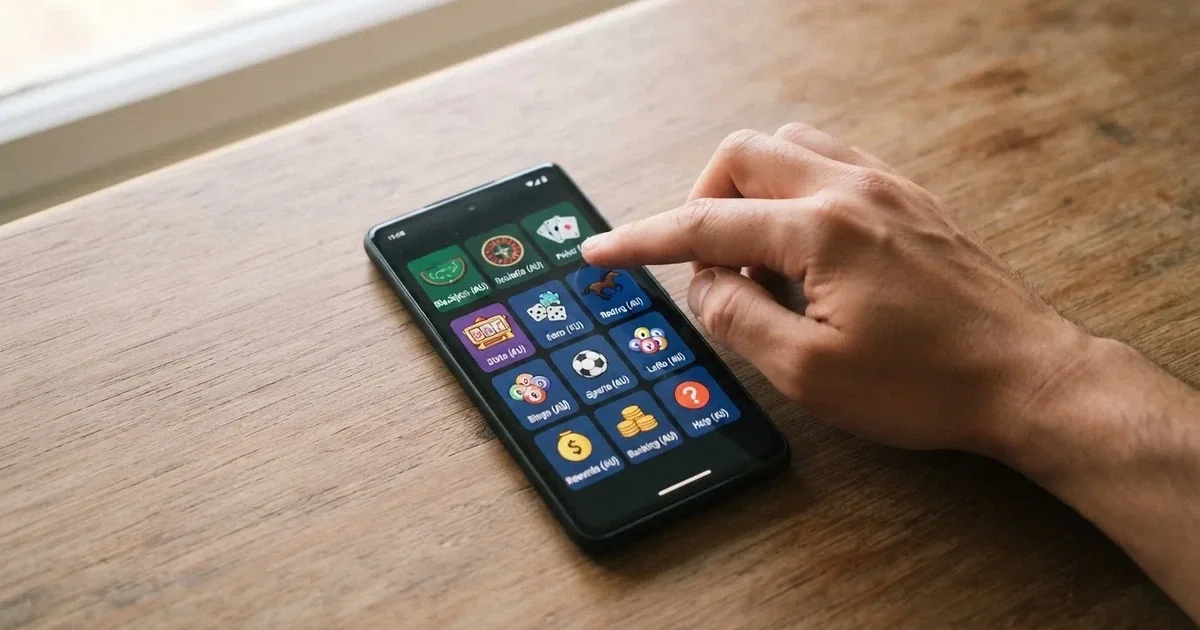
The phrase “best casino app for Android in Australia” implies a marketplace where several options compete for a download and a rating. That marketplace does not exist. The Interactive Gambling Act 2001 prohibits the supply of online casino games and online pokies to anyone in Australia, and no state or territory issues a licence for them. What does exist, in growing volume, is offshore operators running outside Australian law, distributing software by sideloading or by listing apps under categories the Google Play store does not police, and taking deposits through channels the licensed wagering market is forbidden to use. Choosing among them is not the same kind of decision as picking the better of two streaming services. It is closer to choosing which unauthorised door to walk through, and which card to leave on the other side.
This page lays out what an Australian punter using Android is actually choosing between in 2026: the legal frame, the regulator’s record against offshore operators, the shape a touchscreen interface takes, the way payments reach an offshore site, and the responsible-gambling tools that only bind locally licensed services. Eleven names the ACMA itself has warned appear in a comparison near the end of the page, not because they are the best of anything but because the regulator’s formal warnings are the most reliable list of who has been offering prohibited services to Australians, and treating that list as a comparison set is more honest than pretending a ranking exists.
Table of Contents
- The legal frame: why no Australian-licensed casino app exists for Android
- Responsible gambling: what binds locally licensed services, and what offshore sites skip
- Crypto, anonymity and the Android casino app question
- How payments actually reach an offshore Android casino app in Australia
- How an Android casino app interface typically looks, and how it gets onto a phone
- The eleven operators the ACMA has formally warned: a comparison, not a ranking
- Blocking rate: how fast the ACMA is adding sites, in a band with its condition
- What an Australian punter with an Android phone is actually choosing between
- The 2026 reform bill, in plain terms
- Tax and winnings, briefly
- Frequently asked questions
The legal frame: why no Australian-licensed casino app exists for Android
Australia’s online gambling law is the Interactive Gambling Act 2001, amended materially in 2017 and tightened on the payments side in subsequent years. The IGA makes it an offence for a provider to supply online casino games, online pokies or in-play betting to a person physically in Australia. It does not prohibit an Australian from placing a wager with a licensed operator on a race or sporting event before the event starts, and it does not prohibit lotteries or keno, which states and territories regulate separately. What it shuts down, in plain terms, is the entire category of product that an Android casino app would offer.

The NTRWC and what it actually licenses. The Northern Territory Racing and Wagering Commission is the regulator that holds the largest cluster of Australian online wagering licences — 52 of them, covering brands including Sportsbet, Bet365 and Ladbrokes. The reason so many online bookmakers are nominally Territory-licensed is tax: the NT charges a lower wagering tax than other jurisdictions, and operators choose their licence home on that basis. The Commission itself runs thin: no full-time staff, monthly meetings in Darwin. The licences it issues cover pre-event sports and race betting, not casino games. An Australian punter using an NT-licensed app is using a wagering product, not a casino product, even if the same brand also runs a casino site offshore.
Enforcement falls to the ACMA. The Australian Communications and Media Authority investigates complaints, issues formal warnings, and can direct Australian internet service providers to block websites that offer prohibited services. As of a June 2026 tally, the ACMA had asked ISPs to block 1,751 illegal gambling and affiliate marketing websites since the first blocking request in November 2019, and more than 230 unlicensed services had left the Australian market since enforcement was strengthened in 2017. A single round reported on 26 June 2026 added twelve more domains: 7Signs, ChromaBet, Donbet, Duospin, Freshbet, Slots Gem, Jacks Club, Lucky Start, Pointsbetz, Spinrise, Vinyl Casino and Wildsino. The pace is not slowing; the same source notes that H2 Gambling Capital’s 2025 report puts Australian losses to illegal gambling sites at roughly A$3.9 billion a year, with the share of gambling going through legal channels falling from 74 per cent in 2021 to 64 per cent.
What this means for the page. There is no “Top 11 Android casino apps in Australia” because there is no app in the category that an Australian can legally download, install and use for real money. The remainder of this page works around that fact. It treats the eleven brands the ACMA has formally warned as the closest available comparison set — not because they are the best at anything, but because the regulator’s own publications are the cleanest source on who has been offering prohibited services to Australians and when.
Responsible gambling: what binds locally licensed services, and what offshore sites skip
The Australian responsible-gambling infrastructure is built around locally licensed wagering and lottery products. Offshore casino sites are not part of it, and that gap is the practical cost of using one.

BetStop, the National Self-Exclusion Register, has been live since August 2023. It lets a person exclude themselves from every Australian-licensed online and phone wagering service in a single registration. A self-excluded person who tries to open a new account with a participating operator is stopped at the door, and existing accounts are closed and balances handled under each operator’s policy. The mechanism is binding only on operators connected to the register. An offshore casino app is not connected. A person who has self-excluded through BetStop can still register, deposit and play on an offshore site, and the offshore site has no obligation to honour the exclusion.
The 1800 number and the chat. Gambling Help Online runs the National Gambling Helpline on 1800 858 858, free and 24 hours a day, with web chat on the same site. The service is funded for Australians regardless of where they play. If reading about the offshore market and thinking about the mechanics of using one starts to feel compulsive, the helpline is the next stop, and it costs nothing to call.
A practical caution. Offshore sites are under no obligation to identify a self-excluded player, to close an account on request, or to honour a cooling-off period. The licensed product is. The same punter using the same phone can be excluded from one set of services and fully exposed on the other.
Crypto, anonymity and the Android casino app question
Crypto is the payment method most associated with offshore casino marketing aimed at Australians. The marketing pitch is straightforward: no card statement, no bank trail, no name on a transfer. The legal reality is the other side of the same pitch.
Under the Interactive Gambling Act as amended in 2023, and under rules that took effect on 11 June 2024, Australian-licensed online wagering services cannot accept payment by credit card, by credit-related products, or by digital currency. Penalties for operators who do reach A$247,500. The rule exists because licensed operators are the only category that takes Australian deposits at all. Offshore sites take Australian deposits outside the licensed framework, and the credit and crypto bans that apply to licensed wagering do not bind them.
For an Australian punter using an Android device, the practical effects of paying an offshore site in bitcoin or another coin are different from the marketing. AUSTRAC’s threshold-transaction reporting rule, which requires reporting of transfers of A$10,000 or more, applies only to physical cash; ordinary electronic transfers are not subject to that per-transaction threshold. What an Australian bank does see is the on-ramp: the AUD deposit into a local exchange, the conversion into the digital coin, and the transfer out. Banks monitor this, and several — including Westpac and ANZ — operate gambling transaction blocks at card level that can refuse authorisation on transactions carrying the “Betting/Casino Gambling” merchant category code. The block extends, in some banks’ terms, to a digital wallet bound to the card rather than to the physical plastic.
Anonymity is also overstated on the receiving side. A payout to a coin wallet is not anonymous; it is pseudonymous, and the receiving exchange can typically trace it back. The name on the exchange account is the name on the bank account that funded the on-ramp. The punter is identifiable at the point where AUD changed hands, even if the offshore casino never sees a card number.
How payments actually reach an offshore Android casino app in Australia
The deposit side of an offshore Android casino is a list of methods the local market is forbidden to use. The withdrawal side is the reverse of that list, with extra friction.
The deposit experience for an Australian punter involves methods including debit cards, bank transfers, e-wallets like ecoPayz, prepaid vouchers, and crypto. Each of these has a corresponding friction. POLi-style direct debit is largely defunct at Australian banks for this category; the bigger four have either closed it off or restricted it. E-wallets require identity verification at the wallet level, defeating the stated anonymity. Prepaid vouchers require a card to buy. Crypto requires an exchange account with bank-linked identity verification.
The PayID angle. PayID is the addressing layer on Australia’s New Payments Platform, which went live on 13 February 2018 and is owned by New Payments Platform Australia Ltd — a non-profit whose 13 shareholders include the Reserve Bank of Australia and the major banks. Over 100 Australian financial institutions offer PayID-based instant transfers, more than 25 million PayID identifiers had been registered by April 2025, and transfers under the Osko brand arrive in under a minute 24/7. Before sending a transfer, PayID shows the recipient’s registered name; AusPayPlus warns that being asked to transfer to a PayID on an illegal gambling site almost certainly indicates a scam site. That warning exists because the licensed wagering market already has PayID as a deposit option, and a PayID on an offshore site is operating outside the licensed category.
The card path and the bank block. Westpac’s gambling block operates at card level and refuses authorisation on transactions tagged “Betting/Casino Gambling” on eligible personal credit and debit cards. ANZ offers a similar block through the ANZ app; it covers gambling transactions made through a digital wallet such as Apple Pay on an eligible card, not just the plastic, and once activated it carries a 48-hour waiting period to remove. Commonwealth Bank’s gambling lock is set in the CommBank app and applies to most gambling transactions, with the bank noting it cannot guarantee every gambling-related purchase will be stopped. None of these blocks catches a payment that does not use the blocked card, and offshore sites commonly steer punters onto methods the block cannot see — which is itself a reason the blocks exist.
BPAY. BPAY has run in Australia since 18 November 1997, is available in the online banking of more than 140 institutions, and is offered by over 95,000 businesses. It is owned equally, via Cardlink Services Limited, by ANZ, Commonwealth Bank, NAB and Westpac, and has been operated by Australian Payments Plus since the 2021 merger that brought BPAY Group, eftpos and NPP Australia under a single holding entity. For an Australian punter, BPAY is a bill-payment channel: payer enters the Biller Code and the Customer Reference Number printed on the bill. It is one of the legal deposit routes for licensed wagering; an offshore casino asking for a BPAY payment is using a channel reserved for a category it is not part of.
Apple Pay, Google Pay, Samsung Pay. By the end of 2025, these three mobile wallets collectively accounted for around 45 per cent of all card payments in Australia by number. The Reserve Bank of Australia’s July 2025 review proposed removing surcharges only on eftpos, Mastercard and Visa transactions, leaving American Express outside the proposed ban, and Apple itself does not charge consumer fees for Apple Pay in stores, online or in apps — any surcharge comes from the merchant’s card-processing fees, not from Apple. For gambling use of these wallets, the credit-card ban on licensed wagering constrains linked cards, and several banks’ gambling blocks extend to wallet transactions on a blocked card. Limits and PIN requirements on Apple Pay are set by the card issuer, not by Apple. The wallets are a card front-end, and the card’s banking rules travel with them.
What this looks like in practice. The deposit experience on an offshore Android casino app is a list of methods the local market does not use, with friction at almost every step. The withdrawal experience is the same list in reverse, often slower, with KYC checks the deposit side did not require. The punter is funding a product category that does not exist in Australia through payment channels that the local licensed category is forbidden to take.
How an Android casino app interface typically looks, and how it gets onto a phone
An “Android casino app” can mean three different things, and they sit at very different places on the legal and practical scale.
A native app from the Google Play store. Google Play’s policies prohibit real-money gambling apps in most categories and most jurisdictions. The Play store is not the channel an Australian punter reaches an offshore casino through. A few large, locally licensed wagering brands maintain Play store listings for their betting apps; those are wagering products, not casino products.
A web app reached through the phone’s browser. This is the most common path. The offshore casino serves a mobile-optimised web app that opens in Chrome or another browser and behaves like a native install: full-screen, no browser chrome, an icon on the home screen if the punter chooses “Add to Home Screen”. No APK is downloaded and no sideloading is needed. This is also the version that the ACMA’s blocking requests reach, since the blocking is at domain level.
A sideloaded APK. The casino distributes an Android application package installer file directly, often by email or by a link from the site itself. Installation requires the punter to enable installs from unknown sources in Android settings, which Android warns about in plain language. An APK is harder to update and harder to remove than a web app, and it can persist on a phone after the domain has been blocked. This is the install path most commonly associated with aggressive marketing in the offshore category.
The interface inside. Touchscreen-first layouts in this product category follow a similar pattern regardless of brand. A persistent bottom bar with home, casino, live casino, sports and account sections; a vertical scroll of game tiles on the casino tab; a search bar at the top; a deposit button always visible. Game tiles are square thumbnails with the game’s logo and a provider badge. Filters sort by provider, by game type, by feature — new, popular, jackpot, megaways. Live casino is a separate section of streamed table games with human dealers. The account tab is where KYC documents are uploaded and where deposit limits would sit on a licensed site; on an offshore site the same fields exist but are typically enforced only at withdrawal.
The browser-versus-app trade-off. The web-app path is frictionless to install and easy to remove, and it is the path most exposed to ACMA blocking at the domain level. The sideloaded APK is harder to remove and survives a block, at the cost of Android’s own warning about installing software from outside the Play store. Neither is a product the Australian legal framework touches.
The eleven operators the ACMA has formally warned: a comparison, not a ranking
The table below lists eleven brands the ACMA itself has formally warned over the supply of prohibited interactive gambling services to Australians. It is not a ranking. The brands do not compete on any axis that an Australian punter can act on, because none of them can offer a legal product to an Australian. It is a record of who the regulator has acted against and when, ordered from most recent action back.
The first thing the table shows is the regulator’s own pattern: a small number of operators appear under different brand names, and a small number of brands have been warned more than once. The second thing it shows is that warning does not equal removal — the table exists because the ACMA has acted against each entry at least once and the brand is, at the time of writing, still being marketed somewhere to Australians.
The verdict on each entry below the table is the page’s own reading of what the ACMA action means, and is not drawn from any single sentence in the regulator’s publication. The reading is the work, and is what an editor is for.
| Brand | ACMA action and date | Operator named by the ACMA | Subject support |
|---|---|---|---|
| RocketPlay | Formal warning, March 2026; earlier Dama N.V., May 2022 | Pulsup Ltd | listings only |
| Jackbit | Formal warning, April 2026 | Ryker B.V. | no data |
| Level Up Casino | Formal warning, May 2022 | Dama N.V. | listings only |
| Woo Casino | Formal warning, March 2025 | Dama N.V. | no data |
| Spirit Casino | Formal warning, May 2025 | Dama N.V. | no data |
| National Casino | Formal warning, July 2025 | Consolutetish S.R.L. | listings only |
| Bizzo Casino | Formal warning, July 2025; earlier TechSolutions, 2022 | Consolutetish S.R.L. | listings only |
| Ignition Casino | Formal warning, July 2025 | Bamboo Media | no data |
| Instant Casino | Formal warning, February 2025 | EOD Code SRL | listings only |
| Casino Intense | Formal warning, April 2025 | Sterplay Holding Ltd | listings only |
| Sky Crown | Formal warning, September 2022 | Hollycorn N.V. | no data |
A few patterns the table makes visible. Dama N.V. appears four times, under four different brand names, across roughly four years — Level Up in 2022, Woo Casino in 2025, Spirit Casino in 2025, and earlier still RocketPlay in 2022 before the March 2026 warning to Pulsup Ltd over the same brand. TechSolutions appears in 2022 for Bizzo Casino and Consolutetish S.R.L. appears in 2025 for the same brand. The names change, the brand surfaces repeat. The operator-named column is the clearest signal that “another casino” can be the same corporate group under a new front.
The subject-support column carries the listings the ACMA itself does not audit. Where research surfaced a third-party listing of the brand in a non-regulatory context — a payments directory, an industry trade publication — it is recorded as listings only. Where no third-party listing was found, the entry is left empty. No endorsement is implied.
RocketPlay — warned twice, under two operators
The ACMA warned Dama N.V. over RocketPlay in May 2022 and, separately, warned Pulsup Ltd over RocketPlay in March 2026. Two operators, two dates, one brand surface. That is not the same outcome as RocketPlay leaving the Australian market; the ACMA does not list removal dates in its formal-warning publications, and the brand’s continued listing in third-party directories is consistent with continued operation under new ownership. The punter looking at RocketPlay is looking at a brand that has been told twice to stop offering prohibited services to Australians and has not stopped.
Jackbit — most recent warning, single operator named
Ryker B.V. was the named operator in the April 2026 warning to Jackbit and CasinOK. Single operator, single brand surface in the ACMA’s published action. The CasinOK co-mention suggests the same operator running two skins, which is consistent with the multi-brand pattern elsewhere in the table.
Level Up Casino — older warning, still in the market
Dama N.V. was warned over Level Up Casino in May 2022 alongside five other brands. The ACMA’s May 2022 action against Dama N.V. is one of the broader formal warnings in the published record, covering Bambet, Dazard, Level Up, Rocketplay, Wild Tornado and Cobra Casinos. The brand has been in third-party directories through that period.
Woo Casino — warned under Dama N.V. again in 2025
Woo Casino was the subject of a Dama N.V. warning in March 2025. The same operator was warned in May 2022 over other brands, including RocketPlay. Two warnings to the same operator across roughly three years, against different brand surfaces.
Spirit Casino — also Dama N.V., also 2025
Dama N.V. was warned over Spirit Casino in May 2025, two months after the Woo Casino warning. The pattern is two Dama N.V. brands warned in successive months in 2025.
National Casino — operator named, July 2025
Consolutetish S.R.L. was named in the ACMA’s July 2025 warning over National Casino. A separate Consolutetish warning that month covered Bizzo Casino, and that brand had already been the subject of a 2022 warning to TechSolutions. The same corporate group, different registration names, same brand surface.
Bizzo Casino — warned twice, across two operators
Bizzo Casino was the subject of a 2022 formal warning to TechSolutions (CY) Group Limited and TechSolutions Group N.V., and of a July 2025 formal warning to Consolutetish S.R.L. Two operators, two dates, one brand surface — the most direct example in the table of a brand surviving a warning by changing the corporate vehicle behind it.
Ignition Casino — Bamboo Media, July 2025
The ACMA’s July 2025 warning to Bamboo Media over Ignition Casino is a single-operator, single-brand action. Ignition is one of the better-known brand surfaces in the offshore category internationally, and the ACMA warning is the Australian regulator’s specific record against it.
Instant Casino — earliest warning in the table’s recent set
EOD Code SRL was warned over Instant Casino in February 2025. The earliest of the 2025–2026 set. The brand has been surfaced in payment-method listings alongside ecoPayz and PayID, which is the closest the comparison set comes to a payments-rail data point.
Casino Intense — Sterplay Holding, April 2025
Sterplay Holding Ltd was warned over Casino Intense in April 2025. The brand is one of the entries the ACMA’s record intersects with responsible-gambling infrastructure listings — BetStop and AUSTRAC appear in third-party listings of the brand — which is consistent with the brand being marketed through Australian-facing channels at scale.
Sky Crown — oldest entry on the table
The ACMA’s warning to Hollycorn N.V. over Sky Crown and Blue Leo is dated September 2022, the oldest entry in the comparison set. Hollycorn N.V. appears once in the table and is associated with two brand surfaces in the same warning. The age of the entry is itself data: a brand warned in 2022 still appearing in directories in 2026 is a brand that has not been removed by the regulator’s action.
Blocking rate: how fast the ACMA is adding sites, in a band with its condition
The ACMA’s first blocking request under the current enforcement framework was issued in November 2019. By the June 2026 tally, the regulator had asked Australian ISPs to block 1,751 illegal gambling and affiliate marketing websites.
Six and a half years, just over seventy-eight months, one thousand seven hundred and fifty-one blocking requests in total. That is an average of roughly twenty-two blocking requests per month across the full period. The same source reports that more than 230 unlicensed services had left the Australian market entirely since 2017, which is a separate but adjacent number.
The band is wide because the average is built on a denominator that includes the early years of enforcement, when the rate was lower, and a numerator that has grown as the ACMA’s blocking pipeline has matured. A reasonable read is roughly fifteen to thirty blocking requests per month across the full enforcement period, with the rate in recent rounds closer to the upper end of that range as the ACMA takes on more affiliate marketing domains alongside the casino and wagering brands themselves. The June 2026 round alone added twelve domains. Other reported rounds have been of similar size.
The condition is the frame. The rate counts blocking requests, not unique operators; the same operator can appear under several brand surfaces across several rounds. The rate also covers affiliate marketing domains, which are not casinos themselves but which the ACMA has been treating as in-scope since the 2023 reforms. A reader who wants the size of the offshore market in Australia reads the rate as a flow figure, not a stock figure.
What an Australian punter with an Android phone is actually choosing between
The decision is not “which app”. It is “which category”. Three categories exist, and only one is legal.
The licensed wagering category is the only one the Interactive Gambling Act 2001 permits an Australian to use. It covers pre-event sports and race betting, lotteries and keno. NT-licensed brands — Sportsbet, Bet365, Ladbrokes and the broader cohort of 52 — operate under Australian consumer law, are connected to BetStop, and accept deposits through legal channels including debit card, bank transfer, PayID/Osko and BPAY. The product is not a casino. It does not offer pokies, blackjack, roulette or live dealer tables. An Android punter who wants the casino product has to leave this category.
The offshore casino category is what an Android casino app actually delivers. It exists outside Australian law. It is the category the ACMA has been warning and blocking since 2017. It accepts payment methods the licensed market is forbidden to take, including crypto and, in practice, credit-card-funded routes the bank-level gambling block does not catch. It offers no Australian consumer protection, no complaints body, and no recourse if a withdrawal is refused. It can be blocked at domain level with a balance still on the account.
The social / sweepstakes category is a third option that some Australian-facing apps have begun to position. It is a casino-style product running on a virtual-currency model rather than real-money play, and it sits in a different legal position that is not the subject of this page. An Australian punter looking at it should check the specific operator’s licence and the legal status in their state before assuming it is the same product.
For an Australian punter who decides to use an offshore Android casino app regardless, the practical consequences are: no recourse if the operator refuses a withdrawal; potential exposure to the ACMA’s blocking actions with a balance on the account; no connection to BetStop; and a deposit trail through methods the Australian banks are increasingly trained to monitor. The page does not recommend any operator. The regulator’s record is the most reliable evidence available on who has been offering the product, and the regulator has acted against every brand in the table.
The 2026 reform bill, in plain terms
The Interactive Gambling Amendment (Gambling Reform) Bill 2026 passed Parliament on 19 August 2026. Its advertising and inducement measures commence on 1 January 2027. On a page being read in 2026, the bill is law with a future start date, not law in force. The advertising and inducement measures are the parts that change what an Australian punter sees in marketing for offshore products; the substantive prohibition on supply remains the IGA as it has stood since the 2017 amendments.
The reform does not legalise online casino games for Australians. It tightens the existing prohibition by adding restrictions on how prohibited services are marketed into Australia. An Android casino app that is offering prohibited services today is offering them outside the legal framework, and the reform bill does not change that.
Tax and winnings, briefly
Gambling winnings of a recreational player are not assessable income in Australia under section 6-5 of the Income Tax Assessment Act 1997, and losses are not deductible. A person who carries on a business of gambling is treated differently, but that is not the model for the punter this page is written for. Anyone with a specific tax question should check with the ATO or a registered tax agent; the page does not advise on individual situations.
Frequently asked questions
Is there a casino app on the Android app store that is legal for Australians to use for real money?
No. Online casino games and online pokies are prohibited interactive gambling services under the Interactive Gambling Act 2001, and no Australian state or territory issues a licence for them. Google Play’s own policies restrict real-money gambling apps in this category. The licensed wagering apps available to Australians cover pre-event sports and race betting, not casino games.
How would an offshore casino app even reach an Android without an official app-store listing?
Three paths exist. The most common is a mobile-optimised web app that opens in the phone’s browser and can be added to the home screen, requiring no APK and no sideloading. The second is a native app distributed by the operator as an APK file, which requires enabling installs from unknown sources in Android settings. The third is a Play store listing under a category Google does not police for this product, which is rare for the offshore casino category. All three leave the install outside the Play store’s review process.
Does installing a casino app on Android get around the ACMA’s website blocking measures?
It can, partially. A sideloaded APK installs software on the device that does not depend on the blocked domain remaining reachable. The ACMA’s blocking operates at domain level, so a web-app version of the same brand can be blocked while a sideloaded APK continues to function, and updates can be pushed through the same channel. The blocking is the regulator’s enforcement tool, not the punter’s guarantee of removal.
Are the games inside an Android casino app independently tested for fairness?
Some offshore operators publish testing certificates from named laboratories, and the game providers they license from — the studios that supply the actual games — typically test their own output independently. The testing is not performed by an Australian regulator, and the ACMA does not certify games in this category. A punter relying on a published certificate is relying on the operator’s own claim that the certificate is current, valid, and applies to the version installed on their device.
What is the legal alternative to a real-money casino app for someone using Android in Australia?
Australian-licensed wagering apps for sports and race betting, state and territory lotteries, and keno. The product is different — no pokies, no live dealer casino, no blackjack or roulette — but it is the only category the IGA permits an Australian to use. A punter who wants a casino-style product without the offshore exposure can look at licensed social or sweepstakes-style apps and check the operator’s status and the legal position in their own state before signing up.
Published by the Casino No Wager Hub team.