What ‘Aussie crypto casino’ actually means in 2026
 Available in US
Every brand that calls itself an Aussie crypto casino in 2026 is, on the evidence of the Australian Communications and Media Authority’s own formal warnings, an offshore operation offering a product that is prohibited from being licensed anywhere in Australia. The page below works through what that means in practice — for the operator that uses the word, for the wallet that funds it, for the regulator that watches it, and for the player who lands on it expecting an Australian deal and finds a Curaçao or Costa Rica one instead. None of it is a recommendation, and none of it is a shortlist of anywhere to play.

Verified against ACMA enforcement action and Australian regulator guidance as of 24 September 2026.
Table of Contents
- How blockchain payment actually works at a crypto casino
- How the brands on this list compare
- The fundamentals of playing at an offshore crypto casino from Australia
- The legal frame in 2026
- Responsible gambling in the Australian frame
- RocketPlay
- Level Up Casino
- Woo Casino
- Spirit Casino
- National Casino
- Bizzo Casino
- Ignition Casino
- Instant Casino
- Jackbit
- Casino Intense
- Sky Crown
- What an Australian player should hold in mind
- Frequently asked questions
How blockchain payment actually works at a crypto casino
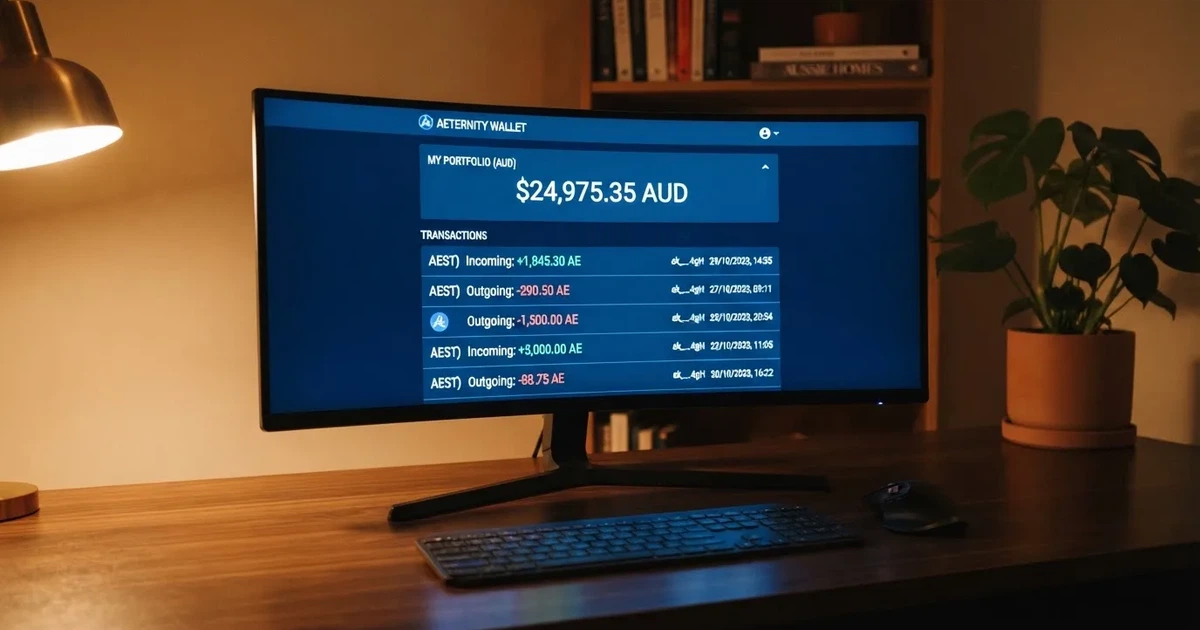
A crypto casino is, at the payments layer, the same as any other online casino with a different rail. A player opens an account, requests a deposit, the site generates a one-time wallet address, the player sends funds from their own wallet or exchange, and on confirmation the casino credits the account. The difference is that no bank sits between the player’s money and the casino’s account — a transfer either lands on-chain in roughly ten minutes for Bitcoin or twelve seconds for Ethereum after The Merge, or it does not land at all.
That pseudonymous feel is the entire reason crypto casinos market themselves the way they do. The blockchain does not record a name or a date of birth; it records a wallet address and the balance it has ever held. Anyone can follow that address with a block explorer and watch the trail it leaves, which is the part the marketing copy tends to skip. Bitcoin was created on 3 January 2009 when the pseudonymous Satoshi Nakamoto mined the genesis block, after publishing the white paper on 31 October 2008, and its real identity has never been verified. Ethereum followed on 30 July 2015 with Vitalik Buterin as its primary creator. Both networks are open ledgers, not private ones, and a wallet address becomes a personal identifier the moment it is tied to a verified exchange account, a deposit, or a withdrawal back to Australian dollars.
The transaction costs at one of these sites are lower than they would be through a card, and the deposits clear without a chargeback risk on either side. The trade-off is what comes next: a deposit that cannot be reversed once it is confirmed, a withdrawal that depends on the operator choosing to send it, and a regulator that does not sit between the player and the operator’s terms.
Bitcoin, Ethereum and Bitcoin Cash at a gambling site
Bitcoin remains the coin most crypto casinos quote first because it is the one a curious player has heard of, and because a new block is added to its chain roughly every ten minutes on average. The block interval is probabilistic — a confirmation can arrive much sooner or much later — and the protocol halves the mining reward every 210,000 blocks until a total of 21 million bitcoin have been issued, expected around the year 2140. Mining secures the ledger through proof-of-work, with the difficulty retargeted roughly every two weeks to keep the average interval near ten minutes. None of that affects the player’s experience directly; what does is the confirmation wait, and the network fee that floats with congestion.
Ethereum is the faster rail at the cashier. After The Merge on 15 September 2022, the chain switched from proof-of-work to proof-of-stake and now produces a new block roughly every twelve seconds. Smart contracts handle deposits on certain sites, which is why Ethereum is the chain most often paired with provably-fair games — the contract code is auditable, the result is verifiable on-chain, and the player can confirm a spin was not altered after the fact. Bitcoin cannot offer the same; its scripting language is intentionally limited.
Bitcoin Cash is a hard fork of Bitcoin, launched on 1 August 2017 at block height 478,558 with a larger block size limit (8 megabytes at launch, raised to 32 megabytes in 2018). The project describes transaction fees “under a penny” and confirmations in minutes, and caps its supply at 21 million coins the same way Bitcoin does. A site that takes Bitcoin Cash is, mechanically, taking the same SHA-256 proof-of-work chain with a different block size, and the operator’s reason for offering it is usually that fees stay low when Bitcoin’s do not.
The point that travels across all three is the same: the coin is just a payment rail. The casino is the casino.
Why a wallet address is not anonymity
The phrase “anonymous gambling” appears in marketing for these sites and it should be read with the ledger open beside it. A wallet address is pseudonymous the way a username is pseudonymous: it does not say who you are on its own, but every transaction it has ever sent or received is on-chain forever. The moment the player converts that crypto back into Australian dollars through a registered exchange, AUSTRAC’s reporting obligations apply and the exchange knows whose wallet it was. From there, the chain of inference is short: a KYC-verified exchange account, a withdrawal to a bank account in someone’s name, and the address that was funded becomes a one-step identification.
What crypto delivers, then, is fewer touchpoints with the casino itself — no card statement, no bank reference, no merchant descriptor. It does not deliver the absence of identity. For an Australian player specifically, it also delivers a tax outcome the marketing does not mention: the ATO classifies crypto assets such as bitcoin as property, not money or foreign currency, so most disposals — selling for AUD, swapping for another crypto, or spending it at a casino — are capital gains tax events. A capital gain on a crypto asset held as a personal use asset is disregarded for CGT purposes only if the asset cost $10,000 or less to acquire, and all capital losses on personal use crypto assets are disregarded outright. A player holding crypto as an investment has no access to that exemption, and from 1 July 2027 the 50% CGT discount on assets held longer than 12 months is replaced by CPI indexation of the cost base plus a 30% minimum tax rate on net capital gains.
AUSTRAC, the exchange, and what the player is using to fund the casino
The exchange that converts Australian dollars into Bitcoin is the regulated layer in this chain, not the casino. Under Australia’s AML/CTF Act, any business providing digital currency exchange services to Australian customers must register with AUSTRAC as a Digital Currency Exchange provider, regardless of where the business is incorporated; operating unregistered is a criminal offence. From 31 March 2026, that registration requirement was expanded beyond crypto-to-fiat exchange to cover crypto-to-crypto exchange platforms, digital asset transferors, digital asset custody providers, and stablecoin issuers and distributors. ASIC, separately, updated its Information Sheet 225 in 2025 with worked examples covering stablecoins, wrapped tokens, tokenised securities and digital wallets, and granted a sector-wide no-action position on related licensing until 30 June 2026.
The player funding an offshore crypto casino from Australia is therefore using a registered, reporting exchange to send funds to an unlicensed recipient. AUSTRAC’s reporting travels with the exchange, not the casino; the casino has no reporting obligation to an Australian authority at all.
How the brands on this list compare
A useful comparison of offshore crypto casinos that market themselves to Australians is not a comparison of payouts and bonuses — those numbers only the operator carries, and the page that quotes them has read the affiliate page — it is a comparison of which operators have come to the regulator’s attention, when, and what the regulator named. Eleven brands have received a formal warning from the ACMA in recent years for offering prohibited interactive gambling services to Australians. The table below sets them out by brand, the ACMA action and date, the operator named in the warning, and the site’s own subject coverage in the sources the research surveyed. Every one of them is offshore; not one is licensed in Australia regardless of branding.
| Brand | ACMA action and date | Operator named by the ACMA | Subject support |
|---|---|---|---|
| RocketPlay | Formal warning, March 2026 | Pulsup Ltd (Rocketplay.com.au); earlier Dama N.V., May 2022 | — |
| Level Up Casino | Formal warning, May 2022 | Dama N.V. | — |
| Woo Casino | Formal warning, March 2025 | Dama N.V. | Listings only |
| Spirit Casino | Formal warning, May 2025 | Dama N.V. | — |
| National Casino | Formal warning, July 2025 | Consolutetish S.R.L. | Listings only |
| Bizzo Casino | Formal warning, July 2025; earlier 2022 | Consolutetish S.R.L.; earlier TechSolutions (CY) Group and TechSolutions Group N.V. | — |
| Ignition Casino | Formal warning, July 2025 | Bamboo Media | — |
| Instant Casino | Formal warning, February 2025 | EOD Code SRL | — |
| Jackbit | Formal warning, April 2026 | Ryker B.V. | — |
| Casino Intense | Formal warning, April 2025 | Sterplay Holding Ltd | — |
| Sky Crown | Formal warning, September 2022 | Hollycorn N.V. | — |
The shape of that table is the shape of the problem. Eleven brands, eleven offshore companies, two and a half years of warnings, and one regulator that publishes each action the moment it is taken. A reader scanning the operator column sees the same handful of names recur: Dama N.V. appears four times across separate brands and dates, Consolutetish S.R.L. twice, and the rest of the field is its own parent company each. None of those parent companies is Australian. None of them holds an Australian licence, because none of them can.
What the table does not show, and what the prose beside it must, is what the warnings actually mean in practice. A formal warning under the Interactive Gambling Act 2001 is the regulator’s notice that further enforcement action follows if the conduct continues. For most of the brands above, the next step is a request to Australian internet service providers to block the site at the DNS level, which is what the ACMA’s blocking program has been doing in rounds since November 2019.
What a formal warning actually does
The ACMA’s formal warning is the first of two steps. It puts the operator on notice, by name and by corporate entity, that the Australian regulator has assessed its offering as a prohibited interactive gambling service under the Interactive Gambling Act 2001, and that further non-compliance will trigger a referral to Australian internet service providers for blocking. It is a published document; the ACMA lists each one on its website with the date, the operator, the brand and a brief description of the prohibited service.
The second step is what most of the brands in the table have either already faced or are on the path to facing. According to the ACMA as reported in June 2026, a total of 1,751 illegal gambling and affiliate marketing websites had been blocked since the first blocking request in November 2019, and more than 230 unlicensed gambling services had left the Australian market since enforcement was strengthened in 2017. In a round reported on 26 June 2026 the ACMA asked Australian internet service providers to block twelve more illegal gambling websites: 7Signs, ChromaBet, Donbet, Duospin, Freshbet, Slots Gem, Jacks Club, Lucky Start, Pointsbetz.com, Spinrise, Vinyl Casino and Wildsino. That is one round. There have been dozens.
The “Aussie” word and what it does in marketing
“Aussie” is a marketing audience label, not a legal status. A brand using it is telling the reader the site is configured for Australian dollars, has Australian-friendly bonus terms, and runs on a schedule that overlaps with Australian evenings. None of those things require an Australian presence. They require a Curaçao licence and a content team that knows the time zone. The brand at the top of this list — RocketPlay — was named in a formal warning to Pulsup Ltd specifically over its Rocketplay.com.au domain, which is the closest an offshore operator can come to looking Australian without being one.
What an Australian player gets from that arrangement, in practice, is a deposit in Australian dollars, support staff who can answer in English, and a withdrawal that goes back to the same crypto wallet it came from. What the player does not get is an Australian licence, an Australian complaints body, an Australian regulator to escalate to if a withdrawal is refused, or the protection of any Australian consumer law. The Interactive Gambling Act 2001 targets the provider, not the player, which means the player has no Australian recourse at all — the offshore operator is the only party to the dispute, and the offshore operator sets the terms.
The fundamentals of playing at an offshore crypto casino from Australia
The fundamentals are simple to set out because they are the same fundamentals that apply to any offshore casino, with one variable changed. The product on offer is prohibited under the Interactive Gambling Act 2001, strengthened by the Interactive Gambling Amendment Act 2017, and no state or territory issues a licence for online casino games, online pokies or in-play betting. What is licensable is wagering on races and sport placed before the event, lotteries and keno. Online casino games are not on that list anywhere in the country.

That distinction matters because the operator will, almost without exception, claim a licence. Curaçao, Anjouan, the Comoros, Costa Rica — the licence shown at the footer of an offshore crypto casino is one of those, and none of them is regulated by an Australian authority. None of them is enforceable in Australia against an Australian player if the operator refuses a withdrawal. None of them recognises Australian responsible-gambling frameworks.
The Northern Territory Racing and Wagering Commission regulates fifty-two of Australia’s online bookmakers — Sportsbet, Bet365 and Ladbrokes among them — but the commission exists because those bookmakers are licensed in the Territory for tax reasons. The commission has no full-time staff and meets once a month in Darwin, and its writ is over wagering on sport and racing, not over online casino games. No equivalent body exists for online pokies, online blackjack or online roulette, because none of those products is licensed to be offered in Australia at all.
What the player is actually funding
The deposit goes to the casino, but the route there goes through a registered exchange. AUSTRAC requires any business providing a digital currency exchange service — exchanging cryptocurrencies such as Bitcoin Cash for fiat, for example — to register as a digital currency exchange provider; operating unregistered is a criminal offence. The exchange that converts Australian dollars into Bitcoin is the regulated layer in the chain. It reports to AUSTRAC, it has KYC obligations, and it knows whose wallet is sending the funds.
The casino is the unregulated layer. It sees the funds arrive at a wallet address it controls, and it credits the player’s account. From that point forward the only person the player has a contract with is the operator behind the brand. The ATO’s tax framework applies on the Australian side: gambling winnings of a recreational player are not assessable income and losses are not deductible, but the crypto used to fund the casino is a CGT asset in its own right. A deposit is a disposal of that asset. A withdrawal is an acquisition. Both are reportable events.
What the player is actually risking
Three things, in this order: the deposit, the balance if the site is blocked, and the absence of a regulator to complain to. The Interactive Gambling Act 2001 targets the provider, not the player — an Australian player is not prosecuted for placing a bet at an offshore casino — but an offshore site gives no Australian consumer protection, no complaints body and no recourse if a withdrawal is refused, and it can be blocked with a balance still on it. The 1,751 sites blocked since 2019 included the affiliate marketing pages that drove traffic to them, and a balance held at one of those sites at the moment of a blocking request is, in practice, frozen.
There is no Australian consumer protection law that travels with the player to an offshore casino. The site’s terms are the terms, and the site’s licence — wherever it is — is the licence that decides disputes. The National Consumer Protection Framework does not apply. The Australian Consumer Law does not apply. The EDR schemes that cover Australian-licensed wagering do not apply.
The legal frame in 2026
Online casino is prohibited in Australia, and the prohibition has real teeth. The Interactive Gambling Act 2001 (IGA), strengthened by the Interactive Gambling Amendment Act 2017, makes it an offence to provide online casino games, online pokies or in-play betting to a person physically in Australia. No state or territory issues a licence for any of those products. What is licensable is wagering on races and sport placed before the event, lotteries and keno — in practice licensed by the Northern Territory. The minimum age is 18 across every product.
The Interactive Gambling Amendment (Gambling Reform) Bill 2026 passed Parliament on 19 August 2026. Its advertising and inducement measures commence on 1 January 2027, which is law with a start date — not yet in force on a 2026 page. What the new law adds is a stricter framework around how offshore operators reach Australian customers through affiliates and inducements, and what penalties attach. What it does not change is the underlying prohibition on the products themselves, which has stood since 2001.
How the ACMA enforces it
The ACMA investigates, issues formal warnings, and directs internet service providers to block illegal sites. The formal warning is the first step; the blocking request is the second. A blocking request goes to every major Australian ISP, the site disappears at the DNS level for Australian customers, and the operator has limited practical recourse inside Australia. According to the ACMA as reported in June 2026, a total of 1,751 illegal gambling and affiliate marketing websites had been blocked since the first blocking request in November 2019.
How fast the ACMA is blocking sites
Working from the research figures, the ACMA’s running total of blocked sites reached 1,751 by 26 June 2026, with the first blocking request issued in November 2019. That is approximately eighty months of enforcement, and the rate is what matters here. Dividing 1,751 by roughly eighty months gives a long-run average in the low twenties of sites blocked per month; the most recent round alone added twelve. So the realistic band a reader should hold in mind is not the long-run average, which understates what enforcement looks like now, but a current pace that runs at least in the dozens per month and accelerates as each round catches more sites. The useful conclusion is that the rate has not slowed since 2017 and is, on the most recent rounds, picking up.
That figure also matters because it changes what a brand’s marketing looks like in retrospect. A casino that was easy to find in 2022 may be unreachable from an Australian ISP in 2026, and the player who found it through search may find a blocked page the next time they look. The operator’s own site may still resolve overseas; the Australian experience of it is the one that stops working.
The payment rules that follow
Credit cards, credit-related products and digital currency are banned as payment for licensed online wagering since 11 June 2024, with penalties up to $247,500 for operators accepting them. Legal deposit routes for licensed wagering are debit card, bank transfer, PayID/Osko and BPAY. A site asking an Australian customer for a credit card or a crypto deposit is operating outside the Australian rules for licensed wagering. That prohibition sits alongside, not in place of, the broader ban on offering online casino games at all — a licensed wagering operator accepting crypto would still be licensed for sport and racing only, not for casino games.
What an Australian player is left with
The honest answer to “where can I play casino games online from Australia” is that there is no Australian-licensed place to play them. The honest answer to “is the offshore site that uses the word ‘Aussie’ actually licensed here” is no, regardless of what its footer says. The honest answer to “can I be prosecuted for using one” is that the IGA targets the provider and the player is not the target — but the player has no Australian consumer protection if the operator refuses a withdrawal, no Australian regulator to complain to, no Australian complaints body, and no guarantee that the site will be reachable next week.
Responsible gambling in the Australian frame
The responsible-gambling framework that does exist in Australia applies to Australian-licensed operators, and an offshore crypto casino is not connected to it. That is the part most players do not realise until they look for the safeguard and find nothing.
BetStop and what it does not reach
BetStop, the National Self-Exclusion Register, has been live since August 2023 and binds Australian-licensed online and phone wagering services. A person who registers with BetStop is excluded from every Australian-licensed wagering account they hold and from opening new ones. An offshore crypto casino is not connected to BetStop, which means a self-exclusion registered in Australia does not extend to an offshore brand, and an offshore brand does not honour a BetStop registration. The safeguard exists; it does not travel.
Help that does travel
The National Gambling Helpline — 1800 858 858 — is free, confidential, and available 24/7, with web chat at Gambling Help Online. That service is independent of any casino, any licence, and any operator. If thinking about any kind of gambling — offshore, licensed, sports, casino — starts to affect a person’s wellbeing or finances, that is the line to call. The research carries the number verbatim because it is the only national safeguard that does reach the player wherever they have placed a bet.
The mental-model mistake to avoid
The marketing copy at offshore crypto casinos talks about “responsible gaming” the same way an Australian-licensed operator does, with deposit limits, time-out options, and self-exclusion tools inside the account. Those tools are real, in the sense that the casino may implement them, but they are not connected to BetStop, not overseen by an Australian regulator, and not enforceable if the operator decides to ignore them. A player who has registered with BetStop and then plays at an offshore brand has not self-excluded from the offshore brand; they have simply chosen not to use the Australian-licensed products while still gambling. That distinction is the one responsible-gambling professionals see most often, and it is the one a reader should hold onto before assuming an in-account tool is the same safeguard as a national register.
RocketPlay
RocketPlay is the brand at the top of this list because it has the most recent ACMA action. In March 2026 the ACMA issued a formal warning to Pulsup Ltd specifically over Rocketplay.com.au, and an earlier Dama N.V. action in May 2022 had already named Rocketplay among six brands at that operator. The “.com.au” domain in the warning is the part that makes the case: an offshore operator went to the trouble of registering an Australian-ccTLD to look local, and the ACMA named it anyway. The site’s subject support, in the sources the research surveyed, is not documented beyond that ACMA action. The verdict is the simplest one this page delivers: this is the brand that most recently tested the “Aussie” word against the regulator’s tolerance, and the regulator published the result.
Level Up Casino
Level Up Casino was named in the May 2022 ACMA warning to Dama N.V. alongside Bambet, Dazard, Rocketplay, Wild Tornado and Cobra Casinos — six brands, one operator, one warning. That makes Level Up part of a batch action rather than a targeted one; the regulator’s grounds were the same for each, and the compliance outcome at each brand since then has been its own. The research carries no figure on subject support beyond that batch action, which is the regulator’s own statement of why each brand is named. The verdict on Level Up is that four years on from the warning the brand is still being marketed to Australian players, and the ACMA has not had to escalate past the warning to a blocking request on this domain. Whether that is forbearance or backlog, the brand itself does not say.
Woo Casino
Woo Casino received a formal warning in March 2025 under Dama N.V., and that operator’s appearance across four of the eleven brands in this table is the single most repeated corporate name on it. The research noted subject support at Woo Casino in listings only — which here means the data exists in directory pages and affiliate summaries, not in any document the regulator has signed. The verdict on Woo Casino is that the brand sits in the busiest corporate family on the ACMA’s recent warning list and has not yet had a blocking request issued against it specifically. The reader who compares brands by operator often ends up reading the operator, not the brand.
Spirit Casino
Spirit Casino is the second Dama N.V. brand to receive a 2025 warning, in May of that year, and the gap between Woo Casino’s warning and Spirit Casino’s is two months. The research carries no data on subject support at Spirit Casino beyond the regulator’s action. The verdict on Spirit Casino is that it joins Woo Casino and Level Up Casino in the Dama N.V. cluster — a single corporate parent now named in four ACMA warnings over four different brand names, and the regulator’s view of one brand in that cluster is the regulator’s view of all four.
National Casino
National Casino received its formal warning in July 2025 under Consolutetish S.R.L., and that operator also runs Bizzo Casino, which received a warning at the same time. National Casino’s subject support shows up in listings only, again meaning directory and affiliate sources rather than any regulator-affiliated one. The verdict on National Casino is that it shares an operator with Bizzo Casino, and the warning is the same warning in substance. A reader looking at the operator column here is reading one corporate entity across two brand names, and the regulator treats both the same way.
Bizzo Casino
Bizzo Casino was named in the July 2025 warning to Consolutetish S.R.L. alongside National Casino, but the brand had been here before — a 2022 formal warning to TechSolutions (CY) Group Limited and TechSolutions Group N.V. had already named Bizzo Casino. The two warnings, four years apart, trace the operator history of a single brand across two corporate owners. Subject support data is unavailable. The verdict on Bizzo Casino is the same as the verdict on National Casino: same operator, same warning, same regulator action, with the additional fact that the brand has been warned twice under different ownership.
Ignition Casino
Ignition Casino was named in the July 2025 warning to Bamboo Media, the same month National Casino and Bizzo Casino were warned. The research carries no data on subject support beyond that. The verdict on Ignition Casino is that it sits in the same July 2025 warning cohort as National Casino and Bizzo Casino but under a different operator, which is the kind of detail that matters when comparing brands: three warnings, two operators, all in the same month.
Instant Casino
Instant Casino received a formal warning in February 2025 to EOD Code SRL, and it is the only brand on this list where the formal warning preceded the operator’s other activity. The research carries no data on subject support beyond that action. The verdict on Instant Casino is that it is the earliest 2025 entry on the table and has not, on the public record, progressed to a blocking request.
Jackbit
Jackbit received a formal warning in April 2026 to Ryker B.V., the same operator named in a warning over CasinOK at the same time. Jackbit is one of the two most recent entries on this list, alongside RocketPlay, and no further subject support data is available. The verdict on Jackbit is that it is the operator’s brand alongside CasinOK rather than a brand on its own, and the ACMA named both at once.
Casino Intense
Casino Intense received a formal warning in April 2025 to Sterplay Holding Ltd. The research carries no data on subject support beyond that action. The verdict on Casino Intense is that it sits alone in the Sterplay cluster and has not, on the public record, progressed past the warning stage.
Sky Crown
Sky Crown was named in an ACMA formal warning to Hollycorn N.V. alongside Blue Leo, with the warning publication dated to September 2022. That makes Sky Crown the oldest entry on this list, and the ACMA’s file on the operator goes back further than the warning alone suggests. The regulator’s action is the only documented detail. The verdict on Sky Crown is that it is the longest-running name on the table and the only one where the warning preceded the regulator’s wave of 2025 enforcement by three years.
What an Australian player should hold in mind
The single word that runs through every section above is “offshore.” A brand using the word “Aussie” is an offshore operator marketing to Australians; a brand claiming a Curaçao or Anjouan licence is an offshore operator licensed in a jurisdiction the Australian regulator does not recognise; a brand offering crypto deposits is an offshore operator taking funds through a rail the Australian-licensed wagering market has banned since 11 June 2024. None of those facts is hidden — the operator is not concealing its corporate address — but they are usually presented as procedural detail rather than as the central fact.
The central fact is the product. Online casino games and online pokies cannot be licensed in Australia. No state or territory issues a licence for them. The Interactive Gambling Act 2001 prohibits their supply to anyone in Australia. The ACMA enforces that prohibition through formal warnings and blocking requests, and 1,751 sites have been blocked since November 2019. H2 Gambling Capital’s 2025 report estimates that Australians lose about A$3.9 billion a year to illegal gambling sites, and that the share of gambling going through legal channels fell from 74% in 2021 to 64%. Those are the numbers that frame the question, and the question is not “which of these brands should I use” but “what am I using when I use any of them.”
A player who has decided to play at one of these sites anyway should hold at least three things: the deposit is a CGT disposal of a crypto asset, the balance can be frozen if the site is blocked, and there is no Australian regulator to escalate a refused withdrawal to. The tax outcome is the player’s problem, not the casino’s. The blocked balance is the player’s problem, not the casino’s. The dispute is the player’s problem, not the casino’s. Each of those three facts is documented in research; each of them is missing from the marketing pages the sites use to attract Australian customers.
Frequently asked questions
Does calling a crypto casino ‘Aussie’ mean it is licensed in Australia?
No. “Aussie” describes the marketing audience the site is configured for — Australian dollars, Australian evening hours, Australian-friendly bonus terms — not the operator’s legal status. Online casino games cannot be licensed in Australia under the Interactive Gambling Act 2001, and every brand on this list is an offshore operation regardless of branding. The ACMA’s formal warnings name the corporate entities behind each brand, and none of them is an Australian company.
Where is a typical ‘Aussie crypto casino’ actually incorporated and licensed?
Offshore, almost without exception. The eleven brands the ACMA has warned in recent years name corporate parents registered in Curaçao, Costa Rica, and Comoros, and hold licences from those jurisdictions or from Anjouan. None of those licences is recognised by an Australian regulator, and none of them provides recourse for an Australian player under Australian consumer law. The licence shown at the footer of the site is the only licence the operator has.
Is holding or spending cryptocurrency itself legal for someone living in Australia?
Yes, with the same tax treatment as any other asset. The ATO classifies crypto assets such as bitcoin as property, not money or foreign currency, so most disposals — selling for AUD, swapping for another crypto, or spending it — are capital gains tax events. A capital gain on a crypto asset held as a personal use asset is disregarded for CGT purposes only if the asset cost $10,000 or less to acquire; holding a crypto asset as an investment takes it outside this exemption. All capital losses on personal use crypto assets are disregarded outright. From 1 July 2027 the 50% CGT discount on assets held longer than 12 months is replaced by CPI indexation of the cost base plus a 30% minimum tax rate on net capital gains.
What AUSTRAC obligations apply to a crypto exchange used to fund an offshore casino?
The exchange is the regulated layer in the chain. Under Australia’s AML/CTF Act, any business providing digital currency exchange services to Australian customers must register with AUSTRAC as a Digital Currency Exchange provider, regardless of where the business is incorporated; operating unregistered is a criminal offence. From 31 March 2026, that registration requirement was expanded beyond crypto-to-fiat exchange to cover crypto-to-crypto exchange platforms, digital asset transferors, digital asset custody providers, and stablecoin issuers and distributors. The exchange reports to AUSTRAC; the casino does not.
Can an Aussie-branded crypto casino be blocked by the ACMA the same as any other offshore site?
Yes. A formal warning is the first step in the ACMA’s enforcement process and a blocking request is the second. According to the ACMA as reported in June 2026, a total of 1,751 illegal gambling and affiliate marketing websites had been blocked since the first blocking request in November 2019, and more than 230 unlicensed gambling services had left the Australian market since enforcement was strengthened in 2017. The brand’s “Aussie” marketing has no bearing on whether the site can be blocked; a site that resolves from an Australian IP at the moment of the blocking request goes dark to that IP. A balance held at the site at that moment is, in practice, frozen.
Published by the Casino No Wager Hub team.