Best online craps casinos in Australia, 2026: why the shortlist is a single line
 Available in US
Data current as of 24 September 2026, checked against the Australian Communications and Media Authority’s register of formal warnings and blocking requests.
A search for “best online craps casinos Australia” turns up a small library of recommendation pages, almost all of them written from outside Australia, and almost all of them leading with the same offshore brands the Australian Communications and Media Authority has been formally warning for years. The honest answer to the question is short: there is no such thing. Online casino games — craps included — cannot be lawfully offered to anyone in Australia under the Interactive Gambling Act 2001, no state or territory issues a licence for them, and the ACMA’s enforcement record is the catalogue of operators that have tried it anyway. This page is built around that gap. It sets out the law, the enforcement record, the protection tools that do apply, and the options that are actually available to a person in Australia who wants to roll dice.
Table of Contents
- ## What the Interactive Gambling Act 2001 actually says about online craps
- ## Enforcement: how the ACMA has applied the prohibition in practice
- ## What BetStop and the other Australian safeguards actually cover
- ## Craps bonuses: why a promotional headline is rarely the cost
- ## Craps at a glance: paytable, mechanics, where the value sits
- ## What is actually available in Australia: licensed pokies venues, land-based casinos and the BetStop option
- ## The blocking rate, as the ACMA’s own record shows it
- ## The eleven brands the ACMA has warned — and what that record means for a person in Australia
- ## How to read an offshore “Australian-friendly” casino offer in practice
- ## Payment methods an Australian-licensed site will and will not accept
- ## Tax, winnings and what the ATO actually says
- ## The 2026 reform: the Gambling Reform Bill, what it changes and when it bites
- ## Where an Australian who has been playing on offshore sites can get help
- Frequently asked questions about online craps in Australia
## What the Interactive Gambling Act 2001 actually says about online craps
The federal statute at the centre of this question is the Interactive Gambling Act 2001, the IGA, tightened by the Interactive Gambling Amendment Act 2017 and most recently amended by the Interactive Gambling Amendment (Gambling Reform) Bill 2026. Its core prohibition is plain: it is an offence to provide a “prohibited interactive gambling service” to a person physically present in Australia. Online casino games — craps, roulette, blackjack, baccarat and the slot machines Australians call pokies — fall squarely inside that prohibition, as does in-play betting on a sporting event. The statute does not target the player. The penalty structure is aimed at the provider: up to A$220,000 per day for an individual and up to A$1.1 million per day for a corporation, per offending service.

What the IGA does permit is wagering on racing and sporting events placed before the event, lotteries and keno. Those are the products that an Australian-licensed operator can lawfully offer online. They are also the products the Northern Territory Racing and Wagering Commission — the NTRWC — is best known for regulating. The NTRWC oversees 52 of Australia’s online bookmakers, including Sportsbet, Bet365 and Ladbrokes, and it does so from Darwin, with no full-time staff and a monthly meeting cycle.
A few corollaries follow. The first is that an offshore operator displaying a Curaçao, Anjouan or Kahnawake licence at the foot of its home page is not licensed in Australia, and that licence confers no protection on an Australian customer. The second is that the question “is this site legal for Australians” has the same answer for craps as it does for online roulette or online blackjack: it is not, and any site offering it to a person in Australia is operating outside Australian law. The third is that a player in Australia who opens an account at one of these sites is not committing an offence under the IGA; the statute aims at the supply side.
## Enforcement: how the ACMA has applied the prohibition in practice
The Australian Communications and Media Authority, the ACMA, is the regulator responsible for investigating breaches of the IGA. Its two main levers are formal warnings, which it publishes by name on its own website, and blocking requests to Australian internet service providers. Both have been used heavily. The published figures as of June 2026: a cumulative 1,751 illegal gambling and affiliate marketing websites blocked since the first blocking request in November 2019, and more than 230 unlicensed gambling services having exited the Australian market since enforcement was strengthened in 2017.
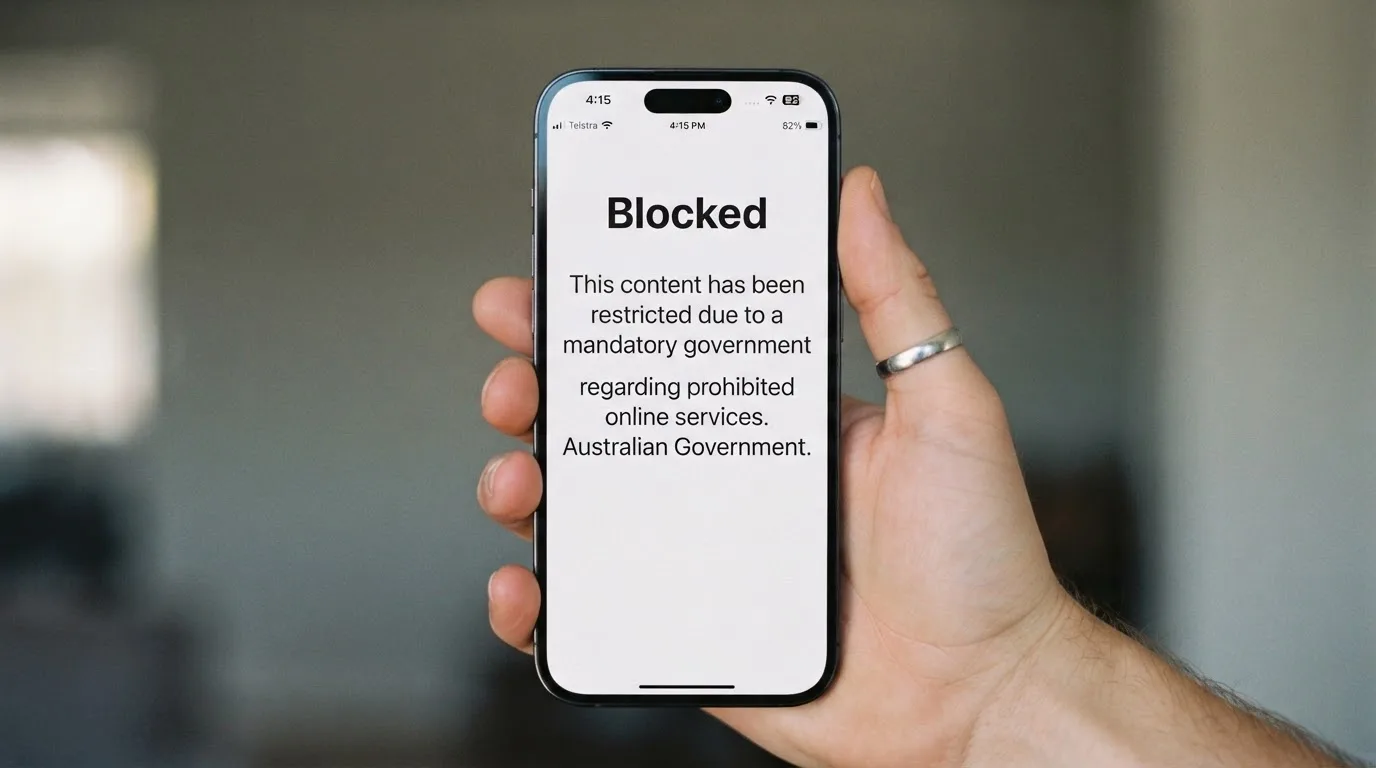
A formal warning is not a court order. It is a public notice that the regulator has formed the view that a named operator is providing a prohibited service to Australians, and it is the step that usually precedes a blocking request. The pattern that emerges from the warnings the ACMA has published is that operators rotate — the same group of names resurfaces under different corporate vehicles. Dama N.V. is the clearest example: the ACMA warned it in May 2022 over six brands including Level Up, then warned it again in March 2025 over Woo Casino and in May 2025 over Spirit Casino. Consolutetish S.R.L. turned up in July 2025, with warnings covering National Casino and Bizzo Casino, the latter of which had already been the subject of a 2022 warning to TechSolutions Group. TechSolutions itself had been warned in 2022 over Bizzo; the rebranding did not move it out of the regulator’s line of sight.
Other named operators and dates from the ACMA’s register, in the order they were published: Pulsup Ltd over Rocketplay.com.au in March 2026; Bamboo Media over Ignition Casino in July 2025; EOD Code SRL over Instant Casino in February 2025; Ryker B.V. over Jackbit and CasinOK in April 2026; Sterplay Holding Ltd over Casino Intense in April 2025; Hollycorn N.V. over Sky Crown and Blue Leo, the warning published in September 2022. The June 2026 blocking round took in 7Signs, ChromaBet, Donbet, Duospin, Freshbet, Slots Gem, Jacks Club, Lucky Start, Pointsbetz.com, Spinrise, Vinyl Casino and Wildsino.
A simple way to read this register is to treat it as the negative space of the market: every name on it is one a person in Australia should assume cannot be reached, or cannot be reached reliably, from an Australian internet connection. None of the brands listed above is a recommendation.
## What BetStop and the other Australian safeguards actually cover
The single most important protection tool for a person in Australia is BetStop, the National Self-Exclusion Register. BetStop went live in August 2023 and it binds every Australian-licensed online and phone wagering service — bookmakers, the racing and sports products that sit inside the IGA’s permitted zone. A person who registers with BetStop is asked to nominate a period of exclusion ranging from three months to a permanent bar, and every connected operator must close the account and refuse to reopen it for the duration.
BetStop’s reach is also its limit. It binds licensed Australian operators; it does not bind an offshore casino, and an offshore casino does not connect to the register at all. A person who has excluded themselves through BetStop can still reach an offshore site through a different account, and the register has no way to stop them. The intended use is as a circuit breaker for someone who has decided, on their own account, that the licensed market is where they are playing. The extension of the same protection into the offshore space depends on Australian ISPs blocking the sites in the first place — which the ACMA does, but as the cumulative count of 1,751 makes plain, not instantaneously and not exhaustively.
Other tools that apply within the Australian system: deposit limits, loss limits and session-time limits, all of which a licensed operator is required to offer. Outside the licensed system, none of those levers is built into the site by default, and an offshore site has no obligation to honour a self-imposed cap set by the customer. The National Gambling Helpline is 1800 858 858 — free, twenty-four hours a day — and there is a chat service at Gambling Help Online. Both are reachable from anywhere in Australia, irrespective of which site someone has been using.
## Craps bonuses: why a promotional headline is rarely the cost
Online craps bonuses and “craps casino bonus” offers exist in the offshore market the same way they do for any other table game. The structure is usually a deposit match with a wagering requirement attached, sometimes called a turnover multiple: the player is expected to wager the bonus amount, or the bonus plus deposit, a stated number of times before any winnings can be withdrawn. The number that matters is not the headline — “200% up to A$500” — but the multiplier, because the multiplier is what determines how much play the bonus actually requires.
A useful rule of thumb: a 35x bonus-only wagering requirement on a A$200 bonus means the player is expected to place A$7,000 of bets before the bonus clears. At a craps table, where the average wager contributes fully to wagering on most sites, A$7,000 is a substantial volume. The free odds bet — the only bet on a craps table with a 0% house edge — is sometimes excluded from wagering contribution entirely, which is a meaningful condition for anyone who plans to play the way the strategy guides recommend.
There is a second figure worth knowing, which is the maximum cashout cap. Some offshore bonuses, particularly the headline-grabbing ones, cap the amount that can be withdrawn from bonus play at a small multiple of the bonus — five times the bonus, ten times the bonus — which converts a large headline into a small ceiling. Where a site does not publish the cap, the absence is itself the answer.
None of this should be read as a defence of any one operator. The bonuses themselves are not the problem; the gap between the headline and the realised value is the problem, and the gap is by design.
## Craps at a glance: paytable, mechanics, where the value sits
Craps is a dice game played with two six-sided dice, and it is unusual among casino table games in that almost every bet on the layout favours the house by a different margin. The game begins with the come-out roll. A 7 or 11 wins the Pass Line bet immediately; a 2, 3 or 12 loses it immediately; any other number — 4, 5, 6, 8, 9 or 10 — becomes “the point”, and the shooter rolls again until either the point comes up again (Pass Line wins) or a 7 comes up first (Pass Line loses).
The standard house edges on the main bets, as published by Wizard of Odds: Pass and Come 1.41%, Don’t Pass and Don’t Come 1.36%, Any Craps 11.11%. The Field bet carries 5.56%, and the Any 7 bet carries 16.67% — the worst bet on the layout by a comfortable margin. The reason Any 7 sits at that number is simple arithmetic: there are six ways to roll a 7 out of thirty-six, and the bet pays 4 to 1.
The single bright spot on the table is the free odds bet. Once a point is established, the player can take “odds” behind a Pass or Don’t Pass bet at the true mathematical odds, and the casino charges no edge on that portion. It is the only bet on a craps table that pays at fair odds, and the strategy guides built around craps are mostly built around maximising the proportion of the total wager that sits on the odds. A site that excludes free odds from wagering contribution, or caps the odds multiple at a low number, is closing off the main way an informed player reduces the effective house edge.
The history is short: the modern American game descends from the European dice game Hazard, which Bernard Xavier Philippe de Marigny de Mandeville is credited with bringing to New Orleans around 1805. The Don’t Pass betting layout that is still used on casino craps tables was introduced around 1907 by the Philadelphia dice maker John H. Winn. The variant without 2, 3, 11 and 12 as come-out losers is Crapless Craps; the informal version played on a sidewalk or a kitchen floor is street craps, with no marked table and no casino staff.
## What is actually available in Australia: licensed pokies venues, land-based casinos and the BetStop option
The lawful routes for an Australian who wants to play craps or anything close to it are not online. They are:
- A land-based casino. Every Australian state and territory that permits casino gambling has at least one. Crown Melbourne in Victoria is the largest and offers a deep table-game floor, including three baccarat variants approved by the Victorian Gambling and Casino Control Commission — Traditional Baccarat, Crown Baccarat and 2 to 1 Baccarat — under section 66 of the NSW Casino Control Act 1992, which sets the same template for approving table games across jurisdictions. Craps is offered at some Australian casinos and not at others; the table-game floor is the place to check the specific house’s current offering.
- A licensed club or hotel with poker machines, the venues Australians call pokies venues. These do not offer craps; they offer slot-style machines. They are not an alternative for someone who specifically wants to roll dice, and they should not be confused with one.
- The licensed online wagering market, which is real-money betting on racing and sport before the event. Craps is not part of it.
For someone whose interest is specifically in craps, the land-based casino is the only Australian-legal option. Every other route is either a different game or an offshore site the ACMA has, in many cases, already tried to block.
## The blocking rate, as the ACMA’s own record shows it
The arithmetic the ACMA’s enforcement record invites is the rate at which blocked sites have accumulated since the first request in November 2019. The cumulative count is 1,751 sites blocked as of June 2026. The first request was in November 2019, and June 2026 is roughly six and a half years later.
Across that span, the implied rate of blocking is roughly between two hundred and three hundred sites per year on average, with a meaningful spread depending on the year. The number is best read as a band rather than a single figure, because the ACMA has issued blocking requests in distinct rounds — June 2026 alone added twelve — and a year in which several large rounds landed will sit well above the average. The same record makes plain that the band has not, so far, been wide enough to outpace the supply of new offshore sites appearing under new names. The register is long because the rotation is fast.
The figure does not settle whether the IGA is working; it does settle that the regulator is using the tool it has. An Australian customer’s experience of the offshore market depends less on what the ACMA has blocked than on which sites the customer’s own ISP has been ordered to block on the day they tried to open one, and on whether the site had already rotated to a new domain by then.
## The eleven brands the ACMA has warned — and what that record means for a person in Australia
The brands below are not a shortlist. They are the brands the ACMA has named in formal warnings under the Interactive Gambling Act 2001, in the order research published them, and they are presented here because the ACMA itself has acted against them for offering prohibited services to Australians. Each is presented with the operator name and date the ACMA published, and with the operating-company history where the regulator’s record carries one. Where the research carries a separate listing that places a particular brand on a particular platform or aggregator, it is named below as a listing rather than as the brand’s own statement.
### RocketPlay
The ACMA’s record for Rocketplay.com.au names Pulsup Ltd as the operator in the most recent warning, issued in March 2026. The same brand had previously been the subject of a May 2022 warning to Dama N.V., one of the operators with the longest public record on the ACMA’s warning page. Rocketplay’s subject support on the listings the research consulted carries no data.
The pattern that matters here is the operator rotation. Rocketplay has not been the same legal entity across its published warnings, and that is the more useful warning than the brand name itself.
### Level Up Casino
The May 2022 warning to Dama N.V. over Level Up was one of six brands the ACMA named in the same notice, alongside Bambet, Dazard, Rocketplay, Wild Tornado and Cobra Casinos. Level Up is the entry in this group that the consulted listings also place on the BGaming aggregator platform, which is the only third-party confirmation of what the brand actually offers on its site. It is not a recommendation; it is what the listings report.
### Woo Casino
Woo Casino was the subject of a separate warning to Dama N.V. issued in March 2025, fifteen months after the May 2022 round that took in Level Up and the other five brands. The intervening period is itself a useful data point: a warning to one Dama N.V. brand did not stop the same operator from launching or rebranding under another.
### Spirit Casino
Spirit Casino was named in a Dama N.V. warning in May 2025, two months after the Woo Casino warning. The clustering of Dama N.V. warnings across a single year is the clearest illustration of why an Australian looking at this category of site should treat any Dama N.V. brand as effectively the same entity for risk purposes, whatever the home page says.
### National Casino
National Casino was named in a July 2025 warning to Consolutetish S.R.L., the same notice that covered Bizzo Casino. The consulted listings place National Casino on the en.wikipedia.org entry as a category page rather than as an independent confirmation of any specific offering.
### Bizzo Casino
Bizzo Casino carries a longer ACMA trail than most on this list. The July 2025 warning to Consolutetish S.R.L. was the second formal action against the brand: the first was a 2022 warning to TechSolutions (CY) Group Limited and TechSolutions Group N.V. Two warnings across two corporate owners is the cleanest available evidence of how durable the underlying demand is, and how durable the operator rotation is in response.
### Ignition Casino
Ignition Casino was named in the same July 2025 notice as the Consolutetish S.R.L. brands, but under a different operator: Bamboo Media. The consulted listings carry no subject support data for Ignition beyond the ACMA record.
### Instant Casino
Instant Casino was the subject of a February 2025 warning to EOD Code SRL, the first of the 2025 warnings in this set. The consulted listings carry no subject support data for Instant Casino beyond the ACMA record.
### Jackbit
Jackbit was named, alongside CasinOK, in an April 2026 warning to Ryker B.V. The same notice covers two brands from the same operator, which makes it a single warning in regulatory terms even though it appears under two brand headings.
### Casino Intense
Casino Intense was the subject of an April 2025 warning to Sterplay Holding Ltd. The consulted listings for Casino Intense reference the Australian Broadcasting Corporation and the ACMA’s own register alongside Crown Melbourne’s table-game page; the listings do not extend the brand’s coverage to anything specific about its craps offering.
### Sky Crown
Sky Crown, along with Blue Leo, was the subject of a warning to Hollycorn N.V. published in September 2022. Sky Crown is the longest-running entry on this list, and the warning is the one on which the regulator’s pattern of repeated action against the same operator group is most clearly visible.
### What the ACMA record actually means for someone in Australia
The point of reading eleven warnings as a single block is not to identify the safest of a bad bunch. There is no safe option in this set; every brand named above is one the ACMA has publicly found to be offering prohibited services to Australians, and the operator rotation means that today’s brand is tomorrow’s entry under a different corporate name. For a person in Australia, the relevant choice is between an Australian land-based casino on the one hand, and an offshore site on the other, and the ACMA’s record is the evidence on which that choice is made.
## How to read an offshore “Australian-friendly” casino offer in practice
A few rules worth keeping in mind when an offshore site presents itself as Australian-friendly.
The licence displayed at the foot of the home page is the licence of the country that issued it. Curaçao, Anjouan and Kahnawake all issue gambling licences; none of them is an Australian licence, and none of them gives an Australian customer any of the protections Australian law provides. The site’s bonus terms are written by the site’s own lawyers and apply to the site’s own balance; there is no Australian regulator to complain to if the casino refuses a withdrawal. The site is reachable only because the Australian ISP has not yet been ordered to block it, or because the site has rotated to a new domain since the last blocking round.
The block can arrive while a balance is still on the account. The IGA does not provide for the protection of customer funds held by an unlicensed operator, and there is no Australian complaints body that can compel a payout.
A useful mental model: any site offering online casino games to a person in Australia is, by definition, the site the ACMA’s register is built around. The register is long, and the names keep changing, but the category does not.
## Payment methods an Australian-licensed site will and will not accept
The federal rules changed on 11 June 2024. From that date, credit cards, credit-related products and digital currency are banned as a means of payment for any licensed online wagering service in Australia, with penalties of up to A$247,500 for operators who accept them. The permitted deposit routes for a licensed Australian wagering account are debit card, bank transfer, PayID and Osko, and BPAY.
An offshore casino is not bound by the credit-card ban, and most still accept Visa and Mastercard as well as a range of cryptocurrencies. The fact that an offshore site accepts a credit card from an Australian customer is not, on its own, an Australian offence for the customer; it is, however, a clear marker that the site is operating outside the Australian regime, and the protections that regime provides — dispute resolution, segregated customer funds, the BetStop connection — do not apply.
## Tax, winnings and what the ATO actually says
For a recreational player in Australia, gambling winnings are not assessable income under section 6-5 of the Income Tax Assessment Act 1997. Losses are not deductible. The position changes if the person carries on a business of gambling, in which case the ATO’s ordinary business-income rules apply and the activity has to be conducted on a commercial basis. For the typical Australian who plays craps at a casino on a Saturday night, none of this is in play. The model answer, in any case where the situation is not clearly recreational, is to check with a registered tax agent.
## The 2026 reform: the Gambling Reform Bill, what it changes and when it bites
The Interactive Gambling Amendment (Gambling Reform) Bill 2026 passed the Australian Parliament on 19 August 2026. Its advertising and inducement measures commence on 1 January 2027. The Bill does not legalise online casino games in Australia; it tightens the existing regime. For a person reading this page in 2026, the practical effect is that the IGA’s prohibition remains in force, and the ACMA’s enforcement powers remain the operative tool.
A page written for the rest of 2026 and the early part of next year should be read with that timeline in mind. The rules in force on the day a person opens an offshore site are the rules the ACMA enforces; the rules taking effect on 1 January 2027 are a separate matter that affects what licensed Australian operators can advertise, not what offshore sites can offer.
## Where an Australian who has been playing on offshore sites can get help
The National Gambling Helpline is 1800 858 858. It is free, twenty-four hours a day, and operates from every state and territory. There is a chat service at Gambling Help Online, which is the same network and is reachable from a browser. Both services are set up to help someone who has been playing at offshore sites, not just at Australian-licensed ones, and a caller does not have to be in crisis to call.
BetStop, the National Self-Exclusion Register, is the structural answer for someone who has decided to stop. It binds every Australian-licensed online and phone wagering service. A person registered with BetStop cannot open a new account with an Australian-licensed bookmaker for the exclusion period they have chosen. An offshore site does not connect to BetStop, and the offshore account has to be closed with the operator directly. For someone who has been chasing losses across offshore sites, the order that tends to work is: register with BetStop, close the offshore accounts directly with each operator, and call the Helpline to talk through the underlying pattern.
The legal frame for an Australian player is small. It is the IGA’s prohibition on the supply side, the ACMA’s enforcement on the regulator side, BetStop on the licensed-product side, and the Helpline on the human side. Everything else is a workaround.
Frequently asked questions about online craps in Australia
### What house edge does the Pass/Come bet carry in craps?
The Pass and Come bets both carry a house edge of 1.41%, which is one of the lower edges on a standard craps table. The Don’t Pass and Don’t Come bets are slightly better at 1.36%. The free odds bet taken behind either of them has a 0% house edge because it pays at true mathematical odds, and that is the bet strategy guides recommend maximising.
### What is the difference between a Pass Line and a Don’t Pass bet in craps?
A Pass Line bet wins on a come-out roll of 7 or 11, loses on 2, 3 or 12, and rides any other number as the point. A Don’t Pass bet does the opposite: it loses on 7 or 11, wins on 2 or 3, pushes on 12, and wins the point if a 7 comes up before the point number. The Don’t Pass bet carries a marginally lower house edge (1.36% vs 1.41%), and many experienced craps players prefer it for that reason, even though it is the bet against the rest of the table.
### Is it legal for an online casino to offer craps to players in Australia?
No. Under the Interactive Gambling Act 2001, it is an offence for an operator to provide online casino games, including craps, to a person in Australia. Penalties for the operator run up to A$220,000 per day for an individual and A$1.1 million per day for a corporation. The individual player is not the target of the statute. Any site offering craps to a person in Australia is operating outside Australian law, regardless of the licence it displays on its home page.
### Why is the Any Craps bet considered a poor-value wager?
The Any Craps bet pays 7 to 1 when a 2, 3 or 12 is rolled, but there are only four ways to produce that outcome out of thirty-six possible two-dice combinations, against the thirty-two ways the bet loses. The arithmetic gives the bet a house edge of 11.11%, more than seven times the edge on a Pass Line bet. The Any 7 bet, which pays 4 to 1 on a single outcome out of six, is even worse at 16.67%, and is widely considered the worst bet on a craps table.
### Can craps be played at a licensed Australian land-based casino?
Yes, at some of them. Australian casinos are state- and territory-regulated; Crown Melbourne in Victoria, for example, runs an extensive table-game floor under the Victorian Gambling and Casino Control Commission and offers three approved baccarat variants. Craps availability varies by venue, and the table-game floor of the specific casino is the place to confirm whether craps is currently offered, and under which rule set.
### What should someone do if they are chasing craps losses online?
The first practical step is to stop playing. The structural step is to register with BetStop, the National Self-Exclusion Register, which will close access to every Australian-licensed online wagering account for the period chosen. Offshore accounts have to be closed with each operator directly, and a withdrawal request should be made for any remaining balance before the account is closed. The National Gambling Helpline is 1800 858 858, free and twenty-four hours a day; Gambling Help Online offers the same service by chat. A person who has been chasing losses is not the right judge of how much they can afford to deposit next, and the phone call is the right next move before the next session is.
Published by the Casino No Wager Hub team.