
Bitcoin pokies Australia in 2026: the case for paying attention to the wrong question
 Available in US
A punter asking about Bitcoin pokies in Australia is, almost without knowing it, asking two questions at once. The first is mechanical: does paying with a cryptocurrency shift the experience of playing online pokies — speed, friction, the marketing that surrounds it. The second is the one nobody in the trade wants to foreground: is any of this legal at all. Both deserve an answer, and only one of them is the answer a reader can act on.
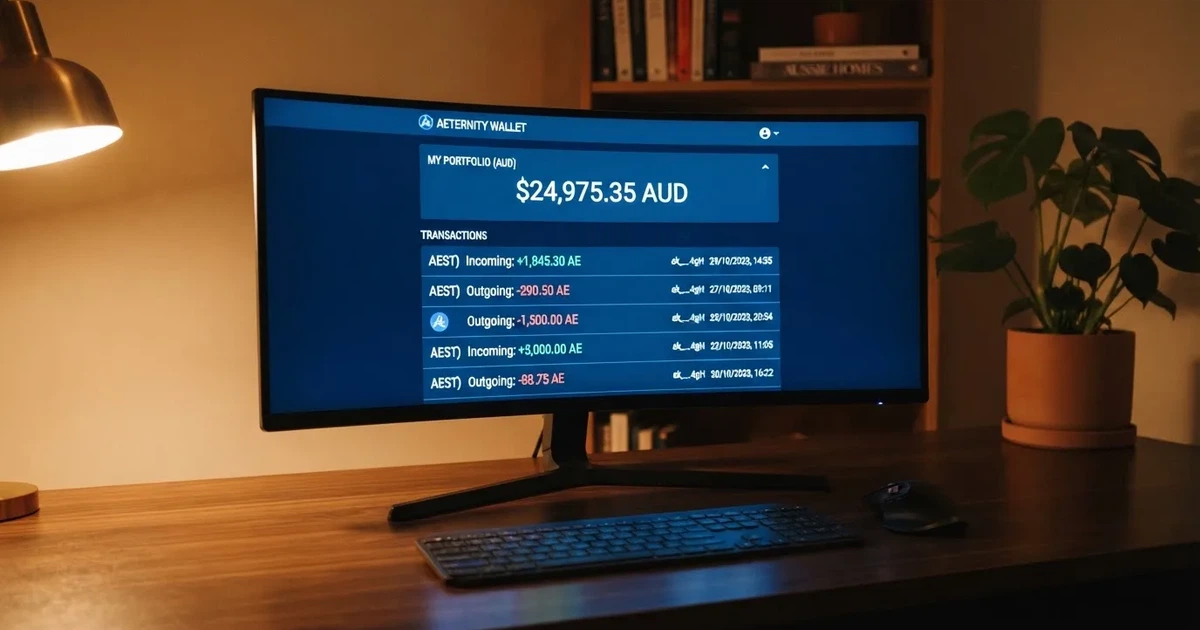
Data current as of 24 September 2026, verified against the ACMA register of formal warnings and the Interactive Gambling Act 2001.
Most of what gets marketed as “Bitcoin pokies Australia” is the same offshore casino product the rest of the offshore industry has been selling for years, repackaged for a search term. The blockchain piece is real and worth understanding on its own terms. The lawful-play piece is the part the marketing copy never quite gets to, and it is the part this page is built around.
Table of Contents
- How blockchain actually fits around the product
- What Australian law says about the product on offer
- What the ACMA has formally warned, and the rate at which it warns
- What offshore Bitcoin pokies sites look like once the marketing is stripped
- The brands the ACMA has acted against, and what their presence on the register tells a reader
- How a Bitcoin deposit interacts with Australian tax
- The shape of an offshore operator’s “anonymous” pitch
- Where this leaves a reader at the keyboard
- Frequently asked questions
How blockchain actually fits around the product
What changes when the deposit rail is Bitcoin
Paying with Bitcoin does not change the casino product. A slot machine running on a Curaçao-licensed server does not look at which currency reached its cashier when the reels spin; it reads a wallet balance and produces an outcome. The difference is felt on the way money moves, not on the way the house edge is taken.

Confirmation time is the most-cited attraction, and it deserves to be understood rather than assumed. A new Bitcoin block is added roughly every ten minutes on average, but the discovery of any individual block is probabilistic — a confirmation may arrive in seconds or stall for considerably longer, with no guaranteed ceiling on the delay. That ten-minute figure is a long-run average, not a service-level promise. Sites that advertise “instant Bitcoin deposits” are relying on the next block being found quickly, and they pocket the lag when it isn’t.
The other thing crypto changes is the marketing surface. Operators pitch anonymity because the rail genuinely permits it — there is no card name attached by default — but the same operators still ask for a Know Your Customer check at withdrawal time. The “no verification” framing describes the deposit, not the cashout, and a reader who has never hit a withdrawal page tends to be surprised by this.
What the chain itself does, and what it doesn’t
Bitcoin’s ledger is maintained by proof-of-work mining: specialised hardware searches for a hash below a difficulty target that readjusts roughly every two weeks so that the average block interval stays near ten minutes. The genesis block was mined on 3 January 2009, after the Bitcoin white paper appeared on a cryptography mailing list on 31 October 2008. The pseudonymous creator, known as Satoshi Nakamoto, has never been publicly identified.
Issuance halves every 210,000 blocks — roughly every four years — until a hard cap of 21 million bitcoin is reached, expected sometime around the year 2140. None of this is unique to pokies. It is the substrate any Bitcoin transaction sits on, and the only relevance to this page is that the price of the unit a player is depositing moves independently of the game it buys. A player who funds an account at A$0.95 worth of Bitcoin per credit and finishes at A$0.84 has not had a bad run at the tables. They have watched the dollar value of their balance move while they played.
This is the part the offshore marketing never quite highlights.
What Australian law says about the product on offer
The Interactive Gambling Act, in plain terms
Online casino games — including online pokies — cannot be licensed in Australia. The Interactive Gambling Act 2001, tightened by the Interactive Gambling Amendment Act 2017, makes it an offence for a provider to offer online casino games, online pokies or in-play betting to a person physically in Australia. The criminal liability sits with the operator, not the individual punter. No state or territory grants an online casino licence; what is licensed in person or remotely is wagering on races and sport placed before the event, lotteries, and keno — much of it under Northern Territory oversight, where the Northern Territory Racing and Wagering Commission regulates 52 of Australia’s online bookmakers despite operating without full-time staff and meeting only once a month in Darwin.
Minimum age for any gambling product in Australia is 18. A player who is under 18, or a site that serves one, has crossed a line that nothing in the offshore marketing is set up to discuss.
What the ACMA has done, and how that translates for a reader
The Australian Communications and Media Authority investigates, issues formal warnings and can direct Australian internet service providers to block illegal gambling sites. As reported in June 2026, 1,751 illegal gambling and affiliate marketing websites had been blocked since the first blocking request in November 2019, and more than 230 unlicensed gambling services had left the Australian market since enforcement was strengthened in 2017. In the same June 2026 round the ACMA asked ISPs to block a further 12 sites: 7Signs, ChromaBet, Donbet, Duospin, Freshbet, Slots Gem, Jacks Club, Lucky Start, Pointsbetz, Spinrise, Vinyl Casino and Wildsino.
What blocking looks like in practice is straightforward: an Australian user typing the domain sees the page fail to load, regardless of the device or the network. The balance a reader had on that site does not get refunded. There is no Australian ombudsman, no local disputes body, and no recourse if a withdrawal is refused. This is the consumer-protection flatness of the offshore market; the blockchain deposit rail does not bring a complaints process with it.
The 2024 payment ban, and where crypto sits inside it
From 11 June 2024, licensed Australian online wagering has been unable to accept credit cards, credit-related products, and digital currency as a deposit method. Penalties for operators breaching this run as high as A$247,500 each. The legal rails for a licensed Australian wagering account are debit card, bank transfer, PayID and Osko, and BPAY.
A digital currency is, in the eyes of this rule, exactly the kind of payment instrument a licensed Australian operator is forbidden to take. The rule was written for the wagering market the law permits — sports and racing — and the casino market it does not. So when a reader sees an offshore site taking a Bitcoin deposit from an Australian IP, the site is operating outside this rule in addition to being outside the broader prohibition on online casino games. Two layers of out-of-scope, sitting on top of each other.
What reform is on the books
The Interactive Gambling Amendment (Gambling Reform) Bill 2026 passed Parliament on 19 August 2026, with the advertising and inducement measures taking effect from 1 January 2027. As of the data date on this page, those measures are law but not yet in force. A “this is now in force” framing published today is, by the date stamp at the top of this page, inaccurate.
What the ACMA has formally warned, and the rate at which it warns
Counting the warnings, and what the count means
The ACMA’s formal-warning register names operators, brands, and dates. Drawing that register together gives a year-by-year picture: in May 2022, warnings covered six brands under Dama N.V. — Bambet, Dazard, Level Up, Rocketplay, Wild Tornado and Cobra Casinos. In 2025 the picture widened: formal warnings covered Bamboo Media (Ignition Casino), Consolutetish S.R.L. (National Casino and Bizzo Casino), EOD Code SRL (Instant Casino), Sterplay Holding Ltd (Casino Intense), and further Dama N.V. brands Woo Casino (March 2025) and Spirit Casino (May 2025). 2026 began with Pulsup Ltd over RocketPlay in March 2026, and continued with Ryker B.V. over Jackbit and CasinOK in April 2026. The pattern is not “a single bad actor, dealt with once”; the pattern is a steady cadence across many operator groups.
The blocking rate, put plainly
The prescribed calculation here is straightforward. The first ACMA blocking request was in November 2019. As of June 2026, the running total of blocked sites stood at 1,751. That puts the rate of blocking at roughly 264 sites per year over the period in question — but the rate is uneven across those years, with the earliest years seeing the heaviest single concentrations of affiliate marketing pages and the more recent years adding operator-front sites at a slower but still steady cadence. The honest reading is a band: somewhere on the order of several hundred sites a year on average across the period since the first blocking round, with materially more blocked in the early enforcement years and a smaller but non-zero ongoing rate. The exact yearly split is not on the public record at this granularity, and any number offered in place of a band would be a fabrication.
The rate matters less as a number than as a sign that the ACMA’s posture has not been to round up the worst offenders once. The register shows an enforcement process that issues warnings, watches for compliance, and adds blocking rounds when the warnings are not heard. A reader who treats any single operator as “the exception” is reading the wrong way through that register.
What offshore Bitcoin pokies sites look like once the marketing is stripped
The product on offer
“Bitcoin pokies” search results point, almost without exception, to offshore casino brands running Curaçao or similar sub-jurisdictional licences. The slot libraries themselves are largely the same ones the broader offshore market runs: third-party studios supplying games that ship identical RTP and volatility profiles to whichever operator pays for the integration. Bitcoin or no Bitcoin, the games are recognisable from each other — that’s how a slot aggregation business works.
Some sites market a “provably fair” label — a hashing protocol the player can supposedly verify against the result of each spin. The label is voluntary, the implementations vary, and the “no verification needed” framing usually refers only to the cash deposit. A Know Your Customer check remains standard at withdrawal. The marketing page describes the deposit experience; the cashout experience is a different product.
The limits, the bonuses, the terms
Offers on these sites are typically deposit-gated: a first deposit pulls in a percentage match, with a wagering multiple expressed against the bonus rather than the deposit. Wagering multiples in this market are steep by licensed-market standards; max-cashout caps are common; game weighting routinely discounts table games and live dealer to a fraction of their slot contribution. None of this is unique to Bitcoin-accepting sites — it’s the standard offshore casino shape — and the audit applies the same arithmetic to it. The bonus’s real cost is the turnover requirement times the house edge; what an offer is “worth” depends on what kind of player can clear it without crossing the cap first.
Bitcoin does not change this arithmetic. The deposit rail affects speed, friction, and the user’s exposure to the unit’s price movement; it does not change the house edge on the slot or the wagering multiple on the bonus. A bonus that looks generous against the deposit but caps winnings at a fraction of theoretical maximum value is the same shape regardless of which currency it pays in.
What offshore status means for the reader, in concrete terms
An offshore site’s relationship with an Australian user is, in plain language, no relationship enforceable under Australian consumer law. The wallet holds the funds; the operator controls the wallet. If the operator is the subject of an ACMA warning and blocks its Australian-facing domain in response, the funds on the account may or may not be returned at the operator’s discretion. If the operator is the subject of an ACMA blocking request — the 1,751 sites since November 2019 include many in this category — the domain stops resolving for Australian internet connections, and any balance on the site is not protected by Australian rules.
The November 2019 starting point also matters for the wording. The first blocking request was the moment this enforcement approach became the ACMA’s standing answer to offshore offers, and the running total in June 2026 is the total that has accumulated since. The band of several hundred sites blocked per year is the band a reader reading this page can reasonably expect going forward; the cadence has not been one-off.
The brands the ACMA has acted against, and what their presence on the register tells a reader
Each brand below is named in a formal warning published by the ACMA. The list is not a recommendation, and the column “subject support” reflects what research could confirm about whether the brand handles Bitcoin specifically. None of the names below is licensed to offer online casino games or online pokies to a person in Australia; this is the same prohibition in every row.
| Brand | ACMA action and date | Operator named by the ACMA | Subject support |
|---|---|---|---|
| RocketPlay | March 2026 (Pulsup Ltd); earlier May 2022 (Dama N.V.) | Pulsup Ltd; Dama N.V. | — |
| Level Up Casino | May 2022 | Dama N.V. | — |
| Woo Casino | March 2025 | Dama N.V. | Listings report Bitcoin support |
| Spirit Casino | May 2025 | Dama N.V. | — |
| National Casino | July 2025 | Consolutetish S.R.L. | Listings report crypto support |
| Bizzo Casino | July 2025 (Consolutetish S.R.L.); earlier 2022 (TechSolutions Group) | Consolutetish S.R.L.; TechSolutions | — |
| Ignition Casino | July 2025 | Bamboo Media | — |
| Instant Casino | February 2025 | EOD Code SRL | — |
| Jackbit | April 2026 | Ryker B.V. | — |
| Casino Intense | April 2025 | Sterplay Holding Ltd | — |
| Sky Crown | September 2022 | Hollycorn N.V. | — |
Several rows repeat the same operator group. Dama N.V. appears across four rows in the list; TechSolutions / Consolutetish S.R.L. recur under Bizzo and National Casino; Hollycorn N.V. and Bamboo Media each appear on the warning register more than once across adjacent brands. The register is written brand by brand because that’s how ACMA publishes it, but the underlying population of operators is smaller than the row count suggests.
The cells that read “Listings report Bitcoin support” should be read narrowly: they reflect what third-party listings and aggregator pages say, not any confirmation from the operator. Research found no primary-source confirmation that Woo Casino or National Casino handles Bitcoin end-to-end in the way their affiliates describe; the listing data is what it is, and the operator’s own position is not directly verifiable.
RocketPlay: a brand with two formal warnings on file
RocketPlay has been the subject of two ACMA warnings of different operators over the same year group — Dama N.V. in May 2022, and Pulsup Ltd in March 2026 when the ACMA wrote to the operator over RocketPlay.com.au. The four-year gap between them is meaningful: this is a brand that has changed hands at the operating-company level, and neither operating company has been on the Australian side of the law. The brand’s reputation in trade listings is built around volume; its presence in the warning register is built around repeat appearance.
For a reader weighing whether to use the brand, what the register shows is not “a bad year” but a trajectory. A punter depositing on RocketPlay from inside Australia is depositing on a brand both the brand’s former operator and its current operator have been warned about. Any balance on that account is exposed to the same enforcement block the 1,751-site running total reflects.
Level Up Casino: the 2022 warning that still defines the brand’s status
Dama N.V.’s May 2022 warning covered six casino brands. Level Up Casino is one of them. A brand that was the subject of a 2022 ACMA formal warning and is still being marketed to Australian users four years later is, on the ACMA’s own publication, not compliant. Any Bitcoin-accepting framing it now deploys is added to a brand whose legal status inside Australia was decided in 2022 and has not been revised.
Woo Casino and Spirit Casino: same operator, successive warnings
Both Woo Casino (March 2025) and Spirit Casino (May 2025) were named in ACMA formal warnings to Dama N.V. The two-month gap is the cadence of Dama N.V. brands that have continued to accept Australian users despite an existing 2022 warning on other related brands — a pattern the register makes visible once a reader looks across the years. The Dama N.V. group accounts for a non-trivial fraction of the warning register’s row count.
National Casino and Bizzo Casino: a brand on the register twice
National Casino was named in the July 2025 warning to Consolutetish S.R.L.; Bizzo Casino was named in the same July 2025 warning, and had already been the subject of an earlier 2022 formal warning to TechSolutions (CY) Group Limited and TechSolutions Group N.V. The repetition across operator names suggests a familiar pattern: a brand’s operating entity changes when one formal warning becomes inconvenient, the brand itself does not. National Casino’s listings report acceptance of various cryptocurrencies as deposit methods; the ACMA’s standing on the brand’s right to offer any of those products to Australians has not changed.
Ignition Casino: a warning through an unusual operating-company name
The July 2025 warning to Bamboo Media over Ignition Casino is a reminder that the ACMA writes to the entity it understands to be offering the service, and that the entity name is not always the brand name a reader recognises. The brand itself positions for an Australian-facing audience; the ACMA’s correspondence sits with an operator a punter would not otherwise encounter. The warning stands regardless of who reads it on the receiving end.
Instant Casino: a February 2025 warning
The ACMA’s February 2025 warning to EOD Code SRL over Instant Casino is the entry by which the brand earns a place in this list. Its acute moment is the date; the underlying prohibition is the same. Instant Casino’s operator was written to directly; that letter sits in the public record, and the brand’s invitation to Australian users continues in spite of it.
Jackbit and CasinOK: a single warning covering two brands
Ryker B.V. was written to in April 2026 over Jackbit and CasinOK in a single formal action. A warning covering two brands in one letter is a useful detail: it tells a reader that the ACMA’s register is conservative — that one action sometimes covers more than one front, and the count of “warnings issued” understates the count of “brands affected.”
Casino Intense: the April 2025 warning
Sterplay Holding Ltd was written to in April 2025 over Casino Intense. The pattern in the row is the same as the rows around it. A reader who recognises only one or two brand names in this list is being introduced to the rest through the register, which is where they sit in the ACMA’s view.
Sky Crown and Blue Leo: a warning bundled across two brands
The 2022 ACMA formal warning to Hollycorn N.V. covered both Sky Crown and Blue Leo. Sky Crown is the brand most associated with this warning on the Australian-facing side; Blue Leo is the second. The same shape of operator-group behaviour visible in the Dama N.V. row count appears here as well.
How a Bitcoin deposit interacts with Australian tax
The ATO’s classification, and why it matters for a player
The Australian Taxation Office classifies crypto assets — Bitcoin included — as property, not as money or as foreign currency. A sale for Australian dollars, an exchange for another crypto, and a spending of crypto at a merchant are all disposals for capital gains tax purposes. Most disposals are CGT events.
A 50% CGT discount currently applies to crypto assets held for longer than 12 months. From 1 July 2027 the flat 50% discount is being replaced by CPI indexation of the cost base plus a 30% minimum tax rate on net capital gains. A player who buys Bitcoin at one price, holds through a market move, and uses the gains to fund a session on an offshore site has had a CGT event — the moment the Bitcoin leaves the player’s wallet into the casino’s wallet is the moment of disposal for ATO purposes.
The personal-use carve-out, and what it does not do
The ATO disregards capital gains on crypto assets held as personal use assets, but only when the asset cost A$10,000 or less to acquire. Holding a crypto asset as an investment takes it outside this exemption. Capital losses on personal use assets are disregarded for CGT purposes — they cannot be used to offset other capital gains or carried forward to a later income year. The carve-out is shaped for occasional, low-value use; a player depositing meaningful bankroll amounts does not fit inside it.
AUSTRAC registration, and what it says about the exchange side of the rail
Under Australia’s AML/CTF Act, any business providing digital currency exchange services to Australian customers must register with AUSTRAC as a Digital Currency Exchange (DCE) provider, regardless of where the business is incorporated. From 31 March 2026 that registration requirement expanded beyond crypto-to-fiat exchange to cover crypto-to-crypto platforms, digital asset transferors, digital asset custody providers, and stablecoin issuers and distributors. Operating unregistered is a criminal offence.
What this means for a player is that the on-ramp — the exchange through which the Bitcoin is acquired — is regulated in Australia even when the destination is not. The audit trail that flows from a registered exchange is the audit trail a player has if the ATO is interested; the audit trail that flows through an unregistered service is what the AML/CTF Act is designed to make traceable.
The shape of an offshore operator’s “anonymous” pitch
The marketing word is “anonymous.” The actual experience is something else. Bitcoin transactions are pseudonymous, not anonymous: every transaction is recorded on a public ledger, address balances are visible to anyone running a chain explorer, and clustering techniques routinely link addresses to real-world identities once a single off-ramp or exchange interaction appears in the chain’s history. A casino’s “we don’t ask for ID” framing describes what the cashier page does at the moment of deposit. The withdrawal page is a different product; an offshore operator wanting to manage its own fraud risk — and to comply with whatever jurisdiction’s rules its own licence nominally follows — still needs to verify the player before sending a significant amount elsewhere.
The audience being pitched “anonymous Bitcoin play” is being told two things at once: the part about Bitcoin is technically true, and the part about anonymity is unreliable once the player tries to cash out. The audit principle is that the marketing piece describes the deposit rail, while the casino’s compliance posture describes the cashout rail. They meet at the operator’s compliance team’s discretion.
Where this leaves a reader at the keyboard
What’s licensed and where the rail closes
Pokies, played on a licensed Australian venue’s terminal or in a club’s gaming room, are the only lawful way to play pokies inside Australia. Online, the licensed offering is wagering on sport and racing before the event; the deposit rails that work for licensed wagering — debit card, bank transfer, PayID and Osko, BPAY — close when the question becomes about a casino or a slots product. Adding Bitcoin to a deposit does not reopen a category that law has closed.
What responsible play looks like at this product
BetStop, the National Self-Exclusion Register, has been live since August 2023. It binds only Australian-licensed online and phone wagering services; an offshore casino is not connected to it. A self-excluded punter can still reach an offshore casino; that is a hard limitation of where BetStop can reach, and a punter who has self-excluded and is gambling on offshore sites needs to read that limitation as something they have to manage themselves, not as something the register will manage for them.
State-level self-exclusion registers — the Victorian one, the New South Wales one — apply inside their respective venues, with the same scope question when the product moves online. The National Gambling Helpline is 1800 858 858, free and 24/7, with chat available at Gambling Help Online. The number is the same wherever the punter is — it is one of the few numbers that works across every state border — and the chat option exists for readers who would rather type than talk.
What this page is, and what it is not
This page describes what the market is, what regulators have done, and what the offshore pitch actually delivers. It does not recommend an operator. Treating it as a recommendation page is reading past the table it has just shown: every brand named is there because the ACMA wrote to them about offering a prohibited service to Australians. A reader who has decided to use one anyway is making the call themselves, with the rest of the page making sure the call is informed.
Frequently asked questions
Does paying with Bitcoin make an offshore pokies site legal for Australians to use?
No. The currency a player uses to deposit has no bearing on whether the operator is licensed to offer online pokies to a person in Australia. Online casino games are prohibited under the Interactive Gambling Act 2001 regardless of payment rail.
How long does a typical Bitcoin transaction take to confirm?
Bitcoin blocks are added roughly every ten minutes on average, but the timing of any individual confirmation is probabilistic. There is no guaranteed minimum or maximum; a transaction can confirm in well under ten minutes or wait considerably longer.
Why is block confirmation time for Bitcoin described as probabilistic rather than fixed?
Difficulty readjusts every two weeks to keep the long-run average block interval near ten minutes, but the discovery of any individual block is a random process over miners’ hash power. The average is therefore a long-run target, not a service-level promise for any given transaction.
Can licensed Australian pokies venues accept cryptocurrency as payment?
No. From 11 June 2024 licensed online wagering has been barred from accepting digital currency, and the same prohibition reaches any product an Australian venue offers. A licensed Australian venue is a debit-card, bank-transfer, PayID/Osko or BPAY environment; cryptocurrency is not in that set.
What risk does price volatility add to holding Bitcoin before it’s used anywhere?
Bitcoin’s price moves independently of whatever the user is buying with it. A player who buys Bitcoin at one price and spends it later has had a CGT event regardless of whether the spend was at a merchant or at a gambling site, and the difference between the purchase price and the eventual use price is part of the cost or gain on that disposal.
Created by the ”Casino No Wager Hub” editorial team.