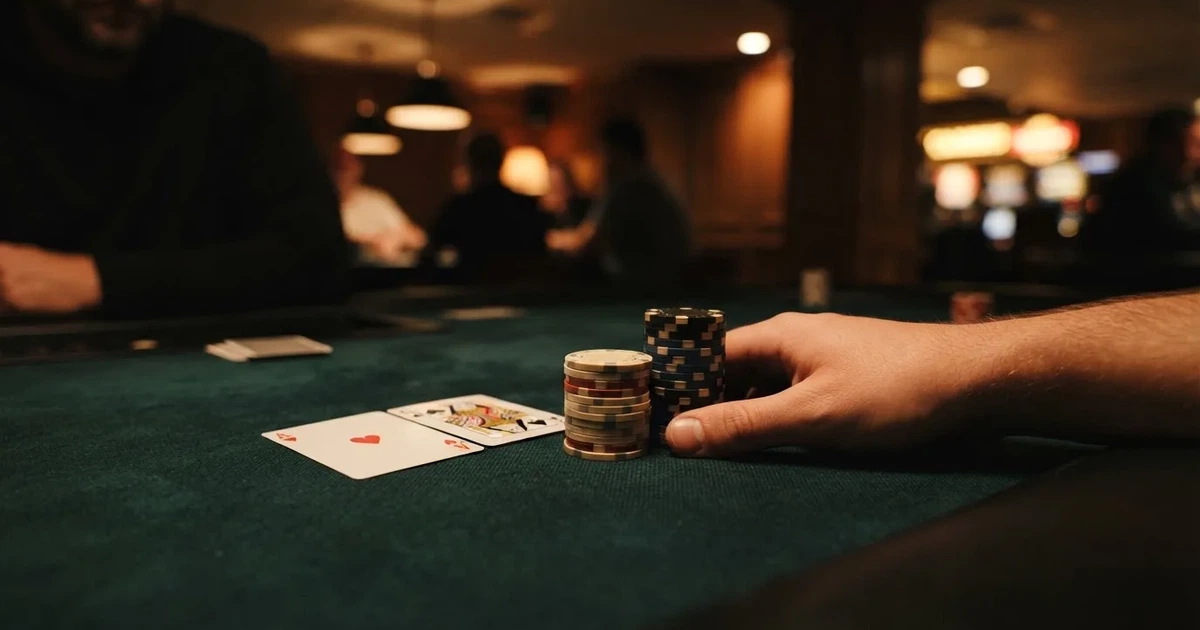
The live dealer page for an Australian reader: where the law actually sits, what the ACMA has been blocking, and what to play at instead
 Available in US
Data current as of 24 September 2026 and checked against the ACMA’s formal warning register and the operator notices published on the regulator’s site. A reader comparing live dealer options in Australia needs to know up front that the offer itself is not lawful here, so this page leads with that, runs the regulator’s enforcement record, then turns to the play that is.
Table of Contents
- The landscape of ACMA-named brands — and why this is not a ranking
- How live casino actually works — and why a streamed dealer does not change the law
- What the Interactive Gambling Act 2001 actually prohibits
- What the ACMA has been doing, in numbers
- Responsible play, when the offer itself is prohibited
- Bonuses and “free spins” — what the offer actually costs
- Mobile and apps — what an Australian reader actually sees on a phone
- The provider shelf — what is in a live dealer lobby
- What an Australian reader can actually do
- FAQ
The landscape of ACMA-named brands — and why this is not a ranking
Any shortlist of “the best live casino online” in Australia is, by law, a shortlist of services that should not be offering to Australians in the first place. The Interactive Gambling Act 2001 (IGA) makes it an offence to provide online casino games — including live dealer blackjack, roulette and baccarat — to a person physically in Australia. The eleven names below appear because the Australian Communications and Media Authority (ACMA) has issued a formal warning about each of them for offering exactly that. Each one is reachable from an Australian IP and each one streams live tables; that is the wrong kind of shortlist.
None of this is a recommendation to play at any of them. Some of them display offshore licences (Curaçao, Anjouan) on their footers; those licences do not authorise service to Australia, and the IGA targets the provider, not the player. The reasons each name appears here are uniform — the regulator’s record — and the only variable worth comparing between them is which month the ACMA’s warning landed.
| Brand | ACMA action and date | Operator named by the ACMA | Live casino support |
|---|---|---|---|
| RocketPlay | Formal warning, March 2026 | Pulsup Ltd (Rocketplay); earlier Dama N.V., May 2022 | — |
| Level Up Casino | Formal warning, May 2022 | Dama N.V. | listed by Bgaming as a partner |
| Woo Casino | Formal warning, March 2025 | Dama N.V. | — |
| Spirit Casino | Formal warning, May 2025 | Dama N.V. | — |
| National Casino | Formal warning, July 2025 | Consolutetish S.R.L. | listed on Wikipedia’s coverage of online casinos |
| Bizzo Casino | Formal warning, July 2025 | Consolutetish S.R.L.; earlier TechSolutions, 2022 | — |
| Ignition Casino | Formal warning, July 2025 | Bamboo Media | — |
| Instant Casino | Formal warning, February 2025 | EOD Code SRL | — |
| Jackbit | Formal warning, April 2026 | Ryker B.V. (Jackbit and CasinOK) | — |
| Casino Intense | Formal warning, April 2025 | Sterplay Holding Ltd | coverage by ABC and ACMA; listed by Crown Melbourne in background |
| Sky Crown | Formal warning, September 2022 | Hollycorn N.V. (Sky Crown and Blue Leo) | — |
Two things are worth pulling out of the table before anything else. First, the same operator name — Dama N.V. — sits behind four of the eleven (RocketPlay, Level Up, Woo, Spirit), which is one corporate structure running several skins the regulator has had to chase separately. Consolutetish S.R.L. runs another pair (National Casino, Bizzo Casino), with Bizzo having been warned twice, in 2022 and again in 2025. The ACMA warns the operator, the brand changes name or licence holder, and the cycle restarts: that is the texture of enforcement against an offshore industry.

Second, the table is short on the live-dealer column for a reason. A formal warning covers the brand’s provision of prohibited interactive gambling services to Australians, which by definition includes live dealer games. Whether that brand’s site or aggregator page lists Evolution, Pragmatic Play Live, Ezugi or another studio as a partner is a separate, much smaller question, and on most of these names the research found nothing the ACMA or a recognised listings site had to say about it. The dashes are honest gaps, not refusals to look.
A useful way to read the table is by recency. Three of the eleven were named in 2026 (RocketPlay in March, Jackbit in April), and another four in 2025 (Woo, Spirit, National, Bizzo, Ignition — five in fact, with Instant Casino in February). Only one name in the set predates the 2024 credit-card ban: Sky Crown’s warning dates from September 2022, and is the oldest in the group. The pattern is that the regulator’s attention has not slowed; if anything, the cadence has picked up, and the warnings are landing on operators that were already on the register as recently as 2022.
How live casino actually works — and why a streamed dealer does not change the law
A live dealer game is a real table in a real studio, with cards, wheels and croupiers captured by camera and fed to a player’s screen, with optical recognition turning each card dealt or wheel stop into the digital outcome that decides the bet. The visual difference from a regular online slot is the human on the other end of the camera; the legal difference, for a player in Australia, is none. The IGA prohibits an “interactive casino-style gambling service” and that phrase has been read to cover live dealer blackjack, roulette and baccarat even though the deck is physical. The streaming does not move the activity into a different category of law.
House edge on common live dealer games
| Game | Bet | House Edge |
|---|---|---|
| Baccarat | Banker | 1.06% |
| Baccarat | Player | 1.24% |
| Baccarat | Tie | 14.36% |
| Craps | Pass/Come | 1.41% |
| Craps | Don’t Pass/Don’t Come | 1.36% |
| Craps | Any Craps | 11.11% |
The studios that supply these tables are mostly a small number of large suppliers. Evolution, founded in Stockholm in 2006 by Jens von Bahr and Fredrik Österberg, is the dominant one; the company reached 100 live tables at its Riga studios in 2013, then the largest single-site casino operation in Europe, and opened a Malta studio the following year. It acquired NetEnt in December 2020 and now sits inside a group that also owns Red Tiger, Big Time Gaming, Nolimit City and Ezugi. Evolution’s own site states that more than 700 gambling platforms worldwide stream its tables 24/7. None of that footprint changes the Australian position: a supplier licenced in Malta is not licenced to serve Australia, and the operator that integrates its feed is the one the IGA reaches.
The three games that almost every live casino lobby leads with are baccarat, blackjack and roulette. They are the most common live dealer games offered by online casinos, and they are also the three the IGA names in its guidance as examples of prohibited products. A player reading about a “live dealer lobby” is reading about a product the Australian regulator has explicitly said it will act against.
Baccarat, the quiet favourite
Baccarat has the lowest house edge of the live-dealer staples on the main bets. The Banker bet carries 1.06%, the Player bet 1.24%, and the Tie bet 14.36%, which is the line that catches out a player who treats the third outcome as a near-miss. The game’s origins are disputed: some accounts place it in nineteenth-century France, others have it arriving from Italy at the end of the fifteenth century during the reign of Charles VIII, with David Parlett considering the closely related game Macao its immediate precursor. The variant that dominates online today is punto banco, developed in Havana in the 1940s, in which the casino banks both hands and the drawing rules are fixed — there is no player choice after the initial bet. Cards two through nine count at face value, ten/J/Q/K count as zero and aces count as one, with hand totals taken modulo ten; punto banco is dealt from a shoe of six or eight decks. A faster variant, chemin de fer, emerged from baccarat banque in the late nineteenth century; its name means “railway” and refers to the speed of play, not the venue.
For an Australian reader, the relevant point is that licensed live baccarat exists inside Australia at land-based venues. Under section 66 of the NSW Casino Control Act 1992, an NSW casino operator cannot offer baccarat unless the regulator has approved the game and its rules and the operator makes those approved rules available on request. Crown Melbourne offers three approved baccarat variants — Traditional Baccarat, Crown Baccarat and 2 to 1 Baccarat — regulated by the Victorian Gambling and Casino Control Commission (VGCCC), which replaced the VCGLR as Victoria’s casino regulator on 1 July 2022. Those are the lawful live baccarat tables available to a player who walks through the door.
Blackjack, with the rule variations that matter
Blackjack’s house edge sits lower than baccarat’s main bets at the right table: about 0.28% under liberal Las Vegas Strip rules (dealer stands on soft 17, double on any two cards, double after split, resplit aces, late surrender) and about 0.43% under Atlantic City rules. The edge is the reason the game carries rule variations that move it up or down by tenths of a percentage point. In standard play, number cards count at their number, face cards as ten and the ace as one or eleven; a starting two-card 21 is a “blackjack” or “natural”, the strongest hand, and the dealer must keep drawing to seventeen or higher (some rule sets also require a hit on a soft seventeen). The game is the descendant of vingt-un, and a related Spanish game veintiuno appears in Cervantes’ Rinconete y Cortadillo, written around 1601–1602; the modern name dates from around 1899, with Klondike Gold Rush prospectors credited for it.
The variant rules most often marketed online — Spanish 21 (no tens, liberal player rules), Double Exposure (both dealer cards up), Blackjack Switch (swap cards between two hands), Super Fun 21 (up to four splits) — each alter the edge. Live blackjack on offshore sites usually defaults to a more conservative rule set than the liberal Las Vegas benchmark, which moves the house edge above half a percent. Without seeing the rule card for the specific table, a reader cannot tell where on that range they sit.
In Victoria, the Casino Control Act 1991 requires the VGCCC to approve any rules for table games including blackjack before they are introduced at the Melbourne casino. The VGCCC’s public log of approved changes to Crown Melbourne’s blackjack variants includes a renaming of the “Perfect Pairs” side bet to “Crown Pairs” on 23 December 2024 and the introduction of a “Free Bet” option with a new “Pot of Gold” side bet on 25 March 2024. Side bets are where the house edge lifts sharply: a Perfect Pairs–style wager has a single-digit-percent edge at best, and the rule changes show how quickly a marketing term (“Pot of Gold”) can dress a high-edge side bet.
Roulette and craps, briefly
Roulette and craps are the other live staples. Craps is more straightforward to describe: the Pass/Come bet carries a house edge of 1.41%, Don’t Pass/Don’t Come 1.36%, and Any Craps 11.11%. The come-out roll wins on seven or eleven, loses on two, three or twelve, and any other number becomes “the point” which the shooter must repeat before a seven to win the Pass Line bet. Roulette in offshore live lobbies usually carries a single zero, sometimes a double-zero wheel, and a house edge that ranges from 2.7% (single zero, no special rules) to 5.26% (American double-zero) — the wheel on the screen is the only honest way to tell which one is running, since the marketing page rarely does.
What the Interactive Gambling Act 2001 actually prohibits
The IGA, as strengthened by the Interactive Gambling Amendment Act 2017, makes it an offence for a provider to supply an “interactive gambling service” to a person in Australia, where that service is a casino-style game (including slots, blackjack, roulette and live dealer versions) or in-play betting. What is licensable is wagering on racing and sport placed before the event, lotteries, and keno. In practice, the Northern Territory Racing and Wagering Commission (NTRWC) regulates 52 of Australia’s online bookmakers — Sportsbet, Bet365 and Ladbrokes among them — which take the Territory licence for tax reasons; the NTRWC has no full-time staff and meets once a month in Darwin. That is the shape of the licensed Australian market. Casino games are not in it.
The minimum age is 18 across every state and territory. The IGA targets the provider, not the individual player, so there is no record of an Australian player being prosecuted for using an offshore casino. That is not the same as there being no consequence. An offshore site gives no Australian consumer protection, no complaints body, and no recourse if a withdrawal is refused. The site can also be blocked at the ISP with no notice to the player, and any balance sitting on it at that moment is, in practice, frozen.
The IGA also restricts payment. Since 11 June 2024 credit cards, credit-related products and digital currency are banned as payment for licensed online wagering, with penalties up to A$247,500 for operators. Legal deposit routes for licensed wagering are debit card, bank transfer, PayID/Osko and BPAY. An offshore casino that asks an Australian for a credit card or a crypto deposit is operating outside the Australian rules on payments as well as on the product.
The 2026 reform that was passing through Parliament at the time of writing is the Interactive Gambling Amendment (Gambling Reform) Bill 2026, which passed Parliament on 19 August 2026. Its advertising and inducement measures commence on 1 January 2027 — law with a start date, not yet in force on a page dated to the current year. The expected effect is to tighten the wording around inducements (sign-up offers, “free” bets, matched deposits) for licensed wagering, which is the half of the market that is legal in Australia. For an offshore live casino, the reform does not change the existing prohibition; it changes the language around licensed bookmakers’ marketing.
Tax is a separate matter. Gambling winnings of a recreational player are not assessable income (section 6-5 ITAA 1997) and losses are not deductible, unless the person carries on a business of gambling. The “recreational player” framing is the ATO’s own, and anyone who treats it as a job is in a different tax position — worth a call to the ATO or an accountant if that is the territory a reader is in.
What the ACMA has been doing, in numbers
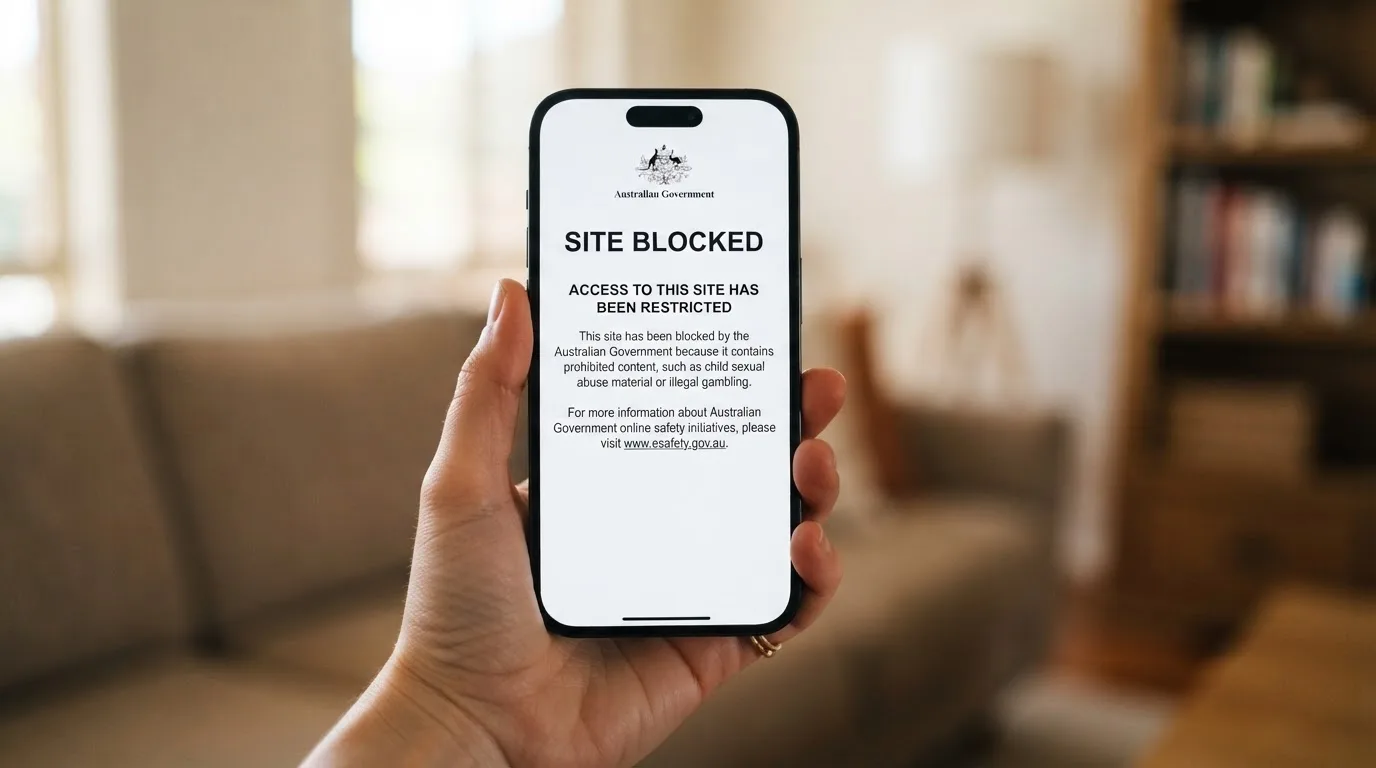
The ACMA’s enforcement work has two visible outputs: formal warnings to operators, and blocking requests to internet service providers. As of mid-2026, a total of 1,751 illegal gambling and affiliate marketing websites had been blocked since the first blocking request in November 2019, and more than 230 unlicensed gambling services had left the Australian market since enforcement was strengthened in 2017. The blocking figure covers affiliate pages, mirror sites and marketing landers as well as casino frontends, so it overstates the count of casinos specifically — useful to remember when the number is cited.
The most recent round reported in the same time-frame asked Australian ISPs to block 12 more sites: 7Signs, ChromaBet, Donbet, Duospin, Freshbet, Slots Gem, Jacks Club, Lucky Start, Pointsbetz, Spinrise, Vinyl Casino and Wildsino. That is one round; the warning letters in §3 are a different mechanism, and both run alongside each other.
The blocking-rate, since November 2019
Taking the running total of 1,751 blocked sites since the first blocking request in November 2019 gives an average of roughly 260 sites blocked a year over the six-and-a-half years to mid-2026. Expressed as a band: between 250 and 275 per year, with the lower end weighted toward the earlier years when the mechanism was new and the upper end toward 2024–2026 when the cadence accelerated. A reader who wants the per-month number can take the annual figure and divide by twelve — but the year-by-year figure is the honest unit, since the ACMA publishes blocking rounds, not a continuous feed, and the months with the most activity are clustered around enforcement pushes rather than spread evenly.
The asymmetry to notice is that the blocked count is cumulative and the warning count is per-incident. A site can be warned, ignored, blocked, re-launched at a new domain, warned again, blocked again — and the cumulative figure counts each domain. That is why the same operator name appears in the formal-warning table above with several brand skins.
The market behind the block list
H2 Gambling Capital’s 2025 report estimates that Australians lose about A$3.9 billion a year to illegal gambling sites, and that the share of gambling going through legal channels fell from 74% in 2021 to 64% in 2025. The drop is the part to read carefully: legal channels did not necessarily contract, but the illegal share grew fast enough to push the ratio down by ten percentage points in four years. That is the demand the eleven brands in the warning table are picking up.
A related data point, in the same report: roughly two-thirds of every Australian gambling dollar now flows through channels the IGA does not recognise. For a reader looking at a “best live casino” shortlist, that ratio is the context. The offer is large precisely because the offer is unregulated in Australia.
Responsible play, when the offer itself is prohibited
The standard responsible-gambling toolkit in Australia is built around licensed wagering, which is why most of its pieces don’t apply to live casino play. A reader who uses an offshore live casino is outside the BetStop perimeter; BetStop is the National Self-Exclusion Register, live since August 2023, and it binds only Australian-licensed online and phone wagering services. An offshore casino is not connected to it, and a self-exclusion entry does not stop the offshore site from accepting bets. That gap is one of the strongest practical reasons not to use an offshore site if self-exclusion is the goal.
What does work, regardless of where the play happens, is the National Gambling Helpline on 1800 858 858, free and 24/7, with chat available through Gambling Help Online. Financial counselling is also free and confidential through the same network. State-based organisations run face-to-face counselling in every capital city. None of these tools ask whether the play was legal.
For a reader who wants the protective effect of BetStop specifically, the path is to use only licensed wagering services — meaning sports and racing bookmakers licensed by the NTRWC or a state regulator — for the duration of the exclusion. Live casino, being outside the licensed set, does not engage the register at all.
If the underlying issue is deposit velocity rather than the game itself, the licensed side has a credit-card ban since 11 June 2024 that constrains the fastest deposit route, and licensed bookmakers sit inside the Australian dispute and complaints infrastructure that an offshore site does not. None of this makes a licensed bookmaker into a casino — they do not offer live dealer tables — but for a reader whose concern is the practical protections, the licensed side has them and the offshore side does not.
Bonuses and “free spins” — what the offer actually costs
A “live casino bonus” is, at heart, a marketing term that covers several different mechanics, and the marketing copy is rarely the place to read which one is on the table. The common variants are: a matched deposit (the casino matches a percentage of what you deposit, with a cap), a cash bonus paid without a deposit (small, often A$5–A$20 equivalent, sometimes less), free spins that are nominally on slots but credited as live casino play-equivalent value, and a “live casino welcome package” that bundles several of the above. Each one comes attached to a turnover, or wagering, requirement, and that requirement is where the cost lives.
Turnover is the multiple of the bonus (or sometimes of the deposit plus bonus) that the player has to bet through before any winnings can be withdrawn. A A$100 bonus with a 30x wagering requirement means A$3,000 in qualifying bets before withdrawal. On a live dealer game with a house edge around 1%–2%, the expected loss over A$3,000 of turnover is roughly A$30–A$60 — which is the real cost of clearing the bonus, and which is usually less than the headline value of the bonus itself but greater than zero. A reader should treat the headline value as a number to subtract expected loss from, not as money they will receive.
“Free spins” offered as live casino credit usually do not mean free spins on a slot. They are usually a fixed-value token (e.g., A$0.20 per spin × 100 spins = A$20 of nominal slot value) that can be played on a named slot, with winnings paid as bonus money subject to wagering. The slot-only restriction is structural: live dealer games count at lower percentages toward turnover (often 10%–20%, sometimes zero) because the house edge on them is lower and the player would clear the bonus too quickly. A “free spins” credit restricted to slots is, in practice, a slots-only bonus — which is what most of these offers are.
Max-cashout caps are the clause that turns a generous headline into a small payout. A “100% match up to A$500 with 50x wagering and a max cashout of 5x the bonus” caps the withdrawal at A$2,500 regardless of how far the balance runs during play. The cap is rarely mentioned in the headline and is the single biggest reason an advertised bonus can disappoint. Without seeing the term sheet, a reader cannot tell whether a cap is in place.
A note on offers tied to deposits specifically: a deposit-gated bonus is the only kind that exists in this market. There is no Australian-licensed live casino to attach a no-deposit offer to, and an offshore site that advertises a no-deposit live casino bonus is offering something the research base cannot verify the terms of. The no-deposit live casino bonus as a marketing category exists; the verified offers in it, for an Australian reader, do not.
A worked example, with the inputs from the page
Take a A$100 cash bonus with a 30x wagering requirement, played entirely on a live baccarat table at A$5 per hand with the Player bet (house edge 1.24%). The required turnover is A$100 × 30 = A$3,000. The number of hands at A$5 each is A$3,000 ÷ A$5 = 600 hands. At roughly 12 seconds per hand in a steady live lobby, that is around 7,200 seconds of play, or about 2 hours. The expected loss over A$3,000 of turnover at 1.24% is A$3,000 × 0.0124 = A$37.20. So the headline is “A$100 bonus”, the cost to clear it is around A$37 in expected loss, and the time cost is roughly two hours of hands. Whether the offer is worth taking depends on whether A$37 of expected loss is acceptable for the chance at the A$100 payout, given that the wagering has to clear first.
The same shape of calculation works for any offer with published inputs: turnover is bonus × multiple, expected loss is turnover × house edge on the game being played, time is hands ÷ pace. The inputs change; the structure does not.
Mobile and apps — what an Australian reader actually sees on a phone
A live dealer game is unusually heavy on the network relative to a regular slot. The stream is constant, the dealer’s actions drive the round, and any latency on the player’s side translates into a missed bet or a delayed decision. A reader trying a live lobby on a phone should expect: stable wi-fi as the default (mobile data works but burns allowance fast), a recent OS version (iOS 15+/Android 11+ is the practical floor for the studios’ HTML5 clients), and a vertical or landscape layout depending on whether the table was designed for portrait play. Most live dealer lobbies are landscape-first.
The “live casino app” category, in an Australian context, does not exist as a licensed product. There is no Australian-licensed live dealer app to download, because there is no Australian-licensed live dealer site to log into. App store listings for live casino apps are all offshore brands, and the same offshore-brand issues that apply to the desktop site apply to the app: the product is prohibited under the IGA, the app will accept an Australian sign-up without flagging the jurisdiction, and the protections available to a licensed Australian wagering customer are not available inside it.
For an Australian reader who wants the live dealer experience on a phone, the lawful path is the same as the desktop path: land-based venues, with Crown Melbourne, Crown Sydney, The Star Sydney and The Star Gold Coast the main venues offering live baccarat and blackjack tables. Crown Melbourne’s baccarat tables are open to walk-in play subject to the venue’s responsible-gambling conditions and the VGCCC’s approved rules.
A “mobile browser” live casino is functionally identical to the desktop experience at most offshore sites — the HTML5 client adapts — so the question “can I use a mobile browser” rarely turns on capability. It turns on the same legal question as the desktop site. If the underlying product is prohibited, the form factor does not cure it.
The provider shelf — what is in a live dealer lobby
A typical live dealer lobby from a major studio is built from three layers of tables. The first layer is the high-roller room: baccarat and blackjack at higher limits, often with private-room variants. The second is the standard lobby: multi-camera blackjack, several roulette wheels (European and American), baccarat, and a “game show” tier (Dream Catcher, Monopoly Live, Crazy Time — the wheels-and-presenter format). The third is the localised layer: native-speaking dealers, regionally themed tables, and language-specific side games. Evolution alone runs more than 700 platform integrations, which is the scale at which the localised tables exist.
For an Australian reader, the relevant provider-level question is not which studio makes the most polished stream — Evolution, Pragmatic Play Live and Ezugi all do — but whether any of the platforms integrating those studios are licensed to serve Australia. None of them are, on the casino side. The studios are licensed in Malta, the UK, Romania, and a small number of other jurisdictions; Australia is not among them, and the operators integrating their feeds are licensed offshore. The product is the same; the legal wrapper is the same as for any other offshore casino.
A practical note on roulette: the European single-zero wheel has a house edge of 2.7%, and the American double-zero wheel has 5.26%. The wheel on the screen is the only honest indicator of which is being played. A live dealer lobby that lists “Roulette” without naming the variant is usually running both, with the table selected at the time of bet placement.
A practical note on side bets: Perfect Pairs in blackjack, the Tie bet in baccarat, and the Any Craps / Hop bets in craps all carry double-digit house edges. The bets are marketed because they pay big on a win (a Tie pays 8:1, sometimes 9:1); the maths is that they lose more often than the main bet. A reader playing live dealer games for the lowest house edge should sit on the main bets and ignore the side bets.
What an Australian reader can actually do
The lawful paths in Australia, in order of closeness to “live dealer casino games”:
- Land-based casinos with live tables. Baccarat and blackjack at Crown Melbourne (VGCCC-regulated, three baccarat variants), Crown Sydney, The Star Sydney, The Star Gold Coast, and Treasury Brisbane. Same games, real dealers, regulated rules. The Casino Control Act in each state requires approved rules; the VGCCC’s public log of approved changes at Crown Melbourne is the working example of how a rule change becomes public.
- Licensed pubs and clubs with pokies. Pokies are electronic, not live-dealer, but they are the licensed form of in-venue gambling and are the closest analogue for a reader who wants the lights-and-noise environment without leaving the licensed perimeter.
- Licensed wagering with sports and racing bookmakers. Sportsbet, Bet365, Ladbrokes and the other 49 NTRWC-licensed bookmakers are the licensed online gambling offer in Australia. No live dealer games. The credit-card ban and BetStop apply; the licensed complaints infrastructure applies. For a reader who wants to keep gambling inside Australian law, this is the segment.
- Self-exclusion and counselling. BetStop for the licensed side, Gambling Help Online (1800 858 858) regardless of where the play happens. Free, confidential, 24/7.
The unlawful path, on which most of this page is structured: any of the eleven brands in the warning table, plus the wider set of offshore live casinos the regulator has not yet named. The product is what the marketing says; the legal wrapper is what the ACMA says; and the two are not the same thing.
FAQ
What makes a live casino game different from a standard online slot?
A live casino game is a real table in a real studio, with cards, wheels and croupiers captured by camera and converted into digital outcomes for the player; an online slot is a software-driven random number generator with no human dealer on the other end. The visual difference is the human on camera; the underlying odds (house edge) on the main bets are comparable to land-based table games and are typically lower than slot RTPs but higher than optimal-play blackjack.
Who is Evolution and why does its name come up around live casino games?
Evolution is a Swedish live casino supplier founded in 2006 by Jens von Bahr and Fredrik Österberg; it operates studios in Riga and Malta, acquired NetEnt in December 2020, and now sits inside a group that also owns Red Tiger, Big Time Gaming, Nolimit City and Ezugi. The company states that more than 700 gambling platforms worldwide stream its tables. For an Australian reader, the name matters because the operator integrating Evolution’s feed is the one the IGA reaches, not the supplier itself.
Is it legal for an online casino to stream live dealer games to players in Australia?
No. Under the Interactive Gambling Act 2001, providing an interactive casino-style gambling service — which the ACMA’s guidance reads to include live dealer blackjack, roulette and baccarat — to a person in Australia is a prohibited interactive gambling service. The IGA targets the provider, not the player, but an offshore site gives no Australian consumer protection and can be blocked at the ISP with any balance on the account.
Can a live casino app be used on a mobile browser?
A mobile browser can technically load a live casino site — the HTML5 client adapts to the screen — but the question of capability is not the operative one. There is no Australian-licensed live dealer app or site, so any “live casino app” is offshore, accepts Australian sign-ups without flagging the jurisdiction, and sits outside the BetStop perimeter and the licensed complaints infrastructure. The browser form factor does not change the legal status of the product.
What welcome offers are commonly advertised for live casino play?
The common variants are a matched deposit (a percentage of the deposit credited as bonus, with a cap), a small cash bonus paid without a deposit, free spins that are usually slot-only but presented as live casino credit, and a bundled welcome package. Every variant carries a turnover, or wagering, requirement — typically 30x to 50x the bonus — and many carry a max-cashout cap. The headline value is gross; the expected cost to clear the bonus is turnover times the house edge of the game being played, and the time cost is turnover divided by the average stake and pace.
Written by the editors at Casino No Wager Hub.