
Live Blackjack Online Casinos In Australia: The Honest Version For 2026
Live dealer blackjack is one of the few casino products that looks almost identical to the legal version and behaves almost nothing like it, once you look at who is running the table. The card dealing is real, the shoe is real, the dealer is on the other side of a studio wall. Everything else — the licence the site displays, the welcome offer, the bonus terms attached to your deposit, the promise of a “fast” PayID payout — is built on a foundation the Interactive Gambling Act 2001 does not allow. That page is the one to read before a punter sends a cent to any of the brands below.
The information on this page was checked against the ACMA’s register of formal warnings and blocking requests as of 31 October 2026. The block-by-block comparison below covers the eleven brands the regulator has acted against most recently, plus the fundamentals of the game itself, the bonus mechanics that apply to live tables, and the arithmetic that shows why a blackjack “bonus” is rarely the bargain its headline makes it.
Table of Contents
- Bonuses At Live Blackjack Casinos: How The Marketing Words Translate
- Specific Games And Live Tables: What “Live Dealer” Actually Means
- Top Live Blackjack Casinos For Australians: The Eleven The ACMA Has Acted Against
- The Australian Casino Landscape: Why Every Live Blackjack Table Is Offshore
- Responsible Gambling At A Live Blackjack Table
- Crypto And Anonymity At Live Blackjack Tables
- Payments And Payout Speed: What The Marketing Promises And What Happens
- The Math Behind The Block: How Often The ACMA Is Catching Up
- What The Brands Have In Common, And What They Do Not
- How To Read The Table Of Brands, And What It Does Not Tell You
- Frequently Asked Questions
Bonuses At Live Blackjack Casinos: How The Marketing Words Translate
A live blackjack bonus offer, on paper, looks like free money. A 100% match up to A$500 plus 50 free spins is the kind of headline a punter reads as a gift. The reality is more like a contract, and a couple of clauses down it starts costing the punter rather than paying them.
Every blackjack casino bonus sits on a wagering requirement, expressed as a multiple of the bonus, the deposit, or both. A 35x bonus multiple, which is roughly the industry median, means a A$200 bonus must be turned over 35 times — A$7,000 of bets — before any of it is withdrawable. The headline number is what the punter sees; the multiple is what determines whether the offer is worth claiming at all.
Table games are usually treated as second-class citizens in those calculations. A standard slots playthrough at full weight counts A$1 wagered as A$1 toward the rollover; blackjack bets, when they count at all, are routinely counted at 10% or 20% — a A$10 blackjack hand counts as A$1, sometimes less. Some offers exclude table play altogether. The lesson is consistent: a bonus advertised as “for blackjack” rarely plays out the way it reads.
The max-cashout clause is the second shoe to drop. A bonus with a max withdrawal cap of 5x the bonus means a punter who plays well, clears the rollover, and tries to withdraw A$2,000 from a A$200 bonus gets A$1,000 instead. The marketing never mentions this. The terms page usually buries it several paragraphs deep.
Live dealer blackjack has one more wrinkle a slots-only bonus does not have to think about: hand speed. A live table deals 50 to 70 hands per hour to a single punter, and each hand needs roughly A$10 to clear the rollover in any sensible way. Working through A$7,000 of required bets on a live table means close to 700 hands, or ten hours of table time at full attention. The bonus the punter thought they were playing with is, in real hours, a part-time job.
None of this is meant to suggest every bonus is a trap. Some are honest match offers with fair multipliers, table games weighted at a useful rate, and no max-cashout clause that swallows the win. They exist. They are the minority. The way to tell the difference is to read the terms page, not the headline — and to remember that the punter is the only person at the table who has not already agreed to them.
Specific Games And Live Tables: What “Live Dealer” Actually Means
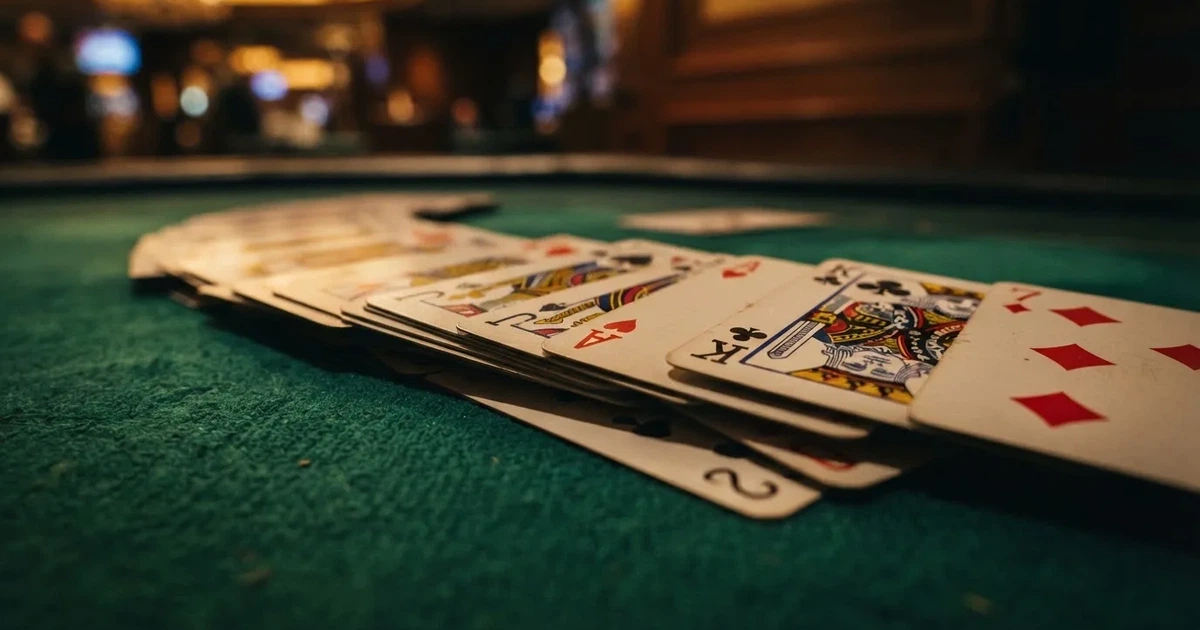
A live dealer blackjack table is not a software simulation. A real dealer sits behind a physical shoe, draws real cards from a real deck, and runs a real game against up to seven remote players. The punter sees the deal through a multi-camera video stream, places bets with a digital chip rack at the bottom of the screen, and chats with the dealer through a text box. The result is decided by physics and dealt by a human hand.
The rules underneath are the standard ones. Number cards count as their number; jack, queen and king all count as ten; an ace counts as one or eleven, whichever helps the hand. A starting two-card total of 21 — an ace plus a ten-value card — is a “blackjack” or “natural” and pays 3:2 in most rule sets. The dealer draws until reaching seventeen or higher, with most rule sets also requiring a hit on a “soft seventeen” (an ace counted as eleven).
The terminology does the rest of the work. “Hit” means take another card; “stand” means keep the total; “double down” means double the bet, take exactly one more card and stand; “surrender” means give up half the bet on a hand the punter expects to lose. Insurance, offered when the dealer shows an ace, is a side bet against the dealer having blackjack; it pays 2:1 and almost never carries an edge worth taking.
Side bets are where the house edge starts to move. Perfect Pairs (the punter’s first two cards matching) and 21+3 (a poker-style hand combining the punter’s first two cards with the dealer’s upcard) are common at live tables and routinely carry house edges north of 5%. The same applies to any progressive jackpot side bet the studio is offering. They are sold as entertainment. They are priced as entertainment.
The game itself, played under a liberal Las Vegas Strip rule set — dealer stands on soft 17, double on any two, double after split, resplit aces, late surrender — runs at about a 0.28% house edge under perfect basic strategy. Under the more common Atlantic City rules, the figure sits closer to 0.43%. Both numbers are averages over many hands; they are not promises on any single shoe, and a punter who deviates from basic strategy loses a lot more than 0.28% in the long run.
Live tables also come in well-known variants. Spanish 21 removes the tens from the shoe but adds player-favourable rules; Double Exposure deals both dealer cards face up at the cost of a higher edge; Blackjack Switch lets a punter swap the top cards between two hands; Super Fun 21 allows up to four splits. Each variant changes the basic strategy chart, and a chart built for vanilla blackjack is wrong for any of them.
That is what “live dealer” really means on a technical level. It does not change the regulatory situation in Australia, which the next shelf covers in detail.
| Game | Bet Type | House Edge |
|---|---|---|
| Blackjack | Optimal (Liberal Vegas) | 0.28% |
| Blackjack | Optimal (Atlantic City) | 0.43% |
| Baccarat | Banker | 1.06% |
| Baccarat | Player | 1.24% |
| Craps | Pass/Come | 1.41% |
Top Live Blackjack Casinos For Australians: The Eleven The ACMA Has Acted Against
Below is every brand on this page that advertises live blackjack to Australian customers. It is not a ranking and it is not a recommendation. Each of the eleven has been the subject of a formal warning issued by the Australian Communications and Media Authority for offering prohibited interactive gambling services to customers in Australia. The table that follows shows the ACMA action, the operator the regulator named, and whether the brand can be confirmed to support live blackjack tables in any verifiable sense. The brands themselves are presented in the order the regulator’s most recent actions appear.
| Brand | ACMA action and date | Operator named by the ACMA | Subject support |
|---|---|---|---|
| RocketPlay | Formal warning, March 2026 | Pulsup Ltd | — |
| Level Up Casino | Formal warning, May 2022 | Dama N.V. | Live tables listed on BGaming’s platform pages |
| Woo Casino | Formal warning, March 2025 | Dama N.V. | — |
| Spirit Casino | Formal warning, May 2025 | Dama N.V. | — |
| National Casino | Formal warning, July 2025 | Consolutetish S.R.L. | Game reference on Wikipedia’s blackjack page |
| Bizzo Casino | Formal warning, July 2025 (earlier TechSolutions, 2022) | Consolutetish S.R.L. | — |
| Ignition Casino | Formal warning, July 2025 | Bamboo Media | — |
| Instant Casino | Formal warning, February 2025 | EOD Code SRL | — |
| Jackbit | Formal warning, April 2026 | Ryker B.V. | — |
| Casino Intense | Formal warning, April 2025 | Sterplay Holding Ltd | Game history mentions in public reporting and Crown Melbourne’s published rules |
| Sky Crown | Formal warning, undated in current ACMA publication | Hollycorn N.V. | — |
The same cell of the table makes the same point every time: a brand being here means a regulator named it, not that the page endorses it. None of them is licensed to offer live blackjack in Australia, and the page does not pretend otherwise.
RocketPlay
RocketPlay has been on the ACMA’s list twice. The earlier action was a May 2022 formal warning to Dama N.V. covering six brands — Bambet, Dazard, Level Up, Rocketplay, Wild Tornado and Cobra Casinos — for offering prohibited interactive gambling services to Australian customers. The more recent action, in March 2026, was a fresh formal warning to Pulsup Ltd over RocketPlay specifically. The fact that the same brand has been warned under two different operators in four years tells its own story: the corporate wrapper changes, the underlying offer to Australian customers does not.
There is no verifiable confirmation that RocketPlay offers live dealer blackjack specifically, and the brand is not reviewed on that point here. The reading a punter is left with is the structural one: a brand the regulator has warned under two different company names is one a punter should not have to research at all.
Level Up Casino
Level Up Casino was named in the same May 2022 Dama N.V. warning as RocketPlay, as one of six brands in a single batch action. BGaming, the studio behind the live blackjack tables some Dama properties carry, lists Level Up Casino on its published platform pages, which is the closest the brand comes to a confirmed live blackjack offering.
That the studio chooses to list a brand the regulator has warned is not, on its own, a reflection on the studio. Studios supply games to operators; they do not vet Australian consumer law for each operator. The signal it sends to a punter, though, is consistent with the rest of the row: the brand has a working live product, the regulator has a working view that the brand should not be selling it to Australians, and both facts are true at once.
Woo Casino
Woo Casino is one of two Dama N.V. brands warned in 2025 — Woo in March, Spirit Casino in May. The pattern is the same as the 2022 batch: one parent operator, multiple brand wrappers, all offering the same prohibited product to the same Australian market.
A punter looking at Woo specifically will not find a verifiable live blackjack product listing in the public materials consulted for this page. The warning itself is the only listing that matters; a parent company repeating the same conduct under different names serves as a clear notice.
Spirit Casino
Spirit Casino pairs with Woo Casino as the second Dama N.V. brand warned in 2025. The two warnings, in March and May of the same year, cover the same parent operator for the same conduct. The brand itself does not appear in the public material consulted for this page with a confirmed live blackjack product.
A punter treating Spirit Casino as a different operator from Woo Casino is reading the marketing rather than the company filings. The action the regulator has taken makes that reading harder to maintain.
National Casino
National Casino was named, alongside Bizzo Casino, in a July 2025 formal warning to Consolutetish S.R.L. The brand’s name appears in the broader public conversation about blackjack variants — the Wikipedia entry on blackjack references it in passing — but that is a mention, not a product listing.
The honest read is the one the rest of the row carries. National Casino is the kind of brand the regulator has warned, offering the kind of product the regulator has warned it for. A punter who finds the brand through a search result is finding it because the marketing works, not because the regulator has cleared it.
Bizzo Casino
Bizzo Casino has the longest paper trail on this page. The July 2025 formal warning to Consolutetish S.R.L. was a second bite at the brand: an earlier 2022 formal warning to TechSolutions (CY) Group Limited and TechSolutions Group N.V. covered Bizzo Casino, and the regulator has now had to name the same brand again under a different operator name.
The structural read is harder to ignore than the others. A brand the regulator has had to warn twice, under two different parent companies, in three years is one where enforcement has not been the operator’s friend.
Ignition Casino
Ignition Casino was named in a July 2025 formal warning to Bamboo Media. The brand has been a familiar name in offshore casino marketing for years; the regulator’s action is the relevant fact for an Australian punter.
Bamboo Media is not the same corporate family as the Dama N.V. group, the TechSolutions pair or the Consolutetish S.R.L. group. That is interesting because it underlines how many separate operators are running the same offer to the same Australian market. The regulator’s list keeps growing.
Instant Casino
Instant Casino was named in a February 2025 formal warning to EOD Code SRL. The timing is the relevant detail: February 2025, well before the round of warnings in March and May that covered Woo Casino and Spirit Casino.
Instant Casino’s brand identity, including the live dealer offering that some marketing pages associate with it, is the kind of thing a punter might encounter through social media advertising or a comparison site that has not been updated since the ACMA’s action. The page’s job is not to chase that marketing. The page’s job is to note that the regulator acted, and that the brand did not become legal in between.
Jackbit
Jackbit was named in an April 2026 formal warning to Ryker B.V., alongside CasinOK. The brand has positioned itself, in public marketing, around cryptocurrency deposits and fast withdrawals, both of which sit outside the Australian payment regime for licensed wagering.
A crypto-funded live blackjack table deals the same cards as a card-funded one. The punter’s experience at the table does not change. The legal and the consumer protection side of the transaction does — a brand operating outside Australian payment rules is operating outside Australian consumer protections as well, which matters when the punter wants their money back.
Casino Intense
Casino Intense was named in an April 2025 formal warning to Sterplay Holding Ltd. The brand’s name has come up in public reporting on the ACMA’s enforcement activity, and the regulator’s published rules for Crown Melbourne in Victoria mention it as part of the broader context the regulator is operating in.
That a brand surfaces in mainstream Australian reporting — ABC News, in this case — is the kind of signal a punter usually takes as a warning, and that is what the signal is meant to be. The regulator’s enforcement record is what makes it news.
Sky Crown
Sky Crown was named, alongside Blue Leo, in the ACMA’s formal warning to Hollycorn N.V., published in September 2022. It is the earliest-named brand on this page, and the ACMA’s published notice is the most specific: a single PDF warning document covering two brands under one operator.
Hollycorn N.V. has not been the subject of a public enforcement round as visible as Dama N.V.’s two, but the warning stands. A punter who has dealt with Sky Crown in the past and is wondering whether anything has changed should assume nothing has, on the evidence the regulator has published.
The Australian Casino Landscape: Why Every Live Blackjack Table Is Offshore
The Interactive Gambling Act 2001, strengthened by the Interactive Gambling Amendment Act 2017, makes it an offence to provide online casino games — including live dealer blackjack, online pokies, in-play betting and any other casino-style product — to a person physically in Australia. The penalty structure is built around the operator, not the player: individuals face up to A$220,000 per day and corporations up to A$1.1 million per day.
What can be licensed is a much narrower set. Wagering on races and sport placed before the event is licensable, in practice by the Northern Territory Racing and Wagering Commission, which regulates 52 of Australia’s online bookmakers — including Sportsbet, Bet365 and Ladbrokes — for tax reasons. Lotteries and keno are licensable separately in each jurisdiction. Live dealer blackjack is not, in any state or territory, and it is not about to be.
The minimum age to gamble online in Australia is 18. The enforcement body is the Australian Communications and Media Authority. The individual player is not prosecuted under the IGA — the law is aimed at the provider — but the practical consequences for the punter are real. An offshore site gives no Australian consumer protection, no complaints body, and no recourse if a withdrawal is refused. A blocked site can hold a balance the punter cannot touch, because the IGA does not require an offshore operator to honour Australian rules.
The Northern Territory’s regulator deserves a second paragraph, because it is the regulator the legal wagering industry actually runs through. It meets once a month in Darwin, has no full-time staff, and supervises 52 bookmakers whose business model is built around a tax arrangement the NT government values. That is the shape of Australian online gambling regulation: small, infrequent, focused on sports and racing. Live dealer blackjack is not in the picture.
The 2026 reform picture is one thing worth separating from the current law. The Interactive Gambling Amendment (Gambling Reform) Bill 2026 passed Parliament on 19 August 2026; its advertising and inducement measures commence 1 January 2027. It is law with a start date, not law in force on a page read in 2026. The pre-existing IGA framework remains the one that governs every live dealer blackjack offer available today.
Responsible Gambling At A Live Blackjack Table
A continuous-shoe live blackjack table runs fast. The dealer is paid by the hour, not by the hand, and the studio has every incentive to keep the cards moving. A punter who sits down for “a few hands” can clear a hundred before they have finished the coffee they sat down with.
The standard responsible-gambling advice — set a budget, set a time limit, stop when either is reached — applies harder here than at a slots machine. A slots machine lets a punter zone out; a live dealer expects bets every thirty seconds or so. The pace is part of the design.
The Australian framework gives a punter two relevant tools. BetStop, the National Self-Exclusion Register, has been live since August 2023 and binds every Australian-licensed online and phone wagering service. An offshore casino is not connected to it. A punter who self-excludes through BetStop has excluded themselves from licensed wagering, not from the eleven brands on this page. The distinction matters, and is worth stating plainly.
The National Gambling Helpline — 1800 858 858, free, 24/7 — and the chat service at Gambling Help Online are the second tool. They are available regardless of whether the punter’s gambling is legal or illegal, and they are the right first call if the budget has already slipped.
Two practical measures are worth keeping in mind. A daily deposit limit, set with the bank rather than the casino, is harder for a punter to override than any in-app tool the offshore site offers. A separate payment method, used only for gambling, gives a punter a clean view of what they have spent without having to comb through a transaction history. Both are imperfect. Both are better than relying on the in-app limit the operator has every incentive to make easy to raise.
Crypto And Anonymity At Live Blackjack Tables
Crypto deposits do not change the cards at a live blackjack table. The shoe is the same shoe, the dealer is the same dealer, the rules are the same rules. What changes is the regulatory frame around the punter’s money.
Credit cards, credit-related products and digital currency have been banned as payment methods for Australian-licensed online wagering since 11 June 2024. The penalty for an operator accepting them is up to A$247,500 per breach. A live blackjack site that takes a Bitcoin or Ethereum deposit from an Australian punter is therefore operating outside the Australian payment regime in addition to operating outside the Australian licensing regime.
The marketing pitch is the opposite of the legal picture. Bitcoin blackjack casino, Ethereum blackjack casino, Litecoin blackjack casino — these are phrases an Australian punter sees in affiliate marketing because the affiliate is paid on a first-deposit basis, and the offer sounds cleaner than it is. The fact that the punter paid in crypto does not legalise the table; the fact that the punter paid in crypto also does not protect the punter if the operator refuses to pay.
Anonymity is the second pitch. Crypto blackjack casino is sold as a way to keep gambling off the bank statement, away from a partner’s view, out of a tax record. The pitch is real for the punter’s side of the ledger, and it is fictional for the operator’s. Crypto deposits land in a wallet the operator controls; crypto withdrawals, when they happen, are subject to the same review process as any other withdrawal. The blockchain is public. The operator’s compliance obligations, to whatever jurisdiction the operator is actually answerable to, run through the operator’s KYC process regardless of how the punter funded the account.
The honest reading is that a crypto-funded live blackjack table changes the punter’s experience at the cashier, not the punter’s experience at the table. The regulatory exposure is the same. The consumer protection is the same. The casino’s house edge is, of course, the same.
Payments And Payout Speed: What The Marketing Promises And What Happens
PayID blackjack casino, fast payout blackjack casino, instant withdrawal blackjack casino — these are the phrases the marketing uses to draw a punter in. They describe the cashier, not the table.
PayID is a real Australian payment system. It links a bank account to a mobile number or a business identifier, and transactions clear through Osko within seconds, often in under a minute. The system is built for licensed Australian merchants, which is where it works as advertised. A PayID deposit to a live blackjack site, in practice, goes to a payment processor in the same way a card deposit does; the difference is the rail the money travels on, not the regulatory frame around the operator receiving it.
Online casino blackjack no deposit bonus offers are the second marketing phrase worth dissecting. A no-deposit bonus is, in practice, a small amount of bonus money or a few free spins credited to a new account, with the full weight of a bonus’s terms page attached. The offer is real. The cash value, after wagering requirements, max-cashout caps and game-weighting rules, is usually much smaller than the headline. A punter who treats a no-deposit bonus as a free sample is reading the marketing; a punter who treats it as a contract is reading the terms.
Blackjack casino payout speed is the third phrase, and the one with the most daylight between marketing and practice. A PayID payout, in a licensed Australian wagering context, can land in minutes. The same PayID payout at an offshore casino goes through the operator’s internal review first, then through a payment processor, then through the receiving bank. A 24-hour review window is common; a 72-hour review window is not unusual; a one-week review is not unknown, especially on a first withdrawal. The marketing copy quotes the rail. The punter experiences the queue.
The legal deposit routes for Australian-licensed wagering are debit card, bank transfer, PayID and BPAY. Anything else — credit card, crypto, an e-wallet the bank has flagged — is a sign the operator is operating outside Australian rules, which is a sign the operator is operating outside Australian consumer protections, which is what the punter is trying to avoid in the first place.
The Math Behind The Block: How Often The ACMA Is Catching Up
The Australian Communications and Media Authority has asked Australian internet service providers to block illegal gambling and affiliate marketing websites since November 2019. By June 2026, the running total stood at 1,751 websites blocked. More than 230 unlicensed gambling services had left the Australian market entirely since enforcement was strengthened in 2017.
The numbers tell the story. Between November 2019 and June 2026 — roughly 79 months — the ACMA’s blocking requests averaged out to about 22 websites per month. The June 2026 round alone added twelve: 7Signs, ChromaBet, Donbet, Duospin, Freshbet, Slots Gem, Jacks Club, Lucky Start, Pointsbetz, Spinrise, Vinyl Casino and Wildsino. The rate has not slowed. The list has not shortened.
That number is also conservative. A blocked site is one the regulator has caught; an unblocked site is one the regulator has not yet gotten around to, not one the regulator has cleared. The market for illegal gambling in Australia, by H2 Gambling Capital’s 2025 estimate, costs Australian players about A$3.9 billion a year. The legal share of total Australian gambling has fallen from 74% in 2021 to 64%, with the rest flowing through offshore sites the IGA does not license. The blocking rate measures the regulator’s catch-up. It does not measure the problem.
The point for a punter is structural. Every brand on this page sits inside that A$3.9 billion annual figure. Every blocked site is a brand the regulator has had time to act on. The brands that have not yet been blocked are not, on that account, safer — they are simply newer, or better at rotating their corporate wrappers, or both.
What The Brands Have In Common, And What They Do Not
Every brand on this page shares three features.
The first is the regulatory one. None is licensed to offer live dealer blackjack to Australian customers. The IGA’s prohibition does not have an exemption for being a “real” dealer, a “real” shoe or a “real” video stream, and the ACMA’s enforcement record does not distinguish between a software-generated and a live-dealt table. The brands have been warned under one of eleven different parent operators; the warnings are not the same; the underlying prohibition is.
The second is the payment one. None of the brands operates inside the Australian payment regime. Credit cards, credit-related products and crypto are banned for licensed Australian wagering; the brands accept at least some of those, and accept them precisely because they are operating outside Australian rules. A punter paying into one of these brands is paying into a payment stack the Australian framework has chosen to reject.
The third is the consumer-protection one. None of the brands is connected to BetStop, the National Self-Exclusion Register, or to any Australian complaints body. A punter who has a problem with one of them has the offshore operator’s own support team, and that is the end of the road. There is no Australian ombudsman to escalate to. There is no Australian regulator to complain to. There is, in practice, no way to force a withdrawal that the operator has decided to delay.
What the brands do not have in common is the rest of the detail. Some are crypto-first and some are card-first. Some have a long paper trail of ACMA warnings and some have a single one. Some have been named under multiple parent operators across the years, which is the closest thing on this page to a corporate identity warning. None of that changes the regulatory frame. None of it changes the consumer protection. The differences between the brands are smaller than the marketing suggests, and the similarities are larger than the marketing admits.
How To Read The Table Of Brands, And What It Does Not Tell You
The table earlier on this page carries four columns: the brand, the ACMA action and date, the operator the regulator named, and a subject-support column for live blackjack specifically. The first three columns are sourced from the ACMA’s own formal warning publications and are the most reliable material on the page. The fourth column reflects the public material consulted during research and is honest about its gaps: a dash means no verifiable live blackjack listing was found in the materials consulted, not that the brand does not offer live blackjack.
A punter who treats the table as a checklist — “the brand has a dash in column four, so I will go to that one” — is reading the wrong column. The first three columns are the ones that determine whether the brand is a sensible place to send money from Australia. They all say the same thing. The fourth column is editorial completeness.
The table is also not a recommendation. It is a list of every brand the ACMA has named, in the order of the most recent action. The order is not a ranking. A brand that appears further down the table is not safer than a brand that appears further up. The page does not endorse any of the eleven. The page describes what the regulator has done and what the operator has not.
Frequently Asked Questions
Is it legal to play live blackjack for real money at an online casino in Australia?
No. The Interactive Gambling Act 2001 prohibits the supply of online casino games — including live dealer blackjack — to customers in Australia, and no state or territory licenses them. Every brand on this page has been the subject of a formal warning from the ACMA for offering the product to Australian customers. The penalty structure targets the operator, not the player, but an Australian punter has no consumer protection if a withdrawal stalls.
How does a live-dealer blackjack table differ from a computer-generated version?
A live-dealer table uses a real dealer, a real shoe and a video stream; bets are placed through a digital chip rack and outcomes are decided by physics. A computer-generated version runs through a random number generator with no human dealer. The rules are similar; the pacing, the social element and the marketing around the product are very different. The legal position under the IGA is the same for both.
What dealer rule most affects the house edge in blackjack?
Whether the dealer hits or stands on a soft seventeen is the rule that moves the edge most for the punter. A dealer who stands on soft 17 takes about 0.2% off the house edge compared with a dealer who hits on soft 17. Liberal Las Vegas Strip rules — stand on soft 17, double on any two, double after split, resplit aces, late surrender — bring the edge to about 0.28% under perfect basic strategy; the more common Atlantic City rule set is closer to 0.43%.
Does a blackjack bonus offer usually count table game bets the same as slot bets?
Rarely. Standard bonuses count slot bets at 100% toward the wagering requirement and blackjack bets at 10% to 20%, and some bonuses exclude table games altogether. A A$10 blackjack hand on a 10%-weighted bonus counts as A$1 toward the rollover, which means a punter has to bet many times more on the table to clear the same bonus. Reading the terms page before claiming is the only honest way to know.
Is a live blackjack app a separate product from a site’s browser-based table?
Most operators offer the same live dealer blackjack tables through both a mobile app and a browser-based client. The deal is streamed from the same studio and the rules are the same; the interface differs to suit the screen. There is no meaningful product difference between the two for an Australian punter, and the legal position is identical regardless of which one a punter uses to log in.
Can a live blackjack hand be joined partway through a dealer’s shoe?
Yes. A live table accepts new players between hands, and a punter can usually join at any point the shoe has not reached the cut card. Joining partway through means a slightly different sequence of cards than a punter who has been at the table since the shuffle, but the rules and the house edge are the same. Some studios offer a “Bet Behind” feature that lets a punter wager on another player’s hand when no seat is free, at the cost of not making decisions on the hand.