
Live roulette with English-speaking dealers for Australian players in 2026
A live roulette table streamed to an Australian is one of the clearer cases in the local market. The wheel is the same wheel the dealer would spin in Melbourne, the bets are the bets a punter has always been able to place, and the dealer speaking English is the part of the product that gets advertised. What changes when the table sits on an offshore site is the legal ground it stands on: under the Interactive Gambling Act 2001, no offshore operator can lawfully offer online casino games, a live-dealer roulette table included, to a person physically present in the country. The page that follows sets out what the product is, what it costs the punter who plays it, and where the regulator has acted against the brands that try to serve that punter anyway.
Data current as of 29 October 2026 and checked against the Australian Communications and Media Authority register of blocking requests and formal warnings.
Table of Contents
- The English-speaking-dealer pitch, and what sits behind it
- How the wheel is built — and what that costs the punter
- Where live roulette sits next to the other table games
- The rule on what an Australian is allowed to be offered
- What the regulator has been doing — and to whom
- What that warning actually means for the punter
- The blocking rate — what the ACMA’s record shows
- What an Australian punter is actually being offered
- Payouts — and why they take as long as they do
- Responsible play — and the limits that go with a spinning wheel
- A note on the 2026 reform
- Tax — what a recreational punter does and does not have to declare
- What the page will not do
- A short verdict on the reviewed brands
- The shape of the market
- Where the page stops
- Frequently asked questions
The English-speaking-dealer pitch, and what sits behind it
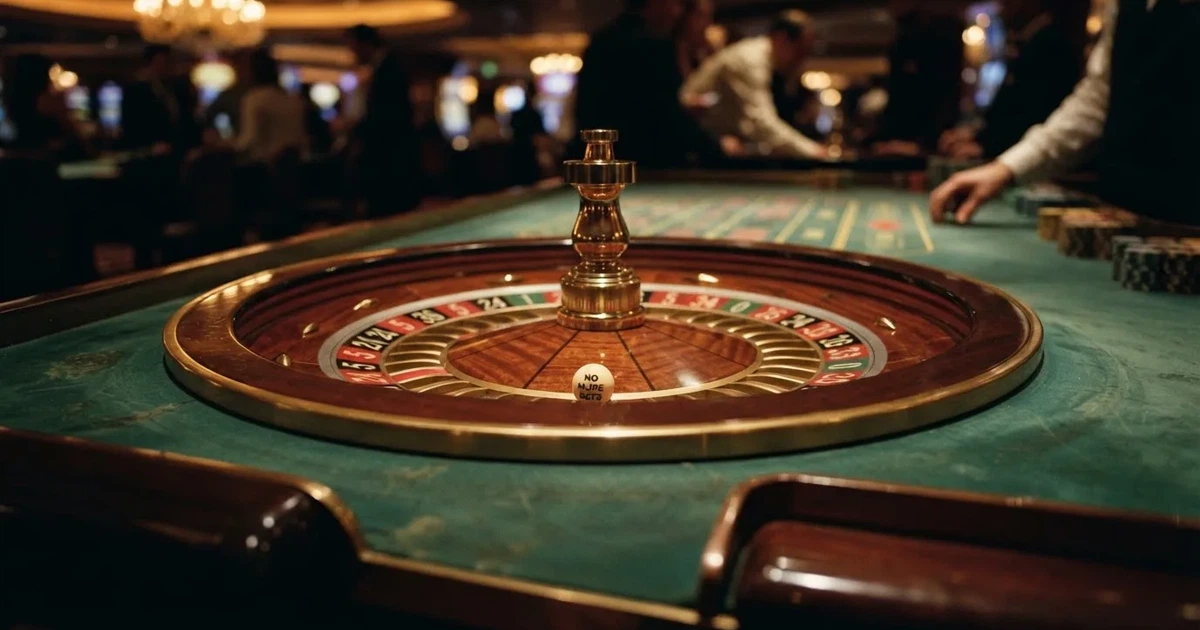
Live roulette is the part of an online casino floor where a real dealer spins a real wheel, sometimes with several cameras covering the felt, sometimes with chat open for players to talk to the dealer and to each other. The dealer speaking English is part of the product the way the felt colour or the chip stack is. A studio with English-speaking dealers does not change the math of the wheel; it changes how easy the table is to follow for a player whose first language is English, and how quickly a question about a stuck bet gets answered.
Two things are worth holding onto before anything else. First, a live roulette table streamed across the internet is still a casino game, and the Australian rule on casino games is binary: they cannot be supplied to a person in Australia by anyone who is not licensed in Australia, and no Australian licence exists for an online casino. Second, the spinning wheel does not become more beatable because the dealer can hear you. The house edge is fixed by the wheel layout, not by the chat. The English-speaking dealer makes the experience clearer; it does not change the math, and it does not change the law.
The page that follows takes the reader through the wheel itself — single-zero against double-zero, the numbers that sit behind the felt — and then through the landscape of brands an Australian might encounter, the regulator’s record against those brands, and what a withdrawal from one of them actually looks like. Where a brand has been the subject of a formal warning by the ACMA, that is named and dated. Where the regulator has directed Australian ISPs to block the site, the blocking round is named. Where a fact is missing from the research, the page says so and moves on.
How the wheel is built — and what that costs the punter
A single-zero (European) roulette wheel has 37 pockets: the numbers 1 to 36 and a single green zero. A double-zero (American) wheel has 38: 1 to 36 plus a zero and a double zero. A triple-zero wheel, which shows up at a handful of venues in the United States, has 39 pockets (1-36, 0, 00 and 000). Every other pocket on every version of the wheel is red or black.

The house edge is the slice of every bet the casino keeps on average over a long run of spins, and it is fixed by the geometry of the wheel rather than by the marketing of the casino. Single-zero roulette carries a house edge of 2.70%. Double-zero roulette carries a house edge of 5.26%. Triple-zero roulette carries a house edge of 7.69%. The dealer, the chat, the studio lighting — none of it touches that figure. The shape of the wheel does.
A small number of European roulette tables soften that 2.70% on the even-money bets (red or black, odd or even, high or low) with a rule called en prison or its sister la partage. Under en prison, an even-money bet that lands on zero is held over for one more spin instead of being lost; if that follow-up spin also loses, the stake is taken. Under la partage, the stake is half returned on the spot when zero comes up. Both rules cut the effective house edge on those particular bets but leave the rest of the layout untouched.
Roulette’s history is shorter than its mythology. The game most likely grew out of an Italian wheel game called Biribi; Blaise Pascal’s 17th-century work on perpetual motion is sometimes credited with a primitive form, but the documented modern game appears in Paris from 1796, played on a single-zero wheel. The double-zero wheel that defines American roulette was added later across the Atlantic, in part to give the house a higher take and in part because the extra green pocket looked handsome on the layout. A live roulette table today can be running any of those configurations, and the punter who assumes the wheel in front of them is the one they would see in a Melbourne casino is making an assumption worth checking.
Where live roulette sits next to the other table games
Live roulette shares a studio with live blackjack, live baccarat and live game-show formats. The math of the wheel puts roulette in the middle of the table: a worse cut for the house than blackjack (about 0.28% under liberal Las Vegas Strip rules with optimal play, about 0.43% under Atlantic City rules), a better cut for the house than craps on the most common wagers (Pass 1.41%, Don’t Pass 1.36%, Any Craps 11.11%), and a comparable cut to baccarat on the Banker bet (1.06%) and Player bet (1.24%).
A live roulette table is also where the English-speaking-dealer framing sits closest to the felt. A live blackjack table with an English-speaking dealer offers essentially the same dealer-facing product; a live baccarat table, where punto banco is the common variant and the casino banks the game at all times, plays out both hands by fixed drawing rules that do not change with the dealer’s language. The dealer speaking English on a roulette table makes a real difference to the pace at which the table clears a question about a stuck bet. It makes less difference on a baccarat table where the dealer is mostly handling cards and announcing results.
The rule on what an Australian is allowed to be offered
Australia’s prohibition on online casino gambling is set out in the Interactive Gambling Act 2001, tightened by the Interactive Gambling Amendment Act 2017. The Act makes it an offence to provide online casino games — a live-dealer roulette table sits squarely inside that — to a person physically present in Australia. No state or territory licenses online casino games. The only forms of gambling that can be licensed for online supply to an Australian are wagering on sporting events and races (before the event, not in-play), lotteries and keno. In practice, the licence those products carry is issued by the Northern Territory Racing and Wagering Commission (NTRWC), which regulates 52 of Australia’s online bookmakers — including the household names Sportsbet, Bet365 and Ladbrokes — from a commission that meets once a month in Darwin and, as reported in April 2026, has no full-time staff of its own.
The minimum age to place a wager or play a casino game in Australia is 18. The individual player is not prosecuted for playing at an offshore casino; the Interactive Gambling Act targets the provider. What the player gives up when they do it is the Australian consumer protection layer that goes with a locally licensed product: no Australian complaints body, no Australian recourse if a withdrawal is refused, and the prospect that the site can be blocked with the player’s balance still on it. None of that changes because the studio in front of the player has English-speaking dealers, multiple camera angles or a chat window.
What the regulator has been doing — and to whom
The ACMA investigates, issues formal warnings, and can direct Australian internet service providers to block illegal sites. The numbers below come from the ACMA’s own record and from reporting on its blocking rounds.
By June 2026 the ACMA had asked ISPs to block 1,751 illegal gambling and affiliate marketing websites since the first blocking request in November 2019, and more than 230 unlicensed services had left the Australian market since enforcement was strengthened in 2017. The June 2026 round added a further 12 sites to the block list: 7Signs, ChromaBet, Donbet, Duospin, Freshbet, Slots Gem, Jacks Club, Lucky Start, Pointsbetz, Spinrise, Vinyl Casino and Wildsino.
H2 Gambling Capital’s 2025 report puts annual losses to illegal offshore sites at roughly A$3.9 billion, and puts the share of Australian gambling going through legal channels at 64%, down from 74% in 2021. The slide is not a coincidence — it tracks the same years the offshore live-dealer product became easier to find and easier to fund.
Formal warnings the ACMA has issued to operators behind the brands an Australian punter is most likely to encounter are listed in the table below. A formal warning is not the same thing as a blocking direction; it is a written notice that puts the operator on notice that the ACMA considers the service unlawful, and a precursor to a block if the operator does not wind the service back. The dates below are the dates the ACMA published.
| Brand | ACMA action and date | Operator named by the ACMA | English-speaking live roulette on the brand’s own site |
|---|---|---|---|
| RocketPlay | Formal warning, March 2026; earlier Dama N.V., May 2022 | Pulsup Ltd (Rocketplay) | — |
| Level Up Casino | Formal warning, May 2022 | Dama N.V. | Listings only — not confirmed by the operator |
| Woo Casino | Formal warning, March 2025 | Dama N.V. | — |
| Spirit Casino | Formal warning, May 2025 | Dama N.V. | — |
| National Casino | Formal warning, July 2025 | Consolutetish S.R.L. | Listings only — not confirmed by the operator |
| Bizzo Casino | Formal warning, July 2025; earlier TechSolutions, 2022 | Consolutetish S.R.L. | — |
| Ignition Casino | Formal warning, July 2025 | Bamboo Media | — |
| Instant Casino | Formal warning, February 2025 | EOD Code SRL | — |
| Jackbit | Formal warning, April 2026 | Ryker B.V. | — |
| Casino Intense | Formal warning, April 2025 | Sterplay Holding Ltd | Listings only — not confirmed by the operator |
| Sky Crown | Formal warning, September 2022 | Hollycorn N.V. | — |
The third column reflects what the operator’s own material carries. A dash means the research did not surface a confirmation that the brand hosts an English-speaking-dealer roulette table specifically; “Listings only” means a third-party listing (a provider catalogue or a directory page) names the brand in connection with the product without the operator itself documenting the English-language setup on its own pages. Either way, the warning stands: the ACMA has named the operator, the operator has not been relicensed in Australia (because no such licence exists), and the table on offer is offered in breach of the Interactive Gambling Act 2001.
The same holds for the brands where the ACMA has not yet issued a formal warning. A clean record at the ACMA is not an Australian licence; it is the absence of one.
What that warning actually means for the punter
A formal warning is the regulator’s written record that the named operator is providing a prohibited interactive gambling service to Australians. It does not, on its own, take the site down. What follows the warning, in the ACMA’s enforcement pattern, is a blocking direction to Australian ISPs if the operator does not wind the service back from the Australian market.
For the punter sitting at a live roulette table with an English-speaking dealer, three things follow. The site can become unreachable from an Australian IP without warning. The balance held on the site sits behind an offshore operator with no Australian complaints body. And if a withdrawal is refused, the punter has no Australian recourse — the ATO will not refund the deposit, the ACMA will not arbitrate the dispute, and a chargeback through the punter’s bank is the only practical lever, and not always a successful one. The English-speaking dealer does not change any of that.
The blocking rate — what the ACMA’s record shows
The ACMA’s first blocking request was issued in November 2019. As of June 2026, 1,751 illegal gambling and affiliate marketing sites have been the subject of a blocking request since that first action — an average of roughly 265 sites blocked per year over the seven years the request power has been in use, or about 22 per month. That is the speed at which the regulator has been moving against the offshore market over the full period.
The June 2026 round of 12 sites sits close to the rolling average. Earlier rounds in 2025 and 2026 added comparable batches. The point of the figure is not to suggest the regulator is winning or losing; it is to show the reader how often a brand that was reachable one month becomes unreachable the next, and how that pace compares with the number of brands coming up. The 230-plus services that have left the Australian market since 2017 are the same trend read off a different axis.
Based on the record of 1,751 sites blocked over seven years, the regulator has acted at a pace of roughly 20 to 30 sites per month, with variance depending on the scale of each blocking round. For a punter with a balance on an offshore site, this equates to a roughly one-in-twelve monthly chance that the brand they are using will be affected by an upcoming ACMA round.
What an Australian punter is actually being offered
Strip the English-speaking-dealer pitch back and the offer on an offshore live roulette site has three parts: a deposit, a bonus attached to the deposit, and a wheel to bet on. The first two carry conditions; the third carries the house edge already described.
The deposit side has changed under Australian rules even for the licensed wagering market. Since 11 June 2024, credit cards, credit-related products and digital currency have been banned as payment for licensed online wagering in Australia — the penalties for an operator that takes them are up to $247,500. The deposit routes that remain legal for a licensed wagering account are debit card, bank transfer, PayID/Osko and BPAY. An offshore casino asking an Australian for a credit card or a crypto deposit is operating outside the Australian rules on payments as well as on the underlying service, and a punter who funds the account that way has no Australian consumer protection on either side of the transaction.
The bonus side is where the marketing does most of its work. Bonus offers at offshore casinos come with conditions: a wagering multiple, a maximum cashout, time limits, restricted games. Wagering multiples in this market often run from 35x to 50x the bonus amount, and the maximum cashout on a no-deposit bonus is often capped at a small multiple of the bonus paid out. None of the brands the ACMA has warned against publish clear, comparable bonus terms on a single page that the research could verify, which is why this page does not list those terms. A punter who wants the real numbers has to read the operator’s own bonus terms page before they deposit, and treat what they read there as the binding figure.
The wheel side is the part the page can speak to in numbers. Whatever bonus the punter takes, the underlying bets on the felt are bets on a wheel with a fixed house edge, and that edge is paid in claims the owner of the wallet earns.
Payouts — and why they take as long as they do
A live roulette payout goes through the same review process as any other casino withdrawal. The punter requests it, the operator’s payments team reviews it (typically against anti-money-laundering and identity-verification checks), and the funds are released back through the deposit channel. On a licensed Australian wagering account, that return runs through PayID/Osko or BPAY in a matter of minutes to a few hours; on an offshore casino, the same process typically runs days rather than minutes, with the offshore operator’s own review window on top of the payment-rail time.
PayID is the Australian real-time payments overlay on the New Payments Platform, and Osko is the brand name for the same real-time rail used by participating banks. Together they make a same-name withdrawal between Australian bank accounts effectively instant, and a punter moving money between a licensed Australian wagering account and an Australian bank account sees the funds on the same day. The offshore operator is sitting on the other side of that rail. A withdrawal from an offshore casino to an Australian bank account is not a PayID transfer; it is a wire transfer or a card refund, and the time it takes is the time the offshore operator’s own review takes plus the time the receiving bank takes to clear an international transfer. A punter reading a marketing claim of “instant payouts” at an offshore live roulette site should read it as the rail the site would prefer to use, not as the rail the punter will see the funds arrive on.
Bitcoin-funded play sits in the same place. The bitcoin transaction itself can clear in minutes; the casino’s review of the withdrawal, and the operator’s policy on when the player can cash out the bonus balance, is a separate timeline, and the punter’s bank still has to clear the conversion back into Australian dollars once the funds arrive.
Responsible play — and the limits that go with a spinning wheel
Watching a spinning wheel repeatedly, with results announced by a real dealer over a video stream, is a setting that can lull a punter into reading patterns in a sequence of independent random draws. A red-black-red-black run is no more likely on the next spin than any other sequence; the wheel has no memory. A punter who finds themselves sizing up the next spin based on the colour of the last few is sizing up against a wheel that does not know the last few happened.
A fixed loss limit is more useful than reading the felt. The punter who decides in advance what they are willing to lose in a session, and stops when they hit that figure, is making a decision the wheel cannot undo for them. The punter who chases a red-black sequence they have just watched is making a decision the wheel can take from them.
BetStop, the National Self-Exclusion Register, has been live since August 2023. It binds the Australian-licensed online and phone wagering services — the bookmakers the NTRWC regulates. An offshore live roulette site is not connected to BetStop, and a punter who has registered for self-exclusion can still reach an offshore site. The register covers the Australian-licensed portion of the market; it does not cover the offshore portion. The National Gambling Helpline is 1800 858 858 — free, 24/7 — with chat at Gambling Help Online, and the same line is the right number to call whether the problem is on a licensed wagering site or an offshore casino.
A note on the 2026 reform
The Interactive Gambling Amendment (Gambling Reform) Bill 2026 passed Parliament on 19 August 2026. Its advertising and inducement measures commence on 1 January 2027. This page treats it as law with a start date, not as law already in force. A punter reading this in late 2026 is reading a page on which the 2026 reform is signed but not yet operative; a punter reading it in early 2026’s successor year will be reading a page on which the same reform has been in force for a few days or weeks. Either way, the reform touches inducements and advertising; it does not change the underlying rule that no offshore operator can lawfully offer online casino games to a person in Australia, and the formal warnings already on the ACMA’s record continue to apply.
Tax — what a recreational punter does and does not have to declare
Gambling winnings of a recreational player are not assessable income in Australia under section 6-5 of the Income Tax Assessment Act 1997, and losses are not deductible. A punter who plays live roulette for fun and reports nothing to the ATO is doing the right thing. A punter who plays professionally — that is, who carries on a business of gambling — is on a different footing, and the ATO’s guidance is the place to confirm that footing. This page is not tax advice, and the relevant phrase is the same one the ATO uses: check with the ATO.
What the page will not do
The page will not recommend an operator. It will not print a working bonus code, a promo code or a voucher. It will not name a brand as a place to play. What it will do is set out the legal frame, describe what the product is, and name the regulator’s record against the brands an Australian punter is most likely to see advertised with an English-speaking live roulette table. The rest of the decision sits with the punter, and the regulator is the right place to check what the brand is currently authorised to do.
A short verdict on the reviewed brands
What follows is the ACMA’s own record against each brand the page covers. The page names the operator the ACMA has named, the date the ACMA published, and any further facts the regulator has put on the same record. Where the ACMA has acted more than once against the same operator, both actions are noted. Where a fact is missing from the ACMA’s published record, the page says so.
RocketPlay — Pulsup Ltd, formal warning March 2026
The ACMA published a formal warning to Pulsup Ltd over Rocketplay.com.au in March 2026. The same brand sits on an earlier Dama N.V. formal warning from May 2022, covering Rocketplay alongside five other Dama N.V. brands. Rocketplay is, on the regulator’s own record, one of the more warned-against operators in this set. The English-speaking-dealer pitch on a brand that has been the subject of two ACMA actions is the same pitch as on any other offshore site: the regulator has acted, the site is not Australian-licensed, and the page does not have a verified source on whether the brand’s live roulette product specifically carries an English-speaking-dealer table.
Level Up Casino — Dama N.V., formal warning May 2022
Dama N.V. was the subject of a single ACMA formal warning in May 2022 covering six brands — Bambet, Dazard, Level Up, Rocketplay, Wild Tornado and Cobra Casinos — for providing prohibited interactive gambling services to Australians. Level Up sits on that warning. The brand is listed by third-party providers as offering the game, though the operator’s own documentation does not specify the English-language setup of its live roulette studio.
Woo Casino — Dama N.V., formal warning March 2025
Dama N.V. took a second ACMA formal warning in March 2025, this time specifically over Woo Casino. The warning followed a year after the ACMA had already put Dama N.V. on notice in May 2022. The pattern is the one the regulator describes: a warning, a period in which the operator is expected to wind back the Australian-facing service, and a second warning when the wind-back has not happened.
Spirit Casino — Dama N.V., formal warning May 2025
The May 2025 warning to Dama N.V. over Spirit Casino came two months after the Woo Casino warning. The two actions in 2025 are the ACMA’s response to the same operator continuing to provide a prohibited service across multiple brands.
National Casino — Consolutetish S.R.L., formal warning July 2025
In July 2025 the ACMA warned Consolutetish S.R.L. over both National Casino and Bizzo Casino. The brand appears in third-party directories in connection with live roulette. Whether the operator maintains an English-speaking-dealer studio remains unconfirmed by the brand itself.
Bizzo Casino — Consolutetish S.R.L., formal warning July 2025; earlier TechSolutions, 2022
The July 2025 warning to Consolutetish S.R.L. over Bizzo Casino sits on top of an earlier 2022 formal warning issued to TechSolutions (CY) Group Limited and TechSolutions Group N.V. over the same brand. The brand has moved between operators, and the regulator has warned both. The pattern is a familiar one in this market: an offshore brand changes hands, the new operator picks up the same product, and the regulator re-files the warning against the new name.
Ignition Casino — Bamboo Media, formal warning July 2025
The ACMA issued a separate formal warning in July 2025 to Bamboo Media over Ignition Casino. The brand is one of the better-known names in the offshore market; the regulator’s record against it stands on the same legal ground as the rest of the brands in this set.
Instant Casino — EOD Code SRL, formal warning February 2025
In February 2025 the ACMA issued a formal warning to EOD Code SRL over Instant Casino. The warning is dated; the regulator has not, in the materials the research could verify, returned to the same operator with a follow-up action in the year since.
Jackbit — Ryker B.V., formal warning April 2026
In April 2026 the ACMA issued a formal warning to Ryker B.V. covering both Jackbit and CasinOK. Jackbit is a crypto-friendly brand; the regulator’s action against it sits on the same legal ground as the action against the fiat-funded brands in this set.
Casino Intense — Sterplay Holding Ltd, formal warning April 2025
The ACMA’s April 2025 warning to Sterplay Holding Ltd over Casino Intense is named in a small set of third-party listings in connection with the live roulette product, including Australian media coverage of the warning itself and the regulator’s own publication of the action. Documentation explicitly confirming an English-speaking-dealer studio at this venue is unavailable.
Sky Crown — Hollycorn N.V., formal warning September 2022
The ACMA issued a formal warning to Hollycorn N.V. over its Sky Crown and Blue Leo casino services in September 2022. The brand is one of the longer-standing warnings in the ACMA’s record; the regulator has not, in the materials the research could verify, returned to the same operator with a follow-up action.
The shape of the market
What the eleven brands above have in common is not a product feature, a licence, or a payment method. It is the regulator’s record. Eleven brands, eleven formal warnings, and a regulator whose pattern across two of the operators (Rocketplay, Wilderness Gaming’s Dama N.V. stable, National Casino, Bizzy Casino) is to warn, wait, and warn again when the wind-back does not happen.
The English-speaking-dealer framing does not appear in any of those warnings. The ACMA acts on whether a prohibited interactive gambling service is being provided to Australians, not on the language of the dealer at the table. A studio with English-speaking dealers is, from the regulator’s point of view, the same unlawful product with the same marketing.
The market an Australian punter is most likely to see advertised in 2026 is the market the ACMA has been working through since November 2019. The pace is roughly 20 to 30 blocks per month on average across the seven years the request power has been in use. The brands that survive one round are not the brands that have been cleared; they are the brands that have not yet been reached.
Where the page stops
The page stops at the regulator’s record. It does not rank the brands; it does not pick one for the reader; it does not print a code that takes the reader to a deposit page. What the punter does with the regulator’s record is the punter’s decision, and the regulator’s register of blocking requests and formal warnings is the place to check what that record currently looks like. A punter planning to play live roulette with English-speaking dealers in Australia is planning against a market in which the wheel is fixed, the house edge is fixed, the legal ground is fixed, and the regulator has been working through the brands at a steady pace for the last seven years.
Frequently asked questions
Is it legal to play live roulette for real money at an online casino in Australia?
No. Under the Interactive Gambling Act 2001, strengthened by the Interactive Gambling Amendment Act 2017, no offshore operator can lawfully supply online casino games — a live-dealer roulette table included — to a person physically present in Australia. The law targets the provider, not the player, but a player at an offshore casino gives up Australian consumer protection and the prospect that the site can be blocked with a balance still on it.
What is the practical difference between a single-zero and a double-zero roulette wheel?
A single-zero (European) wheel has 37 pockets and a house edge of 2.70%; a double-zero (American) wheel has 38 pockets and a house edge of 5.26%. The two extra pockets on the American wheel — 0 and 00 — almost double the house edge on every bet on the layout. A small number of European tables use the en prison or la partage rule to soften that 2.70% on even-money bets.
Why might a live roulette table specifically advertise English-speaking dealers?
An English-speaking dealer makes the table easier to follow for a player whose first language is English and makes questions about a stuck bet or a payout quicker to clear. The framing is a product feature, not a license to operate; the ACMA’s formal warnings do not turn on the language of the dealer.
Does a bitcoin-funded live roulette table use a different wheel to a card-funded one?
No. The wheel is the same physical wheel; only the payment rail is different. A bitcoin deposit changes how the funds arrive at the casino, not how the felt in front of the dealer is laid out. The house edge on the bets is unchanged.
Can betting patterns based on previous spins improve the odds on a live roulette table?
No. Each spin of a properly balanced wheel is independent of the last. Sequences of red and black, or of any other pattern, do not change the probability of the next spin. A punter who sizes bets on a perceived pattern is sizing bets on a wheel that has no memory.
How is a live roulette payout processed compared with a slot machine payout?
The processing is the same. Both go through the operator’s payments review, both are subject to the operator’s identity-verification and anti-money-laundering checks, and both are returned through the deposit channel. On a licensed Australian wagering account, the return runs over PayID or BPAY in minutes to hours; on an offshore casino, the return typically runs days, with the offshore operator’s review window on top of the international transfer time.