
Real money casino table games in Australia: the choices that exist, the cost they carry, and where the law actually lets you play
A punter looking for real money casino table games in Australia in 2026 runs into a wall most comparisons skip past. There is no Australian licence for any online casino offering blackjack, roulette, baccarat or craps to a person physically in this country. The brands that show up in any “best table games” list for Australians operate offshore, and the regulator — the Australian Communications and Media Authority — has issued formal warnings over many of them. The lawful place to sit down at a felt table is a licensed pub, club or casino on Australian soil. That much is settled before the first card is dealt. What this page does is walk the reader through what real money table games are, what their odds actually look like under the maths, what offshore claims cost a player with no Australian consumer protection behind them, and which licensed venues are the places to play them in person.
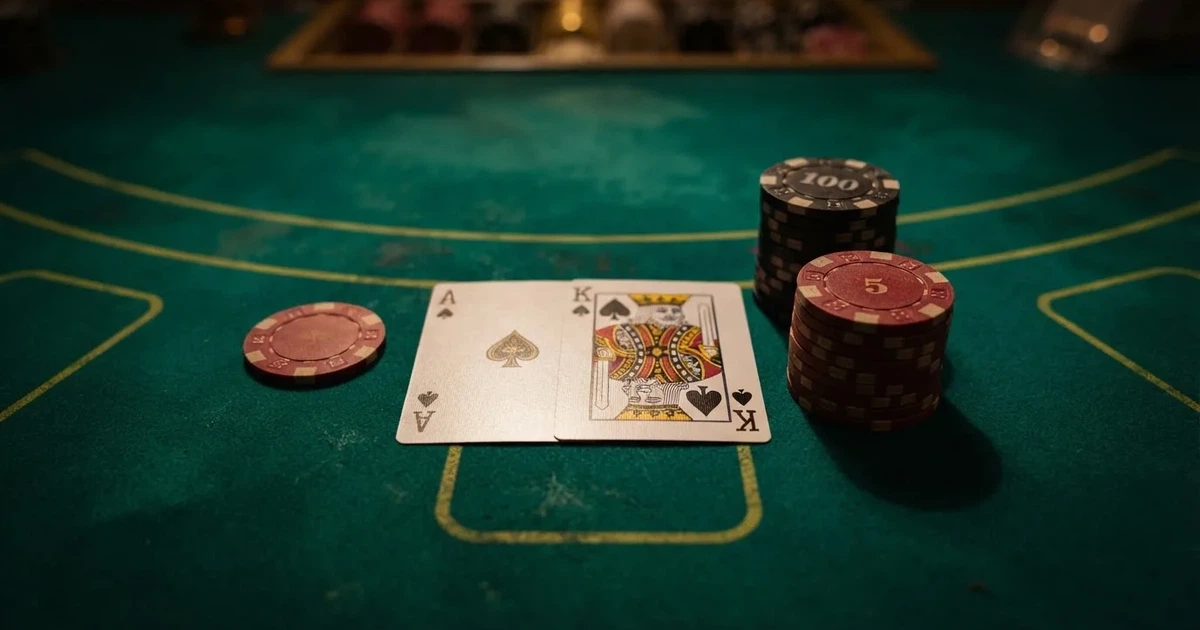
Current as of 4 November 2026 · Verified against ACMA formal warning publications and Victorian, NSW and federal gambling law registers.
Table of Contents
- What “real money table games” actually means — and the three groups an Australian reader can sort them into
- The odds the games actually carry — and why the marketing copy never tells you them
- Blackjack, in detail — the game most often marketed as the player’s choice
- Roulette, in detail — why the wheel matters more than the bet
- Baccarat, in detail — the game the high-limit room hides
- Craps, in detail — the easiest game to play badly
- The land-based venues Australians actually have access to
- The legal prohibition Australians actually face
- The ACMA’s enforcement record — what the formal warnings tell an Australian reader
- How offshore crypto and “anonymous” casinos fit into the picture
- Responsible play — the Australian frame for anyone at risk
- Tax — what the ATO actually does
- What an Australian punter should actually do
- Comparison of offshore operators
- The choices, in plain terms
- Frequently asked questions about real money casino table games in Australia
What “real money table games” actually means — and the three groups an Australian reader can sort them into
Real money table games are casino games played against the house on a marked layout with cards, dice or a wheel, where the player wagers cash and is paid in cash according to a published paytable. They are not slots, they are not sports betting, and they are not the lottery. The phrase covers blackjack, roulette, baccarat, craps and a long tail of variants — Spanish 21, Punto Banco, double-zero and single-zero roulette, casino hold’em, three-card poker, sic bo — all of them share the same structure: a fixed house edge baked into the rules, no element of skill that can flip that edge, and a session outcome that drifts to the mathematical mean over enough play.

An Australian reader sorting the landscape in 2026 ends up with three distinct groups, and the differences between them matter more than the differences between any two games inside any one group.
The first group is licensed Australian venues — Crown Melbourne in Victoria, The Star Sydney and Crown Sydney in NSW, the Treasury Brisbane and Jupiters Gold Coast in Queensland, SkyCity Adelaide in South Australia, the Crown Perth complex in Western Australia, the Wrest Point and Country Club in Tasmania, and a long tail of licensed clubs and hotels in NSW and Victoria operating electronic table game terminals under state rules. Every one of these is a physical premises, regulated by a state or territory casino or gaming regulator, and the games on the floor are the games whose rules have been approved by that regulator. Section 66 of the NSW Casino Control Act 1992, for example, makes it an offence for an operator to put on a game like baccarat without the regulator’s prior approval, and Crown Melbourne currently offers three approved baccarat variants — Traditional Baccarat, Crown Baccarat and 2 to 1 Baccarat — under the Victorian Gambling and Casino Control Commission’s oversight after it took over from the VCGLR on 1 July 2022. This is the only place in Australia where a real money table game is offered lawfully to an Australian resident.
The second group is offshore online casinos — the brands an Australian reader meets in any Google results page for “online table games real money”: RocketPlay, Level Up, Woo Casino, Spirit Casino, National Casino, Bizzo, Ignition Casino, Instant Casino, Jackbit, Casino Intense, Sky Crown, and the long tail behind them. Every one of these is licensed somewhere — Curaçao, Anjouan, the Philippines — and none of those licences permits the offering of online casino games to a person in Australia. The Interactive Gambling Act 2001, as strengthened by the Interactive Gambling Amendment Act 2017, makes the provision of online casino games to Australians a civil offence targeting the provider, not the player. Offshore sites carry an Australian-facing façade, an offshore licence they display prominently, and no Australian consumer protection behind either.
The third group is the licensed Australian online wagering providers — Sportsbet, Bet365, Ladbrokes and their peers — regulated by the Northern Territory Racing and Wagering Commission. These are licensed, but only for wagering on races and sport placed before the event, lotteries and keno. None of them offers a real money table game in the blackjack or roulette sense. Credit cards and credit-related products have been banned as a deposit route for these services since 11 June 2024, and crypto has been excluded alongside them; the lawful deposit routes are debit card, bank transfer, PayID/Osko and BPAY.
The grouping matters because each row carries a different cost. The licensed venue gives the player a regulator-approved game with a published paytable, an on-premises complaint path and a state-based dispute route. The offshore online casino offers the same game with an unverifiable RNG, no Australian complaints body, and the non-trivial possibility that the ACMA directs an Australian ISP to block the site on a Tuesday while a withdrawal is sitting in pending. The licensed Australian wagering provider does not offer the product at all. Once that picture is clear, the rest of this page is about how the games themselves work, what odds they actually carry, what offshore operators have done that the ACMA has acted against, and what an Australian reader with real money on the line should do about it.
The odds the games actually carry — and why the marketing copy never tells you them
A punter sorting blackjack, roulette, baccarat and craps by house edge sees the maths do most of the talking. House edge is the long-run percentage of every dollar wagered that the casino keeps, and the spread between games is wider than any bonus offer can bridge.
Blackjack, played under liberal Las Vegas Strip rules — dealer stands on soft 17, double on any two cards, double after split, resplit aces, late surrender — runs at about 0.28% house edge, the lowest of any common casino table game. Atlantic City rules, slightly less generous to the player, run about 0.43%. The game has carried that shape since the late 19th century, with the English game vingt-un as its immediate predecessor, Miguel de Cervantes’ early-17th-century veintiuno described in Castilian Spain, and the modern name “blackjack” emerging around 1899 in American gambling houses. A player using basic strategy loses on average less than 1% of their action over the long run. That is the floor under any “lowest house edge” claim you will read.
Roulette comes in two distinct shapes. Single-zero roulette — the European wheel — runs at 2.70% house edge. Double-zero roulette — the American wheel with both 0 and 00 — runs at 5.26%, almost exactly double. The 5.26% figure is a near-doubling, not a rounding error, and it is the single largest rule-set difference a player is likely to encounter between two felt tables in the same venue. Roulette in its present form dates from around 1796 in Paris, with the wheel traced to a 1720 gaming wheel combined with the Italian game Biribi. “Almost identical odds” is the wrong frame; the wheel on the floor is the entire question.
Baccarat, played as Punto Banco from an 8-deck shoe — the variant most often on Australian and overseas felt — runs 1.06% on the Banker bet and 1.24% on the Player bet. The Tie bet, paying 8 to 1, runs at 14.4% house edge, which drops to 4.85% only on the rare 9-to-1 payout. Punto Banco developed in Havana during the 1940s, with the casino banking the game permanently and both hands played out under fixed drawing rules; chemin de fer, the two-player French variant from the late 19th century, has players banking in turn and is now mostly a curiosity outside Monte Carlo. Card counting does not apply in baccarat; the house edge is structural and not exploitable by play decisions.
Craps runs at 1.41% on the Pass line, the simplest wager on the table. Side bets run much higher: 5.56% on the Field bet, 16.67% on Any 7, and 11.11% on Hard 4 or Hard 10. Craps developed in the United States as a simplification of the European game Hazard, which Bernard de Marigny brought from London to New Orleans around 1805; the simplified American version had spread throughout the country by the 1910s. The base game is friendly, the prop bets are not.
Keno, where it appears as a table-side game in some casinos, runs at 25%–29% house edge and is the worst bet on the floor by a wide margin. Lottery-style games carry a similar structural cost; the published return-to-player number is the figure, not a starting point for negotiation.
The reader’s takeaway is that the games are not interchangeable. A punter playing single-zero roulette at 2.70% is paying roughly nine times the house edge of a basic-strategy blackjack player at 0.28%. The bankroll half-life — how many hands it takes to lose half a stake under the house edge at a flat bet size — is approximately 24 hands at 0.28%, 8 hands at 1.06%, 3 hands at 2.70% and under 2 hands at 5.26%. The difference between a 0.28% game and a 5.26% game is not a footnote; it is the entire speed of the casino’s grind.
Blackjack, in detail — the game most often marketed as the player’s choice
Blackjack is the table game the marketing leads with, because basic strategy cuts the house edge below 1% and the rules let a casino offer side-bet variants that fatten the edge back up without saying so. The mechanics are simple: number cards count as their number, jacks, queens and kings count as 10, and an ace counts as 1 or 11. A starting two-card total of 21 is a “blackjack” or “natural” and is the strongest hand. The dealer must keep drawing cards until reaching a total of 17 or higher, with some rule sets requiring the dealer to also hit on a soft 17. Players act first and bust before the dealer draws, which is why basic strategy is about minimising the chance of busting against a visible dealer upcard.
The published house edge assumes the player uses basic strategy — a fixed decision chart for every player hand against every dealer upcard. Players who deviate from the chart give the house edge back. So do players who sit down at a table with a 6-to-5 blackjack payout instead of the standard 3-to-2; that one rule change roughly doubles the house edge and is the single most expensive terms change a casual player can accept at the felt without noticing.
The established variants — Spanish 21 (played without 10s but with liberal player-favourable rules), Double Exposure Blackjack (both of the dealer’s cards dealt face-up), Blackjack Switch (players can swap cards between two hands) and Super Fun 21 (up to four splits) — change the maths in different directions. Spanish 21 is closer to a fair game than standard blackjack in some rule sets, but the no-10s deck composition raises the house edge on a natural. Double Exposure pays even money on a natural, which raises the edge back. The variants exist because the rules can be tuned; the underlying message is the same as for the base game: read the rules before sitting down.
Roulette, in detail — why the wheel matters more than the bet
Roulette is structurally the simplest table game on the floor — a wheel, a ball, a layout of numbers, and a paytable. The marketing copy treats it as one product. It is not. Single-zero roulette, the European wheel, runs at 2.70% house edge on every bet type. Double-zero roulette, the American wheel, runs at 5.26% on every bet type, including the same-number straight bets that pay 35 to 1 on both wheels. The player’s odds of hitting a single number are 1 in 37 on the European wheel and 1 in 38 on the American wheel, and the payout is the same.
The spread between the two wheels is so wide that any “best roulette strategy” article that does not specify the wheel type is meaningless. A flat-bet progression on a single-zero wheel will lose about 2.7% per spin; the same progression on a double-zero wheel will lose about 5.26%. There is no betting pattern — Martingale, Fibonacci, Labouchere, the dozens — that changes the underlying house edge. The wheel is the edge; the strategy is entertainment.
Outside bets — red/black, odd/even, dozens — carry the same edge as inside bets on the same wheel. The “safer” outside bets are not safer; they are simply lower-variance. A player who wants the lowest possible edge at a roulette table sits at a single-zero wheel, bets flat, and accepts that the casino is taking 2.7 cents on the dollar regardless.
Baccarat, in detail — the game the high-limit room hides
Baccarat’s reputation as a high-stakes game is structural, not mystical. The Punto Banco variant is dealt from a shoe of 6 or 8 decks, with cards 2–9 at face value, 10/J/Q/K at zero and aces at one, hand totals taken modulo 10. The Player bet and the Banker bet run at near-identical house edges — 1.24% and 1.06% — and the difference is the 5% commission the casino takes on a winning Banker bet, which is why the Banker bet is marginally better and why casinos mark the commission on the layout. The Tie bet at 8 to 1 runs at 14.4% and is the wager the house would prefer every player to make.
Baccarat’s appeal is the opposite of blackjack’s. The decision points are minimal — bet on Player, Banker or Tie, then watch — so the game’s perceived sophistication does not match its actual complexity. A punter betting the Banker every hand for an hour is making roughly 80 decisions, each at 1.06% house edge. The bankroll half-life is about 65 hands. It is a slower game than blackjack but a faster game than roulette.
The game’s deeper variants — baccarat banque, where one player banks against the others, and chemin de fer, the two-player French variant — are now mostly historical outside a few European rooms. Punto Banco’s 1940s Havana origin and its takeover of the world’s baccarat floors is the shape the player actually meets.
Craps, in detail — the easiest game to play badly
Craps intimidates new players because the layout is dense, but the underlying decision is simple. The Pass line bet, made on the come-out roll, wins on a 7 or 11 and loses on 2, 3 or 12; any other number becomes the point, and the bet wins if the point rolls again before a 7. The house edge on the Pass line is 1.41%. The Don’t Pass line, betting against the shooter, runs at 1.36% but is socially awkward in a US-style game and is not always offered in Australian rooms.
Everything else on the craps layout is a side bet, and most side bets carry house edges between 5% and 17%. The Field bet runs at 5.56%. Any 7 runs at 16.67%. Hard 4 and Hard 10 run at 11.11%. The proposition bets in the centre of the layout — single-roll wagers on 2, 3, 11, 12 and the hardway combinations — are the worst bets in the casino. A punter who walks up to a craps table and places chips on the proposition area is paying the casino between 5% and 17% on every roll.
The actual best strategy at craps is to bet the Pass line, take the odds bet behind it (which carries no house edge), and ignore the rest of the layout. Australian casinos, like most non-US rooms, may not offer every US-style side bet, but the principle is the same: the centre of the craps layout is the casino’s profit centre, not the player’s.
The land-based venues Australians actually have access to
A punter in Australia looking to play real money table games on licensed premises has thirteen casinos spread across the mainland states and territories, plus a long tail of licensed clubs and hotels operating electronic table game terminals in NSW and Victoria.
Crown Melbourne, in the Southbank complex, is the largest casino in the southern hemisphere and operates the broadest range of approved table games in Australia, with the Victorian Gambling and Casino Control Commission approving every rule change before it is introduced. The Star Sydney, in Pyrmont, and Crown Sydney, in Barangaroo, operate under the NSW Independent Casino Commission’s oversight, with Liquor & Gaming NSW approving every game and rule since 5 September 2022. Treasury Brisbane and Jupiters Gold Coast are the two Queensland casinos, regulated by the Office of Liquor and Gaming Regulation. SkyCity Adelaide operates under the South Australian Liquor and Gambling Commissioner. Crown Perth is the Western Australian casino, regulated by the Department of Local Government, Sport and Cultural Industries. Wrest Point and the Country Club are the two Tasmanian casinos, regulated by the Tasmanian Liquor and Gaming Commission. The Darwin Casino, in the Mindil Beach complex, is operated by the same group that runs the licensed Australian online wagering providers under the Northern Territory Racing and Wagering Commission.
Inside each of these premises, the table game floor runs the same handful of games: blackjack, roulette, baccarat, and a rotating cast of variants approved by the state regulator. Crown Melbourne’s three baccarat variants — Traditional Baccarat, Crown Baccarat and 2 to 1 Baccarat — are the kind of regulator-approved offering no offshore online casino can replicate, because the offshore operator has no Victorian regulator to answer to and no rule-set approval process to satisfy. The Star Sydney’s blackjack floor operates under rule sets that Liquor & Gaming NSW has approved and published, and the player can request a copy of the approved rules under section 66 of the Casino Control Act 1992.
The licensed clubs and hotels offering electronic table game terminals in NSW and Victoria run a different product. The terminals are electronic versions of roulette, blackjack and baccarat played against a machine, regulated under state rules that differ from the casino rules but with the same underlying maths. House edges on the terminals track the live table games; the difference is the absence of a dealer, the absence of social play, and the absence of comps and loyalty programs. For a punter who wants the maths without the room, the terminals are a reasonable middle path. For a punter who wants the room, the casino floor is the only lawful place.
The legal prohibition Australians actually face
The Interactive Gambling Act 2001, strengthened by the Interactive Gambling Amendment Act 2017, makes it an offence for a person or company to provide an “interactive gambling service” — including online casino games, online pokies and in-play betting — to a person physically in Australia. The offence is civil and targets the provider, not the player. The user is not prosecuted for placing a wager; the offshore operator is the party the ACMA can pursue.
No state or territory licenses the provision of online casino games to Australians. The Northern Territory Racing and Wagering Commission, which regulates 52 of Australia’s online bookmakers for tax reasons, has authority over wagering services and lotteries, not casino games. The Victorian Gambling and Casino Control Commission, the NSW Independent Casino Commission, the Queensland Office of Liquor and Gaming Regulation and every other state regulator have authority over physical casinos in their jurisdiction, not offshore online casino games offered to Australians.
The Interactive Gambling Amendment (Gambling Reform) Bill 2026 passed Parliament on 19 August 2026, with its advertising and inducement measures commencing 1 January 2027. The bill is law with a future start date; on a 2026 page, it is not yet in force, and the shape of its enforcement will become visible once the start date passes.
The practical effect for an Australian reader is that any offshore online casino offering real money table games is operating outside the Australian legal frame. The site may display a Curaçao or Anjouan licence. That licence is a permit to operate from that jurisdiction, not a permit to offer casino games to Australians. The ACMA’s formal warnings — published on the agency’s website and dated from 2022 onward — are the regulator’s public record of having identified an offshore operator offering prohibited services to Australians and having given them an opportunity to cease. Some operators cease; some rebrand and continue; some ignore the warning and wait for the next escalation, which is a written direction to an Australian ISP to geo-block or fully block the site.
The minimum age for any form of Australian gambling is 18. The BetStop National Self-Exclusion Register, live since August 2023, applies to Australian-licensed online and phone wagering services; an offshore casino is not connected to it. A punter who self-excludes through BetStop and then opens an offshore account is not protected by the exclusion; the offshore operator has no way to receive the BetStop signal and no obligation to honour it.
The ACMA’s enforcement record — what the formal warnings tell an Australian reader
The ACMA’s formal warning register is the regulator’s public list of offshore operators identified as offering prohibited interactive gambling services to Australians. Each entry names the operator (the company behind the brand), the brand, and the date of the warning. The register is searchable on the ACMA website and updated as new warnings are issued.
The pattern over the last four years is steady: warnings in 2022, 2023, 2024, 2025 and 2026, with several operators warned more than once as they rebrand or pivot. Dama N.V., a Curaçao-licensed operator, was warned in May 2022 over six brands — Bambet, Dazard, Level Up, Rocketplay, Wild Tornado and Cobra Casinos — and then warned again in March 2025 over Woo Casino and in May 2025 over Spirit Casino. Consolutetish S.R.L. was warned in July 2025 over National Casino and Bizzo Casino, with Bizzo already the subject of a 2022 warning to TechSolutions Group. EOD Code SRL was warned in February 2025 over Instant Casino. Sterplay Holding Ltd was warned in April 2025 over Casino Intense. Hollycorn N.V. was warned in September 2022 over Sky Crown and Blue Leo. Ryker B.V. was warned in April 2026 over Jackbit and CasinOK. Pulsup Ltd was warned in March 2026 over RocketPlay.
What the warnings tell an Australian reader is the shape of the offshore market. The same small group of Curaçao-licensed operators runs most of the brands marketed to Australians, and the ACMA’s enforcement is operator-by-operator and brand-by-brand. A rebrand is cheap; a new Curaçao licence is cheaper. The ACMA’s blocking direction — written notices to Australian ISPs — is the escalation step, and it is what most players meet first if they try to reach a warned site from an Australian IP address.
In the round reported on 26 June 2026, the ACMA asked Australian ISPs to block 12 more illegal gambling websites: 7Signs, ChromaBet, Donbet, Duospin, Freshbet, Slots Gem, Jacks Club, Lucky Start, Pointsbetz, Spinrise, Vinyl Casino and Wildsino. The cumulative count is 1,751 illegal gambling and affiliate marketing websites blocked since the first blocking request in November 2019, with more than 230 unlicensed gambling services leaving the Australian market since enforcement was strengthened in 2017. The blocking rate — sites taken out per year since the November 2019 starting line — has averaged in the high two hundreds, with the count of operators that have exited the market since 2017 running roughly comparable. The result is not a clean figure but a band: the regulator has been closing dozens of sites a year and getting dozens of operators to exit, while the long tail of new brands keeps arriving from Curaçao.
How offshore crypto and “anonymous” casinos fit into the picture
Crypto casino table games are real money table games where the deposit and withdrawal rails are blockchain-based — Bitcoin, Ethereum, stablecoins, occasionally altcoins. The games themselves are the same RNG-based blackjack, roulette and baccarat the player would meet at any offshore site; the difference is the payment layer. Bitcoin deposits clear in minutes rather than days; withdrawals in crypto avoid the bank transfer path; the casino has fewer payment processors to coordinate with and can accept players from jurisdictions mainstream operators will not serve.
None of that changes the legal picture for Australians. The Interactive Gambling Act 2001 makes no distinction between a crypto-funded offshore casino and a fiat-funded one. The provider is still offering a prohibited interactive gambling service to a person in Australia, and the ACMA’s enforcement applies identically. The crypto payment layer may be pseudonymous rather than fully anonymous — every Bitcoin transaction is on a public ledger, and the casino’s withdrawal path is traceable on-chain — but it does not move the operator from prohibited to permitted.
What crypto does change is the recourse question if a withdrawal stalls. A fiat offshore casino taking a deposit via Visa or Mastercard gives the player a chargeback path through the card issuer, which is slow and contested but exists. A crypto offshore casino takes the deposit in Bitcoin and pays out in Bitcoin, and the player has no chargeback route, no card issuer to call, and no Australian consumer protection body to escalate to. The ACMA does not arbitrate withdrawals; the regulator’s role is to investigate the offering of prohibited services, not to recover a player’s balance. A punter with a stalled crypto withdrawal at an offshore site is, in practical terms, at the end of the road.
The market data underlines how much of the gambling dollar flows offshore: H2 Gambling Capital’s 2025 report estimates that Australians lose about A$3.9 billion a year to illegal gambling sites, and that the share of gambling going through legal channels fell from 74% in 2021 to 64%. The shift is not because Australians stopped gambling; it is because more of the gambling moved offshore, into the prohibited space the ACMA regulates and the state regulators cannot reach.
Responsible play — the Australian frame for anyone at risk
A punter who feels their gambling is moving faster than they want has three paths inside Australia and a fourth that does not exist.
The first is BetStop, the National Self-Exclusion Register, which has been live since August 2023. Registration is free, can be done online at the BetStop website, and applies to every Australian-licensed online and phone wagering service at once. Self-exclusion periods range from three months to a permanent exclusion. The exclusion is binding on the licensed operator, which must close the account, refund any balance and stop marketing. As noted, BetStop does not bind offshore casinos, which is one of several reasons the ACMA’s prohibition exists in the first place.
The second is the state-based self-exclusion schemes that cover physical casinos and clubs. Crown Melbourne, The Star Sydney, Crown Sydney, Treasury Brisbane and the other major casinos each operate their own exclusion programs. The programs are independent of BetStop and cover the physical premises and the casino’s loyalty programs.
The third is the National Gambling Helpline on 1800 858 858, free, 24/7, with online chat at Gambling Help Online. The helpline routes to the state-specific Gambling Help services, which offer counselling, financial counselling and referral. The service is for the gambler and for the family around the gambler.
The fourth path — self-excluding through an offshore casino — exists in name only. The offshore operator has no Australian regulatory obligation to honour an Australian self-exclusion request, and the ACMA does not enforce offshore responsible gambling commitments. A punter who wants to stop gambling and is using an offshore site has to stop on their own terms, or use a third-party blocking tool to cut off the sites at the device level.
Player protection on licensed Australian venues goes beyond self-exclusion. State regulators publish the approved house edge and paytable for every game on the floor; the venue is required to display the rules and the player can ask for a copy of the approved rules under section 66 of the NSW Casino Control Act 1992 or its equivalents in Victoria, Queensland and the other states. The venue’s complaints process is published, the state regulator’s complaints process is published, and the venue’s licence is at risk if the regulator upholds a complaint. None of that is true for an offshore site.
Tax — what the ATO actually does
Recreational gambling winnings in Australia are not assessable income. Section 6-5 of the Income Tax Assessment Act 1997 treats them as the product of luck, not as the proceeds of a business, and they sit outside the assessable income definition. Losses are not deductible — there is no “gambling losses” deduction to offset winnings, and there is no negative gearing on a recreational bankroll.
The exception is the gambler who is carrying on a business of gambling. The ATO’s view, as expressed in taxation rulings and case law, is that a person who bets systematically enough to constitute a business — regular bets, a structured staking plan, treating the activity as a primary source of income — may be assessable on the profits and entitled to deduct losses. The boundary is not bright. The ATO’s published guidance refers to “a genuine commercial activity”, which is closer to a professional sports bettor than to a recreational punter, but it is worth confirming with a registered tax agent if the line feels unclear.
The default, for the overwhelming majority of Australian recreational players, is that winnings are tax-free and losses are the cost of entertainment. The winnings do not need to be declared; the ATO does not require disclosure of recreational gambling results. What the ATO does require is that any interest earned on a bankroll sitting in a savings account is declared, which is a separate and unrelated obligation.
What an Australian punter should actually do
A punter who wants to play real money table games in Australia has three honest options.
The first is to play at a licensed Australian casino or club. Crown Melbourne, The Star Sydney, Crown Sydney, Treasury Brisbane, Jupiters Gold Coast, SkyCity Adelaide, Crown Perth, Wrest Point, the Country Club and the Darwin Casino each offer the standard mix of blackjack, roulette and baccarat on regulator-approved floors, with the published rules available on request. The maths is the maths; the player knows the house edge in advance, the operator is regulated, and a complaints path exists.
The second is to play electronic table game terminals at a licensed NSW or Victorian club or hotel. The terminals offer the same underlying games against a machine, regulated under state rules, with a similar house edge. The terminals are a middle ground between a casino visit and online play, with the regulator’s protection but without the felt.
The third is to accept that online real money table games are not lawfully available in Australia and either not play them or play at an offshore site knowingly, with the understanding that the operator is unlicensed for Australia, that the ACMA may block the site at any time, that withdrawals may stall, and that no Australian consumer protection applies. A punter choosing this path should treat the deposit as potentially lost the moment it lands, which is the only honest framing of the cost.
There is no fourth option that delivers online real money table games lawfully to Australians in 2026. The Australian rules do not permit it; the offshore licences do not authorise it; the ACMA’s enforcement record shows the regulator treats it as prohibited.
Comparison of offshore operators
The brands below are not a recommendation and not a ranking. They are listed because the ACMA has issued a formal warning over each of them for offering prohibited interactive gambling services to Australians, and an Australian reader comparing options has the right to see the regulator’s record in one place. None of them is licensed in Australia; none of them is recommended to Australian players; and every one of them has at least one ACMA formal warning on the public record. The warnings are published on the ACMA website and are the regulator’s own assessment of each operator’s conduct.
| Brand | ACMA action and date | Operator named by the ACMA | Table-game listing |
|---|---|---|---|
| RocketPlay | Formal warning, March 2026 (Pulssup Ltd); earlier warning, May 2022 (Dama N.V.) | Pulsup Ltd | — |
| Level Up Casino | Formal warning, May 2022 | Dama N.V. | BGaming aggregator listings |
| Woo Casino | Formal warning, March 2025 | Dama N.V. | — |
| Spirit Casino | Formal warning, May 2025 | Dama N.V. | — |
| National Casino | Formal warning, July 2025 | Consolutetish S.R.L. | Wikipedia coverage |
| Bizzo Casino | Formal warning, July 2025 (Consolutetish S.R.L.); earlier warning, 2022 (TechSolutions Group) | Consolutetish S.R.L. | — |
| Ignition Casino | Formal warning, July 2025 | Bamboo Media | — |
| Instant Casino | Formal warning, February 2025 | EOD Code SRL | — |
| Jackbit | Formal warning, April 2026 | Ryker B.V. | — |
| Casino Intense | Formal warning, April 2025 | Sterplay Holding Ltd | Australian news coverage, ACMA and Crown Melbourne references |
| Sky Crown | Formal warning, September 2022 | Hollycorn N.V. | — |
The pattern the table reveals is that the same handful of Curaçao-licensed operators runs most of the brands marketed to Australians. Dama N.V. alone accounts for three of the eleven brands (Level Up, Woo Casino, Spirit Casino), with an additional earlier warning covering Rocketplay. Hollycorn N.V. runs Sky Crown and Blue Leo. Consolutetish S.R.L. runs National Casino and Bizzo, with TechSolutions’ earlier 2022 warning sitting behind the same brand. The operator-level concentration is the structural reason the ACMA’s warnings sometimes look repetitive: a single operator warning covers multiple brands, and the same operator often reappears under a new company name within a year or two.
The choices, in plain terms
A punter weighing real money table games in Australia in 2026 has a clear set of options and a clear cost attached to each. The licensed Australian casino floor gives the player the full game with the regulator’s protection, at a cost of the trip and the published house edge. The electronic table game terminal gives the player most of the same maths with less of the experience, at a cost of convenience and a lower atmosphere. The offshore online casino gives the player the broadest catalogue and the most flexible stakes, at a cost of the Australian legal frame, the consumer protection and the ACMA’s blocking power.
What no offshore site gives an Australian punter is the legal right to offer real money table games to a person in Australia. The regulator has been acting on that fact since 2017, the cumulative count of blocked sites now sits at 1,751 since November 2019, and the share of gambling going through legal channels has fallen from 74% in 2021 to 64% — a shift the regulator has flagged and the government has begun to address with the 2026 reform bill. The maths on the felt is the same maths the regulator enforces in the law: the house edge always wins in the long run, the offshore operator’s licence does not extend to Australia, and the player’s recourse when something goes wrong is the thing the licence is supposed to provide.
The honest framing is the simplest one. Real money table games are real money games with a real house edge, played at a real venue under a real regulator’s rules, against a real cost the player pays in expected loss per hand. The marketing copy adds the word “real” because it sounds like a benefit, when it is in fact the description of the only thing the player is buying.
Frequently asked questions about real money casino table games in Australia
Is the house edge on blackjack really lower than on roulette or craps at a typical Australian casino?
Yes, and by a wide margin. Liberal-rules blackjack on the Australian casino floor runs at about 0.28% to 0.43% house edge under optimal basic strategy, which is roughly a tenth of single-zero roulette’s 2.70% and about a fifth of double-zero roulette’s 5.26%. Craps’ Pass line at 1.41% sits between the two, with the centre-of-layout proposition wagers running between 5% and 17%. The differences are not nuances; they are the pace at which a bankroll erodes.
Does the law treat live-dealer table games any differently from RNG-based ones offered offshore?
No. The Interactive Gambling Act 2001 prohibits the provision of any “interactive gambling service” — defined to include online casino games regardless of whether they are dealt by a live dealer or generated by a random number generator — to a person physically in Australia. The medium of the dealing does not change the regulatory status; both forms are prohibited, both are subject to ACMA action, and both carry the same absence of Australian consumer protection.
What is the difference between American and European roulette in terms of player odds?
The American wheel has 38 pockets (1 to 36, 0 and 00); the European wheel has 37 pockets (1 to 36 and a single 0). The payouts are identical. The odds of hitting a single number are 1 in 38 on the American wheel and 1 in 37 on the European wheel, which gives the European wheel a house edge of 2.70% and the American wheel a house edge of 5.26% on every wager on the layout. The European wheel is, by a factor of almost two, the cheaper game.
Do crypto casino table games use the same rules as standard online table games, just with a different currency?
The game rules, paytables and house edges on a crypto offshore casino are the same as on the fiat version of the same operator — the crypto payment layer changes the deposit and withdrawal rails, not the underlying maths. What crypto does change is the recourse picture if a withdrawal stalls: there is no chargeback path through a card issuer, no Australian consumer protection body to escalate to, and the ACMA does not arbitrate withdrawal disputes. The legal status is also unchanged — the offshore provider is still offering a prohibited interactive gambling service to a person in Australia.
Where can someone actually play real-money table games legally near them in Australia?
On the premises of a licensed Australian casino — Crown Melbourne in Victoria, The Star Sydney and Crown Sydney in NSW, Treasury Brisbane and Jupiters Gold Coast in Queensland, SkyCity Adelaide in South Australia, Crown Perth in Western Australia, Wrest Point and the Country Club in Tasmania, and the Darwin Casino in the Northern Territory. NSW and Victorian clubs and hotels operating electronic table game terminals under state rules offer an electronic equivalent. Online play of real money table games is not lawfully available to Australians in 2026, regardless of the offshore licence the operator displays.
What should a beginner know about baccarat’s Banker bet before sitting down at a table?
The Banker bet is the cheapest wager on the baccarat layout, carrying a 1.06% house edge in 8-deck Punto Banco against 1.24% on the Player bet and 14.4% on the Tie bet. The reason the Banker bet wins slightly more often is structural — the Banker draws after the Player under the fixed rules — and the reason it costs slightly less despite winning more often is the 5% commission the casino takes on a winning Banker wager. A beginner who bets Banker every hand is making the cheapest long-run decision the table allows; a beginner who bets the Tie bet is paying the casino roughly 14 cents on the dollar.