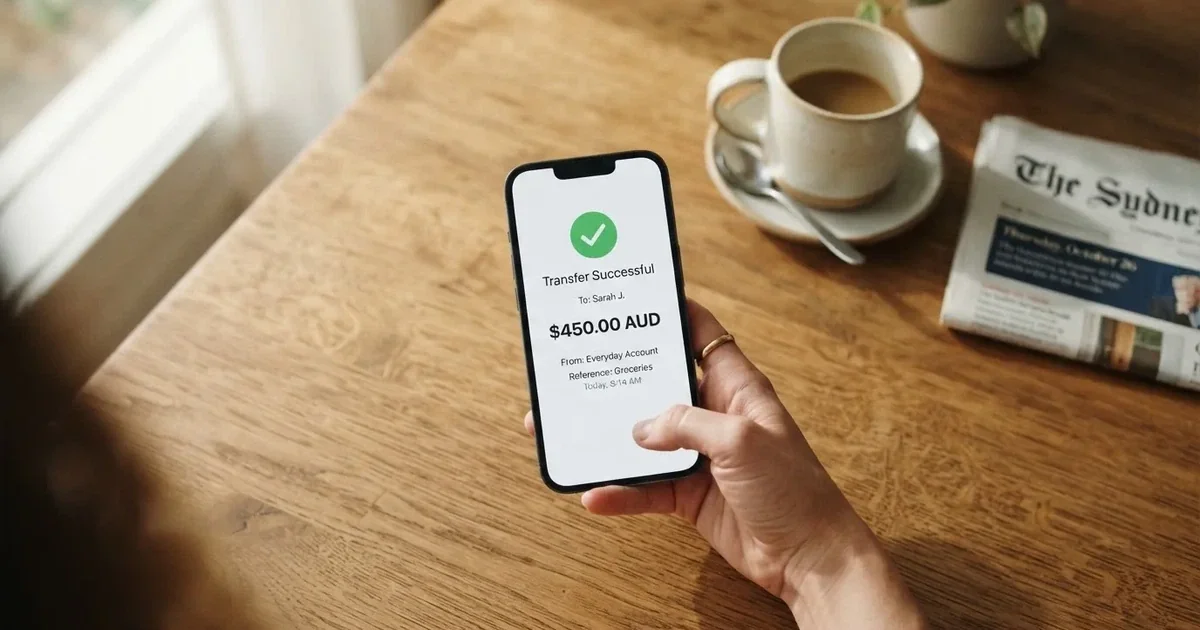
The $10 PayID No-Deposit Casino Bonus in Australia: Why the “Free” $10 Doesn’t Exist Onshore
 Available in US
A punter typing “$10 PayID no-deposit bonus casino Australia 2026” into a search bar usually wants to be told where to click. The honest answer is that the thing they are looking for is a contradiction in Australian terms. No licensed Australian casino can offer a no-deposit credit in exchange for a PayID, because no state or territory issues a licence for an online casino at all. Whatever advertises itself under that banner is an offshore operator running outside the Interactive Gambling Act 2001, and the Australian Communications and Media Authority has already moved against every brand in this guide.

This page is not a recommendation and not a click-through list. It works through what a $10 PayID no-deposit offer actually is, why the payment rail matters more than the bonus, and what recourse a player keeps if the offshore site refuses to pay out. Current as of 24 September 2026, with claims checked against the Australian Communications and Media Authority’s published warning register.
Table of Contents
- The Legal Ground an Australian Offer Sits On
- What Responsible Play Looks Like When the Product Is Prohibited
- PayID, Osko and the New Payments Platform — The Rail, Not the Casino
- The Bonus and the Wagering Requirement Behind It
- Eleven Brands the ACMA Has Formally Warned
- The PayID Scam-Warning Itself
- Where the $10 Goes Once the Punter Clicks
- What Happens to a Refused Withdrawal
- The $10 in Context: What an Australian Punter Is Actually Being Sold
- Frequently Asked Questions
The Legal Ground an Australian Offer Sits On
The shape of the Australian market is unusual, and it shapes everything that follows. The Interactive Gambling Act 2001 — strengthened by the Interactive Gambling Amendment Act 2017 — makes it an offence for a provider to supply online casino games, online pokies or in-play betting to a person physically in Australia. No state or territory licenses those products. What is licensable, and what licensed bookmakers such as Sportsbet, Bet365 and Ladbrokes do offer, is wagering on races and sport placed before the event, plus lotteries and keno — and even that work is concentrated under the Northern Territory Racing and Wagering Commission, a body that meets monthly in Darwin and has no full-time staff.

The point that catches most readers is the narrowness of the licence envelope. A sportsbook licensed in the Northern Territory cannot add a casino tab because casino games are not the licensed product. A casino licensed in Curaçao or Malta cannot accept Australian customers legally because offering those games to Australians is the offence the IGA creates. The “$10 PayID no-deposit casino bonus” combines two things the Australian framework forbids in a single product — no-deposit casino credit from an unlicensed offshore operator — and uses PayID, a perfectly legitimate Australian payment rail, as the trust signal that disguises the breach.
Enforcement sits with the ACMA. It investigates, issues formal warnings, and asks Australian internet service providers to block illegal services. The agency does not prosecute individual players; the IGA targets the provider. That asymmetry matters for a punter reading this page: it means there is no Australian complaints body to take a refused withdrawal to, no Australian regulator to escalate a payout delay to, and no guarantee the site will remain reachable tomorrow. The ACMA’s blocking round reported on 26 June 2026 asked ISPs to block twelve further sites, taking the cumulative count of blocked illegal gambling and affiliate marketing services to 1,751 since the first blocking request in November 2019, with more than 230 unlicensed operators having left the Australian market since enforcement was strengthened in 2017.
A reader’s instinct is to assume the offshore site displays a Curaçao or Anjouan badge and call that “licensed”. It is, in a literal sense — licensed somewhere — and it is still illegal to offer its product to a person in Australia. The licence held by the operator does not reach the player, because the Australian regulator does not recognise it, and the offshore regulator has no practical reach into a dispute over a $10 credit that never arrived.
What Responsible Play Looks Like When the Product Is Prohibited
The offshore casino that offers the $10 credit has no Australian consumer-protection framework around it. That absence is the second thing the marketing copy does not mention. BetStop, the National Self-Exclusion Register, has been live since August 2023 and binds every Australian-licensed online and phone wagering service — but it cannot reach an offshore casino, because BetStop is a condition of an Australian licence and the offshore operator does not hold one. A punter who has self-excluded and then accepts a $10 no-deposit credit on an offshore site has stepped outside the perimeter that exclusion creates.
The same gap exists for complaints. A refused withdrawal from a Curaçao-licensed casino is, in practice, a complaint to the same Curaçao-licensed casino, with the licensing authority acting only on systemic licence breaches. A punter chasing $10 has neither the time nor the standing to file that complaint. The Australian Taxation Office treats recreational gambling winnings as non-assessable income and losses as non-deductible, so even the tax system provides no leverage — the loss is not something a player can offset against other income.
Free, confidential help is available around the clock through Gambling Help Online and the National Gambling Helpline on 1800 858 858. Anyone who feels play starting to feel compulsive or stressful should treat those lines as the first call, not the last.
PayID, Osko and the New Payments Platform — The Rail, Not the Casino
PayID is the second half of the offer’s name, and understanding it dissolves the marketing. PayID is an easy-to-remember identifier — a mobile number, an email address, an ABN — linked to an Australian bank account, operated by Australian Payments Plus, the domestic payments provider. As of April 2025 there were more than 25 million registered PayIDs in Australia, and the rail is offered by over 100 Australian financial institutions, all of which have already built PayID into their online banking.
The rail itself is real and well regulated. PayID runs on the Reserve Bank of Australia–overseen New Payments Platform, which launched in February 2018 to let households, businesses and government agencies make simply-addressed, near real-time payments 24/7. With Osko, the brand that consumers see, a transfer between participating banks arrives in under a minute, including on weekends, whether it is addressed to a BSB and account number or to a PayID. The Reserve Bank separately owns and operates the Fast Settlement Service that settles NPP transactions individually in close to real time.
A payment to a PayID is shown the name of the account holder before the transfer is sent — the check that protects against mistaken payments and scams. This is the part of the rail an offshore casino does not advertise. Australian Payments Plus warns directly about gambling: “If you are asked to transfer funds to a PayID on an illegal gambling site, it is almost certainly a scambling website.” The same body defines “scambling” as slang for illegal online gambling platforms advertised on social media and messaging apps that trick people into gambling on a scam website, and tells anyone who thinks they have been scambled to contact their financial institution.
PayID will never contact a customer directly. Emails or text messages claiming to be from PayID are a scam. PayID never asks anyone to send money in order to receive money, and never asks anyone to “upgrade” an account. The detail to hold onto is simple: PayID is a payment rail, not a casino licence. The reputation of the rail does not transfer to the operator that receives the funds, and an offshore casino using PayID simply receives the funds the same way any other business with an Australian bank account can.
The reason an offshore site asks for a PayID is operational, not regulatory. A PayID lets the operator’s payments team reconcile incoming deposits to an account without handling card data. The PayID does not verify the player’s identity, does not prove the operator holds an Australian licence, and does not give the player any Australian-law protection on the funds once they have been sent. It is a routing convenience dressed up as a trust mark.
The Bonus and the Wagering Requirement Behind It
The “$10 no-deposit” part of the offer deserves the same treatment as the PayID part. Offshore casino marketing typically attaches a wagering requirement — a multiplier that says how many times the bonus must be turned over before any winnings can be withdrawn — and a maximum-cashout cap that limits how much of those winnings the player can actually take out. The exact figures are not published by the ACMA and have not been independently audited, because no affiliate marketing page in the research pool verified them against the operator’s own terms.
What can be said is the shape of the cost. Take a $10 no-deposit bonus with a 40x wagering requirement on the bonus amount. The required turnover before any withdrawal is $10 multiplied by 40, which is $400. On a typical online slot with a return-to-player around 96%, the expected loss on $400 of turnover is about $16 — the wagering turns a “free $10” into an expected $16 cost before a cent can be withdrawn, and that figure assumes the slot’s RTP and ignores the cashout cap that almost always sits on top of it. A 10x cashout cap on the same offer would let the player withdraw at most $100 in winnings; a $1,000 slot win on the way to clearing the wagering would pay out the cap and void the rest.
The arithmetic is the offer’s real price. The $10 figure is what the marketing copy remembers; the $400 turnover and the expected $16 loss are what the punter actually pays. None of this makes the offer fraudulent in the everyday sense — the offshore site typically states the multiplier and the cap in its terms — but it does mean a $10 no-deposit bonus is rarely a free $10 in the player’s pocket, and is more often a small loss taken in exchange for the entertainment of the spins themselves.
Eleven Brands the ACMA Has Formally Warned
The eleven brands below are not a recommendation and not a ranking. Each has been the subject of a formal warning from the ACMA for offering prohibited interactive gambling services to Australians. The operator named by the ACMA and the date of the warning are taken from the agency’s own published register. The “ACMA action” column is the basis on which each brand appears here; the “operator named by the ACMA” column is the legal counterparty the agency addressed; the “subject support” column records what other public listings — bank block pages, AUSTRAC entries, encyclopaedic references — say about the brand, without endorsing any of it as an Australian regulatory finding. Where research carries no such listing, the cell stays empty.
| Brand | ACMA action and date | Operator named by the ACMA | Subject support |
|---|---|---|---|
| RocketPlay | Formal warning, March 2026 (Pulsup Ltd); earlier Dama N.V., May 2022 | Pulsup Ltd (RocketPlay); earlier Dama N.V. | — |
| Level Up Casino | Formal warning, May 2022 | Dama N.V. | Westpac gambling-block listings reference the brand |
| Woo Casino | Formal warning, March 2025 | Dama N.V. | — |
| Spirit Casino | Formal warning, May 2025 | Dama N.V. | — |
| National Casino | Formal warning, July 2025 | Consolutetish S.R.L. | AUSTRAC entry; encyclopaedic reference |
| Bizzo Casino | Formal warning, July 2025 (Consolutetish S.R.L.); earlier 2022 warning to TechSolutions | Consolutetish S.R.L.; earlier TechSolutions (CY) Group Limited and TechSolutions Group N.V. | — |
| Ignition Casino | Formal warning, July 2025 | Bamboo Media | — |
| Instant Casino | Formal warning, February 2025 | EOD Code SRL | EcoPayz listings; PayID scam-alert references |
| Jackbit | Formal warning, April 2026 | Ryker B.V. | — |
| Casino Intense | Formal warning, April 2025 | Sterplay Holding Ltd | AUSTRAC entry; ITNews coverage; NAB gambling-block listings |
| Sky Crown | Formal warning (publication date 2022) | Hollycorn N.V. | — |
Reading across the table, two patterns stand out. The first is the repetition of operators: Dama N.V. appears three times — at Level Up Casino, Woo Casino and Spirit Casino — and Consolutetish S.R.L. appears twice, at National Casino and Bizzo Casino. The ACMA’s warnings target the operator, and the brands are re-skins of the same corporate group; a punter who has been warned off one Dama N.V. brand is, in practice, still dealing with the same counterparty on the next one. The second is the empty cells: most rows carry no subject-support entry, because the public listings that research consulted — bank block pages, AUSTRAC entries, encyclopaedic references — do not name most of these brands at all. An empty cell is the honest answer to “what else do public listings say about this brand?”, and the silence is itself the finding.
There is one further pattern the table does not show. Several of these brands have been warned about more than once. Bizzo Casino was warned in 2022 over TechSolutions and again in July 2025 over Consolutetish S.R.L. — a re-incarnation under a different corporate wrapper. RocketPlay was warned in May 2022 over Dama N.V. and again in March 2026 over Pulsup Ltd. The Australian offshore-casino market is not static; the brands re-papering themselves is part of the cycle, and a fresh warning does not mean a fresh business.
How Often the ACMA Has to Block Sites
The blocking programme is the ACMA’s bluntest tool, and the cumulative count is the measure of how much demand keeps finding new supply. As reported in June 2026, 1,751 illegal gambling and affiliate marketing websites had been blocked since the first blocking request in November 2019. The June 2026 round alone added twelve more: 7Signs, ChromaBet, Donbet, Duospin, Freshbet, Slots Gem, Jacks Club, Lucky Start, Pointsbetz, Spinrise, Vinyl Casino and Wildsino.
Stated as a blocking rate, that is 1,751 sites over roughly 79 months from November 2019 to June 2026 — a long-run average in the low-twenties per month, with the rate varying from round to round as the ACMA triages incoming complaints. The single June 2026 round cleared twelve sites, and a reader who treats the average as steady will understate the pace at which the agency’s enforcement catches up. The figure to hold onto is the cumulative one: the longer a brand has been on the market, the more likely it is that an Australian regulator has already looked at it, and the less likely it is that a new brand is genuinely new.
RocketPlay
RocketPlay was warned about twice. In May 2022 the ACMA warned Dama N.V. covering six brands including RocketPlay, and in March 2026 the agency warned Pulsup Ltd over RocketPlay. The same brand has been the subject of warnings to two different corporate operators in the space of four years. RocketPlay’s Australian availability sits on top of a paper trail of regulator action that no Curaçao badge undoes, and the $10 PayID no-deposit offer — if one is running — is a marketing wrapper around an unlawful-to-Australians product.
Level Up Casino
Level Up Casino was caught up in the May 2022 warning to Dama N.V. and has not, on the public record, been the subject of a fresh formal warning since. Public listings that reference the brand — most visibly Westpac’s gambling-block merchant list — treat it as a casino merchant code rather than as a licensed operator. The practical effect for an Australian punter is the same as for any other offshore brand on this page: a Level Up Casino offer is an offer from a service the ACMA has named, payable through a rail the bank is permitted to block.
Woo Casino
Woo Casino was the subject of a formal warning to Dama N.V. in March 2025, alongside Spirit Casino the following May. The brand is one of the two that share the same Dama N.V. corporate address and the same ACMA warning cycle, and the same caveats apply. Woo Casino’s Australian-facing marketing is operating outside Australian law, and any no-deposit credit it advertises sits on top of a brand the regulator has already named.
Spirit Casino
Spirit Casino was the second of the two Dama N.V. brands warned in 2025, in May. The pairing with Woo Casino is not a coincidence: the two warnings, two months apart, addressed the same corporate operator under two different brand names, and the ACMA’s action makes the point that the corporate group, not the brand, is what the agency is watching.
National Casino
National Casino was warned about in July 2025, with Consolutetish S.R.L. named as the operator. Public listings go further than most: there is an AUSTRAC entry that names the brand, and an encyclopaedic reference that catalogues its corporate history. The combined record — an AUSTRAC reference and an ACMA warning — is unusual; most brands in this guide have one or the other, and National Casino has both.
Bizzo Casino
Bizzo Casino is the brand that has been warned about twice under two different operators. In 2022 the ACMA warned TechSolutions (CY) Group Limited and TechSolutions Group N.V. over Bizzo Casino; in July 2025 the agency warned Consolutetish S.R.L. over the same brand. Three years apart, two different corporate wrappers, the same Australian-facing product. A brand with two warning cycles behind it is the clearest evidence available that re-papering does not protect the offer from regulator attention.
Ignition Casino
Ignition Casino was warned about in July 2025, with Bamboo Media named as the operator. The brand has not appeared in earlier ACMA formal warnings in the research pool, and the public listings that reference it are thin. The July 2025 warning is the only regulator action on the public file, and that is the most a reader can fairly say about its regulatory standing.
Instant Casino
Instant Casino was warned about in February 2025, with EOD Code SRL named as the operator. The brand is referenced in the EcoPayz payment-method listings and in the PayID scam-alert material on the Australian Payments Plus site — both surface as background data points rather than as Australian regulator findings, but the combination is the kind of trail that should give a punter pause before sharing an identifier with the operator behind it.
Jackbit
Jackbit was warned about in April 2026, with Ryker B.V. named as the operator. Public listings are silent on the brand; the ACMA’s April 2026 warning is the only entry on the public file. A new-enough warning that the surrounding trail is still thin, but the regulator action itself is enough to put the brand on this page.
Casino Intense
Casino Intense was warned about in April 2025, with Sterplay Holding Ltd named as the operator. The brand sits on three independent listings: an AUSTRAC entry, ITNews coverage, and NAB’s gambling-block merchant list. The combination — a regulator warning plus bank-block and AUSTRAC visibility — is the strongest non-licence public trail in this guide, and Casino Intense is the brand an Australian punter is most likely to encounter blocked at the point of transaction.
Sky Crown
Sky Crown was warned about by the ACMA over Hollycorn N.V., in the agency’s published PDF of formal warnings from September 2022. The Hollycorn N.V. action also named Blue Leo casino. Public listings on Sky Crown specifically are quiet; the ACMA warning is the dominant entry on the public file.
The PayID Scam-Warning Itself
AUSTRAC’s PayID scam-alert material is short and worth quoting in full, because it is the regulator’s own description of what an Australian punter is being asked to do. Australian Payments Plus warns directly about gambling: “If you are asked to transfer funds to a PayID on an illegal gambling site, it is almost certainly a scambling website.” The same body defines “scambling” as slang for illegal online gambling platforms advertised on social media and messaging apps that trick people into gambling on a scam website, and tells anyone who thinks they have been scambled to contact their financial institution.
The wording matters. The agency does not say “may be a scam”; it says “almost certainly”. It is the strongest language the Australian payments regulator uses on a public page, and it is the language reserved for a payment flow the regulator has concluded is not what it claims to be.
PayID will never contact a customer directly, and any email or text message claiming to be from PayID is a scam. PayID never asks anyone to send money in order to receive money, and never asks anyone to “upgrade” an account. The detail is small but it is the test the rail itself uses: a real PayID interaction does not require an out-of-band step, and an offshore casino’s onboarding flow that asks for a PayID plus a screenshot plus a confirmation code is building the very chain the rail is designed to prevent.
Where the $10 Goes Once the Punter Clicks
A no-deposit bonus has a peculiar economics. The operator is paying the player to try the product, and the wagering requirement is the leash: the player must turn the bonus over a stated number of times before any winnings become withdrawable. The cap on cashable winnings is the second leash: even after clearing the wagering, the player can usually withdraw only a small multiple of the bonus, and the rest is forfeited. The arithmetic that makes the offer unprofitable for the player is the same arithmetic the operator is paying the affiliate to advertise: the expected loss to the player exceeds the headline value of the bonus, and the cap ensures the operator is rarely out more than the cap amount.
The offshore site’s business model is the volume of players who forget to read the terms, the players who clear the wagering and walk away with nothing because they miscounted, and the players who never clear the wagering at all and whose bonus simply expires. None of that is unique to Australia; it is the standard offshore-casino model. What is unique to Australia is that the entire product is unlawful for the operator to offer, so the punter has no complaints body if the operator decides to void the bonus for a terms violation the punter did not know about.
The bank-block layer adds a quiet cost the marketing does not mention. Westpac’s gambling block works at card level: it refuses authorisation of transactions registered under the merchant category code “Betting/Casino Gambling” on eligible personal credit and debit cards. ANZ’s gambling transaction block, activated in the ANZ app, also blocks gambling transactions made through a digital wallet such as Apple Pay on an eligible card, not just the physical card, and once turned on the block requires a 48-hour waiting period to remove. The bank warns that not all gambling transactions will be blocked and some non-gambling transactions might be blocked in error. The same restrictions apply to American Express transactions, and Apple Pay and Google Pay and Samsung Pay collectively accounted for around 45% of all card payments in Australia by number at the end of 2025 — a sizeable share that the block codes may or may not catch, depending on the merchant category the operator files under.
The point is operational. Even if the punter clears the wagering and the cap and the operator agrees to pay out, the payout path back to the punter’s Australian bank account is filtered through the same merchant-category codes that blocked the deposit. A withdrawal from the offshore casino will most likely arrive as an international transfer or a card refund, and either path can be re-blocked by the issuing bank on its way through.
What Happens to a Refused Withdrawal
The offshore operator’s terms typically reserve the right to void the bonus and any associated winnings on a list of conditions that runs from “irregular play” through “use of a VPN” to “multiple accounts”. Each condition is at the operator’s discretion to invoke. A punter who has cleared the wagering but is told their play was “irregular” has, in practice, no recourse beyond the same operator’s customer-support channel. The Curaçao or Anjouan licensing authority has the standing to investigate a licence breach, but a single $10 dispute is not the kind of case that licensing authority opens.
The Australian regulator’s role stops at the operator. The ACMA can warn the operator, can ask ISPs to block the site, and can refer the operator to the Australian Federal Police for criminal investigation — but the ACMA does not arbitrate individual disputes. The punter who is refused a $10 payout is, in Australian-law terms, the victim of a foreign service provider operating outside Australian jurisdiction, and the available remedies are thin.
The cleanest path the punter can take is the one the rail itself suggests: contact the bank. Australian Payments Plus tells anyone who thinks they have been scambled to contact their financial institution. A bank that has received a chargeback request from a customer will sometimes recover funds from the merchant’s acquiring bank, even where the merchant is offshore, and the chargeback route is the only Australian-institution remedy that does not depend on the operator’s goodwill. It is also the only remedy that does not depend on the operator remaining reachable, which — under an active blocking round — it may not.
The $10 in Context: What an Australian Punter Is Actually Being Sold
The honest description of a $10 PayID no-deposit casino bonus in Australia is that it is an unlawful offer from an offshore operator, payable through a legitimate Australian rail, advertised under a bonus value that the wagering requirement and cashout cap will most often erase before the player can withdraw. The H2 Gambling Capital 2025 estimate is that Australians lose about A$3.9 billion a year to illegal gambling sites, and that the share of gambling going through legal channels fell from 74% in 2021 to 64% — a market that has migrated offshore in the years since the 2017 amendment, not because Australians have stopped gambling, but because the licensed onshore product has narrowed to wagering, lotteries and keno.
The Interactive Gambling Amendment (Gambling Reform) Bill 2026 passed Parliament on 19 August 2026. Its advertising and inducement measures commence on 1 January 2027 — law with a start date, not yet in force on a page read today. The bill does not legalise online casino; it tightens the inducements around the wagering, lottery and keno products that remain licensed. The “$10 PayID no-deposit casino bonus” sits outside the perimeter the bill draws, and it will continue to sit outside the perimeter on 1 January 2027.
What an Australian punter is actually being sold, then, is a chance to spend time on a product the regulator says is prohibited, paid for through a rail the regulator says is being abused, on terms the operator writes and the punter cannot appeal. The $10 is the entry fee the marketing copy forgets to call an entry fee.
Frequently Asked Questions
Can a casino actually credit $10 to my account the moment I share a PayID?
No Australian-licensed casino can, because no state or territory issues an online casino licence. An offshore site may credit a small no-deposit balance on signup, but the credit is from an operator outside Australian law, the ACMA has already moved against every brand in this guide, and the bonus typically carries a wagering requirement and a cashout cap that erase most of the headline value before any withdrawal.
Is PayID itself a legitimate, regulated Australian payment service?
Yes. PayID is operated by Australian Payments Plus and runs on the Reserve Bank of Australia–overseen New Payments Platform. It is offered by over 100 Australian financial institutions and there were more than 25 million registered PayIDs in Australia as of April 2025. The legitimacy of the rail does not transfer to the operator that receives the funds.
Why would an offshore site ask for a PayID before paying out a $10 bonus?
Operationally, a PayID lets the operator’s payments team reconcile incoming deposits without handling card data. The PayID does not verify identity, does not prove the operator holds an Australian licence, and does not give the player any Australian-law protection on the funds once they have been sent. It is a routing convenience dressed up as a trust mark.
What’s the catch with a $10 no-deposit bonus that only needs a PayID?
The catch is the wagering requirement and the cashout cap. A 40x multiplier on a $10 bonus means $400 of required turnover before any withdrawal, and a typical 10x cashout cap limits what can actually be taken out. On a slot with a 96% RTP the expected loss is around $16, which exceeds the headline value of the bonus, and any winnings above the cap are forfeited.
Does using PayID with an offshore casino count as banking with an Australian institution?
No. The transfer is processed through the New Payments Platform because the player’s bank uses it, but the receiving account is held by an offshore operator and the funds are not protected by Australian deposit-guarantee or consumer-credit regimes once they have been sent. The receiving end of the PayID is no more Australian than any other international bank account.
Is a PayID casino bonus offer regulated by ASIC or the ACMA?
The PayID rail itself is overseen by the Reserve Bank of Australia through the New Payments Platform, and the ACMA enforces the Interactive Gambling Act 2001 against operators that offer prohibited interactive gambling services to Australians. A specific PayID casino bonus is not regulated as a financial product by ASIC, and the ACMA’s role is to act against the operator, not to arbitrate the bonus. The punter has no Australian regulator to appeal a refused withdrawal to.
Written by the editors at Casino No Wager Hub.