
Apple Pay at Australian online casinos: where the deposit lands and where the law lands it
The phrase “casinos that accept Apple Pay Australia” implies a clean choice between several licensed operators. The reality under that wording is heavier. Under the Interactive Gambling Act 2001, no online casino may lawfully take an Australian customer at all — whether the deposit method is a Visa debit card, a BPAY transfer, or Apple Pay. Every brand reviewed on this page is one the ACMA has formally warned for doing it. A tap to deposit almost always clears. What it sets in motion, and where that motion runs into the bank, the regulator, or a balance that will not move, is the substance of what follows.
Current as of 3 November 2026 — verified against the ACMA’s public register of formal warnings and the June 2026 blocking round.
Table of Contents
- Settlement at an Apple Pay casino: what clears and what doesn’t
- Eleven Apple Pay casino brands the ACMA has named in formal warnings
- Fundamentals of how an offshore casino handles an Apple Pay deposit
- The prohibition: what the Interactive Gambling Act 2001 does to an Apple Pay deposit
- Responsible gambling tools that stop at the Australian border
- Rocketplay — two formal warnings under two operator names
- Level Up Casino — one of the original Dama N.V. six
- Woo Casino — the first 2025 follow-up on Dama N.V.
- Spirit Casino — the second 2025 follow-up on Dama N.V.
- National Casino — the lead brand in a Consolutetish S.R.L. pair
- Bizzo Casino — the second brand in the Consolutetish pair, with a 2022 warning before it
- Ignition Casino — Bamboo Media’s first published warning
- Instant Casino — EOD Code SRL’s only published warning
- Jackbit — Ryker B.V.’s first published warning, paired with CasinOK
- Casino Intense — Sterplay Holding Ltd’s first published warning
- Sky Crown — Hollycorn N.V.’s paired warning covering Sky Crown and Blue Leo
- Blocking rate: how the ACMA’s list of blocked sites grew between November 2019 and the June 2026 round
- Frequently asked questions
Settlement at an Apple Pay casino: what clears and what doesn’t
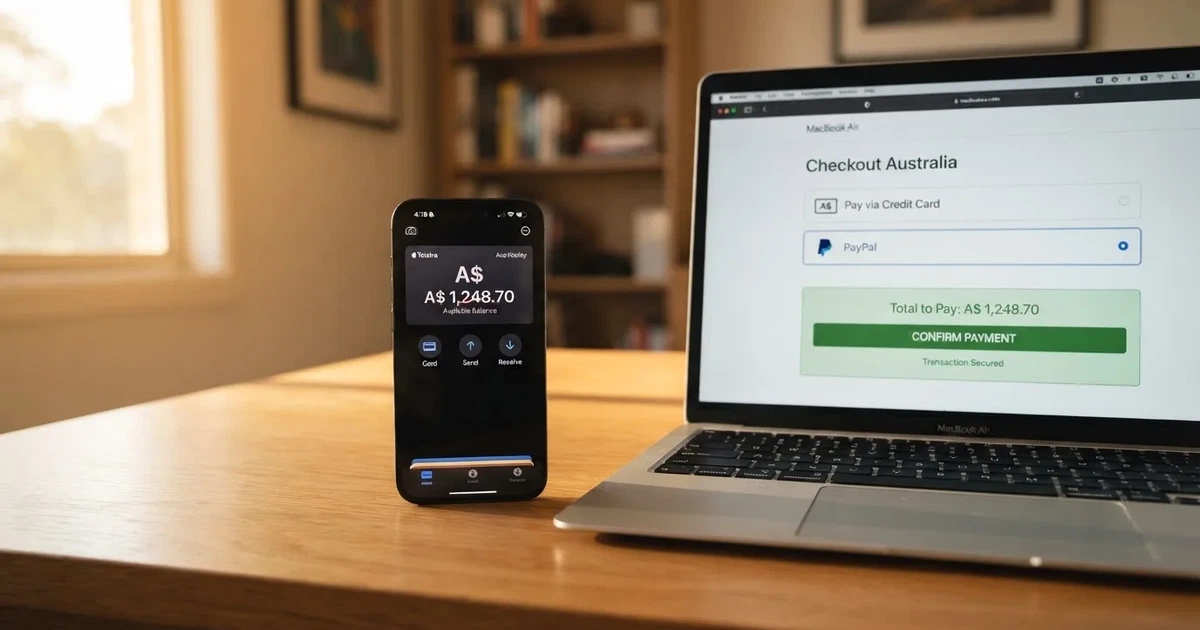
The tap-to-pay experience at an offshore casino tends to feel frictionless. A punter opens a cashier page, picks Apple Pay, confirms with Face ID or Touch ID, and the deposit posts. Behind that single gesture sits the same plumbing as any card transaction: a tokenised card credential, a card-network authorisation, and a merchant-category-code flag the moment the merchant name reaches the issuing bank. Apple Pay is not a separate payment system. It is a card transaction wearing a different front end.
Apple does not charge consumers for using Apple Pay in stores, online, or in apps. Any surcharge that appears at the cashier comes from the merchant’s own card-processing fees, not from Apple. The transaction limits and PIN requirements on an Apple Pay purchase are set by the issuing bank or by the merchant, not by Apple. These are the lines Apple draws. The card issuer’s rules sit on top of them, and they are the ones that bite.
Three Australian banks run gambling blocks that intercept at the card level. Westpac’s block refuses authorisation on transactions registered under the merchant category code “Betting/Casino Gambling” across eligible personal credit and debit cards. ANZ’s block, activated in the ANZ app, also blocks gambling transactions made through a digital wallet such as Apple Pay on an eligible card, not just on the physical card. Commonwealth Bank lets a customer apply a gambling lock to eligible cards through the CommBank app, which automatically blocks most gambling transactions. None of these banks promises a complete block. ANZ’s own warning is direct: not all gambling transactions will be blocked, and some non-gambling transactions may be blocked in error. Removing the ANZ block, once turned on, requires a 48-hour waiting period.
The credit-card ban for Australian-licensed online wagering took effect on 11 June 2024, with operator penalties up to A$247,500 per breach. The legal deposit routes that remain are debit card, bank transfer, PayID and Osko, and BPAY. None of the eleven brands reviewed on this page holds an Australian licence to take online casino play. The credit-card ban is the consumer-side expression of the same prohibition the ACMA enforces against the operators.
A withdrawal is a separate question, and a slower one. The brand at the cashier still has to complete its own internal checks before settlement lands. The wallet is the front end. The queue is the back end. Withdrawal times at these operators run from a stated “instant” to several working days, depending on the brand, the verification stage the player has reached, and whether the casino has flagged any manual review. Apple Pay does not appear on the way out. The brand’s own rails carry the funds back.
The practical sequence looks like this. A player taps to deposit A$30 on a Monday night. The wallet authorises instantly. The bank either passes the transaction through, declines it under the gambling block, or — if the player’s card carries credit functionality — declines it under the credit-card ban. If it passes, the balance appears in the casino account within seconds. The same is not true on the way out. A withdrawal request triggers identity checks the casino did not need on the way in, plus whatever anti-money-laundering review the brand applies. Only after that does settlement get a chance to race. The mobile wallet fast-tracks the deposit. Nothing about it speeds the payout.
PayID and Osko settle a bank transfer between participating Australian banks in under a minute, 24/7 including weekends — addressed to a BSB and account number or to a PayID. Paying to a PayID shows the name of the account holder before the transfer is sent. PayID-based instant transfers are available at more than 100 Australian financial institutions, and more than 25 million PayID identifiers had been registered on the New Payments Platform as of April 2025. None of that matters to a PayID addressed to an offshore casino, because the operator is not a participating Australian institution. AP+ warns that being asked to transfer money to a PayID on an illegal gambling site almost certainly means a scam site.
BPAY is the older Australian bill-payment route — launched on 18 November 1997 and now offered through more than 140 banks and financial institutions and 95,000 businesses. A payer enters the Biller Code and Customer Reference Number printed on the bill. BPAY is owned equally, via parent company Cardlink Services Limited, by Australia’s four major banks: ANZ, Commonwealth Bank, National Australia Bank, and Westpac. It is also the wrong tool for an offshore casino deposit. The bill-payment rail was designed to move money to Australian-registered billers, and the operator set this page covers is not on it.
The platform layer underneath the wallet is the New Payments Platform, which went live on 13 February 2018 and is owned by New Payments Platform Australia Ltd, a non-profit whose 13 shareholders include the Reserve Bank of Australia and the country’s major banks. Participants must keep monthly outages to no more than two minutes. In September 2021 the ACCC authorised merging NPP Australia with BPAY and eftpos under Australian Payments Plus. AUSTRAC’s threshold-transaction-report rule applies only to physical cash transfers of A$10,000 or more; ordinary electronic transfers are not subject to that per-transaction reporting requirement, regardless of the amount sent. The reporting framework is built around the rails a player is not using.
By the end of 2025, Apple Pay, Google Pay, and Samsung Pay transactions collectively accounted for around 45% of all card payments in Australia by number. The wallet’s share at the cashier is large. The share of those wallet transactions that actually reach an offshore casino, after bank blocks and credit-card flags have had their say, is much smaller. A Apple Pay deposit is the modern front end for the same old plumbing. The interception happens at the card layer, not at the wallet.
Eleven Apple Pay casino brands the ACMA has named in formal warnings
Every brand on the table below is one the ACMA has issued a formal warning against for providing prohibited interactive gambling services to customers physically present in Australia. The list is ordered by the most recent ACMA action on each brand. The point of putting them side by side is not to crown a winner. The point is to show, in one view, what “Apple Pay casino Australia” actually points to in 2026.
| Brand | ACMA action and date | Operator named by the ACMA | Apple Pay listed |
|---|---|---|---|
| Rocketplay | Formal warning, March 2026 | Pulsup Ltd | — |
| Jackbit | Formal warning, April 2026 | Ryker B.V. | — |
| Level Up Casino | Formal warning, May 2022 | Dama N.V. | Westpac gambling-block page |
| Woo Casino | Formal warning, March 2025 | Dama N.V. | — |
| Spirit Casino | Formal warning, May 2025 | Dama N.V. | — |
| National Casino | Formal warning, July 2025 | Consolutetish S.R.L. | AUSTRAC and Wikipedia references |
| Bizzo Casino | Formal warning, July 2025 (also 2022 under TechSolutions) | Consolutetish S.R.L. | — |
| Ignition Casino | Formal warning, July 2025 | Bamboo Media | — |
| Instant Casino | Formal warning, February 2025 | EOD Code SRL | EcoPayz and PayID coverage |
| Casino Intense | Formal warning, April 2025 | Sterplay Holding Ltd | AUSTRAC, ITNews and NAB references |
| Sky Crown | Formal warning, 2022 | Hollycorn N.V. | — |
A note on the rightmost column. Where research surfaced the brand in third-party listings that connect it to Apple Pay, the table says so and names the source. Where it did not, the cell carries an em dash. None of the eleven brands had the Apple Pay deposit option verified from the operator’s own terms page.
The cluster of Dama N.V. names — Level Up Casino, Woo Casino, and Spirit Casino — is one operator running three of the eleven brands through the same corporate roof. The pair of Consolutetish S.R.L. names — National Casino and Bizzo Casino — is a second. Bizzo Casino is also the only brand in the table with two ACMA actions against it under two different operator names: the first against TechSolutions (CY) Group Limited and TechSolutions Group N.V. in 2022, and the second against Consolutetish S.R.L. in 2025. Hollycorn N.V. ran Sky Crown and Blue Leo under one warning. The pattern across the table is consistent. The brand stays, and the corporate identity behind it shifts. Two of those brands — Woo Casino and Spirit Casino — were named in Dama N.V. actions in the same year, two months apart.
Fundamentals of how an offshore casino handles an Apple Pay deposit
A Apple Pay deposit at an offshore casino is, at the merchant end, a card-network transaction. When a player taps, the wallet substitutes a device-specific token for the underlying primary account number, and the merchant receives that token rather than the card digits. The merchant’s processor routes the token to the relevant card network — Visa, Mastercard, or American Express — and the authorisation either clears or declines against the player’s card issuer. The marketing word for this is “instant.” The description is more mundane. It is a tokenised card authorisation with a biometric confirmation in front of it.
This is why the bank-side blocks bite at this layer rather than at the wallet. The merchant-category-code flag Westpac acts on is set by the acquirer based on the merchant’s registration, not by Apple Pay. The gambling block ANZ applies to a digital wallet is also a block on the underlying card; Apple Pay is the rail, the card is the destination. A player who has set up an Apple Pay wallet using a debit card on an account with a gambling block active will be declined. A player using a credit card, or a debit card linked to a credit facility, will be declined under the Interactive Gambling Act ban on credit-funded online wagering that took effect on 11 June 2024. Both declines happen before the casino ever sees the transaction.
The minimum deposit these brands publish varies, but A$10 is the floor most of them use. A handful push it to A$20 or A$30. The wallet does not impose its own minimum. Apple explicitly leaves transaction limits to the issuer or the merchant. What that means in practice is that the casino’s cashier page sets the floor, and the card-issuer’s rules set a ceiling below what the casino might accept. The same A$10 that an unblocked debit card can post, a credit-funded wallet cannot, and a wallet with an active gambling block may not. The floor on the screen is not the floor on the receipt.
American Express sits in a slightly different position from Visa and Mastercard. Amex was established in 1850 as a freight-forwarding company and later became a card issuer, launching its first charge card on 1 October 1958. Unlike Visa or Mastercard’s four-party networks, Amex traditionally issues cards and processes transactions itself as a three-party scheme. The Reserve Bank of Australia’s July 2025 review of merchant card payment costs and surcharging proposes removing surcharges on eftpos, Mastercard, and Visa transactions, but explicitly leaves American Express outside the scope of the proposed surcharge ban. For an Australian Apple Pay wallet funded by an Amex card, the practical consequence is that surcharging rules at the merchant remain set by Amex’s own arrangements, not by the proposed RBA standard. The surcharge an Amex wallet sees at an offshore cashier is whatever the merchant has filed with Amex.
The deposit that posts is, from the casino’s perspective, a card deposit. The brand’s bonus terms, withdrawal rules, identity-verification procedures, and anti-money-laundering reviews apply the same way they would to a card-entered deposit. Apple Pay is the rail. The operator’s rules are the destination. A player who thinks of it as a separate payment method, with separate consumer protections, is misreading the transaction. The wallet does not move funds. The card network does. The casino does not see Apple. The casino sees Visa, Mastercard, or Amex.
The prohibition: what the Interactive Gambling Act 2001 does to an Apple Pay deposit
The Interactive Gambling Act 2001, strengthened by the Interactive Gambling Amendment Act 2017, makes it an offence to provide online casino games, online pokies, or in-play betting to a person physically present in Australia. No state or territory licences them. What is licensable is wagering on races and sport placed before the event, lotteries, and keno — in practice licensed by the Northern Territory Racing and Wagering Commission. The minimum age is 18. The legal deposit routes for a licensed wagering service are debit card, bank transfer, PayID and Osko, and BPAY.

The prohibition is targeted at the provider, not the player. The individual Australian who places a bet on an offshore site is not prosecuted under the IGA. The operator that takes the bet is. A site that displays a Curaçao, Malta, or Kahnawake registration is operating under that jurisdiction’s licence, not under any Australian authority. The licence the brand advertises is real in its home jurisdiction. It is not a licence to take Australian customers. None of the eleven brands in this page’s review has an Australian licence to take online casino play, whatever licence they display elsewhere.
The 2026 reform cycle is in motion but not yet in force. The Interactive Gambling Amendment (Gambling Reform) Bill 2026 passed Parliament on 19 August 2026; its advertising and inducement measures commence on 1 January 2027. Until then, the IGA as amended in 2017 remains the operative law. A reader looking at this page in late 2026 is reading under the existing framework, with the new advertising rules queued up for the new year. The deposit that posts today is governed by the older rules. The marketing that surrounds it will be governed by the newer ones.
For Australian players, the practical consequence is a list of consumer protections that simply do not reach them. An offshore site is not bound by BetStop, the National Self-Exclusion Register that has been live since August 2023 — BetStop binds only Australian-licensed online and phone wagering services. An offshore site is not required to display problem-gambling help lines, not required to honour Australian complaints bodies, and not required to hold player funds in segregated accounts. If a withdrawal stalls, the player has no Australian regulator to call. The site’s own internal dispute process is the only process, and “internal” is the operative word. Tax does not soften the landing either: gambling winnings of a recreational player are not assessable income under section 6-5 of the ITAA 1997, and losses are not deductible, unless the person carries on a business of gambling. An offshore casino payout sits outside the Australian tax framework in both directions.
How the ACMA enforces the prohibition
The ACMA investigates complaints, issues formal warnings, and can direct Australian internet service providers to block illegal sites. The blocking round reported on 26 June 2026 added twelve more names to the block list: 7Signs, ChromaBet, Donbet, Duospin, Freshbet, Slots Gem, Jacks Club, Lucky Start, Pointsbetz, Spinrise, Vinyl Casino, and Wildsino. None of the eleven brands reviewed here appeared in that particular round. They were already on a different list — the formal-warning register — and several of them had been there for years.
A formal warning is not a block. The brand remains reachable through a typical Australian internet connection until the ACMA issues a specific blocking request. But a formal warning has its own consequence. It puts the operator on the ACMA’s published record, makes the warning a matter of public fact, and gives the regulator the basis for a block request if the operator does not stop serving Australian customers. The progression the ACMA uses, in most cases, runs from investigation to formal warning to blocking request. The eleven brands in this review sit at the second stage, with the third stage the foreseeable consequence. A balance still sitting on a site when the third stage lands is a balance the player may not move.
The scale of the enforcement effort is large. According to the ACMA as reported in June 2026, a total of 1,751 illegal gambling and affiliate marketing websites had been blocked since the first blocking request in November 2019. More than 230 unlicensed gambling services had left the Australian market since enforcement was strengthened in 2017. The block list is not a one-off action. It is an accumulating record of providers who chose to keep serving Australians after being told to stop.
The financial scale of what the prohibition tries to interrupt is large too. H2 Gambling Capital’s 2025 report estimates that Australians lose about A$3.9 billion a year to illegal gambling sites, and that the share of gambling going through legal channels fell from 74% in 2021 to 64% in 2025. The legal-channel share is the metric that captures both the growth of the illegal market and the contraction of the licensed one. The ACMA’s blocking rounds, in this framing, are not catching up. They are holding the line at a share that is already sliding.
The Northern Territory Racing and Wagering Commission, the de facto national regulator for online wagering, regulates 52 of Australia’s online bookmakers — including Sportsbet, Bet365, and Ladbrokes — under a tax-driven licensing model. The commission has no full-time staff and meets once a month in Darwin. That is the regulatory capacity on the licensed side of the fence. On the prohibited side, the ACMA’s enforcement record is what stands between an offshore operator and an Australian customer, and the record shows it is a permeable fence.
Responsible gambling tools that stop at the Australian border
The responsible-gambling framework an Australian player may be used to — BetStop, deposit limits, time-outs, mandatory identity checks — applies to Australian-licensed online and phone wagering services. An offshore casino is not part of that framework. The ACMA’s blocking list and the formal-warning register are the regulator’s tools on the offshore side. The player-protection tools are the licensed operators’ burden, and these operators do not carry it.
BetStop, the National Self-Exclusion Register, has been live since August 2023. A player who registers with BetStop is excluded from every Australian-licensed online and phone wagering service. The exclusion period is the player’s choice, from three months to a lifetime. The mechanism works by matching the player’s details against a database that every participating Australian licensee is required to check. An offshore casino has no obligation to check that database, no obligation to honour an Australian self-exclusion, and no penalty for taking a self-excluded player’s deposit. A player who has registered with BetStop and then opens an Apple Pay wallet to deposit at one of the eleven brands in this review has not stopped gambling. They have moved it past BetStop’s reach.
The 24/7 help line an Australian player can dial is the National Gambling Helpline on 1800 858 858. The chat service is Gambling Help Online. Both are free. Both are Australian. Neither depends on the operator being licensed — a player who wants help with an offshore-site problem can still call. What they cannot do, on the offshore side, is compel an operator to act on the responsible-gambling framework’s findings. A licensed operator must. An offshore operator may or may not.
The bank’s own tools remain useful, and they are the only Australian-side guard that does reach these operators. Westpac’s gambling block refuses authorisation on transactions registered under the merchant category code “Betting/Casino Gambling”. ANZ’s block does the same, including for transactions routed through a digital wallet such as Apple Pay on an eligible card. Commonwealth Bank’s gambling lock works through the CommBank app on eligible cards. None of the banks advertise the block as comprehensive. ANZ warns that some non-gambling transactions may be blocked in error, and some gambling transactions may not be blocked at all. The block is a barrier at the payment rail, not at the site. The two are different things.
The decision the responsible-gambling framework asks an Australian player to make is, in the offshore context, the one the framework cannot help with. An Australian-licensed site offers deposit limits a player can set in the cashier, time-outs the operator enforces, self-exclusion BetStop enforces across all licensees. None of that reaches the brands in this review. A player who is using an offshore site and wants to set a deposit limit has to do it themselves, and to enforce it themselves, and to live with the fact that the operator has no obligation to either. The Australian framework’s protections end at the border. So does the framework’s enforcement. A Apple Pay deposit at an offshore casino sits in the gap between the two.
Rocketplay — two formal warnings under two operator names
Rocketplay is the only brand in this review with a formal warning against two different operator names: Dama N.V. in May 2022, and Pulsup Ltd in March 2026. The four-year gap between the two warnings is what makes the record worth pausing on. The brand stayed. The corporate identity behind it did not.
The Dama N.V. warning in May 2022 covered six casino brands in one action: Bambet, Dazard, Level Up, Rocketplay, Wild Tornado, and Cobra Casinos. Rocketplay is the only one of the six that has surfaced under a fresh operator name in a later ACMA warning. Three of the original six — Woo Casino, Spirit Casino, and Level Up Casino — have appeared in later actions too, but the Level Up record stays under Dama N.V., and the Woo and Spirit records are portfolio additions to the same Dama N.V. stable rather than transfers to new operators. Rocketplay’s March 2026 warning, by contrast, names a different operator entirely: Pulsup Ltd, over Rocketplay.
The 2026 warning is also the more recent of the two. It sits in the same year as the Ryker B.V. warning over Jackbit and CasinOK, the only other 2026 formal action in this review. The sequence suggests Rocketplay’s brand has either migrated operators since 2022 or has run under parallel corporate vehicles during the period. Either reading is the kind of move a formal warning is meant to discourage. The data shows it has not stopped.
The Australian-facing URL Rocketplay.com.au is what the March 2026 warning names specifically. The Australian-licensed space does not carry online casino games, and the ACMA does not need to find evidence of a player transaction to issue the warning. The warning is about the offering. The block-list round reported in June 2026 added twelve other names; Rocketplay’s two warnings put it ahead of every brand in this review on the ACMA’s formal record.
Rocketplay is the case study in what an enforcement record looks like when a brand keeps operating after a warning. The brand has stayed. The corporate identity has not. The 2022 warning addressed the operator behind it. The 2026 warning addressed the next one. The ACMA’s formal record on Rocketplay is, in this respect, longer than the operator name it is currently filed under.
Level Up Casino — one of the original Dama N.V. six
Level Up Casino is one of the original six. In May 2022 the ACMA issued a formal warning to Dama N.V. covering six casino brands — Bambet, Dazard, Level Up, Rocketplay, Wild Tornado, and Cobra Casinos. Level Up sits in that first wave of post-2017-amendment enforcement. It is the earliest warning in this review.
The warning names Dama N.V. as the operator. Dama N.V. has reappeared in two later formal warnings in this review: Woo Casino in March 2025 and Spirit Casino in May 2025. Both are portfolio additions rather than transfers. Level Up is the original entry, and the record the ACMA has on it has not grown since 2022. The brand has not produced a second warning under a second operator name, in the way Rocketplay has.
What is notable about the Level Up position is what an A$10 deposit looks like at a brand that has been on the ACMA’s formal-warning register for the longest continuous period in this review. The deposit still posts through the same card-network plumbing described in the fundamentals section. The bank-side blocks still apply. The credit-card ban still applies. The BetStop self-exclusion mechanism still does not reach the brand. None of those consequences depend on which year the brand was first warned.
Level Up is also the only brand in the review with a third-party listing reference in the Apple Pay column. Westpac’s gambling-block merchant list names it. A third-party reference is not a direct confirmation that the deposit method is supported, but it is the closest signal surfaced in research. The brand appears in a payment-rail context that suggests Apple Pay connectivity, without the operator explicitly confirming this on its terms page.
Three years on, the brand is still reachable from Australia. The warning has not turned into a block request for this brand specifically, though the block list has grown to 1,751 sites overall. The “early warning, no block yet” position is the most informative line on the Level Up record, and the position the regulator’s slow escalation makes visible.
Woo Casino — the first 2025 follow-up on Dama N.V.
Woo Casino’s formal warning came in March 2025, more than two years after the May 2022 Dama N.V. action that originally named it as part of the six-brand cohort. The intervening period is what a clean transition looks like on paper. The 2025 warning is what actually happened.
The warning names Dama N.V. as the operator. Woo Casino joins Spirit Casino in the same operator’s 2025 enforcement record — Woo Casino in March, Spirit Casino in May — and the two together point to a pattern at Dama N.V. that is broader than a single brand lapse. The brand-level warning has become a portfolio-level record.
The position Woo Casino sits in is informative on timing. The 2017 amendments to the Interactive Gambling Act have now been in force for several years. The first formal-warning round under them ran in May 2022. Three years on, Woo Casino’s warning is a second action on the same operator, not the first. The ACMA’s enforcement tempo on Dama N.V. has been: an early broad warning in 2022, a follow-up warning on Woo Casino in 2025, another follow-up on Spirit Casino in the same year. Three rounds. Same operator. Different brands.
Woo Casino is another brand in this review, and it operates under the same Dama N.V. licence. The warnings reflect the operator’s portfolio-wide enforcement record, not just single-brand issues. Whether the regulator escalates Woo Casino to a block request remains an open question, as the formal-warning register does not specify the next step for this particular operator.
Woo Casino’s record is the cleanest illustration of what a follow-up formal warning looks like. The first warning in 2022 was broad. The 2025 warning is brand-specific. The progression is what enforcement looks like when an operator does not leave the market after being told to.
Spirit Casino — the second 2025 follow-up on Dama N.V.
Spirit Casino received its formal warning in May 2025, two months after Woo Casino’s. Both warnings name Dama N.V. as the operator. The two warnings, taken together, are the most concentrated operator-level enforcement record in this review.
Dama N.V. now sits on the ACMA’s formal-warning register with three brands named across two enforcement rounds: the original six-brand cohort in May 2022, then Woo Casino in March 2025, then Spirit Casino in May 2025. The 2022 action named six brands in one warning. The 2025 actions are one warning per brand, two months apart. The change in shape is what an enforcement record looks like when the regulator stops grouping and starts singling out.
The Spirit Casino position has a specific feature. It is the third warning on the same operator inside this review. A player who chooses Spirit Casino is choosing the brand that sits at the back end of the most-repeated enforcement pattern in the operator set. That is not a “best of” framing. It is a “most-enforced” framing, and the difference matters when the player is trying to read the ACMA record.
Spirit Casino shares this regulatory status. The brand-level warning highlights the regulator’s stance on the operator. It is now on the ACMA’s record, alongside other Dama N.V. properties like Woo Casino and Level Up Casino, confirming a clear pattern of enforcement against this operator.
A formal warning is the second stage of an ACMA enforcement sequence that runs from investigation to warning to block request. Spirit Casino has had its formal warning. The block request is the foreseeable next step, and whether it lands on Spirit Casino specifically or on the Dama N.V. portfolio at large is a question the current data does not answer.
National Casino — the lead brand in a Consolutetish S.R.L. pair
National Casino received its formal warning in July 2025, with Consolutetish S.R.L. named as the operator. The same action also named Bizzo Casino, with Consolutetish S.R.L. again as the operator. National Casino sits at the front of that pair, and Bizzo Casino at the back, and the operator identity is the same in both.
The two-brand, one-operator pattern repeats what Dama N.V. has done with three of its brands. The difference is the operator identity. Consolutetish S.R.L. is a name the ACMA had not previously published in this review’s record, where Dama N.V. has been on the register since 2022. Whether Consolutetish S.R.L. is a fresh operator that picked up National Casino and Bizzo Casino, or a reorganisation of an older operator under a new corporate name, is a question the ACMA’s warning does not answer.
National Casino’s Apple Pay availability reference comes from third-party listings. The brand is named in AUSTRAC’s records and in Wikipedia coverage of Australian payment flows. These references are not direct confirmations from the operator, but suggest payment-rail connections. The operator has not explicitly confirmed Apple Pay as a deposit option on its own terms page. The same caveat applies to its operator-pair Bizzo Casino, which lacks third-party Apple Pay references entirely.
The National Casino record is one formal warning under a new operator name, with a paired warning on a sister brand. The brand has been on the ACMA’s register since July 2025. Before that, the ACMA’s published record on National Casino is silent. The progression from “no ACMA record” to “formal warning in July 2025” is among the quickest transitions in this review, and the operator identity behind the transition is one the ACMA had not previously named.
Bizzo Casino — the second brand in the Consolutetish pair, with a 2022 warning before it
Bizzo Casino is the only brand in this review with two formal warnings against two different operator names. The first was issued against TechSolutions (CY) Group Limited and TechSolutions Group N.V. in 2022. The second was issued against Consolutetish S.R.L. in July 2025. The brand has stayed. The corporate identity behind it has changed.
Three years separate the two warnings. TechSolutions was the operator name the ACMA named in 2022. Consolutetish S.R.L. is the operator name the ACMA named in 2025. National Casino received its warning at the same time, with Consolutetish S.R.L. as the operator, and the pair makes Consolutetish S.R.L. the new operator name on Bizzo Casino’s record.
The repeated-enforcement pattern is what makes Bizzo Casino the case to pause on. A formal warning under one operator, followed by a formal warning under another operator on the same brand, is the clearest version of the migration pattern this review surfaces. Other brands in the review sit at one warning under one operator. Bizzo Casino sits at one warning, a corporate change, and a second warning. The ACMA’s record on the brand is the longest continuous one in the set, even though no single operator has been named on the brand for longer than three years.
The Apple Pay availability for Bizzo Casino is not confirmed in third-party listings. A player at Bizzo Casino experiences standard card-network payment processing. The wallet acts as the front end, but the underlying card is the true destination. All bank-side blocks and the credit-card ban apply equally here, regardless of the brand’s formal warning history.
Bizzo Casino is the case study in what repeated enforcement across two operator names looks like. The brand is still on the ACMA’s register. The corporate identity behind it is no longer the one the register first named. The 2022 warning pointed one way. The 2025 warning points another. The brand’s address has not moved.
Ignition Casino — Bamboo Media’s first published warning
Ignition Casino received its formal warning in July 2025, with Bamboo Media named as the operator. The warning sits in the same month as the Consolutetish S.R.L. actions against National Casino and Bizzo Casino. Three operator names, three brands, one month. The clustering is what makes July 2025 a notable month on the ACMA’s record.
Bamboo Media was absent from previous ACMA records until the July 2025 action. This was the first published instance of this operator in an enforcement context. Other operators like Dama N.V. or Hollycorn N.V. had appeared on the register earlier, making the Bamboo Media warning a recent entry in the regulatory landscape.
Ignition Casino’s Apple Pay availability reference is empty in the table. No third-party listings surfaced that name the brand in an Apple Pay context. From a payment perspective, Ignition Casino looks like every other brand in the review — card-network plumbing, wallet-as-rail, bank-side blocks and credit-card ban apply.
What the July 2025 warning does is put Ignition Casino on the ACMA’s formal-warning register. The brand was on the register before that date only if research had missed an earlier action, and the data carries no record of one. The progression from “no ACMA record” to “formal warning in July 2025” places Ignition Casino in the same quick-transition bracket as National Casino. The operator named is fresh. The brand’s status on the register is fresh. The brand’s underlying plumbing is not.
Ignition Casino joins three other brand-level warnings in July 2025 — the most clustered month on the ACMA’s register in this review. The block request is the foreseeable next stage for each of them. The brand has been on the register for a single reporting cycle at the time of writing.
Instant Casino — EOD Code SRL’s only published warning
Instant Casino’s warning was issued in February 2025 to EOD Code SRL. This action stands alone, as no other brands were included. EOD Code SRL did not appear in any prior ACMA publications.
The Instant Casino position is informative for what it does not carry. No earlier ACMA record. No paired operator. No earlier brand-level warning under a different name. The February 2025 action is the first published record the regulator has on the operator and the brand, both. That places Instant Casino at the earliest end of the enforcement timeline in this review, alongside only Casino Intense’s April 2025 action under Sterplay Holding Ltd as a comparable fresh-operator entry.
Instant Casino’s Apple Pay availability comes from third-party listings. The brand appears in coverage by EcoPayz, the digital payment service, and in PayID documentation. These references suggest payment-rail contexts connecting the brand to Apple Pay, although the operator does not explicitly confirm this on its own terms page.
In general, these offshore brands operate with identical payment limitations. The wallet interface provides a familiar appearance, but the underlying banking restrictions remain effective. Offshore status implies an absence of Australian consumer protection, and those payment consequences remain unchanged regardless of when the operator received a formal warning. No external coverage from digital services improves this core status.
Instant Casino carries the thinnest ACMA record in the review — one warning, one operator, no earlier history. The block request is the foreseeable next step. Whether the ACMA escalates from a single warning to a block on a single brand with no prior record is the question the current data does not answer.
Jackbit — Ryker B.V.’s first published warning, paired with CasinOK
Jackbit received its formal warning in April 2026, with Ryker B.V. named as the operator. The warning also named CasinOK, with Ryker B.V. again as the operator. Jackbit is one of two brands in this review with a 2026 formal warning, alongside Rocketplay’s March 2026 warning under Pulsup Ltd.
Ryker B.V. had no prior entries in ACMA enforcement actions before April 2026. This warning was the first formal action concerning the operator. The CasinOK warning was part of the same action, demonstrating the multi-brand enforcement approach often seen with operators like Consolutetish S.R.L. or Dama N.V.
Jackbit’s position on the ACMA’s formal-warning register is the freshest in this review. April 2026 is later than Rocketplay’s March 2026 warning, later than the July 2025 Consolutetish and Bamboo Media warnings, later than every other brand in the review. The progression from “no ACMA record” to “formal warning in April 2026” places Jackbit at the back end of the enforcement timeline.
The Apple Pay availability reference for Jackbit is empty in the table. No third-party listings surfaced in research that name the brand in an Apple Pay context. The empty cell is not a denial. It is the absence of a confirmed listing. From a payment perspective, Jackbit looks like every other brand in the review — card-network plumbing, wallet-as-rail, bank-side blocks and credit-card ban apply.
Jackbit is the most recent action in this review’s enforcement timeline, and the only 2026 warning paired with a sister brand. The block request is the foreseeable next stage. The brand’s ACMA history is one warning, one operator, and one paired name.
Casino Intense — Sterplay Holding Ltd’s first published warning
Casino Intense received its formal warning in April 2025, with Sterplay Holding Ltd named as the operator. Sterplay Holding Ltd does not appear in any earlier ACMA publication the research surfaced. The April 2025 warning is the regulator’s first published record of the operator and the brand, both.
Casino Intense surfaces in payment-rail and news contexts linked to Apple Pay, though no third-party reference serves as the operator’s explicit confirmation of this deposit option. The breadth of these external sources (AUSTRAC, ITNews, and NAB) is notable, but none represent a formal confirmation from the operator’s terms page.
The reference set the brand carries is the broadest in this review. Three different third-party sources — AUSTRAC, ITNews, and NAB — name Casino Intense in connection with Australian payment flows. The breadth is what the table captures in the rightmost column. The substance is that no single one of these references is the operator’s own terms page, and no single one of them settles the question of whether Apple Pay is a current deposit option at the cashier today.
For Casino Intense, the payment processing mirrors standard industry practices, with the wallet providing the interface and the card serving as the destination for all bank-side blocks and the credit-card ban. None of these payment outcomes are influenced by the year in which the brand received a formal warning.
Casino Intense carries the broadest third-party reference set in this review’s Apple Pay column. The operator name on its ACMA record is the freshest among the 2025 cohort alongside Instant Casino’s February 2025 warning. The brand’s ACMA history is one warning, one operator, and the largest outside-source footprint in the set.
Sky Crown — Hollycorn N.V.’s paired warning covering Sky Crown and Blue Leo
Sky Crown received its formal warning against Hollycorn N.V. Hollycorn N.V.’s published record covers Sky Crown and Blue Leo under the same action. Sky Crown is the brand this review is structured around, and Blue Leo sits as a sister brand in the same warning.
The Hollycorn N.V. action dates from September 2022. It is the earliest operator-level record in this review, alongside Level Up Casino’s position in the May 2022 Dama N.V. six-brand cohort. The two operator names — Dama N.V. and Hollycorn N.V. — have been on the ACMA’s formal-warning register since the first wave of post-2017-amendment enforcement. The intervening three years have added more names to the register without, in this review’s record, removing either of those original operators.
Sky Crown’s Apple Pay availability reference is empty in the table. No third-party listings surfaced in research that name the brand in an Apple Pay context. The empty cell is not a denial. It is the absence of a confirmed listing. From a payment perspective, Sky Crown looks like every other brand in the review — card-network plumbing, wallet-as-rail, bank-side blocks and credit-card ban apply.
The Hollycorn N.V. warning is also one of the longer-published warnings in the ACMA’s set. Three years on, the operator is still on the register. The brand is still on the register. Whether the ACMA has escalated to a block request for either Sky Crown or Blue Leo specifically is a question the current data does not answer. The progression from investigation to formal warning has run its first stage. The progression from formal warning to block request is the next one.
Sky Crown’s record is the earliest-published operator-level warning on this page, alongside the original Dama N.V. cohort. The paired Sky Crown and Blue Leo structure is what makes Hollycorn N.V.’s footprint a portfolio one rather than a single-brand one. The brand has had three years to leave the Australian market on the regulator’s terms. It is still on the ACMA’s register.
Blocking rate: how the ACMA’s list of blocked sites grew between November 2019 and the June 2026 round
The arithmetic behind the ACMA’s enforcement tempo is straightforward. The first blocking request was made in November 2019. By the round reported on 26 June 2026, the running total of blocked sites stood at 1,751. The window between those two points is roughly six years and seven months — about 79 months.
Spread evenly across that window, the rate comes to around 22 blocked sites per month, or roughly 265 sites per year. The figure is an average, and the average is not the most informative reading. Some months the ACMA’s published rounds add nothing; other rounds, like the June 2026 one, add a dozen in a single request. The twelve names blocked in that round — 7Signs, ChromaBet, Donbet, Duospin, Freshbet, Slots Gem, Jacks Club, Lucky Start, Pointsbetz.com, Spinrise, Vinyl Casino, and Wildsino — represent a single month’s enforcement tempo on their own.
The block list grew from zero in November 2019 to 1,751 by June 2026, and the rate at which it has grown is the rate at which offshore operators have either ignored earlier warnings, lost their Australian-facing infrastructure, or had specific blocking requests issued against them. The 230-plus unlicensed services that left the Australian market since 2017 are a related count, and they include operators who withdrew before a block was necessary.
Averaged across 79 months, 22 a month is the headline figure. The variance around it — zero in slow months, a dozen or more in active rounds — is what an enforcement tempo actually looks like in practice. A reader who hears “22 a month” and assumes a steady cadence is reading the average, not the data. The block list is a record of uneven enforcement, and the rate at which it has grown is the rate of uneven enforcement averaged out.
The reading this rate supports is straightforward. The block list grows faster in some months than others. The total grows in every reporting period. The brands in this review’s operator set sit at the formal-warning register, which is the stage before a block request. Whether any of them escalates from one to the other is the next data point to watch, and the ACMA’s enforcement tempo suggests the block request will land on some of them — just not on a predictable schedule.
Frequently asked questions
Is it legal for an offshore casino to take an Apple Pay deposit from someone in Australia?
No. The Interactive Gambling Act 2001 makes it an offence to provide online casino games or online pokies to a person in Australia. The payment method does not change that — Apple Pay, Visa debit, BPAY, or any other rail sits on top of the same prohibition. The operator is the target of the law, not the player.
What is the smallest Apple Pay deposit most offshore casinos accept?
A$10 is the floor most brands in this review publish, with a handful pushing the minimum to A$20 or A$30. The wallet does not impose its own minimum. Apple leaves transaction limits to the issuer or the merchant. The casino’s cashier page sets the floor, and the card-issuer’s rules set a ceiling below what the casino might accept.
Does an Apple Pay withdrawal at these sites clear faster than a card withdrawal?
No. Apple Pay is a deposit-side rail. Withdrawals go back through the operator’s own payment system, and the wallet is not part of that flow. Withdrawal times at these brands run from a stated “instant” to several working days, depending on the operator’s manual review and the player’s verification stage — not on the deposit method.
Can Apple Pay be used at every offshore pokies site, or only some?
Apple Pay availability varies. The brands reviewed on this page range from those that appear in third-party listings of Apple Pay-friendly casinos to those with no confirmed Apple Pay listing at all. What every brand has in common is the underlying card-network plumbing — Apple Pay is the front end, the card is the destination, and the bank-side blocks apply to both.
Does an Apple Pay deposit at an offshore casino carry an extra fee?
Apple does not charge consumers for using Apple Pay in stores, online, or in apps. Any surcharge that appears at an offshore cashier comes from the merchant’s own card-processing fees. The Reserve Bank’s July 2025 review proposes removing surcharges on eftpos, Mastercard, and Visa transactions, but leaves American Express outside the proposed ban.