
Best RTP Slots in Australia 2026: The Math, the Marketing, and the ACMA File
A slot’s return-to-player figure tells a player how much of every dollar staked the game is designed to return over the long run. The “long run” is the catch. For Australian players the figure also runs into a hard legal line: online casino games and online pokies cannot be licensed anywhere in Australia, which means every site publishing RTP tables to an Australian IP address is doing so as an offshore operator the ACMA has, in many cases, already acted against.
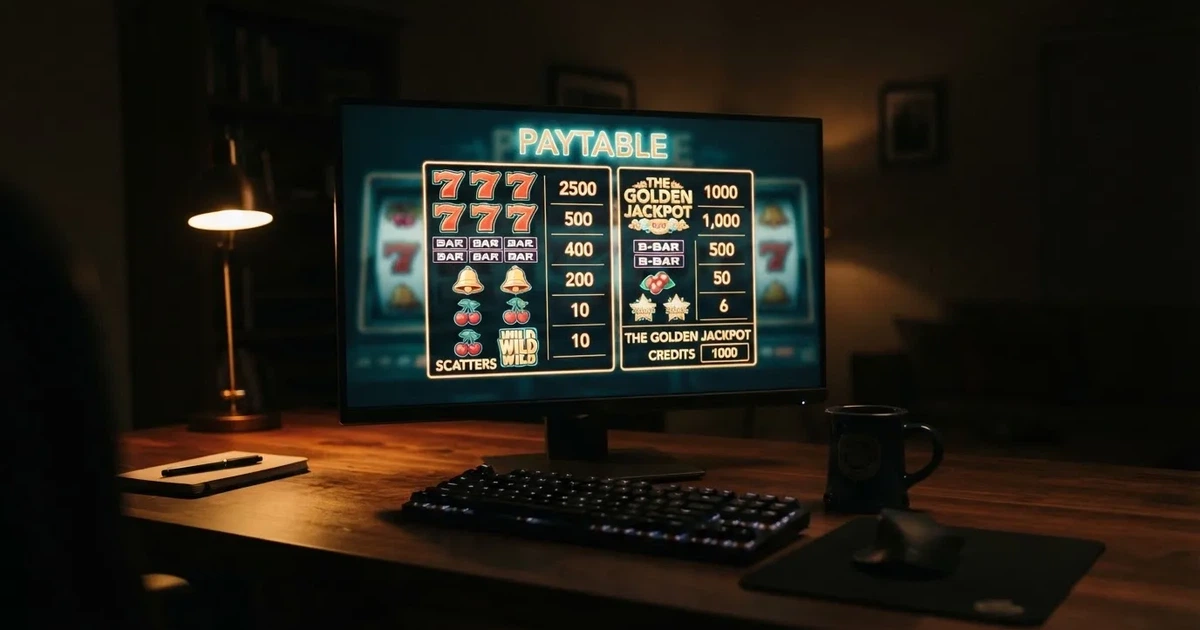
This page looks at high-RTP slots the way an analyst would: where the figure comes from, why two slots with the same theme can carry different percentages, how Australia’s licensing regime treats RTP disclosure on the legal side, and what the regulator has actually done about the offshore brands that pitch RTP tables to Australian inboxes.
Current as of 30 October 2026 · verified against ACMA formal warning publications and the Interactive Gambling Act 2001.
Table of Contents
- What a Slot’s RTP Actually Means and How It Gets Calculated
- How a Shortlist of High-RTP Slots Actually Gets Built
- RTP Disclosure Where It Is Actually Regulated: Australian-Licensed Venues
- The Legal Frame: Why Every Offshore RTP Site Is in the Same Regulatory Bucket
- Responsible Gambling Supports and the Offshore Gap
- Regulatory Landscape: Brands the ACMA Has Formally Warned
- How Fast the ACMA’s Blocklist Actually Grows
- What an Australian Player Should Carry Away from an RTP Number
- Frequently Asked Questions
What a Slot’s RTP Actually Means and How It Gets Calculated
A modern video slot is a random-number generator spinning against a paytable. Each spin is a draw from millions of possible outcomes, weighted so the game returns a defined share of the money taken in over an enormous number of plays. That share is the return-to-player — RTP — and it is the inverse of the house edge. A slot at 96% RTP keeps 4% over the long run; a slot at 99% keeps 1%.

The calculation itself is mechanical: total amount returned to players divided by total amount wagered, expressed as a percentage, computed over a sample large enough that variance collapses. Tens of millions of simulated spins is the working baseline. A few thousand real spins — a normal human session — produces numbers all over the place. A player can walk away 200% ahead on a 96% slot and the math is still intact, because the average needs volume to settle.
What changes from one slot to the next is the paytable design. Symbol weights, reel-strip layouts, bonus-round frequency and the contribution of features to total return all feed the figure. Two slots can use the same theme, the same provider and the same hit frequency, and still finish at different RTPs if their bonus structures differ. A common production choice is to publish multiple RTP configurations for the same title — 96.5%, 94%, 92% — so the operator picks which one to host. The percentage a player sees in the game’s information screen is the configuration that operator selected, not a universal property of the title.
Why two same-themed slots can carry different RTP figures
Identical visual themes can sit on different math models. Studios license art and music from one title and bolt them onto a fresh reel layout with different volatility, different feature triggers and a different theoretical return. A player’s memory of “the original” is a memory of one configuration; the version running on an offshore site may be a lower-paying cousin chosen because it gives the house more margin. That is one reason an RTP figure on an offshore site’s information page is not the same document as the figure in the developer’s master math sheet — the operator configures which one the player sees.
RTP vs. volatility: what each figure tells a player
RTP is the long-run return. Volatility is the shape of the ride. A 96% low-volatility slot returns close to its long-run average over a few hundred spins, with frequent small wins. A 96% high-volatility slot can run long dry patches punctuated by larger payouts, and the same expected return shows up only over thousands of spins. Two slots with the same RTP can feel like completely different games. The figure a player is given tells them nothing about how the return arrives.
Independent testing and the seal on the paytable
RTP figures are produced by the developer and then verified by independent test houses — the names that recur in the industry are GLI, eCOGRA, iTech Labs and BMM Testlabs. The test house runs the math model through simulated spins, confirms the figure matches the developer’s claim, and the result sits behind the RTP disclosure. What the test house does not do is audit the operator’s deployed configuration. The seal confirms the math at one configuration; whether the operator is running that configuration is a separate question, and on an offshore site the player has no way to check.
How a Shortlist of High-RTP Slots Actually Gets Built
The shelves a player sees — “Top 10 highest RTP slots,” “Best RTP slots 2026,” “highest paying online pokies” — are not ranked by an authority. They are ranked by the site that publishes them, against criteria the site chose. The published criteria usually include the headline RTP figure, the developer’s reputation, feature depth and the slot’s availability on the site doing the ranking. What the criteria rarely include is whether the slot is legally available to an Australian player. It almost never is.
A shortlist built honestly says what it is sorting on. If the sort key is “highest published RTP among slots available on offshore sites marketing to Australians,” the result is a list of titles an Australian is paying a license fee to access. If the sort key is “highest published RTP among slot-style games available at Australian-licensed venues,” the result is a different list, smaller and made up of poker machines in pubs and clubs governed by state regulators. Those two lists are not interchangeable, and the difference is the headline of this page.
Paytable design and what the public number leaves out
The paytable a player can read in the information screen shows the symbol payouts, the bonus triggers and the bet-sizing options. It also shows the RTP. What it does not show is the hit frequency, the contribution of bonus rounds to the long-run return, the maximum exposure the math model carries, or the configuration range the developer offers the operator. Two of those omissions matter for an Australian player. The first is hit frequency, because the difference between a low-volatility and a high-volatility slot is exactly that. The second is configuration range, because the operator chooses which band to deploy and the player has no way to verify which one is live.
RTP Disclosure Where It Is Actually Regulated: Australian-Licensed Venues
Australia does not license online casino games or online pokies. What it does license, heavily, is electronic gaming machines in pubs, clubs and casinos. State regulators — the NSW Liquor & Gaming NSW, the Victorian Gambling and Casino Control Commission (which replaced the VCGLR on 1 July 2022), the Queensland Office of Liquor and Gaming Regulation, and their equivalents in South Australia, Western Australia, Tasmania, the ACT and the Northern Territory — set the technical standards each machine has to meet, including the minimum theoretical return.
For a player the practical consequence is that RTP disclosure, where it exists, lives on a machine in a venue the player walks into. The machine’s help screen prints a theoretical return percentage; the venue is licensed to operate it; the regulator has signed off on the configuration. None of that is true for an offshore site. The offshore site prints a number, and the only verification the player has is the seal on the developer’s math model, not on the deployed configuration.
The other practical consequence is volume. By 2010 Australia operated an estimated 97,103 gaming machines outside casinos — a per-capita rate about five times that of the United States. The state breakdown, drawn from the most recent jurisdictional counts, shows how concentrated the network is:
| Jurisdiction | Machine Count | Data Source Year |
|---|---|---|
| New South Wales | 87,298 | 2023 |
| Victoria | 26,380 | 2021–22 |
| Queensland | 21,122 | 2023 |
| South Australia | 11,672 | 2023 |
| ACT | 3,587 | 2023 |
NSW alone operates more than three times the count of Victoria and more than four times Queensland’s. Western Australia and the Northern Territory run restricted models, and Tasmania sits well below the eastern-state average.
The relevance of those numbers to a high-RTP slot page is not the geographic distribution. It is the existence of a regulated venue network where the configuration the player sees is the configuration the regulator approved. Offshore sites do not offer that. The fundamental mechanism that gives a regulated slot its RTP is the regulator’s approval of the math model and the operator’s deployment of it; the offshore equivalent has the developer’s seal on the math model and nothing on the deployment.
The Legal Frame: Why Every Offshore RTP Site Is in the Same Regulatory Bucket
The Interactive Gambling Act 2001 (IGA), strengthened by the Interactive Gambling Amendment Act 2017, makes it an offence to provide online casino games, online pokies or in-play betting to a person in Australia. No state or territory licenses online casino games. What is licensable is wagering on races and sport placed before the event, lotteries and keno — and the practical licensing authority for online wagering is the Northern Territory Racing and Wagering Commission (NTRWC), which regulates 52 of Australia’s online bookmakers, including Sportsbet, Bet365 and Ladbrokes, and which operates with no full-time staff and meets once a month in Darwin. The same act covers every offshore site publishing RTP tables to Australians: the product itself is prohibited, and the operator is the target of enforcement.
The Australian Communications and Media Authority (ACMA) is the regulator that acts. It investigates complaints, issues formal warnings, and directs Australian internet service providers to block illegal sites. As of June 2026, the ACMA reported that 1,751 illegal gambling and affiliate marketing websites had been blocked since the first blocking request in November 2019, and that more than 230 unlicensed gambling services had left the Australian market since enforcement was strengthened in 2017. The June 2026 round alone added 12 sites to the block list: 7Signs, ChromaBet, Donbet, Duospin, Freshbet, Slots Gem, Jacks Club, Lucky Start, Pointsbetz, Spinrise, Vinyl Casino and Wildsino. The blockade is not a one-off raid. It is a standing program that has run every year since 2019, with new names added each round.
The consequence for a player is structural. An offshore site gives no Australian consumer protection, no complaints body and no recourse if a withdrawal is refused — and it can be blocked with a balance still on the account. H2 Gambling Capital’s 2025 report estimates that Australians lose about A$3.9 billion a year to illegal gambling sites, and that the share of gambling going through legal channels fell from 74% in 2021 to 64%. The market is moving in the wrong direction for the regulator and in the wrong direction for the player, because the prohibited product is exactly what offshore sites are best at supplying.
Payments and the additional Australian rules
Since 11 June 2024, credit cards, credit-related products and digital currency have been banned as payment for licensed online wagering in Australia, with penalties up to $247,500 for operators that accept them. Legal deposit routes for licensed wagering are debit card, bank transfer, PayID/Osko and BPAY. A site asking an Australian for a credit card or a crypto deposit is operating outside the Australian rules by definition, because the licensed product those routes were designed for does not include online casino games. An RTP-branded slot site that takes credit cards or crypto is, by its payment stack alone, outside the Australian regulatory perimeter.
Tax treatment for the recreational player
Gambling winnings of a recreational player are not assessable income under section 6-5 of the ITAA 1997, and losses are not deductible. A punter who hits a feature round on a 99% slot and walks away with A$5,000 does not owe tax on the A$5,000. A punter who loses A$5,000 over the year does not get to claim it against other income. The position changes only if the ATO treats the activity as carrying on a business of gambling — a high bar, and not one the recreational player crosses. The standard caveat applies: the ATO’s view is the one that counts, and the ATO’s view is worth checking.
Responsible Gambling Supports and the Offshore Gap
Australian players have a national self-exclusion register, a national helpline and state-based support services — and the offshore RTP site the player is reading about is connected to none of them.
BetStop, the National Self-Exclusion Register, has been live since August 2023. It lets a player exclude themselves from Australian-licensed online and phone wagering services with a single registration. The exclusion binds every licensed operator; a registered player cannot open an account, deposit or place a bet. The catch is in the word “licensed.” BetStop covers wagering services licensed under the IGA — sports and racing — and does not cover offshore casino sites, because those sites are not licensed operators in Australia. A player who registers with BetStop has solved the licensed-venue problem. They have not solved the offshore-casino problem, because the offshore casino was never in the register to begin with.
The National Gambling Helpline is 1800 858 858 — free, 24/7, with chat at Gambling Help Online. State-based services (such as New South Wales’s GambleAware, Victoria’s Gambler’s Help, and Queensland’s Gambling Help) sit underneath the national line. Each state also runs its own self-exclusion scheme for the poker machines in pubs and clubs — venue-based schemes, some state-wide — and those schemes bind the licensed venue the player walked into. They do not bind an offshore site the player has only ever visited online.
The practical shape of the offshore gap is this. An Australian player who has self-excluded from Australian wagering has dealt with the legal side of their problem and left the illegal side open. The offshore slot site will still take the deposit, still spin the reels, still pay out (or refuse to) under its own house rules. A player trying to use BetStop to block themselves out of an offshore casino is using the wrong tool. The tool that would block them is the ACMA’s site-blocking program, and that tool blocks the site itself — which means the player’s balance, if any, is gone with it.
Regulatory Landscape: Brands the ACMA Has Formally Warned
The brands below are not a shortlist. They are a list the ACMA itself built, one formal warning at a time. Each entry carries the date the ACMA published its warning and the operating company named in it. Where a brand has been warned more than once, both events are listed.
| Brand | ACMA action and date | Operator named by the ACMA | Subject support (high-RTP slots) |
|---|---|---|---|
| RocketPlay | Formal warning, March 2026 | Pulsup Ltd | — |
| Level Up Casino | Formal warning, May 2022 | Dama N.V. | Listings mention BGaming titles |
| Woo Casino | Formal warning, March 2025 | Dama N.V. | — |
| Spirit Casino | Formal warning, May 2025 | Dama N.V. | — |
| National Casino | Formal warning, July 2025 | Consolutetish S.R.L. | — |
| Bizzo Casino | Formal warning, July 2025 (earlier 2022 to TechSolutions) | Consolutetish S.R.L. | — |
| Ignition Casino | Formal warning, July 2025 | Bamboo Media | — |
| Instant Casino | Formal warning, February 2025 | EOD Code SRL | — |
| Jackbit | Formal warning, April 2026 | Ryker B.V. | — |
| Casino Intense | Formal warning, April 2025 | Sterplay Holding Ltd | — |
| Sky Crown | Formal warning, September 2022 | Hollycorn N.V. | — |
A single warning is enough for the ACMA to be on record. Two warnings against the same operator — Dama N.V. for Woo Casino in March 2025 and Spirit Casino in May 2025, on top of a 2022 warning to the same operator over six other brands — point to an operating pattern, not a one-off mistake. Where the regulator names a new operating company for a brand that already had a warning under a previous owner, what is changing is the legal target, not the player experience.
The table’s right-hand column is sparse for a reason. For most of these brands the only source of a “highest RTP slot” claim is the brand’s own marketing pages, which are not independent of the operator and which the audit pass treated as listing material, not as confirmed slot-by-slot data. Where the brand’s own pages name a provider or a title, the listing note records it; where they do not, the cell stays empty. The absence is information: a brand that publishes no independent RTP list is a brand whose RTP claim is its own.
What “subject support” means in this context
For most of the brands the audit looked at, the only source naming a specific high-RTP slot was the brand’s own marketing — affiliate-style pages that list titles and headline RTP figures without separating the brand’s marketing claim from the developer’s verified math. The entries marked “listings-only” are the brands where a third-party listing (a developer’s catalogue page or an industry reference) names a high-RTP slot under that brand. The entries with no listing are the brands whose high-RTP slot inventory is asserted only by the brand itself.
The operating companies behind the brands
The same operating company turns up across multiple brands. Dama N.V. is the named operator behind Level Up Casino (May 2022), Woo Casino (March 2025) and Spirit Casino (May 2025) — six other Dama brands were named in the May 2022 warning. Consolutetish S.R.L. is the named operator behind National Casino and Bizzo Casino (July 2025); Bizzo had previously been the subject of a 2022 warning to TechSolutions. A player who recognises one brand on the list and assumes the others are unrelated is reading the brand layer; the ACMA’s file is at the operator layer, and a warning to one Dama brand is functionally a warning to Dama’s portfolio.
Verdict on the brands as a class
The block is not a buyer’s guide. None of these brands can be recommended to a player in Australia because the product they sell is the one the IGA prohibits, and the regulator has already named the operator behind it. The block’s job is the opposite: to put a name to the offshore sites marketing high-RTP slots to Australian players, and to record which operator the ACMA has caught doing it. A reader who sees a familiar brand in this table is seeing it for the right reason.
How Fast the ACMA’s Blocklist Actually Grows
The audit run left a fixed pair of numbers on the page: the running total of blocked sites (1,751 as of June 2026) and the date of the first blocking request (November 2019). That pair gives a rate — and a rate is the kind of figure that tells a player whether the blocklist is a steady drip or a rising tide.
The straight-line count: 1,751 sites over roughly six and a half years (November 2019 to June 2026) works out to an average of around 270 sites blocked per year, or about 22 to 23 per month. That is the headline figure and the one most likely to land in a marketing email. It is also the figure most likely to mislead, because the blocking rate has not been constant. The early rounds were sparse — the first request, in November 2019, covered a small set. The 2024 and 2025 rounds picked up pace as the ACMA’s enforcement program matured, and the June 2026 round alone added 12 sites in one announcement. A straight-line average flattens that acceleration into a false steady state.
The honest band: somewhere between 200 and 350 sites per year over the life of the program, with the lower end describing the early years and the upper end describing the recent pace. A reader who wants a single figure should treat 270 per year as a working average and understand that the actual number in any given year has run both sides of it. The site-blocking program is not slowing down. It is the steady-state shape of the regulator’s interaction with the offshore market.
The calculation assumes the running total is a clean count of sites blocked, not a count of blocking requests — a single request can cover multiple sites, and some sites have been warned before being blocked. It also assumes the November 2019 date is the first formal blocking request under the IGA framework the ACMA currently uses; earlier enforcement existed in other forms and is not in the count. A reader who needs a more exact number for any particular year should treat the running total as a ceiling rather than a floor, because some sites are blocked, taken down, and replaced by mirror domains the ACMA catches in a later round.
What an Australian Player Should Carry Away from an RTP Number
The RTP percentage is a useful document. It tells a player how the math model is designed to behave over the long run, and it is the best single number the industry offers. It is not a guarantee of any individual outcome, and it is not a protection. For an Australian player the further consideration is jurisdictional: the product is prohibited, the operator is offshore, and the regulator has, in many cases, already named the operator in a formal warning.
The consequence of the prohibition is the whole shape of this page. An Australian who wants to play a high-RTP slot has two routes. The first is the legal route: poker machines in pubs, clubs and casinos licensed by state regulators, where the configuration the player sees is the configuration the regulator approved. The second is the offshore route, where the RTP figure is the brand’s claim and the only seal is the developer’s, and where the player’s only protection is the site’s own terms page. Both routes deliver the same product. They do not deliver the same protection.
The reading list for a player who wants to go further is short. The ACMA’s formal-warning register is public and current, and it is the authoritative source on which brands the regulator has acted against. The Interactive Gambling Act 2001 is the statute the regulator enforces, and it is short enough to read in one sitting. The state regulators — Liquor & Gaming NSW, the VGCCC in Victoria, the Office of Liquor and Gaming Regulation in Queensland, and their interstate equivalents — publish the technical standards for the machines they license, including the minimum theoretical returns. Gambling Help Online and the National Gambling Helpline (1800 858 858) are the supports for a player who has decided the legal route is the one they want to stop using.
Frequently Asked Questions
How is a slot’s RTP percentage calculated over the long run?
A slot’s RTP is total amount returned to players divided by total amount wagered, expressed as a percentage and computed over a sample of simulated spins large enough that variance collapses — tens of millions is the working baseline. The figure is the inverse of the house edge: 96% RTP means the math model keeps 4% over the long run. A few thousand real spins is not enough volume for the average to settle.
Does a slot’s RTP figure guarantee any result over a single session?
No. RTP is a long-run average over millions of spins. A single session of a few hundred or a few thousand spins can produce any result, including one well above or well below the published figure. Volatility describes how the return is distributed across the session; two slots with identical RTP can produce very different session-to-session experiences. The figure tells a player how the game is designed to behave over time, not how it will behave tonight.
Are RTP figures independently tested before a slot is released?
Yes — the math model is verified by independent test houses (GLI, eCOGRA, iTech Labs and BMM Testlabs are the recurring names) before a slot goes live. The seal confirms the math at the configuration the developer submitted. What the seal does not confirm is the configuration the operator deployed, and on an offshore site the player has no way to verify which configuration is live.
How many licensed gaming machines operate outside casinos in Queensland compared with New South Wales?
The most recent jurisdictional counts put Queensland at 21,122 pokies-style machines outside casinos (October 2023) and New South Wales at 87,298 (June 2023). NSW operates more than four times as many non-casino machines as Queensland. The Australian total outside casinos reached an estimated 97,103 by 2010, a per-capita rate about five times that of the United States.
Why do two slots with the same theme sometimes carry different RTP figures?
Studios often release multiple RTP configurations for the same title — 96.5%, 94%, 92% are common — and the operator chooses which one to host. A player seeing the same theme on two different sites can be looking at two different math models, and the lower-paying configuration is usually the one the operator picked because it gives the house more margin. The figure on the game’s information screen is the deployed configuration, not a universal property of the title.
Can a player request the RTP figure for a specific licensed pokies machine in Australia?
For machines in Australian-licensed venues, the theoretical return is part of the technical standards the state regulator approves, and the information is typically printed on the machine’s help screen. For offshore sites, the RTP figure is the brand’s claim and is not independently auditable by the player. The practical rule: in a licensed venue the figure is regulator-approved; on an offshore site the figure is the operator’s choice.