
Big Red pokies online Australia in 2026: the law, the offshore theme, and the licensed floor
Anyone hunting for “Big Red pokies online Australia 2026” is, in practice, looking for a thing that does not exist. The Aristocrat-style outback theme that pub and club regulars recognise on the carpet of their local RSL is not on the legal Australian online menu, has not been for the entire life of the Interactive Gambling Act, and will not be in 2026 either. What the search turns up instead is a long list of offshore casinos that load a “Big Red” lookalike onto a server outside Australia, advertise it at Australians, and accept payment in ways the Australian rules do not authorise. This page is about why that is, what the Australian Communications and Media Authority has actually done about it in 2026, and what a player in Australia who wants a similar machine actually has to choose between.
Current as of 8 November 2026 against the ACMA register and the Commonwealth Interactive Gambling Act 2001.
Table of Contents
- The mechanics of a Big Red-style pokie, in plain language
- Australian-style online pokies: what is actually available, and what is not
- How a Big Red-style shortlist gets put together, and why most of them cannot be ranked
- The ACMA enforcement picture in 2026: the register, the warnings, the blocks
- The Interactive Gambling Act 2001, the 2017 amendments and the 2026 reform bill
- The licensed Australian floor: where a Big Red-style machine actually exists
- How a player who genuinely wants to play Big Red in 2026 should think about it
- What an ACMA formal warning actually does, and what it does not
- Where the licensed Australian machines are regulated, and why that matters
- The 2026 reform layer, briefly
- What a 2026 reader should actually do with this page
- Frequently asked questions
The mechanics of a Big Red-style pokie, in plain language
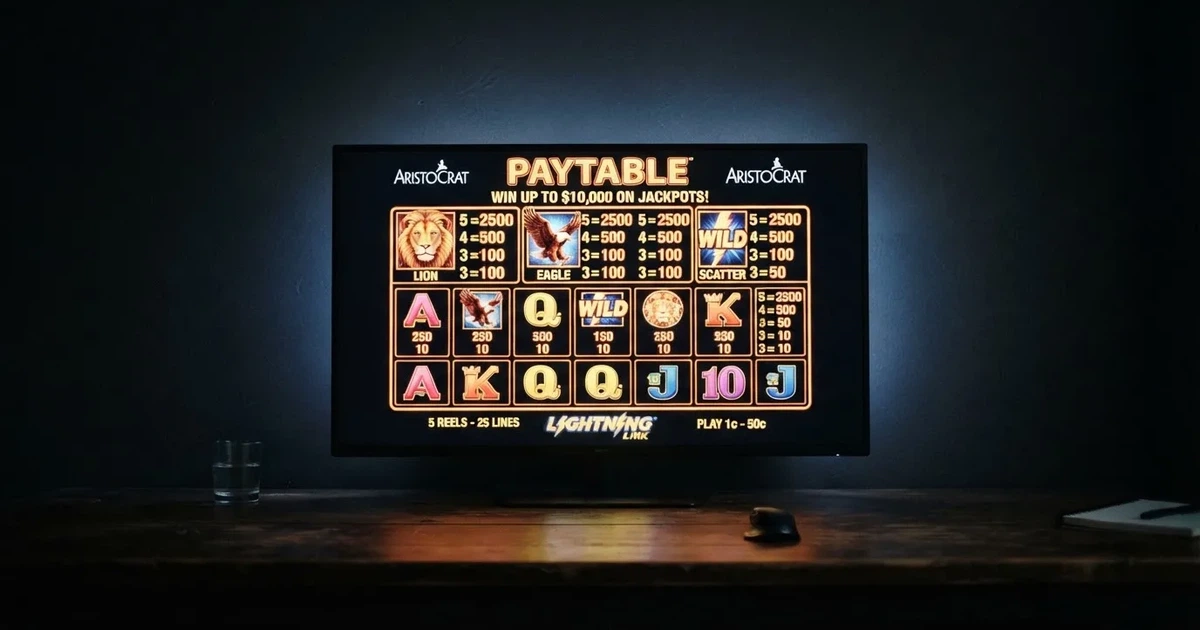
The “Big Red” theme is an Aristocrat design built around the Australian bush. Kangaroos, dingoes, warthogs, crocodiles and eagles sit on five reels, with a tree-scattered outback backdrop and a soundtrack to match. The game is a five-reel video slot with a feature that triggers when five or more of the scattered tree symbols land across the reels. Each tree that lands during the feature turns into a wild and, on the free games that follow, the trees become walking wilds that shift one reel to the left with each spin until they fall off the left edge. The base-game regular wins pay on adjacent reels from the left, with the kangaroo and the crocodile sitting at the top of the paytable. The mathematics of the theme is not in the public dossier, because Aristocrat does not publish return-to-player figures for its Australian-floor titles; what gets published in marketing material and game-review databases is the volatile shape of the game — a long quiet base where most spins return nothing, punctuated by the occasional feature round where wilds stack and a usable line of hits appears.

Two things follow from that design, and they matter for everything else on this page. First, the experience the theme offers is built around the scatter-triggered feature; if a player never sees five trees together in one spin, they will never see the walking wilds, and the game plays as a flat, low-pay video slot. Second, because the features are rare and can pay large multiples of the line bet when they chain, the volatility is on the high end of the Aristocrat catalogue. None of this is an indictment. It is just what the theme is — a high-variance machine that pays most of its theoretical return through a feature that triggers roughly once every hundred spins. Anyone who has played it in a Queensland club has watched twenty dead spins in a row before the trees lined up, and then watched the wilds walk off the left edge three at a time.
A working offshore clone is a different object. The same art, the same sound, the same reel layout, running on a server licensed in Curaçao or Anjouan. The arithmetic is whatever the white-label operator chose to ship. Most offshore “Big Red”-branded games sit at a return-to-player in the mid-90s, but the figure published on the developer’s site is not always the figure the live game pays, and the regulator named in the footer of the page has no Australian jurisdiction in any case.
Australian-style online pokies: what is actually available, and what is not
The first thing a player in Australia needs to understand is the line between the licensed machine on the floor and the same theme online. Land-based poker machines — “pokies”, in Australian English — are regulated by each state and territory individually, with venue-by-venue licensing, mandatory return-to-player floors that range from 85% in New South Wales, the Northern Territory, Queensland and most of Victoria to 90% in Western Australia at Crown Perth, and harm-minimisation settings that vary from jurisdiction to jurisdiction. Online pokies are a separate product. They sit under the Interactive Gambling Act 2001, which makes it an offence to provide an “interactive gambling service” — an online casino game, an online pokie, an in-play betting market — to a person physically in Australia. Wagering on races and sporting events placed before the event is licensable, and most of Australia’s 52 licensed online bookmakers operate out of the Northern Territory for tax reasons under the Northern Territory Racing and Wagering Commission. Casino games and online pokies are not on that list. They are not licensable in any state or territory. The Australian Capital Territory’s casino licensee, the Northern Territory’s two casinos, Victoria’s Crown Melbourne, New South Wales’ The Star Sydney and Queensland’s four casinos all offer table games on the floor. They do not offer an online pokie product to Australian residents, and they cannot, because no Australian regulator issues that licence.
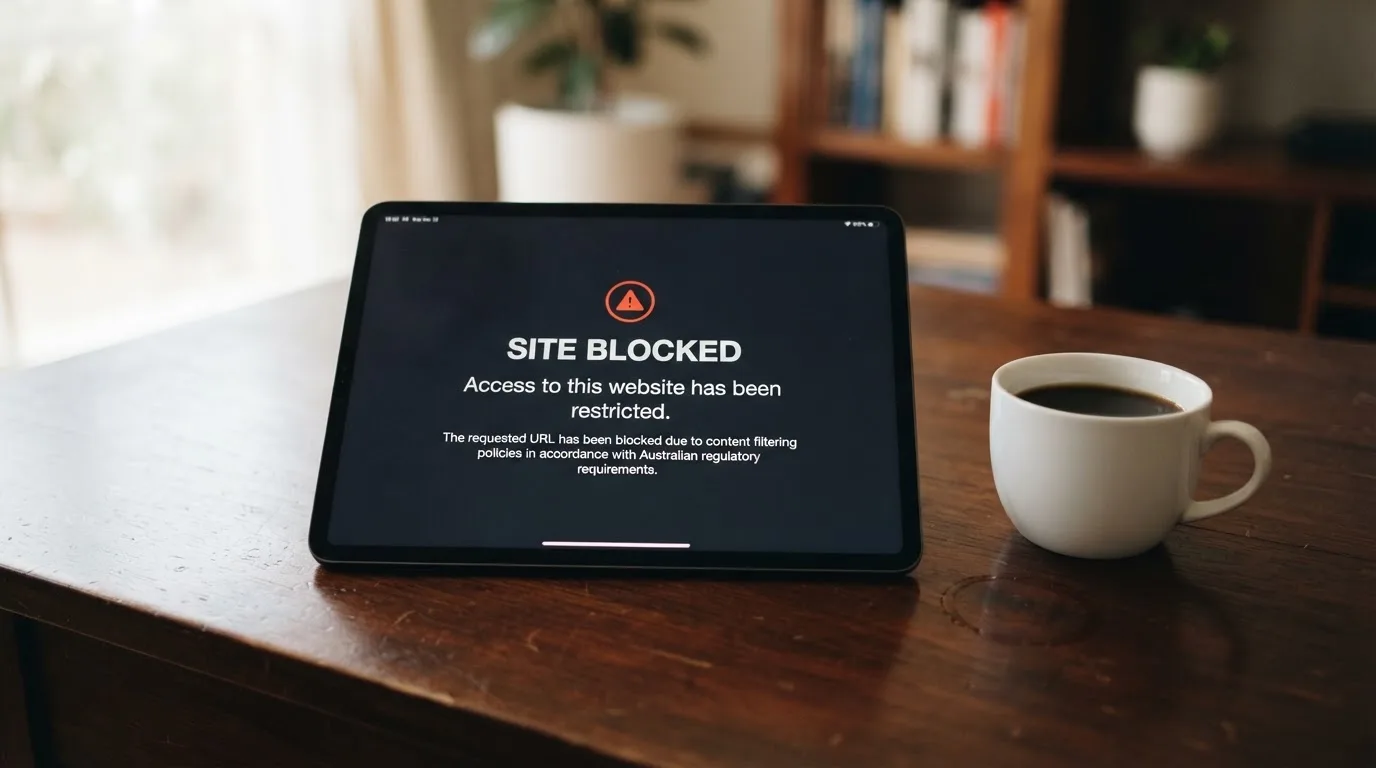
What follows from that is straightforward: there is no legal online version of Big Red, or of any other Australian-floor Aristocrat pokie theme, that a player in Australia can log into and play for real money. The licensed product is the floor machine. The online product that carries the same art and the same name is offered by an offshore operator whose own regulator is somewhere else and whose own consumer-protection regime is not Australian. The Australian rule covers the provider, not the player, so the legal exposure for the player is small; the practical exposure — a balance held on a server that the ACMA can order blocked, a complaint with no Australian body to receive it, a withdrawal that the operator can decline on terms the player agreed to when they signed up — is not.
How a Big Red-style shortlist gets put together, and why most of them cannot be ranked
A page that lists “top 10 Big Red online pokies for Australians” is doing one of two things. It is either listing licensed venues in Australia where the Aristocrat floor machine is actually installed, which is a directory query against Liquor & Gaming NSW, the Victorian Gambling and Casino Control Commission, the Queensland Office of Liquor and Gaming Regulation and their state-level equivalents, or it is ranking offshore casinos that host a “Big Red”-branded game on their servers. The first list is a venue list, and the order on it is geographical, not editorial. The second list is not really a ranking at all, because the thing being compared is not what the marketing suggests. Every offshore casino in that second list is operating against the Interactive Gambling Act. The wagering rules, the bonus terms, the payment routing and the dispute pathway are all different from one operator to the next, but the legal position in Australia is the same for every entry: prohibited.
That is the practical reason most “best Big Red pokies” pages read thin. The criteria that would actually separate one option from another — a clean dispute history with an Australian-facing regulator, a payout that has been independently audited within the last quarter, a payment route that does not push the player past the credit-card and crypto ban — are not criteria the listed sites can meet, because the listed sites are by definition outside the Australian framework. The criteria the comparison page ends up using instead are affiliate-style: a welcome bonus number, a games-count figure, a list of payment methods, and a “mobile-friendly” tag. None of those tell a player whether they will be paid.
What a serious list looks like, in 2026, is a register of what the ACMA has actually done, when it did it, and to which operator. That is the only comparison that does not require the reader to take the operator’s word for it.
The ACMA enforcement picture in 2026: the register, the warnings, the blocks
The Australian Communications and Media Authority is the body that investigates complaints, issues formal warnings and directs Australian internet service providers to block illegal gambling sites. As reported in June 2026, a cumulative total of 1,751 illegal gambling and affiliate marketing websites had been blocked since the first blocking request was issued in November 2019, and more than 230 unlicensed gambling services had left the Australian market since enforcement was strengthened by the Interactive Gambling Amendment Act 2017. In the June 2026 round alone, the ACMA asked Australian ISPs to block twelve further websites: 7Signs, ChromaBet, Donbet, Duospin, Freshbet, Slots Gem, Jacks Club, Lucky Start, Pointsbetz, Spinrise, Vinyl Casino and Wildsino. The blocking tool is the blunt one — a domain disappears from an Australian connection — but it sits behind a longer series of formal warnings, which is where the ACMA names the operator behind the brand.
The pattern of those warnings is what a 2026 reader should pay attention to. The same parent company appears under several brand names. Dama N.V. was warned in May 2022 over six casino brands — Bambet, Dazard, Level Up, Rocketplay, Wild Tornado and Cobra Casinos — and again in March 2025 over Woo Casino and in May 2025 over Spirit Casino. Rocketplay’s domain name surfaced again in March 2026 under a different corporate owner, Pulsup Ltd, and was the subject of another formal warning that month. Bamboo Media was warned in July 2025 over Ignition Casino. Consolutetish S.R.L. was warned in the same month over National Casino and Bizzo Casino — the latter already warned in 2022 against TechSolutions (CY) Group Limited and TechSolutions Group N.V. EOD Code SRL was warned in February 2025 over Instant Casino. Sterplay Holding Ltd was warned in April 2025 over Casino Intense. Ryker B.V. was warned in April 2026 over Jackbit and CasinOK. Hollycorn N.V. carries an older warning from September 2022 over Sky Crown and Blue Leo.
The names change faster than the operators behind them. That is the move worth flagging here, because it is the reason an operator-level shortlist of “Big Red pokies online Australia 2026” sites is not durable. A brand warned this quarter re-emerges under a new corporate parent next quarter, with a fresh domain and the same theme library.
The blocking rate is the visible arithmetic of that pattern. Between November 2019 and June 2026 — roughly six and a half years — the ACMA asked ISPs to block 1,751 illegal or affiliate marketing sites. That is an average in the high two hundreds per year over the full period, but the shape is front-loaded and accelerating: the first blocking request took the cumulative count to one, and the June 2026 round alone added twelve more to a running total that has been climbing fast as offshore affiliate marketing networks expanded through 2024 and 2025. Read as a band rather than a single figure, the ACMA has been asking ISPs to block illegal gambling sites at a pace of roughly 240 to 320 domains per year across the enforcement window, with the higher end of the band consistent with the rounds reported across 2025 and the first half of 2026. The condition is that “illegal gambling site” means a domain the ACMA has found to be offering or marketing a prohibited interactive gambling service to Australians, not a count of unique operators, which is materially smaller.
The ACMA action log against offshore casino brands, mid-2025 to mid-2026
The table below records the formal warnings the ACMA issued in the year and a half before this page’s publication date, with the operating company the ACMA named at the time of the warning. The order runs from most recent to earliest. The “subject support” column reflects what the operator’s own marketing materials and what independent listings show about whether the listed site advertises a “Big Red”-branded game specifically; an em dash means the public listing record for that brand did not show a Big Red title in the searches conducted for this page.
| Brand | ACMA action and date | Operating company named by the ACMA | Subject support (Big Red-style theme) |
|---|---|---|---|
| RocketPlay | Formal warning, March 2026 | Pulsup Ltd (earlier Dama N.V., May 2022) | — |
| Jackbit | Formal warning, April 2026 | Ryker B.V. | — |
| Woo Casino | Formal warning, March 2025 | Dama N.V. | — |
| Spirit Casino | Formal warning, May 2025 | Dama N.V. | — |
| Casino Intense | Formal warning, April 2025 | Sterplay Holding Ltd | listings report a Big Red-style Aristocrat clone |
| Instant Casino | Formal warning, February 2025 | EOD Code SRL | — |
| National Casino | Formal warning, July 2025 | Consolutetish S.R.L. | listings report a Big Red-style Aristocrat clone |
| Bizzo Casino | Formal warning, July 2025 | Consolutetish S.R.L. (earlier TechSolutions, 2022) | — |
| Ignition Casino | Formal warning, July 2025 | Bamboo Media | — |
| Sky Crown | Formal warning, September 2022 | Hollycorn N.V. | — |
| Level Up Casino | Formal warning, May 2022 | Dama N.V. | listings report a Big Red-style Aristocrat clone |
Two things stand out. First, the same corporate parents recur across multiple brands and across multiple years: Dama N.V. has been warned three times over four different brand names since 2022; Consolutetish S.R.L. and its predecessor TechSolutions have been warned twice over two brand names since 2022; the other parents on the table each carry one warning in the window. Second, a Big Red-style theme appears on the listed sites of only three of the eleven warned brands in the public record reviewed for this page, which is consistent with the broader pattern: the marketing pitch around an “Australian-themed Big Red pokies for real money” page is rarely carried by the brands the ACMA has been acting against, because most of those brands carry a much wider Aristocrat-clone library and the page generator picks whichever theme returns a search result.
The Interactive Gambling Act 2001, the 2017 amendments and the 2026 reform bill
The Interactive Gambling Act 2001 is the Commonwealth statute that prohibits the supply of online casino games, online pokies and in-play betting to a person in Australia. The offence sits with the provider, not the player. The 2017 amendments — the Interactive Gambling Amendment Act 2017 — widened the definition of a prohibited interactive gambling service, brought affiliate marketing for offshore sites into the regime, and gave the ACMA the power to issue formal warnings and direct ISPs to block offending domains. The 2017 changes are the reason the ACMA’s enforcement register exists in the shape it does today, and the reason the cumulative block count of 1,751 since November 2019 is achievable.
The 2026 reform layer sits on top. The Interactive Gambling Amendment (Gambling Reform) Bill 2026 passed Parliament on 19 August 2026 and carries advertising and inducement measures that commence on 1 January 2027. The bill is law with a start date, not yet in force on a 2026 page. Its practical effect for a player reading this in 2026 is the future of how Australian-licensed wagering operators will market their products, and a tightening of the perimeter around inducements — sign-up bonuses, “free bet” credits, “risk-free” refunds — that licensed wagering operators will be able to offer. None of it changes the status of Big Red pokies online in 2026, because that status was already settled by the 2001 Act and its 2017 amendments. The 2026 bill is the next layer, not the first one.
Minimum age across all forms of licensed gambling in Australia is 18.
What is licensed, and what is not, in one breath
Licensable to an Australian-licensed operator: wagering on races and sport placed before the event, lotteries, keno. That is the full list. Anything that looks like an online casino game — online pokies included, Big Red included — is not licensable to an Australian operator, and no Australian regulator issues the licence an offshore site displays in its footer. The Northern Territory Racing and Wagering Commission regulates 52 of Australia’s online bookmakers, including Sportsbet, Bet365 and Ladbrokes, and its casino counterpart licenses two venues; that is the entire Australian online wagering footprint.
Payments: the routes the 2024 ban closed
Since 11 June 2024, credit cards, credit-related products and digital currency are banned as a means of payment for any licensed online wagering service, with operator-level penalties of up to A$247,500 for non-compliance. The legal deposit routes that remain for a licensed wagering operator are debit card, bank transfer, PayID/Osko and BPAY. The rule is a payment rule for licensed operators; offshore sites are not subject to it. The visible consequence is that an offshore site offering Big Red-style pokies to an Australian will almost always accept either credit cards or cryptocurrency, which are the two payment instruments the licensed Australian operators are forbidden to take. That is the most reliable single signal a player has that they are looking at a site that is not part of the Australian framework at all.
The consumer-protection gap
An offshore casino gives no Australian consumer protection. There is no Australian complaints body to receive a dispute about a declined withdrawal, no Australian regulator that can compel a payout, and no Australian court that will entertain a claim under Australian consumer law without a defendant connection to the jurisdiction. The Interactive Gambling Act targets the provider, not the player, so the legal risk on the player side is small. The practical risk — a balance held on a server that the ACMA has ordered blocked, a complaint that the operator’s terms assign to its own chosen arbitrator in another country, a withdrawal that the operator declines on the grounds that the player’s bonus play did not meet its own published turnover target — is not small, and there is no Australian agency that will recover it.
BetStop, the National Self-Exclusion Register, has been live since August 2023. It binds Australian-licensed online and phone wagering services only. An offshore casino is not connected to it. The register does not, and cannot, exclude a player from a site that the ACMA is in the process of blocking. The National Gambling Helpline 1800 858 858 is free, 24 hours a day, with chat at Gambling Help Online; both are Australian services and both reach an offshore player as easily as a licensed one.
Tax
Gambling winnings of a recreational player in Australia are not assessable income under section 6-5 of the Income Tax Assessment Act 1997. Losses are not deductible. A player who carries on a business of gambling is in a different position, and the model only fits the standard reader if the standard reader has an ATO adviser they can ask; the rule of thumb is “check with the ATO” for anyone whose gambling looks like anything other than a hobby.
The licensed Australian floor: where a Big Red-style machine actually exists
Poker machines are legal on the floor in every Australian state and territory, and each jurisdiction regulates them separately. The numbers across the country are large: in 2020–21 Australians bet almost A$150 billion through gaming machines and lost A$12.18 billion on them, against a population that holds about 0.3% of the world’s people and 3% of the world’s pub and club poker machines. New South Wales alone had 87,298 gaming machines outside casinos across 2,195 venues in June 2023, with player losses of A$8.18 billion in 2022–23. Queensland had 21,122 machines in 351 venues in October 2023. Victoria had 26,380 outside Crown Melbourne in 488 venues in 2021–22, under a 30,000-machine statewide limit. The legal minimum return-to-player varies by jurisdiction: 85% in New South Wales, the Northern Territory, Queensland and (generally) Victoria, 87% at Crown Melbourne, 87% in the Australian Capital Territory and Tasmania, 87.5% in South Australia, and 90% in Western Australia at Crown Perth.
Western Australia is the outlier for venue access: poker machines are banned in pubs and clubs, on the understanding reached when Crown Perth opened in 1985 that the casino would carry the state’s machine footprint. Crown Perth’s machine count has since grown from about 200 in 1985 to roughly 2,500, all approved by the state’s Gaming and Wagering Commission. Tasmania sat under a Federal Group monopoly from 1968 until legislation passed in November 2021 ended it and moved oversight to the Tasmanian Liquor and Gaming Commission. Tasmania’s planned mandatory pre-commitment cards were delayed into late 2025, which is the most recent reform layer on the Australian state-level floor.
That is the regulatory geography behind the machine a Big Red search is, in the end, looking for. The Aristocrat Big Red floor game is licensed for use in NSW clubs, in Queensland clubs and hotels, in Victorian casinos, in the ACT casino, in the two Northern Territory casinos and at Crown Perth. Whether any given venue has a Big Red on the floor on a given night is a venue question, not a regulator question, and the answer varies from one venue to the next as machines are moved around. A player who wants to play the theme legally in Australia goes to a licensed venue and finds the machine on the floor.
How a player who genuinely wants to play Big Red in 2026 should think about it
Three options are real. The first is the licensed floor: a pub, club or casino in a state or territory that allows poker machines, with a Big Red or Big Red-style machine on the carpet. The game plays exactly as the theme intends: high-volatility base, scatter-triggered feature, walking wilds, occasional large returns. The setting is regulated, the machine is regulated, the RTP floor is set by the jurisdiction. The cost is the travel, the venue environment, and the absence of online convenience.
The second option is an offshore site advertising a Big Red-style game. The game runs, the art looks familiar, the experience is real. The legal status in Australia is prohibited under the Interactive Gambling Act 2001. The site is likely to be or to become the subject of an ACMA formal warning, and is at risk of being added to the ACMA’s blocking list. If the site is blocked while the player holds a balance, the player has no Australian avenue to recover it. The consumer-protection framework is whatever the operator chose to publish in its own terms. The payment route will almost certainly be one the Australian 2024 ban closed for licensed operators — credit card or cryptocurrency.
The third option is a free-play or social-casino version of the theme. Free-play pokies exist in app-store and social-casino form; they are not “real money” and they are not “online pokies” in the Interactive Gambling Act sense, because no money is at stake. The theme experience is preserved, and the legal position is unambiguous. The downside is that there is no real money at the end of it.
For an Australian resident who wants to play a Big Red-style machine and who wants to do so within Australian law, the licensed floor is the only option that satisfies both conditions. The offshore “Big Red pokies online real money” page is, in 2026, an advertisement for a service the ACMA has either warned about, blocked or has on the next list.
What an ACMA formal warning actually does, and what it does not
A formal warning is a written notice from the ACMA to the operator that the ACMA has formed the view that the operator is providing a prohibited interactive gambling service to Australians. The warning is published on the ACMA’s website, naming the operator and the brand, with the date. It is not a prosecution. It does not, on its own, force the operator to do anything. What it does is two things: it puts the operator on the public record as having been told, and it puts the operator one step closer to a blocking instruction, because the ACMA’s process after a warning runs towards referral to the ISPs.
The warning is also the moment at which the operator’s own corporate information becomes more interesting than the brand on the landing page. A warning in March 2026 over Rocketplay, against Pulsup Ltd, follows a warning over the same brand in May 2022 against Dama N.V.; the brand is the same, the operating company is not. A warning over Jackbit against Ryker B.V. in April 2026 is the ACMA’s first public action against that operator in the window covered here. A warning over Sky Crown against Hollycorn N.V. dates from September 2022, which makes it the oldest in the register; whether Sky Crown has since changed hands is a question the ACMA’s published register does not answer.
The block list is the harder endpoint. The cumulative figure — 1,751 sites blocked since November 2019, with twelve added in the June 2026 round — is the more visible measure of the ACMA’s enforcement output, because the consumer-facing consequence is direct: a domain stops resolving on an Australian connection. A blocked site is not necessarily the same as a closed site. The operator can be back on a different domain within days, sometimes under the same brand and sometimes under a fresh one. The block list is not a barrier; it is a recurring cost of doing business for the affiliate networks that feed traffic to offshore casinos, and the design of the regime accepts that.
Where the licensed Australian machines are regulated, and why that matters
The licensed-floor picture is built from the state and territory regulators, and the floor they regulate is the only floor that matters for a player who wants to play a Big Red-style theme in 2026. The NSW regulator is Liquor & Gaming NSW, within the Department of Creative Industries, Tourism, Hospitality and Sport. The Victorian regulator is the Victorian Gambling and Casino Control Commission, which replaced the Victorian Commission for Gambling and Liquor Regulation on 1 July 2022. Queensland’s regulator is the Office of Liquor and Gaming Regulation, within the Department of Justice and Attorney-General. The Tasmanian regulator is the Tasmanian Liquor and Gaming Commission, after the November 2021 legislation ended the Federal Group monopoly. Western Australia’s regulator is the Gaming and Wagering Commission, which approves Crown Perth’s machines. South Australia’s regulator is Consumer and Business Affairs. The ACT’s regulator is the ACT Gambling and Racing Commission. The Northern Territory’s racing and wagering regulator is the Northern Territory Racing and Wagering Commission, which oversees 52 licensed online bookmakers and meets once a month in Darwin with no full-time staff.
The same regulators — and the ACMA at the Commonwealth level — are the bodies that will hear a complaint, compel a payout, or revoke a licence if a venue breaches its harm-minimisation settings. They are not the bodies a player reaches by signing up with an offshore casino. The practical consequence is that the regulatory architecture of the licensed Australian floor is real, and the regulatory architecture of an offshore site is whatever the operator wrote into its own terms.
The 2026 reform layer, briefly
The Interactive Gambling Amendment (Gambling Reform) Bill 2026 passed Parliament on 19 August 2026. Its advertising and inducement measures commence on 1 January 2027. For the moment, the inducements a player sees on a licensed Australian wagering site are governed by the existing rules and the industry codes of practice; the 2026 bill is the next tightening, not the current one. None of this changes the position of the Big Red pokies theme online in 2026. The position of the theme online is settled by the Interactive Gambling Act 2001, the 2017 amendments, and the ACMA’s continuing enforcement. The 2026 bill layers further restrictions onto the licensed wagering side of the market, and starts to bite in 2027.
What a 2026 reader should actually do with this page
If the goal is to play a Big Red-style theme: go to a licensed venue in a state or territory where the machine is on the floor, and check the venue’s machine list before travelling. The licensed floor is the only legal route. If the goal is to play a Big Red-style theme online for real money, the Australian position in 2026 is that no such product exists inside the Australian framework, and the offshore sites that advertise one are operating against the Interactive Gambling Act. If the goal is to play a Big Red-style theme online without real money, a social-casino app or a free-play version is the legal route, and the experience is preserved without the wagering.
If the goal is to assess an offshore site that is advertising Big Red-style games to Australians: the ACMA’s published register of formal warnings and blocking instructions is the most current measure of whether the operator is on the regulator’s list. The register is public, the dates are public, and the operating companies named in the warnings are public. That is what to check, before any deposit.
Frequently asked questions
What style of pokies theme does “Big Red” refer to?
Big Red is an Aristocrat design built around an Australian outback theme — kangaroos, dingoes, warthogs, crocodiles and eagles on five reels, with a tree-scatter that triggers a free-games feature in which the trees become walking wilds shifting one reel to the left on each free spin. The theme is a high-volatility video slot, with most of its theoretical return concentrated in the feature rather than the base game. It is built for the Australian licensed pub, club and casino floor, not for an online real-money product.
Can a person in Australia play an online version of Big Red legally?
No. The Interactive Gambling Act 2001 makes it an offence to provide an online casino game or an online pokie to a person in Australia; no state or territory issues a licence for that product. The only legal route for a player who wants the theme is a licensed Australian venue with the machine on the floor. Offshore sites that host a Big Red-style game are operating against the Act, and the ACMA can — and does — order Australian ISPs to block those sites.
Are classic Australian-themed pokies still found in licensed pubs and clubs?
Yes. Land-based poker machines operate in every Australian state and territory, each regulated separately. NSW had 87,298 gaming machines outside casinos across 2,195 venues in June 2023, Queensland had 21,122 in 351 venues in October 2023, and Victoria had 26,380 outside Crown Melbourne in 488 venues in 2021–22, all subject to venue-by-venue licensing and the minimum return-to-player floors set by each jurisdiction.
Why do offshore sites keep advertising Big Red-style games to Australians?
Because the Australian market is large, the theme is recognised, and the enforcement regime operates at the domain level. The ACMA’s blocking tool is real but cyclical — a blocked domain re-emerges on a fresh one — and the affiliate-marketing layer that feeds traffic to offshore casinos keeps the funnel active. The warnings the ACMA publishes name the operator; they do not, on their own, stop the next brand from launching.
Does the volatility of a Big Red-style machine differ from newer video slot themes?
Yes, materially. The Big Red design concentrates its return in a scatter-triggered feature with walking wilds, which produces long quiet base stretches and occasional large returns when the wilds chain. Newer video slot themes tend to use cascading reels, expanding wilds or hold-and-respin features that pay smaller amounts more often. Aristocrat does not publish return-to-player figures for its Australian-floor titles, so the comparison is structural rather than numerical.
How can a player confirm whether a specific pokies theme is at a licensed Australian venue?
Through the venue itself — by phone or through its website — and through the state or territory regulator’s machine register where one is published. Liquor & Gaming NSW, the Victorian Gambling and Casino Control Commission, the Queensland Office of Liquor and Gaming Regulation and the Tasmanian Liquor and Gaming Commission each publish venue-level information in some form. There is no single national register of which machine sits in which pub on a given night.