
Real cash online pokies in Australia: the offers, the offshore licence, the prohibition
An Australian who searches for “real cash online pokies” lands on a wall of offshore casino sites within seconds. They advertise real money wins, $10 deposits, PayID withdrawals and “real cash” sign-up bonuses, then route the reader to Curaçao-registered operators the Australian Communications and Media Authority has been warning off for years. The legal fact underneath that wall is short: online casino games, including online pokies advertised for real cash, cannot be licensed anywhere in Australia under the Interactive Gambling Act 2001. Anything offered for real cash to a person in Australia sits outside the law, regardless of the licence displayed on the footer.
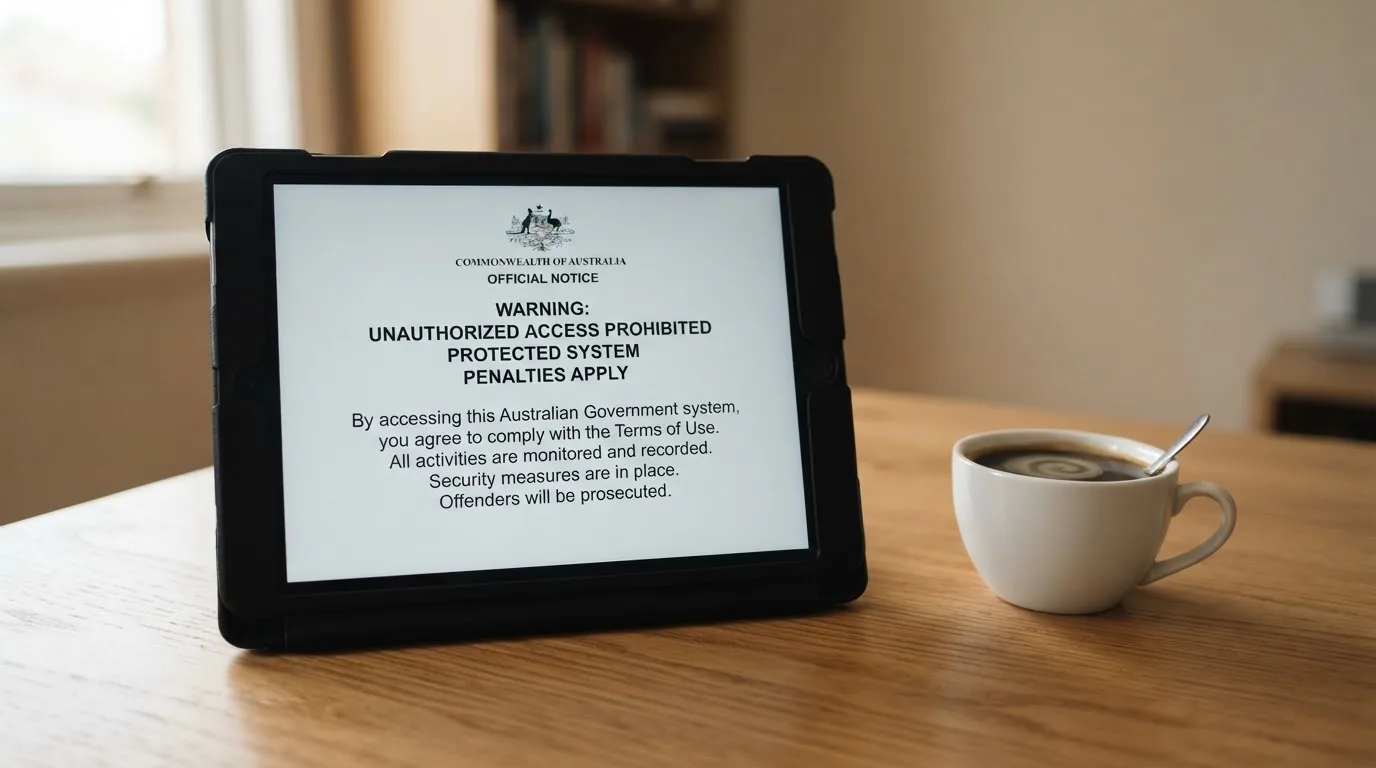
This page looks at that landscape as a set of choices. It traces the “real cash” claim from the paytable through the bonus terms and the withdrawal method, then sets those marketing claims beside the ACMA enforcement record and the player protections that do and do not apply. The goal is to give a reader enough context to see what each offshore offer is, what it costs, and what recourse they actually have if a withdrawal stalls.
Currency and date check: this page is current as of 8 November 2026 and the licence and blocking claims have been verified against the ACMA register of formal warnings.
Table of Contents
- What “real cash” means in a pokies ad
- How online pokies work on a phone
- Game providers and live tables marketed for real cash
- The eleven brands the ACMA has warned
- The legal frame: why an Australian licence for online pokies does not exist
- Player protection: what an Australian can and cannot access
- How the offshore offers move money
- What the “real cash” bonuses actually cost
- A working arithmetic on the blocking rate
- How to read an offshore “real cash” pokies offer
- Picking the right path for the situation
- Verdict on each brand
- Frequently asked questions
What “real cash” means in a pokies ad
The phrase does a lot of work in a banner. At its narrowest it means a stake denominated in a real currency rather than a sweepstakes or social-coin balance — the reels spin against the player’s bank balance, and the wins (if any) pay into the same balance. At its widest it stretches to cover free spins credited in bonus money, no-deposit chips, sign-up rewards and tournaments whose prize pools are paid in cash. Most offshore ads blend all of these under the one banner, which is where the marketing and the mechanism start to drift apart.

A real-money pokie is mechanically the same product as a free-to-play pokie — a slot engine, a paytable, a return-to-player percentage and a volatility class. The difference is who holds the balance. A free-to-play app holds a virtual ledger that has no cash value, which is why it can sit in an Australian app store without issue. A real-money casino holds real funds, accepts real deposits, and pays (or fails to pay) real withdrawals. That is the dividing line between the products the reader can install on an Australian phone without it being unlawful to do so, and the products that the ACMA has been asking ISPs to block since November 2019.
The next sections look at each piece of that offer in turn: how the reels are packaged, how the operators are structured, how the bonus terms move the cash around once it is in the account, and how the deposits and withdrawals are routed. None of it changes the underlying legal status, but each piece is what an Australian reader is actually being asked to trust.
How online pokies work on a phone
Every brand in this market runs a browser-based mobile product and most offer a downloadable app as well. The browser product is the more common path — the player lands on the site, the casino detects the device and serves a touch-optimised HTML5 interface. There is no install step and no app-store review, because the operator is hosted offshore. That is also the point at which the legal line is crossed: the casino is providing an interactive gambling service to a person physically in Australia.
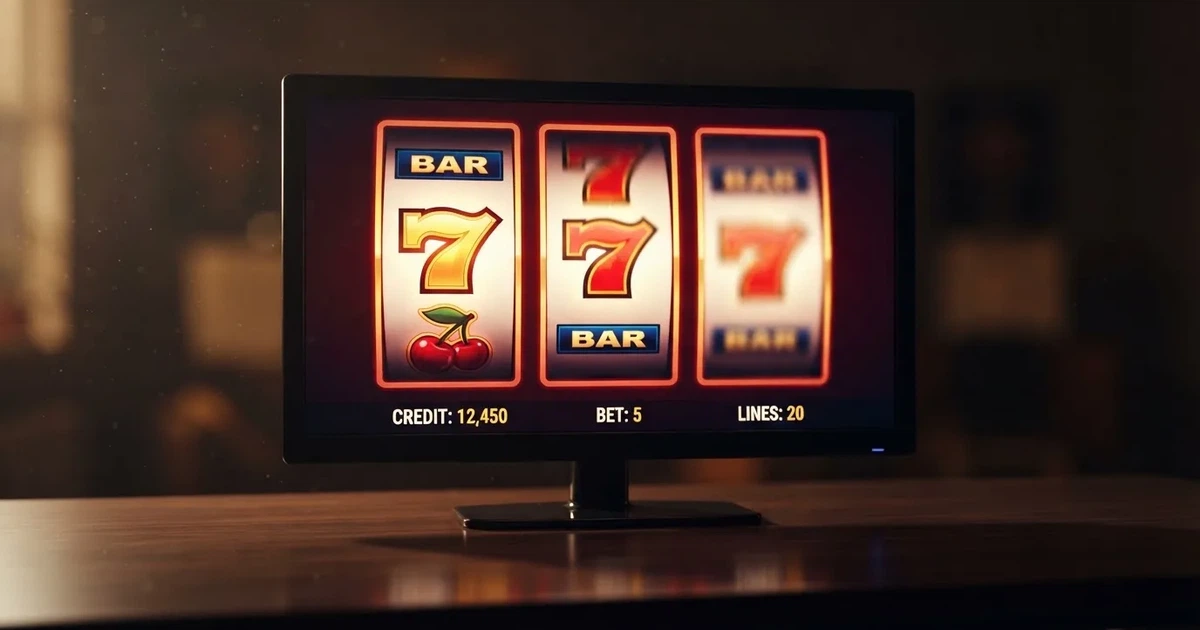
The downloadable app works slightly differently. On Android the casino typically distributes an APK directly from its own site, since Google Play does not host real-money casino apps in most jurisdictions. On iOS the operator points the player at a configuration profile or a web-app shortcut, because the App Store blocks the same product. Either way, the app is a wrapper around the same browser product, and the install path itself is one of the more visible signals that the operator sits outside the Australian regulatory perimeter.
What the app does not change is the underlying mathematics. The reels, the paytable and the random-number generator are identical to the desktop version, because the casino is running the same game server. The “mobile” part is the user interface, not the pricing. A reader who assumes the mobile version of a slot has a different return-to-player than the desktop version is looking at the wrong axis — the maths is the same, the licence is the same, and so is the prohibition.
What the mobile product does add is friction. Push notifications for “daily bonuses” are how these casinos re-engage lapsed accounts, and a logged-in session on a phone is shorter than on a laptop, which is why most of the bonus T&Cs assume the player will log in once a day, tap a bonus button and play through a small set of spins. The shape of the offer is tuned to the device.
Game providers and live tables marketed for real cash
The “real cash” pokies advertised to Australians are licensed out of the same handful of offshore studios that supply the rest of the offshore market. BGaming, Pragmatic Play, Evolution for live tables and a long tail of smaller studios (Endorphina, Belatra, Platipus) make up most of the game library. A reader who recognises a studio from a free-to-play app is seeing the same game engine, not a different product; the licence to take real money sits with the casino, not the studio.
Live dealer tables are pitched as a separate category, usually powered by Evolution or by Pragmatic Play Live. The games are baccarat, blackjack, roulette and game-show formats like Crazy Time, streamed from a studio in Malta, Latvia, Georgia or the Philippines. The table limits and the side-bet menu match what the studio offers its other customers; the only thing that changes is who holds the balance. That detail is also where the most common player confusion sits — “live” implies regulated, and the operator is happy to leave that impression, because the studio’s licence is genuinely held by the studio. The casino that sits between the player and the studio is a different entity.
Game-specific RTP figures vary, and the offshore casino’s published number for a given title is sometimes higher and sometimes lower than the same studio’s published figure elsewhere. That is itself a signal worth reading: a slot’s return-to-player is set by the studio, not by the casino, and discrepancies between two numbers labelled the same game are usually explained by a different math profile the casino has chosen to deploy. The reader cannot verify which profile they are playing without checking the in-game help menu against the studio’s reference number; the offshore casino is under no obligation to publish the figure its server is using.
The eleven brands the ACMA has warned
The table below lists the eleven offshore brands covered in this comparison. Each one is named because the ACMA itself issued a formal warning under the Interactive Gambling Act 2001 over an interactive gambling service marketed to Australians. None of them is licensed to offer online casino games or online pokies for real cash in Australia; that licence does not exist under Australian law. The table is a side-by-side of the enforcement record, not a recommendation.
| Brand | ACMA action | Operator named by the ACMA | Subject support |
|---|---|---|---|
| RocketPlay | Formal warning March 2026 | Pulsup Ltd | — |
| Level Up Casino | Formal warning May 2022 | Dama N.V. | listings-only |
| Woo Casino | Formal warning March 2025 | Dama N.V. | — |
| Spirit Casino | Formal warning May 2025 | Dama N.V. | — |
| National Casino | Formal warning July 2025 | Consolutetish S.R.L. | listings-only |
| Bizzo Casino | Formal warning July 2025 (earlier 2022) | Consolutetish S.R.L. | — |
| Ignition Casino | Formal warning July 2025 | Bamboo Media | — |
| Instant Casino | Formal warning February 2025 | EOD Code SRL | — |
| Jackbit | Formal warning April 2026 | Ryker B.V. | — |
| Casino Intense | Formal warning April 2025 | Sterplay Holding Ltd | listings-only |
| Sky Crown | Formal warning (Hollycorn N.V.) | Hollycorn N.V. | — |
A few patterns jump out from the operator column. Dama N.V. alone accounts for three of the eleven brands (Level Up, Woo, Spirit) and was first warned in May 2022, then re-warned as recently as May 2025 — a three-year gap in which the same Curaçao-registered company continued to market online casino games to Australians. Consolutetish S.R.L. took over the National and Bizzo brands after a 2022 warning to TechSolutions, which suggests a rebranding cycle rather than a withdrawal from the market. Hollycorn N.V. holds Sky Crown and Blue Leo under the same warning, and Bamboo Media runs Ignition Casino under a separate one. None of these operators carries an Australian licence for online casino games, because no such licence exists; what changes between the warnings is the corporate wrapper.
The “subject support” column reflects what the inputs actually carry for each brand. A dash means the inputs have no data on how the brand handles the page’s central subject; a “listings-only” marker means the brand appears in third-party listings (a provider directory, an encyclopedia entry, a regulator page) but no first-party data is available. In every case the underlying legal status is the same: the ACMA has already told the operator, by name, that the service is prohibited.
What a formal warning actually does
A formal warning under the Interactive Gambling Act 2001 is the lightest sanction the ACMA can issue, but it is published, dated and tied to a specific operator entity. It is the ACMA’s way of putting a record on the file: the regulator investigated, found a contravention of the IGA, and warned the named operator. The warning does not, by itself, take the site down. What it does is give the ACMA standing to escalate — to direct Australian internet service providers to block the domain, to refer the matter for civil penalty proceedings, and to add the brand to its public register of actions.
The escalation cadence matters because it tells the reader where each brand sits in that pipeline. RocketPlay, Jackbit and Casino Intense were all warned within the last fourteen months. Woo, Spirit, National, Bizzo and Ignition sit in the warning-but-not-yet-blocked tier. Level Up was first warned in May 2022, four years before this page, and has not been escalated to a blocking request in that window — which is a long tail, not an exemption.
The legal frame: why an Australian licence for online pokies does not exist
The Interactive Gambling Act 2001, as tightened by the Interactive Gambling Amendment Act 2017, makes it an offence to provide online casino games or online pokies to a person physically in Australia. Each state and territory enforces the federal law alongside its own; none of them issues a licence that would make that provision legal. The Northern Territory Racing and Wagering Commission, often cited as a gambling regulator, regulates 52 online bookmakers — Sportsbet, Bet365 and Ladbrokes among them — for wagering on racing and sport placed before the event. The NTRWC has no full-time staff and meets once a month in Darwin. It does not licence online casino games, because no Australian regulator does.
The Interactive Gambling Amendment (Gambling Reform) Bill 2026 passed Parliament on 19 August 2026. Its advertising and inducement measures commence 1 January 2027 — law with a start date, not yet in force on this page. The Bill targets inducements and marketing around prohibited services rather than changing the underlying prohibition; the offence of providing an online casino game to an Australian is unchanged.
The consequence for a reader is structural rather than criminal. The IGA targets the provider, not the player: an Australian who signs up to an offshore casino is not personally prosecuted. What the player loses is the protection that comes with a regulated market — no Australian complaints body, no requirement that the casino hold segregated player funds, no enforced return-to-player floor, no withdrawal time guarantee. If the casino refuses a payout, the reader’s recourse is the casino’s own dispute process or, in some cases, the regulator named in the casino’s footer licence. That regulator is usually Curaçao, Anjouan or Kahnawake, none of which has an Australian consumer-protection mandate.
Player protection: what an Australian can and cannot access
The Australian harm-minimisation framework assumes the player is dealing with an Australian-licensed operator. BetStop, the National Self-Exclusion Register, has been live since August 2023, but it binds Australian-licensed online and phone wagering services only. An offshore casino is not connected to it, and an Australian who has self-excluded can still sign up to a brand on the list above; the register has no mechanism to stop the registration.
The same gap applies to the credit-card ban. Since 11 June 2024, credit cards, credit-related products and digital currency have been banned as payment for licensed online wagering in Australia, with penalties of up to A$247,500 for the operator. An offshore casino asking for a credit card or a crypto deposit is not subject to that ban, because it is not subject to any of the Australian rules. The legal deposit routes for Australian-licensed wagering are debit card, bank transfer, PayID/Osko and BPAY. An offshore casino typically accepts a wider range of methods — including crypto — and that wider range is, again, a signal of the regulatory perimeter rather than a feature.
Help is available and is the same regardless of which operator a reader has been playing with. The National Gambling Helpline is 1800 858 858 — free, 24/7, with web chat at Gambling Help Online. Financial Counselling Australia and the state-based problem gambling services offer free, confidential support. The minimum age for any wagering in Australia is 18, and the ACMA’s blocking regime is designed to make it harder for minors to reach prohibited services in the first place.
How the offshore offers move money
The payment methods advertised under the “real cash” banner fall into two groups. The first is the methods a reader would expect from an Australian-regulated product: debit card, bank transfer, PayID and BPAY. The second is the methods that the IGA-based credit-card and crypto bans exclude from Australian-licensed wagering — credit cards, e-wallets that hide the funding source (Neteller, Skrill in some configurations), prepaid vouchers, and cryptocurrency.
PayID is the most heavily marketed of the lot, because it offers instant deposit settlement and is recognisable to an Australian audience. The deposits move through the New Payments Platform and clear in seconds, which the offshore casinos use as a selling point. The withdrawal side is slower and is the part the marketing tends to underplay. A PayID withdrawal request usually sits in a 24–72-hour pending window while the casino runs its “know your customer” and anti-money-laundering checks; only after the casino approves the payout does the funds actually move. That gap is where most of the player disputes happen.
Crypto deposits are pitched as both faster and more private. They are faster at the deposit end — a USDT transfer on TRC-20 settles in a few minutes — but the withdrawal time depends on the casino’s own queue, which is again 24–72 hours of internal processing before the on-chain leg is even initiated. The “private” framing is also worth pressing on, because every licensed casino still runs KYC at the first withdrawal, and that KYC pulls in a passport scan, a proof of address and a source-of-funds check. The crypto path takes longer to clear the casino’s own review than the PayID path does, in practice.
Minimum deposits in this market sit at A$10–A$30 for the mainstream brands and A$5–A$10 for the low-deposit segment. The “A$10 deposit” claim is real in the sense that the cashier accepts ten Australian dollars; it is misleading in the sense that a ten-dollar deposit does not move the player meaningfully through a real-money welcome bonus. The bonus terms do the actual moving, and they are the next shelf.
What the “real cash” bonuses actually cost
A real-money welcome bonus typically credits a percentage match on the first deposit — 100% up to A$500, 150% up to A$300, sometimes higher — plus a bundle of free spins on a named slot. The bonus money is not cash. It is credited to a separate balance, cannot be withdrawn, and converts to withdrawable cash only after the player has wagered the bonus (and, in many cases, the deposit as well) a stated multiple of times.
That multiple is the wagering requirement, and it is the single number that decides what the bonus is actually worth. A 100% match up to A$500 with a 35× bonus wagering requirement asks the player to turn over A$17,500 before the bonus balance converts. On a slot with a 96% return-to-player, the expected cost of clearing that turnover is around A$700 — 4% of A$17,500 — which is more than the headline bonus itself. The “free A$500” has, on average, cost the player A$700 to convert.
The marketing tends to bury that arithmetic under a banner. The bonus word is “real cash” — in quotes — because it sits in a position that implies a clean deposit-and-win relationship, and the bonus terms are the part that breaks that picture. A reader who sees a 35× requirement can do the conversion in their head; a reader who sees a 50× or 60× requirement should assume the bonus is, on average, paying them to lose.
Free spins credited as part of the welcome package are usually wagered as bonus funds too, with winnings from the spins subject to the same multiple. Max-bet clauses cap the stake per spin during the wagering window — typically A$5 to A$10 — and breaching that cap voids the bonus and the winnings. Game-weighting rules exclude or down-weight table games and live dealer titles, which is why the wagering requirement is best thought of as a slot-only turnover target.
The no-deposit “real cash” offer is a smaller version of the same shape: a small chip (A$5–A$20) or a handful of free spins credited on signup, with a high wagering requirement (often 50×–60×) and a hard cap on the withdrawable winnings (often A$50–A$100). The offer is structured so that the expected value of the bonus is below the cap, which keeps the casino’s liability bounded. A reader who hits a large win on the no-deposit spins is most likely to find the winnings either voided for a terms breach they did not notice or paid out at the capped amount.
A working arithmetic on the blocking rate
The ACMA’s enforcement pipeline gives a measurable rate. As of the June 2026 round, 1,751 illegal gambling and affiliate marketing websites had been blocked since the first blocking request in November 2019 — a span of roughly six and a half years. That works out to a band of roughly 220–310 blocking requests per year, or about 18–26 per month, depending on whether you annualise the rounded 1,751 figure or take the 12-block June 2026 round as representative of an active month. Either way, the cadence is steady rather than aggressive: the ACMA is processing a meaningful number of sites each year, but the pipeline is far from clearing the queue of new entrants.
The arithmetic belongs to this page as a piece of information: an Australian reader who hits a blocked site is looking at one of 1,751 entries in that register, and the rate at which new ones are added is roughly the same as the rate at which old ones are being rotated. The market that the blocking is meant to discourage is, by that measure, neither shrinking nor exploding — it is being managed.
How to read an offshore “real cash” pokies offer
The short version is that every offer in this market sits on the same legal footing, and the differences between them are operational rather than regulatory. A reader who has decided to play at one of these brands is choosing between operators on dimensions the operator actually controls: the size and shape of the bonus, the wagering multiple, the range of accepted payment methods, the speed of the withdrawal queue, the breadth of the game library, and the brand’s track record with player complaints.
The first dimension to read is the wagering multiple. Anything below 35× is unusual in this market and worth taking seriously; anything above 45× is the casino pricing the bonus at a steep expected cost and the reader should assume the bonus is paying them to lose. The second is the withdrawal queue — a 24-hour pending window is reasonable; a 72-hour window is at the edge of what a player should accept without reading the recent complaints. The third is the operator’s corporate history: an entity that has been warned, rebranded and warned again is not the same risk as an entity that has been warned once.
The legal frame does not move with the brand. The Interactive Gambling Act 2001 still applies, the ACMA still publishes formal warnings, and the offshore licence the operator displays is the operator’s protection, not the player’s. A balance at an offshore casino can be lost to a blocking request, a withdrawal refusal, or a corporate restructure at the operator’s end; none of those events gives the player a recourse inside Australia.
The practical advice is not to look for a safer version of the same offer. There isn’t one. The choice is between the offshore market as a whole and the Australian-regulated alternatives — wagering on racing and sport with an Australian-licensed bookmaker, land-based pokies in clubs and casinos, or not gambling at all. Each of those has a consumer-protection floor that the offshore “real cash” market does not.
Picking the right path for the situation
A reader who lands on this page with a specific situation in mind can use the material above to choose between paths. The matrix below maps three reader situations to the paths the page has walked through; it is not a recommendation of one brand over another, because no offshore brand in this market is licensed in Australia.
A reader with a small bankroll who is drawn to the $10-deposit offers is, by construction, choosing the highest-friction segment of the offshore market: the smallest deposits are paired with the highest wagering multiples and the strictest max-bet rules, partly because the casino’s KYC cost is amortised over a smaller balance. The same reader would do better — in expected-value terms, and in recourse terms — at a land-based club with a responsible gambling officer on duty, where the RTP is regulated at 85% or higher and the venue has a duty of care.
A reader who wants the live-dealer experience is choosing between studios and operators. The studio licence is real (Evolution and Pragmatic Play Live are licensed in Malta and the UK); the operator licence is not. The combination is sold as “live casino, fully licensed” by the marketing copy, and the reader should not let that phrase resolve the question — the studio is licensed, the operator is not, and the player funds are held by the operator.
A reader who is looking for harm minimisation is, by definition, not the target of this market. BetStop does not bind the offshore brands. The credit-card ban does not apply. Game-limits, deposit-limits and time-out tools are offered by the offshore casinos as marketing, not as regulated obligations, and the casino can lift them on a whim. The Australian-licensed wagering market offers the full harm-minimisation package; the offshore market offers the games without the package. A reader who is already feeling the pull of those games is the reader the National Gambling Helpline is set up for, and 1800 858 858 is a free call.
Verdict on each brand
The next block closes each of the eleven brands with a one-paragraph verdict — the page’s own judgement, framed as what the brand is and what it is not, given the ACMA record and the legal frame above.
RocketPlay is the most recently warned of the Dama-adjacent brands, with the ACMA naming Pulsup Ltd in March 2026. The brand has cycled through multiple operators over the past four years, and the most recent warning suggests the cycle is continuing rather than resolving. The reader is choosing between two looks at the same operator record.
Level Up Casino is the longest-running entry on this list: the ACMA warned Dama N.V. over Level Up in May 2022, and there is no blocking or further escalation in the public record since. That four-year gap is information either way — the brand has either de-prioritised the Australian market or has been careful enough to avoid another formal action. The reader is reading absence, not absence-of-issue.
Woo Casino took the same Dama N.V. envelope and was warned in March 2025. The recent date puts it firmly in the warned-but-not-blocked tier, and the underlying operator history is the same as Level Up’s. The reader is choosing recency of action over the length of the gap.
Spirit Casino rounds out the Dama N.V. trio with a May 2025 warning. Three warnings to one Curaçao-registered operator in three years is a clear pattern, and the reader should treat that pattern as the brand’s signature rather than as three separate incidents.
National Casino is the first of two brands under Consolutetish S.R.L., warned in July 2025. The corporate wrapper is newer than Dama N.V.’s, but the pattern is the same: a Curaçao operator marketing to Australians, formal warning, no blocking. The reader is choosing a newer corporate envelope over a longer one, which is not necessarily the better trade.
Bizzo Casino sits under the same Consolutetish S.R.L. warning but carries a second layer — a 2022 warning to TechSolutions, the previous operator. The corporate change is visible in the ACMA record, and the reader is looking at a brand that has cycled operators and re-emerged under a new warning in the same year. That is a meaningful signal.
Ignition Casino sits under Bamboo Media, warned in July 2025. Bamboo Media is a less common name in the ACMA record than Dama N.V. or Consolutetish S.R.L., but the structure is the same: an offshore operator marketing a prohibited service to Australians, formal warning issued, no blocking yet.
Instant Casino carries an EOD Code SRL warning from February 2025. The brand markets heavily on speed-of-withdrawal claims; the ACMA record is the speed-of-regulator. A reader who is weighing Instant Casino on its payout-time claims is weighing the operator’s marketing against the regulator’s record.
Jackbit is the more recent of the two Ryker B.V. brands, warned in April 2026. The brand leans on crypto deposits and a Curaçao licence. The crypto path does not exempt the operator from the Australian rules; the warning is the ACMA’s record that it has, again, chosen to market a prohibited service.
Casino Intense sits under Sterplay Holding Ltd with an April 2025 warning. The brand is one of the smaller names on this list, and the warning is recent enough to be in the live enforcement window. The reader is choosing a less-trodden operator with a fresh formal warning over a more-trodden operator with an older one.
Sky Crown closes the list under Hollycorn N.V., the same operator named in the Sky Crown and Blue Leo warning. Hollycorn has been in the ACMA’s enforcement window longer than most of the operators on this list, and the brand sits inside a portfolio rather than as a standalone — the reader is choosing one Hollycorn brand with the knowledge that the others in the portfolio carry the same warning.
Frequently asked questions
Does “real cash” mean the same thing as “real money” when a pokies site advertises it?
In the offshore market the two phrases are used interchangeably to mean a stake denominated in a fiat currency, with wins paid into a real balance. The legal status of that balance — its recourse, its protection, the regulator behind it — is the same under either phrase. The marketing uses “real cash” because “real money” is the term the Australian-licensed market uses, and the offshore casino wants the same surface language without the same regulatory perimeter.
How does a $10-deposit real-cash pokies claim compare with a no-deposit real-cash offer?
A $10-deposit offer asks for real money up front and credits a percentage match plus free spins, with a wagering multiple on both the deposit and the bonus. A no-deposit offer credits a small chip or a handful of free spins on signup, with a higher wagering multiple (typically 50×–60×) and a hard cap on withdrawable winnings (typically A$50–A$100). The expected value of the no-deposit offer is usually below the cap, so the player is paid a small amount to take the casino for a test drive. Both offers end at the same place — a balance that can only be withdrawn after the wagering requirement is cleared.
Is playing online pokies for real cash from an offshore site something an Australian can legally do?
The Interactive Gambling Act 2001 prohibits the provision of online casino games and online pokies to a person physically in Australia. The IGA targets the provider, not the player, so an Australian is not personally prosecuted for signing up. They do, however, lose access to Australian consumer protection, the BetStop self-exclusion register, the credit-card ban and any Australian complaints body. The legal status of the activity is the same as it has been since 2017; the enforcement has tightened each year since.
What is the difference between a real-cash pokies app and a free-to-play pokies app with the same name?
A free-to-play app holds a virtual ledger that has no cash value, which is why it can sit in an Australian app store without issue. A real-cash app holds real funds, accepts real deposits and pays (or fails to pay) real withdrawals. The game engine, the paytable and the studio that produced the slot are typically identical — the difference is who holds the balance and whether the player is dealing with an Australian-regulated product or an offshore one. Many of the offshore casinos market under a name that also appears as a free-to-play app; the two are not the same product, and the marketing copy does not always make that distinction clear.
Why would a site advertise “free slots” that can win real cash, when the two seem contradictory?
The contradiction is the offer. The “free” part refers to the spin cost — the player does not pay per spin out of their deposit — and the “real cash” part refers to the winnings, which are paid into the bonus balance once the wagering requirement is cleared. The offer is structured so that the expected value of the free spins, after the wagering multiple is applied, is below the cap on withdrawable winnings; that keeps the casino’s liability bounded while still giving the player a session on the reels.
How fast does a real-cash pokies withdrawal typically move compared with the original deposit?
The deposit is the fast part — PayID and crypto deposits settle in seconds or minutes. The withdrawal is the slow part. The casino typically runs a 24–72-hour pending window while it completes its KYC and AML checks, then initiates the payment. After the casino approves the payout, PayID withdrawals clear in minutes and bank transfers in 1–3 business days; crypto withdrawals clear once the casino broadcasts the transaction. The total elapsed time from withdrawal request to funds in the player’s account is typically 2–5 business days, which is the gap most player disputes sit inside.