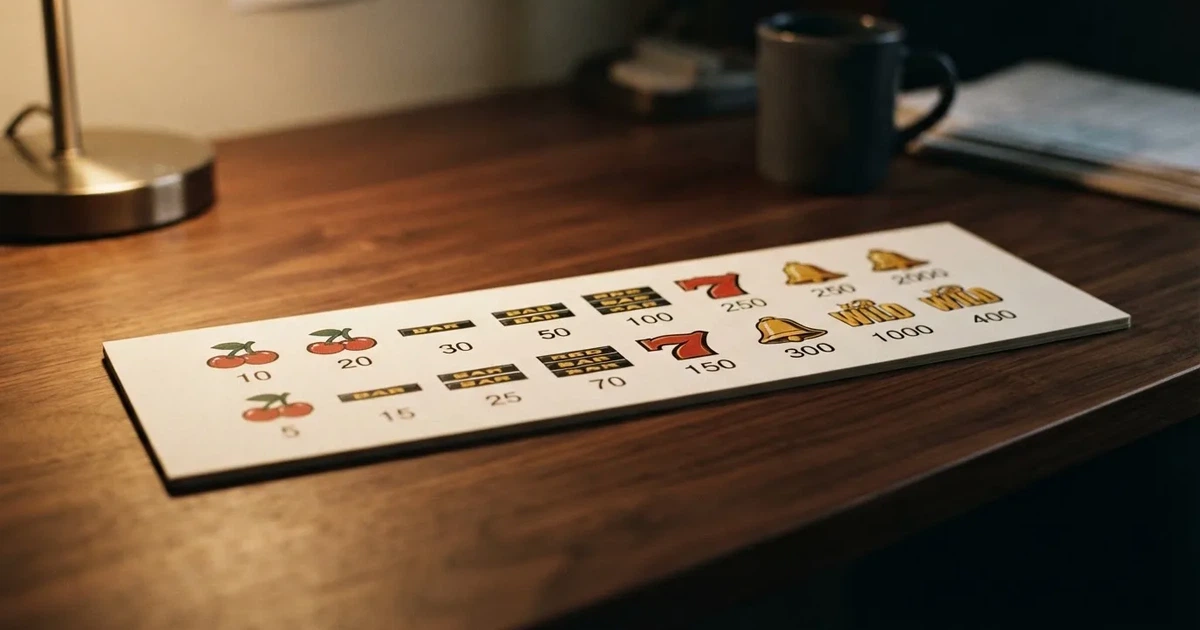
Aristocrat online pokies Australia in 2026: what the page is, what it isn’t
 Available in US
A search for Aristocrat online pokies in Australia in 2026 lands somewhere between two very different products. There is the genuine Aristocrat Leisure Limited — an ASX-listed maker of poker machines sitting inside Australian pubs, clubs and casinos since 1953. And there are online casinos that put Aristocrat-style reels on screen and take real money from Australian players. The second of those exists because the legal ban stops at the border, and the ACMA has spent the past several years telling those sites, by name, that the border matters.
That is the whole page. Not a ranking of where to play, not a guide to the next big Aristocrat release. The product is prohibited, the regulator has been issuing formal warnings in plain sight, and the comparison worth having is the one between what the marketing promises and what the law actually allows. Read on for what that looks like at the close of 2026.
Current as of 24 September 2026, checked against the ACMA’s published register of formal warnings and blocking requests.
Table of Contents
- What a paytable actually tells you on an Aristocrat-style online slot
- Aristocrat Leisure Limited: the company behind the cabinet
- The legal ground under your feet
- How fast the ACMA is blocking sites — and what that pace means
- The ACMA’s formal warnings — by name, by date, by operator
- Responsible gaming — what the Australian frame actually offers
- The eleven operators the ACMA has acted against
- What “subject support” actually means in the table
- The Australian tax position on gambling winnings
- The argument the page is making
- Frequently asked questions about Aristocrat online pokies in Australia
What a paytable actually tells you on an Aristocrat-style online slot
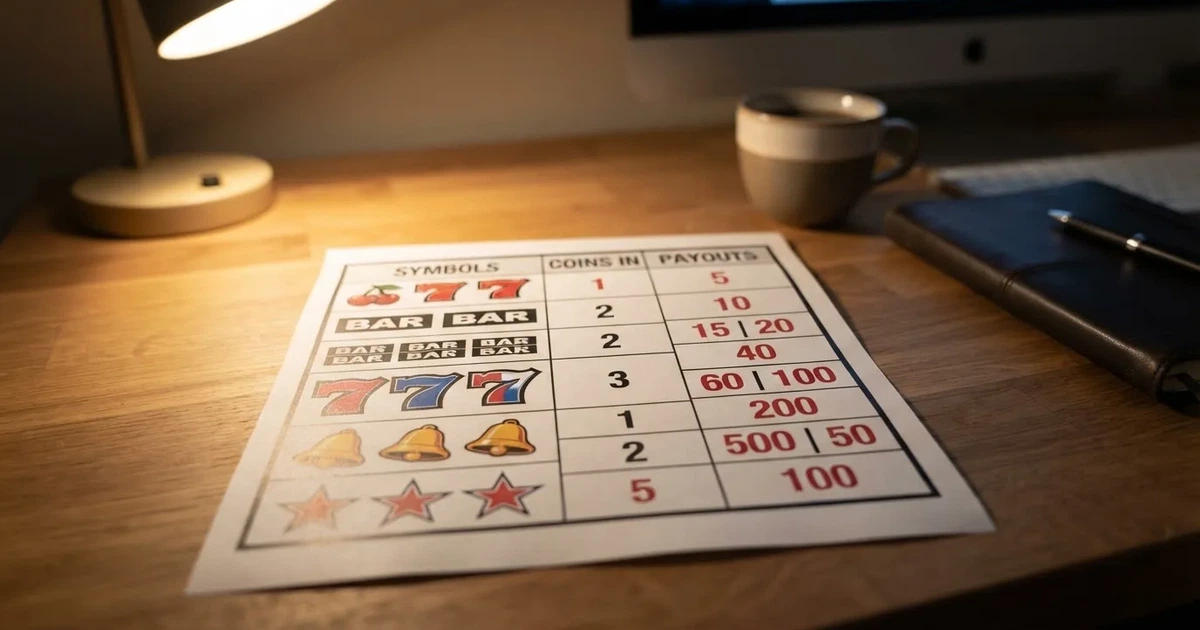
A paytable is the printed strip of symbol values and payout combinations that any pokie, real or online, leans on to explain how a spin is paid. It is the part of the game that decides whether a near-miss still paid you something, whether the scatter you just landed pays anywhere on the reels, and what the wild symbol actually substitutes for. On a genuine Aristocrat machine in a pub, the paytable is the line-printed card glued to the cabinet or shown on the screen above the reels; online, it lives in a menu and is what you read before you decide the bet size.

Three things matter on any paytable, and they are the three things worth knowing before a punter puts a cent through. First, the symbol values: how much each combination pays at the line bet the rules assume. A diamond or a logo is rarely the top payer — that is usually a bonus or scatter symbol, paid by trigger rather than by line. Second, the win lines: how many distinct combinations the game counts. Older Aristocrat cabinets offered nine or twenty fixed lines; modern online conversions tend to advertise “ways to win” figures that run into the hundreds, which look generous until the math underneath them is shown. Third, the special symbols — wild, scatter, bonus — and what each one triggers. A scatter that pays anywhere and a scatter that only triggers a feature are two different things dressed as one word.
The arithmetic that runs a paytable is the same regardless of where the cabinet sits. Each reel carries a fixed number of stops; each stop is weighted by the symbol placed on it; the game cycles the weighted reel and pays on the combinations the paytable defines. A “near miss” is two jackpot symbols landing on a visible line with a third stopping one position above or below — a feature engineered into the weights, not a coincidence of the spin. Aristocrat has built that psychology into its land-based cabinets for decades, and the offshore online sites running Aristocrat-style content run the same logic under different artwork.
What an Aristocrat paytable online does NOT carry is the licence of the original machine. The numbers — the symbol weights, the hold percentage, the volatility class — are taken or copied from the cabinet, but the cabinet itself is regulated by state gaming authorities, while the offshore site runs from Curaçao, Malta or wherever its holding company is registered. A paytable is what tells you the rules of a game. It does not tell you who is on the other side of the screen. That is the regulatory point the rest of this page comes back to.
Aristocrat Leisure Limited: the company behind the cabinet
Aristocrat Leisure Limited is an Australian gambling machine manufacturer founded in 1953 by Leonard Ainsworth and listed on the Australian Securities Exchange in 1996 under the ticker ALL. Its administrative and research headquarters sit in North Ryde in Sydney, with marketing and development offices in South Africa, Russia and the United States. The company is described as the largest gambling-machine manufacturer in Australia and the second-largest slot-machine manufacturer worldwide, behind International Game Technology. The Australian Securities Exchange listing is the reason a person searching for “Aristocrat” can land on a company page rather than a casino page, and it is the piece of context the offshore sites rarely volunteer.
Aristocrat’s business extends well beyond the cabinet. The company develops electronic gambling machines, casino management systems, online real-money gambling technology, iLottery products and social casino games. Its online real-money arm is Aristocrat Interactive, formed in April 2024 by combining the Anaxi unit with the newly acquired NeoGames group, which includes Aspire Global, BtoBet and Pariplay. The acquisition of NeoGames closed in April 2024 at roughly US$1 billion, after the deal was announced in 2023 — Aristocrat Interactive is the legitimate online channel, and it licences its technology to operators that are regulated in jurisdictions where online real-money play is permitted.
The growth path runs through three US deals. Aristocrat bought Video Gaming Technologies in 2014 for about US$1.3 billion, then Plarium in 2017 for US$500 million and Big Fish Games in 2017 for US$990 million. A separate US$3.7 billion bid to acquire Playtech was rejected by Playtech shareholders in 2021, leaving Aristocrat as the second-largest slot maker worldwide rather than the largest. The 2025 financial year, the most recent full reporting cycle, closed on A$6.30 billion of revenue with normalised net profit after tax and amortisation of A$1.55 billion and a headcount of 7,400. The scale matters for the page’s argument: this is a publicly accountable Australian company whose name is borrowed by offshore sites running product the company does not, itself, distribute to Australians online.
Two of Aristocrat’s businesses do run product that Australian players can reach legally. Product Madness runs social casino games, where no real money changes hands and the product is treated as a game rather than gambling under Australian law. Aristocrat Interactive supplies the regulated online real-money platform; the operators that license it are licensed in jurisdictions outside Australia, which is why an Australian account holder sits outside the Australian consumer-protection regime even when the technology on the back end is Aristocrat’s.
The legal ground under your feet
Online casino games and online pokies cannot be licensed anywhere in Australia. The Interactive Gambling Act 2001, strengthened by the Interactive Gambling Amendment Act 2017, makes it an offence to provide online casino games, online pokies or in-play betting to a person in Australia; no state or territory issues a licence for them. What is licensable is wagering on races and sport placed before the event, lotteries and keno — in practice licensed by the Northern Territory Racing and Wagering Commission. The minimum age for any gambling activity in Australia is 18.
The Northern Territory Racing and Wagering Commission is, on paper, the regulator of more than fifty of Australia’s online bookmakers — including Sportsbet, Bet365 and Ladbrokes — licensed in the Territory largely for tax reasons. The commission has no full-time staff and meets once a month in Darwin, which is the structural feature that drew attention in April 2026, when a bill to reform the de facto national online wagering regulator was reported in detail. The point is not that wagering is unregulated; the point is that wagering is a separate legal category from casino gaming, and the licence that lets Sportsbet take a bet on a horse does not, and could not, extend to running an online pokie.
Enforcement against the prohibited side sits with the ACMA, the Australian Communications and Media Authority. The ACMA investigates complaints, issues formal warnings, and can direct Australian internet service providers to block illegal sites. The individual player is not prosecuted — the Interactive Gambling Act targets the provider — but an offshore site gives no Australian consumer protection, no complaints body and no recourse if a withdrawal is refused. The site can also be blocked by the ACMA while a balance is still on it, which is the practical cost a punter on the wrong side of the law carries.
Two payment rules follow from the legal frame. Credit cards, credit-related products and digital currency have been banned as payment for licensed online wagering since 11 June 2024, with penalties up to $247,500 for operators taking them. Legal deposit routes for licensed wagering are debit card, bank transfer, PayID/Osko and BPAY. A site asking an Australian for a credit card or a crypto deposit is, by definition, not operating under the Australian rules; the credit-card ban is the test the ACMA’s own pages run against the offshore sites that try to look local.
The reform on the runway is the Interactive Gambling Amendment (Gambling Reform) Bill 2026, which passed Parliament on 19 August 2026 and whose advertising and inducement measures commence on 1 January 2027. It is law with a start date — not yet in force at the close of 2026, but binding from the date named. The measures the bill introduces are aimed at licensed wagering advertising and inducements, not at the prohibited casino side; the casino side was already prohibited.
How fast the ACMA is blocking sites — and what that pace means
The ACMA’s blocking programme is the most visible metric of how fast the prohibited offshore market is being pushed out. As reported in June 2026, the ACMA’s running total of blocked illegal gambling and affiliate marketing websites stood at 1,751 since the first blocking request in November 2019. The June 2026 round added another twelve names in one direction: 7Signs, ChromaBet, Donbet, Duospin, Freshbet, Slots Gem, Jacks Club, Lucky Start, Pointsbetz.com, Spinrise, Vinyl Casino and Wildsino. More than 230 unlicensed gambling services have left the Australian market since enforcement was strengthened in 2017.
The pace that matters is the one a single reader can verify. From the first blocking request in November 2019 to the running total of 1,751 by June 2026 is roughly six and a half years, or about 270 sites blocked per year averaged across that window — though the curve is not linear. The early years carried the first few dozen blocks while the legal frame was tested and the ISPs built the technical capacity to honour blocking directions; the later years carried the bulk of the count as the ACMA’s enforcement powers bedded in. A reader looking at a specific round should not infer a steady drip — a single round can add a dozen sites in one notice, the next can add none.
The blocking rate at the close of 2026 sits somewhere in the low- to mid-double digits per month when averaged over a year, with single rounds ranging from nothing to a dozen or so. The range is wide because the ACMA’s pipeline depends on the complaint flow, the formal-warnings process, the ISPs’ compliance, and the willingness of the offshore operators to relaunch under a new domain when their old one is blocked. The relaunch problem is the reason the count of blocked sites is a higher number than the count of operators currently unreachable from Australia: a blocked site reappears as a near-clone under a fresh name within weeks.
The same report puts the cost. H2 Gambling Capital’s 2025 report estimates that Australians lose about A$3.9 billion a year to illegal gambling sites, and that the share of gambling going through legal channels fell from 74% in 2021 to 64%. The legal share is shrinking, the illegal share is growing in dollar terms, and the ACMA’s blocking list is growing faster than the ACMA’s staffing. That is the gap the June 2026 round addresses: the ACMA is, on the published numbers, blocking faster than at any previous point in the programme.
The pace a player feels is the one the ACMA does not publish: how long a particular offshore site stays reachable from an Australian IP before it is blocked, and how quickly the operator puts up a new front door. The published rate is the regulator’s metric; the felt rate is the player’s. The two diverge because the ACMA’s list is a record of past blocks, not a forecast of when the next will land. A punter on a site that has not yet been blocked is one blocking round away from losing access with the balance still on the account.
The ACMA’s formal warnings — by name, by date, by operator
The ACMA’s formal warning process is the regulator’s other instrument. A formal warning is the published record of the ACMA writing to a specific operator about a specific breach of the Interactive Gambling Act, naming the operator’s corporate entity and the brand under which the service is offered. Where a blocking order takes the site offline, a formal warning tells the operator to stop; the warning is published on the ACMA’s own pages and survives even if the site changes hands. The list below is the set of formal warnings issued against operators that ran Aristocrat-style online pokies to Australian players, in the order they appear on the ACMA’s register at the close of 2026.
| Brand | ACMA action and date | Operator named by the ACMA | Subject support |
|---|---|---|---|
| RocketPlay | Formal warning March 2026 (Pulsup Ltd); earlier May 2022 (Dama N.V.) | Pulsup Ltd | — |
| Level Up Casino | Formal warning May 2022 | Dama N.V. | Wazdan listings only |
| Woo Casino | Formal warning March 2025 | Dama N.V. | — |
| Spirit Casino | Formal warning May 2025 | Dama N.V. | — |
| National Casino | Formal warning July 2025 | Consolutetish S.R.L. | Betsoft, Pragmatic Play listings only |
| Bizzo Casino | Formal warning July 2025 (Consolutetish S.R.L.); earlier 2022 (TechSolutions) | Consolutetish S.R.L. | — |
| Ignition Casino | Formal warning July 2025 | Bamboo Media | — |
| Instant Casino | Formal warning February 2025 | EOD Code SRL | — |
| Jackbit | Formal warning April 2026 | Ryker B.V. | — |
| Casino Intense | Formal warning April 2025 | Sterplay Holding Ltd | 1spin4win, Gambling Commission listings only |
| Sky Crown | Formal warning (Hollycorn N.V.) | Hollycorn N.V. | — |
What the table shows is the ACMA’s own publication, transcribed into one place. Each row is a separate formal warning, each carries a corporate entity (the actual target of the regulator’s letter), and most carry an em dash in the subject-support column because the brand has no publicly verifiable link to an Aristocrat title. Two of the eleven — Level Up and Casino Intense — appear in third-party listings of studios whose games are aggregated onto casino platforms, but a listing on a provider page is not the same as a licence to distribute Aristocrat’s own catalogue, and the table marks them as listings only so the gap is visible.
The same warning letters name the corporate entity for a reason. Operators running offshore sites routinely move the licence, the domain, and the brand between jurisdictions; Dama N.V. has been the named operator on multiple formal warnings across multiple brands over a four-year span, and Hollycorn N.V. sits behind a separate family of brands across the same window. The corporate-entity line in the table is the line that survives a rebrand.
What the table does not show is what comes next. A formal warning is the published record of the regulator’s first move; the ACMA’s enforcement options escalate from warning to civil penalty to blocking order, and an operator that ignores a warning and continues to accept Australian players can find its sites blocked under a separate round. The RocketPlay row is the clearest example: the brand was the subject of a Dama N.V. warning in May 2022 and a fresh Pulsup Ltd warning in March 2026, with the corporate vehicle changing in between but the operation reaching Australian players continuously.
Responsible gaming — what the Australian frame actually offers
Australian-licensed wagering services are bound by the National Self-Exclusion Register, called BetStop, which went live in August 2023. BetStop is a national register that allows a person to exclude themselves from every Australian-licensed online and phone wagering provider in one registration; the exclusion applies across all the licensed operators and can run from a minimum of three months up to a permanent exclusion. The register is the consumer-protection instrument the offshore sites cannot match, because an offshore casino is not connected to BetStop at all — a person who self-excludes on a licensed wagering site remains free to deposit on an offshore casino, and vice versa.
Help for a person who feels gambling is becoming a problem is available around the clock. The National Gambling Helpline on 1800 858 858 is free, confidential and operates twenty-four hours a day, seven days a week. Webchat is available through Gambling Help Online. The services are not tied to a single operator; they are funded to operate independently and to refer on to counselling, financial counselling and self-exclusion where appropriate.
The interactive gambling frame has a smaller protection footprint than the wagering frame because the casino product itself is prohibited. A punter using an offshore site has no Australian complaints body to approach, no Australian ombudsman, no Australian regulator to notify when a withdrawal is refused or a bonus is clawed back, and no recourse through the Australian court system without leaving the country to litigate. The offshore site’s licence, whatever it advertises, is held in a jurisdiction whose courts have no jurisdiction over an Australian customer unless the customer is willing to litigate there. This is the practical cost of the legal frame: the consumer-protection instruments that apply to Australian wagering do not reach the prohibited casino product, and the offshore site’s own consumer-protection promises are made by the same entity that holds the player’s balance.
Three rules follow that any reader in Australia should hold onto before they hand over a card. First, the legal frame is what decides whether a complaints body has any jurisdiction at all; an offshore site’s “we are licensed by” line does not bring a regulator into the picture. Second, the self-exclusion register does not extend to offshore casinos, so a BetStop exclusion does not cover the prohibited product. Third, the help line is the one service the frame does not gatekeep — Gambling Help Online and 1800 858 858 take calls from anyone in Australia regardless of which site, licensed or not, the caller has been using.
The eleven operators the ACMA has acted against
The eleven brands below are the operators the ACMA itself has named in formal warnings under the Interactive Gambling Act for offering prohibited interactive gambling services to Australians. They are not a ranked list. They are the set of names the regulator has, on the public record, written to. Each entry is the operator the ACMA named, the date of the warning, and what the regulator’s action implies for a player considering the brand despite the warning.
The pattern across the eleven is what gives the set its weight. Eight of the eleven are operated by one of four corporate vehicles — Dama N.V., Hollycorn N.V., Consolutetish S.R.L., and the Ryker/Sterplay/Pulsup cluster that has cycled through the same operations. Each of the four has accumulated at least two formal warnings across multiple brands in the four years from 2022 to 2026. The rebranding cycle that produces the long list of brands on the ACMA’s register is the same cycle that produces the long list of “new casinos” advertised to Australian players on affiliate pages — the corporate entity stays, the brand rotates.
RocketPlay — Dama N.V. then Pulsup Ltd, four years between warnings
RocketPlay is the longest-running reoffender on the ACMA’s list. The ACMA issued a formal warning to Dama N.V. covering RocketPlay in May 2022; the same brand appeared under a new operator, Pulsup Ltd, in a fresh warning published in March 2026. The intervening four years carried continuous operation reaching Australian players, with the licence changing hands in between but the brand surviving. The fact that the ACMA’s second warning is dated March 2026 — the same year as a separate blocking round that included RocketPlay-adjacent names — means the regulator’s attention on this particular brand is recent, not historical.
What a player considering RocketPlay can infer from the warning record is that the operator is willing to cycle the corporate vehicle rather than the operation. The brand persists; the licence changes; the service reaches the same Australian audience. The risk is the ACMA’s escalation path: a brand that has been the subject of two formal warnings across two operators is closer to the blocking-order end of the regulator’s options than a brand that has received one warning, and the cost of that escalation lands on the player with a balance on the account.
Level Up Casino — Dama N.V.’s May 2022 warning
Level Up Casino was named in the same Dama N.V. warning letter as RocketPlay, Wild Tornado, Cobra Casinos, Bambet, Dazard and, separately, Woo Casino and Spirit Casino later on. The May 2022 warning is one of the broader letters on the ACMA’s register, covering six brands at once because they sat under the same operator. Level Up Casino’s third-party presence on the Wazdan listings pages is the only public marker the brand carries of a studio relationship, and that relationship is a listing of a studio’s catalogue rather than a licence to use Aristocrat’s titles.
The judgement for a player considering Level Up Casino is that the operator behind it has been told, in writing, that the service it offers Australians is prohibited. The brand has continued to operate since May 2022; the formal warning has not produced the exit from the Australian market that a blocking order produces, and the ACMA’s enforcement is a process rather than a single action.
Woo Casino — Dama N.V.’s March 2025 warning
Woo Casino appeared in a separate formal warning to Dama N.V. in March 2025, three years after the May 2022 letter that covered Level Up. The fact that the same operator required a second letter three years later, on a different brand, is the clearest signal of what a “formal warning” is in practice: a written record rather than a change in behaviour. The ACMA’s published register does not record any corporate change at Dama N.V. between the two warnings; the same operator is running both brands through the same period.
The verdict on Woo Casino, on the published record, is that the regulator’s first letter to the operator did not produce the change the regulator asked for. The brand remains on the ACMA’s register in 2026, and the same operator continues to hold licences for other brands the ACMA has also written to. A punter considering Woo Casino is considering a brand whose operator is on the regulator’s second warning, not its first.
Spirit Casino — Dama N.V.’s May 2025 warning
Spirit Casino is the second Dama N.V. brand to be added in 2025, with the formal warning dated May 2025. The pattern — same operator, separate brands, separate warnings — is what gives the Dama N.V. group its place in the ACMA’s enforcement record: the corporate entity accumulates warnings faster than it changes behaviour, and each new brand adds a fresh entry to the regulator’s register rather than resolving the previous ones. The brand is, on the public record, operating under the same corporate roof as Woo Casino and Level Up Casino; the differences between the three brands are skin-deep.
The picture for a player considering Spirit Casino is the same as the picture for the rest of the Dama N.V. cluster: a brand whose operator has been the subject of at least three formal warnings across three brands in the past four years, with no public record of behavioural change. The brand’s marketing may present itself as new; the operator’s relationship with the ACMA is not.
National Casino — Consolutetish S.R.L.’s July 2025 warning
National Casino was named in a formal warning to Consolutetish S.R.L. in July 2025, alongside Bizzo Casino. The brand carries third-party listings on Betsoft and Pragmatic Play’s aggregator pages, which is the closest the public record comes to a content-licence marker; the listings show the brand as a customer of the studio’s distribution rather than as a holder of an Aristocrat-style catalogue. The Consolutetish S.R.L. letter is the second corporate entity to accumulate multiple formal warnings within a twelve-month window, alongside Dama N.V.
The judgement on National Casino is that the brand sits in a corporate cluster that has accumulated two formal warnings in two brands within a single enforcement window. The aggregator listings give the brand a real content footprint; the regulator’s record gives the brand a real enforcement footprint. Both run in parallel, and a player weighing one against the other is weighing a marketing proposition against a published warning.
Bizzo Casino — Consolutetish S.R.L. then TechSolutions, two operators across three years
Bizzo Casino has the longest corporate trail in the table. The ACMA issued a formal warning to TechSolutions (CY) Group Limited and TechSolutions Group N.V. in 2022 covering Bizzo Casino, then a further warning to Consolutetish S.R.L. in July 2025. The corporate hand-off between TechSolutions and Consolutetish S.R.L. is the visible feature: the brand persisted across the change of operator, the regulator’s record did not, and the new operator required its own warning letter. The same year that Consolutetish S.R.L. was warned over National Casino, it was warned over Bizzo Casino — two brands, one operator, one letter.
The verdict on Bizzo Casino is that the brand has survived two operators across two warnings, neither of which produced the exit from the Australian market the regulator asked for. The brand’s history with the ACMA is longer than any other on the table, and the operator change in the middle has not changed the operator’s exposure to the regulator’s process.
Ignition Casino — Bamboo Media’s July 2025 warning
Ignition Casino was named in a formal warning to Bamboo Media in July 2025. The brand is a separate operator from the Dama N.V. and Consolutetish S.R.L. clusters and a separate operator from Hollycorn N.V.; Bamboo Media’s name on the ACMA’s register for the first time in July 2025 places Ignition Casino as a fresh operator rather than as a returning one. The brand has no publicly verifiable Aristocrat subject support beyond the operator name itself.
The picture for a player considering Ignition Casino is the simplest on the list: a brand with one formal warning against one operator, in a year in which the regulator’s enforcement activity was running at the highest pace of the programme. The brand is at the front of the regulator’s queue rather than at the back of it.
Instant Casino — EOD Code SRL’s February 2025 warning
Instant Casino was named in a formal warning to EOD Code SRL in February 2025. The brand sits in the same year as Woo Casino and ahead of National Casino, Bizzo Casino and Ignition Casino, which is the regulator’s pace for 2026-25: five formal warnings across four operators in five months. The EOD Code SRL letter is a single-brand warning rather than a multi-brand letter, which makes Instant Casino the standalone brand of that period — the operator is not carrying the same accumulated-exposure profile as Dama N.V. or Consolutetish S.R.L., but the warning still sits on the ACMA’s register.
The judgement on Instant Casino is that the brand is on the regulator’s record for the same reason as every other brand on the list: the service it offers Australians is prohibited. The corporate exposure is smaller than the Dama N.V. cluster’s; the legal exposure is identical. A player considering Instant Casino is considering a brand the regulator has named in writing.
Jackbit — Ryker B.V.’s April 2026 warning
Jackbit was named in a formal warning to Ryker B.V. in April 2026, alongside CasinOK. The Ryker B.V. letter is one of the most recent formal warnings on the ACMA’s register, dated in the same year as the Pulsup Ltd letter to RocketPlay and the broader June 2026 blocking round. The brand is paired with CasinOK in the same letter, which is the regulator’s pattern for the year: an operator warning covers the operator’s brand portfolio in one letter rather than in separate notices per brand.
The picture for a player considering Jackbit is the one the ACMA’s pace implies for any brand named in 2026-26: the regulator’s attention is currently active, the blocking round that ran two months later added another twelve sites, and the operator behind the brand has been warned within the same enforcement window. Jackbit is at the fresh end of the regulator’s record rather than the historical end.
Casino Intense — Sterplay Holding Ltd’s April 2025 warning
Casino Intense was named in a formal warning to Sterplay Holding Ltd in April 2025. The brand carries third-party listings on 1spin4win, the Gambling Commission’s public register and Wikipedia; the listings place Casino Intense as a customer of multiple studios and as a holder of a UK Gambling Commission account number rather than as a holder of an Aristocrat catalogue. The UK account is the regulatory footprint the brand advertises; the ACMA warning is the regulatory footprint the brand has in Australia, and the two have nothing in common.
The verdict on Casino Intense is the verdict that holds for any brand with a UK Gambling Commission account number but no Australian licence: the licence that the marketing page advertises is real, the licence it claims in Australia is not, and the ACMA’s register is the record that decides which one applies to a player in Australia. The regulator’s April 2025 letter is the published reason Casino Intense is on this page.
Sky Crown — Hollycorn N.V.’s warning
Sky Crown was named in a formal warning to Hollycorn N.V., alongside Blue Leo. The Hollycorn N.V. letter sits on the ACMA’s register as one of the broader corporate-entity warnings, covering the operator’s brand portfolio rather than a single brand. Hollycorn N.V. is the second operator to accumulate multi-brand warnings alongside Dama N.V., and the ACMA’s published record on Hollycorn N.V. is older than its record on the more recent operators. The brand has no publicly verifiable Aristocrat subject support, which places Sky Crown in the same position as the rest of the no-data column.
The judgement on Sky Crown is the one that closes the table: a brand whose operator has been warned in writing by the ACMA, on a brand portfolio that runs across multiple names, with no behavioural change visible on the regulator’s record. The corporate vehicle behind Sky Crown is the same corporate vehicle behind Blue Leo, and the ACMA’s letter to Hollycorn N.V. covers both. A player choosing between Sky Crown and any of the other Hollycorn N.V. brands is choosing between sibling brands under the same warning.
What “subject support” actually means in the table
The fourth column in the ACMA-action table is the column the offshore marketing pages do not show their customers. “Subject support” reads one of three ways on this page.
The first reading is “confirmed” — a brand carries a verifiable licence to distribute Aristocrat-style titles from a publisher. No brand on the table reads “confirmed” for Aristocrat content; the page is upfront about that. The second reading is “listings-only”, which means the brand appears on a studio’s aggregator or partner list, or on a regulator’s public register, without that listing being a licence to distribute Aristocrat’s catalogue. Three brands carry listings-only markings: Level Up Casino on Wazdan, National Casino on Betsoft and Pragmatic Play, and Casino Intense on 1spin4win, the Gambling Commission’s public register and Wikipedia. The third reading is “no-data”, which means the page has found no public record of the brand’s content supply chain at all, and the brand is described on the other columns alone.
The em dash in the no-data column is not a failure of research; it is the finding. The reason the column reads em dash for eight of the eleven brands is that the marketing pages these brands run do not name their Aristocrat-style content providers, and the studios those pages draw from do not name these brands as customers. The brands exist on the ACMA’s register because they reach Australian players; they do not exist on the studios’ partner pages because the studios either do not have a relationship with them or do not publicise it.
A reader who wants to verify a brand’s “subject support” should look at two places. The first is the studio’s own partner or aggregator page, where the studio lists the operators it licences content to; a brand that does not appear there has no verifiable link to that studio’s catalogue. The second is the regulator’s public register — the Gambling Commission’s register, the Malta Gaming Authority’s register, the Curaçao Gaming Control Board’s register — where the brand’s licence number can be checked against the brand name the marketing page advertises. Neither of those checks tells the reader whether the brand carries Aristocrat’s own titles, and that is the point: the link between the brand and the publisher is the part of the value chain the offshore marketing pages do not expose.
The Australian tax position on gambling winnings
Gambling winnings of a recreational player are not assessable income under section 6-5 of the Income Tax Assessment Act 1997, and losses are not deductible. The rule applies whether the gambling takes place at a licensed Australian venue or on an offshore site; the ATO’s test is whether the person carries on a business of gambling, which a recreational punter does not. The offshore site’s location does not change the ATO’s view of the punter’s tax status, but it does change the documentation the punter can rely on: an offshore site’s win statement is not an ATO-compatible record, and the punter has no Australian regulator to compel the offshore site to produce one.
The rule is a model: any punter with a question specific to their own circumstances should check with the ATO or a tax adviser. The general principle is the one above, and it is what the page repeats because the question recurs: winnings are not income, losses are not deductible, and the documentation an offshore site provides is what it is.
The argument the page is making
The argument the page makes is the argument the regulator has been making in writing since 2017, and the one the ACMA’s enforcement record has been reinforcing in published form ever since. Aristocrat Leisure Limited is a real Australian company with a real Australian stock-market listing and a real history of building poker machines for Australian pubs, clubs and casinos. The Aristocrat-style online pokies a punter in Australia can reach from a search result are not that product, and the offshore sites that sell them are not licensed in Australia to do so. The Interactive Gambling Act 2001 is the legal frame; the ACMA’s register of formal warnings is the record of how that frame has been enforced; the 1,751 blocked sites since November 2019 is the pace.
A reader who has reached this page and is weighing what to do has the regulator’s register in front of them. The brands above are the brands the ACMA has named; the dates are the dates of the formal warnings; the operators are the corporate entities the regulator wrote to. The product is prohibited. The marketing is targeted at Australian players. The pace of enforcement is rising. Those four facts are what the rest of the page hangs on.
Frequently asked questions about Aristocrat online pokies in Australia
Are the Aristocrat pokies you find online the same machines that sit in Australian pubs and clubs?
No. The cabinets in pubs and clubs are made by Aristocrat Leisure Limited and licensed by state and territory gaming authorities; the “Aristocrat-style” reels on offshore online casinos are imitations produced by other studios and run from overseas. The numbers may look similar, but the cabinet is regulated and the online imitation is not — the offshore site carries no Australian licence, and the ACMA has been writing to the operators behind them since 2022.
Is Aristocrat an Australian company, and where is its stock listed?
Yes — Aristocrat Leisure Limited was founded in 1953 by Leonard Ainsworth, headquartered in North Ryde in Sydney, and listed on the Australian Securities Exchange in 1996 under the ticker ALL. The 2025 reporting year closed on A$6.30 billion of revenue and A$1.55 billion of normalised net profit after tax and amortisation, with 7,400 employees. The company itself runs an online real-money arm called Aristocrat Interactive, but that arm licences its technology to operators licensed outside Australia.
Can you play Aristocrat-branded pokies for real money online from Australia legally?
No — not under Australian law. The Interactive Gambling Act 2001, strengthened by the Interactive Gambling Amendment Act 2017, makes it an offence to provide online casino games or online pokies to a person in Australia, and no state or territory issues a licence for them. An offshore site reaching Australian players is operating outside Australian law, and the ACMA has been issuing formal warnings to those operators in plain sight on its register.
What’s the difference between an Aristocrat machine in a venue and an Aristocrat-style online slot?
A venue machine is built by Aristocrat Leisure Limited, licensed by state or territory gaming authorities, and operated under the rules those authorities set — including hold percentages, return-to-player disclosures, and venue-level self-exclusion schemes. An Aristocrat-style online slot is an imitation produced by an offshore studio, run from Curaçao or Malta, and offered to Australian players without any Australian licence; the ACMA’s register of formal warnings is the published record of those operators.
Does Aristocrat itself operate any online casino sites for Australian players?
No — Aristocrat Leisure Limited operates an online real-money business called Aristocrat Interactive, formed in April 2024 from the Anaxi unit and the acquired NeoGames group, but that business licences its technology to operators in jurisdictions where online real-money play is permitted. Australia is not one of those jurisdictions, and Aristocrat does not run a consumer-facing casino site for Australian players; the brands marketed as “Aristocrat casinos” online are offshore sites that borrow the brand without the licence.
Is it legal for an offshore casino to advertise Aristocrat-style titles to Australians?
No — the Interactive Gambling Act 2001 prohibits the provision of online casino games and online pokies to a person in Australia, and the ACMA’s enforcement record against offshore operators advertising to Australians is published on the regulator’s register. The fact that an offshore site advertises Aristocrat-style content to Australian players is itself the conduct the regulator acts against, and the formal warnings the ACMA has issued since 2022 are the record of that enforcement.
Published by the Casino No Wager Hub team.