
BGaming online casinos in Australia — what is on offer, and what the law actually allows
The short version of this page is also the part that matters most: no online casino running BGaming’s slot content is licensed to take bets from a person in Australia. The Interactive Gambling Act 2001 has prohibited that product since well before BGaming existed as a brand, and the Australian Communications and Media Authority (ACMA) acts on the brands that keep offering it anyway. What a person searching for “BGaming casinos in Australia” actually finds is a list of offshore sites the regulator has warned or, in many cases, asked Australian internet providers to block. This page walks through that landscape — what BGaming is, what those offshore sites look like, and why the ACMA keeps naming them — so the choice in front of the reader is an informed one rather than a guess.
Current as of 8 November 2026. Figures cross-checked against ACMA enforcement bulletins and H2 Gambling Capital’s 2025 market report.
Table of Contents
- Why a BGaming-branded casino has nothing licensed behind it in Australia
- Mobile and app — what a BGaming casino on a phone would look like
- BGaming the studio, and the games its catalogue actually contains
- How the ACMA has been acting on BGaming-carrying brands
- What a fair comparison of BGaming-carrying casinos would weigh
- What the ACMA’s blocking list tells you about the pace of enforcement
- The operators the ACMA has named — and what their cards actually say
- What offshore BGaming casinos ask for that a licensed Australian operator does not
- What BGaming’s licence actually covers, and what it does not
- Responsible gambling, and the help that is actually available
- Bonus terms — what the marketing says, and what the regulator’s record implies
- What this page is and is not, and what to do with it
- Frequently asked questions
Why a BGaming-branded casino has nothing licensed behind it in Australia
Australia runs online gambling through one door. The Interactive Gambling Act 2001 (the IGA), tightened by the Interactive Gambling Amendment Act 2017, makes it a criminal offence to supply online casino games or online pokies to anyone physically in Australia. No state or territory issues a licence for the product, the Northern Territory licence a casino site may quote does not extend to it, and the regulator that exists — the ACMA — investigates and warns offshore operators rather than licensing them. Wagering on races and sport placed before the event, lotteries and keno are the only interactive gambling services a person in Australia can lawfully be sold online. BGaming is a content studio that ships slots, video poker, crash, lottery and casual games to operators, not one of those operators; the products the studio makes are precisely the ones the IGA prohibits from being supplied here.
The ACMA’s reach is the provider, not the player. A person in Australia clicking through to an offshore BGaming casino is not committing an offence; the operator is. What the player loses, on top of the house edge they would have lost anywhere, is every Australian consumer protection — no Australian complaints body, no recourse if a withdrawal is refused, no guarantee a site will still resolve in a month’s time, and a real chance the ACMA asks ISPs to block the domain with money still on it. H2 Gambling Capital’s 2025 report puts annual losses to illegal offshore gambling sites at about A$3.9 billion, and traces the share of Australian gambling spend going through legal channels from 74% in 2021 to 64% in 2025 — a fall of ten points in four years, against a regulator that can only block and warn, not licence a competing local product.
The credit-card and crypto ban compounds the picture for anyone thinking about the deposit side. Since 11 June 2024 it has been an offence for a licensed Australian wagering service to accept payment by credit card, by any credit-related product, or by digital currency — the penalty is up to A$247,500 per breach. The legal deposit routes for a licensed bookmaker are debit card, bank transfer, PayID or Osko, and BPAY. An offshore casino asking an Australian customer for a card or a Bitcoin deposit is, by definition, operating outside the Australian rules; an Australian bank that sees those transactions has no reason to treat them as ordinary gambling.
The 2026 reform package — the Interactive Gambling Amendment (Gambling Reform) Bill 2026 — passed Parliament on 19 August 2026 and starts its advertising and inducement measures on 1 January 2027. On a page read in 2026 that is law with a date, not law in force, and it changes the marketing the licensed bookmakers can show around their ads rather than bringing licensed casino product into existence.
Mobile and app — what a BGaming casino on a phone would look like
A BGaming slot runs in HTML5. That is true regardless of who licenses it, and it is the answer to most of what “BGaming mobile casino” and “best mobile BGaming casino” searchers are asking. The game itself sits in a browser tab; no install is needed for the studio’s content to load on iOS, Android or any modern handset. An aggregator or operator can wrap that browser experience in a downloadable app, which is where the word “BGaming casino app” tends to come from — but the game under it is the same HTML5 build. There is no native BGaming app to download, because the studio is not an operator.
What changes between one phone-based BGaming casino and another is everything around the game. Login flow, banking screen, customer-service chat, push notifications about reload bonuses, geolocation checks, and the operator’s own responsible-gambling tools all live in the wrapper, not in the slot. Australian players comparing mobile offers should pay more attention to that wrapper than to the slot catalogue, because the slot catalogue is largely the same product wherever the studio’s content appears.
The mobile experience also inherits the legal position. An app published in an Australian app store offering BGaming slots for real money to a person in Australia is, like the offshore site it mirrors, a prohibited interactive gambling service. Apple and Google’s app-store policies already exclude that category in Australia; the sites that do offer it distribute their apps through direct download or through stores that don’t enforce Australian consumer law. That is one more reason a player has no protection if the install stops working or the company behind it disappears.
BGaming the studio, and the games its catalogue actually contains
BGaming is operated by Stable Games Ltd, registered in Valletta, Malta, and holds a Malta Gaming Authority Critical Gaming Supply Licence (MGA/B2B/785/2020) for Type 1 B2B gaming services, issued 18 March 2021. The studio’s team has worked on games since 2012, but the BGaming brand itself debuted in 2018. The catalogue has grown to 250+ certified titles spanning video slots, video poker, lottery, card, scratch, crash and casual games; the company states those games are used by 3,000+ operators and names Blaze, Pin-Up and Gamdom among them. The studio’s proprietary mechanics include TRUEWAYS, a ways-to-win system that runs as high as 262,144, alongside MultiDice X and Merge UP.
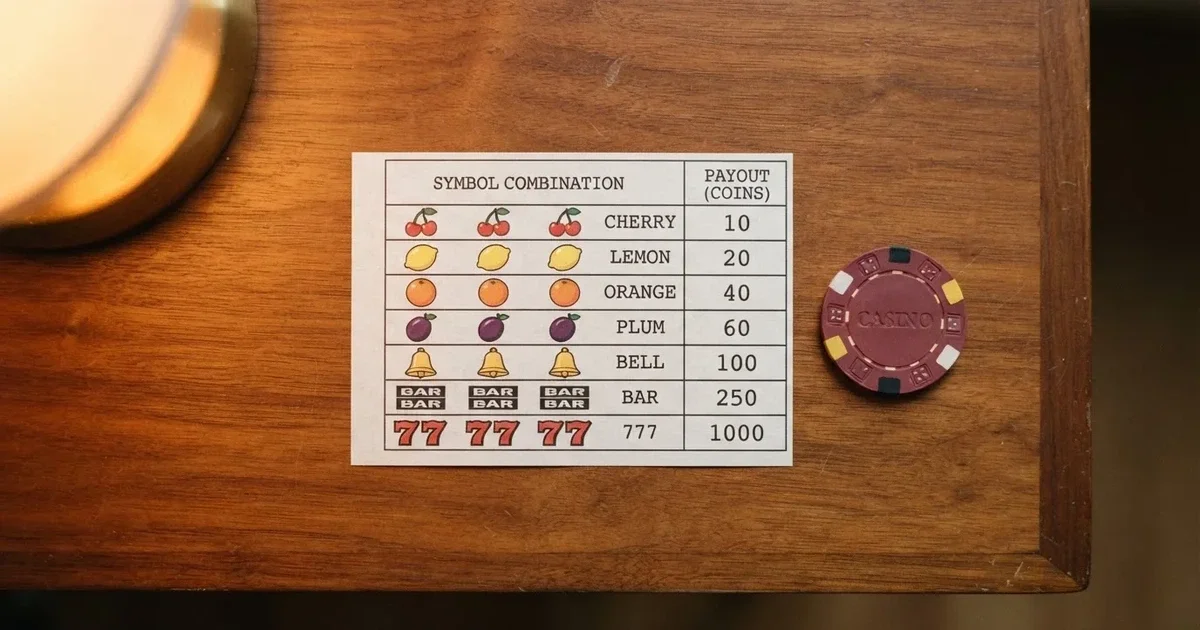
A BGaming slot is a slot the way most slots are — reels, rows, paylines or ways-to-win, a paytable that lists each symbol and its payout. The differences between a BGaming paytable and another studio’s tend to be on three points. The number of ways to win can run higher than a fixed-payline setup, courtesy of TRUEWAYS. The volatility tag tends to be explicit — high, very high, medium — and is published per title on the studio’s site alongside RTP. Bonus mechanics (free spins, multipliers, hold-and-win, jackpot tiers) are described in the help screen of each individual game; the studio’s catalogue is broad enough that one game tells you little about the next.
What that means for an Australian player is that the slot mechanic itself is not the variable in any comparison. The variable is the operator around the slot — the licence it claims, the regulator that has acted on it, the payment method it asks for, the bonus terms it attaches, and whether it is still reachable through an Australian ISP at the end of the month.
How the ACMA has been acting on BGaming-carrying brands
The ACMA’s two main tools are formal warnings and ISP-issued blocking requests. A formal warning is published on the regulator’s site with the operator and brand named; a blocking request asks Australian internet providers to make the domain unreachable for customers on their networks. By the regulator’s own running count, 1,751 illegal gambling and affiliate-marketing websites had been blocked since the first blocking request in November 2019, and more than 230 unlicensed gambling services had left the Australian market since enforcement was strengthened in 2017. A single round reported on 26 June 2026 added twelve more sites to the block list: 7Signs, ChromaBet, Donbet, Duospin, Freshbet, Slots Gem, Jacks Club, Lucky Start, Pointsbetz, Spinrise, Vinyl Casino and Wildsino.
The formal-warning track moves at a different pace. It names an operator and the brand it operates, runs the standard 14-day response window, and is the regulator’s preferred route when the operator is reachable and willing to engage. Several of the operators in this page’s featured set have had more than one warning issued to them — once under one company, again under a successor — which is why Dama N.V. shows up repeatedly in the table below. The point of the table is not the rank order; it is the pattern of regulator action against each brand and the company behind it.
A practical caveat for anyone looking at the table: a formal warning does not close a brand. The ACMA does not have a power to make a site take itself offline; it has the power to name the operator, to ask ISPs to block the domain, and to refer persistent offenders to the Department of Infrastructure for further action. A brand named in a 2022 warning can still be reachable from Australia in 2026; a brand named in a 2026 warning may have already been blocked. The only safe reading of “ACMA action and date” is that the regulator has acted at least once on this operator, and that more action is a realistic possibility.
What a fair comparison of BGaming-carrying casinos would weigh
The page deliberately does not produce a top-10 list of BGaming casinos. The product is prohibited, the ACMA acts on it, and a ranked recommendation is a ranked recommendation of sites the regulator has named. What a comparison can do is set out the columns a player would want before clicking through to any of them, so the choice — if a reader makes one anyway — is made with the variables in front of them rather than the marketing copy.
The columns below are the ones the ACMA’s own bulletins, plus the operator cards the ACMA has published, give a reader the ability to fill in honestly. Where research carries no figure for a cell — a game-count for a brand, an RTP for an individual title, a payment method the operator actually processes — the cell is left as an em dash. A column where almost every row would read the same is also dropped, on the principle that a column of repeated values tells the reader nothing.
| Brand | ACMA action and date | Operator named by the ACMA | Subject support |
|---|---|---|---|
| RocketPlay | Formal warning, March 2026 (earlier warning under Dama N.V., May 2022) | Pulsup Ltd (RocketPlay) | — |
| Level Up Casino | Formal warning, May 2022 | Dama N.V. | Listings name BGaming content |
| Woo Casino | Formal warning, March 2025 | Dama N.V. | — |
| Spirit Casino | Formal warning, May 2025 | Dama N.V. | — |
| National Casino | Formal warning, July 2025 | Consolutetish S.R.L. | Listings name Betsoft, Pragmatic Play and Aristocrat content |
| Bizzo Casino | Formal warning, July 2025 (earlier warning, 2022) | Consolutetish S.R.L. (earlier: TechSolutions) | — |
| Ignition Casino | Formal warning, July 2025 | Bamboo Media | — |
| Instant Casino | Formal warning, February 2025 | EOD Code SRL | — |
| Jackbit | Formal warning, April 2026 | Ryker B.V. | — |
| Casino Intense | Formal warning, April 2025 | Sterplay Holding Ltd | Listings name 1spin4win content (1spin4win) |
| Sky Crown | Formal warning, September 2022 | Hollycorn N.V. | — |
A few of the rows above carry a small note under “Subject support”. National Casino and Casino Intense both have third-party listings that name other studios’ games running alongside any BGaming content — Betsoft, Pragmatic Play, Aristocrat, 1spin4win. Those mentions are from the studios’ own sites and the studios’ own marketing pages, which are not disinterested sources, and they are written here only as what those listings report. The remaining eight rows carry an em dash because no third-party listing cross-references them as BGaming operators in a form research could verify. A blank cell is not a denial of BGaming content; it is the article-language no-data marker, signalling that the verification trail stops at the operator’s own marketing.
The two columns the table deliberately leaves out are bonus terms and payment methods. Bonus terms for any of these brands come almost exclusively from affiliate-marketing pages, and the only honest reading of those pages is that the figures they list exist to be claimed, not verified. Payment methods are the second variable the table drops for the same reason: a site’s stated deposit methods are a marketing line, not an audited fact, and the legal position on credit card and crypto for licensed Australian operators gives the reader the framework without needing a per-brand answer from an affiliate page.
What the ACMA’s blocking list tells you about the pace of enforcement
The running total of blocked sites gives a reader something the per-brand table cannot: a rate at which the regulator is catching up with the offshore market. The arithmetic belongs to the page. The first blocking request went out in November 2019; the running total of 1,751 blocked sites, as the ACMA reported it on 26 June 2026, gives a band rather than a single figure. Across the just-over six-and-a-half years between the first request and the report, the pace works out to roughly 260 sites blocked per year on a simple average, or around 22 per month. Real enforcement is lumpy — a single round can add a dozen at once — so a more useful band sits between about 200 and 320 blocked sites per year over that period, with the higher end being a better guide to the pace the regulator has held in the last two reporting years than the lower end is.
That band is what the page adds to the official figures. It clarifies two things the running total alone does not. First, the ACMA is not running out of work — the pace is steady, not the tail-off of a one-off clean-up. Second, any individual site named in a formal warning has a non-trivial chance of being on a blocking request within the next twelve to eighteen months, because the regulator’s monthly throughput comfortably covers the brands it has warned. A reader making a decision today is making it on a brand whose address may not resolve from an Australian ISP within a year. The block is the ACMA’s lever, not the ACMA’s promise.
The operators the ACMA has named — and what their cards actually say
What follows is the operator set research routes into this page. Each entry is one of the brands the ACMA itself has published a formal warning against for offering prohibited interactive gambling services to Australians. They are described, not recommended. The headline on each block is the brand name and what differentiates it in the comparison; the body sets out what the ACMA named, when, and what the brand is — which is, in every case, an offshore site the regulator has acted against.
RocketPlay — named twice under different operators
The ACMA has published two formal warnings over RocketPlay. The first, in May 2022, named Dama N.V. — the same operator that ran five other BGaming-carrying brands warned in the same round. The second, in March 2026, named Pulsup Ltd over RocketPlay specifically. A site that surfaces in two separate warnings under two different companies is, in regulator terms, a product that has been picked up and moved. RocketPlay is the current-facing brand; the company behind it is the company the regulator named last.
No third-party listing that research could verify cross-references the brand as a BGaming operator. The ACMA’s own action is the only public record of the regulator’s view, and the action is repeated. The brand carries the same risk every offshore casino in this set carries — no Australian consumer protection, no recourse if a withdrawal stalls, and a non-trivial chance the domain is on a blocking request within the next reporting round.
Level Up Casino — Dama N.V., May 2022
Dama N.V. took a single formal warning in May 2022 covering six brands: Bambet, Dazard, Level Up, Rocketplay, Wild Tornado and Cobra Casinos. Level Up is one of those six. The studio listings research could verify (Wazdan, in particular) name BGaming content as carried by Level Up, but those listings come from studios’ own marketing pages — a category that is useful as a sign of what games an operator integrates, never as an audit.
The brand has not been re-named by the ACMA in the years since the 2022 warning, which is no guarantee of reachability — sites can be blocked without a fresh formal warning — but is a sign the regulator has not had to act again on this specific brand in the same period. A reader looking at Level Up is looking at a site whose parent operator took a single, wide-scope warning five years ago and has not, on the public record, attracted a fresh one since.
Woo Casino — Dama N.V., March 2025
Dama N.V. picked up a second formal warning in March 2025, this time over Woo Casino. The ACMA’s pattern here is informative: the same parent company has been named twice, in 2022 across six brands and in 2025 over a single brand. The studio side is opaque — no third-party listing research could verify names BGaming content at Woo Casino specifically, and the brand’s own marketing is the only source of any claim that it runs the studio’s games.
A brand that has been named under the same operator twice is, on the ACMA’s own record, a brand the regulator has had to remind the parent company about. That is a stronger signal than a single warning. Woo Casino carries the same prohibitions every site in this set carries, but with a regulator track record that already shows the operator has been told once before.
Spirit Casino — Dama N.V., May 2025
Two months after the Woo Casino warning, the ACMA named Dama N.V. again — this time over Spirit Casino. The pattern of three warnings to the same operator in three years is the strongest signal in the set that the regulator treats Dama N.V. as a repeat offender rather than a one-off. Spirit Casino’s game side, again, is not cross-verifiable to a third-party listing; the brand’s own pages are the only source for any BGaming claim.
The read on Spirit Casino is the read on Woo Casino with one more data point: the operator has been named three times across a 2022 cluster and a 2025 pair, and the regulator is unlikely to stop there. Any Australian player still resolving the domain is on borrowed clock time.
National Casino — Consolutetish S.R.L., July 2025
National Casino was named in the same July 2025 round as Bizzo Casino, with Consolutetish S.R.L. as the operator. National is the more visibly integrated brand of the two on third-party listings — Betsoft’s own site, Pragmatic Play’s own marketing, and Aristocrat Leisure’s public presence all surface National Casino as a partner carrying their games. Those listings are still marketing pages, and writing them as anything other than what studios report is dishonest; but the pattern across three independent studio listings is stronger evidence of integration than a single source is.
National Casino is the brand in the set whose content stack is most verifiable to a third-party reading. The legal position is unchanged: the ACMA has named the brand, the IGA prohibits the product, and the protection regime offshore casinos offer an Australian customer is none. What National has, and the others do not, is a content catalogue a reader can partly verify before clicking through.
Bizzo Casino — Consolutetish S.R.L., July 2025 (earlier 2022)
Bizzo is the brand in the set with the longest ACMA trail. TechSolutions (CY) Group Limited and TechSolutions Group N.V. were warned in 2022; Consolutetish S.R.L. was warned over the same brand in July 2025. A brand that has survived a change of operator and survived a second warning is, in regulator terms, a brand that keeps surfacing. The studio-side cross-references that research could verify did not name Bizzo specifically as a BGaming operator, so the BGaming claim on the brand rests on the brand’s own pages.
The read on Bizzo is straightforward. The brand has been in front of the ACMA twice, under two different operators. The product is prohibited; the regulator has already made its view clear once and has had to repeat it. A reader picking Bizzo over another brand in the set is choosing a brand with the longest enforcement trail of any of them.
Ignition Casino — Bamboo Media, July 2025
The July 2025 round also named Bamboo Media over Ignition Casino. Ignition’s name is familiar in offshore and US-facing markets, but the Australian-facing picture is set by the ACMA warning. The studio-side cross-references research could verify do not name Ignition as a BGaming operator, so any BGaming content claim on the brand’s site is unverified from a third-party source.
The regulatory position is the same as every other site in the set. What Ignition offers a reader is a brand that has been named under one operator, in one round, with no earlier track record on the ACMA’s site. That is the lowest regulator exposure in the set — which is not the same as approval, but is a less alarming starting point than the brands that have been named twice.
Instant Casino — EOD Code SRL, February 2025
Instant Casino was named in February 2025 under EOD Code SRL. The studio-side cross-references for Instant Casino do not name BGaming content in any source research could verify, and the brand sits on the operator’s own marketing for any game-catalogue claim.
The ACMA’s February 2025 warning sits ahead of the May 2022 Dama N.V. round and the July 2025 Consolutetish round. Instant Casino is a brand the regulator has had to act on once, and the legal position is the same as every other brand in the set: prohibited product, offshore operator, no Australian protection.
Jackbit — Ryker B.V., April 2026
Jackbit was named alongside CasinOK in April 2026 under Ryker B.V. The two brands share an operator and share a warning round, which is the ACMA’s way of indicating a single operator running multiple brands at once. Jackbit is the newer of the two in marketing terms, but the warning places it on the same enforcement calendar as CasinOK.
The studio-side cross-references for Jackbit do not name BGaming content in any source research could verify. The brand is named by the ACMA, the operator is named by the ACMA, and the product is prohibited. The brand’s BGaming claim, if it makes one, is the brand’s own claim and is unverified.
Casino Intense — Sterplay Holding Ltd, April 2025
Casino Intense was named in April 2025 under Sterplay Holding Ltd. The brand is one of the two in the set with third-party studio listings research could verify — 1spin4win’s own site and the UK Gambling Commission’s public register both surface Casino Intense. Neither listing is impartial — a studio’s own page is marketing, and the UK Gambling Commission’s register is a licence database — but they are independent sources pointing at the same brand.
Casino Intense is also the brand whose BGaming claim sits inside a content stack research has been able to partly verify. That does not change the legal position; the IGA still prohibits the product, the ACMA has still named the operator, and an Australian player is still on an offshore site with no Australian consumer protection. It is a more verifiable starting point, not a more legitimate one.
Sky Crown — Hollycorn N.V., September 2022
Sky Crown was named in September 2022 under Hollycorn N.V., alongside Blue Leo. The warning is the oldest in the table. Hollycorn N.V. has not been re-named by the ACMA in the years since, on the public record. Sky Crown is, like Level Up, a brand whose ACMA exposure is a single warning from several years ago.
The studio-side cross-references research could verify do not name Sky Crown as a BGaming operator. The brand’s own pages are the only source for any BGaming claim, and the regulator’s 2022 warning is the only public record of the regulator’s view. Sky Crown’s exposure is older and lighter than most of the set, but the legal position is identical: prohibited product, no Australian protection.
What offshore BGaming casinos ask for that a licensed Australian operator does not
The payment question is the easiest place to see why the offshore market is what it is. A licensed Australian bookmaker can take a debit card, a bank transfer, PayID or Osko, and BPAY — and cannot, since 11 June 2024, take a credit card, a credit-related product, or any digital currency. An offshore casino carrying BGaming slots is, in practice, asking for one of the three things a licensed bookmaker is barred from accepting: card payments processed through an offshore acquirer, a crypto deposit into the operator’s own wallet, or a wire to a bank outside Australia that the operator’s payment processor controls. The shape of the deposit screen is itself a tell — not proof, but a tell — about which side of the Australian rules a site is on.
Withdrawals on the offshore side run through the same processors, which is why the time-to-payout figures affiliate pages quote (instant, 24 hours, three days) are figures the affiliate page cannot audit. The licensed side is slower — a bank transfer through PayID or Osko is near-instant on the receiving end, but a withdrawal request goes through a settlement window the operator controls before it reaches the bank — and the licensed side gives the player somewhere to complain if the settlement window slips past the operator’s published terms. The offshore side gives the player an offshore complaints address and a real risk the regulator blocks the domain mid-withdrawal.
What BGaming’s licence actually covers, and what it does not
BGaming holds a Malta Gaming Authority Critical Gaming Supply Licence (MGA/B2B/785/2020) for Type 1 B2B gaming services. The licence covers the studio as a supplier of games to operators; it is not, and was never meant to be, a licence to take bets from players in any jurisdiction. A B2B supply licence is what an Australian-facing aggregator would look for to confirm the studio’s games are certified and the studio is audited; it is not what an Australian player would rely on for protection, because the operator is the entity the player has the contract with, and the operator in this set is not licensed in Australia.
The studio also lists 3,000+ operators carrying its games, naming Blaze, Pin-Up and Gamdom among them. None of those three is licensed in Australia either. The operator set an Australian player can reach is the operator set the ACMA has acted against, and the studio’s B2B licence is irrelevant to that question.
Responsible gambling, and the help that is actually available
If the thinking about BGaming-powered play has started to feel compulsive or stressful, the help an Australian can actually use is the help the Australian system funds. Gambling Help Online runs a 24/7 chat; the National Gambling Helpline is 1800 858 858 and is free, around the clock. BetStop, the National Self-Exclusion Register, has been live since August 2023 and binds every Australian-licensed online and phone wagering service to honour an exclusion. What BetStop does not bind is offshore casinos — an exclusion on BetStop does not stop an offshore site from accepting bets from the same person. The mechanism works against the licensed side of the market; the offshore side has to be reached by the ACMA’s blocking tool.
The framing matters here. The Australian responsible-gambling infrastructure was built for the Australian licensed market, and the offshore market is not part of it. Anyone thinking about play on an offshore BGaming casino is, by definition, outside the protection regime they would otherwise be inside, and that is a real cost the comparison does not always price in.
Bonus terms — what the marketing says, and what the regulator’s record implies
A bonus on an offshore BGaming casino is, on the marketing page, the same kind of offer a licensed bookmaker might run: a deposit match, free spins on a named slot, a no-deposit token for account verification. What the marketing page rarely surfaces in the same place is the wagering multiple, the maximum cashout from bonus-derived winnings, the time limit on clearing, and the list of games the bonus does not apply to. The licensed side publishes those terms in a single document the regulator can audit; the offshore side publishes them in a “terms” page an affiliate link routes around.
The general shape of the offers research has on file — and what any reader clicking through should expect to see — is a deposit match with a wagering requirement in the 30x to 50x range on the bonus amount, a cap on winnings derived from a no-deposit bonus that is often well below the headline value, and a list of excluded games that quietly removes the highest-RTP slots from the bonus contribution table. None of those figures is published in this page for any specific brand; the affiliate pages that publish them are the only source, and the only honest reading is that those figures exist to be claimed, not verified. A reader who wants the specific numbers has to read the specific terms page on the specific brand’s site, and that is exactly the page the affiliate route avoids.
What this page is and is not, and what to do with it
This is not a ranking. It is not a recommendation. It is a description of the landscape a reader who searched for “BGaming casinos in Australia” actually lands in: a prohibited product, an offshore market for it, a regulator that names the operators running it, and a rate at which the regulator’s blocking requests have been adding domains to the unreachable list. The page sets out the columns a fair comparison would weigh — what the ACMA has done, when, and under which operator — and leaves the reader to apply them.
What an Australian can actually play legally online is wagering on races and sport before the event, lotteries and keno. The licensed operators for that product are listed by the ACMA and the Northern Territory Racing and Wagering Commission; the NTRWC regulates 52 of Australia’s online bookmakers, including Sportsbet, Bet365 and Ladbrokes, with its own commission running without full-time staff and meeting once a month in Darwin. That is the product a person in Australia is meant to be able to buy. Slots, pokies, table games and crash games — including BGaming’s — are not part of it.
Frequently asked questions
Is BGaming itself an operator?
No. BGaming is operated by Stable Games Ltd of Valletta, Malta, and holds a Malta Gaming Authority Critical Gaming Supply Licence (MGA/B2B/785/2020) issued on 18 March 2021. The licence covers the studio as a B2B supplier of games to operators, not as a bookmaker taking bets from players.
Can BGaming titles be played for real money at a licensed Australian casino?
No. Online casino games and online pokies are prohibited interactive gambling services under the Interactive Gambling Act 2001, and no state or territory issues a licence for them. The only interactive gambling products a person in Australia can lawfully be sold online are wagering on races and sport placed before the event, lotteries, and keno.
How does a BGaming slot differ from other studios’ games in its paytable?
The mechanical differences tend to be in three places. The number of ways to win can run higher than a fixed-payline setup, courtesy of the studio’s TRUEWAYS system, which the company describes as offering up to 262,144 ways. The volatility tag (high, very high, medium) is published per title on the studio’s site, alongside RTP. And bonus mechanics — free spins, multipliers, hold-and-win, jackpot tiers — are described in the help screen of each game rather than standardised across the catalogue.
Does BGaming run its own casino?
No. The studio’s role is B2B: it supplies certified games to operators. BGaming states its games are used by 3,000+ operators and names Blaze, Pin-Up and Gamdom among them. None of those operators is licensed in Australia; the operator set an Australian player can reach is the set the ACMA has acted against.
Why do offshore casinos highlight BGaming as a selling point to Australian visitors?
Because the search interest exists. Australian-facing search traffic for “BGaming casino” and similar terms is a marketing channel, and offshore operators bid on it. The IGA prohibits the supply, the ACMA names the operators, and the marketing spend continues regardless — a pattern the regulator’s enforcement record is built around.
Is it legal for a site to offer BGaming games for real money to people in Australia?
No, and the individual player is not the target. The Interactive Gambling Act 2001 makes it an offence to supply prohibited interactive gambling services to a person in Australia; the ACMA’s enforcement is against the operator. The player does not commit an offence by clicking through, but loses every Australian consumer protection in doing so.