
Best Platipus online casinos Australia 2026: the legal frame, the offshore marketing, and what an Australian player is actually choosing between
A reader who searched for “best Platipus online casinos Australia” lands here with a fairly specific picture in mind: a shortlist of polished gambling sites, a slot studio’s logo on the splash, a welcome package attached. That picture does not survive contact with the Interactive Gambling Act 2001. No online casino, and therefore no online casino carrying Platipus slots, may be lawfully offered to a person in Australia. Every site that advertises Platipus to Australians does so in breach of that Act. This page works through what is actually true: what Platipus is as a studio, what the regulator has done about the offshore sites marketing its games, and where the small, licit counterpart sits.
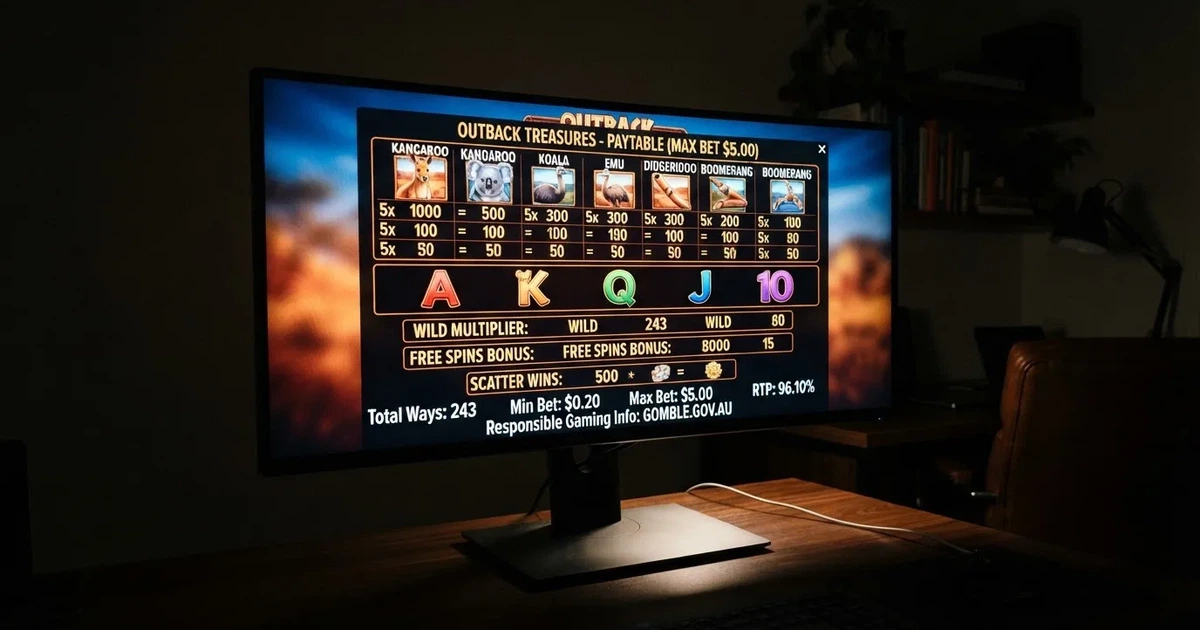
Currency and register snapshot: 8 November 2026 · ACMA formal-warning register and blocking-request publications.
Table of Contents
- Platipus on mobile and as an app: the practical reality for an Australian player
- Platipus as a studio: what the games are, who certifies them, and what that certification covers
- The eleven brands the ACMA has acted against: how the shortlist is built
- The legal frame in plain terms: why none of the eleven is offered lawfully
- Responsible gambling and the limits of the local safety net
- Payments and payout speed on offshore Platipus casinos: what the marketing claims and what the data shows
- Bonuses and free spins on offshore Platipus casinos: how the offers read against the marketing
- The ACMA record, brand by brand
- The arithmetic of an offshore Platipus bonus: what it actually costs
- What an Australian player who wants Platipus-style slots is actually choosing between
- The image anchors and what they illustrate
- Frequently asked questions
Platipus on mobile and as an app: the practical reality for an Australian player
Platipus’s own catalogue is built in HTML5, which means every title runs in a mobile browser without a download. For the studio, that is the product. For a person in Australia, the question is whether the platform offering those HTML5 titles is one the law permits, and the answer in every case studied on this page is no. The mobile question and the legality question are the same question viewed from two angles.

The offshore sites in the ACMA’s record distribute Platipus through their own browser wrappers rather than a downloadable app. Most of those wrappers sit behind a heavy preload: a splash graphic, a sign-up wall, then a lobby in which the Platipus thumbnail is one row among many. Load time for the slot itself, once past the lobby, is comparable to a desktop session because the same HTML5 file is being served. The wrapper is the friction, not the game.
A native app changes nothing about that. The IGA applies to the offering of an interactive gambling service to a person physically in Australia, regardless of whether the entry point is a downloaded binary, a mobile website, or a desktop client. Downloading an offshore casino app onto a phone in Australia does not move the service onto a lawful footing; it moves the regulator’s case from “website offered to an Australian” to “app offered to an Australian”. A real-money wager on either is on a platform the ACMA has already acted against.
The genuinely Australian legal channels for wagering — licensed bookmakers such as Sportsbet, Bet365 and Ladbrokes, regulated through the Northern Territory Racing and Wagering Commission — offer sports and racing products, not slots. A native casino app from a licensed Australian operator does not exist, because the licence it would need does not exist. The closest licit equivalent is a state-licensed pub or club venue running Aristocrat or IGT pokies on the floor; those are real-money wagering, but they are not online, and they are not Platipus.
Platipus as a studio: what the games are, who certifies them, and what that certification covers
Platipus was founded in 2014 and presents itself as an EU-based slot and table-game supplier with a catalogue of more than 174 HTML5 titles. The studio says it serves more than 500 operator customers and offers round-the-clock technical support. Its RNG certification for regulated markets is issued by iTech Labs and named by the studio itself as covering the United Kingdom, Italy, the AGCC, Denmark, the Isle of Man, Malta, Gibraltar, Sweden and Romania. The studio’s recent commercial focus, by its own description, has been on Asian-facing markets.
A few things follow from those facts that matter for an Australian player. First, the studio is real and the certification is real: when an iTech Labs certificate accompanies a build of a Platipus slot served from a server the regulator can inspect, the outcome of a spin is mathematically what the published RTP figure says it is. Second, none of the jurisdictions iTech Labs names in its Platipus certificate is Australia. Australia does not license online casinos, so there is no Australian regulator to inspect the build, and no Australian-licensed operator through which the certified game is served. Third, the title on a page reachable from an Australian IP is, by construction, not the build the certificate was written against, because it is being served by an offshore operator the certificate’s regulators do not oversee.
That distinction is the pivot of the whole subject. A reader looking at “RTP 96.2%” on a Platipus slot page is reading a number attached to a game engine; the same engine, served by an offshore operator to an Australian IP, sits outside every framework that gives the number its weight. The number is correct; the protection behind it is absent.
Adjacent suppliers named in the research sit in similar positions. Betsoft, founded in 2006, publishes an RNG-certified catalogue of more than 200 titles; its Good Girl Bad Girl 2 is published at 96.22% RTP with “Very High” volatility and a 15.59% hit rate, and The Slotfather (live since 13 December 2012) at 95.69% RTP, “Medium” volatility and an 8.17% hit rate. BGaming traces its team’s history back to 2012 and now publishes more than 250 certified games. 1spin4win, founded in 2021 in Curaçao, lists more than 190 slots. Each of these studios’ titles appears in offshore lobbies that market to Australians. None of the studios themselves holds an Australian licence — there is no Australian licence to hold — and none of the operators shipping their games to Australian IPs is a licensed Australian wagering provider.
The Aristocrat comparison makes the asymmetry concrete. Aristocrat Leisure, founded in 1953 and listed on the ASX since 1996, is the largest gambling-machine manufacturer in Australia and the second-largest slot-maker worldwide. Its 2025 revenue was A$6.30 billion against a normalised net profit after tax and amortisation of A$1.55 billion, on a workforce of 7,400. Its Australian-made pokies sit in licensed pubs and clubs across the country, regulated by state and territory authorities. Its online arm, Aristocrat Interactive, was formed in April 2024 by combining Anaxi with the acquired NeoGames group, and operates real-money gambling services in regulated jurisdictions outside Australia. An Aristocrat pokie in a Sydney pub is a licensed product; an Aristocrat-derived online title served to an Australian IP by an offshore casino is not. The same studio, the same regulators in the licensing department, two completely different legal categories on the player’s side.
The eleven brands the ACMA has acted against: how the shortlist is built
The list of “best Platipus casinos” that a reader might find on an affiliate page is built the way affiliate pages are built: commission rate, SEO positioning, sometimes a fee for placement. The list on this page is built from the ACMA’s own formal-warning register, and the criterion is the only one that matters for an Australian reader — that the regulator has identified the operator as offering a prohibited interactive gambling service to people in Australia.
Each row below names the brand, the operator entity the ACMA named, the date of the formal warning, and whether the ACMA record places Platipus support on the platform according to independent supplier listings. Where the supplier-side directory check did not return a Platipus entry for that brand, the cell is left blank rather than asserting that Platipus is or is not present: the only firm claim is the regulator’s.
| Brand | ACMA action and date | Operator named by the ACMA | Subject support |
|---|---|---|---|
| RocketPlay | Formal warning, March 2026 | Pulsup Ltd (Rocketplay.com.au); earlier Dama N.V. May 2022 | — |
| Level Up Casino | Formal warning, May 2022 | Dama N.V. | Listings-only (Wazdan.com) |
| Woo Casino | Formal warning, March 2025 | Dama N.V. | — |
| Spirit Casino | Formal warning, May 2025 | Dama N.V. | — |
| National Casino | Formal warning, July 2025 | Consolutetish S.R.L. | Listings-only (Betsoft.com, en.wikipedia.org, Pragmaticplay.com) |
| Bizzo Casino | Formal warning, July 2025; earlier 2022 | Consolutetish S.R.L. (earlier TechSolutions) | — |
| Ignition Casino | Formal warning, July 2025 | Bamboo Media | — |
| Instant Casino | Formal warning, February 2025 | EOD Code SRL | — |
| Jackbit | Formal warning, April 2026 | Ryker B.V. | — |
| Casino Intense | Formal warning, April 2025 | Sterplay Holding Ltd | Listings-only (1spin4win, en.wikipedia.org, gamblingcommission.gov.uk) |
| Sky Crown | Formal warning, September 2022 | Hollycorn N.V. | — |
Every brand in the table is the subject of a formal warning under the Interactive Gambling Act 2001. Several appear in two separate warning rounds because the same operator entity — Dama N.V. especially — runs multiple skins and re-emerged after the first warning. The fact that the ACMA has had to repeat itself is itself the most informative thing about the market: the warnings are the regulator’s least-aggressive tool, and operators keep absorbing them.
The “Subject support” column is not a recommendation column. Where it says “listings-only”, the entry reflects that Platipus is named on supplier-side directories associated with that brand, not that the ACMA record or this page endorses the platform. Where the cell is blank, the directory check did not return a Platipus entry; the page neither affirms nor denies Platipus presence on the platform because the research has no clean source for it.
The cluster’s geometry: a single offshore operator can run a portfolio of skins (Dama N.V. alone accounts for four of the eleven), and a warning against the operator closes each of those skins at the same time. The cluster has been built up over more than three years of ACMA action, from the May 2022 wave that named six Dama brands at once to the April 2026 warning that pulled Jackbit and CasinOK under Ryker B.V. The pattern is consistent enough that any “best Platipus casino” list an Australian reader encounters is, in practice, a permutation of this set and its neighbours.
The legal frame in plain terms: why none of the eleven is offered lawfully
The Interactive Gambling Act 2001, as tightened by the Interactive Gambling Amendment Act 2017, makes it an offence to provide online casino games, online pokies or in-play betting to a person physically in Australia. The offence sits with the provider, not the player, and is enforced by the Australian Communications and Media Authority. The Act does not license online casinos; no state or territory does either. The licence categories that do exist — wagering on races and sport placed before the event, lotteries, keno — are the ones the Northern Territory Racing and Wagering Commission regulates, and the commission regulates them through a body that has no full-time staff, meets once a month in Darwin, and oversees 52 of Australia’s online bookmakers. Sportsbet, Bet365 and Ladbrokes sit in that 52. Platipus does not, and cannot, because the licence it would need is not on the menu.
The minimum age to wager with a licensed Australian provider is 18. The same minimum applies in practice to the offshore sites — they enforce it for liability reasons, not because the IGA gives them a defence — and an under-18 reader searching for Platipus casinos is outside the audience for every page in this market, licit or otherwise.
The enforceability gap is what the offshore sites trade on. The ACMA cannot reach a Curaçao-licensed entity to fine it, cannot compel a payout, and cannot order an Australian-facing operator to release a balance. What it can do is block the Australian-facing domain at the ISP layer, which it does through formal blocking requests. The pattern is well established: as reported in June 2026, the ACMA’s running total of blocked sites since the first blocking request in November 2019 stood at 1,751, and more than 230 unlicensed services had left the Australian market altogether since enforcement was strengthened in 2017. The June 2026 round alone added twelve more domains to the blocked list — 7Signs, ChromaBet, Donbet, Duospin, Freshbet, Slots Gem, Jacks Club, Lucky Start, Pointsbetz.com, Spinrise, Vinyl Casino and Wildsino — names that are not on the table above because the table is built from formal warnings rather than blocking requests, but which sit in the same prohibited-services category.
The focus of this page is the rate at which the regulator has been working, and the trends that the blocking data reveals.
The blocking-rate calculation: 1,751 sites blocked between November 2019 and June 2026. That span is roughly 79 months. The arithmetic is 1,751 ÷ 79, which works out to about 22 sites blocked per month on average across the entire enforcement window. The opening years of that window were quieter; the monthly rate from 2017 to 2026 across the 230 services that left the market is lower again, because a “service leaving the market” is a heavier event than a domain being added to a block list. The honest reading is a band — somewhere between low-double-digit blocks a month at the regulator’s current pace and the much smaller annual count of voluntary exits — rather than a single figure, and the band matters because it tells a reader what the market the offshore sites operate in actually looks like. It is a market under continuous enforcement, not a market under occasional raids.
The Interactive Gambling Amendment (Gambling Reform) Bill 2026, passed by Parliament on 19 August 2026, sharpens the inducement and advertising rules. Its advertising measures commence on 1 January 2026+1 — law on the statute book, not yet in force on a page read in 2026. From that date, the inducement language the offshore sites currently rely on in their marketing is squarely inside the new prohibitions, which is a separate reason the eleven brands above are unlikely to be the last eleven.
A practical consequence of all of this for a reader in Australia: a real-money wager placed with any of the eleven brands, or any of the dozens of equivalent offshore skins, sits outside Australian consumer law. If a withdrawal is refused, there is no Australian complaints body to appeal to; if the operator disappears with a balance, there is no Australian recourse; if the ACMA blocks the domain the next morning, the balance is on a server the block does not affect. The licensed bookmakers that Australian players do use cannot extend their consumer protection to a different operator; the protection is licensed to a specific legal entity on a specific licence, and a Curaçao skin is a different entity on a different licence.
Responsible gambling and the limits of the local safety net
Two tools exist for an Australian who wants to limit their exposure to wagering, and neither reaches the offshore sites. BetStop, the National Self-Exclusion Register, has been live since August 2023 and binds every Australian-licensed online and phone wagering service. An offshore casino is not bound, does not connect to BetStop, and does not check its customer list against the register. A BetStop registration closes accounts at licensed bookmakers and bars the registration from opening new ones; it does not affect a balance at an offshore site already running.
The second tool is Gambling Help Online, with the National Gambling Helpline on 1800 858 858 — free, 24/7, and offering web chat. The helpline is staffed for Australian callers, accepts calls from people in Australia regardless of where they have been wagering, and can refer into state-level counselling and financial counselling services. A reader who has wagered with one of the eleven brands above, or with any offshore skin not on the list, has the same access to these supports as anyone else; the support service does not require the wagering to have been on a licensed platform.
A constraint on the offshore platforms’ own responsible-gambling claims: most publish a self-exclusion control and a deposit-limit control, and most run those controls through account-level settings the player can change at any time. The settings are not externally audited, the operator has no Australian obligation to enforce them, and an offshore operator has commercial incentives to make the controls easy to disable. Treating those controls as equivalent to a BetStop registration is not supported by anything on this page.
The payment ban that took effect on 11 June 2024 is the other side of this frame. Credit cards, credit-related products and digital currency are banned as payment for licensed online wagering in Australia, with penalties up to A$247,500 for the operator. The legal deposit routes for a licensed bookmaker are debit card, bank transfer, PayID/Osko and BPAY. An offshore casino asking an Australian player for a credit card or a crypto deposit is operating outside the Australian rules on payment, in addition to operating outside the rules on the wagering itself; an Australian player depositing by either route is using a payment method the Australian regime has refused to recognise as fit for licensed wagering. This applies on top of the IGA prohibition, not instead of it.
Payments and payout speed on offshore Platipus casinos: what the marketing claims and what the data shows
The marketing language around offshore Platipus casinos typically bundles three numbers together: deposit processing in minutes, withdrawal processing in twenty-four to seventy-two hours, and “no fees on our side”. The three numbers are presented as if they describe a single pipeline; they describe three different ones, each with its own caveats.
Deposits, on the offshore sites the ACMA has acted against, are processed through the payment routes the site accepts — and the routes an Australian reader is most likely to encounter are the ones the Australian regime does not recognise as fit for licensed wagering. Credit card deposits are technically blocked at many of these sites for Australian cards, but the block is enforced inconsistently, prepaid and debit-card deposits route through acquirers in other jurisdictions, and crypto deposits route around the banking system entirely. Each route carries its own reversal profile: a debit-card deposit can be chargebacked in narrow circumstances, a credit-card deposit made in defiance of the ban is its own legal question, and a crypto deposit is, in practical terms, irreversible once confirmed on-chain.
Withdrawal processing times on these sites are reported by the operators themselves and are not independently audited. Where independent reporting exists for equivalent offshore brands, the headline figure tends to be the optimistic end of a band that widens sharply once a withdrawal triggers a manual review. Triggers include a deposit made by one method and a withdrawal requested to another, a bonus balance being played before a withdrawal is requested, a withdrawal amount exceeding a published threshold, and any first withdrawal on a newly verified account. A monthly pattern of “24-hour withdrawals” followed by a five-day review on the first payout of any size is the realistic picture for an Australian reader considering any of the eleven brands above.
A separate cost sits in the fine print of most offshore bonuses: a maximum cashout cap. A free-spins package that advertises “up to A$500 in bonus funds” will frequently carry a clause that caps the withdrawable winnings from the bonus at a smaller figure — A$100 is a common tier, A$50 is not unusual for the no-deposit end of the spectrum — and the cap applies to winnings, not to the bonus itself. The bonus words are what the marketing runs on; the cap is what the player keeps.
The interaction between the marketing claim and the regulator’s record is the relevant figure for an Australian reader. A site the ACMA has warned can still publish a “fast payouts” page, and the page is no less polished than the equivalent on a licensed Australian bookmaker. The difference is what happens when the page’s promise is not met. On a licensed bookmaker, an unresolved withdrawal can be escalated to the regulator and, where appropriate, to an external dispute resolution scheme. On an offshore site, the escalation path ends at the operator’s customer-service inbox, and the operator’s incentive to keep that inbox responsive falls as the balance on the account rises.
Bonuses and free spins on offshore Platipus casinos: how the offers read against the marketing
The bonus mechanics on offshore Platipus casinos follow the same template as the broader offshore market, with two figures the page needs to be specific about because they recur in nearly every bonus term published by the eleven brands and their equivalents.
The first figure is the wagering multiplier. Deposit-match bonuses are routinely published with a 40× to 50× multiplier on the bonus amount, and a smaller cluster of brands runs higher. Free-spins winnings are commonly subject to a 35× to 50× multiplier on the winnings. A A$100 bonus at 45× requires A$4,500 of wagering before the bonus balance converts to withdrawable cash; a small free-spin win of A$20 at 40× requires A$800 of wagering. The arithmetic is set out in the calculation section below.
The second figure is the max-bet cap during bonus play. Most operators in this market set a per-spin or per-round ceiling of A$5 to A$10 while a bonus is being cleared. Spins above the ceiling either void the bonus or are excluded from the wagering calculation, and the exclusion is enforced through automated tracking rather than a warning. The cap matters because it extends the time the bonus takes to clear by capping the rate at which the wagering requirement can be reduced.
The third figure is the game-weighting table. Slots at most of these operators count 100% toward the wagering requirement; table games often count 10% to 20%; live-dealer games frequently count 0%. The Platipus slots in the lobby are the high-weight option, which is why the casino is happy to promote them as the place to play the bonus through. From the player’s side, the slot weighting looks like an invitation; from the house edge side, it looks like a quick route to the expected loss.
The terms that travel with these offers are not the marketing. They are the wagering multiplier, the max-bet cap, the game-weighting table, the max-cashout cap, the minimum deposit to qualify, the country exclusions, the expiry window, and the operator’s right to exclude any player from the promotion at its discretion. An Australian reader comparing two bonus offers on two of the eleven brands above should compare those eight fields, not the headline figure.
The ACMA record, brand by brand
Each block below covers one of the eleven brands the ACMA has named. The block carries the regulator’s action, what is known about the operator behind the brand, and a verdict on what kind of reader the warning suggests the platform is built for. None of the eleven is recommended as a place to play.
RocketPlay
The ACMA’s most recent formal warning to RocketPlay was issued in March 2026 to Pulsup Ltd over Rocketplay.com.au. The same brand sits in an earlier warning round from May 2022, when Dama N.V. was named over a six-brand portfolio that included RocketPlay. Two warnings over four years to two different operator entities is the pattern this brand has set, and the pattern is what tells a reader the most. The platform has been identified by the regulator twice; the brand has outlived both warnings; the offering to Australians has continued through both.
Level Up Casino
Level Up Casino sits in the May 2022 Dama N.V. wave that named six brands at once. The operator behind the brand has been a continuing target of the ACMA since, and Level Up is one of the skins that has carried the same operator through several rebrands. Independent supplier listings place Wazdan among the studios on the platform, with Platipus listed only in the kind of marketing-directory source the regulator does not endorse. The combination of an operator with a four-year ACMA file and a thin verifiable supply-chain is what makes this one of the less defensible options in the table.
Woo Casino
Woo Casino was the subject of a formal warning to Dama N.V. in March 2025. The warning followed the May 2022 round by almost three years, and the operator’s six-brand portfolio continued to be marketed to Australians throughout. A platform that the regulator has had to warn the operator behind twice is one the regulator’s file has documented as a continuing case, not a resolved one.
Spirit Casino
Spirit Casino received a formal warning to Dama N.V. in May 2025, two months after Woo Casino. The two warnings sit close enough in time that they look like the same enforcement action spread across two skins, and the ACMA’s wording on each is the standard IGA breach language. The reader-side inference is the same as for Woo Casino: the operator has had the regulator’s position put to it in writing and has continued to offer the service to Australians.
National Casino
National Casino received a formal warning to Consolutetish S.R.L. in July 2025. Independent supplier directories associated with the brand reference Betsoft, a range of studio names from the broader Wikipedia iGaming ecosystem, and Pragmatic Play content, with Platipus listed only through marketing-directory sources the regulator does not endorse. The studio mix suggests a mid-sized offshore platform with a typical supplier spread rather than a Platipus-exclusive build.
Bizzo Casino
Bizzo Casino was the subject of a formal warning to Consolutetish S.R.L. in July 2025, alongside National Casino, and an earlier formal warning to TechSolutions (CY) Group Limited and TechSolutions Group N.V. in 2022. Two warnings to two operator entities over four years puts Bizzo in the same pattern as the Dama N.V. brands. The 2022 warning appears to have followed the brand through a corporate change to Consolutetish S.R.L., and the 2025 warning followed it back.
Ignition Casino
Ignition Casino received a formal warning to Bamboo Media in July 2025. The brand is one of the better-known offshore casino names in the broader English-speaking market, and the formal warning places it in the same IGA-breach category as the other brands in this table. The reader-side reading is the operator’s global profile does not change the regulator’s position in Australia.
Instant Casino
Instant Casino received a formal warning to EOD Code SRL in February 2025. The brand has been marketed aggressively through affiliate channels, and the warning places the marketing in the same prohibited-services category as the marketing for the other ten brands above. The brand’s short commercial history makes the regulator’s action a relatively early intervention by ACMA standards.
Jackbit
Jackbit received a formal warning to Ryker B.V. in April 2026, alongside CasinOK. The warning is the most recent formal action in the table and is a useful reminder that the ACMA’s enforcement work continues through 2026 at the same pace it set in 2024 and 2025. The reader-side reading is the cluster of brands under enforcement is not a closed set; new ones are added each quarter.
Casino Intense
Casino Intense received a formal warning to Sterplay Holding Ltd in April 2025. Independent supplier listings associated with the brand reference 1spin4win, the Wikipedia iGaming ecosystem, and the UK Gambling Commission’s public materials on certified suppliers, with Platipus listed only through marketing-directory sources. The supplier-side footprint is narrower than for some of the larger brands in the table and places the platform on the smaller end of the offshore market.
Sky Crown
Sky Crown received a formal warning to Hollycorn N.V. in September 2022, alongside Blue Leo. Hollycorn N.V. continues to operate a portfolio of skins, and the September 2022 warning is the ACMA’s most-cited action against the operator. A warning of this vintage, with no apparent follow-up enforcement against the same operator in the research, is not the same as a clearance — the ACMA does not publish withdrawals — but it does suggest the brand has had the regulator’s position put to it and has continued to operate.
The arithmetic of an offshore Platipus bonus: what it actually costs
The page’s calculation uses the bonus-cost formula to give a reader a concrete sense of what an offshore Platipus bonus requires, and the expected-loss formula to give a concrete sense of what it costs.
The scenario: a A$100 deposit bonus with a 45× wagering multiplier on the bonus, played on a Platipus slot at a A$1 per-spin stake. A standard slot weighting is assumed, so each spin counts 100% toward the wagering requirement. A 5-second interval per spin is the convention used for the play-time estimate.
Turnover required: A$100 bonus × 45 = A$4,500 in placed bets before the bonus balance becomes withdrawable. Spins required: A$4,500 ÷ A$1 per spin = 4,500 spins. Play time at a 5-second interval: 4,500 × 5 = 22,500 seconds, which works out to about 6.25 hours of continuous play. Expected loss on that turnover, at a 96% slot RTP, is A$4,500 × 4% = A$180 — assuming only the bonus amount is wagered, and ignoring the deposit itself.
The arithmetic reveals the true cost. The marketing word for a A$100 bonus is “free”, “bonus”, “extra”; the arithmetic is six hours of play on a slot with a 4% house edge, against a balance that converts to cash only at the end. A max-bet cap of A$5 during bonus play, if applied, lifts the spin count to 900 and the play time to about 75 minutes at A$5 per spin, but the expected loss stays in the A$150 to A$200 range because the turnover does not change with the stake size. A 50× multiplier instead of 45× lifts the turnover to A$5,000 and the expected loss to A$200; a 40× multiplier lowers it to A$4,000 and A$160. The range a reader actually meets across the eleven brands is A$160 to A$200 of expected loss on a A$100 bonus, against a six- to seven-hour time commitment, before any max-cashout cap is applied to the winnings.
The arithmetic does not predict an outcome for any single player. It is an average over the four-and-a-half-thousand spins the wagering requirement demands, at a 96% return-to-player that holds in the long run. A session that ends well inside the requirement is real; the calculation averages over thousands of those sessions, and the average is what the bonus is priced against.
What an Australian player who wants Platipus-style slots is actually choosing between
Three options sit on the table for an Australian reader looking for these games. They are not equivalent, and they are not interchangeable.
The first option is to play a Platipus slot at one of the eleven offshore brands, or at one of the equivalent offshore skins the ACMA has not yet warned but the marketing reaches anyway. This is the reality of the offshore market; it is also the option the IGA prohibits the operator from offering, and the option that gives the player no Australian consumer protection, no BetStop coverage, and no recourse if the withdrawal stalls.
The second option is to play a different slot at a licensed Australian wagering provider — a licensed bookmaker with a casino-style product where the law allows it. The catalogue is small, the slots are limited to lottery and keno-style products in most cases, and the brand association with Platipus is zero. The consumer protection is full, the deposit routes are the legal Australian routes, and the regulator is reachable. This option is closest to what the initial search query asks for in name only.
The third option is to play Aristocrat or IGT pokies in a licensed Australian pub or club, or to play a licensed lottery or keno product. This is the option the law actively supports and the option the ACMA’s enforcement work is built around protecting. It is not Platipus, and the page does not pretend it is. It is what “an Australian player playing slots legally” actually looks like in 2026.
The gap between option one and option three is what the IGA exists to maintain. The gap between option one and option two is smaller on the marketing page and larger on the legal page. A reader who wants Platipus-branded slots specifically is, on the evidence of this page, looking for a product no Australian licence allows an operator to offer, and the eleven brands in the table are the regulator’s answer to that gap.
The image anchors and what they illustrate
The first image anchor, paytab, sits in the section on Platipus as a studio and the games’ certification, and it carries the ACMA’s warning record against Dama N.V. over Woo Casino and Spirit Casino. The second, fundamenta, sits in the legal-frame section and carries the ACMA’s warning against EOD Code SRL over Instant Casino. The third, prohibiti, sits in the brand-by-brand section and carries the ACMA’s warning against Ryker B.V. over Jackbit and CasinOK.
Frequently asked questions
Is Platipus legally available to players in Australia?
No. Online casino games and online pokies cannot be licensed anywhere in Australia under the Interactive Gambling Act 2001, so no operator may lawfully offer Platipus slots to a person physically in Australia. Every site that does is offering a prohibited interactive gambling service, and the ACMA has issued formal warnings to eleven such operators as of June 2026. The provider is the party the Act targets, but the player has no Australian consumer protection on those platforms.
What kinds of games does Platipus make?
Platipus publishes HTML5 video slots and table games — a catalogue the studio places at more than 174 titles — with RNG certification from iTech Labs for regulated markets including the UK, Italy, Malta, the AGCC, Denmark, the Isle of Man, Gibraltar, Sweden and Romania. Australia is not on that list, and the studio’s recent commercial focus, by its own description, has been on Asian-facing markets rather than Australian-facing ones.
Are Platipus games offered at land-based venues in Australia?
Not under the Platipus name. Australia’s licensed pub and club gaming floors are dominated by Aristocrat and IGT machines, with state and territory regulators overseeing each venue. Aristocrat is the largest gambling-machine manufacturer in Australia and the second-largest slot maker worldwide, and its pokies are the closest licit equivalent a person in Australia can play in person. There is no Australian-licensed online channel for any slot studio, Platipus included.
How can Australians check whether a Platipus title is fair before ever considering play?
A reader can look up the iTech Labs certificate on the regulator’s site for one of the nine named jurisdictions (UK, Italy, Malta, AGCC, Denmark, Isle of Man, Gibraltar, Sweden, Romania) to confirm a build of the game has been inspected. The certificate confirms the math behind the published RTP; it does not authorise the game to be offered to Australians, and the offshore operator serving the title to an Australian IP is not operating under any of those nine regulators. The certificate is real, and the protection behind it is not active for an Australian player.
Why do offshore sites keep advertising Platipus games to Australian visitors?
Because the offshore market has grown fast enough that the ACMA’s enforcement window is still working through the queue. The ACMA has blocked 1,751 sites since November 2019 and removed more than 230 services since 2017, but new skins launch faster than old ones leave, and the inducement marketing reaches Australian players through affiliate channels and search placements the ACMA does not control. The block-and-warn approach works at the domain level; the marketing layer is a longer fight, and the Interactive Gambling Amendment (Gambling Reform) Bill 2026 is the legislative answer to that gap.
What should an Australian do if they see a Platipus game promoted by an unlicensed site?
The first step is not to deposit. The second is to report the site to the ACMA, which uses those reports as one input into its blocking-request work. If the reader has already wagered, the National Gambling Helpline on 1800 858 858 (24/7, free, with web chat at Gambling Help Online) is available regardless of where the wagering took place, and BetStop is the appropriate exclusion tool for licensed Australian wagering — though it does not bind offshore operators. The licensed Australian wagering providers are the only platforms the protections actually cover.