
Playtech in Australia: what the brand really offers and what the law actually allows
Playtech is one of the bigger names in online gambling software — a London-listed supplier that builds slots, live-dealer tables, poker networks and bingo platforms for offshore operators around the world. None of that licensing footprint, however, extends to Australian consumers in the way the marketing pages often imply. Online casino games and online pokies cannot be licensed anywhere in Australia under the Interactive Gambling Act 2001, so every site that markets Playtech titles to a person sitting in Sydney or Perth is doing so from offshore, outside Australian consumer law, and is treated as a prohibited interactive gambling service by the regulator.
Current as of 8 November 2026 · Verified against the Australian Communications and Media Authority’s public register of formal warnings and blocking requests.
Table of Contents
- Mobile play, app vs browser, and what runs on a phone
- Paytables, mechanics, and what the catalogue actually contains
- The eleven brands the ACMA has actually warned
- What the law actually says about offering Playtech in Australia
- Responsible play, self-exclusion, and where help is available
- Deposits, withdrawals and the speed of getting money back
- Bonus offers, free spins and what the headline number actually costs
- How fast the ACMA is blocking sites, in one band
- The H2 Gambling Capital estimate of what Australians spend offshore
- Frequently asked questions
Mobile play, app vs browser, and what runs on a phone
Playtech’s modern catalogue is built in HTML5, so the same games load in a mobile browser without a download. The relevant question for an Australian player is not which app is slickest — it is which environment delivers the game at all. A standalone Playtech-branded casino app, downloadable from an Australian app store, would itself be offering a prohibited interactive gambling service. The legal channel for gambling-machine play in Australia is a land-based venue licensed by a state or territory, or one of the licensed wagering services that the Northern Territory Racing and Wagering Commission oversees for sports and racing. The browser experience for those services runs through a standard mobile site; there is no separate “Playtech app” sitting in the Australian marketplace, and there cannot legally be one.
What players do see on mobile is a stream of offshore sites that adapt Playtech slots and live tables into a touch interface — quick load times, portrait-friendly reels, demo modes that work without an account. The technology works. The legal status of the venue running it does not change with the screen size.
Paytables, mechanics, and what the catalogue actually contains
Playtech’s software catalogue breaks into several families. The slot library runs from branded titles tied to DC Comics films — Batman v Superman, The Dark Knight Trilogy, Suicide Squad, Justice League — through to classical five-reel video slots with configurable paylines. The supplier’s poker arm, iPoker, runs a network that licences the software rather than the operator, and the bingo side, Virtue Fusion, sits behind a number of bingo brands overseas. Playtech BGT Sports supplies sportsbook software to wagering operators, including some of the Northern Territory-licensed Australian bookmakers. On the live-dealer side, the supplier streams roulette, blackjack and baccarat from studios in Europe and Asia for offshore sites that take Australian sign-ups.
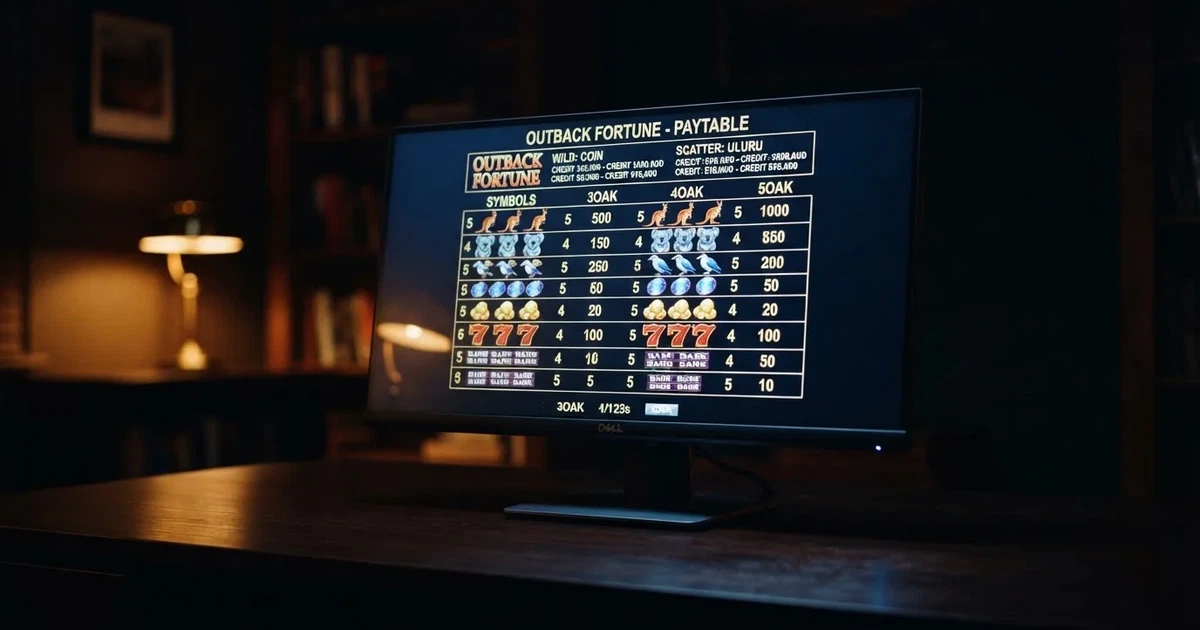
The mechanics of any individual title are spelled out on its paytable — reel layout, paylines, return-to-player percentage, volatility band, bonus-trigger conditions and maximum exposure. Playtech publishes those specifications, and reputable operators surface them in an in-game help screen. Three things to know about reading them: the return-to-player figure is theoretical, calculated over a long run of spins; volatility tells you how bumpy the ride is, not whether the house edge is positive — the house always has an edge, whatever the volatility label; and bonus features like free spins or pick-me rounds usually retrigger the bet that triggered them rather than paying a separate stake. None of that is unique to Playtech, but the brand’s catalogue is large enough that one operator may carry several hundred of these paytables and the player only meets them one at a time.
The eleven brands the ACMA has actually warned
This is not a ranking and not a recommendation. Each of the brands below sits on this page because the Australian Communications and Media Authority issued a formal warning over it for offering prohibited interactive gambling services to Australians. The ACMA’s register is the single public source for those warnings, and the table carries its operator names and dates as published.
| Brand | ACMA action and date | Operator named by the ACMA | Subject support |
|---|---|---|---|
| RocketPlay | Formal warning, March 2026; earlier May 2022 | Pulsup Ltd; earlier Dama N.V. | — |
| Level Up Casino | Formal warning, May 2022 | Dama N.V. | Listed as a Playtech-compatible venue by Wazdan |
| Woo Casino | Formal warning, March 2025 | Dama N.V. | — |
| Spirit Casino | Formal warning, May 2025 | Dama N.V. | — |
| National Casino | Formal warning, July 2025 | Consolutetish S.R.L. | Carries Playtech-style integrations per Betsoft, Wikipedia and Pragmatic Play listings |
| Bizzo Casino | Formal warning, July 2025; earlier 2022 | Consolutetish S.R.L.; earlier TechSolutions | — |
| Ignition Casino | Formal warning, July 2025 | Bamboo Media | — |
| Instant Casino | Formal warning, February 2025 | EOD Code SRL | — |
| Jackbit | Formal warning, April 2026 | Ryker B.V. | — |
| Casino Intense | Formal warning, April 2025 | Sterplay Holding Ltd | Carries 1spin4win, Wikipedia and UK Gambling Commission references |
| Sky Crown | Formal warning, September 2022 | Hollycorn N.V. | — |
The pattern in the table matters more than any single row. Dama N.V. appears four times across RocketPlay, Level Up, Woo and Spirit — a single corporate vehicle running multiple brand fronts, each warned at a different moment. TechSolutions appears under Bizzo from a 2022 warning, with Consolutetish S.R.L. picking up the same brand in 2025. The ACMA’s action is operator-level, and offshore operators have form for rewrapping the same product under a new name after a warning.
What each brand actually offers the reader
The next eleven sections walk the brands in the same order as the table. Each section states what the ACMA said and when, what the brand claims to offer, and what an Australian reader is actually looking at. None of these is a place to play — every entry is on the ACMA’s register of formal warnings — but a reader comparing options needs to know what each operator held out, what the licence claim was, and what the conditions attached to any bonus looked like.
RocketPlay
The ACMA warned Pulsup Ltd over RocketPlay in March 2026, with an earlier warning to Dama N.V. over the same brand in May 2022. The site markets a wide online casino catalogue with bonus structures, tournaments and a VIP scheme; the brand is configured for an Australian-facing URL that the regulator treated as offering a prohibited service. The 2026 warning post-dates the 2022 one, which is the recurring pattern: an offshore brand reappears under a fresh corporate vehicle and the ACMA issues a fresh formal warning rather than a single running case.

The read for an Australian: the same brand has now been told twice, under two operators, that its offering to Australian residents is unlawful. Whatever Playtech content the lobby carried, the legal frame around it has not moved.
Level Up Casino
Level Up sat on the May 2022 Dama N.V. warning alongside Bambet, Dazard, Rocketplay, Wild Tornado and Cobra Casinos — a six-brand batch the regulator published in one notice. Wazdan’s own site lists Level Up among venues carrying Wazdan content, which places it in the broader offshore-casino aggregation network that includes Playtech-adjacent suppliers.
The read for an Australian: this brand’s warning is seven years old and has not been followed by a re-warning. That is not an endorsement — the IGA prohibition stands whether or not the ACMA has revisited the brand — but it explains why some listings still surface it as a “Playtech-compatible” venue without that listing having any bearing on its legal status for an Australian sign-up.
Woo Casino
Dama N.V.’s March 2025 warning over Woo Casino is the third Dama N.V. warning in this set after the May 2022 batch and the May 2025 Spirit Casino action. Woo’s marketing has emphasised tournament play and a multi-deposit welcome package with free spins attached, framed in language aimed squarely at Australian and New Zealand visitors.
The read for an Australian: Woo is the same operator vehicle as Level Up, RocketPlay and Spirit, with a marketing refresh. The product is interchangeable across the four brands to a degree that the ACMA’s repeated warnings treat as the same case rather than four independent ones.
Spirit Casino
The May 2025 Dama N.V. warning over Spirit Casino rounds out the four-brand cluster under that operator vehicle. Spirit’s positioning has leaned on a large game lobby and a tiered VIP structure; the ACMA’s action came under the same provision of the Interactive Gambling Act that grounded the earlier Dama N.V. warnings.
The read for an Australian: same operator, latest rebrand. The product surface changes; the corporate address does not.
National Casino
Consolutetish S.R.L.’s July 2025 warning over National Casino is one half of a two-brand action that also covered Bizzo Casino. Public listings for National Casino have it carrying content integrations across Playtech-adjacent suppliers — Betsoft, Pragmatic Play and others in the same aggregation tier — though no direct Playtech content claim appears in the research.
The read for an Australian: Consolutetish S.R.L. is the operator named by the ACMA for both National Casino and Bizzo; the pairing of those two brands in a single notice is the regulator treating them as one case.
Bizzo Casino
Bizzo carries two warnings: TechSolutions (CY) Group Limited and TechSolutions Group N.V. in 2022, then Consolutetish S.R.L. in July 2025. The 2022 warning pre-dates the ACMA’s current reporting style and the 2025 one is part of the same notice as National Casino.
The read for an Australian: Bizzo is the clearest case in the set of a brand surviving an operator change and remaining a prohibited service under a fresh corporate vehicle. The product the player meets today sits behind the same brand the regulator warned in 2022.
Ignition Casino
Bamboo Media was warned over Ignition Casino in July 2025. Ignition has been positioned in the offshore market as a poker-and-casino hybrid with a focus on US-facing traffic; the ACMA’s action covers Australian sign-ups, which the brand had accepted.
The read for an Australian: a brand the ACMA treats as prohibited. The earlier reputation the operator has built in other jurisdictions does not extend to Australian consumer protection.
Instant Casino
EOD Code SRL was warned over Instant Casino in February 2025. The brand has run an aggressive affiliate-marketing footprint aimed at Australian and European traffic, and the warning followed ACMA’s standard process: investigation, formal notice, and an instruction to cease offering prohibited services to Australian residents.
The read for an Australian: Instant Casino is the case in this set where the warning is recent enough that affiliate links and review pages still surface the brand prominently. The ACMA’s action is the authoritative source, not those pages.
Jackbit
Ryker B.V. was warned over Jackbit and CasinOK in April 2026 — a two-brand notice published together, treating the brands as a single case for the purposes of the formal warning. Jackbit has positioned itself around cryptocurrency deposits and a sports-casino hybrid product.
The read for an Australian: the April 2026 warning is the most recent formal action in this set. The crypto-first positioning also intersects with the credit-card and digital-currency prohibition that applies to licensed Australian wagering — an offshore site taking crypto from an Australian is operating outside Australian payment rules on top of the IGA prohibition.
Casino Intense
Sterplay Holding Ltd was warned over Casino Intense in April 2025. Casino Intense appears in 1spin4win’s partner listings, in Wikipedia’s aggregator notes and on the UK Gambling Commission’s public register — the last of those reflecting its UK-facing licensing posture rather than any Australian channel.
The read for an Australian: a brand whose offshore footprint is broad enough to surface in three independent listings. None of those listings authorises Australian sign-ups, and the ACMA’s April 2025 warning is the controlling fact for an Australian reader.
Sky Crown
Hollycorn N.V. was warned over Sky Crown and Blue Leo in September 2022 — the oldest warning in the set, and one that pre-dates the current ACMA reporting style. Hollycorn continues to operate a multi-brand portfolio offshore.
The read for an Australian: the warning is four years old and the brand has not been re-warned. That does not change the IGA status, which is structural rather than case-by-case, but it does mean the brand is less prominent in current ACMA reporting than the more recent Dama N.V. and Consolutetish S.R.L. actions.
What the law actually says about offering Playtech in Australia
The Interactive Gambling Act 2001, strengthened by the Interactive Gambling Amendment Act 2017, makes it an offence to provide online casino games, online pokies or in-play betting to a person physically in Australia. No state or territory issues a licence for those products, so any site offering them to an Australian is doing so without Australian authority. What is licensable is wagering on races and sporting events placed before the event, lotteries and keno — in practice licensed through the Northern Territory Racing and Wagering Commission, which oversees 52 online bookmakers including Sportsbet, Bet365 and Ladbrokes.
The ACMA investigates, issues formal warnings and directs Australian internet service providers to block illegal sites. The individual player is not prosecuted — the IGA targets the provider — but a player at an offshore site has no Australian consumer protection, no Australian complaints body and no recourse if a withdrawal is refused. The site can be blocked while a balance is still on it, with no Australian channel to recover it.
The Interactive Gambling Amendment (Gambling Reform) Bill 2026 passed Parliament on 19 August 2026; its advertising and inducement measures commence on 1 January 2027. That is a law with a start date, not yet in force on a page written in 2026. It will, when it commences, restrict the inducements offshore sites use to recruit Australian players — bonus offers, free-spin packages and “VIP” schemes will move further out of reach. The substance of the prohibition does not depend on that bill: the IGA prohibition is the present law, and the ACMA’s enforcement record is built on it.
Responsible play, self-exclusion, and where help is available
The licensed Australian wagering market runs a National Self-Exclusion Register called BetStop, live since August 2023. A person registered with BetStop is barred from opening new accounts with Australian-licensed online and phone wagering services, and existing accounts are closed. The register binds the licensed side of the market only. An offshore casino has no obligation to check BetStop, and many do not — registration on BetStop does not, on its own, stop a person reaching an offshore site.
For someone who needs to talk to a counsellor, the National Gambling Helpline is 1800 858 858 — free, 24/7, with web chat at Gambling Help Online. State and territory bodies run their own programs — Gamblers Help in Victoria, GambleAware in New South Wales and the equivalent services in other states — and each can arrange face-to-face counselling. The free services exist because the licensed market funds them through point-of-consumption taxes; they are not funded by offshore operators.
A player at an offshore site who has a complaint about a refused withdrawal, a bonus term enforced after the fact, or an account closure has no equivalent Australian channel. The licence the offshore site displays — typically Curaçao, Anjouan or another small-jurisdiction authority — sits outside the Australian complaints framework entirely.
Deposits, withdrawals and the speed of getting money back
For licensed Australian wagering services, the legal deposit routes are debit card, bank transfer, PayID/Osko and BPAY. Credit cards, credit-related products and digital currency have been banned as payment for licensed online wagering since 11 June 2024, with penalties of up to A$247,500 for operators that breach the rule. A site asking an Australian customer for a credit card or a crypto deposit is, on the payment side alone, operating outside the Australian rules.
Settlement times for licensed wagering services are typically same-day to twenty-four hours on debit and PayID; bank transfers and BPAY can take one to three business days depending on the receiving bank. Withdrawals back to the original deposit method are standard; some operators allow withdrawal to a separate bank account after identity verification.
For offshore sites, the figures are different and far less consistent. The research carries no audit of offshore withdrawal times — affiliate marketing pages publish numbers like “instant” or “under an hour” that the underlying terms pages qualify with verification steps, processing windows and per-method limits. An Australian player at an offshore site who has won and wants the money out has no recourse if the operator drags the verification process or applies a maximum-cashout cap. The IGA prohibition makes the operator’s offer unenforceable in Australian law; that is not a fine point — it is the practical consequence of being outside the framework.
Bonus offers, free spins and what the headline number actually costs
Offshore sites market welcome packages in the form of matched deposits, free spin bundles, “no deposit” credits and reload offers for existing customers. The headline number — “100% up to A$500 plus 200 free spins” — is the inducement, and the wagering requirement is the cost. A 35-times wagering multiple on the bonus amount means a player has to turn the bonus over 35 times before any winnings can be withdrawn. On a A$500 bonus, that is A$17,500 of wagering, which at A$1 per spin on a 96% return-to-player slot is roughly A$700 of expected house-edge take across the clearing period.
The arithmetic is mechanical, and the result is mechanical. A bonus that pays less than the house edge it costs to clear is not a gift, it is a marketing spend on the operator’s side and a time-and-money cost on the player’s. The expected loss from clearing a bonus depends on the wagering multiple, the stake size and the RTP of the game the player uses to clear it. Higher RTP games shorten the expected loss; lower RTP games lengthen it. The operator usually restricts clearing to a list of slots with RTPs in the 94% to 96% range, and excludes table games or counts them at a lower percentage.
For an Australian player specifically, the bonus question has a layer underneath: even if the bonus cleared cleanly, the operator is offering a prohibited service in the first place. A withdrawal refused at that point has no Australian channel behind it. The expected loss on a bonus at an offshore site is therefore the mathematical cost plus the operational risk of dealing with an operator outside Australian jurisdiction.
How fast the ACMA is blocking sites, in one band
The ACMA’s June 2026 reporting cycle gives two anchor figures for the rate at which the regulator is removing prohibited services from Australian reach. By that report, 1,751 illegal gambling and affiliate marketing websites had been blocked since the first blocking request in November 2019, and more than 230 unlicensed gambling services had left the Australian market since enforcement was strengthened in 2017. The most recent published round added twelve more sites in a single batch: 7Signs, ChromaBet, Donbet, Duospin, Freshbet, Slots Gem, Jacks Club, Lucky Start, Pointsbetz, Spinrise, Vinyl Casino and Wildsino.
Two different bands fall out of those numbers, and each carries a different meaning. The blocking band — sites added to Australian internet service provider blocklists since November 2019 — runs at roughly 250 sites per year over the six-and-a-bit years the regime has been active. The leaving-the-market band — operators that have wound up their Australian-facing operations since 2017 — runs at roughly 25 per year. The blocking number is large because the ACMA’s enforcement is additive: each new operator on the list adds one entry, and a brand can be added several times under different URLs. The leaving-the-market number is smaller because it counts operators, not URLs, and most operators that leave do so quietly rather than by announcement. A reader who watches the regulator’s monthly updates will see the blocking cadence move in clusters — a dozen sites added in one round, then a quieter few weeks — rather than at a steady rate.
The two bands together describe the practical shape of enforcement: the ACMA moves quickly on individual sites through the blocking mechanism, and more slowly on the underlying operators, several of whom rebrand and resurface. The pattern in the eleven-brand table on this page — Dama N.V. under four brand names, TechSolutions then Consolutetish S.R.L. under Bizzo, Ryker B.V. under two brands in a single notice — is the corporate-resurface pattern the slower leaving-the-market band reflects.
The H2 Gambling Capital estimate of what Australians spend offshore
H2 Gambling Capital’s 2025 report estimates that Australians lose about A$3.9 billion a year to illegal gambling sites, and that the share of gambling going through legal channels fell from 74% in 2021 to 64%. The first number is an estimate of the dollar flow to prohibited services. The second is a trend in the share of gambling activity that runs through Australian-licensed channels. Read together, they describe a market in which the licensed share is shrinking and the offshore share is growing, even as the ACMA’s blocking machinery removes more sites each year.
The estimate is an estimate — H2 Gambling Capital is an industry forecasting house, and its figure rests on payment-flow modelling rather than direct measurement. The trend in the licensed share is the more defensible number, because it can be cross-checked against point-of-consumption tax receipts and wagering turnover reported by the Northern Territory and state regulators. The dollar figure should be read as “of this order”, not as a precise count. Both numbers matter for the same reason: they describe the size of the gap the IGA prohibition has not closed, and the direction in which that gap has been moving.
Frequently asked questions
Is Playtech legally available to players in Australia?
Playtech’s software is licensed to operators in many jurisdictions, but no Australian-licensed operator offers Playtech-branded casino games or online pokies, because those products cannot be licensed in Australia under the Interactive Gambling Act 2001. Australian players who reach a Playtech-lobby site are doing so through an offshore operator that the ACMA has, in the cases covered on this page, formally warned.
What kinds of games does Playtech make?
Playtech supplies software for online slots, table games, live-dealer studios, poker networks (its iPoker network), bingo platforms (Virtue Fusion) and sportsbook software (Playtech BGT Sports). The slot catalogue includes branded titles tied to DC Comics films alongside a larger library of classical video slots, and the supplier carries several hundred paytable configurations across that range.
Are Playtech games offered at land-based venues in Australia?
Australian land-based venues — clubs, pubs and casinos — run poker machines regulated by state and territory authorities. Those machines are typically supplied by Aristocrat, International Game Technology and other manufacturers with Australian operations, not by Playtech, which does not have a land-based Australian presence. The branded games Australians meet at land-based venues are Aristocrat titles like the Buffalo series, not Playtech slots.
How can Australians check whether a Playtech title is fair before ever considering play?
Reputable suppliers publish a return-to-player percentage, a volatility classification and a hit-rate figure on the game’s help or paytable page, and reputable operators surface those figures in-game. Independent testing labs — GLI, Quinel, eCOGRA — certify the random number generator. For an Australian player specifically, the question of fairness sits underneath the question of legality: a fair game on a prohibited service is still on a prohibited service.
Why do offshore sites keep advertising Playtech games to Australian visitors?
Because the offshore market is large — H2 Gambling Capital’s 2025 estimate puts Australian losses to illegal sites at about A$3.9 billion a year — and Playtech’s catalogue is one of the better-known suppliers in that market. Affiliate marketing networks push the offer, and the ACMA’s blocking machinery removes sites faster than the marketing networks replace them.
What should an Australian do if they see a Playtech game promoted by an unlicensed site?
The ACMA’s register of formal warnings is the authoritative source for whether a site has been the subject of enforcement action, and the register is updated when new warnings issue. A player who wants to confirm a site’s status can check the register, and a player who wants to avoid the offshore market altogether can use BetStop to exclude themselves from Australian-licensed wagering services — though BetStop does not bind offshore sites.