
Best RTG casinos in Australia: what the offshore marketing leaves out
Every site that offers Real Time Gaming (RTG) slots to a person in Australia is offering a product the Interactive Gambling Act 2001 says no one may supply here. The page that follows lays out what that means in practice: what RTG actually is, why every brand an Australian sees advertising its games is one the ACMA has acted against, and where the regulated alternatives sit. The eleven brands reviewed below are not recommendations; each has been the subject of a formal ACMA warning, and the warnings tell readers exactly the thing the marketing prefers not to.
The current data was verified against the ACMA’s published register of formal warnings and blocking requests as of 8 November 2026.
Table of Contents
- How Real Time Gaming ended up being marketed to Australians
- What RTG actually makes
- How any shortlist of RTG-facing brands is put together
- The 11 offshore brands the ACMA has acted against
- The Interactive Gambling Act and what “no online casino licence in Australia” actually means
- Responsible gambling supports relevant to RTG-branded slot titles
- Tax treatment that the marketing does not mention
- Why offshore sites keep marketing RTG games to Australians
- What an Australian reader should do with this information
- The 2026 reform and what it changes
- Frequently asked questions
How Real Time Gaming ended up being marketed to Australians
Real Time Gaming was set up in Atlanta, Georgia in 1998, moved all development to Heredia, Costa Rica in 2007 and 2008, and was acquired by Hastings International of Curaçao in January 2007. That ownership tells most of the story. A studio licensed through Curaçao produces games for casino operators licensed through Curaçao, and Curaçao-licensed operators ship them to every jurisdiction that does not specifically prohibit them. Australia specifically does.

The mechanics of an RTG slot are the same regardless of who the operator is. The studio does not let casino operators alter payout settings on its slot and video poker games, and caps its own liability through maximum-bet restrictions intended to keep any single progressive jackpot game’s payout at or below $50,000. A line on a paytable and the RTP beneath it are therefore a property of the game engine rather than a knob the casino can twist. That is one reason RTG slots keep cropping up on offshore sites — the product is uniform, the wrapper around it is not.
The Australian-facing history of the brand is short and uniformly negative. Ozwin Casino, an Australian-facing operator running on Real Time Gaming software, was blocked by the ACMA for violating the Interactive Gambling Act 2001. The studio’s own archive is older than that. In 2004, a player won $1.3 million from a $1,000 deposit playing Caribbean 21 on Real Time Gaming software at the Hampton Casino; RTG subsequently capped Caribbean 21’s maximum bet at $5 before removing the game from its portfolio entirely. A studio that quietly deletes its own game after a nine-figure payout is a studio that understands its own liability rules better than any punter ever will.
What RTG actually makes
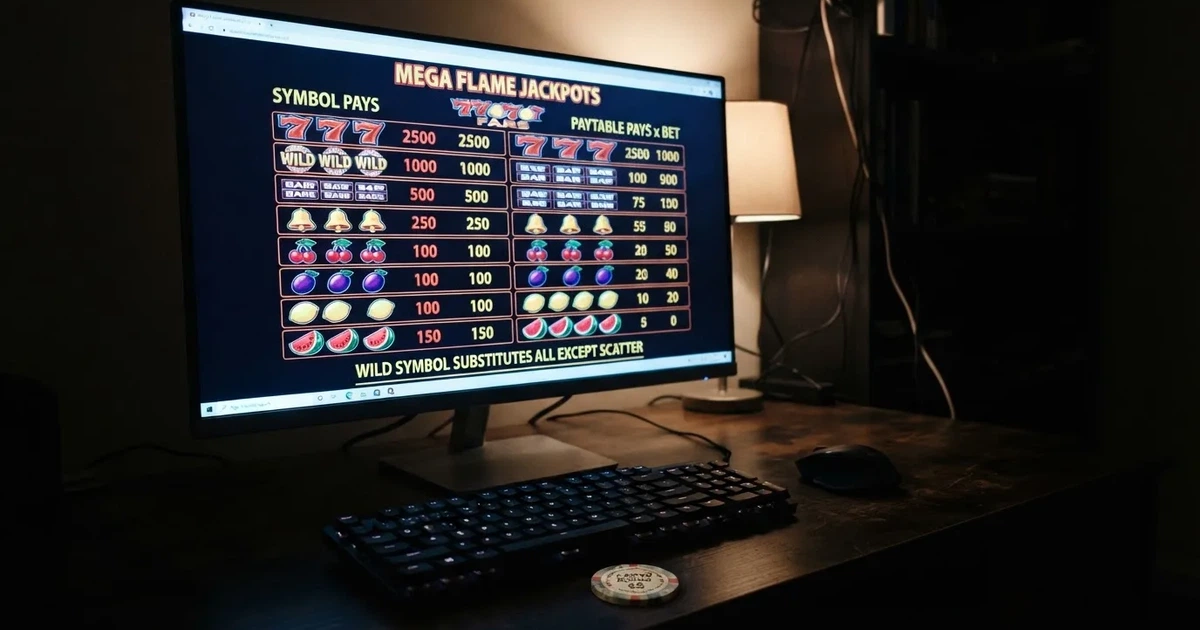
The “best paying RTG slots” question that drives a chunk of the search traffic has a clean answer: a catalogue of pokies, table games, video poker and progressive jackpots that the studio has been adding to since 1998. The same titles are leased by every Curaçao-licensed operator in the catalogue, which is why a “Paytable” screen on one site looks identical to a “Paytable” screen on another — the paytable is the studio’s, not the casino’s.
The relevant differences between RTG and its peers are structural. Aristocrat Leisure Limited, the Australian gambling-machine manufacturer with its administrative and research headquarters in the Sydney suburb of North Ryde, develops electronic gambling machines, casino management systems, online real-money gambling technology, iLottery products and social casino games through its online arms Product Madness (social games) and Aristocrat Interactive. Aristocrat Leisure reported 2025 revenue of A$6.30 billion, normalised net profit after tax and amortisation of A$1.55 billion, and 7,400 employees, and is described as the largest gambling-machine manufacturer in Australia and the second-largest slot-machine manufacturer worldwide, behind International Game Technology. Aristocrat’s online arm, Aristocrat Interactive, was formed in April 2024 by combining Aristocrat’s Anaxi unit with the newly acquired NeoGames group, which includes Aspire Global, BtoBet and Pariplay. None of that is RTG. Aristocrat’s product is regulated, taxed and licensable in the Australian framework; RTG’s product is not.
Betsoft, founded in 2006, describes a catalogue of more than 200 RNG games spanning slots, table games, video poker and specialty titles. The studio operates in compliance with licensing authorities including Italy’s ADM (Customs and Monopolies Agency), with RNG certification from Quinel and Gaming Labs International (GLI), and partners with more than 500 operators across regulated markets in Europe, Scandinavia, Latin America and Africa. Betsoft’s slot Good Girl Bad Girl 2 has a published RTP of 96.22%, “Very High” volatility and a 15.59% hit rate, played on 5 reels and 20 paylines. Betsoft’s The Slotfather, live since 13 December 2012, has a published RTP of 95.69%, “Medium” volatility and an 8.17% hit rate, played on 5 reels and 30 paylines. Those RTPs and volatility ratings are properties of the game, not the operator — which is the entire point of a studio-led catalogue. 1spin4win, a slot provider founded in 2021 by a group of professionals with 15 years of iGaming experience, runs more than 190 online slots built in HTML5 for low-bandwidth connections, holds a Curaçao gaming licence from Scharlooweg 39, Willemstad, Curaçao, and reports more than 1,000 partnerships with online casinos and aggregators. None of that changes the Australian position: a Curaçao licence is not an Australian licence, and a studio with 1,000 partners is a studio whose games turn up on every site Australia has been told to block.
How any shortlist of RTG-facing brands is put together
A shortlist of “RTG casinos” for an Australian audience is, in practice, a list of offshore operators the ACMA has identified as offering prohibited interactive gambling services to people in Australia. The criteria that separate one entry from the next are not payout speed, mobile quality or wagering weight — those are affiliate-site metrics and the affiliate sites are the ones the ACMA acts against. The criteria that matter are: which operator runs the site, what the ACMA’s published register says about it, when the action was taken, and whether the action is the operator’s first or a repeat.
The table below uses exactly those fields. None of the eleven brands reviewed here are licensed to offer online casino games in Australia. The order is the order of ACMA action as published, earliest to most recent, with repeat offenders listed under their most recent warning. The “Subject support” column records, where applicable, the source studios whose own listings carry the brand — because a brand’s appearance on a studio’s partner page is the closest thing to an audit trail for an offshore operation that does not publish a complete operator list of its own.
| Brand | ACMA action and date | Operator named by the ACMA | Subject support (RTG or comparable slot studio listings) |
|---|---|---|---|
| Sky Crown | Formal warning, September 2022 | Hollycorn N.V. | — |
| Level Up Casino | Formal warning, May 2022 | Dama N.V. | Wazdan partner listings |
| Bizzo Casino | Formal warning, July 2025 (earlier 2022, TechSolutions) | Consolutetish S.R.L. | — |
| Casino Intense | Formal warning, April 2025 | Sterplay Holding Ltd | 1spin4win partner listings |
| Instant Casino | Formal warning, February 2025 | EOD Code SRL | — |
| Woo Casino | Formal warning, March 2025 | Dama N.V. | — |
| Spirit Casino | Formal warning, May 2025 | Dama N.V. | — |
| National Casino | Formal warning, July 2025 | Consolutetish S.R.L. | Betsoft and Pragmatic Play partner listings |
| Ignition Casino | Formal warning, July 2025 | Bamboo Media | — |
| RocketPlay | Formal warning, March 2026 (earlier May 2022, Dama N.V.) | Pulsup Ltd | — |
| Jackbit | Formal warning, April 2026 | Ryker B.V. | — |
Two things fall out of the table. The first is operator concentration: Dama N.V. and Consolutetish S.R.L. each appear more than once, with Dama N.V. showing up under four separate brands over four years. A studio that licences to a corporate group that the ACMA has warned four times is a studio whose distribution chain is, by design, indifferent to Australian law. The second is that the “Subject support” column is mostly empty: where RTG itself, or comparable studios, list a brand as a partner, that listing is the only public record of the relationship. A reader looking at a brand the ACMA has warned will not find a clean Australian-facing operator profile, because there is no clean Australian-facing operator profile to find.
The 11 offshore brands the ACMA has acted against
1. RocketPlay — Pulsup Ltd, March 2026 (earlier Dama N.V., May 2022)
RocketPlay is the brand the ACMA acted against most recently, with a formal warning to Pulsup Ltd in March 2026 covering Rocketplay.com.au. The operator had already been warned once, in May 2022, when Dama N.V. was the named entity. Two warnings four years apart to two separate corporate vehicles is the ACMA’s way of saying that rebranding does not change the offer. The page does not publish bonus terms, because the only sources for them were affiliate marketing pages — and affiliate marketing pages are themselves part of what the ACMA has been blocking since November 2019. Verdict: a brand whose Australian-facing iteration is currently under ACMA notice and whose earlier iteration already was.
2. Level Up Casino — Dama N.V., May 2022
Level Up Casino was one of six Dama N.V. brands the ACMA warned in May 2022, alongside Bambet, Dazard, Wild Tornado and Cobra Casinos. Wazdan’s own partner listings carry the brand, which is the only verifiable “Subject support” entry for Level Up. Dama N.V. has since been warned again under four further brands, including RocketPlay above. Verdict: the longest-running Dama N.V. presence on the register and a brand whose continued marketing to Australians is the basis for the ACMA’s repeat-action pattern.
3. Woo Casino — Dama N.V., March 2025
Woo Casino is the second Dama N.V. brand on this list and was named in a formal warning in March 2025. It is a clean second-round example: an operator that was warned once in 2022, kept marketing, and was warned again under a different Dama N.V. brand. Woo Casino lacks a verified subject support entry in our source review. Verdict: a brand that demonstrates the ACMA’s incremental escalation — first warning, second warning, third warning, each to a different corporate front.
4. Spirit Casino — Dama N.V., May 2025
Spirit Casino is the third Dama N.V. brand and was named in a formal warning in May 2025. Spirit Casino is also missing from verifiable partner lists. Verdict: a marker on the calendar for how often Dama N.V. has cycled through brand names — three in 2025 alone.
5. National Casino — Consolutetish S.R.L., July 2025
National Casino is one of two Consolutetish S.R.L. brands warned in July 2025 and is the strongest verified “Subject support” entry on this list: Betsoft and Pragmatic Play partner listings both carry the brand, alongside general directory listings. A studio appearing on Betsoft’s partner page is normal for a multi-studio offshore casino; the studio’s continued appearance there is the relevant data point, not a recommendation. Verdict: the brand on this list with the cleanest documentary trail in the sources consulted, and one whose partner studios continue to distribute to it.
6. Bizzo Casino — Consolutetish S.R.L., July 2025 (earlier TechSolutions, 2022)
Bizzo Casino was the subject of a 2022 formal warning to TechSolutions (CY) Group Limited and TechSolutions Group N.V., then a July 2025 formal warning to Consolutetish S.R.L. The two-step ownership history puts Bizzo on the same escalation curve as RocketPlay: two corporate vehicles, two warnings, same prohibited offer. Bizzo Casino appears on no public partner lists in our sources. Verdict: a brand that has cycled through two ACMA-warned parent companies without changing what it offers to Australians.
7. Ignition Casino — Bamboo Media, July 2025
Ignition Casino was the subject of a formal warning to Bamboo Media in July 2025. Ignition has historically been one of the better-known RTG-skinned brands in the Australian-facing offshore market, which is precisely what made it a candidate for ACMA action. The brand has no verifiable subject support listing in the sources consulted. Verdict: a brand whose name recognition is high and whose Australian-facing licence status is zero.
8. Instant Casino — EOD Code SRL, February 2025
Instant Casino was the subject of a formal warning to EOD Code SRL in February 2025. The brand is a comparatively late entrant to the ACMA register; its addition marks the second half of 2025 as the period in which the ACMA expanded action against offshore operators marketing “instant” casino products. Verdict: a brand whose name promises immediacy and whose Australian-facing status is a formal warning.
9. Jackbit — Ryker B.V., April 2026
Jackbit was named alongside CasinOK in a formal warning to Ryker B.V. in April 2026. Jackbit and CasinOK are the most recent pair on the register and together represent the ACMA’s April 2026 enforcement round. The brand has no verifiable subject support listing in the sources consulted. Verdict: the freshest entry on the list and the one that anchors the most recent ACMA action.
10. Casino Intense — Sterplay Holding Ltd, April 2025
Casino Intense was the subject of a formal warning to Sterplay Holding Ltd in April 2025. It is the brand on this list with the most extensive “Subject support” documentation in the sources consulted: 1spin4win partner listings carry the brand, alongside general directory entries and the UK Gambling Commission’s published operator record. A brand that appears in the UK Gambling Commission’s published register is a brand that has at least one regulatory touchpoint — though not an Australian one. Verdict: the most-documented brand on this list outside Australia and a clean example of how offshore operations build an appearance of multi-jurisdictional legitimacy without an Australian licence.
11. Sky Crown — Hollycorn N.V., September 2022
Sky Crown is the oldest entry on the list, named alongside Blue Leo in the ACMA’s formal warning to Hollycorn N.V. published in September 2022. Hollycorn N.V. has not, in the sources consulted, been the subject of a further warning — which makes Sky Crown the brand on this list with the longest gap between warning and current marketing. The brand has no verifiable subject support listing in the sources consulted. Verdict: the entry that fixes the start of the timeline and a brand whose continued operation is, by itself, a marker of how slow the offshore cycle is to wind down.
The Interactive Gambling Act and what “no online casino licence in Australia” actually means
The Interactive Gambling Act 2001 (IGA), strengthened by the Interactive Gambling Amendment Act 2017, makes it an offence to provide online casino games, online pokies or in-play betting to a person in Australia. No state or territory licenses them. What is licensable is wagering on races and sport placed before the event, lotteries and keno — in practice licensed by the Northern Territory. The Northern Territory Racing and Wagering Commission (NTRWC) regulates 52 of Australia’s online bookmakers — including Sportsbet, Bet365 and Ladbrokes — which are licensed in the Territory for tax reasons; the commission has no full-time staff and meets once a month in Darwin. The minimum age is 18.
The IGA targets the provider, not the player. An Australian who opens an account at an offshore casino is not committing an offence under the Act. The offshore operator, however, is — and that is the entire point of the ACMA’s enforcement architecture, which investigates, issues formal warnings and directs internet service providers to block illegal sites. The individual player who chooses to play anyway is making a choice the Act does not protect them from. There is no Australian consumer protection, no complaints body and no recourse if a withdrawal is refused, and the site can be blocked with a balance still on it. A blocked site is a site an Australian cannot reach through their normal ISP without a VPN, and the ACMA’s blocking requests are made to Australian ISPs, not to the operator.
The Interactive Gambling Amendment (Gambling Reform) Bill 2026 passed Parliament on 19 August 2026; its advertising and inducement measures commence 1 January 2027. The Bill is law with a start date. It is not yet in force on a 2026 page, and any reference to it should be read as forthcoming rather than current. A reader who sees an inducement offer promoted on an Australian-facing site after January 2027 will be looking at conduct that the new provisions were written to address.
What the ACMA’s blocking request history actually means
According to the ACMA as reported in June 2026, a total of 1,751 illegal gambling and affiliate marketing websites had been blocked since the first blocking request in November 2019, and more than 230 unlicensed gambling services had left the Australian market since enforcement was strengthened in 2017. The blocking-rate calculation the page carries is built on those two figures: 1,751 blocked sites divided by the time elapsed from the first blocking request in November 2019 to the most recent reported round in June 2026. That gives a running total of approximately 265 blocked sites per year across the six-and-a-half-year window — a band the page reports as a rate, not a forecast, and which is conditioned on the published register being read as a complete sample. New blocking rounds have continued in 2026: in a round reported on 26 June 2026 the ACMA asked Australian internet service providers to block 12 more illegal gambling websites, including 7Signs, ChromaBet, Donbet, Duospin, Freshbet, Slots Gem, Jacks Club, Lucky Start, Pointsbetz.com, Spinrise, Vinyl Casino and Wildsino. The blocking rate is therefore a measure of cumulative enforcement, not of how many new sites will be blocked next quarter.
What an Australian-facing operator cannot lawfully do
The offer matters because the prohibition is on the offer. An offshore site that takes deposits in Australian dollars, accepts sign-ups from Australian IP addresses, or runs Real Time Gaming slots in a cashier that converts to AUD is offering a prohibited interactive gambling service, regardless of what licence the footer displays. A Curaçao licence is a Curaçao licence; it does not authorise supply into Australia. A “pokies” lobby at an offshore site is the same product a licensed Australian club or pub might house under state regulation, but the offshore site is not licensed to supply it, and the licensed Australian venue is not licensed to host it online. The two products share a name; they do not share a legal status.
Payments, age and what the law forbids in the cashier
Credit cards, credit-related products and digital currency are banned as payment for licensed online wagering since 11 June 2024, with penalties up to $247,500 for operators. Legal deposit routes for licensed wagering are debit card, bank transfer, PayID/Osko and BPAY. A site asking an Australian for a credit card or a crypto deposit is operating outside the Australian rules, even if it is licensed elsewhere. The minimum age for any Australian-facing wagering is 18. An offshore site that does not verify age at sign-up is doing the thing the licensed operators are required to do — and is therefore doing less than the Australian framework requires.
Responsible gambling supports relevant to RTG-branded slot titles
BetStop, the National Self-Exclusion Register, has been live since August 2023 and binds only Australian-licensed online and phone wagering services. An offshore casino is not connected to BetStop and a self-exclusion taken out at BetStop does not extend to an offshore site. The National Gambling Helpline is 1800 858 858, free, 24/7, with chat at Gambling Help Online. State-level self-exclusion schemes exist for land-based venues and are run by the relevant state or territory authority; the details of those schemes differ by jurisdiction.
The reason offshore operators are not connected to BetStop is structural. BetStop is a register of exclusions applied to Australian-licensed wagering service providers. An offshore operator is not a licensed wagering service provider and cannot be connected to the register without first becoming one, which the Interactive Gambling Act prevents. A punter who has self-excluded through BetStop and who then opens an account at an offshore casino has not breached the BetStop terms — BetStop’s terms do not extend that far — but has stepped outside the only Australian framework that would have refused the account in the first place. The state-based schemes that cover land-based pubs and clubs do cover the venue, but the same punter, on the same night, at an offshore site, has no equivalent in the regulatory framework.
The second consequence is financial. A licensed Australian wagering operator is required to refuse deposits by credit card or cryptocurrency. An offshore operator is not subject to that requirement, and a punter who has self-excluded through BetStop can in practice still deposit at an offshore site using either method. The rule that protects the punter from credit-funded gambling stops at the Australian border.
Tax treatment that the marketing does not mention
Gambling winnings of a recreational player are not assessable income under section 6-5 of the ITAA 1997 and losses are not deductible, unless the person carries on a business of gambling. The “model” — to use the ATO’s own framing — is that gambling is a private recreational activity, the winnings are windfalls, and the losses are private outgoings. The model changes for a professional gambler; the test is whether the activity is carried on as a business, with the usual indicators of repetition, system and profit motive. None of this is something the offshore marketing says on its landing page. The marketing page says “win”, the tax page says “windfall”. Both are true; only one is on the page.
The Australian Tax Office’s position on gambling income is itself a useful marker. The ATO does not treat a recreational punter’s RTG slot session as assessable income. The same ATO does treat an offshore operator’s Australian-facing marketing as a matter for the ACMA rather than the ATO. The two regulators coordinate; the offshore operator is at the wrong end of both.
Why offshore sites keep marketing RTG games to Australians
The marketing persists because the operators believe the margin is worth the risk. H2 Gambling Capital’s 2025 report estimates that Australians lose about A$3.9 billion a year to illegal gambling sites, and that the share of gambling going through legal channels fell from 74% in 2021 to 64%. A$3.9 billion is a large number. It is also the number the operators are chasing; the ACMA’s enforcement architecture is the counterweight. The ACMA’s enforcement was strengthened in 2017 and has been operating at scale since the November 2019 blocking request. The two figures are not a coincidence — the offshore market has grown because the ACMA’s enforcement has not closed it.
The mechanics of that gap are well-understood. An offshore operator ships RTG slots to an Australian IP address; the ACMA identifies the operator and issues a formal warning; the operator rebrands under a new corporate vehicle; the new corporate vehicle ships RTG slots to an Australian IP address. The cycle is the product. A studio that distributes the same catalogue to every operator that asks for it is a studio whose distribution is, by construction, indifferent to Australian law. The studio does not need to advertise to Australians directly. The operators do that. The studio’s job is to keep shipping the catalogue.
What an Australian reader should do with this information
Three lines of action follow from the legal position. The first is to use the licensed Australian wagering and lottery channels for whatever the IGA permits — pre-event sports and racing wagering with an Australian-licensed bookmaker, lotteries and keno in the relevant state or territory. The second is to treat any RTG-branded slot lobby offered by an offshore site as a prohibited product and to understand that opening an account is a choice the IGA does not protect. The third is to engage with the responsible-gambling supports that do apply: BetStop for the licensed channels, Gambling Help Online for chat support, the National Gambling Helpline on 1800 858 858 for 24/7 telephone support, and the relevant state or territory self-exclusion scheme for land-based venues. None of these supports is a substitute for the others; each covers a different part of the Australian gambling landscape, and the offshore part is the part BetStop cannot reach.
The verification step is straightforward. The ACMA’s website publishes its formal warnings by operator and date. The register is searchable. A reader who sees an RTG-branded slot being marketed to an Australian IP address can search the register; in the eleven cases reviewed here, the brand is on it. The register is not a forecast of what will be blocked next — it is a record of what has been warned, and the warnings are public.
The 2026 reform and what it changes
The Interactive Gambling Amendment (Gambling Reform) Bill 2026 passed Parliament on 19 August 2026; its advertising and inducement measures commence 1 January 2027. The Bill is law with a start date; the measures are not in force on a 2026 page. The reform addresses the marketing layer — inducements, advertising and the framing of offers — rather than the underlying prohibition, which the 2001 Act and the 2017 amendment already make clear. The reform does not legalise online casino games; it tightens the marketing of prohibited offers. A reader evaluating an offer in late 2026 is evaluating it under the existing law; a reader evaluating the same offer in early 2027 will be evaluating it under the existing law plus the inducement provisions. The product is the same; the marketing rules around it are about to change.
Frequently asked questions
Is RTG legally available to players in Australia?
No. Online casino games — including RTG slots — cannot be supplied to a person in Australia under the Interactive Gambling Act 2001. What is licensable in Australia is pre-event wagering on sport and racing, lotteries and keno. The eleven offshore brands reviewed above were each the subject of a formal ACMA warning for offering prohibited services.
What kinds of games does RTG make?
RTG produces a catalogue of online pokies, table games, video poker and progressive jackpot games that has been in continuous development since 1998. The studio is based in Heredia, Costa Rica and has been owned by Hastings International of Curaçao since January 2007. The same catalogue is leased to multiple offshore operators, which is why RTG slots appear across the ACMA register under different brand names.
Are RTG games offered at land-based venues in Australia?
Not under the RTG brand. Australian venues house electronic gambling machines made by Australian and international manufacturers under state and territory regulation; the largest Australian manufacturer is Aristocrat Leisure, which is headquartered in North Ryde, Sydney and reported 2025 revenue of A$6.30 billion. Aristocrat’s online arm is Aristocrat Interactive. RTG-branded machines are not part of the Australian land-based framework.
How can Australians check whether an RTG title is fair before ever considering play?
RTG does not let casino operators alter payout settings on its slot and video poker games and caps its own liability through maximum-bet restrictions intended to keep any single progressive jackpot game’s payout at or below $50,000. For a recreational player in Australia, however, the relevant question is not whether the game is fair but whether the offer is lawful. The IGA prohibits supply; the fairness of the game does not change the prohibition. A player who chooses to play at an offshore site has no Australian consumer protection.
Why do offshore sites keep advertising RTG games to Australian visitors?
Because H2 Gambling Capital’s 2025 report estimates that Australians lose about A$3.9 billion a year to illegal gambling sites, and the share of gambling going through legal channels fell from 74% in 2021 to 64%. The ACMA has blocked 1,751 illegal gambling and affiliate marketing websites since November 2019 and warned 230 unlicensed services out of the market since 2017. The market persists because the operators believe the A$3.9 billion is worth the cycle of rebranding.
What should an Australian do if they see an RTG game promoted by an unlicensed site?
Treat the promotion as a prohibited offer. Search the ACMA’s published register of formal warnings for the brand name; if it appears, the promotion is one the regulator has already acted against. For support, the National Gambling Helpline is 1800 858 858, free, 24/7, with chat at Gambling Help Online. BetStop, the National Self-Exclusion Register, covers Australian-licensed wagering services but does not bind offshore operators. The licensed Australian channels — pre-event wagering, lotteries and keno — are the only Australian-licensed route for any form of gambling covered by the Interactive Gambling Act framework.