
Casinos not on BetStop in Australia — what actually sits outside it, and what that costs the player
 Available in US
Data current as of 24 September 2026, verified against the Australian Communications and Media Authority register of formal warnings and blocking requests.
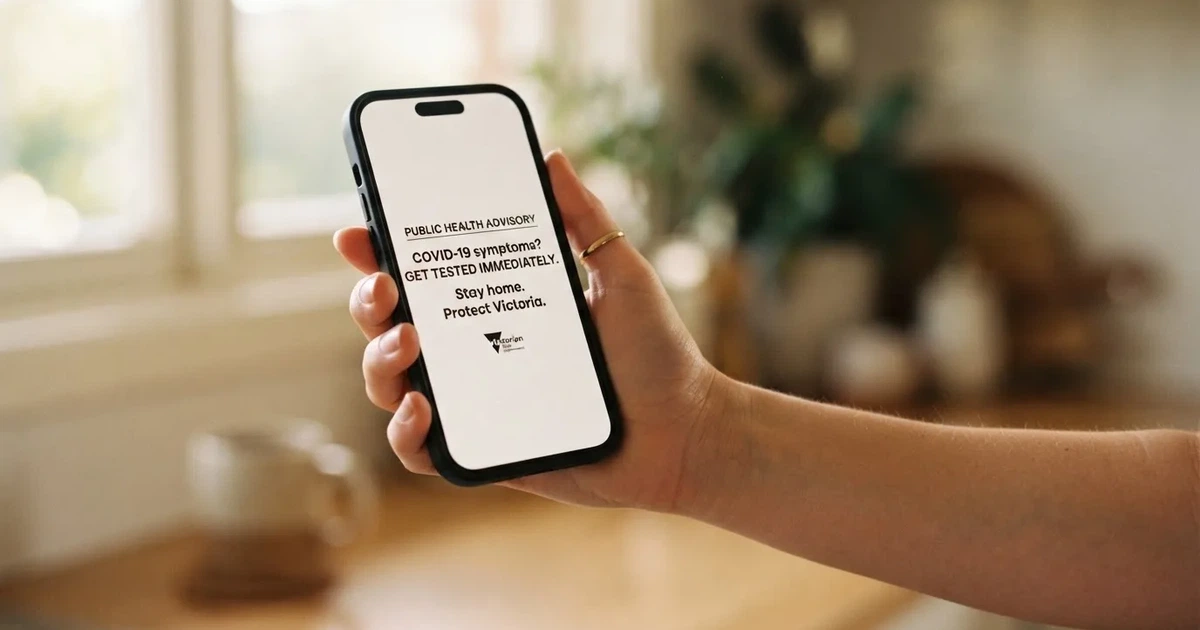
This page answers a question that the marketing around offshore casino sites tries to blur. Someone searching for a “casino not on BetStop” usually wants to find a casino that an Australian self-exclusion through BetStop does not reach. The honest answer is short. BetStop only covers licensed Australian wagering services — sports and racing bookmakers, the lottery products, keno. Online casino games and online pokies cannot be licensed anywhere in Australia under the Interactive Gambling Act 2001. An offshore casino is outside BetStop not because it evades the register, but because no licence connects it to Australia in the first place. That distinction is the one this article keeps returning to, and it is the one the rest of the page is built on.
The angle here is the cost — what an offshore casino actually costs the Australian player who lands on one. That cost is not just the house edge. It is the absence of Australian consumer protection when a withdrawal stalls, the possibility that the site is blocked mid-session with money still on it, and the gap between the marketing of “freedom from BetStop” and the regulatory reality of a service that no Australian regulator oversees at all. The page closes with eleven brands the ACMA has acted against, and the same picture repeats across all of them.
Table of Contents
- The BetStop register, in plain terms
- The legal frame — what the Interactive Gambling Act 2001 actually prohibits
- How the ACMA enforces — warnings, blocking requests, and the running tally
- What “not on BetStop” actually means for a player who has self-excluded
- Responsible gambling tools that do work from Australia
- The brands that turn up — eleven names the ACMA has warned
- A read on the cost — the calculation behind the warning list
- What the picture adds up to for an Australian reader
- Frequently asked questions about BetStop and offshore casinos
The BetStop register, in plain terms
BetStop — the National Self-Exclusion Register — went live on 21 August 2023 and is administered by the Australian Communications and Media Authority. It is free. Registration takes about five minutes, can be done at any time, and once a person is on it every licensed Australian online and phone gambling provider is required to block their bets, refuse new account openings in their name, and stop sending marketing to them. The exclusion periods a registrant can choose are three months, six months, twelve months, or lifetime. The minimum is three months, an active exclusion can be extended but never shortened, and a lifetime exclusion cannot be reversed at all. A registrant can also nominate someone they know to support them through the exclusion period — a feature built into the scheme, not an afterthought.

By 31 July 2026, three years after launch, BetStop had reached 67,480 total registrations, with 41,290 exclusions still active. The demographic skew is sharp: 78 percent of registrants are under 40, and 38 percent chose lifetime exclusion. Those numbers describe a register that is being used, heavily, and being used in its most serious form more than a third of the time.
The limit on what BetStop reaches is the point the marketing around offshore casinos is built to obscure. BetStop binds “licensed Australian online and phone gambling providers”, which means wagering services that hold an Australian licence — Sportsbet, Bet365, Ladbrokes, and the rest of the cohort of 52 online bookmakers regulated by the Northern Territory Racing and Wagering Commission. An offshore casino holds no Australian licence. There is nothing for BetStop to bind it to. It is outside the register not because the player outwitted it, but because the register was never written to cover it in the first place.
That is why the question this page answers needs reframing. The right question is not “how do I find a casino not on BetStop”, because no Australian-licensed casino exists. It is “what am I actually being offered when I land on one of these sites, and what protection do I have if it goes wrong”. The remainder of this page works through that question.
The legal frame — what the Interactive Gambling Act 2001 actually prohibits
The Interactive Gambling Act 2001, tightened by the Interactive Gambling Amendment Act 2017, makes it an offence for a provider to supply online casino games, online pokies, or in-play betting to a person physically in Australia. What is licensable is wagering on races and sport placed before the event, lotteries, and keno. In practice, online bookmakers licence through the Northern Territory Racing and Wagering Commission — 52 of them, including the three named above — for tax reasons. The NTRWC is the regulator of record; it has no full-time staff and meets once a month in Darwin.

That structural fact clears up several marketing claims at once. When an offshore casino displays a “Curacao licence” or an “Antillephone seal”, it is not contradicting the Australian position. No Australian licence exists for the product it is selling. The licence it displays is from a jurisdiction that does license online casino games, and the ACMA’s position is that supplying those games to a person in Australia is still an offence under Australian law regardless of what the offshore licence says.
The 2023 amendments added the payments ban that took effect on 11 June 2024: licensed Australian wagering services cannot accept payment by credit card or any other credit-related product, with penalties up to A$247,500 for operators that take one. The ban reaches credit-card-funded digital wallets too — Apple Pay or Google Pay sitting on top of a credit card is still a credit transaction. The same amendments tightened the advertising and inducement rules; the further tranche of those measures, in the Interactive Gambling Amendment (Gambling Reform) Bill 2026 passed on 19 August 2026, commences on 1 January 2027. Law on the books, not yet in force on a 2026 page.
What that frame means in practice is this. An offshore casino asking an Australian customer for a credit card number, or for a crypto deposit, is operating outside the rules the licensed Australian market runs on. It is not in a grey zone. It is in the territory the ACMA actively investigates and blocks.
How the ACMA enforces — warnings, blocking requests, and the running tally
Enforcement runs on three rungs, and the ACMA’s published record shows each of them in action. The first rung is a formal warning — a written notice to the operator that the ACMA considers the service to be in breach of the Interactive Gambling Act 2001. The second is referral to Australian internet service providers with a request to block the site at the network level. The third is publication — the ACMA lists the warned operators and the blocked domains on its website, which is how this page knows which brands to name.
The running tally, as the ACMA reported in June 2026, is 1,751 illegal gambling and affiliate marketing websites blocked since the first blocking request in November 2019. More than 230 unlicensed gambling services have left the Australian market entirely since enforcement was strengthened in 2017. A single round reported on 26 June 2026 asked ISPs to block twelve more: 7Signs, ChromaBet, Donbet, Duospin, Freshbet, Slots Gem, Jacks Club, Lucky Start, Pointsbetz, Spinrise, Vinyl Casino and Wildsino. These are not obscure brands — they are the visible surface of an industry the regulator treats as prohibited.
The economic scale sits behind those numbers. H2 Gambling Capital’s 2025 report estimated that Australians lose about A$3.9 billion a year to illegal gambling sites. The share of gambling going through legal channels fell from 74 percent in 2021 to 64 percent — a ten-point drop in four years, against a backdrop of new enforcement tools. The legal market is shrinking as a share of the total, which is the trend line that makes enforcement rather than education the central policy question.
What “not on BetStop” actually means for a player who has self-excluded
A player who has self-excluded through BetStop, and who then opens an account with an offshore casino, has done something that BetStop cannot prevent and that the offshore casino will not check. There is no shared database. The offshore operator has no obligation to consult BetStop before accepting a deposit, and it has no obligation to honour an exclusion registered in Australia. The whole idea that an offshore casino can be “not on BetStop” is only meaningful because there is no BetStop for it to be on.
The downstream cost lands in three places. The first is the absence of Australian consumer protection. There is no Australian complaints body for an offshore casino that refuses a withdrawal, no Australian regulator to escalate to, and no Australian court with straightforward jurisdiction over a Curacao- or Anjouan-licensed operator. Dispute resolution, where it exists, runs through the offshore licence’s own framework, which is typically slower and less predictable than the local alternative. The second is the block risk. An offshore casino that the ACMA has referred to ISPs for blocking can become unreachable mid-session, including with a positive balance on the account. The block lands at the network level; the operator’s obligation to refund the balance is whatever its own terms say, and the player’s leverage to enforce it is whatever the offshore licence provides. The third is the payment rail. A bank transaction to an offshore gambling merchant can be declined by an Australian bank’s own gambling block — Westpac’s card-level block refuses authorisation of transactions registered under the merchant category code “Betting/Casino Gambling” on eligible cards, and ANZ’s equivalent, activated in the app, also blocks gambling transactions made through a digital wallet on the same card. The block cuts the deposit off at the source.
These three costs are not theoretical. They are the everyday experience of offshore gambling from Australia, and they are what an Australian self-exclusion through BetStop does not reach. Anyone who has registered with BetStop and is still looking for a casino has not found a gap in their own exclusion. They have stepped outside the part of the market that would have honoured it.
Responsible gambling tools that do work from Australia
The protective toolkit that does work is well-developed, free, and run by Australian bodies. BetStop is the headline, but it sits inside a wider system. The National Gambling Helpline on 1800 858 858 is free, available 24 hours a day, and Gambling Help Online runs a live chat for people who would rather type than call. State and territory gambling-counselling services run their own programs. These are the services a person worried about their own gambling ends up talking to, not affiliate pages listing offshore brands.
The bank-side tools are part of the same system. Westpac’s gambling block works at card level: it refuses authorisation of transactions registered under the merchant category code “Betting/Casino Gambling” on eligible personal credit and debit cards. ANZ’s equivalent, activated in the ANZ app, also blocks gambling transactions made through a digital wallet such as Apple Pay on an eligible card, not just the physical card. The block is set up by the customer, and ANZ warns that not every gambling transactions will be blocked and that some non-gambling transactions might be blocked in error — the merchant category code system is coarse, and the trade-off is real. Once activated, ANZ’s block requires a 48-hour waiting period to remove, which is itself a guard against impulse removal.
The Apple Pay and Google Pay angle is worth being specific about, because it is where a lot of the marketing lives. Apple does not charge fees to consumers for using Apple Pay in stores, online, or in apps, so any surcharge is the merchant’s own card-processing fee rather than Apple’s. Transaction limits and PIN requirements for Apple Pay purchases are set by the card issuer or merchant, not by Apple itself. The relevant Australian restriction runs through the underlying card: where the card is a credit card, or a debit card linked to a credit facility, the Interactive Gambling Act 2001 as amended in 2023 prohibits licensed Australian wagering services from accepting it, and a digital wallet on top of that card inherits the restriction. By the end of 2025, Apple Pay, Google Pay and Samsung Pay collectively accounted for around 45% of all card payments in Australia by number, which is the size of the surface that the credit-card ban and the digital-wallet extension cover.
Bank transfer is the deposit rail most likely to land clean on a licensed Australian wagering service. Osko transfers between participating Australian banks arrive in under a minute, 24/7 including weekends, whether addressed to a BSB and account number or to a PayID. The PayID system shows the account holder’s name before the transfer is sent — a small feature that does a lot of work, since being asked to transfer to a PayID on an illegal gambling site almost certainly means a scam site. Over 100 Australian financial institutions offer PayID-based instant transfers, and more than 25 million PayID identifiers had been registered on Australia’s New Payments Platform as of April 2025. The New Payments Platform itself went live on 13 February 2018 and is owned by New Payments Platform Australia Ltd, a non-profit company whose 13 shareholders include the Reserve Bank of Australia and the country’s major banks. Participants must keep the platform’s monthly outages to no more than two minutes — the operational discipline of a system the licensed Australian market actually runs on.
The brands that turn up — eleven names the ACMA has warned
The brands below are not a ranking. They are not a recommendation. They are listed because the ACMA itself issued a formal warning over each of them for offering prohibited online casino services to Australians. The licence any of them displays is from an offshore jurisdiction; the ACMA’s position is that supplying those games to a person in Australia is still an offence under Australian law regardless of what the offshore licence says. No bonus terms are quoted here, because the only sources for them were affiliate marketing pages rather than anything a reader should act on.
| Brand | ACMA action and date | Operator named by the ACMA | Subject support |
|---|---|---|---|
| RocketPlay | Formal warning, March 2026 (Pulsup Ltd over RocketPlay); earlier Dama N.V., May 2022 | Pulsup Ltd / Dama N.V. | listings-only (Gambling Insider) |
| Level Up Casino | Formal warning, May 2022 | Dama N.V. | listings-only (Westpac) |
| Woo Casino | Formal warning, March 2025 | Dama N.V. | no-data |
| Spirit Casino | Formal warning, May 2025 | Dama N.V. | no-data |
| National Casino | Formal warning, July 2025 | Consolutetish S.R.L. | listings-only (ACMA, AUSTRAC, BetStop) |
| Bizzo Casino | Formal warning, July 2025 (Consolutetish S.R.L.); earlier 2022 warning to TechSolutions | Consolutetish S.R.L. / TechSolutions | listings-only (Gambling Insider) |
| Ignition Casino | Formal warning, July 2025 | Bamboo Media | no-data |
| Instant Casino | Formal warning, February 2025 | EOD Code SRL | listings-only (Ecopayz, PayID) |
| Jackbit | Formal warning, April 2026 | Ryker B.V. | no-data |
| Casino Intense | Formal warning, April 2025 | Sterplay Holding Ltd | listings-only (AUSTRAC, BetStop, Gambling Insider) |
| Sky Crown | Formal warning, September 2022 | Hollycorn N.V. | no-data |
The pattern across the table is worth naming. Dama N.V. alone turns up four times — May 2022, March 2025, May 2025 — for separate brands running on its platform. A warning issued in one calendar year does not stop the operator launching another brand and offering the same prohibited service to Australians under a new name. The ACMA warns, the brand is rebranded or relaunched, and the cycle repeats. The brands are the surface; the operators behind them are the unit the ACMA actually names. A reader trying to evaluate a specific site should treat the operator name as the durable identifier and the brand as a label that can change.
The other pattern is the spread of operating companies. Hollycorn N.V., Sterplay Holding Ltd, Ryker B.V., Bamboo Media, EOD Code SRL, Consolutetish S.R.L., Pulsup Ltd, Dama N.V., TechSolutions — these are the names the ACMA has had cause to publish. The brands on the front of the websites are interchangeable skins over a smaller set of operating companies, several of which have been warned repeatedly.
A note on the subject-support column. The “listings-only” entries are what third-party listings pages reported about payment methods or payment-rail compatibility for these brands; the “no-data” entries are brands where no third-party listing gave a usable read on that subject. Neither is the operator’s own claim. The point of the column is to make the absence visible, not to populate cells with material that is not there.
A read on the cost — the calculation behind the warning list
The blocking rate provides a clear view of the ACMA’s enforcement. The ACMA reported, in June 2026, that 1,751 illegal gambling and affiliate marketing websites had been blocked since the first blocking request in November 2019. That works out to an average rate that depends on which window you measure it across.
From November 2019 to June 2026 is roughly 79 months. Spread across that period, the running total averages around 22 blocked websites per month. The most recent published round — 12 sites blocked in a single action on 26 June 2026 — sits at the upper end of what a typical month produces, but it is not out of line with the post-2023 rate. The honest way to state the result is as a band: somewhere in the order of 15 to 25 websites referred for blocking per month across the lifetime of the regime, with single rounds of ten or more still routine and no sign of the rate falling. The headline number — 1,751 blocked since November 2019 — is the one that captures what the policy has actually produced; the monthly band is the rate at which new sites replace the ones that get blocked, and it is the more honest measure of the problem’s size.
Two things follow from the arithmetic. The first is that “not on BetStop” is a moving target — the set of offshore sites an Australian can reach is not stable, and a brand reachable today can be blocked next month with money still on it. The second is that the ACMA is not slowing down. Twelve new blocking requests in a single June 2026 round, against a backdrop of A$3.9 billion a year in estimated losses to illegal sites, describes an enforcement regime that is active, public, and ongoing.
What the picture adds up to for an Australian reader
The picture across the law, the ACMA’s published record, and the bank-side tools is internally consistent. BetStop covers the licensed Australian wagering market, which is the only part of the gambling market an Australian licence can cover. Online casino games and online pokies cannot be licensed in Australia, and the offshore sites offering them to Australians sit outside the register by structural fact. The ACMA warns, blocks, and publishes. Banks block gambling transactions at the card level. The licensed Australian market runs on bank transfer, PayID, Osko, BPAY, and debit cards — the same set of rails that the credit-card ban of 11 June 2024 cleared of credit products.
For a reader who has self-excluded through BetStop, the practical answer is the one BetStop itself points to. The helpline on 1800 858 858, the chat at Gambling Help Online, and the option to extend an active exclusion to lifetime are the next steps after registration. For a reader who has not self-excluded and is browsing offshore sites for other reasons, the cost the page keeps returning to is the absence of Australian recourse when something goes wrong — which is the same cost whether or not the player ever set foot inside BetStop.
The eleven brands named in the table above are the visible evidence of how the ACMA applies the law. None of them is recommended here, and the page describes what the ACMA published about each rather than offering a verdict on which is “best”. There is no best. There is the same prohibition, the same warnings, and the same absence of Australian protection sitting underneath each of them.
Frequently asked questions about BetStop and offshore casinos
What is BetStop, and how does it differ from a casino ban?
BetStop is the National Self-Exclusion Register, run by the Australian Communications and Media Authority since 21 August 2023. It blocks a registered person from placing bets with licensed Australian online and phone wagering providers, opening new accounts with them, and receiving marketing from them. A casino ban, in the everyday sense, usually means a self-imposed block at a single betting site. BetStop is the system-wide version, and it only reaches operators that hold an Australian licence.
Does BetStop block offshore online casinos as well as licensed wagering sites?
No. BetStop’s reach is defined by licensing — it binds “licensed Australian online and phone gambling providers”, which means wagering services licensed in Australia. Offshore casinos hold no Australian licence, so there is nothing for BetStop to bind them to. An offshore casino is outside the register by structural fact, not because the player has outwitted it.
How long does it take to register with BetStop?
Registration takes about five minutes and can be done at any time through the BetStop website. The exclusion periods on offer are three months, six months, twelve months, or lifetime, with three months as the minimum. An active exclusion can be extended but not shortened, and a lifetime exclusion cannot be reversed.
Can someone remove themselves from BetStop before the minimum period ends?
No. The minimum exclusion is three months, an active exclusion can be extended but never shortened, and a lifetime exclusion cannot be reversed. Once the chosen period ends, the person is automatically returned to the licensed wagering market. Until then, every licensed Australian provider is required to refuse their bets and refuse to open new accounts in their name.
Where can someone get support if they are worried about their gambling instead of searching for casinos outside BetStop?
The National Gambling Helpline on 1800 858 858 is free, 24/7, and runs alongside live chat at Gambling Help Online. BetStop itself can be extended to lifetime at any point during an active exclusion, and a registrant can nominate someone they know to support them through the exclusion period. State and territory gambling-counselling services run their own programs as well.
Is it legal for any online casino to operate in Australia, on or off the BetStop register?
No online casino game can be licensed in Australia. The Interactive Gambling Act 2001 makes it an offence to supply online casino games, online pokies, or in-play betting to a person in Australia, and no state or territory issues a licence for them. An offshore licence displayed by an online casino does not change that. BetStop is not the issue — the issue is that no Australian licence exists for the product.
Created by the ”Casino No Wager Hub” editorial team.