
International casinos serving Australian players: the gap between what the marketing promises and what the law permits
 Available in US
Data current as of 24 September 2026 and cross-checked against the Australian Communications and Media Authority register of formal warnings and blocking requests.
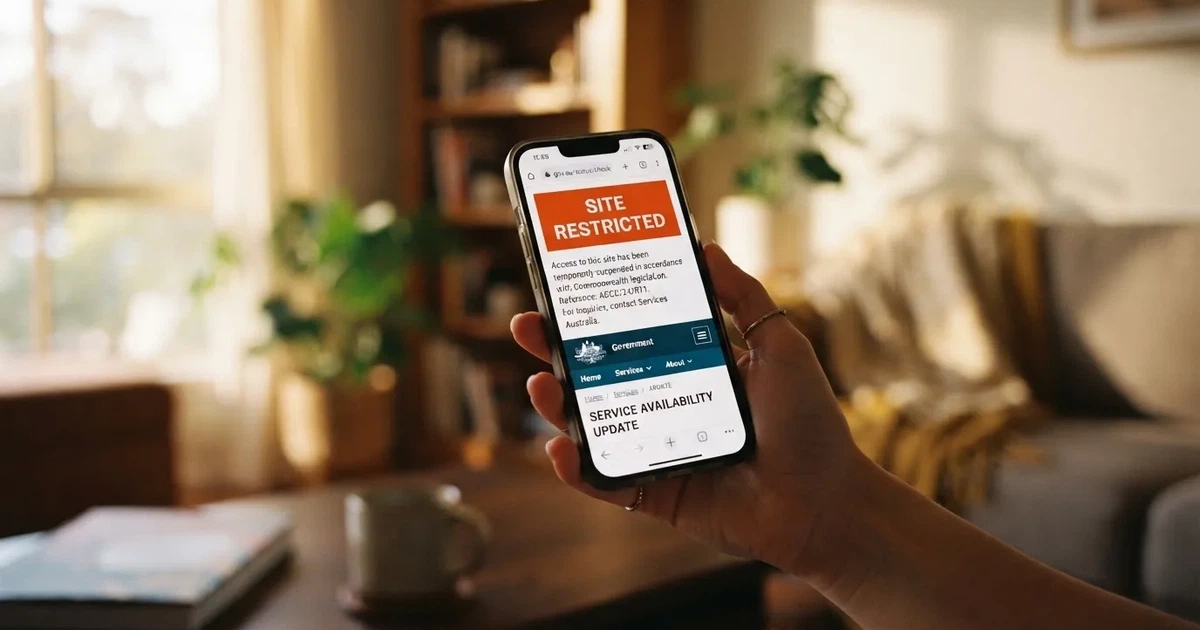
The phrase “international casino” reads as a single idea and collapses two very different things at once. On one side sit legitimate overseas resorts — Crown Melbourne’s parent has a stake in a Bermudan operation, Star’s properties sit inside a global chain, the Aquis complex in Canberra deals in internationally branded hotel rooms and gaming floors. On the other side sit offshore websites, often Curacao-licensed, offering online casino games and online pokies to anyone with an internet connection. Australians searching the phrase mostly mean the second group. The first group is mostly irrelevant to that search, and the second group is, in plain terms, prohibited under Australian law.
The Interactive Gambling Act 2001, tightened by the Interactive Gambling Amendment Act 2017, makes it an offence to provide online casino games or online pokies to anyone physically in Australia. No state or territory licences the activity. Wagering on sport and racing before the event is licensable, lotteries and keno are licensable, online casino games are not. Anyone telling you otherwise is selling you something the regulator says you cannot lawfully buy.
This page does not hand over a list of operators to play at. It lays out why that list would be dishonest to publish, names the brands the ACMA has moved against in the past four years, and walks through what an Australian actually has at home if what they wanted was a real, protected way to play.
Table of Contents
- The Australian legal landscape for international casino sites
- Responsible gambling: the safeguards that actually reach Australians
- The shortlist of brands the ACMA has acted against
- What the ACMA’s blocking regime looks like in practice
- Payment routes and what they tell you about a site’s standing
- What is actually lawful for an Australian who wants to play
- Tax: what a recreational punter owes
- What an Australian actually has at home if what they wanted was protection
- The 2026 reform agenda and what it changes
- Frequently asked questions
The Australian legal landscape for international casino sites
| Aspect | Status in Australia | Authority |
|---|---|---|
| Online casino games | Prohibited | ACMA |
| Online pokies | Prohibited | ACMA |
| Sports/Racing betting (pre-event) | Licensable | State/Territory regulators |
| Enforcement | ISP blocking / Formal warnings | ACMA |
The Interactive Gambling Act and what it prohibits
The IGA targets the provider, not the individual player. Australians who sign up to an offshore casino are not personally prosecuted. The site itself is the legal target — and the site’s operator, if identifiable and reachable from Australia, is the party the regulator moves against. That structural choice is not a kindness to the punter; it is a recognition that an offshore site exists outside the Australian enforcement net in any practical sense. If the operator can be reached through a local ISP or a local payment partner, the regulator moves. If they cannot, the regulator instead tells Australian ISPs to make the site unreachable from inside the country.

Section 15 of the Interactive Gambling Act sets the basic prohibition on providing a prohibited interactive gambling service to a customer physically in Australia. A “prohibited interactive gambling service” is defined to cover online casino games, online pokies and in-play betting on sport — the latter meaning bets placed after the event has started. Pre-event sports betting and racing betting are licensable through state and territory wagering regimes. Online casino gaming is not, and that has been the settled position since the 2001 Act came into force, with the 2017 amendments giving the regulator sharper tools.
Minimum age is 18. The minimum age applies to the player, but it is the provider who carries the obligation to verify it. An offshore site asking for a date of birth is performing a gesture — the IGA’s reach does not extend to enforcing whatever that gesture produces.
The ACMA’s enforcement record
The Australian Communications and Media Authority is the body that investigates breaches, issues formal warnings to named operators, and asks Australian internet service providers to block illegal sites at the network level. As of the ACMA’s June 2026 statement, 1,751 illegal gambling and affiliate marketing websites had been blocked since the first blocking request went out in November 2019, and more than 230 unlicensed services had left the Australian market entirely since enforcement was strengthened in 2017.

In the round reported on 26 June 2026 the ACMA asked ISPs to block 12 more: 7Signs, ChromaBet, Donbet, Duospin, Freshbet, Slots Gem, Jacks Club, Lucky Start, Pointsbetz.com, Spinrise, Vinyl Casino and Wildsino. A “blocking request” is not a polite request. Once the ACMA directs the major Australian ISPs to add a domain to their block list, an ordinary Australian household will find the site fails to load regardless of the device used. The site keeps running for the rest of the world. It simply stops being reachable through a Telstra, Optus, TPG or Vodafone connection.
The pattern of formal warnings matters as much as the headline blocking figure. The ACMA names the operating company on the warning itself, which is how the public learns that a brand called Rocketplay.com.au is run by a company called Pulsup Ltd, or that “Instant Casino” is operated by a company called EOD Code SRL. The regulator is not naming the marketing front; it is naming the corporate entity that sits behind it.
What a “Curacao licence” actually means for an Australian
An international casino site will usually display a licence badge from Curaçao, sometimes from Malta, occasionally from the Isle of Man or Anjouan. The badge is real in the sense that some authority issued it. It is not an Australian licence, because no Australian authority issues one for the activity. The licence does not give the holder a right to take bets from inside Australia. It gives the holder a permission to operate from a particular jurisdiction, subject to that jurisdiction’s rules.
For an Australian player, the practical question is not whether the badge exists. It is whether the badge gives the player any recourse if a withdrawal is refused. The answer in almost every case is no. The licensing authority sits offshore, speaks the operator’s home language, and runs no complaints process a foreign punter can meaningfully use. If the operator decides to delay a withdrawal, limit an account, or void winnings on a bonus term you only learn about after the fact, the player’s leverage is the threat of a chargeback — and many offshore sites explicitly forbid chargebacks as a breach of the terms, threatening to seize the balance.
The fact that a site displays a licence does not mean the player is protected. It means the site has chosen a regulator that does not protect the player.
Responsible gambling: the safeguards that actually reach Australians
BetStop and the National Self-Exclusion Register
BetStop is the Australian National Self-Exclusion Register, run by the ACMA, live since August 2023. A player registers once, choosing a self-exclusion period of three months, six months or up to five years, and every Australian-licensed online and phone wagering operator is obliged to refuse them service for the duration. The exclusion applies to sports betting, racing, lotteries and keno offered by an Australian-licensed provider. It does not reach an offshore casino, because the offshore casino is not licensed in Australia and is not connected to the register.
This is the practical reason BetStop matters more than it looks. A person who has decided they should not be gambling can use BetStop to close the lawful doors. The unlawful doors — the offshore sites — stay open unless the ACMA blocks them. BetStop plus a bank-level gambling block is the realistic combination. Either on its own leaves a gap.
Bank-level gambling blocks
The major Australian banks now let customers block gambling transactions at the card level. The mechanics are not identical across banks but the principle is shared: transactions carrying the merchant category code “Betting/Casino Gambling” are refused at authorisation, before the merchant ever sees them.
Westpac’s gambling block refuses authorisation of transactions registered under that merchant category code on eligible personal credit and debit cards. ANZ’s version, activated inside the ANZ app, blocks gambling transactions made through a digital wallet such as Apple Pay on an eligible card, not only on the physical card itself. Commonwealth Bank offers a gambling lock through the CommBank app, with the same caveat the other banks attach: not every gambling transaction will be blocked, and some non-gambling transactions may be blocked in error. The banks are precise about that limitation in their own documentation, which is worth reading before relying on the lock as a hard barrier.
Once ANZ’s block is on, removing it requires a 48-hour waiting period — the cool-off is built into the off-switch by design, on the theory that a person wanting the block removed in a moment of impulse should not get it instantly.
Help lines and where to go
National Gambling Helpline is 1800 858 858, free, available 24/7. The companion service Gambling Help Online runs a live chat. Counselling is confidential and the call does not appear on a phone bill. For anyone reading this from inside Australia, those are the working channels. They are funded for Australian residents and they speak the same regulatory language as BetStop and the bank-level blocks.
The shortlist of brands the ACMA has acted against
How this list was assembled, and why
The operators named below are not ranked for play. They are presented because the Australian regulator itself issued a formal warning over each one for offering prohibited services to Australians. The list is built from the ACMA’s own publication register, organised in roughly the order the warnings were issued or escalated. Some of these brands market themselves as “international” — the language is part of how the sites present themselves to Australians searching for offshore access — but none of them can lawfully provide online casino games or online pokies to a person in Australia, whatever the licence badge on the page says.
The table covers the ACMA’s enforcement footprint as it relates to this page’s specific scope. Other names appear in the ACMA’s register that are not reproduced here; the table reflects what research established and confirmed.
Comparison of ACMA action against offshore brands
| Brand | ACMA action and date | Operator named by the ACMA | Subject support |
|---|---|---|---|
| RocketPlay | Formal warning, March 2026 (and May 2022 under prior operator) | Pulsup Ltd | Listings-only — listed on GAMBLINGINSIDER.COM |
| Level Up Casino | Formal warning, May 2022 | Dama N.V. | Listings-only — referenced by Westpac.com.au |
| Woo Casino | Formal warning, March 2025 | Dama N.V. | No data |
| Spirit Casino | Formal warning, May 2025 | Dama N.V. | No data |
| National Casino | Formal warning, July 2025 | Consolutetish S.R.L. | Listings-only — listed on acma.gov.au, austrac.gov.au, betstop.gov.au |
| Bizzo Casino | Formal warning, July 2025 (earlier 2022 under TechSolutions) | Consolutetish S.R.L. | Listings-only — listed on GAMBLINGINSIDER.COM |
| Ignition Casino | Formal warning, July 2025 | Bamboo Media | No data |
| Instant Casino | Formal warning, February 2025 | EOD Code SRL | Listings-only — listed on EcoPayz.com, PayID.com.au |
| Jackbit | Formal warning, April 2026 | Ryker B.V. | No data |
| Casino Intense | Formal warning, April 2025 | Sterplay Holding Ltd | Listings-only — listed on austrac.gov.au, betstop.gov.au, GAMBLINGINSIDER.COM |
| Sky Crown | Formal warning (2022) | Hollycorn N.V. | No data |
What the comparison shows
The patterns are more instructive than the individual rows. Dama N.V. surfaces three times in the table — Level Up in 2022, Woo Casino in March 2025, Spirit Casino in May 2025 — which is what a corporate group that operates multiple skins looks like when the regulator catches up with each in turn. Consolutetish S.R.L. surfaces twice — National Casino and Bizzo Casino, both warned in July 2025 — with Bizzo’s earlier 2022 warning to TechSolutions (CY) Group showing how the same brand can rotate through different operators as one entity exits and another enters.
The “Operator named by the ACMA” column is the single most useful field on the table from the reader’s standpoint. A consumer who has been told by the site they joined that the operator is “Dama N.V.” can match that name against the ACMA’s warning register. A consumer who has only ever seen the brand name — the colourful marketing front — has been given a name that does not appear on any regulatory document.
“Subject support” records what third-party listings carry about each brand. A “listings-only” entry means the name appears in an industry directory or aggregator page but not in a way that confirms anything about the brand’s operations for Australians specifically. A “no data” entry means the page’s research pass found no listing on the consulted sources for that brand. Neither is a recommendation. The listings-only entries do not change the legal picture.
Operator notes from the ACMA register
RocketPlay sits at the top of the regulator’s recent activity. The ACMA’s March 2026 formal warning named Pulsup Ltd as the operator of Rocketplay.com.au, and a separate May 2022 warning had already named Dama N.V. for the same brand. A site that has cycled through two named operators within four years is not, on the face of it, an operation committed to continuity.
Level Up Casino was named in the May 2022 warning to Dama N.V. alongside five other brands — Bambet, Dazard, Rocketplay, Wild Tornado and Cobra Casinos. The breadth of that single warning is itself a statement: one corporate group was running six skins under the ACMA’s eye.
Woo Casino and Spirit Casino are later entries for the same Dama N.V. group. The gap between March 2025 and May 2025 is short enough that the ACMA was tracking the group’s activity in real time rather than catching up on history.
National Casino and Bizzo Casino are the Consolutetish S.R.L. pair from July 2025. Bizzo’s earlier 2022 warning went to TechSolutions Group rather than Consolutetish, which is the kind of detail that shows up when one operator sells or abandons a brand and another picks it up.
Ignition Casino is the Bamboo Media entry from July 2025. The Bamboo Media name is less commonly cited in industry directories than the Dama or Hollycorn names, which makes the operator column the only reliable way to place the brand.
Instant Casino was the subject of a February 2025 formal warning to EOD Code SRL — the most recent ACMA action among the brands named on this page and, on the published timeline, the most recent warning before the regulator moved into the March 2026 RocketPlay round.
Jackbit sits at the April 2026 end of the table under Ryker B.V. The CasinOK brand was warned in the same round, though only Jackbit appears on this page.
Casino Intense is the Sterplay Holding Ltd entry from April 2025. The brand recurs in industry listings under that operating company.
Sky Crown is the Hollycorn N.V. entry from the September 2022 formal warning, paired with Blue Leo. Hollycorn is one of the more prolific operators in the offshore space, with a portfolio that includes brands this page does not cover.
The pattern, taken across all eleven: the ACMA names operators, not brands. A reader trying to assess a site on the strength of its marketing name has not been given the information the regulator has published.
What the ACMA’s blocking regime looks like in practice
The mechanics of an ISP-level block
When the ACMA adds a domain to its blocking list, the major Australian ISPs add it to a network filter that operates at the resolver or routing level. A browser pointed at the blocked domain does not connect; the request fails before any data leaves the user’s device. The site continues to operate from its own servers, available to anyone connecting through an overseas ISP or a VPN that exits through one. The block is geographic, applied at the Australian edge of the network.
A VPN lets a user route their traffic through an overseas server, which side-steps the block at the cost of breaking the user-data chain that the ACMA’s enforcement is designed around. Using a VPN to reach a site the regulator has blocked is itself a step beyond the ordinary access path, and offshore sites that survive by being reached through VPNs are not, in any meaningful sense, available to an ordinary Australian household.
Why the warning comes before the block
The ACMA typically issues a formal warning first and asks ISPs to block later. The warning gives the operator an opportunity to cease offering prohibited services to Australians; the block follows when the operator either does not respond or continues. The warning is also a public document — the ACMA publishes it on its website — which is what makes the operator column in the table above reliable.
A formal warning is not a prosecution. It does not carry a fine, and the regulator cannot enforce a penalty against an offshore operator that does not have assets in Australia. The warning’s force is in what comes next: an ACMA finding of breach, which can then support a civil penalty application in the Federal Court, or a direct request to ISPs to add the site to the block list. Neither step requires the operator’s consent.
Where the player stands if the site is blocked with money on it
If an Australian player has a balance on an offshore site when the site is blocked, the player’s funds are still on the operator’s books. The block prevents the player from reaching the site through an ordinary Australian connection, not the operator from continuing to run the site elsewhere. In practice, an Australian player with a balance on a freshly blocked site has lost access to the site’s customer interface and has no Australian complaints body to approach. The site’s own terms usually require the player to email support or open a ticket through a back-channel; whether the operator responds is a function of how much of an incentive the operator has to keep the player whole.
This is the material risk an offshore casino carries that an Australian-licensed wagering provider does not. A licensed provider is bound by Australian consumer law, by the ACMA’s complaint-handling framework, and by the licensing conditions of the jurisdiction that issued the licence. An offshore provider is bound by whatever the site says it is bound by in its terms — and the terms are written by the operator.
Payment routes and what they tell you about a site’s standing
Why a credit-card deposit is a tell
Under the 2023 amendments to the Interactive Gambling Act, Australian-licensed online wagering services cannot accept payment by credit card or any credit-related product. The restriction, in force since 11 June 2024, also reaches linked digital wallets such as Apple Pay used against a credit-funded source. Penalties for breach run up to A$247,500 for operators.
An offshore casino site that accepts a Visa, Mastercard or Amex credit card deposit is operating outside the Australian rules. The deposit is not illegal on the player’s side — the IGA targets the provider — but the willingness to take a credit-card deposit is itself a marker of how little regard the site has for the framework the Australian regulator has set up.
American Express sits slightly outside this picture in two ways. The card scheme is a three-party network rather than the four-party model Visa and Mastercard use, and the Reserve Bank of Australia’s July 2025 review of merchant card payment costs and surcharging proposes removing surcharges only on eftpos, Mastercard and Visa transactions, explicitly leaving American Express outside the scope of the proposed ban. None of that changes the IGA position: credit-card deposits to an Australian-licensed wagering provider are prohibited, and Amex credit is a credit card for the purposes of the prohibition.
Why an Apple Pay or Google Pay deposit is not the same thing as a card deposit
Apple Pay and Google Pay are tokenised front-ends to an underlying card. A transaction routed through Apple Pay spends against the card the wallet holds, and whether the card is debit or credit determines whether the prohibition applies. ANZ’s documentation spells this out for its own gambling block: transactions made through Apple Pay on an eligible card are blocked at the bank side, not just transactions on the physical card. The bank cannot tell from the network traffic whether the spend was initiated via wallet or plastic; it sees the card.
Apple does not itself charge fees to consumers for using Apple Pay in stores, online or in apps. Any surcharge a customer sees at checkout is the merchant’s own card-processing cost, not a wallet fee. Apple Pay’s transaction limits and PIN requirements are set by the card issuer or the merchant, not by Apple.
By the end of 2025, Apple Pay, Google Pay and Samsung Pay transactions collectively accounted for around 45% of all card payments in Australia by number, on the Reserve Bank’s published figures. That share is the background against which the bank-level gambling blocks operate — most Australians using a card at a merchant today are using a wallet, and the gambling block has to catch the wallet path too. ANZ says it does. The other major banks publish similar positions.
Why a PayID or Osko deposit is worth pausing on
PayID and Osko are the instant-transfer rails of the New Payments Platform, which became accessible to the public on 13 February 2018 and is owned by New Payments Platform Australia Ltd, a non-profit whose thirteen shareholders include the Reserve Bank of Australia and the country’s major banks. Osko transfers between participating banks arrive in under a minute, 24/7, addressed to either a BSB and account number or a PayID. More than 25 million PayID identifiers had been registered on the platform as of April 2025.
The PayID feature that matters for an Australian punter is the account-name display: paying to a PayID shows the name of the account holder before the transfer is sent. Australian Payments Plus warns explicitly that being asked to transfer money to a PayID on an illegal gambling site almost certainly means a scam site — the operator is asking the punter to send to an account whose name will not match the brand. PayID-based instant transfers are available at over 100 Australian financial institutions.
AUSTRAC’s threshold-transaction-report rule requires reporting of transfers of A$10,000 or more in physical cash; ordinary electronic bank transfers are not subject to that per-transaction reporting requirement, regardless of the amount sent. The rule’s relevance here is the limit of its scope: a person sending A$2,000 to an offshore casino by PayID is below the cash threshold and outside the per-transfer reporting requirement, but is also outside any protective framework that would let the transfer be reversed if the site turns out to be fraudulent.
Why a BPAY deposit is a different shape
BPAY is a bill-payment service that lives inside a customer’s online banking: the payer enters the Biller Code and the Customer Reference Number printed on the bill, and the bank transfers the funds to the biller through the BPAY scheme. It has operated in Australia since 18 November 1997, is available in the online banking of over 140 banks and financial institutions, and is offered by over 95,000 businesses. It is run by Australian Payments Plus, the same operator that runs PayID and Osko.
BPAY is not a deposit channel a typical offshore casino uses, because the BPAY scheme requires the biller to be an Australian-registered entity with an Australian bank account. The most common offshore deposit routes are still card payments, e-wallets such as ecoPayz and Skrill, and increasingly cryptocurrency. A site offering BPAY is, in practice, offering a bill-payment flow that routes through an Australian bank — which is itself a marker of how the site has chosen to position itself inside the Australian framework rather than outside it.
What is actually lawful for an Australian who wants to play
Licensed wagering — sports, racing, lotteries, keno
Pre-event sports betting and racing betting are licensable in every Australian state and territory, and the bulk of the major operators are licensed in the Northern Territory through the NTRWC. The NTRWC regulates 52 of Australia’s online bookmakers — including Sportsbet, Bet365 and Ladbrokes — licensed in the Territory for tax reasons. The commission has no full-time staff and meets once a month in Darwin, which is itself a structural feature of the regime and one that has drawn periodic criticism.
Lotteries and keno are licensable in their respective states. The major operators are state-owned or operate under state-specific licences. None of this is online casino gaming, and that is the relevant point for the reader comparing the page’s subject to what the page actually recommends.
Land-based casinos
A licence to operate a land-based casino exists in every Australian state and territory. Crown operates Melbourne and Perth; The Star operates Sydney, Gold Coast and Brisbane; the Adelaide Casino sits under the SA government’s framework; the casino floor at Wrest Point in Hobart and the Country Club in Launceston operate under Tasmanian licences; SkyCity Darwin operates in the Northern Territory; the casino at the Canberra Casino, formerly run by Aquis, is now under different management. These are physical venues operating under physical licences; their online arms are separate businesses and are subject to the same IGA prohibition as any other operator offering online casino games to Australians.
Pokies at licensed venues
Pokies — poker machines — are licensed for use in clubs, hotels and casinos in every state and territory except Western Australia, which operates a stricter regime. The machines are physically present, the licensing authority is a state or territory body, and the venue is subject to the responsible-gambling obligations those licences carry. This is the legal route for an Australian who wants to play a poker machine: go to a licensed venue, where the consumer-protection framework actually applies.
Tax: what a recreational punter owes
The tax treatment of gambling winnings in Australia is straightforward for the player who is not running a gambling business. Recreational winnings are not assessable income under section 6-5 of the ITAA 1997, and losses are not deductible, unless the person carries on a business of gambling. A casual punter who wins on the Melbourne Cup or on a pokie at the Crown does not declare the win. A casual punter who loses does not claim the loss. The ATO’s published guidance is consistent on this point, and the practical effect is that recreational gambling is, for income-tax purposes, neither income nor a deduction.
The “business of gambling” exception exists. It applies to professional gamblers — the small minority whose gambling is organised, systematic and intended to produce assessable income at a profit. The ATO’s tests look at factors such as the volume of betting, the use of specialist knowledge, the regularity of activity and the intention to make a profit. The standard advice — “check with the ATO” — applies if any reader believes they may be in that category. This page does not adjudicate that question for anyone.
What an Australian actually has at home if what they wanted was protection
The combined picture
An Australian who wants the consumer-protection framework of a licensed environment, combined with the responsible-gambling tools available to people who may be playing too much, has a coherent set of options. BetStop covers the legal wagering side. The bank-level gambling blocks close off card-based access at the authorisation step. The National Gambling Helpline is free, 24/7 and confidential. Gambling Help Online provides chat. A bank lock plus BetStop plus the helpline is the practical toolkit, not because it stops every pathway, but because it stops the legal pathways and provides support if the pathways that remain become a problem.
An offshore casino is not part of that toolkit. It is not connected to BetStop, does not accept the bank-level gambling blocks as a feature, and offers no Australian complaints body. The deposit may go in by PayID and the withdrawal, if it is ever paid, may come back the same way; but the dispute resolution framework is whatever the site’s terms say it is, and the operator is the party that wrote those terms.
The cost the marketing does not name
The marketing for an offshore casino site sells a game, a bonus, a brand. The cost the marketing does not name is the loss of every protective layer the Australian framework provides. The deposit is reversible at the bank only if the bank cooperates and the operator has not already foreclosed the chargeback route in its terms. The withdrawal is at the operator’s discretion, on the operator’s timeline, against the operator’s interpretation of the bonus terms the player agreed to on signup. If the site is blocked while the player has a balance, the player has no Australian entity to contact. The site continues to operate; the player simply cannot reach it through an Australian connection.
None of that is a prediction that any particular operator will refuse to pay. It is the shape of the risk that exists because the operator sits outside the Australian regulatory perimeter. A reader weighing that risk against the marketing promise is making the calculation this page is set up to support.
The 2026 reform agenda and what it changes
The Interactive Gambling Amendment (Gambling Reform) Bill 2026 passed Parliament on 19 August 2026. Its advertising and inducement measures commence on 1 January 2027, which makes the relevant question for a 2026 reader a specific one: the law is in force as a statute but not yet operative as a set of enforceable rules on the day this page is read. A ban on inducement advertising that has passed the Parliament but not yet commenced is a law with a start date, and a reader evaluating the offshore market in the closing months of 2026 is reading at a moment between enactment and commencement.
The reform’s headline effect is to extend the existing prohibition framework into the advertising and inducement layer — affiliate marketing, bonus offers targeted at Australian sign-ups, and the kind of “international casino for Australian players” content the search phrase is built around. The commencement date is what determines when an inducement becomes an offence. Until 1 January 2027, the prohibition on providing prohibited interactive gambling services remains the operative rule; from that date forward, the inducement provisions add a second layer.
A reader of this page who is making a decision about whether to play at an offshore casino today is reading at a moment when the legal pressure on the operators is about to increase but has not yet increased in this particular way. That is a piece of timing information the page can carry honestly without speculating about what the commencement will do in practice.
Frequently asked questions
What does “international casino” actually mean?
“International casino” in the sense most Australians use the phrase means an offshore gambling site that takes customers from multiple countries, including Australia. The term covers legitimate overseas resorts as well — Crown’s stake in a Bermudan operation, Star’s international properties — but the search phrase and the marketing aimed at it both refer to the offshore online casinos, not the resorts. The legal position for an Australian differs sharply between the two: a stay at an overseas resort is not a question the IGA reaches; signing up to an offshore casino site is.
Can an international online casino legally accept Australian players?
No. The Interactive Gambling Act 2001 prohibits providing online casino games to anyone physically in Australia, and no state or territory issues a licence for the activity. An offshore site that accepts Australian sign-ups is operating outside the Australian framework, not within it. The site may display a licence from Curaçao, Malta or another jurisdiction, but that licence is not an Australian licence and does not give the site any right to take bets from inside Australia.
Does an overseas gambling licence help an Australian player?
In practice, very little. The licence authority sits offshore, runs no complaints process a foreign punter can meaningfully use, and has no reach over how the operator pays withdrawals or interprets bonus terms. The licence’s existence tells the player that the operator has chosen a regulator in a particular jurisdiction. It does not tell the player that the regulator will protect them. For an Australian, the only licence that carries meaningful protection is an Australian one — and no Australian licence exists for online casino gaming.
What protections apply to an Australian using an international casino site?
Essentially none from the Australian side. The site is not connected to BetStop, is not bound by Australian consumer law in the way an Australian-licensed operator is, and offers no Australian complaints body. A bank-level gambling block can prevent the deposit from going out at the card level, but once a deposit has been made, the player’s leverage is whatever the site’s terms allow. The ACMA’s blocking regime can render the site unreachable through an Australian ISP, which is a consumer protection in the sense that it prevents the site from being used, not in the sense that it returns lost funds.
Are international land-based casino resorts the same as the offshore online sites?
No. A land-based resort operating under a foreign licence is a physical venue subject to that jurisdiction’s gambling laws. An offshore online casino is a website subject to whatever jurisdiction its operating company has chosen to register in, with no physical presence, no local regulator with oversight of the player’s interaction, and no consumer-protection framework that follows the player home. The marketing language treats them as one category; the legal position treats them as different things.
Who can an Australian contact if an international casino will not pay out?
The first port of call is the site itself, through whatever complaint channel the site publishes. If that fails, the player can report the site to the ACMA, which does not have power to order a payout but does record the complaint and may use it to support a blocking request. Scam-related complaints can be made to Scamwatch and to the Australian Cyber Security Centre. Money lost by bank transfer or card chargeback may be recoverable through the issuing bank, subject to the bank’s policies and the time elapsed. None of these channels is a substitute for an Australian-licensed operator; they are what is left when the licensed-operator route was not taken.
How fast is the regulator blocking sites?
The following breakdown shows the scale of enforcement activity. Working from the ACMA’s own published totals: 1,751 sites blocked since the first blocking request went out in November 2019, through to the end of June 2026. That is roughly eighty months of enforcement, against a base of 1,751 distinct sites.
The arithmetic: 1,751 blocked sites spread across about 80 months works out to roughly 22 sites blocked per month on average across the whole period. The actual pattern is lumpy — rounds are announced in batches, and the ACMA does not block sites one at a time. But the running total gives a reader a sense of the cadence: between November 2019 and June 2026, the regulator moved against an average of just over twenty illegal gambling or affiliate sites a month.
Stated as a band rather than a single figure: between 18 and 25 sites per month on average, conditional on the ACMA’s running total and the November 2019 starting point. The rate has not been constant; some years were heavier than others, and the December-to-January periods tend to attract more blocking rounds than other parts of the year. But the band is honest about the pace at which an offshore site that targets Australians can expect to be added to the block list — and the certainty of that eventual block is part of the cost of playing on one.
Written by the editors at Casino No Wager Hub.