
An Australian guide to Inclave casinos, and what the marketing skips over
Current as of 8 November 2026 — checked against the ACMA’s register of formal warnings under the Interactive Gambling Act 2001, and against the ACMA’s published list of website blocking requests issued to Australian internet service providers.

The phrase “Inclave casinos list Australia” promises a clean thing: a roster of offshore brands that share a single login system, with the convenience that implies. The reality is messier. No casino using Inclave can lawfully supply online casino games, online pokies or live-dealer tables to a person in Australia — the Interactive Gambling Act 2001 makes that a prohibited interactive gambling service, full stop. Every brand on this page is here because the regulator has acted against it. None can be played from Australia without stepping outside the law, and none offers an Australian player the consumer protections a locally licensed operator does.
The rest of this page is what that costs the reader. Three ways. Legal exposure that sits with the provider but lands on the player through the loss of every protection that would have applied. Money that cannot be recovered, because the offshore brand is not connected to Australian dispute resolution. And the tracking that a shared login makes harder, when the player’s spend is split across brands the licensed system would have centralised. The Australian-licensed system has its own tools for each of those three — BetStop for self-exclusion, card-level gambling blocks for transaction-level refusal, a transparent payment system where the merchant’s name appears before the transfer is sent. None of them reach an offshore casino. The cost the marketing does not price in is the cost of doing without them.
Table of Contents
- Prohibition under the IGA — and the legal cost of an offshore signup
- Wellbeing across a shared login — and the visibility it takes
- The landscape of ACMA action — eleven brands on the formal warning list
- Fundamentals of the Inclave login system — and what the marketing leaves out
- Operator write-ups
- The rate at which blocks land
- Frequently asked questions
Prohibition under the IGA — and the legal cost of an offshore signup
The Interactive Gambling Act 2001 draws a clean line through Australian gambling law. Online casino games, online pokies and in-play betting are prohibited interactive gambling services; supplying them to a person physically in Australia is an offence. The Interactive Gambling Amendment Act 2017 strengthened those offence provisions and gave the Australian Communications and Media Authority the tools it now uses on a near-monthly basis. No state or territory licenses online casino games. What is licensable is wagering on races and sport placed before the event, lotteries and keno; in practice, most online bookmakers are licensed in the Northern Territory, where the Northern Territory Racing and Wagering Commission oversees 52 wagering service providers — Sportsbet, Bet365 and Ladbrokes among them. The commission has no full-time staff and meets once a month in Darwin. The structure is real, but the casino-shaped part of the Australian market is not in it.
An Inclave casinos list sits on the wrong side of that line. Every brand on it is offshore; every offshore brand offering casino games to Australians is doing what the IGA prohibits; every player using one is using a service the regulator has either warned or blocked. The cost of the convenience the marketing sells is the cost of being on the wrong side of a published prohibition — a balance that can be frozen by an Australian blocking order, a complaint that has nowhere to go, a payout that is whatever the operator decides to release, and no recourse to an Australian court.
What enforcement has actually done
The regulator’s main instrument is the blocking request — the ACMA asks Australian internet service providers to make illegal sites unreachable from Australia. The first such request went out in November 2019. As reported in June 2026, the running total is 1,751 blocked websites and affiliate marketing pages, and more than 230 unlicensed services have left the Australian market entirely since enforcement was strengthened in 2017. The June 2026 round alone added twelve names: 7Signs, ChromaBet, Donbet, Duospin, Freshbet, Slots Gem, Jacks Club, Lucky Start, Pointsbetz.com, Spinrise, Vinyl Casino and Wildsino.
These twelve are not Inclave brands and they are not on the warning list further down. They are the regulator’s other ledger — the brands it has chosen to make unreachable rather than to warn. The point of naming them is the rate. Twelve in a single round, 1,751 in total, and the regulator is not slowing down. A player who treats a blocked site as a regulator that has moved on is treating a running total like a finished file; the file is not finished, and the total has not been closed.
Licensed versus offshore payment comparison
| Payment route | Licensed wagering status | Offshore casino suitability |
|---|---|---|
| PayID / Osko | Available | Almost certainly a scam risk |
| BPAY | Available | Not supported |
| Debit card | Available | High rejection risk |
| Crypto / Credit card | Prohibited | Favoured by offshore operators |
What the offshore position removes from the player
The IGA targets the provider, not the player. An Australian using an offshore casino is not prosecuted for doing so. But the offshore position takes a set of protections with it. BetStop, the National Self-Exclusion Register, has been live since August 2023 and binds every Australian-licensed online and phone wagering service; an offshore casino is not connected to it. A player who has self-excluded and then opened an Inclave account has self-excluded from a service the offshore brand was never bound by. The National Gambling Helpline on 1800 858 858 — free, 24/7, with chat at Gambling Help Online — still works for the player, and is the one number worth keeping on a phone regardless of which side of the law the play sits on.
The payment side adds another cost. Since 11 June 2024, Australian-licensed online wagering services cannot accept payment by credit card, credit-related products or digital currency, and the same restriction constrains gambling use of linked digital wallets. Penalties for licensed operators accepting these run up to A$247,500. The legal deposit routes for licensed wagering are debit card, bank transfer, PayID/Osko and BPAY — fast, Australian and traceable. An offshore casino asking an Australian for a credit card or a crypto deposit is operating outside the Australian rules, and the player funding the transaction is the one the licensed system would have refused. That refusal is a feature. The licensed payment system is built so that the player’s own bank can block a gambling transaction at the card level — the next section looks at how those blocks work and where they stop.
Wellbeing across a shared login — and the visibility it takes
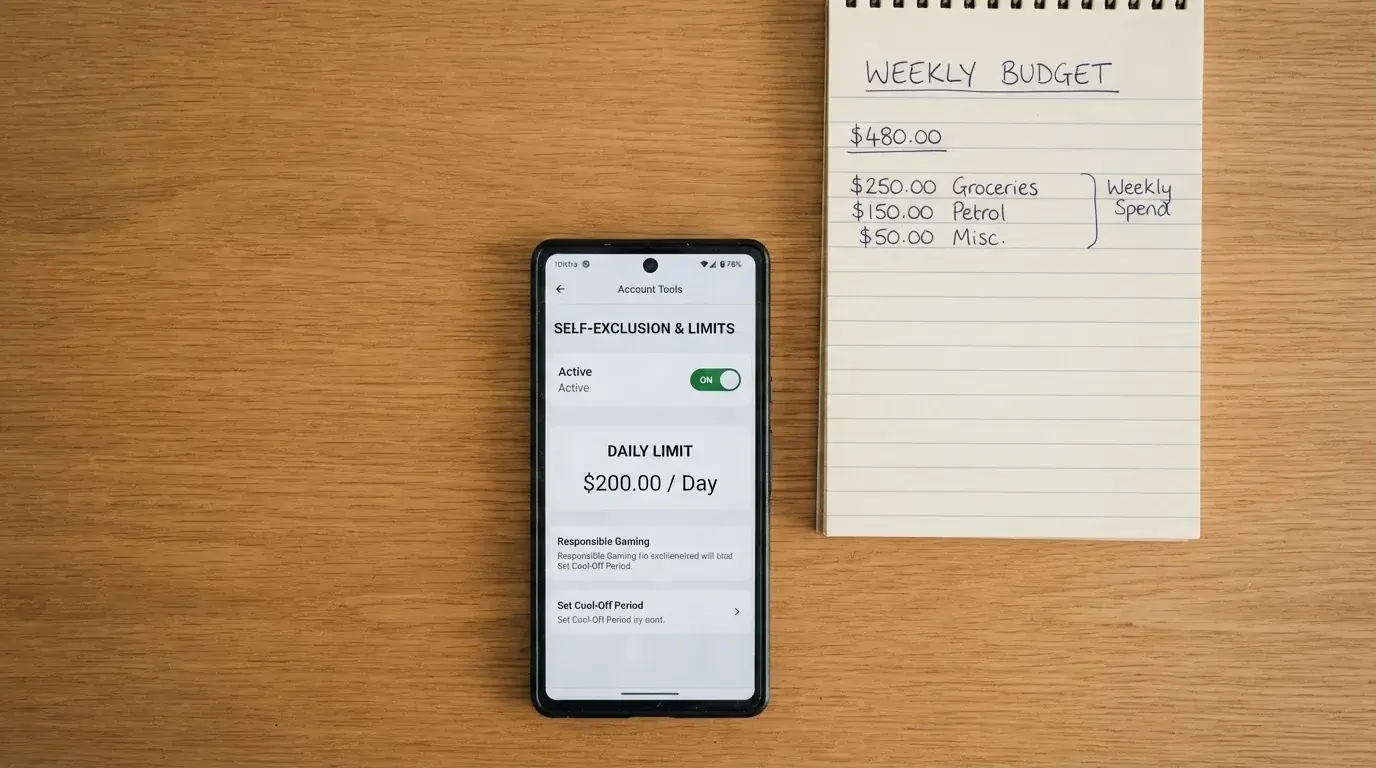
A single Inclave login that works across several offshore sites solves a real player problem: remembering a dozen passwords and biometrics for a dozen brands. It creates a different one. Total spend is harder to see when the balance is split across brands the player only meets through one login; a losing streak at one site is invisible to the next; a self-exclusion taken at one brand does not reach the others. The cost of the convenience is exactly the visibility the player most needs.
What the licensed system offers — and why an offshore brand skips it
A BetStop registration covers every Australian-licensed online and phone wagering service at once; the section above describes how it works in practice. An offshore brand sits outside that register, outside the scope of the operator’s own exclusion, and outside the same data. A self-exclusion that does not cover the sites the player actually uses is a self-exclusion the player has to enforce alone.
The licensed system also offers card-level gambling blocks. Westpac’s gambling block works at card level: it refuses authorisation of transactions registered under the merchant category code “Betting/Casino Gambling” on eligible personal credit and debit cards. ANZ’s gambling transaction block, activated in the ANZ app, blocks gambling transactions made through a digital wallet such as Apple Pay on an eligible card, not just the physical card. Commonwealth Bank lets customers apply a gambling lock to eligible cards via the CommBank app, which automatically blocks most gambling transactions, though the bank states it cannot guarantee all gambling-related purchases will be stopped. Each of these tools assumes the player’s spend goes through an Australian card and an Australian merchant code. The offshore brand’s merchant code may not be classified the same way, and the block may not catch it.
The honest limits of a card block
ANZ’s own warning on its gambling block is worth reading in full: once a customer turns on the block, removing it again requires a 48-hour waiting period, and the bank warns that not all gambling transactions will be blocked and some non-gambling transactions might be blocked in error. That warning is for an Australian-licensed merchant. An offshore casino’s transactions are a longer shot for the same block. Apple Pay, Google Pay and Samsung Pay transactions collectively account for around 45% of all card payments in Australia by number as of the end of 2025 — a wallet that the block may or may not recognise depending on which card is in it. Apple Pay transaction limits and PIN requirements are set by the card issuer or merchant, not by Apple, and Apple does not charge fees to consumers for using Apple Pay in stores, online or in apps; any surcharge comes from the merchant’s own card-processing fees, not from Apple. The block is the player’s last line of defence; it is not a wall.
The honest summary is this: a card-level block is most reliable on the Australian-licensed merchant it was built for. An offshore brand sits at the edge of what the block recognises, and the player’s bank will not catch every transaction the player wishes it would. The block is worth turning on, and the block is not worth treating as certain.
How the licensed payment system signals a scam
The Australian payment system has its own warnings for the player who lands on the wrong site. Paying to a PayID shows the name of the account holder before the transfer is sent, and Australian Payments Plus warns that being asked to transfer money to a PayID on an illegal gambling site almost certainly means a scam site. PayID-based instant transfers are available at over 100 Australian financial institutions, and Osko, the instant settlement layer on Australia’s New Payments Platform, arrives in under a minute, 24/7 including weekends, whether addressed to a BSB and account number or to a PayID. The New Payments Platform itself launched to the public on 13 February 2018 and is owned by New Payments Platform Australia Ltd, a non-profit company whose shareholders include the Reserve Bank of Australia and the country’s major banks; participants must keep the platform’s monthly outages to no more than two minutes. By April 2025, more than 25 million PayID identifiers had been registered on the platform. The licensed payment system is built so that the player sees the merchant’s name, the funds clear fast, and the institution on the other end is identifiable.
BPAY sits alongside PayID as another licensed payment route. Run by Australian Payments Plus, the same operator as PayID and Osko, BPAY is a bill-payment service in online banking: the payer enters the Biller Code and the Customer Reference Number printed on the bill. It has operated since 1997, is available in the online banking of over 140 banks and financial institutions, and is offered by over 95,000 businesses. The system is owned equally, via parent company Cardlink Services Limited, by Australia’s four major banks — ANZ, Commonwealth Bank, National Australia Bank and Westpac. In September 2021 the ACCC authorised the merger of BPAY Group, eftpos and NPP Australia under the new holding entity, Australian Payments Plus. A licensed wagering deposit routes through systems like these; an offshore casino asking for a crypto deposit is asking the player to step outside them.
AUSTRAC’s threshold-transaction-report rule, which requires reporting of transfers of A$10,000 or more, applies only to physical cash; ordinary electronic bank transfers are not subject to that per-transaction reporting requirement, regardless of the amount sent. That detail cuts the other way: a player using PayID or Osko to deposit at an offshore casino is not, by virtue of the size of the transfer alone, generating a regulator’s report. The visibility the licensed system provides is the visibility of the merchant name on the PayID screen, not the visibility of the AUSTRAC file. The player who relies on the regulator to notice the deposit is relying on the wrong signal.
Tracking spend when the sites do not
A player who uses five offshore brands through one Inclave login has five separate balances, five separate bonus states, and five separate loss ledgers. The licensed system centralises some of this for the player — the betting account statement, the self-exclusion register, the merchant-level block. The offshore system centralises only the password. The player who wants a single number for what the month cost has to build that number themselves, and the player who does not build it does not know the number. That is the angle a responsible approach takes to a shared login: the convenience is real, and so is the cost of the visibility it takes away. The National Gambling Helpline is 1800 858 858, free and 24/7. The chat is at Gambling Help Online. For the player who has started to lose the thread, those are the numbers worth dialling before any other.
The landscape of ACMA action — eleven brands on the formal warning list
The brands below are not a ranking. Each appears because the ACMA itself has issued a formal warning over it for offering prohibited interactive gambling services to Australians. The list is read across the columns: the brand as the player meets it, the ACMA action and date as the regulator published it, the operator the regulator named, and what any consulted subject directory had to say about it. Where a directory has nothing on the brand, the column sits empty rather than guessing.
| Casino brand | ACMA action and date | Operator the regulator named | Listings record |
|---|---|---|---|
| RocketPlay | Formal warning, March 2026; earlier warning, May 2022 | Pulsup Ltd (2026); Dama N.V. (2022) | Listed as an offshore casino by Gambling Insider |
| Level Up Casino | Formal warning, May 2022 | Dama N.V. | Listed in Westpac’s gambling-block merchant directory |
| Woo Casino | Formal warning, March 2025 | Dama N.V. | — |
| Spirit Casino | Formal warning, May 2025 | Dama N.V. | — |
| National Casino | Formal warning, July 2025 | Consolutetish S.R.L. | Listed by the ACMA register, AUSTRAC and BetStop directories |
| Bizzo Casino | Formal warning, July 2025; earlier warning, 2022 | Consolutetish S.R.L. (2025); TechSolutions (CY) Group Limited and TechSolutions Group N.V. (2022) | Listed as an offshore casino by Gambling Insider |
| Ignition Casino | Formal warning, July 2025 | Bamboo Media | — |
| Instant Casino | Formal warning, February 2025 | EOD Code SRL | Listed alongside ecoPayz and PayID in payment-method directories |
| Jackbit | Formal warning, April 2026 | Ryker B.V. | — |
| Casino Intense | Formal warning, April 2025 | Sterplay Holding Ltd | Listed by AUSTRAC, BetStop and Gambling Insider directories |
| Sky Crown | Formal warning, September 2022 | Hollycorn N.V. | — |
Eleven rows, four years of regulator action, one shared conclusion: every one of these is an offshore operator the ACMA has named in writing. None can lawfully serve an Australian. The cost to the reader is the same on every row — the cost of using a service the regulator has told to stop. What differs between rows is the operator footprint behind the brand, and the write-ups below read that footprint row by row, in the order the table gives them.
Fundamentals of the Inclave login system — and what the marketing leaves out
An Inclave login is a single set of credentials — username, password, often a biometric factor — that the player creates once and uses at any casino in the network that supports it. The login lives on Inclave’s own service; the casino subscribes to Inclave the way a website subscribes to a payment processor. From the player’s perspective the result is fewer accounts to remember, faster signups at every new brand, and a password manager the operator has already filled in. From the casino’s perspective the result is faster onboarding, fewer abandoned registrations, and a player the operator does not have to convert from scratch. Both sides get a transaction the marketing describes as seamless.

What Inclave does not do is more interesting than what it does. Inclave does not share a balance, share a bonus, share a self-exclusion, or share a session history. Each casino still runs its own wallet, its own wagering rules, its own house edge and its own KYC files. The shared piece is the credential, not the money and not the protection. The convenience is real, and the cost is the cost of any aggregator: a single password the player uses across many services is a single password that exposes many services if it leaks. The breach that hits one brand is the breach that hits every brand the player has registered through the same login.
Why an Inclave list is a marketing list, not a regulatory one
No regulator publishes an Inclave list. No authority certifies that a brand on an “Inclave casinos list Australia” is suitable for an Australian player. The lists that exist are compiled by affiliate marketers and SEO sites, and they are written to drive signup, not to protect the player. A brand appearing on such a list tells the reader only that the brand supports Inclave as a login method; it tells the reader nothing about whether the brand is licensed where the reader lives, whether it has been warned by the regulator, or whether it has paid out recent withdrawals.
The brands the ACMA has named are the brands on this page. The brands the affiliate lists name are a superset, and the ACMA’s set is the smaller and more honest one. In July 2025 the ACMA warned Bamboo Media over Ignition Casino and Consolutetish S.R.L. over National Casino and Bizzo Casino; the same round picked up a brand — Bizzo Casino — that had already been the subject of a 2022 warning to TechSolutions (CY) Group Limited and TechSolutions Group N.V. The lesson is not that the ACMA has lost count of who is doing what. The lesson is that the affiliate lists are tracking a marketing surface, while the ACMA is tracking an enforcement one, and the two lists only overlap where the regulator has named a brand that the affiliate list already had. The marketing surface tells the player where to click; the regulator’s file tells the player where the IGA already is.
What an Inclave login changes for the player who uses it
Three things. First, signup gets faster at every new brand that supports the login. Second, password hygiene gets simpler — one strong credential instead of a dozen weak ones. Third, the player’s actual playing data is fragmented: the deposit history at brand A is not visible from brand B, the loss at brand A is not visible from brand B’s session, and any self-exclusion the player takes at one brand does not reach the others.
For an Australian player the third point is the one that costs. The licensed system centralises visibility — the betting account statement, the merchant-level block, the self-exclusion register. The Inclave login decentralises it. The marketing promise — fewer passwords, faster play — is the thing the player is being asked to trade the visibility for, and the player who does not read the trade before accepting it is the player who finds out what they have signed away only when the loss is already on the page. H2 Gambling Capital’s 2025 report estimates that Australians lose about A$3.9 billion a year to illegal gambling sites, and that the share of gambling going through legal channels fell from 74% in 2021 to 64%. The convenience story is what the affiliate site sells; the A$3.9 billion is what the players pay.
Operator write-ups
Each write-up below covers a single brand from the table above. The headings carry the brand name and what makes the brand’s entry on the ACMA’s file distinct from the rest. The verdicts land where the material leads — not on whether the brand is worth the reader’s signup, which the legal frame above settles, but on what the file actually shows about the brand.
RocketPlay: the brand the ACMA has chased the longest
RocketPlay was first named by the ACMA in May 2022, when the regulator warned Dama N.V. over six casino brands including RocketPlay. In March 2026 the ACMA warned Pulsup Ltd over Rocketplay.com.au — the same brand, four years on, under a different operator. Two warnings, two different owners, one URL. The listings the ACMA works against describe it as an offshore casino; that is what it has been for as long as the regulator’s record exists, and what it was under both owners. The cost to a reader is what four years of regulator attention looks like. The brand has not stopped, the operator has changed, and the warning has come again. None of that changes the legal frame, but it does change the read of “new owner, clean record” — a brand the regulator has chased twice has a record under both owners, and a reader who treats the operator change as a fresh start is reading the file wrong.
Level Up Casino: a Dama brand from the 2022 batch
Level Up Casino appeared in the same May 2022 ACMA warning as RocketPlay — six Dama N.V. brands named at once. The listings the regulator works against describe it as an offshore casino. There has been no second warning to Level Up specifically, which makes it a quieter row than some others on this list. The quiet is not reassuring. It is the same operator — Dama N.V. — that the regulator warned again in 2025 over Woo Casino and Spirit Casino, which means the original 2022 batch was not the warning that changed the operator’s mind. For a reader the cost of a Level Up signup is the cost of a brand that was named once, by an operator that has since been named twice more. The brand is no louder than it was in 2022; the operator behind it is louder, and the operator is the louder thing.
Woo Casino: the first Dama warning in 2025
The first Dama warning of 2025 is the Woo Casino warning, published in March. It is the first Dama warning published in 2025 and the first since the May 2022 batch — two and a half years between warnings. That gap is the regulator’s patience running out; Woo Casino is what the regulator says when the previous warning did not work. The marketing reads Woo Casino as a fresh brand on a new licence; the regulator’s record reads it as the same operator’s next warning. For a reader Woo Casino’s row is the moment Dama N.V.’s regulator file gets its second entry. The cost is being on the brand whose warning restarts the count.
Spirit Casino: the second Dama warning in two months
Two months after the Woo Casino warning, the ACMA warned Dama N.V. again, this time over Spirit Casino. It is the second Dama warning of 2025 and the shortest gap between warnings on this page. The operator’s history of formal warnings speaks for itself, and the regulator’s rapid follow-up in this instance indicates clearly that the initial warning was ignored. A reader who treats the second warning as the regulator making up for missing Spirit the first time is reading the file wrong — the regulator did not miss Spirit, the regulator named Spirit after naming Woo, in the same quarter, in the same breath.
National Casino: the first Consolutetish warning in 2025
In July 2025 the ACMA warned Consolutetish S.R.L. over National Casino. It is the first Consolutetish warning on the regulator’s published file and one of two Consolutetish brands named in the same July 2025 round. The listings the regulator works against describe National Casino as an offshore casino, alongside the regulator’s own register and the AUSTRAC and BetStop directories. There is no earlier warning to National Casino; what makes the row interesting is the operator behind it. For a reader National Casino’s row is what a fresh operator name on the ACMA file looks like. The result is a brand appearing on a formal warning list that serves as an immediate red flag for any user.
Bizzo Casino: a brand warned twice under two different operators
Two warnings, two operators, one brand. Bizzo Casino was named in a 2022 ACMA warning to TechSolutions (CY) Group Limited and TechSolutions Group N.V. In July 2025 it was named again, this time in a warning to Consolutetish S.R.L. The regulator has had to chase the brand twice because the operator changed. The listings the regulator works against describe Bizzo Casino as an offshore casino. For a reader Bizzo Casino is what an operator change looks like on the ACMA file. The brand has been warned twice; the operators have been warned once each. The cost is the price of a brand whose ownership has moved and whose warning record has followed it, and a player who reads the new operator as a clean slate is reading only the latest name on the file.
Ignition Casino: the only Bamboo Media warning
In July 2025 the ACMA warned Bamboo Media over Ignition Casino. Bamboo Media has no other entry on the regulator’s published warning file; this is its only appearance. The listings the regulator works against have nothing on Ignition Casino specifically — there is no second warning, no second brand, no operator history beyond the one warning. For a reader Ignition Casino’s row is what a single warning from a previously unnamed operator looks like. This initial warning from the ACMA effectively marks the brand’s first public citation for prohibited activity.
Instant Casino: the warning that sits next to the payment-method listings
In February 2025 the ACMA warned EOD Code SRL over Instant Casino. The listings the regulator works against name Instant Casino alongside payment-method entries — ecoPayz and PayID — rather than alongside other offshore casino listings. That is a different shape of footprint: the brand appears in payment directories rather than casino directories, which suggests the audit trail the regulator has walked is the payment trail. For a reader Instant Casino’s row is what an EOD Code SRL warning looks like when the audit trail is the deposit, not the casino review. The cost is the warning that points at the way the money moved, not at the way the games were sold, and a player who follows only the casino listing misses the payment side of the file.
Jackbit: one warning covering two brands
In April 2026 the ACMA warned Ryker B.V. over Jackbit and CasinOK. One warning, two brands, one operator. The regulator is naming a portfolio, not a single URL. The listings the regulator works against have nothing on Jackbit specifically; what they have is the operator behind it, and the operator behind it now has two brands on the regulator’s file. For a reader Jackbit’s row is what a portfolio warning looks like. The cost is being on a brand the regulator has named alongside its sibling, in the same breath, and the absence of a warning to Jackbit alone does not mean the absence of a warning.
Casino Intense: the warning at a smaller operator
In April 2025 the ACMA warned Sterplay Holding Ltd over Casino Intense. Sterplay Holding Ltd has no other entry on the regulator’s published warning file. The listings the regulator works against describe Casino Intense as an offshore casino, alongside the AUSTRAC, BetStop and Gambling Insider directories. There is no second warning and no second brand; what makes the row interesting is the smaller operator footprint. For a reader Casino Intense’s row is what a warning at a less established operator looks like. The cost is being on a brand whose operator has been named once, with no portfolio context to soften the read and no prior track record to lean on either way.
Sky Crown: the warning bundled with a sister brand
The ACMA issued a formal warning to Hollycorn N.V. over Sky Crown and Blue Leo. One warning, two brands, one operator — the same shape as Jackbit and CasinOK, four years apart. The listings the regulator works against have nothing on Sky Crown specifically; what they have is the operator behind it, and the operator behind it now has two brands on the regulator’s file. For a reader Sky Crown’s row is what a bundled warning at a multi-brand operator looks like. The cost is being on a brand the regulator has named alongside its sibling, under a published Hollycorn N.V. file from September 2022 that has not been reopened, and the warning’s age is not the same as its expiry.
The rate at which blocks land
The blocking requests the ACMA has issued since November 2019 give a number that is more honest than any single block. As reported in June 2026, the running total is 1,751 blocked websites and affiliate marketing pages; the first blocking request went out in November 2019. The interval between those two points is roughly eighty months — November 2019 to June 2026 — and the rate that falls out is between 21 and 22 new blocks per month, closer to 22. The same figure worked as an annual rate lands at just under 265 per year. The band is conditional on the snapshot holding and on the regulator’s pace not slowing materially; a quiet month does not erase the year’s running total, and the snapshot is the regulator’s own number, not a third-party estimate.
The figure is not a guarantee of any single month’s total. The rate has accelerated and slowed in different rounds — the June 2026 round alone added twelve, other rounds added fewer — and a single slow month does not change the year’s running total. The point of the calculation is the slope, not the number. A player who reads the ACMA’s June 2026 round as the regulator’s last word is reading one round; the running total is what the regulator has done since the first blocking request, and the running total is the figure that has been growing, not shrinking. Twelve blocks in June 2026, 1,751 since November 2019, a rate that lands between 21 and 22 new blocks every month. The slope is the answer to anyone wondering whether the regulator is keeping up. The regulator is keeping up. The question the slope answers for the reader is how long any one offshore brand can expect to remain reachable from Australia.
Frequently asked questions
Is using an Inclave casino from Australia against the law?
The Interactive Gambling Act 2001 prohibits supplying online casino games, online pokies and in-play betting to a person in Australia. The IGA targets the provider, not the player. A player is not prosecuted for using an offshore brand, but gives up the consumer protections the licensed system would have applied.
What does the Inclave login actually share between casino sites?
Inclave shares the credential — username, password and any biometric factor — across every casino that subscribes. It does not share balances, bonuses, self-exclusions, or session data. Each casino still runs its own wallet and its own house edge. The shared piece is the login; the fragmented piece is everything the player might want to centralise.
If a brand has been warned twice, does that change what an Australian player should expect?
Yes. A second warning is the regulator signalling that the first one did not change the operator’s behaviour, and a brand warned under two different operators — Bizzo Casino is the case on this page — has had its ownership change and its warning record follow it. The legal frame does not change.
How does a player track total spend when one Inclave login covers several offshore sites?
By hand, because each offshore casino runs its own wallet. The licensed system centralises the betting account statement and the merchant-level block; the offshore system centralises only the password. A player who wants a single number for what the month cost adds the statements themselves, with the National Gambling Helpline on 1800 858 858 as the number to dial first.
What should worry a reader about a brand that has only just joined an Inclave list?
A fresh addition is a marketing event, not a regulatory one. No regulator certifies an Inclave list. Affiliate marketers compile them, and they are written to drive signup. A brand new to a list tells the reader nothing about whether the regulator has warned it, whether it has paid out recent withdrawals, or whether it is licensed where the reader lives.