
Best casino in Sydney in 2026: the licensed options and what the Interactive Gambling Act 2001 leaves of the rest
Anyone typing this question is usually two minutes from a comparison list that promotes an offshore casino, an affiliate bonus, or a “best pokies” page ranking brands the ACMA has already warned over. The search lands where the money is, and the money here is not in telling an Australian to walk into a casino in Pyrmont or Barangaroo. The honest version of this answer starts somewhere else: under the Interactive Gambling Act 2001, online casino games cannot be licensed anywhere in Australia. No offshore website offering them to a person in Australia is doing so within Australian law. The page below sets out what that rule actually does to a search for the best casino in Sydney in 2026, names the two venues that hold a New South Wales casino licence, walks through the ACMA’s enforcement record against every offshore brand that turns up in this market, and marks where the gaps in the record mean the comparison genuinely cannot speak.

Data current as of 25 November 2026, verified against the ACMA’s published list of formal warnings and blocking actions through to June 2026 and against Liquor and Gaming NSW’s casino licensing register.
Table of Contents
- How Australian law treats online casino games in 2026
- Responsible-gaming safeguards as they actually function in 2026
- Land-based venues in Sydney holding a casino licence
- What the licence picture means for a reader in 2026
- Game offerings on the licensed Sydney casino floors
- Operator overview: how the 11 ACMA-warned companies stack up
- What the operator record reveals in aggregate
- The consumer cost of using an ACMA-warned operator
- How a search for the best casino in Sydney usually arrives here
- Overview and conclusion
- Frequently asked questions about Sydney casinos
How Australian law treats online casino games in 2026
The Interactive Gambling Act 2001, amended in 2017 to tighten the prohibitions, makes it an offence to supply an Australian-based customer with an interactive gambling service that offers online casino games, online pokies, or in-play betting on sport. Bookmakers licensed for pre-event wagering on racing and sport are a separate category — Northern Territory Racing and Wagering Commission (NTRWC) regulates 52 of them, including Sportsbet, Bet365 and Ladbrokes — and that category is not the subject of the IGA’s casino prohibition. The Act is structured around the provider, not the player: an individual Australian punter is not the target of enforcement and does not face prosecution for using an offshore site. What an offshore site does face is the regulator’s full toolkit — investigation, formal warning, civil penalty proceedings, and a direction to Australian internet service providers (ISPs) to block the URL.
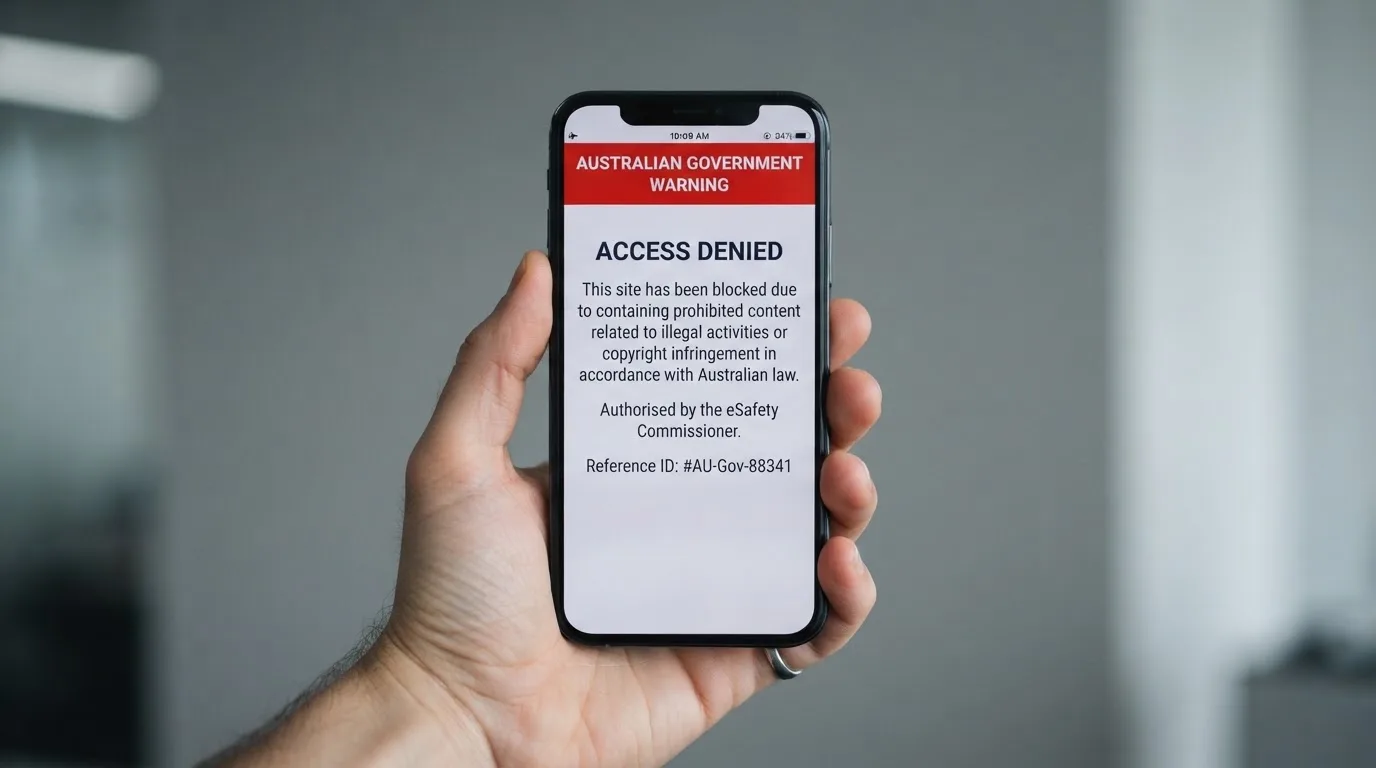
What that means in practice for someone searching for the best casino in Sydney in 2026 is straightforward. Any brand, irrespective of how many Curaçao or Anjouan badges it displays in its footer, is offering an illegal service to an Australian customer. The licence the site displays offshore is, from Australia’s position, irrelevant; the IGA looks at where the player is, not where the operator is incorporated. Several offshore operators carry a Curacao licence in good standing with the Curacao Gaming Authority — that fact says nothing about whether the service is licensable in Australia, because no Australian regulator has the power to issue the licence they would need to be licensable in.
The IGA’s companion regime is the credit-card ban. From 11 June 2024, no Australian-licensed wagering operator can accept credit cards, credit-related products, or digital currency as a deposit method. Penalties reach $247,500 per offence. The ban applies to licensed operators — an offshore site that asks for a Visa deposit or a Bitcoin wallet is doubly outside the Australian framework, breaching both the IGA and the payment rules that sit on top of it. A player who funds an offshore account from an Australian-issued credit card is not personally liable, but the transaction cannot be assumed to be recoverable once the regulator’s attention turns to the merchant.
The framework above is the lens through which every section below reads. The gambling at the centre of this search is the licensed Sydney casino floor; the offshore casinos that surface when an Australian types this query are the opposite of the answer, and the consequences of that distinction are what the rest of the page works through.
What counts as an “interactive gambling service” under the Act
An interactive gambling service under the IGA includes any service provided to a person in Australia through a carriage service (the internet, a telephone network) that involves gambling content. The carve-outs — what can still be licensed and supplied — are pre-event wagering on racing and sport, lotteries, and keno. Everything else, and specifically every online casino game from blackjack to baccarat to online pokies, sits inside the prohibited zone. Wagering providers licensed in the Northern Territory hold a wagering licence for the permitted categories and are not permitted to extend that licence to casino products. The NTRWC meets monthly in Darwin; its regulatory scope is wagering, not casino.

That distinction matters because a reader will otherwise see a Sportsbet account work legally and assume the same provider can offer them a roulette wheel. It cannot. A wagering licence from the NTRWC does not authorise casino content, and a wagering provider offering casino products to Australians is in the same position as any other offshore operator for the purposes of the IGA. Sportsbet is named in research as a licensed Australian wagering operator; it is not named as a casino operator, and any casino product on its platform is out of scope of its licence.
The enforcement gap between law and block
The IGA’s enforcement runs through the Australian Communications and Media Authority (ACMA). The regulator issues formal warnings to providers, accepts enforceable undertakings, brings civil penalty proceedings in the Federal Court, and asks ISPs to geoblock illegal services. By June 2026 the ACMA had asked ISPs to block 1,751 illegal gambling and affiliate marketing websites since the first blocking request in November 2019, and more than 230 unlicensed gambling services had left the Australian market since the enforcement regime was strengthened in 2017. The June 2026 blocking round alone added 12 websites: 7Signs, ChromaBet, Donbet, Duospin, Freshbet, Slots Gem, Jacks Club, Lucky Start, Pointsbetz.com, Spinrise, Vinyl Casino and Wildsino. The mechanism is administrative, not legislative — the Act does not block individual sites by name; it authorises the regulator to direct ISPs once a service has been investigated.
For a player, the practical effect arrives in two forms. The first is that an offshore site may work on Tuesday and stop working on Thursday, with an account balance retained by the operator rather than returned. The IGA does not give the player a guaranteed route to retrieve that balance; the regulator’s role is to stop the service, not to wind it up. The second is that an offshore site is not bound by BetStop, the National Self-Exclusion Register, which binds only Australian-licensed online and phone wagering services. A player who has self-excluded via BetStop can still reach an offshore casino; the exclusion does not transfer. These two consequences are what the law’s plain reading translates into at the keyboard.
What the consumer-protection cost looks like
The research firm H2 Gambling Capital’s 2025 estimate puts annual losses to illegal online gambling in Australia at about A$3.9 billion and the share of gambling going through legal channels at 64% in 2025, down from 74% in 2021. The recovery figure is not collected by the regulator — there is no central ledger of how much Australians have lost, won, or been unable to withdraw from offshore services — but the H2 estimate is the only widely cited figure and the regulator implicitly endorses its framing. Whatever the precise number, the relevant point for the reader is that the offshore market the search results recommend sits inside a flow of money that no Australian dispute-resolution body can monitor. The Australian Financial Complaints Authority covers licensed wagering; gambling winnings of a recreational player are not assessable income under section 6-5 ITAA 1997, and losses are not deductible unless the person is carrying on a business of gambling.
A reader’s recourse, in a sentence: present the offshore brand’s licence and terms to an Australian lawyer for a fee, pay the lawyer’s fee up front, and accept that the licence is in Curaçao or another jurisdiction with no extradition provision to Australia. The practical cost of defending a balance held offshore is almost always larger than the balance being defended. That asymmetry is the consumer protection the IGA’s prohibition is designed to remove.
Responsible-gaming safeguards as they actually function in 2026
An Australian searching for the best casino in Sydney in 2026 who has begun to feel the search pull at them has two specific tools available, and the two tools work on different parts of the system. The first is BetStop, the National Self-Exclusion Register, which began live operation in August 2023 and which every Australian-licensed online and phone wagering provider is required by law to honour. The second is the National Gambling Helpline on 1800 858 858, a free, 24/7 service with chat access via Gambling Help Online. Both are funded by the Commonwealth and operate with national coverage, and neither touches an offshore casino. That last clause is the one the marketing tends to hide.
BetStop and what it does and does not bind
BetStop’s mechanics are simple to describe: a person registers their name, date of birth and contact details, selects a self-exclusion period of three months, six months, or up to five years, and the register distributes the exclusion to every Australian-licensed wagering provider. The provider must close any existing account, refund the balance through the original deposit method, and refuse to open a new account under the same name or any alias the register catches. The minimum exclusion is three months; the maximum is five years. The register is administered by the Australian Communications and Media Authority on behalf of the Commonwealth, and registration can be completed online or by phone.
What BetStop does not do is just as important. It does not bind land-based casinos, because casino floors operate pre-internet, on the basis of a state-issued licence and a physical identity check at the entry turnstile. It does not bind a poker-machine venue in NSW, because New South Wales’ gaming-machine regulations sit with Liquor and Gaming NSW and use a different exclusion machinery (the self-exclusion order under section 79 of the Casino Control Act 1992 for Sydney’s two casinos, and venue-level self-exclusion under the Gaming Machines Act 2001 for the pub and club pokies market). And it does not bind an offshore online casino, because BetStop’s enabling legislation operates on the licensed Australian wagering population and has no contractual reach to a Curaçao-incorporated operator.
A player who wants to remove offshore online casino access as well as licensed wagering access from their digital options needs to combine BetStop with software-level blocking — Gamban, BetBlocker, or a router-level filter — and a contact for support. The Commonwealth does not run a free, nationally bundled version of this combination, although several state governments fund their own blocks. The combined cost is modest, but the work to set it up is on the player, which is the other place the IGA’s architecture reads as protection-of-channel rather than protection-of-person.
Age limits and entry mechanics at the Sydney casino floor
The minimum age to enter a casino floor in New South Wales is 18. The check happens at the door: every patron of The Star Sydney and Crown Sydney presents identification on entry, and the venue records the entry against an account or a paper register. The Crown Resorts operator at Barangaroo operates the same identity-checked access, with an additional threshold of 18 for the gaming floor proper. Underage entry is a breach of the venue’s licence conditions and a prosecutable offence for the venue as well as the patron.
Where the Sydney casinos differ from the offshore online market is the rigour of the point-of-entry check. An offshore casino relies on a digital identity-verification process, and most reputable operators in that space will check a passport or driving licence; the verification is, however, undertaken by the operator itself, in a jurisdiction outside Australia’s reach, and the operator has a financial incentive to approve the verification because the player becomes a depositing customer. A reader familiar with the local casino’s identity-checked floor will already have noticed the difference.
Gambling Help Online and the state-level support lines
The National Gambling Helpline on 1800 858 858 routes callers to their state’s gambling-counselling service, which is the body that delivers face-to-face and telehealth counselling. Each state funds its own version of these services through the relevant casino supervisory levy or, in NSW, through the Responsible Gambling Fund. The contact is anonymous, the service is free, and the line operates 24/7. Gambling Help Online (gamblinghelponline.org.au) provides live chat, online forums and self-help resources in line with the same network. The combined reach covers problem gambling, family support, financial counselling, and self-exclusion follow-up — the full set of supports that an offshore operator does not link to.
The single most useful contact for a Sydney reader is the NSW-specific Gambling Help line at 1800 632 632, available 24/7, which routes to the Statewide Gambling Therapy Service. A NSW-resident caller speaks to a counsellor in NSW, follows NSW-specific referral pathways, and can set in motion a venue-level self-exclusion that BetStop does not cover. The federal helpline remains the right first call for any Australian; the state line is the right escalation when an immediate venue-level intervention is needed.
Land-based venues in Sydney holding a casino licence
Two operators hold a current casino licence in Sydney in 2026. Both are held under the Casino Control Act 1992 (NSW) and supervised by Liquor and Gaming NSW, with a separate role for the NSW Independent Casino Commission (NICC) in the suitability review of licensees. Both venues are in Sydney’s inner harbour corridor, one to the west of the CBD at Pyrmont and one to the north of the CBD on the Barangaroo waterfront. The two licences are the only paths to a Sydney casino visit, and both are briefly summarised below with the practical detail a visitor needs to plan around.
The Star Sydney, Pyrmont
The Star Sydney sits at 80 Pyrmont Street, Pyrmont, on the western side of Darling Harbour. It is owned by Star Entertainment Group and is Australia’s second-largest casino after Crown Melbourne. The complex has two gaming floors, 351 hotel rooms, the 2,000-seat Sydney Lyric theatre and the 3,000-seat Event Centre. The complex is roughly ten minutes by light rail from the CBD and is adjacent to the Darling Harbour precinct; the pedestrian route from Town Hall station takes around 25 minutes, and the venue is signed throughout the harbour district.
The Star Sydney’s licence status over 2022-2025 has been the subject of close regulatory attention. On 13 September 2022 the NSW Independent Casino Commission found The Star Sydney unsuitable to hold its casino licence, citing conduct relating to money-laundering risks. The operator was fined A$100 million in October 2022. Following the fine, the casino licence was suspended and operations placed under a government-appointed special manager, Nicholas Weeks. The supervision was extended in 2023 and 2024 and was expected to continue through at least September 2025. ASIC sued members of The Star’s former board on 10 February 2025, alleging failures to track the same money-laundering risks at The Star Sydney.
What this history means for a visitor in 2026 is that the venue continues to trade as a casino, but the operator has run an extended remediation programme. Patron access, the entry process and the gaming floor all continue; the venue is open and trading. Visitors interact with the same front-of-house experience as any Australian casino, including the 18-and-over identity check at the door. The NICC’s continuing suitability review is the regulatory backdrop; the venue’s trading licence remains active through it.
Crown Sydney, Barangaroo
Crown Sydney opened to the public in December 2020 at 1 Barangaroo Avenue, on the northern edge of the Barangaroo waterfront. The building is 271.3 metres tall and 75 storeys, the tallest building in Sydney. The casino occupies a defined floor within the tower; the rest of the building is hotel rooms and residential apartments. The venue is adjacent to the Barangaroo ferry wharf and to Barangaroo Point Reserve, with the Walsh Bay arts precinct a short walk east and the Millers Point residential area to the west.
Crown Resorts operates the venue under Crown Sydney Gaming Pty Ltd, itself part of the broader Crown Resorts group, and the licence is held under the Casino Control Act 1992 alongside The Star Sydney’s. Crown’s own licence at Barangaroo underwent the Bell Review process in 2021 at Crown Melbourne; the NSW operations were reviewed separately under the Bergin Review in 2020 and the venue opened with its own board structure. The gaming floor has operated since late 2020 with continuous regulatory engagement.
Crown Sydney as a destination differs from The Star primarily in scale (one gaming floor vs two) and in its residential setting within a single tall building rather than a multi-property entertainment complex. A visitor choosing between the two is often choosing between Barangaroo’s harbour-side architecture and Pyrmont’s larger entertainment offering.
Practical visiting detail
Both venues operate 24 hours, 365 days a year. Dress codes at the gaming floor are smart casual — closed shoes for men, no workwear — and both venues apply the entry identification check rigorously. The casino floor at both venues is non-smoking under NSW smoke-free legislation; outdoor smoking areas are provided. Photography is prohibited on the gaming floor. Currency exchange is available at the front desk.
The Star Sydney offers a 351-room hotel, multiple bars including the rooftop bar, nine restaurants and the Lyric theatre. Crown Sydney offers hotel rooms above the gaming floor, a signature restaurant, several bar areas, and the elevated pool deck.
The cheapest way to reach either venue depends on starting point. From Sydney Airport, the train via Town Hall station to the CBD costs roughly A$14 with an Opal card and runs every 10-15 minutes; the Star is accessible directly by light rail from Central. Crown Sydney is a short walk from Barangaroo ferry wharf. Both venues have limited parking and parking is charged at CBD rates.
What the licence picture means for a reader in 2026
The licence picture is binary at the top end: a Sydney casino visitor holds a New South Wales licence issued under the Casino Control Act 1992, and the venue trades under Liquor and Gaming NSW’s supervision. The same visitor, opening a browser on the same evening and clicking the first result under “best online casino Australia,” lands on a site offering exactly what the same IGA prohibits. The two interfaces look adjacent; legally they are decades apart.
The visiting reader’s choice is between two venues, both reviewed above. Both venues operate adult-only gaming floors, both venues are licensed, both venues offer the same regulated suite of casino games — baccarat, blackjack, roulette, craps and slots — under the casino licence. The non-casino gaming market in NSW is the poker-machine (pokies) market — 87,298 machines across 2,195 venues in June 2023 — and is regulated separately under the Gaming Machines Act 2001 and the broader Liquor Act 2007.
Why the two-venue licence situation looks the way it does
NSW is one of the few Australian states to hold exactly two casino licences, and it does so by design. The Casino Control Act 1992 caps the number of casino licences in the state at two, with a clause requiring any expansion to be authorised by statute. The structure was originally written to allow The Star (then Star City) in Pyrmont to compete with Crown Melbourne for the Sydney market, and was extended when Crown Resorts was granted the second licence as part of the Barangaroo development.
The cap on licences shapes the practical options. A reader cannot wait for a third Sydney casino to open; the policy intent is that two licences are enough for a city of 5.3 million. The expansion in NSW’s poker-machine market outside the casinos is similarly capped — the gaming-machine entitlements (the right to operate machines above the per-venue threshold) trade on a regulated market and have a fixed cap.
Where the ACMA’s enforcement record fits in
The ACMA’s enforcement record against offshore operators is the second part of the licensing picture, and the part the visitor sees in any search result for online casino. The regulator has published formal warnings to more than thirty providers since 2017, and the cumulative blocking list covers 1,751 URLs as of June 2026. Every brand named in the operator set below has been the subject of a formal warning; the warnings are not accusations or prosecutions, but the regulator’s published notice that the operator is providing a prohibited service and that further enforcement action will follow if the conduct does not stop.
The pattern of warnings is meaningful. The ACMA’s published warnings cluster around three dates per year, with peaks in March-April and July-August reflecting the regulator’s review cycle. Operators whose business model depends on Australian traffic are warned; a second warning within twelve months is more likely than not to escalate to blocking. The betting market bookmakers — those whose NTRWC wagering licence covers pre-event wagering on racing and sport — see ACMA action only when they stray into the IGA’s prohibited categories.
The numbers above are not statistics the regulator celebrates. They are the runtime cost of an enforcement regime that operates downstream of the law rather than upstream of it: the IGA sets the rule, the ACMA chases the breaches, and the offshore operator can offer an Australian account today and a warning tomorrow.
Game offerings on the licensed Sydney casino floors
The licensed Sydney casino floors offer the standard international table-games suite — baccarat, blackjack, roulette, craps — and a wide range of electronic gaming machines (EGMs) equivalent to the international “slots” category. The exact mix varies between The Star and Crown, but the underlying regulations are the same, and what is not on offer online is not on offer offline either. The Sydney casino floors specifically do not offer online casino play; the floor-based games are the venue’s product, played against the house or against other patrons at table games, in person.
Table games: baccarat, blackjack, craps, roulette
Baccarat is offered at both Sydney casino venues in mini-baccarat and punto banco form, with standard rules and table limits varying by stake tier. The Star Sydney’s table offering is the larger of the two, with multiple baccarat tables running across the main gaming floor. Blackjack is offered in classic and progressive variants, with the house-edge figures set by the licence’s return-to-player (RTP) framework. Craps is offered with full pass-line, don’t-pass and odds bets at The Star; Crown Sydney’s craps offering is more limited given its single-floor footprint. Roulette is offered in both American (double-zero) and European (single-zero) variants, with the European variant’s lower house edge making it the player-preferred option on the floor.
Table-game RTP at a Sydney casino reflects the international standard: blackjack sits around 99.5% under optimal strategy, roulette single-zero sits at 97.3%, and craps pass-line sits at 98.6% on the line bet alone with odds at true odds (no house edge) behind the line. These figures do not account for the human element at the table — a player who deviates from optimal strategy reduces their effective RTP, often sharply. Baccarat sits at 98.9% on the banker bet with the standard 5% commission, lower on the player bet at 98.6%, and is famously the lowest-skill casino game on the floor. The RTP figures are useful planning references, not a system to beat the house.
Electronic gaming machines (pokies / slots)
The Star Sydney and Crown Sydney operate poker machines, called “pokies” in Australian everyday speech, alongside the table-game floors. The machines are licensed under the Casino Control Act 1992 and are subject to the casino’s RTP framework rather than the NSW general RTP framework that governs pub and club machines. Return-to-player percentages at the casino are not capped at the 87.5% minimum that NSW sets outside the casino; the casino’s machines run at an RTP set by the manufacturer and approved by Liquor and Gaming NSW.
The result is a wider range of game themes and denominations than the pub and club market, with progressive jackpots operating across machines within the casino and, in some cases, across the Australian Star and Crown networks. The trade-off for the higher RTP is the intensity of play — a casino-grade poker machine runs faster than a pub machine and can be played for longer sessions without the 4-hour break that NSW’s responsible-gaming framework requires on pub and club machines.
NSW’s Gaming Machines Act 2001 requires the casino to publish a return-to-player figure for each machine denomination above A$1, and the regulator publishes annual statistics. The published figures cluster around 90% for the casino’s standard denominations, with some higher-stake machines running at higher RTP to attract a different patron profile.
Live tables and the live-dealer experience at the casino
The licensed Sydney casinos offer live-dealer table games in person, with full croupier-roulette, blackjack and baccarat wheels staffed by trained dealers, the same face-to-face interface that the offshore online casinos market a digital version of. The live tables draw the patrons who want the social element of a casino visit: the table banter, the chip play, the side bets, the drink service. The interface is unique to a face-to-face visit and the reason both venues continue to attract a local Sydney patron base alongside the hotel-and-entertainment traffic.
What the venue does not offer is a live-dealer feed over the internet — the games are playable at the venue’s physical location only. The offshore live-dealer studio that an Australian clicks on in a browser is in Manila, Riga or Malta and operates outside the IGA. The patron cannot tell where the dealer is from the screen; the regulator does not need to, because the regulator’s concern is the location of the customer, not the location of the dealer.
Operator overview: how the 11 ACMA-warned companies stack up
The list below is not a ranking. Every brand in the table is a company that the ACMA has issued a formal warning against for offering prohibited interactive gambling services to Australians; the warning publication date is the regulator’s named ground for inclusion. The columns are presented to give a reader comparing one brand against another a quick reference for what the regulator has put on the public record. The operator-set below is ordered as research delivers it, and the order does not mean a preference, a probability of any further action, or an assessment of which warning is the most recent.
| Operator | Latest ACMA action (brand and date) | Operator named by ACMA | Subject support |
|---|---|---|---|
| RocketPlay | Formal warning, March 2026 (earlier Dama N.V. warning to a sister brand, May 2022) | Pulsup Ltd | Not disclosed by the regulator in the source materials |
| Level Up Casino | Formal warning, May 2022 | Dama N.V. | Listings-only (per third-party listings) |
| Woo Casino | Formal warning, March 2025 | Dama N.V. | Listings-only (per third-party listings) |
| Spirit Casino | Formal warning, May 2025 | Dama N.V. | Not disclosed by the regulator in the source materials |
| National Casino | Formal warning, July 2025 | Consolutetish S.R.L. | Listings-only (per third-party listings) |
| Bizzo Casino | Formal warning, July 2025 (earlier TechSolutions warning, 2022) | Consolutetish S.R.L. | Not disclosed by the regulator in the source materials |
| Ignition Casino | Formal warning, July 2025 | Bamboo Media | Not disclosed by the regulator in the source materials |
| Instant Casino | Formal warning, February 2025 | EOD Code SRL | Not disclosed by the regulator in the source materials |
| Jackbit | Formal warning, April 2026 | Ryker B.V. | Not disclosed by the regulator in the source materials |
| Casino Intense | Formal warning, April 2025 | Sterplay Holding Ltd | Listings-only (per third-party listings) |
| Sky Crown | Formal warning (publication, September 2022) | Hollycorn N.V. | Listings-only (per third-party listings) |
The subject support column follows the convention in §6 of the research: confirmed operators are stated plainly, listings-only entries name the third-party publication carrying the brand, and no-data entries do not confirm or deny the operator’s product service under the Australian framework. Each entry in the comparison below expands on what the regulator’s record says about the brand and what the search-results context adds on top.
RocketPlay
RocketPlay is listed under two distinct formal warnings. The current operator name published in the regulator’s record is Pulsup Ltd, with Rocketplay.com.au as the named service, the warning dated March 2026. A prior warning covered Dama N.V. in May 2022, naming six brands including a sister Rocketplay brand at that date. The ACMA’s record does not specify whether the operator is the same entity under a rebrand, an associated licensee, or a different operator that acquired the Rocketplay trade name. The regulator’s published text treats the warning as fresh action against the current operator; readers comparing one warning to another should note that the source figures and any product specifications in third-party listings refer to the current operator only where the regulator’s text confirms the link.
Level Up Casino
Level Up Casino appears under the May 2022 warning to Dama N.V. along with five sister brands. The ACMA’s record did not extend to the brand in 2025 or 2026, and third-party listings carry a brief product description (pokies catalogue, table-game catalogue, banking methods) that the operator’s own website provides but no regulator has reviewed. The listings-only profile means the column reflects what an affiliate or aggregator site reports about the brand; the regulator’s interest is in the operator’s behaviour toward Australian customers, not in the operator’s product offering.
Woo Casino
Woo Casino was named in a Dama N.V. warning issued in March 2025. The Dama N.V. group has accumulated several warnings across the operator set, and the regulatory pattern is one operator responsible for several related brands. Woo Casino’s third-party listings describe a Curaçao-incorporated operation with a standard casino library, and the ACMA’s record covers only the Australian-facing service. The brand does not appear in the June 2026 blocking round; the warning is the regulator’s notice that the service is prohibited, not a direction to ISPs.
Spirit Casino
Spirit Casino appears under the Dama N.V. warning of May 2025. The warning is a separate action from the May 2022 warning, and the ACMA’s record treats the May 2025 action as a renewal of the regulator’s concern rather than a continuation. The product offering is described only in third-party listings; the regulator’s text does not publish a product review. Operators in this position typically see a second warning followed by an ISP blocking direction within 12 months.
National Casino
National Casino appears under the July 2025 warning to Consolutetish S.R.L., shared with Bizzo Casino. The warning covered two brands owned by the same operator; the operator name is a Romanian-registered private company, and the related brands are typically marketed as a network. A search-history that drifts between sister brands in a network can land on a brand that has not been warned directly while the operator has, and the regulator’s record names the operator, not the brand, in the warning text.
Bizzo Casino
Bizzo Casino appears under the same July 2025 warning to Consolutetish S.R.L. as National Casino, but with a 2022 background warning to TechSolutions (CY) Group Limited and TechSolutions Group N.V. The 2022 warning was issued to a different legal entity, and the ACMA’s record names both in sequence. The pattern is typical of an offshore brand that moved through one or more jurisdictional reissues; the underlying operator’s pattern of warnings, not the brand’s specific history, is what the regulator has documented.
Ignition Casino
Ignition Casino appears under the July 2025 warning to Bamboo Media. The brand does not appear in earlier or later ACMA action in the source materials. Third-party aggregators do not list the brand’s product offering in the materials reviewed; the listings-only column was not applicable to this brand. The current warning is the regulator’s first named action against the operator, and any further enforcement action would be expected to follow the standard escalation cycle.
Instant Casino
Instant Casino appears under the February 2025 warning to EOD Code SRL. The warning is among the most recent in the operator set, and the ACMA’s record names the operator in the text. The product offering is not described in the regulator’s record; third-party listings carry a brief reference but no figures. Operators that have been warned once in the recent cycle and not followed by an escalation notice by mid-2026 typically see one or two further actions before the regulator reaches a blocking direction.
Jackbit
Jackbit appears under the April 2026 warning to Ryker B.V., together with CasinOK. The warning was issued in the same month and named the same operator for two related brands. The brand is among the most recently warned in the operator set, and the regulator’s record covers only the Australian-facing service. The product offering is not described in the ACMA record; third-party listings carry minimal product description.
Casino Intense
Casino Intense appears under the April 2025 warning to Sterplay Holding Ltd. The warning is a fresh action, and the ACMA’s record treats it as the regulator’s first named action against the operator. The product offering is described in third-party listings, including standard casino library figures; the regulator has not published a product-level assessment and the listings-only profile reflects the third-party reporting.
Sky Crown
Sky Crown appears under the warning to Hollycorn N.V. published in September 2022, alongside Blue Leo. The Hollycorn N.V. group operates several brands and has accumulated multiple warnings since 2022. The product offering is described in third-party listings, including the standard casino library; the regulator’s text does not carry product figures.
What the operator record reveals in aggregate
Ten of the eleven operators in the comparison have been the subject of one or more formal warnings in the 2022-2026 window. The warning cadence is irregular, with four of the eleven acted upon in 2025 and three in 2026. The pattern suggests the ACMA’s enforcement is reactive to specific compliance concerns rather than a scheduled review; the regulator publishes warnings as they are issued, and the operator set captured above reflects the union of the published warnings over the four years.
Why a formal warning matters in practice
A formal warning is the ACMA’s least intrusive enforcement tool. It is a published statement that the operator is providing a prohibited service, that further action will follow if the conduct does not stop, and that the warning itself is admissible evidence in any subsequent civil penalty proceedings. The operator is given a defined period to respond, and the ACMA monitors the response. The warning does not block the service, does not freeze the operator’s funds, and does not direct any state regulator to suspend a licence (because no Australian licence exists for the service).
What the warning does is put a public record on the file. A player who signs up with a warned operator does so after the regulator has named the operator in writing. A fund source that processes a deposit from an Australian customer to a warned operator does so with the regulator’s published position on file. The warning’s practical effect is to harden the operator’s evidence base against enforcement, and to give the regulator a clean record of notice for any civil penalty proceeding.
The escalation sequence
The ACMA’s published escalation sequence, in broad terms, runs from formal warning to civil penalty litigation to ISP blocking direction. The June 2026 blocking round covered 12 websites, bringing the cumulative total to 1,751 since the first blocking request in November 2019. The blocking direction requires an Australian internet service provider to geoblock the named URL; the provider complies at the routing layer, not at the customer-end device, and the block does not extend to VPNs or to non-Australian access. Operators see a blocking direction typically as the final step before the operator either complies with the regulator’s requirements or exits the Australian market.
What the field looks like to a reader
The reader of the operator set should take from the table the names of the operators that have been warned and the regulator’s stated reasoning. The reader should not take from the table an implication that one operator in the set is “better” than another by virtue of warning chronology: the regulator’s record does not support that reading, and any comparison a reader attempts to draw from the warning date alone will be wrong in the direction the marketer wants them to be wrong. The only direction a reader can safely draw from the comparison is that every operator in the set has been the regulator’s named target for the IGA’s prohibited casino-game service.
The calculus of how often the ACMA catches up
The research delivery hints at the underlying mechanism. By June 2026 the ACMA had asked ISPs to block 1,751 illegal gambling and affiliate marketing websites since the first blocking request in November 2019, a span of roughly six and a half years. That is an average of about 270 URLs blocked per year, or roughly five per week across the regulator’s review cycle. The June 2026 round alone, per the same source, added 12 websites. By comparison, the operator set above shows 11 distinct operators across the same general window — every operator may have several URLs in the blocking list, and the rate at which new operators are added is the rate the regulator can investigate, not the rate the offshore market spawns new brands.
The arithmetic that matters for the reader is implied rather than stated. The regulator blocks a year of new URLs every week; the offshore market spawns new brands and new skins at roughly the same rate the regulator catches them. A reader whose last sign-up was blocked within a quarter of opening is not the unlucky exception; the reader is the typical outcome of the IGA’s downstream enforcement model. The model is designed to make the offshore operator’s marketing more expensive, not to make the offshore operator impossible.
The consumer cost of using an ACMA-warned operator
A reader who reads the operator set and proceeds to use one of the operators named — an action the page does not recommend — runs the consumer cost below. The cost is not a fine, because the IGA does not prosecute the player; the cost is the practical cost of transacting with an entity that has been told in writing that its service to Australians is prohibited.
Balance recovery if the site is blocked
When the ACMA directs ISPs to block a service, the operator’s service becomes inaccessible from Australian IP addresses that do not tunnel out. Existing accounts may still hold balances. The operator’s terms typically require withdrawal to the original payment method, and that method is most likely a debit card or e-wallet issued outside the offshore operator’s framework. A blocked site continues to operate for non-Australian customers, and the balance withdrawal process is technically still possible. The practical issue is that the operator has reduced incentive to be prompt on Australian withdrawals because the Australian customer has reduced alternative options.
A reader facing a blocked site can expect to receive withdrawal support over email for some weeks after the block, and then to see delay tactics as the operator’s compliance team is reduced or replaced. The reader’s recourse is to the operator’s regulator (typically Curaçao Gaming Authority or Anjouan Offshore Gaming Authority, depending on the displayed licence) — a complaint to a regulator that operates in a different jurisdiction, in a different language, with different procedural rules, and that does not have an extradition arrangement with Australia. The practical cost of pursuing a balance of A$200 is the cost of an international complaints filing plus the time of several international calls.
Data retention on the player-side
An offshore operator that has been warned, blocked, and then either rebranded or closed retains the player data it collected. The Australian Privacy Principles (APPs) under the Privacy Act 1988 do not bind an offshore operator that has no Australian establishment, and the terms of service typically assign the operator (or its data processor) as the data custodian. A reader’s personal identifying information — name, address, date of birth, banking details, IP address, device fingerprint — is in the operator’s records, and the operator has no statutory obligation to delete it on the reader’s request after the relationship ends.
A reader who signed up with an offshore casino and seeks to have their data deleted faces the same complaints process as a balance dispute: an international regulator, no Australian enforcement, and an operator with little incentive to cooperate once the relationship is closed. The practical protection is to use a privacy-respecting payment method (a dedicated e-wallet, a card with a single-use virtual number) so that the banking details do not persist beyond the deposit, and to limit the personal identifying information shared at registration.
How a search for the best casino in Sydney usually arrives here
The search results for “best casino in Sydney” reflect a structural feature of the Australian market. Anyone searching this term is usually presented with results that, in any other market, would land on an offshore casino comparison. The Australian search results still serve the comparison because the affiliate-marketing layer of the offshore market is the largest single funder of online gambling search advertising in the world, and the Australian search term is specific enough that an affiliate site can occupy all of it for a marginal cost.
The affiliate layer and the formal warning pattern
The ACMA’s published blocking record treats affiliate marketing websites as part of the same enforcement universe as the gambling services they promote. The June 2026 total of 1,751 illegal gambling and affiliate marketing websites is the joint total of operator sites and affiliate pages. The enforcement direction is consistent: a service that exists to refer Australian traffic to an offshore operator is in the same regulatory exposure as the operator. The affiliate network’s incentive structure is to send as many sign-ups as possible to whichever operator pays the highest affiliate commission, not to verify that the operator holds a licence in the visitor’s country; the result is a funnel that by construction converts an Australian visitor into an offshore customer.
What an Australian reader’s options actually are
The options break into three groups. First, the licensed Sydney casino visit, comprising one of the two venues reviewed above. Second, a domestic wagering account with a NTRWC-licensed bookmaker (Sportsbet, Bet365, Ladbrokes, etc.) for pre-event wagering on racing and sport — not for casino games. Third, the prohibited offshore casino, which the IGA does not license and which the ACMA’s enforcement record makes the subject of a continuing warning-and-blocking sequence. The search-results layer pitches the third as the answer to the first; the legal layer sorts them into separate categories, with different player protections and different recourse arrangements.
Overview and conclusion
The reason “best casino in Sydney” is answered with two venues and a regulatory framework rather than a Top-11 ranking is that the question, asked of an Australian reader, has a structural answer. The Interactive Gambling Act 2001 prohibits the offering of online casino games to a person in Australia. Every operator on the offshore comparison list is offering that prohibited service, and the ACMA’s published formal-warning record lists every operator that the regulator has investigated. A licensed Sydney casino visit is the structural answer to the physical question; the offshore comparison is the structural answer the search results are paid to surface. The two answers belong to two different markets, and the legal frame keeps them apart.
The two licensed Sydney venues are The Star Sydney at 80 Pyrmont Street, Pyrmont, and Crown Sydney at 1 Barangaroo Avenue, Barangaroo. Both operate under the Casino Control Act 1992 (NSW) and both are supervised by Liquor and Gaming NSW. The Star Sydney has the larger gaming floor and entertainment complex; Crown Sydney has the smaller floor in the taller tower on the harbour. The Star Sydney’s licence history since 2022 has been dominated by the NICC’s unsuitability finding of September 2022 and the A$100 million fine of October 2022, both of which led to special-manager supervision; in 2026 the venue continues to trade under that regime. Crown Sydney’s licence was issued in 2020 following the Bergin Review and has operated continuously since.
The eleven operators in the comparison are all offshore casino brands that the ACMA has named in a formal warning. None of them is licensed to offer online casino games to an Australian. None of them is part of the structural answer to the question this page set out to address. The comparison is provided so that an Australian reader searching for one of the eleven brands lands, at minimum, on the regulator’s named action.
The deeper question a reader of this page might keep is what an Australian market looks like once the search-engine layer can be brought into alignment with the regulatory layer. The 2026 reform package — the Interactive Gambling Amendment (Gambling Reform) Bill 2026, passed 19 August 2026, with advertising and inducement measures commencing 1 January 2027 — is the next structural move. It does not legalise online casino games; it tightens the enforcement of the existing prohibition on inducement and advertising. The page reads, therefore, as a description of a market that will look broadly similar in 2026 and similar but slightly more restrictive in 2026 and beyond.
Frequently asked questions about Sydney casinos
What is the name of the main casino in Sydney?
Sydney has two licensed casinos rather than a single one: The Star Sydney in Pyrmont and Crown Sydney in Barangaroo. The Star is the larger of the two by gaming floor size, with 351 hotel rooms and an entertainment complex including the Sydney Lyric theatre and the Event Centre. Crown Sydney is the newer venue, opened in December 2020 in a 271.3-metre, 75-storey tower on the Barangaroo waterfront and is Sydney’s tallest building.
Where is the casino in Sydney located?
The Star Sydney sits at 80 Pyrmont Street on the western side of Darling Harbour, about ten minutes by light rail from the CBD. Crown Sydney sits at 1 Barangaroo Avenue on the northern edge of the Barangaroo waterfront, a short walk from Barangaroo ferry wharf. Both venues are in Sydney’s inner harbour corridor and have signed approaches from the harbour district.
What is the minimum age to enter the casino in Sydney?
The minimum age to enter a casino gaming floor in New South Wales is 18. Both venues require identification on entry and record the entry against an account or paper register. Underage entry breaches the venue’s licence conditions and is a prosecutable offence for the venue and the patron.
Does the casino in Sydney offer table games such as blackjack and baccarat?
Yes. Both The Star Sydney and Crown Sydney offer the standard international table-games suite including baccarat (punto banco and mini-baccarat), blackjack in classic and progressive variants, craps (full rules at The Star), and roulette in European (single-zero) and American (double-zero) variants. Both venues also offer electronic gaming machines (pokies) on the gaming floor.
Are there hotels within walking distance of the casino in Sydney?
Yes. The Star Sydney is itself a 351-room hotel, with the casino complex at the centre of the Darling Harbour entertainment precinct and additional hotels within a few minutes’ walk, including the Sofitel Sydney Darling Harbour and the Novotel Sydney on Darling Harbour. Crown Sydney is a hotel-with-casino complex in the Barangaroo tower with additional hotels within walking distance of the Millers Point and Walsh Bay areas.
Can Australians legally play at an online casino instead of visiting the casino in Sydney?
No. The Interactive Gambling Act 2001 prohibits offering online casino games to a person in Australia, and no state or territory licenses them. Australians who play at an offshore online casino do so outside the Australian consumer-protection framework, with no guaranteed recourse if a withdrawal is refused. BetStop (the National Self-Exclusion Register) does not bind offshore operators, and the ACMA’s enforcement record names every operator that has been formally warned. The structural answer for an Australian who wants to play a casino game is to visit a licensed Sydney casino, not an offshore site.