
Where Australians Find Pokies Open Nearby in 2026, and What the Offshore Pitch Actually Costs
Searching “pokies open near me” pulls a reader into two different markets at once. There is the legal, licensed side — pubs, clubs and casinos running electronic gaming machines under state-by-state rules with set hours, minimum returns and identity checks. And there is the offshore pitch: online casinos promising the same activity from Curaçao, Cyprus or wherever, served to an Australian address over a connection the ACMA can sever with a single request to an ISP. The first is what the search is actually asking for. The second is what most of the marketing is actually selling, and it is the part the regulator keeps having to push back against. This page is written for the reader who wants to know what is open, when, and how — and who also wants to understand, before they hand over a card, what the difference between those two markets costs them.
Information current as of 25 November 2026, cross-checked against the Australian Communications and Media Authority’s register of blocking requests and formal warnings.
Table of Contents
- Licensed venues where pokies actually open near you
- A side-by-side of brands the ACMA has warned — and what each warning actually said
- How the ACMA keeps the offshore side from becoming a normal Australian option
- Staying safe while playing pokies — wherever the reader ends up
- What the ACMA’s blocking record actually tells the reader
- How the day actually unfolds, in sequence
- Closing on what the reader came for
- Frequently asked questions
Licensed venues where pokies actually open near you
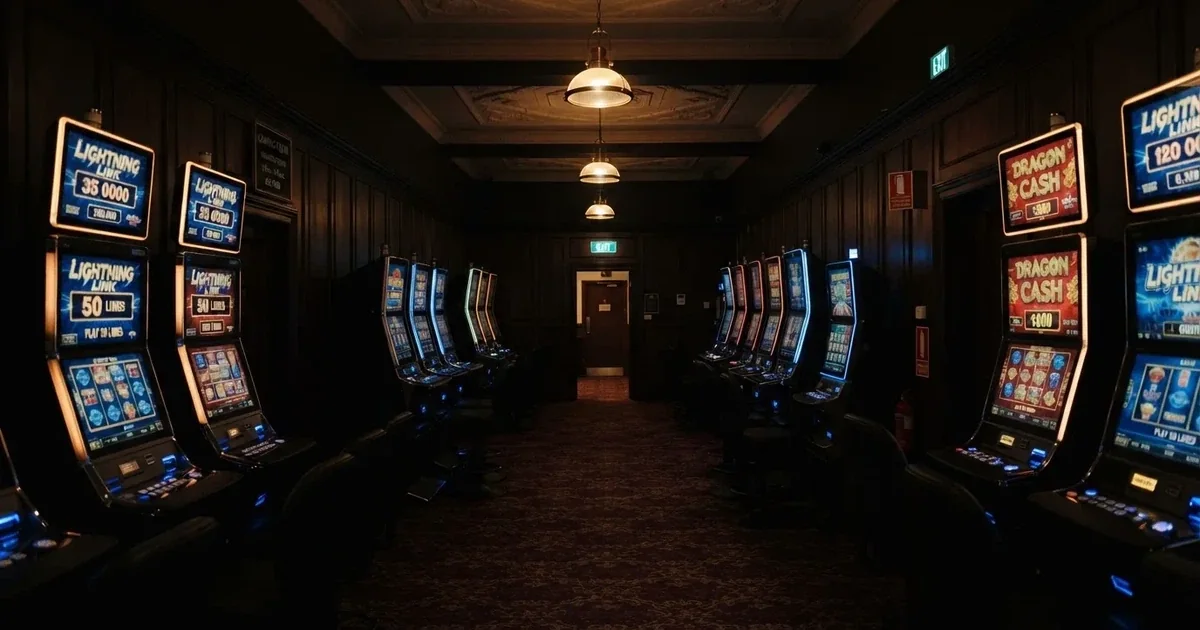
The land-based option is the lawful one. Australians looking for poker machines to play tonight, right now, find them in pubs, registered clubs and the casino floors of Adelaide, Crown Melbourne, Crown Perth, the Star Sydney, the Star Gold Coast and Treasury Brisbane. Each machine is licensed by the state or territory in which the venue sits, and each jurisdiction decides its own hours, its own return-to-player floor and its own design rules. The picture below shows the kind of gaming room a reader will walk into when they answer this search correctly.
Hours vary by state and by venue licence
New South Wales pubs and clubs are the largest pool in the country, with 87,298 gaming machines outside casinos spread across 2,195 venues as of June 2023 and player losses of A$8.18 billion in 2022-23. Most NSW pubs close the gaming room by about 10 pm or midnight on weeknights and run later on weekends, though the licensed hotel on the corner can set its own hours inside that envelope. Queensland venues, which held 21,122 gaming machines across 351 sites in October 2023, run a similar pattern with many clubs opening from 10 am and shutting the machine area somewhere between midnight and 4 am depending on the licence. Victoria, where the state caps the total number of machines outside Crown Melbourne at 30,000 and had 26,380 spread across 488 venues in 2021-22, tends toward later weekend hours. Western Australia is the outlier: poker machines in pubs and clubs are banned there, and the only place to play them is the casino floor of Crown Perth, where the count has grown from about 200 machines in 1985 to roughly 2,500 today. A reader who lives in Perth and sees an ad for “24-hour pokies near me” should know the answer before they leave the house.
South Australia, Tasmania and the ACT run their own hours under their own acts. Tasmania is the small jurisdiction with the loudest reform in the pipeline: mandatory pre-commitment cards for the machines, planned since the early 2020s, with implementation delayed until late 2025. The cards set a spend limit before the player can sit down — a different kind of answer to “where can I play” than the pubs and clubs elsewhere can give. The Australian Capital Territory runs a higher minimum return-to-player floor than most states, and so does South Australia. None of this is something the reader learns from the search-results page; it is the kind of detail that decides what an hour on the machine actually costs.
How many machines there are, and what that means for a reader
Australia holds about 3% of the world’s pub and club poker machines with 0.3% of the global population. The density is the point. A$150 billion wagered through gaming machines in 2020-21 against losses of A$12.18 billion is a national turnover that most other countries do not approach at the same scale per capita, and it shapes what a search like this one returns. The pub on the corner of any reasonably settled Australian suburb is unlikely to be empty of machines. The harder question is whether the gaming room is open at the hour the reader is asking about — and on that, the state rules and the venue’s own trading hours do the talking.
Identification and entry: what a venue actually asks for
Every Australian poker machine venue requires the player to be at least 18. Some venues scan a driver’s licence at the door on busy nights or during problem-gambling check-ins; others rely on staff judgement and signage. The licensed venue is part of a state-run monitoring system, which means the machine itself is recording play, not the player. That is one of the quiet differences between the licensed venue and the offshore site: in the pub, the player can be anonymous to the room but identifiable to the regulator. The offshore site, by contrast, ties identity directly to a withdrawal and decides, on its own terms, when to ask for it.
A side-by-side of brands the ACMA has warned — and what each warning actually said
The eleven brands in the table below are not a ranking, not a recommendation, and not a list of venues the reader should consider. Every one of them is an offshore online casino or affiliate marketing site that the Australian Communications and Media Authority has, at some point in the last four years, served with a formal warning under the Interactive Gambling Act 2001 for offering prohibited services to Australians. The table is here so the reader can see, at a glance, who the regulator is actually pushing back against, who runs each site, and what the warning covered. The “what it offers” column reflects only what those sources say; the offshore brand itself has no Australian licence and no Australian consumer protection, whatever it claims on its home page.
| Brand | ACMA action and date | Operator named by the ACMA | Subject support |
|---|---|---|---|
| RocketPlay | Formal warning, March 2026; earlier Dama N.V. warning, May 2022 | Pulsup Ltd (Rocketplay) | — |
| Level Up Casino | Formal warning, May 2022 | Dama N.V. | listings-only (BGaming) |
| Woo Casino | Formal warning, March 2025 | Dama N.V. | — |
| Spirit Casino | Formal warning, May 2025 | Dama N.V. | — |
| National Casino | Formal warning, July 2025 | Consolutetish S.R.L. | listings-only (en.wikipedia.org) |
| Bizzo Casino | Formal warning, July 2025; earlier TechSolutions warning, 2022 | Consolutetish S.R.L. | — |
| Ignition Casino | Formal warning, July 2025 | Bamboo Media | — |
| Instant Casino | Formal warning, February 2025 | EOD Code SRL | — |
| Jackbit | Formal warning, April 2026 | Ryker B.V. | — |
| Casino Intense | Formal warning, April 2025 | Sterplay Holding Ltd | listings-only (Abc.net.au, acma.gov.au, Crownmelbourne.com.au) |
| Sky Crown | Formal warning, September 2022 | Hollycorn N.V. | — |
What the table is actually showing
Two things stand out. First, the operators behind the brands move around: Dama N.V. alone accounts for four of the eleven warnings on this list, with three different trading names. Consolutetish S.R.L. takes two of the most recent. Reincorporation, rebranding and affiliate reselling are how this market survives enforcement — when a brand’s URL gets blocked or its name gets a formal warning, the operator opens the same platform under a new name. The reader who sees a brand new to them and assumes it must therefore be unsanctioned is reading the list backwards. Second, the dates cluster. Half of the warnings in this table are from 2025 or 2026, which is consistent with a regulator that issues a warning when the service is identified, not when it launches, and which has been turning up the pace. The blocking round the ACMA reported in June 2026 alone asked ISPs to block 12 more sites — 7Signs, ChromaBet, Donbet, Duospin, Freshbet, Slots Gem, Jacks Club, Lucky Start, Pointsbetz.com, Spinrise, Vinyl Casino and Wildsino — none of which is in the table above, because the table only lists the formal-warning set, not the blocked-without-warning set.
Why this section does not recommend any of them
The point of laying them out is not to give the reader a shortlist of offshore sites to compare. None of them is licensed in Australia to offer the activity they are marketing, and the page’s own subject — pokies open near you, right now — is not what these sites provide. They provide a desktop or mobile client that streams the same kind of game to a connection the ACMA can sever. Some readers land here because one of these brands is already advertising to them and they want to know what the regulator has said about it; the table answers that question and stops there. The choice for someone in Australia who wants to play a poker machine tonight remains the pub or club down the road, with hours, identity rules and a state-licensed machine behind it.
How the ACMA keeps the offshore side from becoming a normal Australian option
The legal frame is the Interactive Gambling Act 2001, strengthened by the Interactive Gambling Amendment Act 2017. It makes it an offence to provide online casino games, online pokies or in-play betting to a person physically in Australia. No state or territory issues a licence for these activities. The activity the reader is asking about — sitting at a real poker machine in a real room — is licensed, regulated, monitored and taxed at the state level. The activity the offshore marketing is selling — the same game, delivered through a browser — is not, anywhere in Australia.
What the regulator can do
The ACMA investigates complaints, issues formal warnings to operators, and directs Australian internet service providers to block sites that continue to offer prohibited services after warning. The cumulative count the ACMA reported in June 2026 was 1,751 illegal gambling and affiliate marketing websites blocked since the first blocking request in November 2019, with more than 230 unlicensed gambling services having left the Australian market since enforcement was strengthened in 2017. The pace has accelerated: 12 more sites in the June 2026 round alone, on top of formal warnings to Ryker B.V. over Jackbit and CasinOK in April 2026, to Pulsup Ltd over Rocketplay.com.au in March 2026, and to Consolutetish S.R.L. over National Casino and Bizzo Casino in July 2025. Each warning is the regulator’s written record of an offence; each block is the operational consequence when the warning is not heeded.
What that means for a reader with a balance on a blocked site
This is the consequence angle the page is built around. The blocking request is sent to ISPs; the site’s domain stops resolving for Australian connections. Any Australian player with an open account on that site — deposits still on it, a withdrawal pending, identity documents already uploaded — finds the front door closed. The site is not obliged to refund, and it is not subject to an Australian complaints body, because it is not licensed in Australia. The Interactive Gambling Act targets the provider, not the player, so the player is not personally prosecuted; what the player loses, in practice, is the protection they would have had under a state-licensed wagering regime, and the practical ability to resolve anything that goes wrong. A blocked site is the moment that gap becomes visible.
The Northern Territory question
Most online bookmakers Australians have actually heard of — Sportsbet, Bet365, Ladbrokes and 52 others — are licensed in the Northern Territory for tax reasons. The Northern Territory Racing and Wagering Commission oversees them, and the regulator is small enough that it has no full-time staff and meets once a month in Darwin. A reform bill covering that commission was reported in April 2026. What the commission does not license is online casino games. The NT licence is a wagering licence — racing and sport, pre-event, lotteries and keno — and it does not extend to pokies or table games streamed from offshore. The reader who sees “licensed in Australia” on a casino-style site is almost always seeing a wagering licence from a sister company, not a casino licence.
Payments as a tell
Credit cards, credit-related products and digital currency have been banned as payment for licensed online wagering since 11 June 2024, with penalties up to A$247,500 for operators that accept them. Legal deposit routes for licensed wagering are debit card, bank transfer, PayID/Osko and BPAY. A site asking an Australian for a credit card or a crypto wallet is operating outside the Australian rules by definition, and the payment request is the easiest place for a reader to check. The deposit rail that works is also the deposit rail that connects to BetStop and to the state complaints body.
The 2026 reform that’s coming but not yet live
The Interactive Gambling Amendment (Gambling Reform) Bill 2026 passed Parliament on 19 August 2026. Its advertising and inducement measures commence on 1 January 2027 — law with a start date, not yet in force on this page. The clause matters for the reader who wants to know why affiliate marketing for these sites still looks so aggressive in 2026: the rules tightening that marketing come in a few months, and the marketing knows it. Until then, the ACMA’s blocking and warning powers are the main lever, and the table above is the running record of how often the lever has been pulled.
Staying safe while playing pokies — wherever the reader ends up
A page that talks about pokies without talking about responsible gambling does the reader a disservice. The point is not to moralise; it is to point out the support that exists for any Australian who finds the activity harder to step away from than they planned.
BetStop, the National Self-Exclusion Register
BetStop went live in August 2023. It binds every Australian-licensed online and phone wagering service, which means an excluded account cannot be created and an existing account is closed across the licensed wagering market. What BetStop does not bind is offshore casino sites — an exclusion registered through BetStop does not stop an offshore site from accepting a deposit, because the offshore site is not part of the Australian system. For a reader who needs self-exclusion to actually hold, the answer is to play only at licensed Australian venues and through licensed wagering services, and to register the exclusion across the licences the register covers.
The helpline, and when to use it
The National Gambling Helpline is 1800 858 858, free and available 24/7, with online chat through Gambling Help Online. The service is for the person who has decided to step back, the family member who has noticed a change, and the player who wants to talk before the next session. There is no threshold at which calling makes sense and a threshold below which it does not. A reader who finds themselves searching “pokies open near me” at 2 am on a weeknight, for the third time this week, has the answer the helpline is set up to give.
Minimum returns and what they tell a reader
State-set minimum return-to-player floors are an honest number, even if a reader never looks it up. NSW, the NT, Queensland and (generally) Victoria set 85%, with Crown Melbourne at 87%; the ACT and Tasmania set 87%; South Australia 87.5%; and Western Australia 90%. These are the floors the licensed machine must hit over its design life, not the return a player will see in any session. The licensed venue cannot fall below them. An offshore site can offer any theoretical return it likes, because no Australian regulator audits the figure and no Australian complaint avenue exists if the figure turns out to be marketing. The licensed pub machine is the one where the published floor is enforced.
The tax side, briefly
Recreational gambling winnings are not assessable income in Australia (section 6-5 of the ITAA 1997) and losses are not deductible. A player who carries on a business of gambling is in a different position, and that is a question for the ATO, not for this page. What this means in practice is that the reader does not need to plan for a tax bill on what they win at the local pub, and they should treat anything an offshore site tells them about tax-free play as a marketing line about a fact that is already true for the licensed venue.
How to read the warning notices themselves
The ACMA’s formal warnings are published documents. They name the operator behind the brand, the URL the operator was serving to Australians, the date the warning was issued, and the section of the Interactive Gambling Act the regulator says the operator has breached. A reader who is weighing whether to open an account with one of the brands in the table above can read the ACMA’s wording directly, see the operator named, and form a view. The regulator’s record is the cleanest source a reader can find on who is actually behind an offshore casino brand.
What the ACMA’s blocking record actually tells the reader
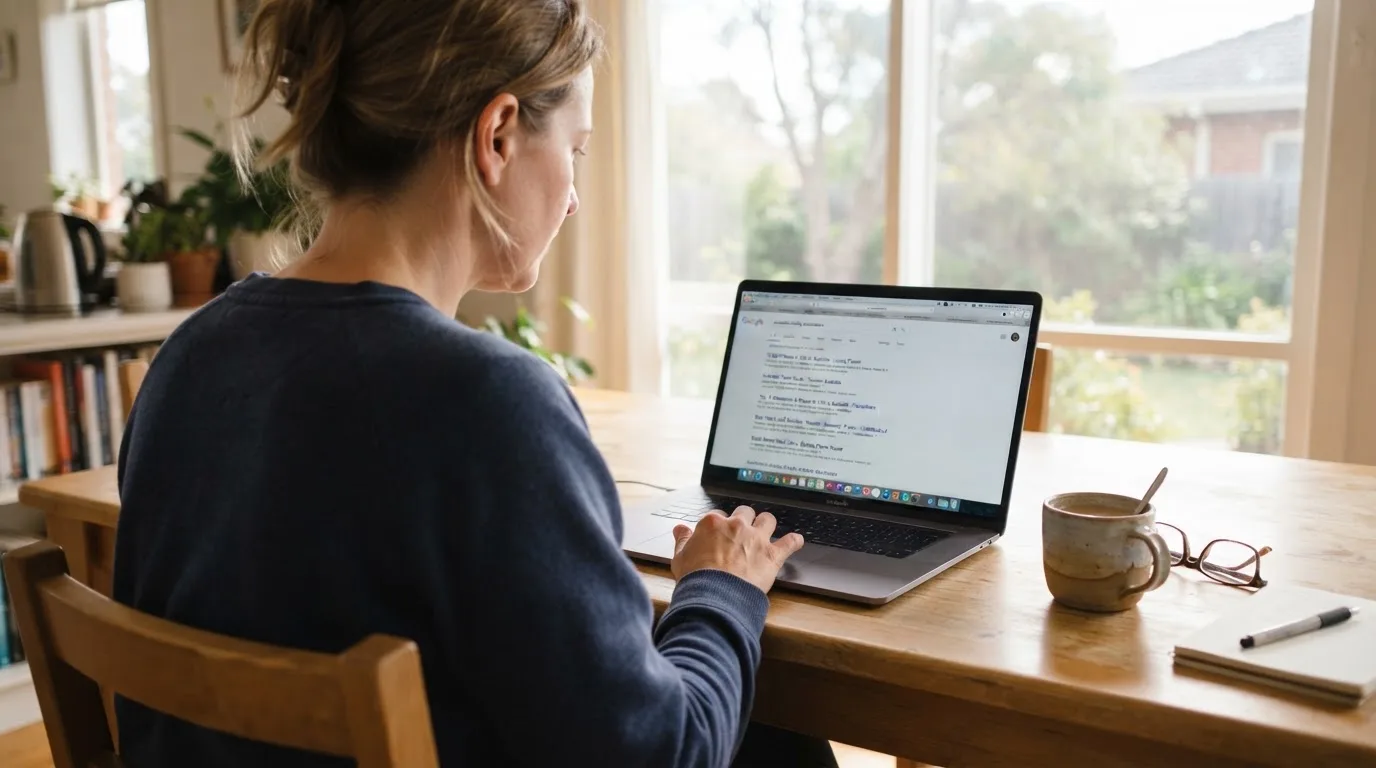
The plan for this page includes one calculation, and the input is the cumulative count of sites the ACMA has asked ISPs to block since the first request in November 2019. The figure reported in June 2026 is 1,751. That gives roughly six and a half years of enforcement, which lands at about 269 sites blocked per year on average, or roughly 22 to 23 sites per month if the pace were even. The pace has not been even. The June 2026 round alone asked ISPs to block 12 more sites, and earlier rounds in 2024 and 2025 cleared comparable numbers in single sittings. The honest band for what a reader should expect over the next twelve months is somewhere between roughly 150 and 300 additional blocks, depending on whether the regulator keeps issuing warnings individually or pushes through larger batches as offshore operators cluster around the same platforms. The condition that decides which end of the band is closer is the ACMA’s resourcing for the second half of 2026 and whether the 1 January 2027 advertising rules change what the marketing side puts in front of Australian players.
The reason this matters is that a block is not just an inconvenience for the operator. Each block is a domain that stops resolving for Australian connections, which means any player with an open account on that domain at the moment of the block loses practical access to the balance on it. The 1,751 figure is also, therefore, a count of decisions where the regulator chose to make a clean break rather than let a service ride. The reader who treats their offshore account as if it were a long-term home for funds is reading the table the wrong way around.
How the day actually unfolds, in sequence
A reader in a NSW suburb who wants to play tonight has a fairly predictable path. They search for pokies near them, see the local club with a late licence, drive over, get ID-checked at the door on a busy night, sit at a machine with a state-monitored return floor of 85% or better, set a spend limit in their head, leave when they hit it, and walk out with whatever the machine returned. The whole thing is licit, regulated and recoverable if anything goes wrong, because the venue is part of a state complaints system.
A reader who instead clicks on an ad for one of the offshore brands above lands on a site with no ID check at the door but a credit card or crypto request at the deposit step. The deposit rail tells them what they need to know. If they play, the ACMA may ask their ISP to block the domain later that month, and the balance on it becomes hard to recover. The first path is slow and the second is fast, and the difference is not which one is more fun — it is which one the reader can still get help from if the session goes the wrong way.
Closing on what the reader came for
The search is “pokies open near me”, and the honest answer is the licensed pub, club or casino on the next block, the one with hours set by the state, a return floor set by the state, and a regulator who can act if something goes wrong. The offshore alternative exists, advertises heavily, and is the reason the ACMA has issued warnings to the eleven operators above and asked ISPs to block 1,751 sites since November 2019. The reader’s question was about opening hours; the regulator’s question was about whether the offshore sites should be allowed to answer it. The first is a venue question and the second is a law question, and the answer to both is the same kind of place — the one in the reader’s suburb that has been there for seventy years and will be there next week.
Frequently asked questions
What hours do most Australian pubs and clubs typically keep their poker machines open?
Most NSW and Queensland pubs and clubs open the gaming room by mid-morning and close it somewhere between 10 pm and midnight on weeknights, with later hours on weekends; Victoria runs a similar pattern, and Western Australia bans pub and club machines entirely outside Crown Perth. The exact window depends on the venue’s licence and the trading hours of the hotel or club itself, so the most reliable answer is the venue’s own trading-hours sign or phone line.
Is there a way to check which nearby venue currently has poker machines open right now?
There is no national live feed, but each venue’s own trading hours are usually published on its website or Google listing, and the local council or state liquor and gaming authority can confirm whether a licence is in force. State regulators — Liquor & Gaming NSW, the Victorian Gambling and Casino Control Commission, the Office of Liquor and Gaming Regulation in Queensland — publish registers of licensed venues that confirm the licence is current and the gaming floor is operating.
Are poker machines in a licensed pub or club the same thing as an online pokies game?
They share the same broad category — electronic gaming machines — but the licensed pub machine is a physical device in a regulated room with a state-set return floor and an in-room monitoring system, while the offshore “online pokies” site is a software client streamed from outside Australia with no Australian licence and no Australian complaint avenue. The activity the search is asking about is the first one; the second is what the offshore marketing is selling and what the ACMA keeps warning against.
Do all pubs and clubs run pokies for 24 hours, or only some venues?
None of the mainland states routinely license 24-hour gaming floors in pubs and clubs; the gaming room closes at a venue-specific hour set by the licence. Western Australia does not allow pub or club machines at all, and the ACT and Tasmania operate within their own hours. The Star Sydney and Crown Melbourne have longer casino-floor hours than pubs and clubs do, but even those are capped by state rules rather than running through the night.
What identification, if any, does a venue ask for before letting someone play the machines?
Every venue enforces a minimum age of 18 and may ask for photo ID at the door on busy nights, at sign-up to a loyalty card, or as part of a self-exclusion check. The machine itself is linked to the state’s monitoring system, which records play against the venue rather than against an identity document. Offshore sites, by contrast, usually require ID at the withdrawal stage — which is when the reader has the least leverage if a payout is contested.