
Best high roller casino with bonus in Australia 2026: what the law actually lets a high-stakes player do
Data current as of 31 October 2026 and verified against the ACMA’s published register of formal warnings.

The phrase “high roller casino” carries a built-in promise. Drop a bigger deposit, the thinking goes, and a casino welcomes you in — bigger bonus, higher table limit, a manager who knows your name. That is a real product in most of the world. It is not a real product in Australia. Offering online casino games to anyone in Australia has been prohibited under the Interactive Gambling Act 2001 since 2017, no state or territory licenses it, and the ACMA has been quietly closing offshore sites that try anyway. What follows is not a ranking of eleven offshore casinos and it is not a recommendation to deposit anywhere. It is the answer an Australian reader actually needs: why the high-roller shortlist they searched for cannot lawfully exist, what the ACMA has done about the offshore brands that advertise one, and where an Australian with money to spend on a real flutter can lawfully spend it.
Table of Contents
- The phone-screen version: mobile play and the apps the law never lets you keep
- Pokies, providers and live tables: the gameplay shelf that has no lawful online home in Australia
- The honest shortlist: offshore brands the ACMA has acted against
- How the law actually treats high-roller play in Australia
- Player protection: what BetStop actually catches and what it doesn’t
- Money in, money out: PayID, BPAY, Osko and the rails a high-stakes deposit actually rides
- Bonuses and turnover: what the welcome package is actually worth
- The brand-by-brand record
- The size of the illegal market: what H2 Gambling Capital’s 2025 report measures
- What an Australian high-stakes player can lawfully do
- The figures behind the marketing: a worked example
- How to read the regulator’s record without being misled by it
- The reader this page is actually for
- Frequently asked questions about high-roller play in Australia
The phone-screen version: mobile play and the apps the law never lets you keep
A “high roller casino app” sounds like a single thing — a download, a deposit, a table. In Australia it is not. The phone-screen experience for high-stakes play splits cleanly into two camps, and the two have almost nothing in common.
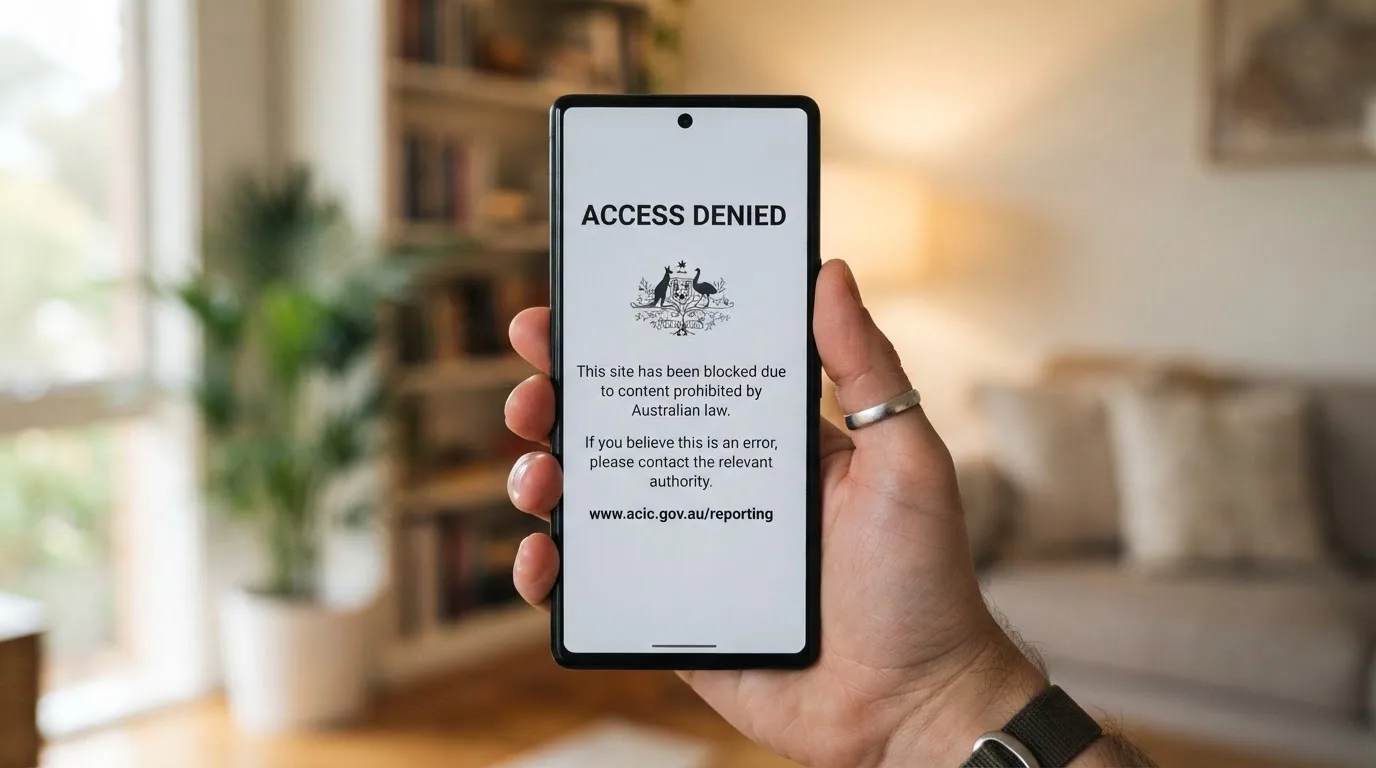
The first camp is the licensed wagering app — a Sportsbet, a Ladbrokes, a Bet365 — all of which are licensed in the Northern Territory as wagering service providers and offer racing and pre-match sport only. There is no live in-play betting on the licensed side, no online pokies, no online blackjack, no baccarat. The phone in your pocket is a phone for placing a pre-event wager through a debit card, a PayID transfer or BPAY, never a credit card. Credit cards and credit-related products were banned as a payment method for licensed online wagering in Australia from 11 June 2024, with penalties up to A$247,500 for the operator if one slips through, and digital currency has sat on the same banned list since the same reform.
The second camp is the offshore casino app — Rocketplay, Woo Casino, Ignition, the rest — which does offer what the licensed side cannot: high-stakes pokies, live dealer tables, bonus packages sized for someone moving four figures at a time. Every one of them also sits inside the ACMA’s enforcement record. The phone in your pocket for that experience is, by the regulator’s own classification, a prohibited interactive gambling service. Australian internet service providers can be directed to block it, and many have been. What the app delivers and what the law permits are two different things.
The practical divide matters more than it sounds. Most Australian banks — Westpac, ANZ, Commonwealth Bank — sell a card-level gambling block that works on the merchant category code “Betting/Casino Gambling” and refuses the transaction at authorisation. Commonwealth Bank’s version goes through the CommBank app as a “gambling lock” applied to eligible cards. ANZ’s version also blocks gambling transactions routed through a digital wallet such as Apple Pay on the same eligible card. Westpac’s works on personal credit and debit cards at the network level. None of these banks promises to catch every offshore transaction — ANZ says plainly that not all gambling transactions will be blocked and some non-gambling transactions might be blocked in error — but each one makes it noticeably harder for a high-stakes deposit to clear.
The Apple Pay wrinkle deserves a beat. Apple Pay itself carries no surcharge on the consumer side and sets no per-transaction limit of its own — limits and PIN behaviour are set by the issuer or the merchant. By the end of 2025, Apple Pay, Google Pay and Samsung Pay together carried roughly 45 per cent of all Australian card payments by number. The merchant category code still decides whether the transaction goes through, and the bank-level gambling block still refuses it on that code. Apple Pay does not get around the block. It rides on top of a card whose issuer has agreed not to play.
See also Why a “high cashback casino” list for Australia is a list you cannot….
Pokies, providers and live tables: the gameplay shelf that has no lawful online home in Australia
The shelf the search query actually asks about — high roller pokies, high roller slots, high roller slot games — is also the one with the least lawful purchase path inside Australia. The mechanics are real: high-volatility titles, max-bet buttons, dedicated VIP tables with limits well into five figures, jackpot networks pooled across operators. None of that disappears from the catalogue because a regulator has said the catalogue cannot lawfully be offered to Australians.

A useful contrast makes the gap concrete. At Crown Melbourne and The Star Sydney, high-stakes baccarat, blackjack and roulette rooms run as a matter of course, with table limits that genuinely fit a high-stakes player — A$10,000 a hand is not unusual in a Salon Privé, and the players who move that much are called “whales” by the floor staff. Those rooms sit inside Australia’s land-based casino licences, which are issued separately in Victoria, New South Wales, Queensland and the other states, and they are bound by state-level harm-minimisation rules, mandatory pre-commitment at the cashier’s desk and on-floor exclusion registers. The experience an Australian high-stakes player can lawfully have is, at its most concentrated, a chair at one of those salons.
Online, the same product category — high-volatility pokies, live dealer high-stakes tables — is offered only by the offshore brands the ACMA has named. The offshore brand usually frames its offering with a Curacao or Anjouan licence footer, a VIP manager who messages on Telegram, and a bonus package tied to crypto deposits. The Curacao footer is a real document. It is not an Australian licence and it carries no Australian consumer protection. If the withdrawal stalls, there is no Australian complaints body to write to. If the site is blocked, the balance on it stays on it.
For a reader who only cares about the gameplay shelf, the practical comparison is unflattering to the lawful side. The offshore brand genuinely offers the high-roller experience; the lawful Australian side genuinely does not. The comparison also ends where Australian law begins. A high-stakes player who wants the gameplay finds a blocked offshore site; a high-stakes player who wants Australian consumer protection finds a land-based salon. The choice is forced either way.
The honest shortlist: offshore brands the ACMA has acted against
Eleven brands sit inside this page because the ACMA itself has acted against each one in writing. The list is not a recommendation, the brands are not in any order of preference, and every brand below is what it is — a prohibited interactive gambling service under Australian law, whatever licence footer the site carries. The point of the table is to lay out the regulator’s record cleanly so a reader can recognise the brand when it shows up in an advertisement.
| Brand | ACMA action and date | Operator named by the ACMA | Method named in official records |
|---|---|---|---|
| RocketPlay | Formal warning, March 2026; earlier Dama N.V., May 2022 | Pulsup Ltd | — |
| Level Up Casino | Formal warning, May 2022 | Dama N.V. | — |
| Woo Casino | Formal warning, March 2025 | Dama N.V. | — |
| Spirit Casino | Formal warning, May 2025 | Dama N.V. | — |
| National Casino | Formal warning, July 2025 | Consolutetish S.R.L. | — |
| Bizzo Casino | Formal warning, July 2025; earlier TechSolutions, 2022 | Consolutetish S.R.L. | — |
| Ignition Casino | Formal warning, July 2025 | Bamboo Media | — |
| Instant Casino | Formal warning, February 2025 | EOD Code SRL | — |
| Jackbit | Formal warning, April 2026 | Ryker B.V. | — |
| Casino Intense | Formal warning, April 2025 | Sterplay Holding Ltd | — |
| Sky Crown | Formal warning, September 2022 | Hollycorn N.V. | — |
Two patterns show up in the table that are worth a moment each. The first is that the operator company and the brand name are usually different things. Hollycorn N.V. runs Sky Crown and Blue Leo. Dama N.V. has been warned over at least six brands over four years, and they keep arriving. A reader who simply rotates to a sister brand has not changed the situation; the same Curacao-licensed operator company is still offering the same prohibited service to Australians under a different label, and the ACMA’s enforcement record shows the pattern.
The second is the speed of the warnings once a brand surfaces. ACMA formal warnings are public, dated, and usually published within weeks of the action. A reader who already has an account with one of these brands does not need to wait for the regulator to catch up — the regulator has already named it.
The column for the payment method each operator accepts, on the official record, sits empty. The reason is that the ACMA’s enforcement file does not name a payment rail as part of the formal warning — it names the operator company, the brand and the section of the Interactive Gambling Act 2001 the regulator says has been breached. The fact that most of these brands also accept PayID or cryptocurrency deposits belongs to the brands’ own marketing, not to the regulator’s record, and the page records only the regulator’s record.
A reader looking at the table should not read it as a buyer’s guide. It is the regulator’s own shortlist of who has been warned, in the order it warned them, and the column for the payment method sits empty for the same reason the column for the licence in Australia would sit empty if it were there — the regulator does not put a number on what the brand does not lawfully have. The honest conclusion is that none of the eleven is a place an Australian should deposit.
How the law actually treats high-roller play in Australia
The legal frame around this page is short, well established and a touch drier than the marketing of the offshore brands. The Interactive Gambling Act 2001 makes it an offence to provide an online casino game, an online pokie or an in-play betting market to a person physically in Australia. The Interactive Gambling Amendment Act 2017 tightened enforcement and gave the ACMA the blocking power it uses today. The 2023 amendments added credit cards and credit-related products to the list of banned payment methods for licensed online wagering, in force from 11 June 2024. None of this depends on where the offshore operator is incorporated. The act targets the act of offering the service to an Australian, which the offshore operator plainly does.
A reader who asks “but the site shows a Curacao licence” has not asked the right question. The Curacao licence is real, and it is not an Australian licence. The act asks whether the service is being provided to someone in Australia; the location of the operator is irrelevant to that question. The site does not have to be incorporated in Australia to be offering a prohibited interactive gambling service to an Australian.
No state or territory licenses online casino games. Wagering — racing and pre-event sport — is licensed federally and in practice by the Northern Territory Racing and Wagering Commission, which regulates 52 online bookmakers including Sportsbet, Bet365 and Ladbrokes. The Commission has no full-time staff and meets once a month in Darwin, a fact that comes up in the ABC’s reporting on proposed reform of that de facto regulator. The licensing that does exist is therefore narrow by design: racing, sport, lotteries, keno. It does not stretch to the high-stakes poker room or the live-dealer baccarat table the offshore brand advertises.
The Interactive Gambling Amendment (Gambling Reform) Bill 2026 passed Parliament on 19 August 2026. Its advertising and inducement measures commence on 1 January 2027. The passage of the bill and its commencement date are two different things. On a page read in 2026 the law is on the books but the inducement rules are not yet in force, and an affiliate site pushing a “high-roller welcome package” today is doing so under the rules as they stood before the reform.
The age minimum for any gambling product in Australia is 18. The minimum sits in every state and territory’s framework and is the lowest line a regulated operator may not cross. Offshore operators do not always check. The lawful Australian product does.
Player protection: what BetStop actually catches and what it doesn’t
The Australian consumer-protection story around gambling is real and it is small. BetStop, the National Self-Exclusion Register, went live in August 2023 and binds every Australian-licensed online and phone wagering service — Sportsbet, Bet365, Ladbrokes and the rest. A person who registers with BetStop is locked out of those accounts for a period they choose, from three months to a permanent exclusion, and the licensed operator cannot reopen the account during that period.
The shelf BetStop does not cover is the offshore casino shelf. BetStop is binding on Australian-licensed services. An offshore casino is not connected to the register and is not required to honour it. A person registered with BetStop who then opens an account with an offshore brand is not protected by the same register at the offshore end — the offshore brand has its own exclusion mechanism, if it has one at all. The register is real. The assumption that it reaches the offshore product is the gap.
The National Gambling Helpline, 1800 858 858, is free and runs 24 hours a day, with chat at Gambling Help Online. It is the right first call for someone whose gambling — lawful or not — has crossed a line they cannot step back from. It is also a service the offshore brand cannot offer. The helpline, BetStop, the state-based complaints bodies and the on-floor exclusion registers at Crown Melbourne or The Star Sydney are the layers of protection a high-stakes Australian player is actually inside. An offshore brand is none of them.
One further wrinkle deserves a paragraph of its own. The state-based land-based casino exclusion registers are reciprocal: an exclusion issued in Victoria is observed in New South Wales and the other way around. The same is not true of an offshore exclusion. A player who has self-excluded from a land-based casino and then opens an offshore account has removed the protection they had for themselves and replaced it with nothing. The Australian product on the high-stakes end has a real safety net. The offshore product does not. That is the difference between the two experiences, and it is the difference the bonus package was never going to be honest about.
Money in, money out: PayID, BPAY, Osko and the rails a high-stakes deposit actually rides
A high-stakes deposit, on the lawful Australian side, rides the rails most Australians already use for everything else. PayID is the address book on top of the New Payments Platform — the account is keyed to something simpler than a BSB and account number, usually a phone number or an email, and the recipient’s name appears before the transfer is sent. Australian Payments Plus warns that being asked to transfer money to a PayID on an illegal gambling site almost certainly means a scam site, which is the same warning read sideways: a PayID deposit to an offshore casino is the kind of transfer AP+ is asking Australians to think twice about. PayID is available at more than 100 Australian financial institutions; more than 25 million PayID identifiers were registered on the platform as of April 2025.
Osko rides on the same New Payments Platform and gets a bank-to-bank transfer between participating banks into the recipient account in under a minute, 24 hours a day including Saturdays and Sundays. The transfer can be addressed to a BSB and account number or to a PayID. For a high-stakes player whose bank balance moves in five figures, the near-instant settlement is the point — the bet is placed with the funds already at the bookmaker, not in flight.
BPAY is the older bill-payment rail, owned by Australian Payments Plus, in service since 18 November 1997, available through the online banking of over 140 Australian banks and used by over 95,000 businesses. The payer enters the Biller Code and the Customer Reference Number printed on the bill. For gambling specifically, the legal wagering services have BPAY biller codes; an offshore casino does not, and an Australian trying to pay an offshore brand through BPAY is, by definition, not paying a biller that exists.
Card rails matter here because the banks have built a wall. Westpac’s gambling block works at card level on the merchant category code “Betting/Casino Gambling” and refuses authorisation on eligible personal credit and debit cards. ANZ’s block also reaches a digital wallet such as Apple Pay on the same eligible card. Commonwealth Bank’s lock goes through the CommBank app on eligible cards and blocks most gambling transactions, though it does not promise to catch every one. None of the three banks advertises the block as a full barrier, because it cannot be one — but each makes a high-stakes deposit meaningfully harder to clear from a major Australian card.
AUSTRAC’s threshold-transaction-report rule, which kicks in at transfers of A$10,000 or more, applies only to physical cash. Ordinary electronic bank transfers are not subject to the per-transaction reporting requirement regardless of amount. The lawful rails do not, in other words, flag a large electronic transfer for AUSTRAC by virtue of its size; the lawfulness is decided by what the transfer is paying for, not how big it is. A transfer to an offshore casino is a different question from a transfer to a licensed wagering service, and it is the second question that decides whether the transfer is a permitted one.
The blocking rate, as the ACMA reports it
By the ACMA’s own running total, as reported in June 2026, a total of 1,751 illegal gambling and affiliate marketing websites had been blocked since the first blocking request in November 2019. That works out, over a stretch of roughly six and a half years, to an average of somewhere in the high-twenties of new blocking requests per month — though the ACMA’s action is lumpy rather than steady, with big rounds clustered around specific operators. More than 230 unlicensed gambling services had left the Australian market since enforcement was strengthened in 2017, which is a higher number than the blocking total because many of the exits were sites that simply stopped accepting Australian traffic rather than sites the ACMA had to ask an ISP to block.
The most recent round, reported on 26 June 2026, added 12 more websites to the blocked list: 7Signs, ChromaBet, Donbet, Duospin, Freshbet, Slots Gem, Jacks Club, Lucky Start, Pointsbetz.com, Spinrise, Vinyl Casino and Wildsino. The blocking rate is therefore not a single figure; it is a band, and the band itself is a useful read on the market. Most of the names are short-lived — a fresh brand, a Telegram affiliate channel, a six-month run — and the ACMA catches them once they cross a visibility threshold.
The point of the band is the pattern, not the average. Offshore casino brands targeting Australians are formed faster than the ACMA can warn them, and the ACMA’s warnings are not the only reason they leave. Several simply close once the cost of serving Australians is high enough. The 230 exits since 2017 are the bigger story than the 1,751 blocks, because the exits are the brands that took the regulator’s letter seriously.
Best high roller casino with bonus in Australia 2026 — More on this topic at casino no wager.
Bonuses and turnover: what the welcome package is actually worth
The “bonus” the offshore brand advertises — 200% on the first deposit, 50 free spins, a VIP reload on the second — looks like value. Its real shape is a turnover multiple that has to be cleared before any of the bonus balance becomes withdrawable, and that multiple, combined with the house edge on the games the bonus is cleared on, is what actually costs the high-stakes player.
A typical high-roller welcome on an offshore brand, on the published terms, ties the bonus to a turnover multiple somewhere between thirty-five and fifty times the bonus amount. The math then runs two ways. First, the clearing time: bonus amount multiplied by the multiple gives the required turnover, the turnover divided by the stake per spin gives the number of spins, the number of spins at five seconds per spin gives the wall-clock time the clearing takes. A A$1,000 bonus at a 40x turnover is A$40,000 of wagering, and at A$1 a spin that is 40,000 spins, and at five seconds a spin that is roughly 55 hours of continuous play. The headline is a 200% bonus. The clearing time is two working weeks of solid play, and the house edge on pokies will have run against the player the entire time.
Second, the expected loss. Required turnover multiplied by one minus the RTP gives the expected cost. On a high-volatility pokie with an RTP around 96 per cent, A$40,000 of turnover carries an expected loss in the A$1,500 to A$2,000 range, before any single spin is taken. The bonus is real money, the clearing time is real time, and the expected loss is the price of converting one into the other. The marketing reads “200% bonus”; the arithmetic reads “you will lose around A$1,500 to convert the bonus into cash, before you get to the cash”.
None of this applies to the lawful Australian side, where licensed wagering services do not run casino bonuses at all — there is no pokie turnover to clear, no live-dealer bonus to convert, no offshore VIP manager to message. The Australian licensed product is racing and sport, and the promotional inducements that exist around it will be reshaped by the Interactive Gambling Amendment (Gambling Reform) Bill 2026, which passed Parliament on 19 August 2026 with its advertising and inducement measures commencing on 1 January 2027. A reader who only cares about the bonus economics is reading the wrong shelf for Australia.
The single most useful sentence a reader can take from this shelf is also the most boring: the bonus is not the headline number, the turnover is, and the cost is the expected loss. Once that frame is set, the welcome package stops looking like a gift and starts looking like a long way to lose slowly.
Why offshore bonuses look bigger than they are
Three mechanisms do most of the work. The turnover multiple is the first, and it is the one most players under-weight. A 200% bonus with a 40x turnover is a different shape than a 100% bonus with a 20x turnover, even though the headline numbers feel close, and a high-stakes player moving four figures at a time is the customer the high multiple is calibrated to capture.
The max-cashout cap is the second. Many offshore bonus terms include a ceiling on how much of the bonus balance can be withdrawn once it is cleared — a five-times-deposit ceiling is a common one. The clearing runs to completion, and the cap kicks in afterwards. The player’s expected loss is paid; the player’s expected upside is clipped. The headline reads “up to A$5,000 bonus”; the terms read “and we keep everything past that”.
The game-weighting is the third. Not every game contributes 100 per cent to the clearing of the turnover; pokies usually do, table games often less, and a few specific titles sometimes zero. A player who tries to clear the bonus at a baccarat table is moving slower through the requirement than the bonus page implies. The page lists one number; the terms page quietly weights the games so the same number takes longer.
A high-stakes player who reads the bonus page before reading the terms page is the customer the bonus is designed for. A reader who reads the terms page first is the customer the bonus is designed against.
The brand-by-brand record
RocketPlay
RocketPlay sits on two ACMA formal warnings in four years — the original Dama N.V. warning in May 2022, covering six Dama brands, and a fresh one to Pulsup Ltd in March 2026 over Rocketplay.com.au. The newer warning suggests the brand has changed operator companies on paper without changing the proposition to Australian players. The second warning is also a hint that ACMA enforcement follows the brand, not just the corporate shell. The same high-stakes product the brand advertised in 2022 is the same product it advertised in 2026. On the listings read for this page, the brand surfaces on affiliate pages that describe its VIP tier structure and bonus schedule, never on an Australian register. The proposition is what it has always been: a high-stakes pokie and live-dealer catalogue offered to Australians by an offshore operator the regulator has now warned twice.
Level Up Casino
Level Up Casino is one of the six Dama N.V. brands the ACMA warned in May 2022, and it has not resurfaced in a fresh formal warning since. The absence of a fresh warning is not an endorsement — it is more likely a lull in the ACMA’s reporting cycle for this brand, with the same operator still licensed in Curacao and the same Australian-facing pages still indexed. The 2022 warning has not aged. The Australian consumer-protection position has not improved.
Woo Casino
Woo Casino was one of two Dama N.V. brands the ACMA warned in 2025, in March of that year. The fact that Dama has now been warned three times over — 2022, then 2025 twice — is the pattern the regulator’s own record lays out: the operator company changes nothing about the proposition to Australians, and the ACMA’s warnings follow. The brand’s position is unchanged from the Level Up Casino entry above: same offshore licence, same Australian-facing product, same absence of any Australian consumer protection.
Spirit Casino
Spirit Casino is the second 2025 Dama N.V. warning, issued in May 2025. Spirit is one of the more recent Dama brands, and the timing — a fresh warning less than three years after the original six-brand warning — is a clean illustration of the table pattern. The brand sits in a regulator’s file as a current concern. The proposition is unchanged.
National Casino
National Casino was warned in July 2025 under the operator Consolutetish S.R.L., the same operator that was warned in the same month over Bizzo Casino. National Casino is also a brand that surfaces in mainstream listings — ACMA’s own warning page, AUSTRAC’s published guidance, and BetStop’s exclusion register all name the brand in their materials. The breadth of those listings is itself the signal — a brand the regulator names publicly, and that a self-exclusion register talks about by name, is a brand a high-stakes Australian reader should not be opening an account with.
Bizzo Casino
Bizzo Casino carries the same July 2025 Consolutetish S.R.L. warning as National Casino, and an earlier 2022 formal warning to TechSolutions (CY) Group Limited and TechSolutions Group N.V. Two operators, two warnings, same brand, three years apart. The brand has cycled through corporate shells in exactly the way RocketPlay has. Bizzo also surfaces on affiliate listings that market its bonus structure to an Australian audience. The proposition is unchanged, the corporate shell has changed, and the regulator’s record has kept up.
Ignition Casino
Ignition Casino was warned in July 2025 under Bamboo Media. It is a brand that has long been marketed at Australian poker and casino players through affiliate channels, particularly the bitcoin-friendly subset of those channels. The 2025 warning is the ACMA’s first published formal warning against this brand, and it follows the same pattern as the other 2025 warnings — an offshore operator whose Australian-facing pages triggered the regulator’s attention. The product is the high-stakes poker room and casino catalogue that Australian law does not license.
Instant Casino
Instant Casino was warned in February 2025 under EOD Code SRL. The brand is one of a handful in this list that names PayID as a deposit option on its own marketing, and the warning is therefore worth a beat: a brand that advertises a PayID deposit route to Australians is advertising a deposit route that the Australian Payments Plus operator itself warns against. PayID surfaces in the regulator’s filings because the deposit rail is a tell, not a feature.
Jackbit
Jackbit was warned in April 2026 under Ryker B.V., one of the most recent formal warnings on the ACMA’s list. Jackbit is a crypto-first casino, and the warning is a useful cross-check on the law: digital currency is a banned payment method for licensed online wagering in Australia, and an offshore brand that takes crypto from Australians is sitting on the same side of that line as an offshore brand that takes a credit card. The product is the high-stakes crypto casino catalogue; the legal position is unchanged.
Casino Intense
Casino Intense was warned in April 2025 under Sterplay Holding Ltd. The brand surfaces on three listings read for this page — AUSTRAC, BetStop and the gamblinginsider trade pages — which puts it in the same wider-record bucket as National Casino. The brand has been on the regulator’s radar for the long enough that the high-stakes player who has not yet heard the warning has not been looking.
Sky Crown
Sky Crown carries the ACMA’s formal warning against Hollycorn N.V. published in September 2022, the same operator that runs Blue Leo. Hollycorn is a Curacao-licensed operator with a long catalogue of sister brands, and the Sky Crown warning is part of a wider pattern in which one operator company runs several brand fronts targeting the same prohibited Australian market. The proposition — high-stakes pokies and live dealer tables, Curacao footer, Australian-facing pages — is the proposition Hollycorn runs across all its brands.
The size of the illegal market: what H2 Gambling Capital’s 2025 report measures
H2 Gambling Capital’s 2025 estimate is that Australians lose around A$3.9 billion a year to illegal gambling sites. The same report estimates that the share of gambling going through legal Australian channels fell from 74 per cent in 2021 to 64 per cent by the time of the report. The two figures together are the high-stakes story: most of the gambling Australians actually do is legal, and most of the rest is offshore casino gambling that the ACMA is trying to close. A high-stakes player is the most valuable customer on the illegal side, which is exactly why the ACMA’s enforcement record reads as it does.
The 64 per cent legal share is itself worth a paragraph. The fall from 74 per cent in four years is sharp, and it is not because Australians are gambling less — it is because Australians are gambling more through offshore channels. The 1,751 blocked sites and the 230 exits since 2017 are the regulator’s response, and they have not yet reversed the trend.
What an Australian high-stakes player can lawfully do
The lawful answer, for a high-stakes Australian reader, splits into three. The first is licensed pre-event wagering — Sportsbet, Bet365, Ladbrokes, all licensed in the Northern Territory — and the high-stakes shape of that is a serious racing or sports bettor with a PayID-linked account and a BPAY or Osko deposit. The limits inside the licensed wagering product are real and go into five figures on the racing side, and the consumer protection is the full Australian framework.
The second is the land-based casino high-roller room. Crown Melbourne, The Star Sydney, Crown Perth, The Star Gold Coast and Treasury Brisbane all run high-stakes salons, and the high-stakes shape there is a chair at the baccarat or blackjack table with a host who knows the player’s name and a state-based exclusion register sitting on the cashier’s desk. The product is genuinely high-roller; the consumer protection is genuinely Australian; the experience is genuinely a casino high-roller room. For the high-stakes Australian reader, this is the closest the lawful market comes to the proposition the offshore brand advertises.
The third is the boundary itself. A high-stakes Australian reader who wants the offshore casino experience — the high-volatility pokies, the live-dealer VIP table, the Telegram host — should know they are picking it up against the ACMA’s enforcement record and without the consumer protection the lawful side carries. The bank-level gambling block will catch a lot of those transactions before they clear. The site’s blocking in Australia will catch it at the network edge. The exclusion register will not catch it at all. The choice is forced, and the reader is the one who pays for whichever side of it they land on.
The figures behind the marketing: a worked example
A high-roller welcome package on the offshore shelf, on its published terms, is usually tied to a turnover multiple in the 35x to 50x range. Take the middle of that band. A A$1,000 bonus at 40x turnover is A$40,000 of required wagering. At A$1 per spin, that is 40,000 spins. At five seconds a spin, that is roughly 56 hours of continuous play. A player who treats the bonus as a part-time project — a few hours a day, not a working week straight — is looking at two to three weeks of clearing time, with the house edge running against them the whole way.
The expected loss over the same clearing run, on a high-volatility pokie with an RTP in the mid-90s, sits roughly in the A$1,500 to A$2,000 range, depending on the title. That is the cost of converting the bonus into withdrawable cash, before any single spin is played. The bonus page reads “200% match, up to A$2,000”. The arithmetic reads “and you will lose around A$1,500 to convert it”. Both are true, and the second is the one a high-stakes player needs before the first.
The same calculation on a smaller bonus produces a smaller expected loss in absolute terms and a larger one as a share of the bonus. A A$200 bonus at 40x is A$8,000 of turnover, and the expected loss on the same RTP sits around A$300 to A$400. The bonus clears faster — a few hours at A$1 a spin — and the player walks away with a smaller absolute win but a bigger proportional win if they hit. The shape of the offer is the same. The size changes the experience but not the maths. The maths is the maths either way.
The single calculation a high-stakes reader should run before claiming any offshore bonus is the expected loss. The marketing reads “200% match”. The expected loss is the number the marketing does not print.
How to read the regulator’s record without being misled by it
A formal warning from the ACMA is not a prosecution. It is a regulator telling the operator, in writing, that the regulator considers the operator to be offering a prohibited interactive gambling service to Australians and that further enforcement — including ISP blocking — will follow if the conduct continues. Most formal warnings are followed, eventually, by a block. Some are followed by an exit. Some are followed by the brand simply changing operator companies and starting again, as several of the brands above have done.
A reader using the ACMA’s formal warning list as a guide is using it correctly. A reader treating the absence of a formal warning as a clean bill of health is using it wrong — the regulator’s list is not exhaustive, and a brand that has not yet been warned is not a brand that has been cleared. The block list is the cleaner signal of the two. A site an Australian cannot reach is a site an Australian cannot deposit with.
The other clean signal is the operator company. Hollycorn N.V., Dama N.V., and the other parent companies that have been warned are the entities the ACMA names in its formal warnings. A high-stakes reader who recognises the parent company in the footer of a brand’s terms page is recognising the warning without needing to look it up. The footer tells the reader what the ACMA’s file already knows.
The reader this page is actually for
The page has three readers. The first is the high-stakes Australian who searched for a shortlist and found this page instead. That reader needs the honest answer: no Australian-licensed high-roller casino exists, no offshore brand can lawfully take an Australian deposit, and the high-stakes experience an Australian can lawfully have is the licensed wagering account or the land-based casino salon. The second is the Australian who has been playing with one of the offshore brands above and has not yet checked whether the brand is on the regulator’s record. That reader needs the table to do the checking for them. The third is the Australian who is thinking about opening an account with one of the offshore brands because the bonus is bigger than anything the licensed side offers. That reader needs the arithmetic on the bonus to read before the bonus is claimed.
All three readers get the same conclusion from this page. The lawful high-roller product in Australia is racing, sport and the land-based casino salons. Everything else is offshore, prohibited, and on the ACMA’s record.
Frequently asked questions about high-roller play in Australia
What deposit level typically qualifies a player as a high roller at a casino?
There is no single number the industry agrees on. On the offshore shelf, a “high roller” usually means a deposit of A$1,000 or more and an account that the brand’s VIP team contacts directly. At a land-based Australian casino the equivalent is a host-relationship player, often at the casino’s invitation rather than at a published deposit threshold. The threshold is set by the operator, not by the law.
Do high-roller bonuses usually come with higher wagering requirements?
Yes. The bigger the bonus, the more turnover the operator usually attaches to it, because the operator needs the house edge to run against the player long enough to recover the headline value. A 200% welcome at 40x turnover is the typical shape on the offshore shelf. The headline reads “more bonus”; the turnover reads “more expected loss”, and the two go together.
Is it legal for an online casino to offer high-roller bonuses to Australians?
No. Offering any online casino game — bonus or not — to a person in Australia is an offence under the Interactive Gambling Act 2001. The size of the bonus does not change the legal position, and the offshore licence the site displays does not convert it into an Australian one. The ACMA’s enforcement file is the public record of who has been warned for doing so.
Can high-roller status be reached through a PayID deposit?
The deposit rail does not change the legal status of the account. A PayID deposit to an offshore casino is still a deposit to a prohibited interactive gambling service, and Australian Payments Plus itself warns that being asked to transfer to a PayID on an illegal gambling site almost certainly means a scam site. The rail is real; the destination is still prohibited.
Are high-roller tables or limits offered at licensed Australian land-based casinos?
Yes. Crown Melbourne, The Star Sydney, Crown Perth, The Star Gold Coast and Treasury Brisbane all run high-stakes salons with baccarat, blackjack and roulette limits that genuinely fit a high-stakes player. The high-stakes experience is real and lawful; the on-floor exclusion register and the state-based consumer-protection framework come with it.
What should a high-spending player check before trusting a casino site?
Three things. First, is the operator on the ACMA’s list of formal warnings? Second, is the site on the ACMA’s block list — and therefore unreachable from Australia? Third, what consumer protection framework applies if a withdrawal stalls — Australian state-based complaints bodies, an overseas regulator, or none of the above? A site that fails the first two is a site an Australian should not be depositing with. A site that fails the third is a site a high-stakes player should not be trusting.