
Best fast payout online casino Australia 2026 — what the law actually permits, and what does not
A search for “fast payout online casino Australia” usually arrives with a working assumption the law refuses to honour. Online casino games, including the slot-style games most readers mean by “casino”, cannot be offered to anyone in Australia. No state or territory issues a licence for them, no offshore licence changes that fact, and the Australian Communications and Media Authority has spent the better part of a decade saying so out loud. The honest version of this page is therefore not a ranking of casinos that pay out quickly. It is an explanation of why that ranking does not exist for an Australian reader, what happens to the offshore brands that claim otherwise, and what lawful alternatives sit on the other side of the wall.

Current as of 3 November 2026 against the ACMA Register of blocked and warned services and the Reserve Bank of Australia’s public payments guidance.
Table of Contents
- The Australian legal frame: prohibited interactive gambling services
- How the ACMA enforces it: blocking rounds and formal warnings
- What the blocking rate actually means over time
- The brands the ACMA has acted against: a record, not a ranking
- Where consumer protection sits, and where it stops
- BetStop and the limits of self-exclusion
- The bank side: what an Australian bank actually blocks
- PayID, Osko and the shape of a fast payout in Australian banking
- American Express, surcharge reform and the card side
- AUSTRAC thresholds and the size of a transfer
- Crypto and the offshore brand
- The legal wagering side: what is actually licensed
- What an Australian reader who wants to play slots actually has
- Responsible gambling, written once
- Tax: winnings are not income, losses are not deductions
- The 2026 reform, and the date it does not yet apply
- Why a payout speed question has no Australian answer
- The settleme on the table: what an Australian reader should do
- The fundamental choice: ranking versus register
- The prohibition frame: a closing word on what the law refuses
- Frequently asked questions
The Australian legal frame: prohibited interactive gambling services
The Interactive Gambling Act 2001, tightened by the Interactive Gambling Amendment Act 2017, makes it an offence for a provider to supply online casino games, online pokies or in-play betting to a person physically in Australia. The provision the operator commits is the offer, not the player’s act of accepting it. That distinction matters to the reader, because it is also why the ACMA’s enforcement targets the company behind the brand and not the punter who registered.
What is licensable in Australia is narrower than the marketing suggests. Wagering on racing and sporting events placed before the event is licensable. Lotteries and keno are licensable. Everything that looks like a casino game, from a digital slot to a live-dealer blackjack table, falls outside that perimeter. The Northern Territory Racing and Wagering Commission oversees most online bookmakers — 52 of them, including the household names — but that oversight is a wagering licence, not a casino licence, and the commission itself is small enough to fit around a meeting table in Darwin. It is the regulator Australian readers most often see cited, and it does not cover the product being searched for here.
The product being searched for here is, by definition, an illegal one in Australia. The fastest payout on offer is still a payout from a service the reader is not supposed to be using.
How the ACMA enforces it: blocking rounds and formal warnings
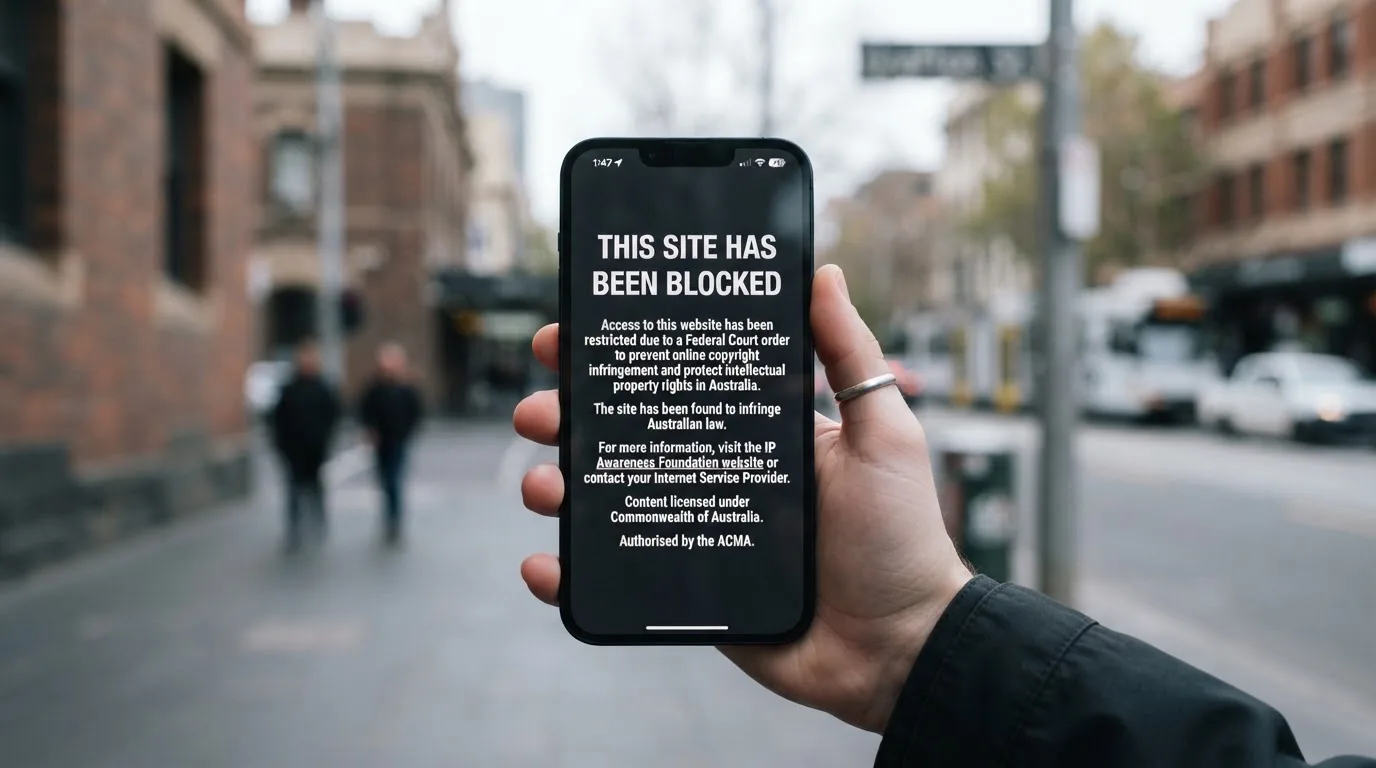
The ACMA’s enforcement record is the closest thing to a ranking that an Australian reader can find for offshore casinos. Two tools sit in the toolkit, and they appear in roughly this order in the official record: formal warnings to the operator first, and directions to Australian internet service providers to block the offending sites afterwards.
The formal warning is the slower instrument and the more public one. Each one names the operator, the brand and the section of the Act breached, and is published on the ACMA register. A warning does not, by itself, take a site offline. What it does is put the operator on notice, and what it gives the Australian reader is a date-stamped public record that the brand is, as a matter of fact, offering a prohibited service to people in Australia. The register accumulated several formal warnings through 2025 and 2026 against operators running multiple brands:
- Dama N.V. drew separate warnings in May 2022 covering six brands, again in March 2025 over Woo Casino, and once more in May 2025 over Spirit Casino.
- Bamboo Media drew a warning in July 2025 over Ignition Casino, and Consolutetish S.R.L. drew one in the same month over National Casino and Bizzo Casino; Bizzo had already been warned in 2022 against a different corporate group.
- EOD Code SRL drew a warning in February 2025 over Instant Casino.
- Sterplay Holding Ltd drew a warning in April 2025 over Casino Intense.
- Hollycorn N.V. drew a warning over Sky Crown and Blue Leo.
- Ryker B.V. drew a warning in April 2026 over Jackbit and CasinOK.
- Pulsup Ltd drew a warning in March 2026 over RocketPlay.
The blocking round is the more aggressive instrument and the more interesting number. Australian internet service providers are directed to block specific URLs at the network level. As of the round reported on 26 June 2026, the ACMA’s running total reached 1,751 illegal gambling and affiliate marketing websites blocked since the first blocking request in November 2019 — close to seven years of enforcement action. In the same June 2026 round the authority sought blocks on another twelve domains: 7Signs, ChromaBet, Donbet, Duospin, Freshbet, Slots Gem, Jacks Club, Lucky Start, Pointsbetz, Spinrise, Vinyl Casino and Wildsino. More than 230 unlicensed services are reported to have left the Australian market altogether since enforcement was strengthened in 2017.
The reader who came for fast payout speeds should pause on that sequence. The fastest payout on an offshore site is still a payout from a brand that, with high probability, appears either on this register or on one about to be added.
What the blocking rate actually means over time
The blocking total of 1,751 sites over the period from November 2019 to June 2026 is more useful read as a rate than as a number. Spread across just over six and a half years of enforcement, it averages out to roughly 260 sites blocked per year, or a site every working day or two on average — though the actual blocking is lumpy, with named rounds that take out a dozen at a time and quiet stretches in between. The June 2026 round alone added twelve to the count, which is a single day’s work above the long-run average.
That is the consequence of running an offshore casino for an Australian audience: a brand can be functional one morning and unreachable the next evening, with no warning to anyone holding a balance. The ACMA’s enforcement record demonstrates that the blocking register changes, not the operator’s terms of service. H2 Gambling Capital’s 2025 report estimates that Australians lose around A$3.9 billion a year to illegal gambling sites, and that the share of gambling going through legal channels fell from 74 per cent in 2021 to 64 per cent. The economic pull on the offshore side remains large. The enforcement response is steady rather than symbolic.
For a reader who arrived here deciding between offshore brands, the blocking rate is itself a piece of information. It does not say how quickly a payout would have arrived. It says how long the site on which that payout sits is likely to remain reachable from an Australian internet connection.
The brands the ACMA has acted against: a record, not a ranking
The brands below appear because the ACMA itself has taken enforcement action against them, not because any review has ranked them. There is no Australian ranking of online casinos, and a ranking assembled from offshore sources would rank products a reader is not supposed to be using. What follows is the register’s own order, with the date the warning was issued and the operator named in it.
| Brand | ACMA action and date | Operator named by the ACMA | Subject support |
|---|---|---|---|
| RocketPlay | Formal warning, March 2026 | Pulsup Ltd | listings-only |
| Level Up Casino | Formal warning, May 2022 | Dama N.V. | listings-only |
| Woo Casino | Formal warning, March 2025 | Dama N.V. | — |
| Spirit Casino | Formal warning, May 2025 | Dama N.V. | — |
| National Casino | Formal warning, July 2025 | Consolutetish S.R.L. | listings-only |
| Bizzo Casino | Formal warning, July 2025 (earlier 2022) | Consolutetish S.R.L. (earlier TechSolutions) | listings-only |
| Ignition Casino | Formal warning, July 2025 | Bamboo Media | — |
| Instant Casino | Formal warning, February 2025 | EOD Code SRL | listings-only |
| Jackbit | Formal warning, April 2026 | Ryker B.V. | — |
| Casino Intense | Formal warning, April 2025 | Sterplay Holding Ltd | listings-only |
| Sky Crown | Formal warning, September 2022 | Hollycorn N.V. | — |
The “subject support” column records whether the page’s subject — fast payout online casinos for Australian readers — was found anywhere in the consulted sources. A listing-only entry means the source cited the brand, not that the source endorsed it. An em dash means the consulted sources carried nothing on that brand against the page’s subject, and that the absence is itself the answer.
The brand-level story is largely a corporate-level story. Dama N.V. appears four times in the table under different consumer-facing names. Consolutetish S.R.L. appears twice in one month. Ryker B.V. and Hollycorn N.V. each carry a portfolio of brands across the register. The marketing surface is fragmented; the legal exposure sits with the company running the back office, and the ACMA has, with some consistency, named that company in its warnings.
Each of these brands displays an offshore licence, often a Curaçao or Anjouan number, on its footer. The licence is real, in the sense that the regulator that issued it exists and is paid a fee. What it is not, by definition, is an Australian licence — because none can be issued — and the ACMA’s actions over these brands proceed independently of whatever the offshore licence permits. The display is a marketing fact, not a legal answer.
Where consumer protection sits, and where it stops
An Australian consumer who has a dispute with a licensed local business has the Australian Financial Complaints Authority, the relevant state regulator, and usually a written terms-of-service document enforceable under Australian law. An Australian consumer who has a dispute with an offshore casino has the terms-of-service document, the offshore licence’s complaint process, and the offshore licence’s regulator — none of which is Australian, none of which is required to take instructions from an Australian complainant, and none of which can compel the operator to act if the operator prefers not to.
The consequence is what closes this section. The “fast payout” claim is itself the part most likely to attract a complaint. A casino that delays or refuses a withdrawal sits behind customer-support email addresses that do not pick up, dispute processes that resolve in months, and a registration jurisdiction that does not share a court system with the country the reader is in. The reader who arrived here for payout speed is the reader most likely to need the protection that an Australian licence would have given, and most unlikely to have it.
BetStop and the limits of self-exclusion
BetStop, the National Self-Exclusion Register, went live in August 2023 and is the central self-exclusion tool for Australian online gambling. It is run by the ACMA and binds every Australian-licensed online and phone wagering service. A punter can register a minimum exclusion period and the licensed operators must close the account, refund any balance and refuse to reopen it for the duration. The National Gambling Helpline on 1800 858 858 sits alongside it, free, 24/7, with chat at Gambling Help Online.
The honest limitation is the one that matters to this page. BetStop binds Australian-licensed operators and nothing else. An offshore casino that does not hold an Australian licence is not connected to the register, not required to honour an exclusion registered with it, and not required to do so even when the punter asks the casino directly. The exclusion is, from the offshore casino’s point of view, a polite request.
For a reader thinking about how to control their own play, the practical consequence is a clear one: BetStop works against licensed Australian services, and against them only. The offshore brand on the player’s screen sits outside that ring, and the safeguards that the ACMA has built around Australian wagering do not reach it.
The bank side: what an Australian bank actually blocks
The next layer of protection sits with the Australian banks, and the reader who has searched for a fast payout has, in many cases, already been stopped at this layer without knowing it.
Westpac operates a gambling block that works at the card level. It refuses authorisation on transactions bearing the merchant category code “Betting/Casino Gambling” for eligible personal credit and debit cards. ANZ runs a comparable block, activated in the ANZ app, and explicitly extends the block to gambling transactions made through a digital wallet such as Apple Pay on an eligible card, not only the physical card. Commonwealth Bank lets customers apply a gambling lock to eligible cards in the CommBank app. Each of the four major banks now offers a gambling block that the reader can switch on without leaving the app.
ANZ’s block carries two fine-print warnings worth reading. Removing the block again requires a 48-hour waiting period, which slows down an impulsive reversal but also slows down a deliberate one. And the bank’s own page states that not all gambling transactions will be blocked, and that some non-gambling transactions might be blocked in error. The block is not a perfect filter; it is a friction layer.
The wallets and the cards behind them have their own layer. By the end of 2025, Apple Pay, Google Pay and Samsung Pay collectively accounted for around 45 per cent of all card payments in Australia by number. Apple does not charge consumer fees for Apple Pay; any surcharge comes from the merchant’s processing fees rather than from the wallet itself. Apple states that transaction limits and PIN requirements for Apple Pay purchases are set by the card issuer or merchant, not by Apple. Apple Pay sitting on top of a debit card does not, by itself, route the transaction around the issuer’s gambling block — ANZ’s documentation is explicit that its block catches digital-wallet gambling transactions too.
A second bank-side restriction sits on top of that. Since 11 June 2024, Australian-licensed online wagering services cannot accept payment by credit card or other credit-related products, a restriction that also constrains gambling use of linked digital wallets such as Apple Pay on credit-funded cards. An offshore site does not face this rule — it is not licensed in Australia and so is not bound by it — but the reader’s card issuer, and the wallet on top of it, may still refuse the transaction regardless. The combination is the source of the most common cause of failed deposits reported in player forums: not the casino blocking the card, but the bank blocking the casino.
PayID, Osko and the shape of a fast payout in Australian banking
For an Australian reader, the “fast payout” question is partly answered by what the domestic banking system already does. PayID and Osko are the rails underneath most Australian-to-Australian transfers that feel instant to the person sending them, and understanding them clarifies what any offshore payout is being compared against.
With Osko, a bank transfer between participating Australian banks arrives in under a minute, around the clock including weekends, whether it is addressed to a BSB and account number or to a PayID. PayID-based instant transfers are available at over 100 Australian financial institutions. The platform underneath both went live on 13 February 2018, is owned by New Payments Platform Australia Ltd — whose shareholders include the Reserve Bank of Australia and the country’s major banks — and its participants must keep monthly outages to no more than two minutes. In 2021 the ACCC authorised the merger of NPP Australia, BPAY and eftpos into Australian Payments Plus, the same operator that now runs PayID, Osko and BPAY.
PayID also carries a feature that matters in this context. Paying to a PayID shows the name of the account holder before the transfer is sent, and the operator warns that being asked to transfer money to a PayID on an illegal gambling site almost certainly means a scam site. The instant rail is, by design, transparent about who is at the other end.
BPAY, by contrast, is the bill-payment service in Australian online banking. A payer enters a Biller Code and a Customer Reference Number printed on the bill. The service has been operating since 1997, is available in over 140 Australian banks and credit unions, and is offered by more than 95,000 businesses. It is owned, via parent company Cardlink Services Limited, equally by Australia’s four major banks. It is not a real-time transfer rail, and a reader thinking about fast payouts will not be using BPAY as the settlement vehicle.
The shape of a fast payout in Australian banking is, in other words, the Osko transfer into a domestic account, where “fast” means under a minute on a 24/7 rail. An offshore casino is not on this rail. Whatever speed the offshore casino’s marketing claims — instant, same-day, 24-hour — is the speed of a correspondent-bank transfer back into the Australian account, against which the domestic rails are an obvious comparison.
American Express, surcharge reform and the card side
The card a reader uses changes the picture. American Express, founded in 1850 as a freight-forwarding company, became a card issuer and launched its first charge card on 1 October 1958. It operates as a three-party scheme: Amex issues cards and processes transactions itself, unlike Visa or Mastercard’s four-party network where the issuer and the acquirer are separate. The structural difference shows up in the surcharge question.
The Reserve Bank of Australia’s July 2025 review proposes removing surcharges only on eftpos, Mastercard and Visa card transactions, explicitly leaving American Express outside the scope of the proposed surcharge ban. The practical effect for a reader: surcharging on Amex remains a live lever for merchants, and the card is treated separately in cost discussions because it is structured separately.
For an Australian reader playing offshore, the surcharge question rarely surfaces in the same form, because the offshore casino rarely charges a surcharge on its own deposit — it absorbs the processing fee and pays for it through other terms. What does surface is the cash flow. An Amex-funded deposit is not, in Australian-licensed wagering, even legal as of mid-2024. The reader using Amex to fund an offshore casino is using a card that, in the regulated Australian market, would be refused at the deposit screen. The fact that the offshore site accepts it is one more data point about the offshore site.
AUSTRAC thresholds and the size of a transfer
AUSTRAC’s threshold-transaction reporting rule applies only to physical cash. It requires reporting of transfers of A$10,000 or more in cash. Ordinary electronic bank transfers are not subject to that per-transaction reporting requirement, regardless of the amount sent. For an Australian reader sending A$2,000 to an offshore casino via an international wire, no per-transfer AUSTRAC report is triggered at the moment of transfer.
That is not the same as saying the transfer is unrecorded. AUSTRAC’s wider regime collects reports on suspicious matters regardless of amount, and the banks themselves file reports when transaction patterns fit the typologies in their own monitoring. A regular pattern of international wires to known offshore gambling destinations will be visible to the bank’s transaction monitoring team, even if no single transfer hits the cash threshold. The threshold number is not the privacy number; it is the reportable-cash number, and most casino deposits are not cash.
The practical consequence for the reader is that the choice between sending a single A$10,000 transfer or ten A$1,000 transfers does not affect the regulatory line at AUSTRAC, but it can affect the bank’s own monitoring. The bank does not have the same visibility into many small transfers that it has into a single large one, which is a reason that an offshore casino’s marketing sometimes steers players towards smaller, more frequent deposits. The reader should know which side of that pattern their own bank statement looks like.
Crypto and the offshore brand
Cryptocurrency enters the offshore picture for the same reason it enters most cross-border retail: the card and bank rails are easier to cut than the crypto rails. A deposit in Bitcoin or stablecoin is hard for an Australian bank to block at the card level because it never crosses the card network. The transaction settles on the blockchain, and the receiving wallet belongs to an entity outside the Australian bank’s reach.
Three things follow. The first is that the crypto rail does not make the offshore casino legal — the prohibition in the Interactive Gambling Act targets the offer, not the payment method. The second is that the transfer has no chargeback path, no card-issuer dispute process and no bank-side gambling block. The third is that the settlement time most often advertised by the crypto-friendly casino is the blockchain settlement time, not the time to settle into the player’s Australian bank account. The crypto leg is fast; the conversion back to Australian dollars and the onward bank transfer is not, and a reader who has only looked at the first leg has not looked at the whole trip.
The crypto leg also removes the friction that the Australian banks have built into card-based gambling. A bank that has switched on a gambling block cannot stop a transfer to a crypto exchange that the bank does not know is for gambling; once the dollars have been converted into Bitcoin and withdrawn to the casino’s wallet, the bank cannot follow the chain. The block works against the card, not against the bank-to-exchange transfer, and not against the exchange-to-casino transfer. Crypto is the rail that survives the block. It does not survive the law.
The legal wagering side: what is actually licensed
For a reader in Australia who wants to bet, the licensable products sit on the wagering side of the line. Sports betting and race betting, placed before the event, are licensable in most states and territories; the major operators — Sportsbet, Bet365, Ladbrokes and others — are licensed through the Northern Territory Racing and Wagering Commission for tax reasons, even when their Australian head offices and customer bases are elsewhere. Lotteries are licensed separately, by the relevant state. Keno is licensed in venues.
None of these is the product that a search for “fast payout online casino Australia” is looking for, and the gap is the point. The reader who arrives here looking for online pokies, online blackjack or online roulette has arrived looking for a product that the law does not permit to be offered to them, and no speed of payout changes that.
What an Australian reader who wants to play slots actually has
For a reader who wants to play slots, the lawful Australian options are land-based. Every state and territory licenses pubs and clubs to host poker machines, known locally as pokies, and every capital city hosts one or more land-based casinos. Crown Melbourne, The Star Sydney and The Star Gold Coast are the largest of the casino venues. These are the products the law actually permits to an Australian player, and the payout at a poker machine is paid out by the venue, in cash, at the venue.
The transition from online to land-based changes what a payout looks like. There is no transfer to wait for. The cash is paid at the machine or by the cashier. The trade-off is access: a land-based venue requires the reader to be physically present, with the travel and the planning that implies.
A separate point worth making is the licensed venue’s consumer-protection record. A complaint about a payout at a Crown casino goes to the Victorian Casino and Gambling Regulator, and a complaint about a pub’s poker machine goes to the relevant state liquor and gaming authority. Both have the authority to compel a response. An offshore casino complaint goes to an address on the other side of a corporate structure.
Responsible gambling, written once
The Australian help services sit on a small number of well-rehearsed routes. BetStop, the National Self-Exclusion Register, binds Australian-licensed online and phone wagering services, and a self-exclusion registered with it cannot be lifted early by the operator. The National Gambling Helpline on 1800 858 858 is free, 24/7 and offers chat at Gambling Help Online. Both work within the licensed wagering perimeter. Section “BetStop and the limits of self-exclusion” above goes into the limit on that perimeter in the offshore case.
Tax: winnings are not income, losses are not deductions
For a recreational player, gambling winnings are not assessable income in Australia under section 6-5 of the Income Tax Assessment Act 1997, and gambling losses are not deductible. The rule applies because the ATO treats recreational gambling as a personal activity rather than a profit-making endeavour. A person who carries on a business of gambling — a professional poker player, for instance, with a structured approach to bankroll and tax — sits outside that rule and the ATO’s guidance on professional gamblers is the model for them. The summary holds for almost everyone reading this page: winnings do not need to be declared, losses cannot be claimed, and the offshore casino’s own record-keeping does not change that position.
The 2026 reform, and the date it does not yet apply
The Interactive Gambling Amendment (Gambling Reform) Bill 2026 passed Parliament on 19 August 2026. Its advertising and inducement measures commence on 1 January 2027. The bill is law with a start date, not yet in force on a page published in 2026. The legal position on online casino games — prohibited, no licence available — does not change in 2026.
The commencement matters because advertising reform is the part that bites the marketing channel, not the consumer. Once the inducement rules are in force, Australian-facing advertising for prohibited services becomes a more exposed legal target. The offshore casinos listed above do not, at the time of writing, face that exposure; from 1 January 2027 they may face more of it.
Why a payout speed question has no Australian answer
The shape of the puzzle comes into focus only at the end. A reader searching for a fast payout is asking which of several providers moves money fastest. The provider, in the Australian context, is not permitted to exist. The legal answer to the speed question is therefore the speed of moving money out of an offer that should not have been accepted, which is a question of correspondent-bank friction, crypto conversion friction and the offshore operator’s own discretion — none of which the reader can verify in advance.
The same reasoning explains why the Australian-focused ranking of fast payout casinos does not exist on reputable sites. The reputable Australian comparison sites restrict themselves to wagering services, which are licensable, and to land-based casinos, which are licensed. They do not, and cannot, rank the offshore product in good faith.
The settleme on the table: what an Australian reader should do
The practical move, for a reader who arrived here, is to pick one of the lawful options.
A reader who wants to bet on sport or racing can open an account with a Northern-Territory-licensed bookmaker and fund it via debit card, PayID, Osko or BPAY. Payouts from a licensed bookmaker are governed by Australian consumer law, the bank’s own rules and the operator’s published terms.
A reader who wants to play slots can do so at a licensed venue. The cash payout is at the venue. The consumer-protection pathway is via the relevant state regulator.
A reader who wants to self-exclude can register with BetStop. The minimum exclusion periods bind the licensed services and the licensed services only.
A reader who has been playing with offshore brands, and who wants to stop, can register with BetStop regardless. The Australian bank-side gambling blocks are switchable in-app at Westpac, ANZ and Commonwealth Bank. The 48-hour cooling-off at ANZ exists in part to slow down an impulsive reversal.
The offshore ranking this page does not provide is a ranking of services that the ACMA has been blocking at a rate of roughly one per working day for the past six and a half years. That is the answer to the speed question in the Australian context: the relevant Australian speed is the speed at which the offer disappears.
The fundamental choice: ranking versus register
A ranking is a comparison, ordered by some criterion. The ACMA’s record is a register, ordered by date. The two are different things. A ranking would tell a reader which brand is faster than which other brand. The register tells a reader which brands have been the subject of formal enforcement action, when, and against which operator.

The register is what the ACMA makes public, and it is what this page makes available. The ranking the reader came for cannot honestly be assembled from Australian sources, because the product the ranking would cover cannot be lawfully offered to the reader. The reader who reads the register and treats it as a ranking of brands to avoid is reading it in the only way that makes sense.
The prohibition frame: a closing word on what the law refuses
The Interactive Gambling Act 2001 sits at the centre of the page’s frame because the page’s subject cannot be discussed without it. Any analysis of fast payout casinos that does not name the prohibition is an analysis that mistakes the marketing for the legal position. The legal position is the prohibition, the ACMA’s enforcement record is its application, and the reader’s actual options are the licensable products on the wagering side and the licensed venues on the casino side.
A reader who arrives here for a ranking has arrived at the wrong document. The document they need is the register the ACMA publishes and the help services that BetStop, the National Gambling Helpline and Gambling Help Online provide. The document they have arrived at is an explanation of why those are the right documents to read first.
Frequently asked questions
What counts as a fast payout time for a casino transaction?
There is no single Australian definition, because no Australian operator is permitted to offer online casino games. Among offshore brands the marketing term “instant” usually means same-day, and “fast” usually means within 24 to 48 hours. The actual settlement into an Australian bank account then adds the correspondent-bank leg on top, which is rarely faster than the marketing number. The Australian-to-Australian comparison is Osko, where a bank transfer between participating banks arrives in under a minute around the clock.
How quickly does an Osko bank transfer arrive between Australian banks?
Osko transfers between participating Australian banks typically arrive in under a minute, around the clock including weekends, and can be addressed to a BSB and account number or to a PayID. The platform underneath — the New Payments Platform — went live on 13 February 2018 and is owned by New Payments Platform Australia Ltd, whose shareholders include the Reserve Bank of Australia and the major banks. Participants must keep monthly outages to no more than two minutes. Where the Osko comparison breaks down is in any transfer that crosses the Australian border, where the offshore leg takes over.
Is it legal for an online casino to offer fast payouts to players in Australia?
No. Under the Interactive Gambling Act 2001, as strengthened by the Interactive Gambling Amendment Act 2017, it is an offence for a provider to supply online casino games to a person in Australia. No state or territory issues a licence for the activity. The offshore operator offering the payout is offering a prohibited interactive gambling service regardless of what licence it displays. The ACMA’s enforcement record, including the formal warnings and blocking rounds published on its register, is the practical demonstration of that position.
Do faster payout claims make an offshore casino any safer to use?
No. Payout speed is a marketing claim by an operator offering a prohibited service in Australia, and the ACMA has issued formal warnings against several of the brands that make those claims. Faster payouts do not bring the service within Australian consumer law, do not bring it within BetStop, and do not give the player a dispute pathway against an Australian body. The bank’s own gambling block at Westpac, ANZ and Commonwealth Bank can still refuse the deposit and, on the withdrawal side, the correspondent-bank leg is outside the casino’s control. Speed is not the dimension on which the safety question turns.
What payment method typically settles quickest into an Australian bank account?
For Australian-to-Australian transfers, Osko to a PayID or BSB-and-account number typically arrives in under a minute. For an offshore withdrawal, the casino’s own processing window is usually 24 to 48 hours and the onward correspondent-bank transfer is on top of that. Crypto is sometimes faster on the casino-to-player leg but adds a conversion step on the way back into Australian dollars. The Australian card system has additional friction: credit cards have been banned for use with Australian-licensed wagering since 11 June 2024, and most major banks run an in-app gambling block that can refuse the transaction regardless of speed.