
Instant payout online casinos in Australia: what is actually available, and what the ACMA has been blocking
An “instant payout” promise is, on its own, one of the easier marketing lines to write. Settling into an Australian bank account in under a minute is also one of the easier things to actually do, because Australia’s New Payments Platform was built precisely for that. The harder question is whether the casino on the other end of the transfer is allowed to take your deposit at all. Under the Interactive Gambling Act 2001, no Australian jurisdiction issues a licence for online casino games — for pokies, roulette, blackjack or any of the other games marketed as “instant payout online casinos”. The brands that advertise themselves under that label are operating outside Australian law, and the Australian Communications and Media Authority has spent the past several years issuing formal warnings, walking ISPs through site-blocking requests, and adding to a tally that crossed 1,751 blocked URLs in mid-2026.
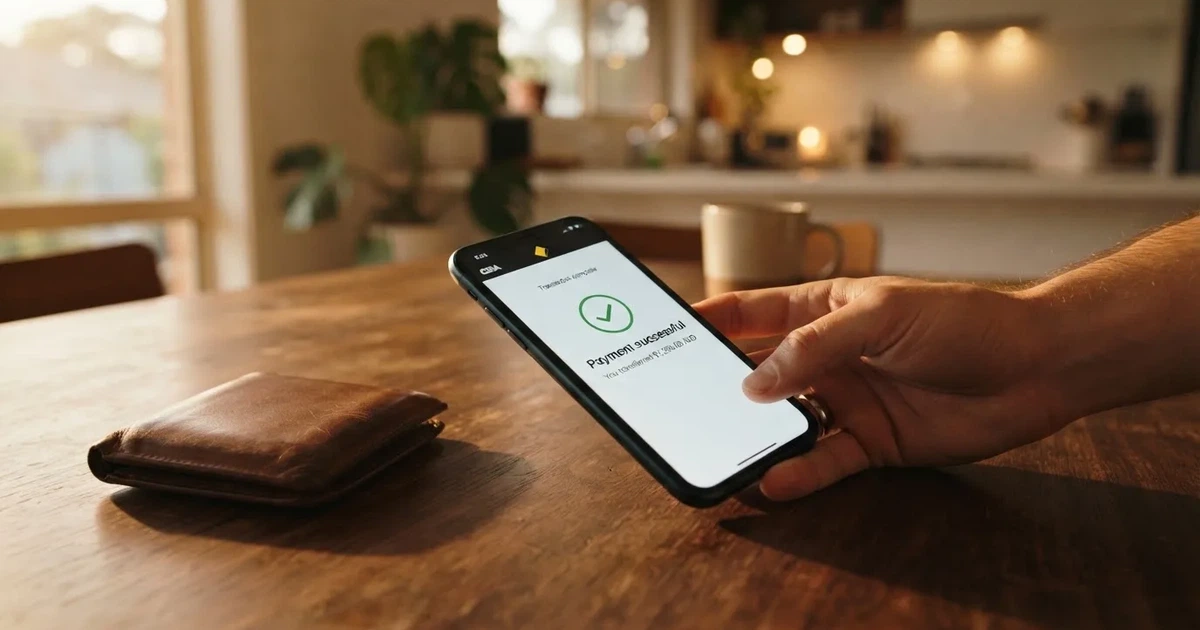
This page walks through that gap from the Australian end. It sets out what is actually lawful, what the ACMA’s enforcement record looks like, and what the brands cited in those warnings have in common — because the same offshore operators keep turning up under new brand names after each round of action. It then looks at the payment rails themselves: which Australian transfer systems are genuinely built for speed, which the law has restricted, and where a “verification” step quietly breaks the instant-payout promise. The ranking that follows is not a buyer’s guide. It is a record of the brands the ACMA itself has acted against, with the date and operator named on the warning notice, and what little verified material exists beyond that. Read it as such.
Currency and licence-claim data current as of 6 November 2026, verified against the ACMA register and Australian Payments Plus.
Table of Contents
- How Australian law treats online casino games and instant-payout claims
- The ACMA’s enforcement record, in numbers
- What the ACMA’s formal warnings show about who is actually offering these services
- How the Interactive Gambling Act shapes the payment side as well
- What BetStop and the responsible-gambling tools actually cover
- The crypto rail and what “instant” actually means on it
- The Australian payment rails that genuinely move money in under a minute
- What actually breaks the “instant” promise on the casino’s side
- The ACMA’s record against the brands marketing themselves as instant payout online casinos
- What the verified material says about each brand beyond the ACMA record
- Where Australian readers can actually play the games the marketing describes
- What this page does and does not conclude
- Frequently asked questions
How Australian law treats online casino games and instant-payout claims
The Interactive Gambling Act 2001, tightened by the Interactive Gambling Amendment Act 2017, makes it an offence to supply online casino games — pokies, table games, instant-win products — to a person physically in Australia. The 2017 amendments closed earlier workarounds and gave the ACMA its current enforcement toolkit. No state or territory has ever issued a licence for the activity, and the amendments confirmed that none could. What is licensable, and what licensed online bookmakers such as Sportsbet, Bet365 and Ladbrokes actually hold, is a Northern Territory Racing and Wagering Commission (NTRWC) licence for pre-event wagering on racing and sport — not for casino games.

The NTRWC itself is a useful illustration of how thin that layer of regulation is. The commission has no full-time staff, meets once a month in Darwin and supervises 52 of Australia’s online bookmakers. Its remit is the licensing side of licensed wagering, not the casino side of an “instant payout online casino”. The boundary matters because the marketing language — “instant payout”, “withdraw in seconds”, “AUD-friendly” — implies a regulated product. These brands lack any Australian casino regulation, and their overseas licences hold no power here.
The minimum age is 18. The individual player is not the target of the IGA — enforcement is aimed at the provider — but the protections Australians might expect from a regulated product do not apply. There is no Australian complaints body, no local dispute resolution, and no guarantee that a balance can be withdrawn if the operator is blocked. The site can vanish behind an ISP block with money still on it.
The ACMA’s enforcement record, in numbers
The ACMA enforces the IGA by investigating complaints, issuing formal warnings, and — since 2019 — formally requesting that Australian internet service providers block offending sites. By the ACMA’s own count as reported in June 2026, 1,751 illegal gambling and affiliate marketing websites had been blocked since the first blocking request in November 2019. More than 230 unlicensed gambling services had left the Australian market since enforcement was strengthened in 2017. The blocking list grows in batches: a round reported on 26 June 2026 alone added 12 sites — 7Signs, ChromaBet, Donbet, Duospin, Freshbet, Slots Gem, Jacks Club, Lucky Start, Pointsbetz.com, Spinrise, Vinyl Casino and Wildsino.
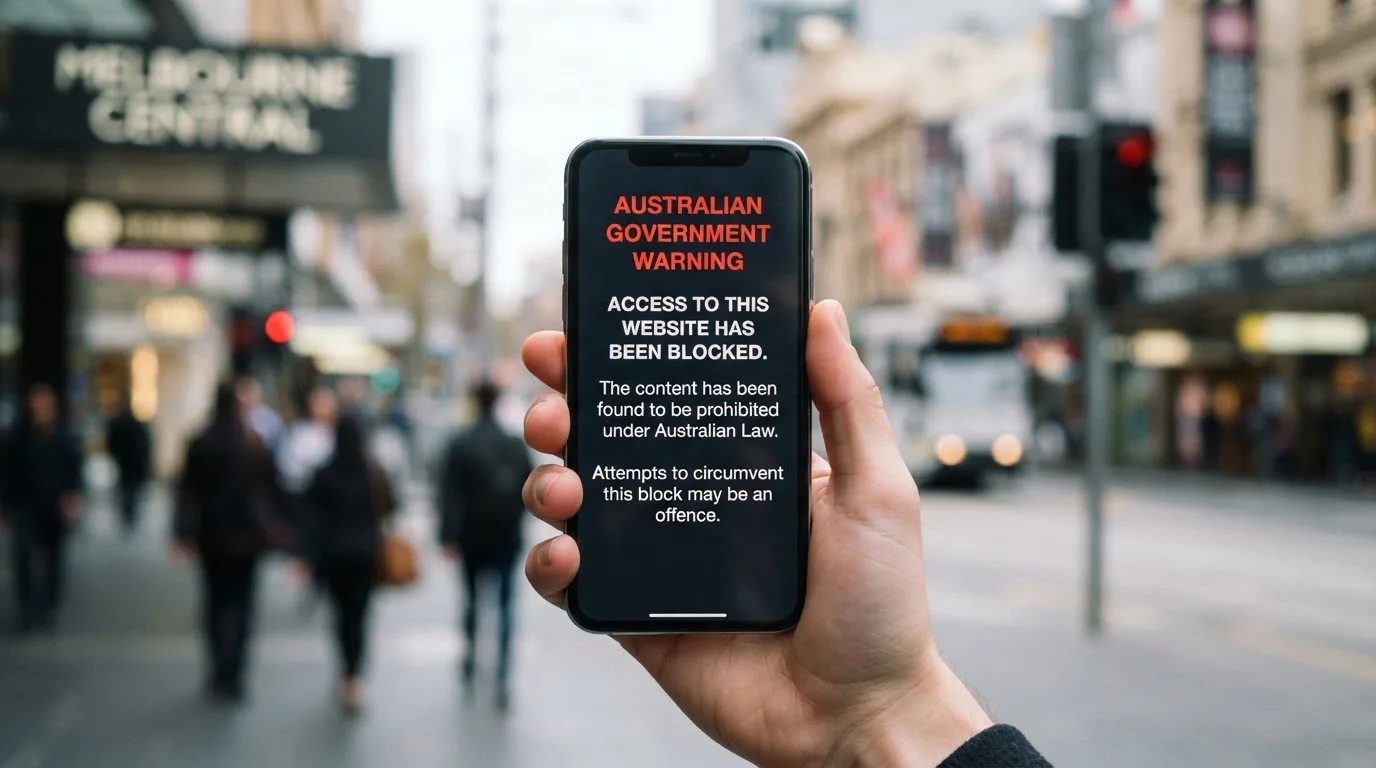
The pace, mapped against the running total, gives a measure of how the prohibition is being applied in practice. From the first blocking request in November 2019 to the mid-2026 total of 1,751 sites, the ACMA has directed ISPs to block roughly 1,751 URLs over about six and a half years — a band that runs between 200 and 300 blocks a year once the early ramp is averaged out, and that has only grown as each round drags fresh affiliates into the net. The number is a count of URLs rather than of operators, which is why the same operator can appear several times: a single company will rebrand, re-domain and re-skin under a string of front names, and the ACMA blocklist catches each in turn. The 230-odd services that have “left the Australian market” since 2017 are the operator-level figure behind the URL-level one — a smaller number of companies shedding a much larger number of domain names.
The cost side of the equation sits in a H2 Gambling Capital estimate for 2025: Australians lose about A$3.9 billion a year to illegal gambling sites, and the share of gambling going through legal channels fell from 74 per cent in 2021 to 64 per cent. The fall is the gap the IGA’s enforcement record is trying to close; the absolute figure is what is being closed against.
What the ACMA’s formal warnings show about who is actually offering these services
A blocking request and a formal warning are different tools. A block takes a site offline for Australian visitors at the ISP layer; a formal warning, issued under section 9 of the IGA, names the operator and the conduct complained of, gives the operator a chance to stop, and stands on the public record when further action follows. The warnings over the past three years cluster around a handful of operators, and those operators are the ones behind the brands the rest of this page names.
The clearest cluster is Dama N.V. In May 2022 the ACMA warned Dama N.V. over six brands in a single notice — Bambet, Dazard, Level Up, Rocketplay, Wild Tornado and Cobra Casinos. The same operator reappeared in March 2025 over Woo Casino and in May 2025 over Spirit Casino. The pattern — one operator, multiple brands, successive warnings — is the pattern this list mostly traces. Rocketplay itself drew a second warning in March 2026, this time naming Pulsup Ltd as the operator of Rocketplay.com.au; the site had changed hands between the two actions but the brand had not. In July 2025 the ACMA warned Bamboo Media over Ignition Casino and Consolutetish S.R.L. over National Casino and Bizzo Casino. Bizzo had already been the subject of a 2022 warning to TechSolutions (CY) Group Limited and TechSolutions Group N.V., the predecessor operator. In February 2025 the ACMA warned EOD Code SRL over Instant Casino. In April 2025 the ACMA warned Sterplay Holding Ltd over Casino Intense. In April 2026 the ACMA warned Ryker B.V. over Jackbit and CasinOK. Hollycorn N.V. was warned over Sky Crown and Blue Leo in a September 2022 notice that is still on the register.
The lesson is structural rather than about any one brand. The “instant payout online casino” the marketing describes is, in the great majority of cases, one of a small set of Curaçao- or Kahnawake-incorporated companies running a long shelf of brand names, each one capable of being warned, blocked, rebranded and re-launched before the next round of enforcement catches up.
How the Interactive Gambling Act shapes the payment side as well
The payment side of the IGA — amended again in 2023 and in force from 11 June 2024 — closes off the rails that might otherwise make an instant payout trivial. Australian-licensed online wagering services cannot accept payment by credit card or by any other credit-related product, and the same rule constrains gambling use of linked digital wallets such as Apple Pay, because the wallet is funding the underlying credit instrument. Penalties run to A$247,500 for an operator that accepts one. Digital currency is also out for any licensed wagering service. The lawful deposit rails for a licensed Australian bookmaker are debit card, bank transfer, PayID/Osko and BPAY.
For an offshore “instant payout online casino” the same restrictions do not bind — the operator is not licensed in Australia and is not subject to the ACMA’s payment-conduct rules. That is why these sites still ask for credit cards and cryptocurrencies, and why an Australian using one of those rails is operating outside the Australian consumer-protection framework. The ACMA’s formal-warning notices name this directly when they cite a brand: the operator is offering a prohibited interactive gambling service and accepting payment in connection with it.
A useful framing for an Australian player: the rails work, the casino does not. Osko will settle a transfer between participating Australian banks in under a minute, 24/7. The bottleneck on the casino side is not the rail — it is that the recipient of the transfer is an unlicensed operator whose continued ability to receive transfers, let alone process a payout back, can end with an ISP block.
What BetStop and the responsible-gambling tools actually cover
The responsible-gambling architecture for online wagering in Australia has a sharp edge that an offshore “instant payout online casino” sits entirely outside. BetStop — the National Self-Exclusion Register, run by the ACMA and live since August 2023 — binds every Australian-licensed online and phone wagering service. A person who registers with BetStop is matched against the customer database of every licensed operator, and the registered brands are obliged to refuse them service, refund deposits and stop marketing. It is the strongest consumer-protection lever available to an Australian punter.
It binds only Australian-licensed services. An offshore casino is not connected to BetStop and is not obliged to honour a BetStop registration. The self-exclusion a player has set up with their bank or with BetStop does not stop the player from opening an account with an offshore “instant payout online casino”, and it does not stop that site from accepting deposits. The two systems — domestic exclusion registers and offshore casino onboarding — do not talk to each other.
The same is true of the bank-level gambling blocks. ANZ lets a customer activate a gambling transaction block through the ANZ app; once on, the block refuses gambling transactions on the eligible card and, importantly, on linked digital wallets such as Apple Pay funded from that card. Turning the block off again requires a 48-hour cooling-off period, which ANZ describes as a deliberate friction point, and the bank warns that not all gambling transactions will be blocked and some non-gambling transactions might be blocked in error. Westpac runs a parallel gambling block at card level, refusing transactions bearing the merchant category code ‘Betting/Casino Gambling’ on eligible personal credit and debit cards. Commonwealth Bank lets customers apply a gambling lock to eligible cards through the CommBank app. These blocks are best-effort: they rely on the merchant category code being present and accurate, they work most reliably against large licensed operators, and they can be circumvented by an offshore site that miscategorises or routes around the code. They are not a substitute for the player deciding not to deposit in the first place.
Help is available regardless of where a person plays. The National Gambling Helpline — 1800 858 858 — is free, runs 24/7 and connects to Gambling Help Online, which also offers web chat. Financial Counselling Australia and the state-based problem-gambling services can help with the debt side if a balance has already been lost.
The crypto rail and what “instant” actually means on it
The crypto marketing is louder than the crypto reality. Bitcoin and the other coins the “instant payout bitcoin casino” listings advertise do move on a different rail from the Australian banking system, and a transfer on-chain can confirm in minutes — often faster than the bank-to-bank Osko transfer an Australian player would otherwise rely on. That is the genuine part of the pitch. The qualifier is what surrounds the transfer.
First, the IGA. For a licensed Australian wagering service, digital currency is not a permitted deposit method. An Australian-licensed bookmaker will not accept it. The crypto rail exists in this market only because the “instant payout crypto casino” is unlicensed in Australia and is not bound by the Australian rule. A player using it is paying into a service the ACMA has identified as prohibited.
Second, the merchant-side delay. On-chain confirmation is one part of the time-to-funds; the other part is the casino’s own processing. Many of these operators queue crypto withdrawals into a manual review step — anti-money-laundering checks, source-of-funds checks, “one last” verification — that can stretch what is technically an instant rail into hours or days. Where the on-paper promise and the in-practice experience diverge, it is almost always on the casino’s side, not the blockchain’s.
Third, the price side. Crypto-to-AUD conversion happens at whatever rate the operator quotes at the moment of cashout, less a conversion fee the player sees only when the screen shows the final number. A 1 per cent swing in Bitcoin against the Australian dollar between deposit and withdrawal is not unusual; over a larger balance and a longer hold, the conversion drag is the difference between what the marketing showed and what the player receives. The instant-payout promise and the fixed-AUD-promise rarely survive contact with each other.
Fourth, the irreversibility. A bank-to-bank transfer, even an instant one, can be reversed through the bank’s dispute process if the recipient turns out to be fraudulent. A crypto transfer cannot. AP+ — the operator of PayID and Osko — warns directly that being asked to transfer money to a PayID on an illegal gambling site almost certainly means a scam site. The same property — irrevocability — that makes the rail attractive to the operator makes it unforgiving for the player.
The Australian payment rails that genuinely move money in under a minute
The payment infrastructure that an Australian player would otherwise use is, on its own merits, fast. The New Payments Platform went live on 13 February 2018 and is owned by New Payments Platform Australia Ltd, a non-profit whose 13 shareholders include the Reserve Bank of Australia and the major banks. In September 2021 the ACCC authorised the merger of NPP Australia, BPAY Group and eftpos under a single holding entity, Australian Payments Plus (AP+). Outage discipline is built into the platform’s service levels: participants must keep monthly outages to no more than two minutes.
PayID is the addressing layer. Over 100 Australian financial institutions offer PayID-based instant transfers, and more than 25 million PayID identifiers had been registered on the platform as of April 2025. The crucial property for the player is the name check: paying to a PayID shows the name of the account holder before the transfer is sent. That feature is what AP+ points to when it warns that an instant-pay instruction on an illegal gambling site is almost certainly a scam — the account name will not match the operator the site claims to be.
Osko is the settlement layer sitting on the NPP. With Osko, a transfer between participating Australian banks arrives in under a minute, 24/7, whether it is addressed to a BSB and account number or to a PayID. The combination is what an Australian punter means by “instant payout” in any other context: money moved, confirmed and available, without office hours.
BPAY is the older parallel system. It has operated since 18 November 1997, runs on the online banking of more than 140 banks and financial institutions, and is offered by more than 95,000 businesses. The payer enters a Biller Code and a Customer Reference Number printed on the bill — a bill-payment system, not a person-to-person transfer. BPAY is now run by Australian Payments Plus alongside PayID and Osko, and its parent ownership — Cardlink Services Limited, jointly held by ANZ, Commonwealth Bank, National Australia Bank and Westpac — is the same ownership circle as the NPP. The pace is slower than Osko’s because BPAY settles in batched overnight cycles, which is why BPAY does not feature in the instant-payout marketing an offshore casino uses.
AUSTRAC’s threshold-transaction-report rule requires reports for cash transfers of A$10,000 or more, but the rule applies only to physical cash. Ordinary electronic bank transfers are not subject to that per-transaction reporting requirement, regardless of the amount. The implication for the player is that a bank transfer to or from an offshore operator is not, by itself, a flagged transaction. The flag, where one exists, comes from the operator’s side and from the bank’s own transaction-monitoring systems.
What actually breaks the “instant” promise on the casino’s side
Five things slow an otherwise instant payout, and four of them happen before the money ever moves. The first is identity verification. An unlicensed operator that lets a player deposit instantly is often the same operator that asks for the player’s passport, utility bill and source-of-funds evidence the moment the player requests a withdrawal — and the request is rarely satisfied by what the player submitted at signup, because the signup flow was deliberately lightweight. The verification gap is the single most common delay the marketing hides.
The second is bonus-term entanglement. A player who has accepted a deposit bonus has typically accepted wagering requirements — turnover multiples on the bonus, the deposit, or both — that the casino’s own system will not consider satisfied until specific play thresholds are met. A withdrawal request submitted before those thresholds are met is either refused outright or paid out net of the bonus, which is rarely what the player expected. The “instant” promise, in this case, never existed: the withdrawal was always going to wait for the bonus to clear.
The third is manual review on the operator side. Even outside bonus terms, payouts above a threshold — often a few hundred AUD — are routed into a queue that a human operator works through. The queue is where the “we need one more document” emails come from, and it is where a withdrawal can sit for 48 to 96 hours without explanation. The marketing page does not advertise the queue.
The fourth is the bank-side gambling block. A transfer to a known gambling merchant can be refused by the customer’s own bank if a gambling block is active. The customer may not realise the block is on. The result is a payout that bounced, a casino that did not receive it, and a player who has to negotiate both sides to recover the funds.
The fifth, and the one that does involve the rail, is the interchange or processing fee the operator pays and the operator occasionally tries to claw back. A withdrawal that arrives instantly can arrive minus a fee the player was not told about — usually framed as a “processing fee” or a “currency conversion fee”. The figure is small per transaction but routine, and it is the difference between “instant” and “instant, less what the operator kept”.
The ACMA’s record against the brands marketing themselves as instant payout online casinos
The brands in the table below are not a buyer’s shortlist. Each one appears because the ACMA itself issued a formal warning over it for offering prohibited interactive gambling services to Australians, and each one names the operator and date from the public warning notice. Online casino games cannot be licensed anywhere in Australia; foreign licence claims are irrelevant to Australian law. Where the ACMA register carries the brand, the brand is here.
| Brand | ACMA action and date | Operator named by the ACMA | Subject support |
|---|---|---|---|
| RocketPlay | Formal warning — March 2026 (Pulsup Ltd over Rocketplay.com.au); earlier Dama N.V., May 2022 | Pulsup Ltd; previously Dama N.V. | listings-only (Gamblinginsider.com) |
| Level Up Casino | Formal warning — May 2022 | Dama N.V. | listings-only (Westpac.com.au) |
| Woo Casino | Formal warning — March 2025 | Dama N.V. | — |
| Spirit Casino | Formal warning — May 2025 | Dama N.V. | — |
| National Casino | Formal warning — July 2025 | Consolutetish S.R.L. | listings-only (acma.gov.au, austrac.gov.au, betstop.gov.au) |
| Bizzo Casino | Formal warning — July 2025; earlier 2022 warning over TechSolutions | Consolutetish S.R.L.; previously TechSolutions (CY) / TechSolutions Group N.V. | listings-only (Gamblinginsider.com) |
| Ignition Casino | Formal warning — July 2025 | Bamboo Media | — |
| Instant Casino | Formal warning — February 2025 | EOD Code SRL | listings-only (Ecopayz.com, Payid.com.au) |
| Jackbit | Formal warning — April 2026 | Ryker B.V. | — |
| Casino Intense | Formal warning — April 2025 | Sterplay Holding Ltd | listings-only (austrac.gov.au, betstop.gov.au, Gamblinginsider.com) |
| Sky Crown | Formal warning — September 2022 | Hollycorn N.V. | — |
Several patterns are worth pulling out of the table rather than restating row by row. The first is operator concentration: the 11 brands name six distinct corporate operators, and three of them — Dama N.V., Consolutetish S.R.L. and TechSolutions — account for six of the warnings. The second is the timing skew: six of the eleven warnings are dated 2025 or 2026, which reflects the recent acceleration of the ACMA’s enforcement, not a clean record before then. The third is the recurrence: Rocketplay was warned in 2022 under Dama N.V. and again in 2026 under Pulsup Ltd, and Bizzo was warned in 2022 under TechSolutions and again in 2025 under Consolutetish S.R.L. — a brand has changed hands and the ACMA has acted twice on the same name. The fourth is what is missing: a row carries “Subject support” only where a verified source besides the ACMA warning actually names the brand for that topic. Empty cells are not refusals; they are the places where no verified source carries the brand on that subject.
What the verified material says about each brand beyond the ACMA record
RocketPlay
The ACMA has named this brand twice. The first warning, in May 2022, was to Dama N.V. and covered six brands including Rocketplay. The second, in March 2026, was to Pulsup Ltd over Rocketplay.com.au — the same brand under new ownership. Verified material beyond the ACMA notice is limited to listing pages such as Gamblinginsider.com, which carry the brand as a marketing entry rather than a regulated product. Online casino games cannot be licensed in Australia, and any site claiming otherwise is operating outside the law. The fact that the brand has survived two ACMA warnings under two operators is itself the most informative thing about it.
Level Up Casino
The May 2022 ACMA warning over Level Up was part of the six-brand Dama N.V. notice. Verified material on Level Up is thin: the only reference outside the ACMA record carried in the inputs is a Westpac gambling-block documentation entry, which lists the brand among those the bank’s card-level block is designed to refuse. The block is a merchant-category-code match, and the casino’s willingness to use it is its own admission of category. No offshore site has a licence that an Australian consumer can rely on.
Woo Casino
The ACMA’s March 2025 warning named Dama N.V. over Woo Casino. Verified material on Woo Casino is non-existent beyond the ACMA notice itself — no payment-rail documentation, no Australian register entry, and no domestic listing. The gap is consistent with a brand that exists primarily as one Dama N.V. skin among several. Its presence is not recognised by any Australian regulatory authority.
Spirit Casino
The ACMA’s May 2025 warning named Dama N.V. over Spirit Casino, alongside Woo Casino a few months earlier. Like Woo Casino, there is no verified material beyond the ACMA notice. The brand’s value to the operator is the marketing surface it adds to the Dama N.V. shelf; the brand’s value to an Australian reader is the ACMA warning itself, which is the public record of what the operator was told to stop.
National Casino
The July 2025 ACMA warning named Consolutetish S.R.L. over National Casino. Verified material beyond the warning is broader than for several others: the ACMA register itself lists the brand, AUSTRAC references the operating entity in its compliance material, and BetStop — the National Self-Exclusion Register — names the brand among those against which Australian-licensed exclusions are enforced. The BetStop reference matters because BetStop binds only Australian-licensed services; an offshore brand appearing in BetStop material means the brand is being addressed by the domestic framework, even though the brand itself sits outside it. No offshore site holds a licence enforceable in Australia.
Bizzo Casino
The July 2025 ACMA warning named Consolutetish S.R.L. over Bizzo Casino; a 2022 warning to TechSolutions (CY) Group Limited and TechSolutions Group N.V. had already named the brand. Verified material beyond the ACMA notices is limited to listings on Gamblinginsider.com. The pattern — same brand, two operators, two warnings — is the same recurrence structure as Rocketplay, and the conclusion remains: the brand operates with no Australian regulatory standing.
Ignition Casino
The July 2025 ACMA warning named Bamboo Media over Ignition Casino. Independent verification of this brand is non-existent beyond the ACMA warning. The brand has a longer history in the US-facing market than in the Australian-facing one, which is one reason the Australian-side material is sparse. Australian regulation does not recognise its operations.
Instant Casino
The February 2025 ACMA warning named EOD Code SRL over Instant Casino. Verified material beyond the warning is more substantial than for several of the others: EcoPayz, the e-wallet service, lists the brand in its merchant directory, and PayID’s own materials warn that being asked to transfer to a PayID on an illegal gambling site is almost certainly a scam — Instant Casino is one of the worked examples. The PayID reference is unusual: the payment rail itself is telling readers that the brand is operating outside the rules. Its presence is not recognised by any Australian regulatory authority.
Jackbit
The April 2026 ACMA warning named Ryker B.V. over Jackbit, in the same notice as CasinOK. Independent verification of this brand is non-existent beyond the ACMA warning. Jackbit is a crypto-led brand, which makes the warning particularly pointed: the IGA’s prohibition extends to digital-currency deposits at unlicensed services, and the brand’s marketing premise — an instant crypto payout — is the very combination the ACMA has acted against. Its regulatory status in Australia is effectively non-existent.
Casino Intense
The April 2025 ACMA warning named Sterplay Holding Ltd over Casino Intense. Verified material beyond the warning includes AUSTRAC references to the operating entity, a BetStop listing and Gamblinginsider.com entries. The same BetStop caveat applies as for National Casino: the brand sits outside the domestic framework, but the framework is publicly identifying it. It holds no valid standing in this market.
Sky Crown
The September 2022 ACMA warning named Hollycorn N.V. over Sky Crown and Blue Leo — a single notice covering both brands. Independent verification of this brand is non-existent beyond the ACMA warning. Sky Crown is one of the older Hollycorn N.V. brands in the set, and the gap since the 2022 warning reflects the operator’s own rebranding cycle rather than any change in the ACMA’s posture. Its regulatory status in Australia is effectively non-existent.
Where Australian readers can actually play the games the marketing describes
The honest answer to “where can I play pokies or casino games online in Australia” is the same in 2026 as it has been since the IGA was tightened in 2017: not at an offshore “instant payout online casino”, and not at any licensed Australian online casino, because no such licence exists. The games are available in licensed venues — pubs and clubs with poker-machine entitlements, and the land-based casinos in each state — under the rules of the relevant state or territory gaming regulator.
For pre-event wagering on racing and sport, the lawful options are the licensed Australian bookmakers — Sportsbet, Bet365, Ladbrokes and the rest — operating under NTRWC licences. The licensed bookmakers run debit-card, bank-transfer, PayID/Osko and BPAY deposit rails, are bound by the credit-card and crypto ban from 11 June 2024, and are connected to BetStop. Their payout speeds on PayID/Osko are genuinely instant. None of them offers online casino games, and any site that does while claiming to be licensed is misrepresenting its status.
The Interactive Gambling Amendment (Gambling Reform) Bill 2026 passed Parliament on 19 August 2026 and adds advertising and inducement measures that commence on 1 January 2027. The bill is law with a start date — it is not yet in force on this page. The new measures tighten the marketing side of the existing prohibition rather than licensing online casino games; the substantive prohibition is unchanged.
What this page does and does not conclude
The conclusion is short. The instant-payout marketing is built on rails — Osko, PayID, the New Payments Platform — that genuinely do what the marketing claims. The casinos those rails would be paying into are prohibited in Australia, and the ACMA’s enforcement record is a list of the operators that have been told so publicly. A player considering any of the brands named above is not choosing between one offshore casino and another; they are choosing whether to play at an unlicensed operator at all.
For a player who has decided to play anyway, the practical matters are the ones the marketing does not advertise: which brand has been warned most recently, which operator has reappeared under successive brand names, which payout rail the operator supports, and what verification the operator will demand before the money can leave. The table above gives the warning record; the payment-rail section gives the rail record. The two together are what an Australian reader actually has to work with.
Frequently asked questions
Does “instant payout” mean the money is truly available the moment the casino approves the withdrawal?
No. “Instant” describes the transfer rail once the casino has approved the payout. Before approval, the request sits in the operator’s own queue: identity verification, bonus-term checks, anti-money-laundering review, and a manual-approval step that can stretch from minutes to several days. The rail is fast; the casino is not.
Which Australian payment rail is genuinely built for near-instant transfers?
Osko, which runs on the New Payments Platform. A transfer between participating Australian banks arrives in under a minute, 24/7, whether it is addressed to a BSB and account number or to a PayID. PayID is the addressing layer; the name check before payment is the feature that makes it safer than a blind BSB transfer.
Is it legal for an online casino to advertise instant payouts to Australians?
No. Offering online casino games to a person in Australia is an offence under the Interactive Gambling Act 2001. The ACMA enforces the prohibition through formal warnings and by directing Australian ISPs to block offending sites. An “instant payout” claim from an offshore casino is, by itself, evidence of the activity the IGA prohibits.
Can a cryptocurrency withdrawal really be instant?
On the blockchain side, often yes — a Bitcoin transfer can confirm in minutes. On the casino side, the same delays apply as for any other rail: manual review, source-of-funds checks, conversion of crypto back to AUD at the operator’s quoted rate, and a processing fee the marketing page does not advertise. The speed the crypto marketing advertises is the speed of the rail, not the speed of the operator.
What verification steps can delay an otherwise instant payout?
The most common is a request, raised at withdrawal rather than at signup, for a passport, a recent utility bill, proof of address and sometimes proof of the source of the deposited funds. The bonus side adds a second: a withdrawal request submitted before the wagering requirements on an accepted bonus are met is either refused or paid out net of the bonus. The third is a manual-approval queue on payouts above a threshold the operator does not publish.
Should a claimed instant payout change how much I trust a site?
It should make you more sceptical, not less. A site that promises an instant payout before it has completed identity verification is the same site that will demand documents the moment you ask for the money. The marketing line is a deposit-side incentive; the delay is a withdrawal-side cost. Read the licence claim, the operator name and the regulator’s own warning record before deciding whether to deposit at all.