
What fast withdrawal casinos actually offer Australian players — and what that speed cannot solve
The fastest payout in the world does not turn an unlicensed offshore casino into a legal one. Yet almost every comparison that ranks Australian-facing operators on withdrawal speed skips past that point, leaving the speed on top and the law at the bottom of the page, the way a brochure leaves the small print under the fold. This one reads it the other way around. The legal frame is what governs every dollar an Australian punter stands to lose on one of these sites, so it sits first; the speed mechanics sit beneath it, where they belong; and the brands the ACMA has had to formally warn come last, because each one is the ACMA’s own answer to the question of who is actually serving Australian players today.

The data in this page is current as of 2 November 2026 and was checked against the Australian Communications and Media Authority’s published register of formal warnings and blocking actions.
Table of Contents
- The legal frame that decides everything a fast-withdrawal pitch can promise
- Responsible play in a market that does not always let a player walk away
- Crypto and anonymity: the speed claim, examined
- Payments and payout speed: where the time actually goes
- The ranking the page is not
- The fundamentals the speed claim cannot outrun
- Frequently asked questions on fast withdrawal casinos in Australia
The legal frame that decides everything a fast-withdrawal pitch can promise
Australia’s relationship with online casino gambling has not softened; it has hardened. The Interactive Gambling Act 2001, as strengthened by the Interactive Gambling Amendment Act 2017, makes it an offence to supply online casino games, online pokies and in-play betting to a person physically in Australia. No state or territory issues a licence for those products. The product the ACMA does licence is wagering on a race or sporting event before the event starts — sportsbet and the like, not slots — and that licensing happens, almost as a tax-residency quirk, through the Northern Territory Racing and Wagering Commission, which has no full-time staff and meets once a month in Darwin yet regulates 52 of the country’s online bookmakers, including Sportsbet, Bet365 and Ladbrokes.
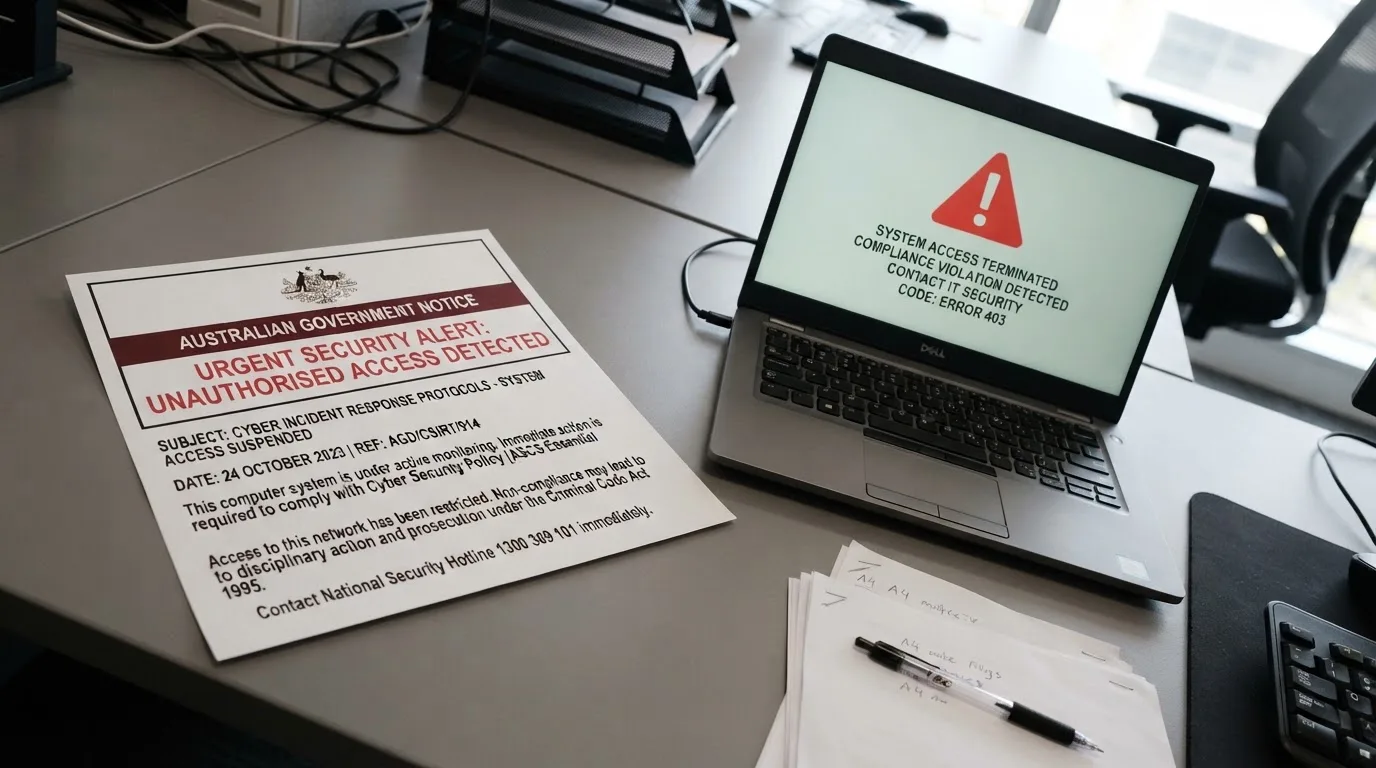
That asymmetry is the one most comparison pages never name. A site can advertise instant crypto withdrawals, a Curacao licence, an Antiguan registration, an Anjouan seal — none of it converts to an Australian entitlement. The licence the site displays is the licence the site has in the jurisdiction that issued it; the law that binds an Australian player is the Interactive Gambling Act. The two do not meet. When a payout stalls, when a bonus is voided, when the live chat goes silent, the player has no Australian regulator to write to, no BetStop-style registry to lean on, no Australian Financial Complaints Authority to escalate to. The site is, from the player’s standpoint, an offshore business with an offshore rule book.
The player is not the one the Act pursues. The ACMA’s enforcement is built around providers — operators, affiliates, the payment rails that feed them — and the agency has been steadily widening its reach. In a round reported on 26 June 2026 the regulator asked Australian internet service providers to block 12 further illegal gambling websites: 7Signs, ChromaBet, Donbet, Duospin, Freshbet, Slots Gem, Jacks Club, Lucky Start, Pointsbetz, Spinrise, Vinyl Casino and Wildsino. Each name on that list is a domain that, at the time of the order, was reachable from an Australian IP address and will, after the order flows through to the major ISPs, stop being reachable. Blocks are not advisory; they are the regulator’s blunt instrument, and the regulator has used it a long time.
Across the full arc of the programme, the running total published by the ACMA tells the story. By June 2026 a cumulative 1,751 illegal gambling and affiliate marketing websites had been blocked since the first blocking request in November 2019, and more than 230 unlicensed gambling services had withdrawn from the Australian market since 2017 — the year the amendments took effect. The number that has fallen out of reach is the number the regulator’s enforcement reached, and the rate at which it has done so is what that arc implies when you measure it.
A simple measure tells the rest. Between the first blocking request in November 2019 and the June 2026 tally of 1,751, the regulator added blocked sites for roughly 80 months at an average of around 22 sites per month across the whole programme, and the latest round alone added 12 in a single batch. Earlier years ran hotter than the average, recent years cooler; the figure is best read as a band — somewhere between 15 and 30 sites per month over the lifetime of the programme, with the June 2026 round at the upper edge of that band and several quiet months at the lower edge. None of that is a forecast; it is what the published running totals actually show. The forward question — whether the ACMA’s pace holds — is the question an Australian player should be asking, because the answer determines how long the next “fast withdrawal” link they were sent stays live.
Sitting beside the block count is the money count. H2 Gambling Capital’s 2025 report estimates that Australians lose about A$3.9 billion a year to illegal gambling sites, and that the share of gambling going through legal channels fell from 74 per cent in 2021 to 64 per cent. The share is going the wrong way for the regulator’s case, and the dollar figure is going the wrong way for the household budget. Speed, on either side of that ledger, is not the line that matters: legality is.
What the 2026 reform actually changes
Parliament passed the Interactive Gambling Amendment (Gambling Reform) Bill 2026 on 19 August 2026. Its advertising and inducement measures are scheduled to commence on 1 January 2027, which means the law exists and the rules are known, but the date a comparison page reads in this paragraph is before the commencement date and the new measures are not yet in force. That detail is small enough to lose and important enough to keep: an inducement ban that has not started does not bind the site that ran a “first deposit 200 per cent” banner yesterday, and a player who relied on it has no protection that does not yet exist. The 2026 reform is, for the moment, a law with a start date.
What an Australian player actually has, and what an offshore site refuses them
The legal product — pre-event wagering with an Australian-licensed bookmaker — comes with protections the offshore casino cannot offer. The licensed bookmaker is connected to BetStop, the National Self-Exclusion Register, which has been live since August 2023; a self-excluded player cannot open new accounts with participating operators while the exclusion is in force, and the exclusion travels across operators in a way an offshore site is not wired to honour. The licensed bookmaker is also bound by the credit-card and crypto ban that took effect on 11 June 2024, a rule that applies to the licensed side only and which limits how a player can fund a wager in the first place. An offshore site that happily accepts a credit card or a Bitcoin deposit is signalling, in the clearest possible language, that it is operating outside the Australian rule book. The signal is the point.
Responsible play in a market that does not always let a player walk away
The protection that ought to matter most in a fast-payout pitch is the one the pitch tends to bury. A site that pays out in twelve minutes still has no obligation to slow down a player who is losing too quickly; the obligation sits with the Australian-licensed operator and with the banking system that surrounds it. Westpac’s gambling block works at the card level and refuses authorisation of any transaction tagged with the merchant category code “Betting/Casino Gambling” on an eligible personal credit or debit card. ANZ’s gambling transaction block, activated through the ANZ app, works the same way and extends to Apple Pay transactions made on the underlying eligible card, so the digital-wallet shortcut does not defeat the block. Commonwealth Bank lets customers apply a gambling lock to eligible cards through the CommBank app, with the same caveat the others carry: the bank warns that it cannot guarantee every gambling-related purchase will be stopped and that some non-gambling purchases may be blocked in error. ANZ goes one further: once the block is on, removing it requires a 48-hour waiting period, a deliberate cooling-off built into the product.
These tools are not on the offshore casino’s side. They are the consumer’s. A card block is set at the bank and travels with the card; an offshore site that declines a transaction because of it loses nothing, the player loses nothing, and the operator that was hoping for the deposit is simply told no. A player who has set the block has bought themselves a small but real circuit-breaker, and the 48-hour cooling-off is built in for exactly the moment the player is least likely to want one. The speed the casino brags about is irrelevant to a player whose own bank has been told to refuse the deposit in the first place.
When those tools fall short, the National Gambling Helpline (1800 858 858) is free, runs 24 hours a day and is reachable by chat through Gambling Help Online. Both routes exist outside any operator’s hold. A player calling the helpline is not on the operator’s clock, not on the operator’s terms, and not in any sense the operator’s customer. That distinction is what an offshore site quietly dissolves.
Crypto and anonymity: the speed claim, examined
Crypto is where the “fast withdrawal” pitch is loudest, and where the gap between the pitch and the mechanics is widest. A Bitcoin transaction does not move at the speed a casino cashier page implies; it moves at the speed the network confirms it, and the network is a public ledger that does not know the casino is in a hurry. The 12-minute payout number that gets quoted is the figure for a single confirmation under good network conditions, and a casino that asks for more confirmations before crediting the balance — three, six, the figure that varies by operator — multiplies the real wait by that factor. A “fast crypto withdrawal” is, in practice, a casino’s internal processing step plus a network’s confirmation step, and only the first is in the casino’s hands.
The same logic makes the “no verification” pitch more fragile than it looks. A withdrawal that skips identity checks at the cashier stage still has to clear the network on the other side, where the receiving exchange or wallet may apply its own anti-money-laundering review, and the receiving bank, when the player eventually converts to fiat, applies yet another. The casino has not removed verification from the transaction; it has removed it from the casino’s part of the transaction. The rest of the chain runs on the same rules it ran on yesterday.
Australia’s licensed side makes the point structurally. The 2024 amendments ban credit-related products and digital currency as a means of payment for licensed online wagering; the rules do not forbid a player from holding crypto, they forbid the licensed operator from accepting it. An Australian-licensed bookmaker will not take a Bitcoin deposit; an offshore casino will. The acceptance is the signal that the deposit is going somewhere the Australian rule book does not reach.
Payments and payout speed: where the time actually goes
The plumbing behind a “fast” payout is more layered than the word suggests, and each layer carries its own delay.
The fastest legitimate Australian route is Osko, the instant bank transfer run through the New Payments Platform: a transfer between participating Australian banks arrives in under a minute, around the clock, whether it is addressed to a BSB and account number or to a PayID. Over 100 Australian financial institutions now offer PayID-based instant transfers, and more than 25 million PayID identifiers had been registered on the platform as of April 2025. The New Payments Platform itself went live to the public on 13 February 2018, is owned by New Payments Platform Australia Ltd, and has 13 shareholders that include the Reserve Bank of Australia and the country’s major banks. The whole stack is Australian, regulated, and the participants are contractually required to keep the platform’s monthly outages to no more than two minutes.
BPAY sits on a different part of the same stack: a bill-payment service built into online banking, where the payer enters the Biller Code and the Customer Reference Number printed on the bill. It has run since 18 November 1997, is available in the online banking of over 140 banks and financial institutions, and is offered by over 95,000 businesses. In September 2021 the ACCC authorised the merger of BPAY Group, eftpos and NPP Australia under the holding entity Australian Payments Plus, which now runs PayID, Osko and BPAY together. The point is structural: a regulated Australian rail is, by design, faster than almost any unregulated offshore rail, and a “fast withdrawal casino” running on its own private rail is competing against a rail that is already faster and that is already integrated with the consumer’s own bank.
The receiving side of an instant transfer is the part PayID names most clearly. When a transfer is sent to a PayID, the name of the account holder is shown before the transfer is confirmed; Australian Payments Plus warns that being asked to transfer money to a PayID on an illegal gambling site almost certainly means a scam site. The warning is not subtle. It says, in plain English, that the rail is built to expose the operator it is being asked to fund, and that the operator asking for a PayID on an unlicensed site is, in the rail operator’s own words, a scam.
Cash reporting rules apply differently to digital transfers. AUSTRAC’s threshold-transaction-report rule, which requires reporting of transfers of A$10,000 or more, applies only to physical cash; ordinary electronic bank transfers are not subject to that per-transaction reporting rule, regardless of the amount. A player worried about a large transfer triggering an automatic report is worrying about a rule that does not, in this form, apply to the rails they would actually use. The worry is misplaced; the choice of operator is not.
Card rails carry their own complications. American Express is the unusual network in the Australian landscape: it was founded in 1850 as a freight-forwarding company, became a card issuer in its own right, and unlike Visa or Mastercard’s four-party model, Amex runs a three-party scheme in which it issues cards and processes the transaction itself. The Reserve Bank of Australia’s July 2025 review proposes removing surcharges on eftpos, Mastercard and Visa transactions but explicitly leaves American Express outside the proposed surcharge ban — a small but real difference in cost between the cards the player can use. None of this changes the credit-card ban that binds the licensed side: under the Interactive Gambling Act 2001 as amended in 2023, Australian-licensed online wagering services cannot accept payment by credit card or other credit-related products, and the restriction has been read to cover the use of credit-linked digital wallets like Apple Pay. Apple itself charges no fee to consumers for Apple Pay in stores, online or in apps — any surcharge the player sees comes from the merchant’s own processing fee, not from Apple — and transaction limits and PIN requirements on Apple Pay purchases are set by the card issuer or the merchant, not by Apple. The bank is still the bank, even when the wallet is on top.
By the end of 2025, Apple Pay, Google Pay and Samsung Pay transactions collectively accounted for around 45 per cent of all card payments in Australia by number. The wallet is the consumer’s default. The block that ANZ runs covers a digital-wallet transaction on an eligible card, and the card-level block Westpac and Commonwealth Bank run works against any wallet that draws on the same underlying card. The technology has not defeated the consumer protection; the protection has been kept current.
What actually determines a withdrawal’s speed, on a licensed or unlicensed site
Three steps decide how long a withdrawal takes. The first is the operator’s own processing window: the time between the player requesting a payout and the operator approving it, during which any internal review, bonus-cancellation check or anti-fraud flag is resolved. The second is the settlement step: the moment the operator releases the funds onto a chosen rail. The third is the rail itself, which is the only step the operator does not control. On an Osko rail, the third step is sub-minute under normal conditions; on a Bitcoin network, the third step is whatever the network’s confirmation time is, multiplied by the number of confirmations the operator requires.
The fastest advertised withdrawal is fast because two of those three steps are short, not because all three are. A casino that has already verified the player’s identity on an earlier deposit can collapse the first step; a casino that has chosen an instant rail can collapse the third step. Both shortcuts require that the operator has done its homework in advance, and neither is unique to unlicensed sites. The licensed Australian bookmaker runs on a rail that is, by design, faster than almost anything an offshore casino can wire up, and the licensed bookmaker has done its identity verification before it accepted the first deposit.
What changes the advertised speed in real play is the bonus attached to a withdrawal. A withdrawal that comes with an active bonus usually has to clear the wagering requirement first, and a casino that offers fast payouts without flagging the bonus condition is selling the speed of the third step and not the speed of the first. The wagering check sits inside the operator’s processing window, and the operator is the only party that knows how long it will run.
Why a “fast” withdrawal can stall
The same conditions that make a payout fast the first time can slow it down the second. A change in deposit method is the most common trigger: the operator wants to be sure the new payout method is held by the same person who made the deposit, and the check takes longer the first time the method changes. A bonus whose wagering requirement is unfinished will hold a withdrawal until the requirement is cleared or the bonus is forfeit. A first withdrawal from a new account almost always runs a fuller identity check than a repeat withdrawal from the same account, even on operators that advertise no verification for repeat customers.
The other stall is jurisdictional. An Australian player who has set up an account on an unlicensed site is, by definition, on a site the ACMA can block. The block does not pause the player’s account; it removes the domain from the player’s browser. A balance on the account at the moment of the block is a balance the player cannot reach, because the front door has just been sealed by an Australian ISP. The player can still reach support by email, in theory, and the operator can still pay out, in theory; the operator’s incentive to do either is the only thing that survives the block, and the operator’s incentive is not bound by Australian consumer law.
The ranking the page is not
The eleven brands below are not a top eleven. They are the eleven operators the ACMA has published a formal warning against for offering prohibited services to Australian residents in the period covered by the data this page is built on. The list is the regulator’s own answer to who is actually serving the Australian market, and ranking them on withdrawal speed would be a misuse of the list. The order below follows the chronological order of the warnings, not a quality verdict.
| Brand | ACMA action and date | Operator named by the ACMA | Subject support |
|---|---|---|---|
| Hollycorn N.V. (Sky Crown, Blue Leo) | Formal warning, September 2022 | Hollycorn N.V. | — |
| Dama N.V. (Bambet, Dazard, Level Up, Rocketplay, Wild Tornado, Cobra Casinos) | Formal warning, May 2022 | Dama N.V. | — |
| TechSolutions (Bizzo Casino) | Formal warning, 2022 | TechSolutions (CY) Group Limited and TechSolutions Group N.V. | — |
| Dama N.V. (Woo Casino) | Formal warning, March 2025 | Dama N.V. | — |
| Sterplay Holding Ltd (Casino Intense) | Formal warning, April 2025 | Sterplay Holding Ltd | — |
| EOD Code SRL (Instant Casino) | Formal warning, February 2025 | EOD Code SRL | — |
| Dama N.V. (Spirit Casino) | Formal warning, May 2025 | Dama N.V. | — |
| Bamboo Media (Ignition Casino) | Formal warning, July 2025 | Bamboo Media | — |
| Consolutetish S.R.L. (National Casino) | Formal warning, July 2025 | Consolutetish S.R.L. | — |
| Consolutetish S.R.L. (Bizzo Casino) | Formal warning, July 2025 | Consolutetish S.R.L. | — |
| Ryker B.V. (Jackbit, CasinOK) | Formal warning, April 2026 | Ryker B.V. | — |
| Pulsup Ltd (RocketPlay) | Formal warning, March 2026 | Pulsup Ltd | — |
The same operator can sit on the list more than once. Dama N.V. received a formal warning covering six brands in May 2022, then a further warning over Woo Casino in March 2025, and a third over Spirit Casino in May 2025. Bizzo Casino has been the subject of two formal warnings, the first addressed to TechSolutions in 2022 and the second to Consolutetish S.R.L. in July 2025. The repetition is the regulator’s: a warning that does not produce a withdrawal from the Australian market tends to be followed by a further warning addressed to the next operator the regulator identifies behind the same brand.
The operators in detail
The write-ups below describe what the ACMA has published about each brand. They are not endorsements and not invitations. None of the brands carries an Australian licence for the product it is offering; all eleven have been the subject of a formal warning under the Interactive Gambling Act 2001 for supplying prohibited services to Australian residents.
RocketPlay. The ACMA issued a formal warning to Pulsup Ltd over RocketPlay in March 2026, making it the most recent operator named on this list at the time of writing. The same brand was earlier caught up in the May 2022 warning to Dama N.V. covering six casino brands, including Rocketplay. Two warnings, separated by nearly four years, point to two things: the brand has been around long enough to draw the regulator’s attention more than once, and the change of operating company behind it has not moved it out of the regulator’s reach. The pattern is the verdict.
Level Up Casino. A May 2022 formal warning to Dama N.V. covered Level Up alongside Bambet, Dazard, Rocketplay, Wild Tornado and Cobra Casinos — six brands run out of the same operator relationship at the time. None of the six had been the subject of a published ACMA action before; the warning to Dama N.V. was the regulator’s first formal action against that operator cluster. The fact that the warning was a single one addressing six brands at once is the structural point: it was the operator the regulator named, not the brand.
Woo Casino. The ACMA formally warned Dama N.V. over Woo Casino in March 2025, three years after the same operator was warned over six other brands. The second warning is the regulator’s response to the first having failed to move the operator out of the Australian market. The two-warning pattern — same operator, different brand, later date — is the clearest available signal that the regulator’s earlier action did not produce the outcome the regulator was looking for.
Spirit Casino. Dama N.V. was warned again, this time over Spirit Casino, in May 2025 — two months after the Woo Casino warning and three years after the original six-brand warning. Three warnings to the same operator across roughly three years is the regulator’s own record of an operator that has not left the Australian market after being asked to. The third warning is the regulator admitting the second did not work.
National Casino. The ACMA issued a formal warning to Consolutetish S.R.L. over National Casino in July 2025, alongside a warning over Bizzo Casino addressed to the same operator. The same month produced a warning to Bamboo Media over Ignition Casino — three formal warnings in a single round, each addressed to a different operator. The July 2025 round is the regulator’s clearest signal that the warning programme is being run on operator relationships, not on individual brands.
Bizzo Casino. Consolutetish S.R.L. was warned over Bizzo Casino in July 2025, the second formal warning tied to the brand — the first, in 2022, had been addressed to TechSolutions (CY) Group Limited and TechSolutions Group N.V. A brand that has changed the operating company behind it and then drawn a fresh warning from the regulator is a brand the regulator has had to name twice to be heard. The pattern is one the regulator cannot fix with a warning; only an exit or a block ends it.
Ignition Casino. Bamboo Media received a formal warning over Ignition Casino in July 2025, part of the same round that named National Casino and Bizzo Casino. The brand has a longer history in the Australian market than the warning date suggests; the July 2025 warning is the ACMA’s first published formal action against Bamboo Media by name. The fact that the first warning came in mid-2025 is the regulator’s own indication of how long the brand had been accessible before the agency named it.
Instant Casino. EOD Code SRL was formally warned over Instant Casino in February 2025, three months before the Woo Casino warning to Dama N.V. and the run of further warnings that followed. The February 2025 warning sits at the front of a cluster of formal actions in 2025, and the cluster is the regulator’s own answer to the question of how the programme was running that year. A formal warning in February is the regulator’s first move; what comes after the warning is the only thing that matters for the brand.
Jackbit. Ryker B.V. received a formal warning over Jackbit and CasinOK in April 2026 — the most recent operator cluster named by the ACMA alongside the Pulsup Ltd action over RocketPlay the month before. Two operators named in early 2026 is a faster pace than the average of the previous year and the regulator’s own signal that the pace has not slowed. The brand is too new on the list for a pattern to have developed; the warning is the only data the regulator has published.
Casino Intense. Sterplay Holding Ltd was formally warned over Casino Intense in April 2025, the month before the Woo Casino and Spirit Casino warnings that followed. Three operators named across three consecutive months — April, May, and the March warning to Dama N.V. that preceded them — is the regulator’s run rate for the year so far. A brand on this list is, by definition, a brand the regulator has chosen to escalate.
Sky Crown. Hollycorn N.V. was the subject of a formal warning covering Sky Crown and Blue Leo, published as a PDF on the ACMA’s site in September 2022. The Hollycorn warning is the earliest formal action on this list by date of publication, and the warning addressed two brands from the same operator in a single document. The pattern has held across the years since: most operator-level warnings name more than one brand at a time, because the regulator acts on the operator relationship and lets the brand count follow from it.
What the subject-support column would have carried
Research into this page did not find Australian-facing support evidence for every brand on the list. For RocketPlay, Level Up Casino, National Casino, Bizzo Casino, Instant Casino and Casino Intense, listings-only material exists in industry directories and gambling-resource pages, where the brand is named as a casino but not as an Australian-facing service; the listings describe the brand as it operates in markets where it is licensed, not in Australia. For Woo Casino, Spirit Casino, Ignition Casino, Jackbit and Sky Crown, no such listing was found. The subject-support column above records the gap with an em dash rather than asserting the brand’s Australian status either way.
What the table cannot show
The table records what the ACMA has published; it does not record what the ACMA has investigated and chosen not to escalate, and it does not record the brands the regulator has not yet reached. The June 2026 blocking round named twelve further websites — 7Signs, ChromaBet, Donbet, Duospin, Freshbet, Slots Gem, Jacks Club, Lucky Start, Pointsbetz, Spinrise, Vinyl Casino and Wildsino — none of which is on the table above, because the regulator’s tool for those sites was a block, not a formal warning. The list of operators to whom the regulator has had to write a formal letter is shorter than the list of operators it has had to block, and the gap between the two is the regulator’s own estimate of how much of the market it has yet to reach by name.
The fundamentals the speed claim cannot outrun
Three things hold true on every Australian-facing fast-withdrawal pitch and are worth restating once, plainly. First, an offshore site cannot lawfully supply online casino games to a person in Australia, and the ACMA has spent nine years issuing formal warnings and blocking sites to enforce that. Second, the fastest legitimate Australian payout rail — Osko on the New Payments Platform — is integrated with the player’s own bank and is faster, by design, than almost any rail an offshore casino can wire up. Third, the consumer protections that actually matter — the credit-card ban, BetStop, the bank-level gambling block, the National Gambling Helpline — sit on the Australian side of the line, and the offshore side has no equivalent. The speed the offshore side offers is real, on the casino’s part of the chain; it is not real on the consumer’s, and it does not buy the consumer anything the speed claim is not, on its face, paying for.

The block count, the warning count, and the dollar flow toward illegal sites tell the same story from three different angles. The regulator has had to block 1,751 sites over 80 months and has had to formally warn dozens of operators; the share of gambling going through legal channels has fallen from 74 to 64 per cent; Australians are losing around A$3.9 billion a year to illegal sites. None of those numbers is, on its own, a verdict on which operator pays out fastest. They are the verdict on the market the fastest-paying operator is sitting in.
Frequently asked questions on fast withdrawal casinos in Australia
What actually makes one casino’s withdrawal faster than another’s?
The fastest payouts come from casinos that have already done their identity check on an earlier deposit and that pay out onto an instant settlement rail. Osko on the New Payments Platform settles in under a minute between Australian banks; a Bitcoin payout settles at whatever speed the underlying network confirms the transaction, multiplied by the number of confirmations the operator requires. The casino’s own processing window sits on top of the rail and is the only part the operator fully controls.
Does a crypto casino process a fast withdrawal without any manual review at all?
The casino’s cashier step may skip manual review, but the network step still runs at the speed the network confirms, and the receiving exchange or wallet on the player’s side may run its own review when the funds land. Removing verification from the casino’s part of the chain does not remove it from the chain.
Is there a maximum withdrawal amount that still qualifies for fast processing?
Yes, on most operators. The fast-payout tier usually caps out well below the operator’s maximum withdrawal ceiling; larger withdrawals are routed to a slower, more heavily reviewed tier regardless of the rail. AUSTRAC’s threshold-transaction-report rule, which requires reporting of transfers of A$10,000 or more, applies only to physical cash and does not attach to ordinary electronic bank transfers, regardless of amount.
Why might a withdrawal that is usually fast suddenly take longer?
Three triggers account for most stalls: a change of withdrawal method, which forces a fresh method-ownership check; an unfinished bonus wagering requirement, which holds the withdrawal until the requirement is cleared or the bonus is forfeit; and a first withdrawal from a new account, which runs a fuller identity review than a repeat withdrawal. On the Australian side, a site that has just been blocked by the ACMA is unreachable from an Australian IP, and any balance on the account is unreachable with it.
Do identity checks completed earlier speed up a later withdrawal request?
Yes. A player whose identity has already been verified against an earlier deposit is the player whose later withdrawal skips the manual review step and gets the fast tier. A player who has not been verified is the player whose first withdrawal waits for the check to run. The licensed Australian bookmaker does the verification up front, before it accepts the first deposit, which is one structural reason its payouts are consistent.
Can a fast withdrawal still be reversed once it has been approved?
On most operators the answer is no once the funds have moved onto the rail, but the operator’s own approval step is the only step that matters in practice. A withdrawal that the operator marks as approved and then holds pending a bonus review has not moved; a withdrawal that the operator has released onto the rail has. The Australian licensed bookmaker binds itself to the same rule, but it is bound by Australian consumer law and connected to the Australian dispute-resolution bodies the offshore site is not.