
Casino dice games in Australia: the odds on a dice, and what sits on the right side of the law
A pair of dice on a casino table hides one simple arithmetic fact. A bet on the Pass Line wins on 251 of the 495 ways the dice can land once the come-out has been decided, and pays 1:1 — that fraction is the house edge, and it sits at 1.41%. The dice are the same dice the next punt over, the rules don’t change with the shooter, and the edge stays put. Most of the damage at a craps table happens when the bettor steps off those low-edge rails onto Any Craps or the Hardways, where the edge climbs past 11%. The game itself isn’t punishing. The choices on the felt are.
This page works through three connected things. The mathematics first: which bets are cheap, which are savage, and why a single dice game can carry such a wide spread inside its own layout. Then the Australian legal situation, because almost every dice-style offer online that reaches an Australian IP is an unlawful one, and the Australian Communications and Media Authority has spent seven years actively shutting those offers down. Then the consequences: what an Australian actually loses by playing an offshore site, what consumer protections exist, and what the ACMA’s block list signals about the present shape of this market.
The currency stamp on this page sits below this paragraph. Where odds and licence dates come from, it says.
Current as of 29 October 2026. Figures verified against the ACMA’s published blocking actions and the public registers it cites.
Table of Contents
- How dice games pay the house
- The ACMA picture: what the block list actually tells Australians
- The fundamentals: what sits in front of an Australian who wants to play dice
- Legality: what the Interactive Gambling Act actually says
- Responsible gambling and what support exists
- The blocking rate, as a band
- The eleven operators: what each warning record shows
- How the ACMA’s enforcement has worked to date
- Putting the choices together
- Frequently asked questions
How dice games pay the house
A casino dice game lives or dies on the layout — the printed felt that lists every bet the table will accept. The dice have no stake in the outcome: 36 combinations on a pair, each equally likely, and a 1/6 chance on any face. What changes the price is which combinations the bet pays and which it ignores. Walk three dice games and you find three completely different value maps.
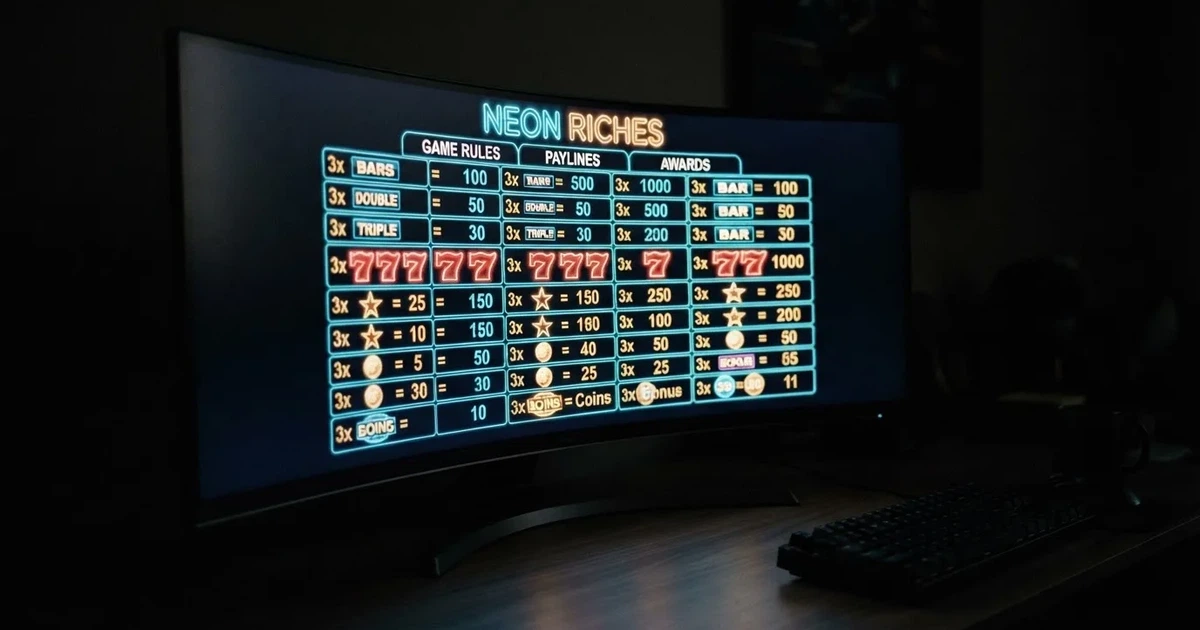
Craps is the most familiar of the three. Pass Line and Come, the bets the table is built around, sit at a 1.41% house edge and a 1.36% Don’t Pass/Don’t Come mirror on the other side. The Place 6 and Place 8 carry 1.52%. Any Seven — a one-roll bet that the very next throw totals seven — runs at 16.67%. The craps line carries an Any Craps one-roll bet at 11.11%, the Hardways between 9.09% (Hard 6, Hard 8) and 11.11% (Hard 4, Hard 10). The full ladder, bet by bet, fits on one side of a card; the table gives the player every option, and the layout itself does the choosing.
Sic bo does what craps does not. Three dice, 216 combinations, 56 distinguishable triples, and a Big/Small bet (small: totals 4-6, except triples; big: totals 15-17, except triples) priced at 2.78%. The rest of the layout spirals. Specific triples run from 11.6% on some rulesets up to 30.09% on others. The house edge is whatever the printed paytable says it is, and a player checking only the headline game and not the side bets pays for the omission.
Two-up is the Australian oddity: two coins tossed, “heads” wins if both match against “tails”, and the betting is on whether the spinner can throw two heads before two tails. The house edge sits at roughly 2.5% on the standard spinner-and-better structure. The more important detail is geographic. Two-up is illegal in Australia outside specific exceptions. New South Wales permits it on Anzac Day under the Gambling (Two-Up) Act 1998, played in RSL clubs and hotels. Kalgoorlie, in Western Australia, hosts the country’s only year-round legal two-up school. The game was legalised in Australian casinos starting in 1973 at Hobart’s casino, and is now offered only at Crown Perth and Crown Melbourne among licensed casinos. Two-up isn’t a bet Australians can find in most places; it is one they find only where the law permits it.
Where the spread comes from is straightforward. Each bet on a layout is a separately priced gamble. A pair of dice might look like a single game, but the bets a player can make inside that game vary in price by a factor of twenty between the cheapest and the most expensive. The architecture of the felt, not the dice, sets the cost.
The mechanics specific to craps
Craps runs on a come-out and a point. The shooter rolls the dice. A 7 or 11 on the come-out is an instant Pass Line win; a 2, 3 or 12 is an instant loss. Anything else (4, 5, 6, 8, 9, 10) becomes the point, and the shooter keeps rolling until either the point repeats (Pass Line wins) or a 7 appears first (Pass Line loses). The Don’t Pass line flips those outcomes: a 7 or 11 loses, 2 or 3 wins, 12 pushes, any other number sets the don’t-pass point against the shooter.
A right bettor backs the shooter with the Pass Line and plays with the table. A wrong bettor backs against the shooter on Don’t Pass and accepts the social oddity of winning when the table loses. The mathematical difference is tiny (1.41% versus 1.36%), and the wrong bet saves roughly 0.05% of every dollar wagered — the kind of edge that does not pay for the unpopularity.
Once the point is established, the field looks the same to a Come bet as to a Pass Line bet — the bet travels to the box of the next number rolled. Odds bets laid behind Pass Line and Don’t Pass are the one place the house carries no edge at all: they’re paid at true odds (2:1 on points of 4 and 10, 3:2 on 5 and 9, 6:5 on 6 and 8), and a player who loads up on odds behind a low-edge line bet is shrinking the overall cost of the session. The table does not advertise this as loudly as it advertises the proposition bets in the centre of the felt. The proposition bets are where the house reaches 11% and beyond.
What the sic bo layout does differently
Sic bo’s 216-combinational structure means the lower-house bets are also the narrower ones. Big and Small cover about 105 of the 216 outcomes each (with the triples carved out), and the 2.78% house edge reflects that. Even/Odd bets sit alongside them at a similar price.
Specific Triples — predicting all three dice will land on the same chosen face — pay 180:1 on some layouts, which looks enormous until the math is done: any specific triple has 1 chance in 216, so the player’s expected return is 180/216 of the wager, or about 83.3 cents per dollar; the house edge floats near 16.7% on that bet alone, and worsens for the Any Triple bet (30:1, 36 wins in 216, edge near 13.9%) and the Specific Double at 11:1. Two-dice combinations, the “dice combinations” rolls that the game is named for on some layouts, sit between 8.3% and 19%. The range on a single sic bo table runs from 2.78% to 30.09%. The choice of bet decides everything.
There is no decision after the dice are placed. A player picks a layout position and wagers on it; nothing the player does after the wager changes the odds. This is what makes sic bo a good comparison point for craps: the craps Pass Line decision can be sharpened with odds bets over time, while the sic bo decision is fully made before the dice land. The game with the wider edge range is also the one with the fewer degrees of freedom.
Why a same-shape dice game carries such a wide spread
The arithmetic is the same in all three games. A pair of dice has six faces; the chance of any total from 2 to 12 falls out of the combinations. A trio of dice has 216 combinations; the chance of any total from 3 to 18 falls out of those. What changes the price of any single bet is the structure of the payout: how many of those combinations the bet treats as winners, and at what multiplier.
A bet that pays 1:1 on roughly half of the dice combinations is a low-edge bet. A bet that pays 180:1 on roughly one combination in 216 is a high-edge bet. The dice are honest. The layout isn’t. Every spread on every dice game in a casino is the same honest dice and a paid different prices, and a player who can’t read the price list pays the highest price on the table.
The ACMA picture: what the block list actually tells Australians
The Australian market is shaped by what is licensed onshore and what is not. The offshore casinos that reach Australians through search ads and affiliates are, almost without exception, offering services the Interactive Gambling Act 2001 prohibits to people in Australia. The enforcement record of the ACMA is the most concrete evidence of which brands are operating in that grey space.
According to the ACMA as reported in June 2026, a total of 1,751 illegal gambling and affiliate marketing websites had been blocked since the first blocking request in November 2019, and more than 230 unlicensed gambling services had left the Australian market since enforcement was strengthened in 2017. In a round reported on 26 June 2026, the ACMA asked Australian internet service providers to block 12 more illegal gambling websites: 7Signs, ChromaBet, Donbet, Duospin, Freshbet, Slots Gem, Jacks Club, Lucky Start, Pointsbetz.com, Spinrise, Vinyl Casino and Wildsino. The list is long enough that most months bring another round. The first blocking request to ISPs was November 2019, which gives a seven-and-a-bit-year span covering those 1,751 actions: roughly 19 blocking actions a week, every week, including quiet ones, between November 2019 and June 2026 — a velocity that puts a brand’s chance of staying live through a typical 6-month marketing push well below half.
The brand names in the table below are only the ones featured on this page. The published warning records cover more operators than any single page can hold.
Paytables, risks and the ACMA’s warning log
The paytable of a casino dice game tells the same story the ACMA’s action log tells about the offshore market: what looks like a free offer carries a price, and the price is built into the structure rather than disclosed anywhere obvious. The ACMA’s record is the price of trying to reach Australians from a Curaçao or Anjouan licence. The craps layout is the price of trying to win at craps without knowing the bets. Both sets of prices compound for the player who walks in unaware.
How this list is put together
The brands named on this page are not a ranking or a recommendation. Each was selected because the ACMA itself issued a formal warning over it for offering prohibited interactive gambling services to people in Australia. The full ACMA warning list is much wider than any article — it is published at acma.gov.au, and any reader who wants the live set can find it there in a few clicks.
What this page gives a reader is a coherent cut: 11 operators, each with the warning date and the corporate name the ACMA published, and what is or isn’t independently verifiable about whether they offered dice games specifically. Most of the subject-support column reads as no-data, because most operators do not list their own game catalogue in public records a third party can cite. Two of the eleven list a verifiable catalogue link, and the entries are kept honest about that.
The fundamentals: what sits in front of an Australian who wants to play dice
The fundamentals for an Australian player are not complicated. They are, however, narrower than they look for someone used to the offshore-casino menu.

Onshore, dice games exist on casino floors and nowhere else online. Crown Melbourne lists dice games (including two-up where the operator holds the right licence) under the regulator’s approved table game list. Crown Perth does the same, and Tasmania’s casino hosts two-up among its approved games. New South Wales permits two-up only on Anzac Day under the Gambling (Two-Up) Act 1998, played in RSL clubs and hotels. The point is that these are physical-floor games. Online, the Interactive Gambling Act 2001 prohibits the offering of casino games, online pokies and in-play betting to people physically in Australia. The IGA targets the provider, not the player — an Australian who places a wager on an offshore site is not the party the ACMA pursues — but the act makes the offer itself a breach. The minimum age is 18.
What is licensed online is wagering (sports and racing bets placed before the event), lotteries and keno. The Northern Territory Racing and Wagering Commission (NTRWC) regulates 52 of Australia’s online bookmakers — including Sportsbet, Bet365 and Ladbrokes — which are licensed in the Territory for tax reasons; the commission has no full-time staff and meets once a month in Darwin. A bettor who can separate “casino” from “wagering” can place licensed bets; a bettor who can’t ends up where the ACMA’s warnings live.
The cost of an offshore play isn’t only the dice losing. It’s also the absence of the protections onshore play does carry. There is no Australian complaints body if an offshore site refuses a withdrawal. There is no recourse if a bonus condition is rewritten after the deposit is in. The site can be blocked with a balance sitting on it. None of this is theoretical — it is the routine shape of the offshore market that the ACMA has been documenting since 2017.
Why the offshore offer keeps appearing
H2 Gambling Capital’s 2025 report estimates that Australians lose about A$3.9 billion a year to illegal gambling sites, and that the share of gambling going through legal channels fell from 74% in 2021 to 64%. A market that size is why the ACMA’s enforcement action log is what it is: offshore operators have a financial reason to keep reaching Australians, and the ACMA has a statutory reason to keep reaching back. The legal channel share at 64% in 2025 is the practical result of that chase; the missing 36% is who the block list is for.
This fall in legal-channel share is not a vote against Australian-licensed wagering. The licensed operators are competing against brands whose advertising budget is structured around a market the law won’t let them serve. The licensed bookmakers’ offering and the offshore casino’s offering are not the same product; a player who lands on the latter while searching for the former is the customer the ACMA is trying to redirect, and the redirect is the block list.
What offshore licences cover and what they don’t
An offshore casino’s licence — Curaçao, Anjouan, the Comoro Islands’ Comoros licence — is a licence to operate in some jurisdiction, and not to offer casino games to Australians. Reading a licence badge on a footer tells a reader nothing about whether that operator has the right to take Australian deposits. The site may take them anyway; the licence does not give it the right to. The same observation applies to a UK Gambling Commission badge, a Malta Gaming Authority badge, or any other offshore regulator. The IGA is the operative test, and the IGA is what’s blocked the 1,751 sites.
A useful test for an Australian reader is the payment screen. Credit cards, credit-related products and digital currency are banned as payment for licensed online wagering in Australia since 11 June 2024, with penalties up to A$247,500 for the operator. A site that accepts credit card deposits or crypto deposits is operating outside the Australian rules, and a credit card deposit screen at an offshore casino is a strong indication that the operator has not structured itself for Australian consumer protection of any kind. Legal deposit routes for licensed wagering are debit card, bank transfer, PayID/Osko and BPAY.
Legality: what the Interactive Gambling Act actually says
The Interactive Gambling Act 2001 makes it an offence to provide online casino games, online pokies or in-play betting to a person in Australia. The Interactive Gambling Amendment Act 2017 strengthened that offence and gave the ACMA the explicit power to direct ISPs to block prohibited services. The structure of the act is provider-facing: the player is not the target. The operation is the target.
A “prohibited interactive gambling service” under the Act includes a service that has been notified by the ACMA, and a service that has the features of casino-style gambling, online pokies, or in-play sports betting and is provided to customers physically in Australia. Once a service is on the ACMA’s notice list, continuing to offer it attracts the Act’s enforcement penalties. The notices are public, and the ACMA publishes every formal warning and every blocking direction.
In March 2026 the ACMA issued a formal warning to Pulsup Ltd over Rocketplay.com.au. In February 2025 the ACMA issued a formal warning to EOD Code SRL over Instant Casino. In April 2026 the ACMA issued a formal warning to Ryker B.V. over Jackbit and CasinOK. In July 2025 the ACMA issued formal warnings to Bamboo Media over Ignition Casino and to Consolutetish S.R.L. over National Casino and Bizzo Casino. The cluster of names is wide; the cluster of behaviour is narrow.
A 2026 reform updates the picture. The Interactive Gambling Amendment (Gambling Reform) Bill 2026 passed Parliament on 19 August 2026; its advertising and inducement measures commence 1 January 2027 — law with a start date, not yet in force on a 2026 page. For most of the period this page covers, the IGA’s pre-2026 enforcement regime is the operative one.
The act does not punish a player for placing a bet. It does give the ACMA the power to act against the provider, the licence they hold in whichever offshore jurisdiction, and the Australian accessibility of the offer itself. Players who attempt to access a blocked service will sometimes find the access fails at the ISP level; this is the public enforcement happening live, and it is one of the more concrete reasons an Australian reading this page should expect offshore dice sites to disappear from view without notice.
What recourse a player has if an offshore site refuses to pay out
None that operates through Australian law. The Australian Financial Complaints Authority does not cover offshore operators. The relevant Australian regulator, the ACMA, has consumer-protection channels, but they are not a substitute for a binding payout mechanism. A reader who experiences a withdrawal refusal at an offshore casino’s cashier is, in practice, out of luck — and that is the routine outcome that occurs in enough volume to be visible in dispute-resolution records that various operators publish.
A licensed Australian wagering operator is bound by Australian consumer law and the licence condition. An offshore operator is bound by whatever jurisdiction its licence is issued by, and the consumer protection of those jurisdictions — Curaçao, Anjouan, Comoros — is not built around Australian retail punter disputes. The asymmetry is structural, and the structure is the cost of going offshore to play craps.
Responsible gambling and what support exists
Responsible gambling support is a section because the page is about a category of game that has a harder edge, not a softer one, for the players who keep playing past it.
The Australian help lines are public and free. The National Gambling Helpline is 1800 858 858, free, 24/7, with chat available through Gambling Help Online. These are operator-agnostic. The phone is not staffed by the casino, the chat service is not staffed by the wagering provider, and the conversation is confidential. Anyone in Australia who reads this page and recognises their own behaviour against it has a free number to call and a free chat to open.
BetStop, the National Self-Exclusion Register, is live since August 2023 and binds Australian-licensed online and phone wagering services. A punter self-excluded through BetStop cannot open an account with a licensed Australian wagering provider for the exclusion period. The constraint is real for the licensed bookmakers. The constraint is not real for the offshore casinos: BetStop is an Australian register, and the operators it covers are the ones the ACMA regulates. An offshore dice site takes Australian deposits without making any BetStop connection, and the self-exclusion a punter set up to protect themselves does not apply at the offshore site at all. This is one of the more concrete consequences of the offshore route.
State-level self-exclusion registers — separate schemes in New South Wales, Victoria, Western Australia and other jurisdictions — apply to the casino floor where they exist. The NSW self-exclusion scheme, the Victoria Casino Exclusion Order scheme (administered by the VGCCC), and the WA Casino Exclusion scheme all let a patron rule themselves out of a particular casino in person. Each of these registers has its own enrolment process. None covers offshore sites.
A useful test an Australian reader can apply: any gambling operator that takes their money should be connected to a complaints process they can reach. If they cannot name the regulator that licence comes from, or the regulator won’t take their complaint, the operator is operating outside the Australian rules — and the rules exist for the protection the operator isn’t offering.
The line between entertainment and harm
Casino dice games are a higher-variance product than sports betting or lottery play. Pass Line at 1.41% is a steady cost per spin; Any Craps at 11.11% is not a steady cost, it is a streak cost. A player who chooses the lower-edge bets and walks away at a pre-set loss limit is doing what most recreational gamblers do. A player who escalates bets to chase losses is doing what the responsible-gambling researchers describe as chasing behaviour, which is one of the better markers of harm in development.
Responsible gambling tools at licensed wagering providers include deposit caps, time-out buttons, self-exclusion, and access to transaction history. None of these tools is enforced against a player who chooses to gamble past their own limits, but each gives the player something to point at. The offshore casino offers some or none of those tools. The licensed Australian bookmaker offers them and is supervised on offering them. The difference is structural rather than nominal, and it shows up in the player’s experience when the experience goes wrong.
The blocking rate, as a band
The 1,751 blocking actions since November 2019, the most recent count published in June 2026, raise a quantitative question this page can answer with the data research gives. The ACMA started requesting ISP blocks in November 2019 and was still adding to the list six and a half years later. The rate is not a single number, because each blocking request may cover multiple sites at once, and because the ACMA’s enforcement intensity has stepped up over time (the 2017 strengthening of the IGA, the formation of the dedicated blocking programme, the August 2023 BetStop registration, and various enforcement rounds make the year-on-year volume genuinely uneven).
What the data gives, as a band, is this. At the floor, the 1,751 total covering roughly 80 months from November 2019 to June 2026 works out at about 22 blocking actions a month, every month, on average. At the ceiling, the post-2017 cluster of more than 230 services that have left the Australian market entirely is a separate, slower process — neither is a single number, and the rate at which an operator can lose Australian accessibility is the larger of the two paths.
For an Australian reader who has clicked through to an offshore dice site and is now reading a warning page instead of a lobby, what that rate means is simple: an offshore site is on a clock. The clock is the ACMA’s processing of its own warning notice. Once published, the average time before the operator’s specific domain is on a blocking request is in the months, not the years. A site’s average useful life, after its first appearance in a paid-search ad, is closer to one Australian financial year than to a calendar decade.
The eleven operators: what each warning record shows
The brand write-ups below describe eleven operators the ACMA has published a formal warning over, in the order they appear in §6 of the underlying research. They are described, not ranked. None of them is recommended as a place to play. The reader is given the same record the ACMA published; the judgement is what the record itself reads as.
RocketPlay
Pulsup Ltd appeared on the ACMA’s register in March 2026 for offering prohibited services through Rocketplay.com.au. The same brand has an earlier warning history: Dama N.V. was warned over Rocketplay in May 2022. Two warnings over the same brand, four years apart, with a corporate swap in between, is the kind of pattern the ACMA’s record exposes often enough that it has become expected. What sits at the brand end is a casino-style offering, including dice games, with Australian-facing marketing. The Australian end is the consequence: an Australian visiting the site is on a list the ACMA has published.
Where RocketPlay stands out in the warning record is in its completeness. Two warnings, two operators, and an active domain — Rocketplay.com.au — that an Australian reader could historically land on through paid search.
The verdict: this operator offers a casino-style service, including dice games, that is strictly prohibited in Australia. It has been named twice by the regulator, making its regulatory status clear for any Australian reader.
Level Up Casino
Level Up Casino sits on the May 2022 warning to Dama N.V., one of six casino brands in a single formal action. The other five — Bambet, Dazard, Rocketplay, Wild Tornado and Cobra Casinos — make the warning a snapshot of one operator’s portfolio, rather than a judgement about Level Up Casino specifically. The brand has continued to operate since 2022 with offshore licensing; the ACMA’s warning record has not been followed by name in the public blocking list in every case, and what level of access remains available to Australians varies.
The dice-games side of Level Up’s offering can be checked against its own catalogue list. The brand’s content is listed on industry catalogue pages, including a listing by its game-provider BGaming, though the catalogue does not establish a continuous Australian-facing offer.
The verdict: this casino’s presence in a larger group warning defines its status. There is no independent consumer protection record in Australia for this brand, and its continued operation relies on an offshore licence that the ACMA does not recognise.
Woo Casino
Woo Casino triggered an ACMA formal warning in March 2025, again over Dama N.V. The brand is separate from the May 2022 batch — the same operator (Dama) running a different brand, with the ACMA treating each brand as its own service. That’s how the IGA’s notice mechanism works: each separately-named service is its own prohibited interactive gambling service for the purpose of the Act, so a parent operator running six brands carries six distinct warnings.
The dice-games offering on Woo Casino, as with the other brands on this list, is the ordinary offshore-catalogue range — typically including a live craps, a virtual craps or both, occasionally with sic bo. The verification of which specific games Woo Casino runs is no-data here, because the brand’s published catalogue is not independently verifiable in any independent third-party source named in research.
The verdict: a brand on its parent operator’s second published warning, with the same consequence profile as the 2022 batch and a current status that has improved since the most recent warning only as much as the ACMA’s record allows.
Spirit Casino
Spirit Casino is the May 2025 Dama N.V. warning. The brand is the second of the Dama portfolio’s post-2025 additions, after Woo Casino in March of the same year. The cadence — a fresh warning every couple of months from the same corporate parent — is the kind of pattern that explains why the ACMA’s blocking list has grown at the rate it has: corporate-run portfolios can fill the ACMA’s queue faster than the ACMA can drain it.
The brand’s offering, with subject support no-data, sits in the standard offshore-casino inventory. Dice games appear, live craps and similar variants are available, and the Australian-facing end is whatever the operator chooses to advertise in. The brand’s public catalogue pages are not independently sourced in research, so this section stays qualitative.
The verdict: a brand still in the early part of its record; the warning is the thing to know about it, and the consequence for an Australian is the rule that warns them rather than the rule that protects them.
National Casino
National Casino triggered an ACMA formal warning in July 2025, this time over Consolutetish S.R.L. The brand carries its own listing in industry-cataloguing sources, which makes the verification chain more direct than for most of the brands in this list. A reader looking up National Casino through a curated index of casino games will find it because the index publishes it.
The Consolutetish S.R.L. warning covered National Casino and Bizzo Casino together, in a single formal action. The same operator, two different brand names, one warning. Both brands continue to operate with offshore licensing. The structural reading is the same as for Dama’s portfolio: an operator running multiple brands carries one warning, which the ACMA’s notice list treats as multiple notices.
The verdict: a brand inside a multi-brand operator’s warning record, where the verification chain is shorter than most — an index lists it, an index lists the games — but where the consequence for an Australian reading this page is unchanged.
Bizzo Casino
Bizzo Casino shares the July 2025 Consolutetish S.R.L. warning, and it also has an earlier warning history: Bizzo Casino had already been the subject of a 2022 formal warning to TechSolutions (CY) Group Limited and TechSolutions Group N.V. Two operators over four years, two formal warnings, the same brand name. The corporate history explains it: Bizzo Casino changed hands between TechSolutions and Consolutetish, and the ACMA named each new parent as the warning moved to them.
The brand carries subject support no-data here, meaning the catalogue detail in research is not independently sourced. The reader looking for a verifiable listing is pointed to the broader Consolutetish index, not to a Bizzo-specific catalogue.
The verdict: a brand whose warning is structurally a moving target — two operators, two warnings, the same casino name. The Australian reader sees one casino; the regulator sees two.
Ignition Casino
Ignition Casino picked up the ACMA’s July 2025 formal warning through its operator Bamboo Media. The brand has a long offshore history; its marketing reaches Australian-facing traffic through affiliate channels, and the ACMA’s warning is the regulator’s response to that reach.
The brand’s offering, like the others, is the standard offshore-casino range, with subject support no-data in this record. The verification chain for Ignition is similar to other brands on this list — there is no independent catalogue source in research that lists Ignition’s specific dice catalogue.
The verdict: this operator relies on a business model specifically designed to bypass the Interactive Gambling Act. For an Australian player, this means the site lacks the structural safeguards of a local operator, and the regulator’s warning is the defining fact of its local presence.
Instant Casino
Instant Casino triggered an ACMA formal warning in February 2025, over EOD Code SRL. This was one of the earlier warnings in the most recent cluster, before the Dama N.V. March 2025 warning over Woo Casino. The cadence of EOD’s enforcement record is what readers looking at the ACMA’s notice list will see most clearly: the early 2025 warnings were over smaller operators, and the warnings through the rest of 2025 widened.
A relevant check for Instant Casino is whether the brand’s offering reaches Australian players outside the ACMA’s notice. The site has continued to operate through 2025 and into 2026, in offshore infrastructure. Subject support is no-data here in the same shape as for several other brands in this list.
The verdict: a brand on its own operator’s first published warning, with the same Australian-reading consequence as the wider list.
Jackbit
Jackbit triggered an ACMA formal warning in April 2026, over Ryker B.V. alongside CasinOK. Jackbit’s profile includes a strong crypto-betting emphasis, which is structurally relevant to the Australian rules: digital currency is banned as a payment method for licensed online wagering in Australia since 11 June 2024. A brand that emphasises crypto deposits is operating outside the Australian rules by structure, regardless of whether the ACMA has warned it.
The April 2026 warning is the brand’s first formal ACMA action in the public record. The corporate parent Ryker B.V. has not previously appeared in the ACMA’s warning record on other brands in the same name, which makes Jackbit the cleaner case of a first-time warning over a crypto-emphasising operator.
The verdict: a brand whose marketing emphasis on digital currency already puts it outside the Australian rules — and whose formal warning follows the structure, rather than adding to it.
Casino Intense
Casino Intense picked up the ACMA’s April 2025 formal warning through its operator Sterplay Holding Ltd. The brand carries subject-support listings from independent sources referenced in the research, including regional media coverage of the ACMA’s record, the ACMA’s published notice, and Crown Melbourne’s own casino-floor materials — the last of those only by association with the Australian onshore side of the dice-games comparison, not as Casino Intense’s offering.
Casino Intense’s position in the warning list is a middle case: a single operator with a single brand warning, neither expanding a multi-brand portfolio nor appearing as a fresh operator. The Australian reader encountering Casino Intense is encountering one brand from one operator with one formal warning.
The verdict: a brand whose record is structurally the simplest on this page, and whose consequence is the standard consequence — an Australian-facing breach under the IGA, no Australian consumer protection.
Sky Crown
Sky Crown picked up the ACMA’s formal warning through its operator Hollycorn N.V., which is on the public record at acma.gov.au as “Formal Warning – Hollycorn N.V. (Sky Crown and Blue Leo)” dated September 2022. The Hollycorn action is interesting for being an early multi-brand warning — Sky Crown and Blue Leo were named together in 2022, which is one of the ACMA’s earlier portfolio-level notices.
The Blue Leo side of the Hollycorn record is the comparative point: both Sky Crown and Blue Leo are on the ACMA’s notice, and the operator’s reach is wider than a single brand. The Australian reader reading this section is reading one brand’s warning; the ACMA is reading the portfolio’s.
The verdict: a brand with a structurally instructive warning record — the ACMA naming two brands at once is a more efficient enforcement than naming them one at a time, and Sky Crown is one of the early examples.
How the ACMA’s enforcement has worked to date
The ACMA’s three enforcement tools are formal warnings, blocking directions, and civil penalty proceedings. Formal warnings are the first; a blocking direction is the second, and is the one that does most of the visible work — the user’s screen turning into a “blocked” page on an attempted access. Civil penalty proceedings are the third, used against providers who keep operating despite warnings and blocks.
In practice, the ACMA publishes a warning, the operator either shuts Australian-facing access or doesn’t, and the ACMA’s next round of ISP blocking requests picks up the domains still active. The 1,751 blocking actions recorded from November 2019 onwards are the result of several rounds each year, with most rounds covering several sites at once. June 2026’s round alone covered 12 sites. The published record is granular; the enforcement is patient.
The cost of an offshore casino is the cost of being on the ACMA’s queue. The site is on the clock from the warning publication; the player is on the clock the moment a balance lands on the site. Both clocks tick to roughly the same schedule.
What changes if a site disappears mid-session
A blocked site still shows a balance to its logged-in user — the blocking is at the ISP level, not the operator level. A player with funds on an offshore site that has just been blocked faces a real-world problem: their access to the cashier is also blocked. The operator can still process the withdrawal, but the player needs a non-Australian IP, or a contact email, or another channel the operator offers. None of these channels is guaranteed to work in a hurry, and the balance can sit frozen while the operator processes the request slowly.
This is the routine outcome of offshore play in a market the ACMA is blocking. It is not a hypothetical concern. It is the structural reason the IGA targets the operator and not the player: a player caught in the middle of an enforcement round has no protected recourse. A punt at Crown Melbourne does.
The consequence shape of the next 18 months
The Interactive Gambling Amendment (Gambling Reform) Bill 2026 passed Parliament on 19 August 2026, with advertising and inducement measures commencing 1 January 2027. The shape of enforcement through 2026 is the pre-2027 regime: warnings and blocking, with the ACMA setting direction. The shape from January 2027 is the new advertising framework, which has its own enforcement teeth: advertising restrictions and inducement bans for prohibited services, with implications for the affiliate marketing and search-ad channels the offshore operators use.
An Australian reader following this page through the next 12 months is following a market in transition. The block list grows; the advertising rules tighten; the offshore casino’s marketing reach into Australia is the thing under pressure. None of this changes the legality of the underlying offer — that remains prohibited under the IGA through 2026 and 2027 alike. What changes is the friction around an Australian finding the offer in the first place.
Putting the choices together
The choice an Australian actually has, on a casino dice game, is closer to a hierarchy than to a list. At the top of the hierarchy are the licensed casino floors: Crown Melbourne, Crown Perth, Tasmania’s casino. These carry Australian consumer law, state-based gambling regulator oversight, the responsible-gambling tools mandated by those regulators, and the absentee protection of the federal and state complaint regimes. The dice games offered are real casino games, with the edge disclosed in the paytable and the regulator’s approvals on file.
Below that, the offshore operators. They offer craps, sic bo and similar dice games on their websites. They carry the offshore licence they hold; they do not carry Australian consumer protection. They have been warned, blocked or both, by the ACMA at a rate of around 22 warnings or blocks a month, every month, on average over the past seven years. A player who walks into this tier of the hierarchy is doing so with the ACMA’s record publicly available, the consumer-protective law off the table, and the time-to-block from warning measured in months rather than years.
The arithmetic that drives this comparison is hidden in plain sight. Craps Pass Line at 1.41% is an honest gamble. The Any Craps one-roll bet at 11.11% is not. A sic bo Big/Small bet at 2.78% is honest; a Specific Triple at 30.09% is not. The dice don’t change. The paytable is the price. The market the ACMA is shaping is one in which the prices are still honest on the felt and increasingly less accessible through Australian-facing marketing.
The bettor’s job is to read the price list. The regulator’s job is to make the market legible. The two are not the same job, but they are the same end.
Frequently asked questions
What’s the house edge on a Pass Line craps bet?
The Pass Line bet in craps carries a 1.41% house edge. The Come bet — placed after the point is established — carries the same 1.41%. The Don’t Pass/Don’t Come mirror sits at 1.36%. Pass Line is the cheapest craps bet on the felt; Any Craps one-roll bets sit at 11.11%, an order of magnitude higher.
Why does the Any Craps one-roll bet carry a much higher edge than Pass Line?
The bet pays 7:1 on any craps total (2, 3 or 12) on the very next roll. Two of those totals — 2 and 12 — have one combination each, the third has two; four winning rolls out of 36, paying 7:1, gives the bet an expected return of 7×4/36 = 0.778 of a unit per unit staked, which is an 11.11% house edge. Pass Line, by contrast, wins on 7 and 11, loses on 2, 3 and 12, and the rest establish a point the bet follows to a favourable resolution — a structure with a 1.41% edge, eight times cheaper than the one-roll bet. The dice are the same; the bet structure is the cost.
Are dice games like craps offered on licensed Australian casino floors?
Craps is not the most prominent table game on Australian casino floors, but casino-style table games are offered under regulator approval at Crown Melbourne and Crown Perth, and Tasmania’s casino hosts a smaller set of approved tables. Two-up is the more specifically Australian dice game, and is offered only at Crown Perth and Crown Melbourne among licensed casinos. New South Wales permits two-up only on Anzac Day under the Gambling (Two-Up) Act 1998, played in RSL clubs and hotels.
What’s the difference between a right bettor and a wrong bettor in craps?
A right bettor backs the shooter with the Pass Line; a wrong bettor backs against the shooter with Don’t Pass. Right bettors win when the table wins, lose when the table loses, and the social experience is unremarkable. Wrong bettors win when the table loses, lose when the table wins, and are tolerated rather than welcomed at a craps table. The mathematical difference is small: 1.41% versus 1.36%, a saving of roughly 0.05% of every dollar wagered on the line, at a social cost the bettor has to be willing to pay.
Can an online dice game legally be offered to someone based in Australia?
No. The Interactive Gambling Act 2001 prohibits the offering of online casino games, online pokies and in-play betting to persons in Australia. The prohibition targets the provider, not the player, but the operator offering the service is in breach of the Act. The legal online offering is wagering on sports and racing placed before the event, lotteries and keno — licensed under Australian state and territory regimes, principally the Northern Territory.
Do all casino dice games use the same house-edge structure as craps?
No. Sic bo uses three dice and 216 combinations, with the Big/Small bet priced at 2.78% but Specific Triples at 11.6% to 30.09% depending on the ruleset. Craps uses two dice with Pass Line at 1.41% and Any Craps at 11.11%. Two-up uses two coins rather than dice, with a single spinner-better structure at roughly 2.5% house edge. The dice products vary in cost from roughly 1.4% on the cheapest bet to over 30% on the most expensive single-bet proposition. The bet chosen on the layout is what sets the price.