
Live baccarat at online casinos in Australia: the landscape after 2026’s enforcement rounds
Latest update: 7 November 2026. Cross-referenced against the Australian Communications and Media Authority’s published list of formal warnings and blocking requests.
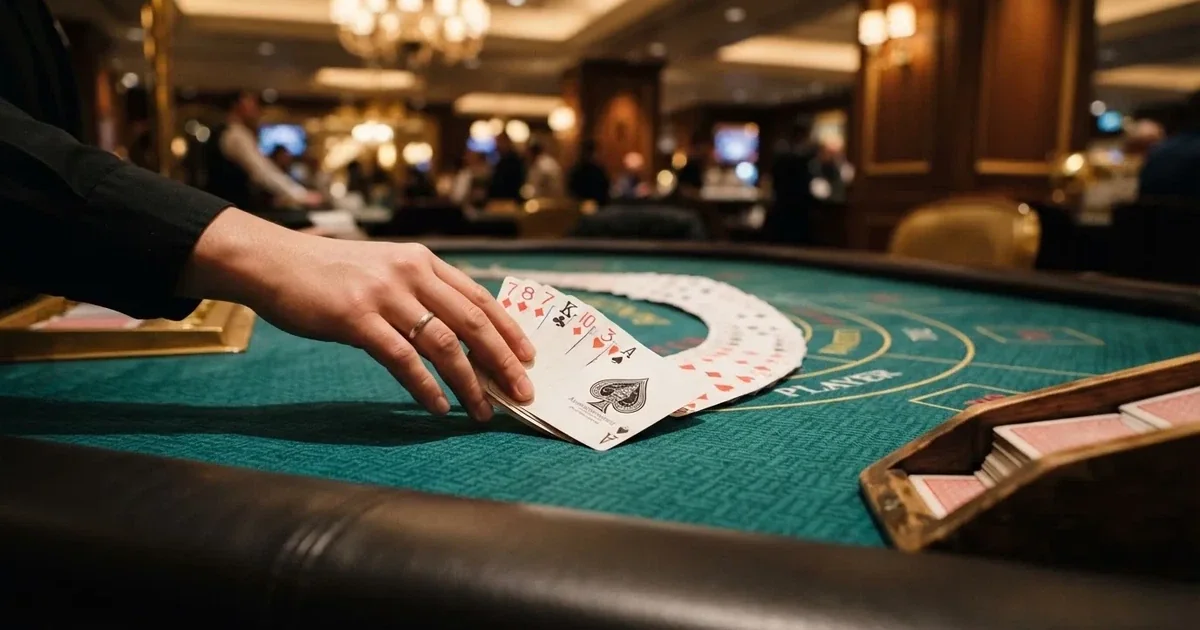
A live-dealer baccarat table is the same game as a computer-generated one, with one difference that does not change the math: the cards are dealt by a person behind a camera instead of by a random number generator. The paytable is identical. The house edge on the Banker bet is 1.06%, on the Player bet 1.24%, and on the Tie bet a punishing 14.36%. None of that is illegal in Australia, because none of it requires the internet. What requires the internet, and what makes the whole subject of this page complicated, is the live stream and the deposit.
No online casino offering live baccarat (or slots, or blackjack, or roulette) can be licensed under Australian law. The Interactive Gambling Act 2001 makes the provision of those games to someone in Australia an offence. The Australian Communications and Media Authority enforces this by issuing formal warnings, requesting internet service providers to block offending sites, and tracking operators that simply rebrand and reopen. Since the first blocking request in November 2019, the ACMA has had 1,751 illegal gambling and affiliate marketing websites blocked, and more than 230 unlicensed gambling services have left the Australian market since enforcement was strengthened in 2017.
The eleven brands reviewed below all sit on the ACMA’s published warning list. They are not ranked by quality. They are not recommended. They are described because the regulator has already named them, and a player searching for live baccarat online in Australia will encounter them regardless.
Table of Contents
- Why the law is the first thing this page covers
- How the ACMA has moved against live casino operators
- What a live baccarat session actually looks like
- Crypto-funded baccarat tables: what changes, what doesn’t
- Comparing the brands the regulator has warned
- The cost of a session: reading the math
- Responsible play under a fast stream
- What an Australian player is actually choosing
- The fundamentals behind the live format
- Frequently asked questions
Why the law is the first thing this page covers
Australia’s online gambling law was written as a carve-out: a narrow list of what can be licensed, and an everything-else prohibition. Wagering on races and sport placed before the event, lotteries, and keno are licensable, in practice by the Northern Territory Racing and Wagering Commission, which oversees 52 of the country’s online bookmakers, including Sportsbet, Bet365 and Ladbrokes. The commission runs on a part-time board that meets once a month in Darwin. Everything that looks like a casino game online, including a live baccarat stream, falls outside that permission.
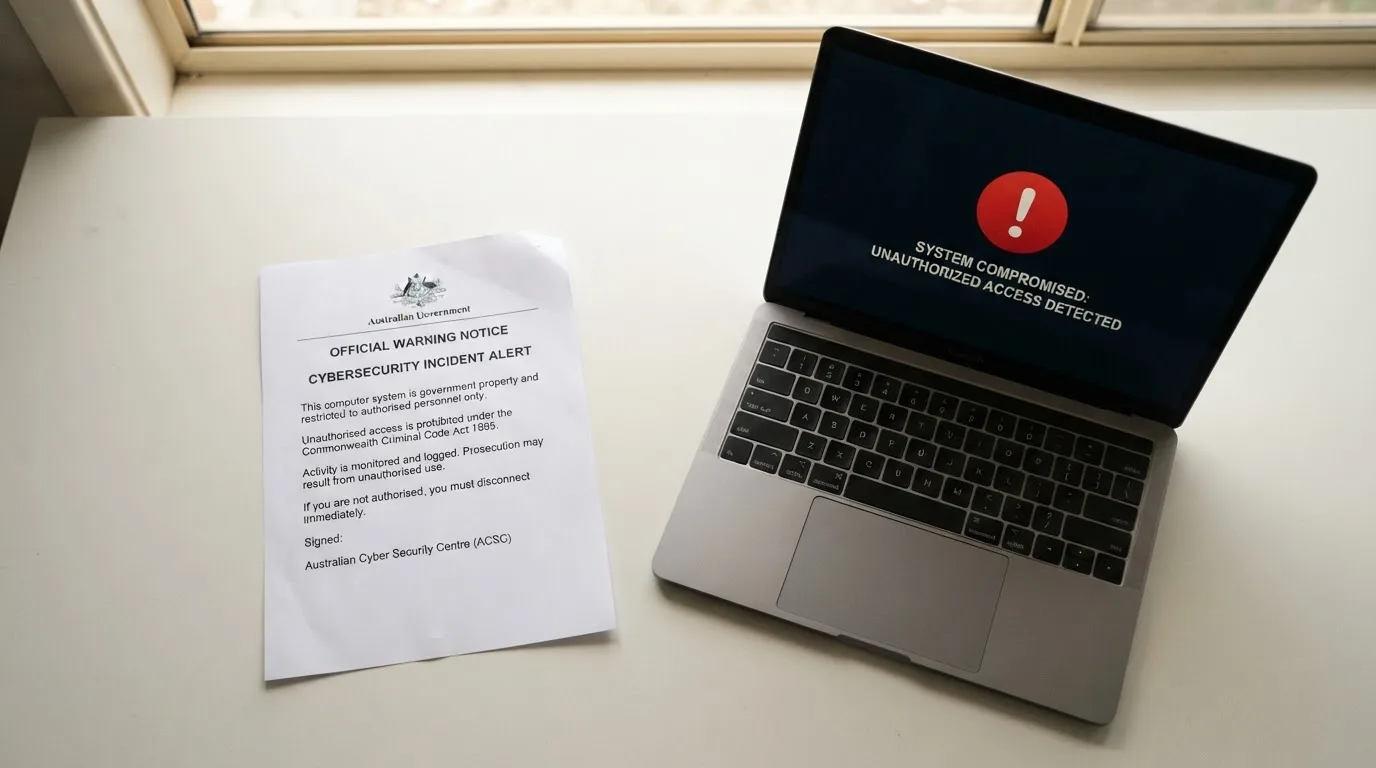
The Interactive Gambling Act 2001 was tightened in 2017 by the Interactive Gambling Amendment Act 2017, which broadened what counted as a “prohibited interactive gambling service” and gave the ACMA the tools it has been using ever since. The penalties target the provider, not the punter. Individuals cannot be prosecuted for placing bets at an offshore site. Corporations, however, face fines of up to A$1.1 million per day, and individuals running such operations up to A$220,000 per day.
The practical consequence for a player is sharper than the legal one. An offshore live baccarat site offers no Australian consumer protection. If a withdrawal stalls, if a bonus term changes mid-play, if the stream cuts out during a winning shoe, there is no Australian complaints body to appeal to. The site can also be blocked while a balance remains. That has happened. It happens regularly enough that the ACMA blocked 12 more sites in a single round in June 2026: 7Signs, ChromaBet, Donbet, Duospin, Freshbet, Slots Gem, Jacks Club, Lucky Start, Pointsbetz, Spinrise, Vinyl Casino and Wildsino.
And then there is the tax and payment picture. Recreational gambling winnings are not assessable income in Australia, and losses are not deductible, unless the activity rises to the level of carrying on a business. A live baccarat session at an offshore site is recreational, so no tax bill lands. The payment side is where the Australian rules bite: credit cards, credit-related products and digital currency have been banned as funding methods for licensed online wagering since 11 June 2024, with operator penalties up to A$247,500. Legal deposit routes for a licensed bookmaker are debit card, bank transfer, PayID/Osko and BPAY. A live baccarat site asking for a credit card or a crypto deposit is, by definition, not operating under Australian rules.
How the ACMA has moved against live casino operators
The ACMA does not publish a list of recommended offshore sites. It publishes a list of operators it has warned. The current record shows the pace quickening. In 2022, the regulator issued a formal warning to Dama N.V. covering six brands, Bambet, Dazard, Level Up, Rocketplay, Wild Tornado and Cobra Casinos. In 2025 it warned Dama N.V. again, separately, over Woo Casino and Spirit Casino. By March 2026, a third Dama N.V.-linked site, Rocketplay, had attracted a formal warning under a different operator entity (Pulsup Ltd), the pattern of rebranding that the ACMA has publicly flagged as a recurring problem.
Other 2025 actions included warnings to EOD Code SRL over Instant Casino (February), to Sterplay Holding Ltd over Casino Intense (April), to Bamboo Media over Ignition Casino and to Consolutetish S.R.L. over National Casino and Bizzo Casino (July). The 2025 action over Bizzo Casino was the second formal warning the regulator had issued over that brand; the first ran in 2022 to TechSolutions (CY) Group Limited and TechSolutions Group N.V. The April 2026 round added Ryker B.V. over Jackbit and CasinOK. Hollycorn N.V.’s Sky Crown and Blue Leo services had been the subject of a formal warning in September 2022.
Each entry on that list is a separate operator entity, which is the detail that makes the enforcement picture hard to read. Dama N.V. is not a single brand but a corporate wrapper that has housed dozens of them. When the ACMA warns one operator entity, the same site frequently appears weeks later under a slightly different name. That is the cycle the regulator is trying to break, and the warning list is one of its tools.
What a live baccarat session actually looks like
The mechanics of live baccarat have not changed since the game took its modern form in Havana in the 1940s, when punto banco was developed and the casino became the permanent banker. A player wagers on one of three outcomes: Banker, Player, or Tie. Two cards are dealt face up to each hand. Card values are simple: 2 through 9 are worth their pip, 10, Jack, Queen and King are worth zero, and Ace is worth one. A hand total that exceeds 9 is reduced by 10, which is the same as saying the total is read modulo 10. A hand of 8 or 9 from the first two cards is called a “natural” and wins immediately, unless both hands are natural at the same total, in which case the result is a tie.
A third card may be drawn, but the player does not choose. The drawing rules are fixed and depend only on the totals already showing. In the standard six- or eight-deck shoe used at most tables, the Banker hand draws a third card on totals of 0, 1 or 2, and stands on 7, 8 or 9. The Player hand draws on 0 through 5 and stands on 6 through 9. The decision tree for whether the Banker draws on 3, 4, 5 or 6 depends on the Player’s third card, and that is the only nuance in the rules that takes a moment to absorb. Once it clicks, the game is mechanical, which is the point: there is no decision to make once a bet is down.
What the live format changes is the pace. A computer-generated baccarat round resolves in seconds because no human has to clear the cards, shuffle, or burn. A live round takes longer, depending on how many players are seated and whether the dealer is waiting for a Player-bet decision on a borderline total. The history of repeated outcomes, often displayed on the side of the table as “roads,” is one of the format’s appeals, and one of its traps. The roads reflect nothing about the next hand. They are a record of what happened, not a prediction.
The three bets are not equal in cost. The 1.06% edge on Banker is the lowest in the game, because the Banker hand wins slightly more often than the Player hand and the casino charges a 5% commission on winning Banker bets to compensate. The Player bet at 1.24% is close behind and avoids the commission. The Tie bet at 14.36% is the worst standard wager in any casino card game, and the reason is simple: a Tie pays 8 to 1, which sounds generous until the math is run and the actual frequency of a Tie is around 9.5%. The expected return is then 8 × 0.095 = 0.76, against a stake of 1. A player betting Tie is paying roughly 24 cents of every dollar wagered for the privilege of a rare payoff. The Tie bet is the kind of wager the marketing copy sometimes calls “exciting,” a word that means something different at 14.36%.
Crypto-funded baccarat tables: what changes, what doesn’t
A live baccarat table funded with bitcoin runs the same dealt cards as one funded with a credit card. The dealing rules do not change. The shoe is the same. The paytable is the same. The only thing that changes is the rail the money moves along, and for an Australian player, that rail is itself outside Australian rules.
Since 11 June 2024, digital currency has been banned as a deposit method for licensed online wagering in Australia. The ban sits alongside the credit card ban and applies to any operator with an Australian licence. A bitcoin-funded live baccarat table, by definition, is not under Australian rules. The same applies to a bank transfer routed through a service that does not process under Australian identity checks, and to a credit card deposit, which the ACMA’s enforcement partners treat as a signal that the operator is outside the regime.
For an Australian resident, the practical effect is that there is no recourse to an Australian regulator if a bitcoin-funded table refuses a withdrawal, runs a delayed KYC review, or simply disappears with the balance. The same applies to credit card deposits, but at least a chargeback can sometimes be attempted through the card issuer. Bitcoin and most other cryptocurrencies are not reversible in that sense. The transaction is final once it confirms.
Crypto enthusiasts sometimes argue that the lack of identity checks is a feature. It is, for the operator. For the player, it means there is no one to call when the shoe stops mid-deal and the chat window goes dark. An anonymous account is also an account with no verified identity on the receiving side, which is one reason offshore sites that do not verify the person they are paying are also the sites that most often decline withdrawals after a win.
Comparing the brands the regulator has warned
The table below lists eleven brands the ACMA has issued a formal warning over. The columns are the matters a comparison actually has room to speak to: the brand name as published in the warning, the regulator action and date, the operator entity named, and the brand’s relation to this site’s subject. Where the research carries no figure, the cell is blank.
| Brand | ACMA action and date | Operator named by the ACMA | Subject support |
|---|---|---|---|
| RocketPlay | Formal warning under the IGA — March 2026 | Pulsup Ltd (earlier Dama N.V., May 2022) | — |
| Level Up Casino | Formal warning under the IGA — May 2022 | Dama N.V. | Listed by BGaming as carrying baccarat content |
| Woo Casino | Formal warning under the IGA — March 2025 | Dama N.V. | — |
| Spirit Casino | Formal warning under the IGA — May 2025 | Dama N.V. | — |
| National Casino | Formal warning under the IGA — July 2025 | Consolutetish S.R.L. | Listed on Wikipedia as operating casino games |
| Bizzo Casino | Formal warning under the IGA — July 2025 (earlier 2022) | Consolutetish S.R.L. (earlier TechSolutions) | — |
| Ignition Casino | Formal warning under the IGA — July 2025 | Bamboo Media | — |
| Instant Casino | Formal warning under the IGA — February 2025 | EOD Code SRL | — |
| Jackbit | Formal warning under the IGA — April 2026 | Ryker B.V. (Jackbit and CasinOK) | — |
| Casino Intense | Formal warning under the IGA — April 2025 | Sterplay Holding Ltd | Listed by ABC.net.au and Crown Melbourne sources |
| Sky Crown | Formal warning under the IGA — September 2022 | Hollycorn N.V. (Sky Crown and Blue Leo) | — |
The repetition of Dama N.V. across four of the eleven entries is the headline. A single corporate wrapper, six different brand surfaces, three different formal warnings in roughly four years, and the same game catalogue available under each new name. The pattern is not unique to Dama. Consolutetish S.R.L. and the TechSolutions entities are connected by a shared platform rather than a shared name, and the ACMA’s record treats them as a continuum. The lesson the table teaches is that a brand name is the surface, not the entity, and the surface changes faster than the regulator’s publication cycle.
RocketPlay
The most recent ACMA action over Rocketplay.com.au was in March 2026, against Pulsup Ltd. That warning followed an earlier May 2022 action against Dama N.V. over the same site, which had been bundled into a six-brand warning covering Bambet, Dazard, Level Up, Rocketplay, Wild Tornado and Cobra Casinos. The site continues to operate offshore and continues to take Australian-facing sign-ups. The research for this page did not surface any baccarat-specific content detail for RocketPlay, so the comparison stops at the warning record. For a player who accepts the offshore-no-protection trade-off and wants the brand with the longest enforcement trail on this list, RocketPlay is the test case: a site the regulator has warned twice and which is still accepting accounts. The fact that it is still accepting accounts after a second warning is itself the answer to whether a third warning would change anything.
Level Up Casino
Level Up Casino was named in the May 2022 Dama N.V. warning. The brand still carries a baccarat lobby sourced from BGaming, according to the provider’s own listings. That listing is the narrowest piece of evidence a player can find: a game studio names the brand as a partner, which means the brand has integrated that studio’s baccarat titles into its platform. It does not say anything about how the brand treats withdrawals, how its live dealer tables behave at peak hours, or what the bonus terms look like. Level Up’s profile on this page is therefore thin: a brand the regulator has warned, a provider listing that confirms baccarat content, and not much beyond that.
Woo Casino
The ACMA warned Dama N.V. over Woo Casino in March 2025. This was the first of two separate Dama N.V. warnings that year, the second running to Spirit Casino in May. The research for this page did not surface a provider listing or a game catalogue detail for Woo Casino, so what the brand has to show is the warning record and the date. That is the problem with most of the entries on this list: a brand without a verifiable baccarat offering is just a name, and a name the regulator has warned is one a player is reading this page to make sense of.
Spirit Casino
Spirit Casino carries the May 2025 Dama N.V. warning, the second of the two 2025 Dama actions. The research carries no further detail on the brand’s baccarat content, its payment rails, or its withdrawal conditions. The deeper issue with Spirit is the same as it is for Woo, Rocketplay, and the rest of the Dama N.V. cluster: a brand that surfaces, attracts a warning, rebrands slightly or resurfaces under a different operator entity, and continues to market into Australia. Spirit is one episode in that cycle. The reader who has followed the table down to this row has read the cycle spelled out; what Spirit adds is a date.
National Casino
The ACMA’s July 2025 warning to Consolutetish S.R.L. covered both National Casino and Bizzo Casino. National Casino appears on Wikipedia’s lists of casino operators as running casino games, which is the narrowest confirmation that the brand is operational. The warning itself is the more useful piece of evidence for a reader comparing this site to the alternatives on the list. National Casino, like its sibling Bizzo, is part of a corporate pair that the regulator has treated together.
Bizzo Casino
Bizzo Casino’s regulatory history is two formal warnings separated by three years. The first ran to TechSolutions (CY) Group Limited and TechSolutions Group N.V. in 2022. The second, in July 2025, ran to Consolutetish S.R.L. The site has been under some form of ACMA notice for most of the period the warning system has been publishing, and it continues to take Australian sign-ups. The research carries no detail on Bizzo’s baccarat offering beyond the brand’s existence. What the brand’s record shows is the gap between the regulator’s view and the site’s operation, which is the structural problem this entire page addresses: the ACMA can warn and block, and a brand under warning can keep accepting Australian deposits through a different operator wrapper. Bizzo is one of the cases where the gap is longest.
Ignition Casino
The July 2025 warning to Bamboo Media over Ignition Casino sits alongside the Consolutetish S.R.L. warnings over National Casino and Bizzo Casino, all issued in the same month. Ignition’s profile on this page is the same as Spirit’s and Woo’s: a name, a date, an operator entity, and not enough detail from the research to say what the baccarat lobby looks like or what the live tables run. Ignition is poker-focused in its branding, which makes its appearance on a baccarat list a reminder that the ACMA warning covers the full casino offering, not a single game.
Instant Casino
The ACMA warned EOD Code SRL over Instant Casino in February 2025. Instant Casino is one of the brands that markets itself heavily to Australian players via affiliate channels and SEO, which is part of why it appears so often in searches for online casino games including live baccarat. The research carries no further detail. The warning itself is the single piece of evidence on the page, and it predates the broader 2025 enforcement wave by a few months.
Jackbit
Jackbit was named in the April 2026 ACMA warning to Ryker B.V., which also covered CasinOK. Jackbit is notable for being a cryptocurrency-focused operator, which is part of why it sits on this list: bitcoin-funded play is outside the Australian payment rules, and Jackbit’s marketing leans into that. The research carries no further detail on its baccarat lobby. The relevant point for a player is that a crypto-funded operator has been added to the ACMA warning list, and a withdrawal dispute with such an operator has no Australian body to appeal to.
Casino Intense
Casino Intense was named in the April 2025 warning to Sterplay Holding Ltd. The brand has a small but verifiable footprint: it appears on Australian media coverage of the offshore casino sector (Abc.net.au) and is referenced in the same coverage that discusses Crown Melbourne’s baccarat variants. The casino’s position on the ACMA list is the same as the others: a formal warning under the IGA, with the offshore operator entity named in the publication. The ABC coverage is a useful signal that the brand has been treated by Australian reporting as part of the offshore market, which is the bracket Casino Intense sits in.
Sky Crown
Sky Crown sits on this list with the oldest entry: the September 2022 formal warning to Hollycorn N.V., which covered Sky Crown and Blue Leo together. Hollycorn is a Curacao-based operator group that runs a portfolio of brands, several of which have surfaced in the ACMA’s enforcement record. Sky Crown has been under some form of notice for the longest unbroken period on this list. The research carries no further detail on its baccarat content, so what Sky Crown’s entry establishes is the persistence of the warning, not the depth of the catalogue.
The cost of a session: reading the math
The house edge numbers are the most honest part of any baccarat page, and they are the part marketing copy tends to leave out. A 1.06% edge on Banker means that, over a very large number of hands, the player loses A$1.06 for every A$100 wagered. Over 200 hands at A$10 a hand, that is A$200 in total wagers and an expected loss of around A$2.12. Over 1,000 hands, the expected loss is around A$10.60. These figures are statistical averages; no individual session will produce exactly these numbers, and a session can easily end ahead or behind by far more than the long-run average.
The Tie bet is where the math goes wrong. At 14.36%, every A$100 wagered on Tie costs A$14.36 in expected loss over the long run. Over a 200-hand session, that is A$287.20 in expected loss for the same volume of play. The reason anyone takes the Tie bet is the 8-to-1 payout. The payout is real, but the frequency of a Tie is low enough that the math collapses. A player who routinely bets Tie is paying roughly A$14 for every A$100 in action for the privilege of a payoff that lands one time in roughly ten.
The pace matters too. A live baccarat table runs roughly one hand every 30 to 45 seconds, faster when there are fewer players and the shoe is being burned and dealt automatically. At 40 seconds a hand, a 200-hand session takes about 133 minutes, just over two hours. That is the speed at which a session limit becomes essential, because the time spent is not the same as the time perceived, and the “roads” displayed on the side of the table invite the kind of pattern-watching that turns a fixed stake into a series of larger and larger wagers.
What the blocking-rate calculation shows
The ACMA’s first blocking request ran in November 2019. By June 2026, the total of blocked sites and affiliate pages had reached 1,751. That is a band, not a single figure, because the blocking rate has not been constant across the six-and-a-half-year window. In the early enforcement rounds, blocks were infrequent; in 2024 and 2025, the rounds ran in clusters. The June 2026 round alone added 12 more sites.
A reasonable reading of the data is that the ACMA has been blocking illegal gambling and affiliate sites at a sustained pace of roughly 270 to 290 sites per year on average across the period, with the rate accelerating in the most recent rounds. The June 2026 cumulative total, divided by the roughly 80 months since November 2019, gives a rate of about 22 blocked sites per month. That is the headline figure: about 22 illegal or affiliate sites blocked every month, on average, for as long as the ACMA has been publishing its blocking record. The condition that makes this figure meaningful is the assumption that the blocking requests the ACMA publishes represent enforcement rounds of roughly equal scale, which they do not. Earlier rounds were smaller. The acceleration is real but it is not uniform.
What this means for a player is that the ACMA is not signalling an intent to wind down enforcement. The 2026 rounds are running at a higher rate than the 2020 rounds, and the proposed Interactive Gambling Amendment (Gambling Reform) Bill 2026, which passed Parliament on 19 August 2026, introduces additional advertising and inducement measures that commence on 1 January 2027. That is law with a start date, not yet in force on a page written in the current calendar year, but it sits in the same trajectory.
Responsible play under a fast stream
The pace of live baccarat is the thing a session limit has to account for. A computer-generated baccarat table resolves in seconds; a live table with one or two players seated runs at 25 to 40 seconds a hand, and a fuller table runs slower because the dealer is waiting for bets to land. Either way, the volume of hands a player can absorb in an hour is large. At the faster end, 100 hands an hour is achievable. At the slower end, the same volume takes closer to 90 minutes. The flat stake in either case is the same; the total amount wagered depends on how many hands are played, not how long the session felt.
BetStop, the National Self-Exclusion Register, has been live since August 2023. It binds Australian-licensed online and phone wagering services. An offshore live baccarat site is not bound by BetStop, because BetStop is a feature of the licensed market and an offshore site has no Australian licence. A player who has registered with BetStop and then opens an account at an offshore site is not protected by that registration. The exclusion covers the licensed bookmakers, the lotteries, and the keno operators; the offshore casino market sits outside it.
The National Gambling Helpline (1800 858 858) is free, available 24/7, and offers web chat through Gambling Help Online. The service is for anyone in Australia affected by their own or someone else’s gambling, and it is independent of which platform the play happens on. That makes it the one piece of the responsible-gambling picture that works regardless of where the bets are placed.
What an Australian player is actually choosing
Reading down the table of brands the ACMA has warned, the comparison the page invites is not between sites. It is between two distinct choices a player can make. The first is to play live baccarat at a licensed Australian venue, which means a physical casino in a state or territory where the regulator has approved the table. Crown Melbourne runs three approved baccarat variants — Traditional Baccarat, Crown Baccarat and 2 to 1 Baccarat — under the Victorian Gambling and Casino Control Commission, which replaced the VCGLR as Victoria’s casino regulator on 1 July 2022. The NSW Casino Control Act 1992 makes a parallel requirement: under section 66, an operator must not permit a game such as baccarat to be played unless the regulator has approved the game and its rules, and a copy of the approved rules must be available to patrons on request. The same rules-based approval structure applies under the VGCCC’s public log of approved changes to Crown Melbourne’s blackjack variants and, by extension, to its baccarat tables. A physical casino in Australia is licensed, regulated, and subject to consumer protection law.
The second choice is to play live baccarat at an offshore site, which means one of the brands on the ACMA’s warning list or one that has not yet attracted a warning. The site’s Curacao or Malta licence is real; the Australian licence is not, because no Australian licence exists. The deposit routes (credit card, bitcoin, e-wallet) are outside Australian rules. The withdrawal process is outside Australian rules. The site’s continued availability is outside Australian rules. The ACMA can warn the operator and ask Australian ISPs to block the domain, and the site can simply rebrand or move to a new domain. That is the cycle the regulator’s enforcement record describes.
There is no third category. There is no “Australian-friendly live baccarat casino that is also licensed under Australian law.” The two categories are mutually exclusive. A player who wants live baccarat and wants Australian consumer protection has to travel to a licensed venue. A player who wants to play online is choosing, by definition, the offshore market and the absence of Australian consumer protection.
The fundamentals behind the live format
The game’s history is part of the framing. Baccarat’s origins are disputed: some accounts place it in 19th-century France, others say it was introduced from Italy at the end of the 15th century during the reign of King Charles VIII. Writer David Parlett considers the game Macao its immediate precursor. Punto banco, the variant played in nearly every live casino stream today, was developed in Havana during the 1940s, and the rules of when to draw a third card were standardised in the late 1950s. Chemin de fer, a two-player variant named from the French for “railway,” emerged from baccarat banque in the late 19th century and is named for being quicker to play than the original game. None of the variants change the paytable. They change who decides whether a third card is drawn.

A player who understands the rules can read a live baccarat stream without confusion. Two hands are dealt. The totals are announced. The fixed drawing rules resolve any decision to draw. The winner is paid. The shoe advances. The next hand begins. The roads displayed on the side of the table show what has happened; they do not predict what will. The only thing the player controls is which of the three bets to place, and the only advice the math supports is to bet Banker or Player and to leave Tie alone.
Compared to other live casino games, baccarat has the lowest house edge after blackjack with optimal strategy (about 0.28% under liberal Las Vegas Strip rules). Craps’s Pass Line at 1.41% and Don’t Pass at 1.36% sit close behind baccarat’s Player bet. The Field bet at 5.56% and Any 7 at 16.67% are the worst standard wagers on the craps table, in the same category as baccarat’s Tie. The house always has an edge, and the only question is how much of every dollar wagered the house keeps over time. For baccarat, the answer is roughly one cent on Banker, one and a quarter cents on Player, and fourteen and a third cents on Tie.
Frequently asked questions
Is it legal to play live baccarat for real money at an online casino in Australia?
No. The Interactive Gambling Act 2001 prohibits the provision of online casino games, including live-dealer baccarat, to a person in Australia, and no state or territory licenses them. The ACMA enforces this against operators, not players. An offshore site accepting Australian deposits operates outside Australian law and offers no Australian consumer protection.
How does a live-dealer baccarat table differ from a computer-generated version?
The cards are dealt by a person behind a camera rather than by a random number generator, and the player watches a video stream. The paytable, the drawing rules, the shoe size, and the house edge on each bet are identical. The pace is slower in live format because cards have to be cleared and shuffled by hand, and a dealer may wait for bets to settle.
Does a bitcoin-funded live baccarat table use a different card-dealing process?
No. The game is dealt the same way regardless of the funding rail. The dealing rules, the shoe, and the paytable are unchanged. What changes is the deposit and withdrawal mechanism. Since 11 June 2024, digital currency has been banned as a deposit method for licensed Australian online wagering, so a bitcoin-funded baccarat site is, by definition, outside Australian rules and outside Australian consumer protection.
What is the difference between betting on Banker, Player and Tie in baccarat?
The Banker bet wins on a Banker hand total closest to 9 and pays even money minus a 5% commission. The Player bet wins on a Player hand total closest to 9 and pays even money. The Tie bet wins if the totals tie and pays 8 to 1. The house edge is 1.06% on Banker, 1.24% on Player, and 14.36% on Tie, which is why no serious player bets Tie.
Can a live baccarat session be joined mid-shoe, or only at the start?
A live baccarat table can be joined at any point during a shoe. There is no requirement to wait for a new shoe to begin. Some sites display a countdown between shoes, but the dealer’s “place your bets” call closes each hand and a new player can sit down immediately afterward. The shoe continues until it is exhausted, at which point a new shoe is shuffled.
How fast do consecutive hands typically run at a live baccarat table?
A live baccarat hand takes between roughly 25 and 45 seconds depending on the number of players seated and whether the dealer is waiting for late bets. At the faster end, a player can absorb 100 hands per hour. At the slower end, the same volume takes around 90 minutes. The pace is consistent enough that a fixed session length is a more useful guardrail than a fixed time window.