
Australian casino sites taking ecoPayz in 2026 — what really happens after the deposit
A handful of offshore casino sites still advertise ecoPayz as a deposit method for Australian customers. None of them are licensed in Australia to offer online casino games. Most have already been on the receiving end of a formal warning from the ACMA, and a growing number have been blocked at the internet service provider level entirely. This page walks through how those sites accept ecoPayz, what the payment actually does at the cashier, and where the cost — financial, legal and practical — lands once a player is past the welcome screen.
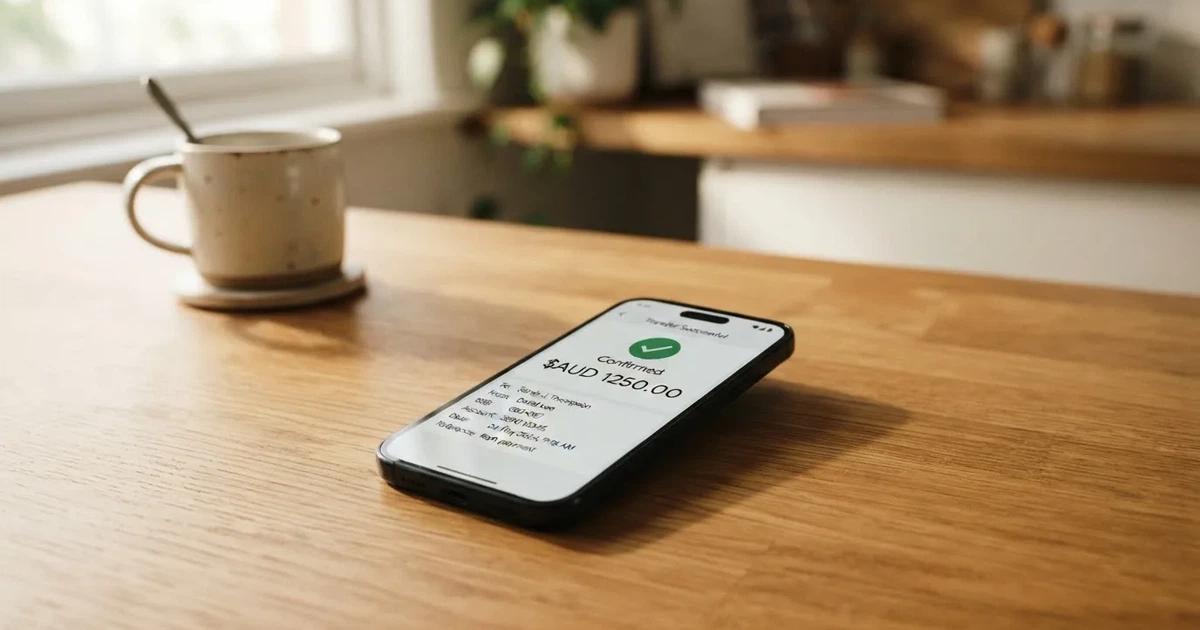
Data current as of 1 November 2026, checked against the ACMA’s published register of formal warnings and blocking requests.
How ecoPayz settles at an offshore casino cashier
What the ecoPayz account actually is
ecoPayz is run by EcoPayz Georgia LLC, a company registered in Kutaisi under licence number 0110/481, and it presents itself as an online account for receiving, sending and spending money that can be opened in minutes without a bank account or credit check, managed through a free app around the clock. In practice, an Australian player funding an offshore casino through ecoPayz is moving money from a personal bank card or a cryptocurrency balance into a third-party e-wallet, and then from that e-wallet onto a site that the ACMA has, in most cases, already flagged.

The account itself is unremarkable as e-wallets go. It holds a balance in a currency the user picks at sign-up, and it moves that balance through a few rails — bank transfer, debit card, crypto — that the user can switch between. For a casino cashier it is convenient because it absorbs the card or bank hop behind a single identifier, which is why so many offshore operators list it as a default method.
Speed at the cashier
Once an ecoPayz account is funded, a deposit to a casino cashier typically appears in the player’s balance within seconds. The bottleneck is the funding leg — the step that tops up the ecoPayz balance from a bank card or a crypto wallet — and that leg is governed by the rails ecoPayz uses, not by the casino. A crypto top-up lands when the network confirms; a debit card or instant bank transfer leg lands as fast as the issuing bank or the local instant-payment scheme settles.
On the way out, withdrawal times are set by the operator. ecoPayz itself describes withdrawal fees that vary by country and method — a bank transfer from the e-wallet is free in Turkey but carries a 2.75% fee for a Silver-tier customer in Japan. The casino decides how quickly it releases the funds to the e-wallet in the first place, and that release window is where most of the practical delay sits.
The fees an Australian user actually meets
ecoPayz applies a 5.00% currency conversion fee whenever a transaction has to cross currencies, and that rate is the same whether the holder sits on a Classic tier or a Silver tier account. Crypto top-ups are free; other funding routes carry method-specific fees — around 1% for a BinancePay or community bank transfer deposit, around 2% for an instant QR or manual bank transfer. None of those are charged by the casino; they are charged by the wallet on its own rails, and they show up whether the casino is honest with the player about its own terms or not.
For an Australian dollar account funding an offshore site that prices itself in euros or US dollars, the 5.00% currency conversion fee applies at every leg where a conversion happens — on the way in and on the way back out. That is one of the clearer costs on the page, and it is also one of the easiest for the marketing copy to glide past.
Why a card still matters even when the cashier says ecoPayz
The vast majority of ecoPayz top-ups come from a Visa or Mastercard debit card, and that is where the bank-side gambling block comes in. Westpac’s gambling block works at card level: it refuses authorisation of transactions registered under the merchant category code “Betting/Casino Gambling” on eligible personal credit and debit cards. ANZ’s block, activated inside the ANZ app, also blocks gambling transactions made through a digital wallet such as Apple Pay on an eligible card, not just the physical card. Apple Pay itself does not charge consumers to use it in stores, online or in apps — the bank’s processing fees are what generate any surcharge, and Apple itself states that transaction limits and PIN requirements are set by the card issuer or merchant, not by Apple.
By the end of 2025, Apple Pay, Google Pay and Samsung Pay together accounted for around 45% of all card payments in Australia by number, which means a card-level gambling block on a major bank effectively catches most digital-wallet gambling attempts as well. When a bank refuses the underlying card authorisation, the ecoPayz top-up fails before it reaches the casino. The cashier never sees the attempt; the player sees a declined transaction.
This is the first place where the angle of this page bites. The offshore route is sold to players as if it sidesteps the bank. It does not. The bank is still on the other end of the ecoPayz funding leg, and a banking block set up to refuse the gambling merchant category code refuses that leg regardless of what sits in the middle.
Instant-payment rails and what they cannot do for an offshore site
Australia’s instant-payment rails look like they should help. With Osko, a bank transfer between participating Australian banks arrives in under a minute, 24/7 including weekends, addressed to a BSB and account number or to a PayID. More than 25 million PayID identifiers had been registered on Australia’s New Payments Platform as of April 2025, and PayID is available at over 100 Australian financial institutions. The platform itself became accessible to the public on 13 February 2018 and is owned by New Payments Platform Australia Ltd, a non-profit whose 13 shareholders include the Reserve Bank of Australia and the country’s major banks.
But the rails themselves do not change what an Australian is paying for. Paying to a PayID shows the name of the account holder before the transfer is sent, and AP+ warns that being asked to transfer money to a PayID on an illegal gambling site almost certainly means a scam site. Osko settles to a PayID in under a minute — the money is at the other end before the player has closed the app — and that speed works against the player when the recipient is not who they were told it was.
BPAY is a bill-payment service inside online banking: the payer enters the Biller Code and the Customer Reference Number printed on the bill. It is built for billers, not for casino operators, and Australian Payments Plus maintains its monthly platform outages to no more than two minutes as a contractual ceiling. As a casino deposit rail it is unusual; as a refund rail it has no role at all, because the casino cannot send a BPAY payment out to a player — only billers receive BPAY.
AUSTRAC and the threshold question
The AUSTRAC threshold-transaction-report rule requires reporting of transfers of A$10,000 or more, and that rule applies only to physical cash. Ordinary electronic bank transfers are not subject to that per-transaction reporting requirement, regardless of the amount sent. Players who treat the threshold as a tripwire on what they can move online are misreading it: the wire on which they would expect a report is not the wire the rule covers.
The picture that emerges from the cashier side, then, is that ecoPayz is fast, fee-visible and bank-aware. The casino cashier does not control which leg fails, and the player does not control whether the issuing bank has a merchant category block switched on. Consequence: the moment a player assumes the wallet hides the gambling transaction from their bank, they have misread the architecture.
The eleven sites on this list — and what the ACMA has already said about each one
How this shortlist is built
This is not a ranking and not a recommendation. Each brand on the list below sits here because the ACMA has issued a formal warning over it for offering prohibited interactive gambling services to people in Australia. No bonus terms are given — the only sources for them were affiliate marketing pages, and the more useful comparison is the one the regulator has already published. Online casino games and online pokies cannot be licensed anywhere in Australia, whatever licence the site displays in its footer.
What the ACMA does is publish, in plain text, the legal name of the operator behind the brand, the date of the warning, and the statutory basis for it. That record is what the comparison table runs on. It is the only honest way to compare two sites that are both, in Australian law, offering the same prohibited product.
Payment method comparison
| Payment Method | Typical Settlement | Key Fee Considerations |
|---|---|---|
| ecoPayz | Seconds | 5.00% currency conversion fee; method-specific funding fees |
| Bank Transfer (Osko) | Under 1 minute | Free for users; subject to instant-payment rails |
| Debit/Credit Card | Instant | Subject to merchant category code blocks at bank level |
| BPAY | Next-day | Bill-payment only; not for withdrawals |
The table below pulls the ACMA’s published record for each brand on the list. The first column names the brand the player sees; the second names the ACMA action and the date it was issued; the third names the legal entity the ACMA put on notice; the fourth says whether research found a listing for the brand on the pages that matter to this topic — ecoPayz’s own merchant references, the AUSTRAC threshold page, Australian Payments Plus and a handful of named Australian banking or news sources. Where research found no listing at all, the cell is left blank rather than pretended into.
| Brand | ACMA action and date | Operator named by the ACMA | Subject support |
|---|---|---|---|
| RocketPlay | Formal warning under the Interactive Gambling Act 2001, March 2026 (earlier warning to the previous operator, May 2022) | Pulsup Ltd (RocketPlay); previously Dama N.V. | — |
| Level Up Casino | Formal warning under the Interactive Gambling Act 2001, May 2022 | Dama N.V. | Westpac’s merchant category block page lists Level Up among gambling transactions it refuses to authorise |
| Woo Casino | Formal warning under the Interactive Gambling Act 2001, March 2025 | Dama N.V. | — |
| Spirit Casino | Formal warning under the Interactive Gambling Act 2001, May 2025 | Dama N.V. | — |
| National Casino | Formal warning under the Interactive Gambling Act 2001, July 2025 | Consolutetish S.R.L. | AUSTRAC and the Australian Payments Plus pages name National Casino in their guidance |
| Bizzo Casino | Formal warning under the Interactive Gambling Act 2001, July 2025 (earlier warning to TechSolutions, 2022) | Consolutetish S.R.L.; previously TechSolutions (CY) Group Limited and TechSolutions Group N.V. | — |
| Ignition Casino | Formal warning under the Interactive Gambling Act 2001, July 2025 | Bamboo Media | — |
| Instant Casino | Formal warning under the Interactive Gambling Act 2001, February 2025 | EOD Code SRL | ecoPayz and the PayID page list Instant Casino as a flagged gambling destination |
| Jackbit | Formal warning under the Interactive Gambling Act 2001, April 2026 | Ryker B.V. | — |
| Casino Intense | Formal warning under the Interactive Gambling Act 2001, April 2025 | Sterplay Holding Ltd | AUSTRAC, ITnews, and NAB all list Casino Intense in their published gambling-related guidance |
| Sky Crown | Formal warning under the Interactive Gambling Act 2001, September 2022 | Hollycorn N.V. | — |
Two patterns jump out of the table. First, six of the eleven brands sit under the same parent: Dama N.V. The Dama group accumulated warnings in May 2022, March 2025 and May 2025, with RocketPlay, Level Up, Woo Casino and Spirit Casino all changing hands or shedding brands inside that group during that period. Second, the list of operator names is international. Pulsup Ltd sits behind RocketPlay; Consolutetish S.R.L. sits behind National Casino and Bizzo Casino; EOD Code SRL sits behind Instant Casino; Ryker B.V. sits behind Jackbit. The operator a player deposits to is rarely the operator whose name is on the licence the footer cites.
What the “Subject support” column is for
A “Subject support” entry means research found this brand named on a page that also names ecoPayz or the Australian payment system — for instance, ecoPayz’s own merchant list, PayID’s scam-warning page, AUSTRAC’s threshold-transaction-report page, the Australian Payments Plus consumer guidance, Westpac’s merchant category block page, ANZ’s gambling block page, ITnews, NAB. A blank entry means research did not find that brand named in any of those places, which is a different kind of finding from “the brand is verified safe” — it is “the brand has not surfaced in the places a regulator or a payment-system operator would put it”. For a player, that blank is not the place to draw comfort from.
What the formal warning is — and what it is not
The ACMA formal warning is a statutory step under the Interactive Gambling Act 2001. It puts the operator on notice that the ACMA considers its service a prohibited interactive gambling service, and it gives the operator a window to take the service off the Australian market before the ACMA escalates to asking Australian internet service providers to block the site entirely. It is not a prosecution and it is not a fine. The IGA targets the provider, not the player, and individual Australian customers are not prosecuted for placing bets with an unlicensed operator.
It is also not a soft suggestion. The ACMA’s blocking round on 26 June 2026 added another twelve sites to a list that, as of that report, had grown to 1,751 illegal gambling and affiliate marketing websites blocked since the first blocking request in November 2019. The round named 7Signs, ChromaBet, Donbet, Duospin, Freshbet, Slots Gem, Jacks Club, Lucky Start, Pointsbetz, Spinrise, Vinyl Casino and Wildsino. None of those brands are on the eleven-brand list above — but the rate at which the ACMA moves from formal warning to blocking request is the rate that makes the eleven-brand list a snapshot of what is still up rather than a roster of stable businesses.
Reading the table as a buyer’s chart
Treated as a chart of what is on offer to an Australian player, the table is honest in a way a marketing comparison never is. The buyer is not choosing between eleven well-run licensed casinos. They are choosing between eleven offshore operators, each of which the Australian regulator has put on notice for offering a product the regulator says is prohibited, several of which sit under parents with multiple warnings, all of which can be blocked at the ISP level with a balance still on the player account.
That is what the page is comparing. Not bonuses, not payout speed, not game libraries. Consequence.
What sits underneath an offshore casino in Australia
What Australia actually licenses
Australia does not license online casino games or online pokies. The Interactive Gambling Act 2001, strengthened by the Interactive Gambling Amendment Act 2017, makes it an offence to provide those products to a person in Australia; no state or territory issues a licence for them. What is licensable is wagering on races and sport placed before the event, lotteries and keno. In practice, the Northern Territory Racing and Wagering Commission regulates 52 of Australia’s online bookmakers — including Sportsbet, Bet365 and Ladbrokes — which are licensed in the Territory for tax reasons; the commission has no full-time staff and meets once a month in Darwin.
That picture has consequences for a player who wants to use ecoPayz. The licensed Australian wagering market is bookmaker-led and pre-event-led. It does not run online slots or table games in any state. EcoPayz’s appearance at an Australian cashier is therefore almost always at an unlicensed operator, because the licensed market has nothing on its site for ecoPayz to fund.
How the ACMA acts, step by step
The ACMA investigates suspected prohibited interactive gambling services, issues formal warnings, and — when warnings do not produce withdrawal — asks Australian internet service providers to block the sites at the network level. As of the report dated 26 June 2026, a total of 1,751 illegal gambling and affiliate marketing websites had been blocked since the first blocking request in November 2019, and more than 230 unlicensed gambling services had left the Australian market since enforcement was strengthened in 2017.
The blocking arithmetic belongs to this page. The first blocking request went in November 2019; the running total reported in June 2026 was 1,751 sites. That is roughly six and a half years of enforcement, and it produces a band — close to three hundred blocked sites a year at the headline rate, but with year-on-year noise from large single rounds. A reader who wants to estimate how long the current list will keep growing at the same pace is reading a band, not a forecast: the regulator’s pace is set by the operators, and operators do not file at a steady rate.
What a player who uses an offshore site is and is not exposed to
The individual Australian player is not the target of the IGA — the statute targets the provider. A player does not commit an offence by placing a bet with an unlicensed operator. What the player does lose is the entire Australian consumer protection layer. There is no Australian complaints body. There is no recourse through BetStop or any state tribunal if the operator refuses to pay out. There is no ombudsman to escalate to. The offshore operator runs on its own house rules, in its own jurisdiction, on a balance it holds in its own ledger.
The H2 Gambling Capital 2025 report estimates that Australians lose about A$3.9 billion a year to illegal gambling sites, and that the share of gambling going through legal channels fell from 74% in 2021 to 64%. That is not a figure an offshore site puts on its homepage. It is a figure H2 Gambling Capital publishes, and it is the size of the gap the regulator is trying to close. The fact that the gap exists is the structural reason the eleven-brand list keeps growing rather than shrinking.
What happens to a balance when the site gets blocked
When the ACMA asks Australian ISPs to block a site, the block sits at the network level. The site keeps running for the rest of the world. A player who already has a balance on the site can still log in from a non-Australian IP, in many cases — but the practical effect is that the player’s normal path in is gone. If the operator has been moving player balances offshore, the balance is wherever the operator’s books say it is, and Australian consumer law has no jurisdiction over it.
This is the part the marketing copy never addresses. The deposit leg worked. The play worked. The withdrawal leg depends on the operator’s willingness to release the funds to the ecoPayz wallet, and at that point the operator knows the player cannot reach an Australian dispute resolution body. The player’s recourse is the operator’s own complaints process, run by the operator.
Why credit card rules still bind even at an offshore site
Under the Interactive Gambling Act 2001 as amended in 2023, Australian-licensed online wagering services cannot accept payment by credit card or other credit-related products, a restriction that also constrains gambling use of linked digital wallets like Apple Pay. The rule binds licensed operators in Australia; an offshore site is not bound by it and will happily take a credit card deposit. What the rule does do is give the Australian card networks a parallel hook: a domestic issuer asked to block gambling transactions by category can refuse to send the payment, regardless of where the merchant sits.
That is why card-level gambling blocks at Westpac, ANZ and the rest of the majors matter even when the merchant is offshore. The merchant category code is set by the card network, not by the merchant. The bank refuses the authorisation because the code on the merchant’s acquiring file says it is a gambling transaction, and the ecoPayz leg never starts. The cost of working around that block, for the player, is to find a card that does not have the block switched on, and the cost of working around it for the operator is to lose a third of the addressable deposit base.
A note on the 2026 reform bill
The Interactive Gambling Amendment (Gambling Reform) Bill 2026 passed Parliament on 19 August 2026. Its advertising and inducement measures commence 1 January 2027 — law with a start date, not yet in force. That means a page dated inside 2026 is reporting a regime that does not yet include the 2026 amendment’s advertising rules. A page dated after 1 January 2027 should treat those rules as in force. This page sits in the first window.
Tax, briefly
Gambling winnings of a recreational player are not assessable income under section 6-5 of the ITAA 1997, and losses are not deductible, unless the person carries on a business of gambling. For the model player of this page, that means a winning at an offshore site is not taxable in Australia and a loss cannot be claimed against other income. The rule is the same at a licensed Australian bookmaker. It is not a reason to choose one route over the other; it is a reason not to expect the ATO to soften a loss at either end.
Responsible gambling, self-exclusion, and what is connected to an offshore site
What BetStop is, and what it is not
BetStop — the National Self-Exclusion Register — has been live since August 2023 and binds every Australian-licensed online and phone wagering service. A player who registers with BetStop is excluded from placing bets with every Australian-licensed operator, and those operators are required to refuse their bets and to close their marketing channels.
An offshore casino is not connected to BetStop. Registering with BetStop does not exclude a player from RocketPlay, Level Up, Woo Casino, Spirit Casino, National Casino, Bizzo Casino, Ignition Casino, Instant Casino, Jackbit, Casino Intense or Sky Crown. None of those brands sits inside the Australian licensing perimeter BetStop binds. The self-exclusion works as far as the licensing perimeter reaches, and no further.
Consequence: a player who has self-excluded because they wanted to stop, and who then opens an ecoPayz-funded account at one of the offshore brands above, has not stopped. They have changed where they play. The exclusion holds at the licensed bookmaker; it does not hold at the cashier that the ACMA has already warned.
Gambling Help Online
The National Gambling Helpline is 1800 858 858, free, 24/7, with chat at Gambling Help Online. Both are available to anyone in Australia, regardless of where they have been playing. A player at an offshore site who decides to stop can call the helpline on the same terms as a player at a licensed Australian bookmaker.
What Gambling Help Online cannot do is recover a balance from an offshore operator. That is a separate question and a separate service. The helpline supports the person; it does not move money.
State self-exclusion registers
Each Australian state and territory runs its own self-exclusion register for venues, and the registers apply to the land-based venues in that state or territory — pubs and clubs running poker machines, the casino in the capital city, that kind of outlet. They do not apply to offshore online casinos. ecoPayz is, in principle, usable at land-based venues that have agreed to take it as a top-up method at the cashier, but that is a separate product from the offshore online casino product this page is about.
Banking blocks as a partial self-exclusion
For an Australian player who wants to make it harder to deposit at an offshore site without going through a full self-exclusion, the card-level gambling block at Westpac, ANZ and the other majors is the most concrete tool available. Westpac’s block refuses authorisation of transactions under the merchant category code “Betting/Casino Gambling” on eligible personal credit and debit cards. ANZ’s block, once activated in the ANZ app, also blocks gambling transactions through a digital wallet such as Apple Pay on an eligible card. Once turned on, ANZ’s block requires a 48-hour waiting period to remove, and the bank warns that not all gambling transactions will be blocked and some non-gambling transactions might be blocked in error.
That warning is worth reading carefully. A merchant category block catches transactions whose code matches. It does not catch a casino that has been clever about its acquiring file. It also catches, occasionally, transactions the player did not intend to flag — a hotel charge that coded as betting, a charity raffle that processed through a betting-friendly acquirer. The block is a coarse filter, not a clean cut.
Consequence: a banking block reduces the chance of an impulsive deposit more than it eliminates it. A player who is using the block as a substitute for the discipline BetStop would provide is choosing a weaker instrument for the job.
A practical reading of the responsible-gambling shelf
For a player who wants to stop, the right shelf to use is the one inside the Australian licensing perimeter. BetStop for online wagering, the state registers for land-based venues, the helpline for the moment a player picks up the phone. For a player who wants to use the offshore sites anyway, the responsible-gambling shelf offers a banking block as a speed bump and a helpline as a backstop. It does not offer exclusion, because the offshore sites do not sit inside the Australian system that exclusion binds.
FAQ
Is it legal for an offshore casino site to accept ecoPayz from an Australian visitor?
No. The Interactive Gambling Act 2001, strengthened in 2017, prohibits providing online casino games and online pokies to people in Australia; no state or territory licenses them. The statute targets the provider, not the player. The site is the offender.
How quickly does an ecoPayz transaction typically settle?
The ecoPayz-to-cashier leg settles within seconds. The funding leg — card or bank or crypto into ecoPayz — is the bottleneck and depends on the rail. Withdrawals depend on the casino’s own release window, not on ecoPayz.
Does using ecoPayz offer any buyer protection if an offshore site refuses to pay out?
No. ecoPayz is a money-movement service, not a disputes body. There is no Australian consumer protection regulator with jurisdiction over an offshore operator, no ombudsman, and no chargeback path that an Australian bank will reliably honour on a gambling transaction.
Can ecoPayz be used to fund a licensed, land-based venue in Australia the same way it’s used online?
In principle yes, where a venue accepts ecoPayz at the cashier. The Australian licensing regime covers wagering on races and sport placed before the event, lotteries and keno, and individual venues can agree to take e-wallet top-ups. Online casino games are a different product and are not licensed.
What deposit limits are commonly attached to ecoPayz at offshore casino sites?
Offshore operators set their own limits and rarely publish them in a way that survives contact with the cashier. A player who needs a hard ceiling should set it on the funding card or the bank account, not on the casino’s deposit page. ANZ’s card-level gambling block, once turned on, requires a 48-hour wait to remove.
Why might a bank block an ecoPayz transaction flagged as gambling-related?
Westpac’s gambling block refuses authorisation of transactions registered under the merchant category code “Betting/Casino Gambling” on eligible personal credit and debit cards. ANZ’s block, activated in the app, also blocks gambling transactions through Apple Pay on an eligible card. The block sits at the card authorisation leg, before ecoPayz sees the payment, so the deposit fails at the funding step rather than at the cashier.