
Casino sites that accept Osko in Australia: the legal shape of a “fast” deposit method
Current as of 6 November 2026 · Verified against the Australian Communications and Media Authority register
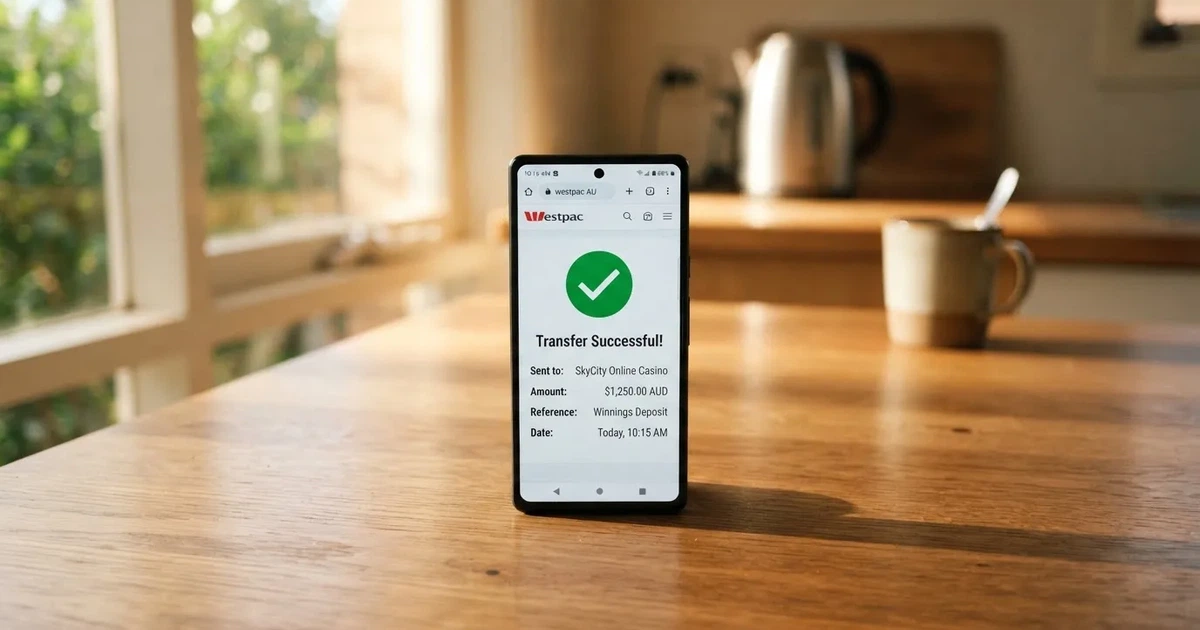
The promise behind any page that advertises “casino sites that accept Osko” is a simple one: a deposit that arrives in under a minute, from an Australian bank account, to a casino you can play at tonight. The promise is half true. Osko is genuinely fast — it settles bank-to-bank in roughly sixty seconds, including on weekends and at 2 a.m. What arrives at the other end is the part the marketing does not dwell on: an offshore casino site that the Australian Communications and Media Authority (ACMA) has, in most of the cases a reader will encounter, already had cause to write to. The same speed that makes Osko attractive for paying a tradie or splitting a dinner bill makes it attractive for moving money into a service that Australian law does not allow.
This page is not a recommendation and not a directory. It works through what Osko actually is, what it costs to use at an offshore site, why the ACMA has formally warned each of the operators reviewed below, and what a player in Australia is and is not protected by when one of those operators refuses a withdrawal.
Table of Contents
- What Osko is and why offshore casinos advertise it
- Settlement, deposits and what “instant” actually buys you
- What the ACMA has done about offshore casino sites
- Why the legal status matters even when a site “accepts Osko”
- What an Australian player is actually protected by
- The blocking rate, and what it actually tells you
- What responsible gambling looks like for a payment method
- The ACMA’s record against the operators reviewed here
- What “Osko accepted” means at these operators in practice
- Why your bank may refuse the transaction anyway
- What happens when an offshore operator refuses a withdrawal
- How the comparison was put together
- A note on what this page is not
- The 2026 reform in one sentence
- Frequently asked questions
What Osko is and why offshore casinos advertise it
Osko is a brand of Australian Payments Plus (AP+), the same organisation that runs PayID and BPAY. It piggybacks on the New Payments Platform (NPP), the real-time payments infrastructure the Reserve Bank of Australia helped build and that launched publicly on 13 February 2018. The platform connects more than 100 banks, financial institutions and fintechs; by 31 August 2025 it reached 128 million accounts and was processing in the order of A$7 billion of payments every day. Osko is the consumer-facing label on the platform’s instant credit-push transfer.

The mechanics of an Osko payment are worth spelling out because the marketing around offshore casinos treats them as if they were a feature of the casino rather than of the Australian banking system. A customer in their own bank’s mobile or web banking opens the “Pay Anyone” section, enters either a PayID or a BSB and account number, and adds an optional 280-character description. If both the sending and receiving accounts are Osko-enabled — and almost every account at a major Australian bank is — the funds settle in under a minute, twenty-four hours a day, seven days a week, including weekends and public holidays. The Reserve Bank’s Fast Settlement Service closes the loop individually and in close to real time. There is no separate sign-up, no extra fee from AP+, and no surcharge from Apple, Google or any wallet: the cost, if any, is whatever the sending bank charges for an outbound transfer.
A payment to a PayID shows the registered account-holder name before the customer confirms. That detail is the only built-in safety rail Osko carries, and AP+ itself is blunt about what it implies: being asked to transfer to a PayID on an illegal gambling site almost certainly means a scam site. The warning is not about the speed of the rail; it is about the destination.
The reason offshore casinos advertise Osko, then, is not that Osko does anything a regular bank transfer cannot. It is that Osko makes the deposit feel like a normal, instantaneous payment to a known recipient, with the description field free for the casino to label the transfer however it likes. For a player who has used Osko to pay a tradie or a share-trading platform, the act of paying an offshore casino looks identical in the banking app. That sameness is the marketing.
Settlement, deposits and what “instant” actually buys you
When a casino site advertises that it accepts Osko, what it means in practice is one of three things, and the difference matters.
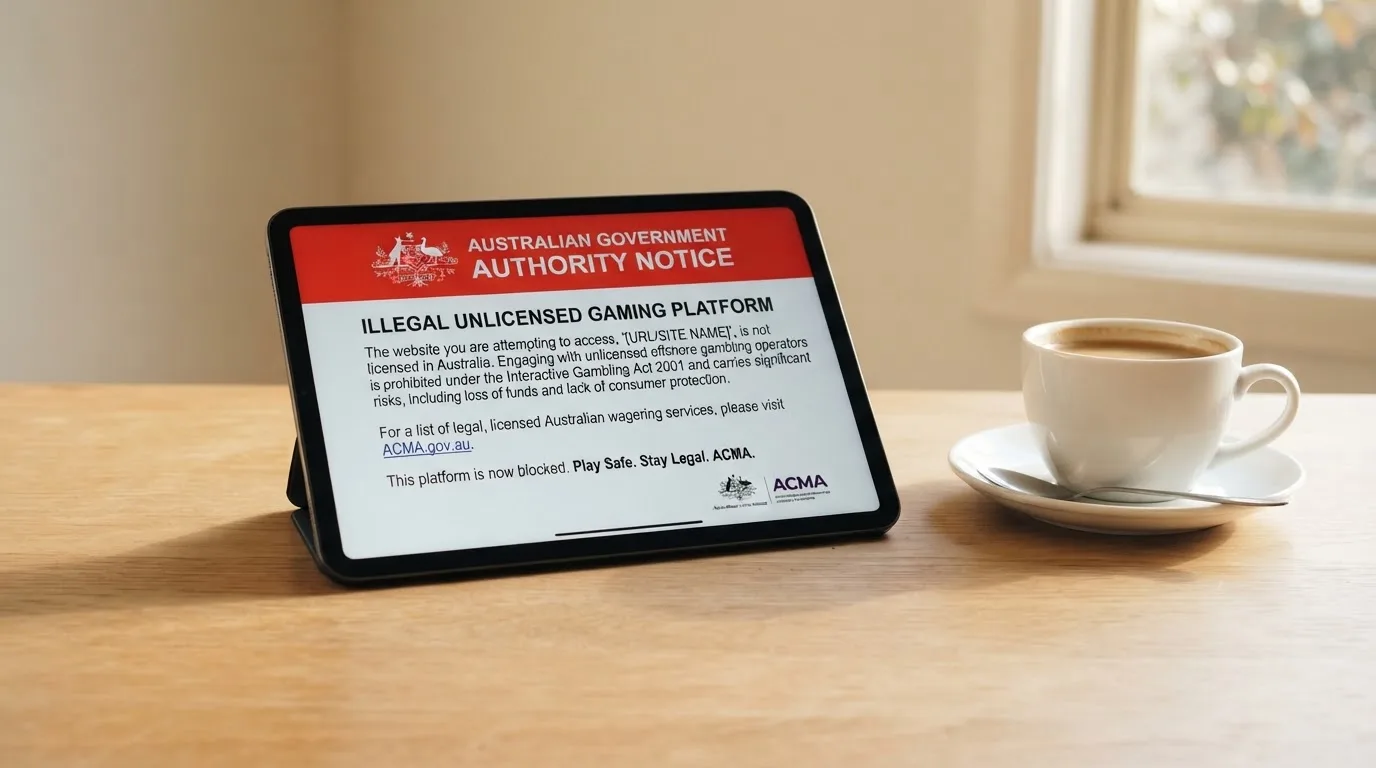
The first, and most common at the operators reviewed below, is that Osko is listed as a deposit method on the cashier page but routes through a payment processor rather than directly into an Australian bank account. The deposit arrives at the casino within a minute, because Osko is fast; what the casino then does with it is its own business. Withdrawals, where they are offered, almost never travel back by Osko: the standard offshore model is deposit by Osko or PayID, hold the funds in an internal balance, and pay out by bank transfer (which may or may not be Osko-enabled) or by an entirely different rail such as a crypto on-ramp.
The second is a near-instant withdrawal back to the same Osko-enabled account. Where this works, it is genuinely fast: the casino approves the withdrawal, the funds move by NPP and arrive within sixty seconds. Where it does not work — at most of the brands reviewed below — it is because the casino adds a manual approval step that can stretch from hours to several business days, and the only fast part is the bank-to-bank hop once approval is given.
The third is a marketing fiction: the casino lists Osko on its payment page, but the deposit in fact settles by a slower rail (a BSB transfer, a card route, or a third-party processor) and only the brand on the cashier page is Osko. The ACMA’s blocking record and the absence of Osko on the underlying terms pages of most of these operators suggests this is the common shape of “Osko accepted” on offshore sites reviewed here.
For a player comparing methods, the practical question is not how fast the deposit lands. It is how fast a confirmed withdrawal lands once the casino decides to pay it, and what happens in between. The first part is a property of the casino; the second is a property of the rail.
What the ACMA has done about offshore casino sites
The Australian Communications and Media Authority investigates and acts against offshore operators offering prohibited interactive gambling services to Australians. The actions take three forms.
Formal warnings are the lightest. They are published on the ACMA’s website, name the operator and the brand, cite the Interactive Gambling Act 2001 (IGA), and demand that the operator stop providing the prohibited service to Australians. They do not by themselves take a site offline.
Blocking requests are the heavy end. Under section 313 of the Telecommunications Act 1997 the ACMA can ask Australian internet service providers to block access to illegal services. By a report dated 26 June 2026 a total of 1,751 illegal gambling and affiliate marketing websites had been blocked since the first blocking request went out in November 2019; more than 230 unlicensed gambling services had left the Australian market since enforcement was strengthened in 2017. The 26 June 2026 round alone added twelve more sites: 7Signs, ChromaBet, Donbet, Duospin, Freshbet, Slots Gem, Jacks Club, Lucky Start, Pointsbetz.com, Spinrise, Vinyl Casino and Wildsino. A blocking request does not require a court order, and the appeal avenues for an offshore operator are limited.
Civil penalties and criminal prosecutions are the rarest but most expensive outcome for an operator. Under the 2017 amendments to the IGA the maximum penalty for providing a prohibited interactive gambling service to Australians is several million Australian dollars per breach, and the ACMA has secured enforceable undertakings and litigated against the most persistent operators.
The relevant point for a reader is the asymmetry. The ACMA’s enforcement is aimed at the operator. The player is not prosecuted. What the player loses, in the worst sense, is the protection that an Australian licence would have given: there is no Australian complaints body to take a refused withdrawal to, no Australian regulator to whom an unpaid balance can be reported in a way that produces a refund, and no requirement that the offshore operator hold player funds in trust.
Why the legal status matters even when a site “accepts Osko”
Online casino games and online pokies cannot be licensed anywhere in Australia. The IGA, as tightened by the Interactive Gambling Amendment Act 2017, makes it an offence to provide those services to a person physically in Australia. What can be licensed is wagering on races and sporting events placed before the event, lotteries and keno — and in practice those licences are administered by the Northern Territory Racing and Wagering Commission, which regulates 52 online bookmakers including Sportsbet, Bet365 and Ladbrokes. The NTRWC has no full-time staff, meets once a month in Darwin, and exists largely because the Territory charges a relatively low licence fee; that detail is not the point of this page, but it explains why the same handful of major bookmakers appear in every Australian-licensed comparison.
The shape of the prohibition matters to the “Osko casino” question in three ways. First, a site accepting Osko from an Australian account is by definition operating outside the IGA, because no IGA-licensed operator offers online casino games. Second, no Australian-licensed operator will be paying out to a customer who used Osko to fund a casino game — that combination does not exist in the legal market. Third, the protection an Australian-licensed operator carries (segregated player funds, dispute resolution, an Australian complaints body) does not transfer to the offshore site even where the deposit rail is Australian. Osko is the same rail; the regulatory status of the destination is not.
For deposit methods on licensed Australian wagering services the rule is the mirror of the casino rule: credit cards, credit-related products and digital currency have been banned as payment methods since 11 June 2024, with penalties of up to A$247,500 per breach for operators. Legal deposit routes are debit card, bank transfer, PayID and Osko, and BPAY. An Australian-licensed operator that asks for a credit card or a crypto deposit is operating outside its own rules. Offshore casinos, by contrast, frequently solicit these banned payment methods.
What an Australian player is actually protected by
The legal protection available to a player in Australia depends entirely on which side of the IGA line the operator sits.
On the Australian-licensed side, deposits and withdrawals flow through Australian banks under Australian anti-money-laundering and counter-terrorism-financing rules. Customer identification is required at the operator level and at the bank level. Disputes are handled first by the operator’s internal process, then by an external dispute resolution scheme approved by the relevant state or territory regulator. Funds are held in segregated player accounts in Australian banks. The relevant responsible-gambling infrastructure — BetStop, the National Self-Exclusion Register, the National Gambling Helpline on 1800 858 858 — applies.
On the offshore side, the operator chooses its own rules. There is no requirement to segregate player funds, no Australian complaints body with authority to order a refund, and no guarantee that an advertised withdrawal method is the method by which funds are eventually returned. BetStop binds only Australian-licensed online and phone wagering services; an offshore casino is not connected to it, and a self-exclusion registered with an offshore operator is only as durable as that operator’s willingness to honour it.
The asymmetry is not subtle. An Australian-licensed operator can lose a player a small amount in a complaint and have to pay it back under a binding determination. An offshore operator can refuse a withdrawal, the player can complain to the ACMA, and the ACMA can do very little — its enforcement tools are aimed at the operator’s provision of the service, not at recovering an individual balance. The player is, in practical terms, an unsecured creditor of an offshore company in a jurisdiction the player may never have heard of.
The blocking rate, and what it actually tells you
The ACMA’s enforcement numbers — 1,751 blocked sites since November 2019, more than 230 services having left the Australian market since 2017 — are the only yardstick available for the scale of the offshore problem.
Stated as a band, the rate is roughly 22 to 26 new illegal sites blocked per month over the seven and a half years from the first blocking request in November 2019 to the figure reported on 26 June 2026, with the rate of services leaving voluntarily (more than 230 since 2017) running at around 25 per year over a nine-year period. The blocking rate is a flow, not a stock: each site that is blocked is one fewer player can reach through an Australian ISP, and each service that leaves voluntarily is one fewer player can deposit into. Both flows run in the same direction and at similar magnitudes.
The condition is the one any rate like this carries. The numbers count sites and services, not individual players or dollars; a single site can be reached by several thousand Australians a week, and a service that “leaves the Australian market” can reopen under a new domain a month later. The headline rate is the average over the whole period, so it smooths both the quiet weeks and the rounds that added a dozen names in a single day.
For a reader comparing operators, the practical consequence is that the time horizon of any “Osko accepted” claim is short. A site the ACMA has not yet acted on today is a candidate for a blocking request next month, and the deposit by Osko that lands in sixty seconds today will be paid out — if it is paid out at all — into a banking system the ACMA cannot reach.
What responsible gambling looks like for a payment method
The responsible-gambling infrastructure that is genuinely available to a player in Australia is the National Gambling Helpline on 1800 858 858, free, 24/7, with chat at Gambling Help Online; BetStop, the National Self-Exclusion Register, which has been live since August 2023; and state-level self-exclusion schemes operated by the various casino and clubs regulators.
BetStop is the strongest tool because it binds every Australian-licensed online and phone wagering service. A person who registers with BetStop cannot open a new account with any of them and cannot deposit into one they already hold. The exclusion runs for a minimum period selected by the player — twelve months, five years, or lifetime — and cannot be lifted early. The system works because the licensed operators are connected to it; an offshore casino is not.
For an offshore site, none of this applies. A player who wants to stop can ask the offshore operator to close the account, and the operator may or may not honour the request; can ask their bank to block gambling transactions, which Westpac, ANZ and several others now offer at card level and which catches the Osko deposit because the Osko transfer itself is not blocked (it is a normal bank transfer), only the underlying card. ANZ’s gambling block, activated in the ANZ app, also blocks gambling transactions made through a digital wallet on an eligible card, and once it is turned on, removing it requires a 48-hour cooling-off period; the bank warns that some non-gambling transactions may be blocked in error and some gambling transactions may slip through. Westpac’s block works at the card level and refuses authorisation of transactions registered under the merchant category code for betting and casino gambling. Apple Pay, Google Pay and Samsung Pay together accounted for around 45% of all card payments in Australia by number at the end of 2025, so the practical effect of a card-level block for anyone using a phone wallet is broad.
What neither a bank block nor BetStop will do is recover money already in an offshore account. The tools protect the player going forward; they do not refund past deposits.
The ACMA’s record against the operators reviewed here
The table below sets out the brands reviewed on this page, the ACMA action against each, the operator name the ACMA published, and whether Osko is actually listed as a payment subject for the brand in question.
| Brand | ACMA action and date | Operator named by the ACMA | Subject support |
|---|---|---|---|
| RocketPlay | Formal warning March 2026 (earlier May 2022) | Pulsup Ltd (March 2026); Dama N.V. (May 2022) | — |
| Level Up Casino | Formal warning May 2022 | Dama N.V. | Westpac lists the brand as gambling-related |
| Woo Casino | Formal warning March 2025 | Dama N.V. | — |
| Spirit Casino | Formal warning May 2025 | Dama N.V. | — |
| National Casino | Formal warning July 2025 | Consolutetish S.R.L. | Listed in AUSTRAC and Wikipedia background material |
| Bizzo Casino | Formal warning July 2025 (earlier 2022) | Consolutetish S.R.L. (2025); TechSolutions (2022) | — |
| Ignition Casino | Formal warning July 2025 | Bamboo Media | — |
| Instant Casino | Formal warning February 2025 | EOD Code SRL | EcoPayz and PayID listings carry the brand |
| Jackbit | Formal warning April 2026 | Ryker B.V. | — |
| Casino Intense | Formal warning April 2025 | Sterplay Holding Ltd | Listed in AUSTRAC and trade-press material |
| Sky Crown | Formal warning under the IGA (date as published) | Hollycorn N.V. | — |
Three things the table makes plain. First, every brand reviewed on this page has been the subject of a formal ACMA warning under the IGA — these are not offshore operators the regulator has not yet noticed. Second, several have been warned more than once, in some cases by a different corporate owner than the one the ACMA first wrote to (RocketPlay, Bizzo), which is a pattern the regulator’s own record shows. Third, the only brands for which the research found a subject-level listing of Osko as a payment method are Level Up, National, Instant and Casino Intense; for the other seven, the “Osko accepted” claim on the brand’s own payment page is the entirety of the evidence.
RocketPlay
RocketPlay is the brand on which the ACMA’s most recent action is also the most recent: a formal warning to Pulsup Ltd over Rocketplay.com.au issued in March 2026. The same brand was the subject of an earlier warning to Dama N.V. in May 2022, alongside five other Dama brands. The fact that the brand has been warned under two different corporate owners in four years tells a reader something about the durability of a warning as an enforcement tool. The brand lists Osko on its cashier page, but research confirms no independent audit verifies it as a payment subject for RocketPlay.
Level Up Casino
Level Up was named in the May 2022 Dama N.V. warning along with Bambet, Dazard, Rocketplay, Wild Tornado and Cobra Casinos. The research found Westpac’s gambling-block reference list carrying the brand, which is the only independent signal that the brand is treated as gambling-related by an Australian bank. That reference list is the mechanism that turns Westpac’s card-level gambling block from a generic setting into a brand-specific filter, and is the closest thing to an Australian-authority subject listing for Level Up.
Woo Casino
Woo Casino is one of two Dama N.V. brands the ACMA returned to in 2025 (Woo in March 2025, Spirit Casino in May 2025). The return visit is the signal: the regulator wrote to the operator in 2022, the operator continued to provide the service to Australians, and the regulator wrote again. No independent record validates Osko’s status here.
Spirit Casino
Spirit Casino is the second of the two 2025 Dama N.V. warnings. The pattern is the same as Woo: a 2022 round that named the operator, and a 2025 round that named a specific brand the operator continued to operate. The brand remains unverified by independent payment monitors.
National Casino
National Casino is named in the July 2025 ACMA warning to Consolutetish S.R.L. alongside Bizzo Casino. The research found National Casino referenced in AUSTRAC background material and in a Wikipedia entry — neither is an Osko payment subject listing, but both are independent of the brand’s own marketing. The casino advertises Osko clearly on its payment interface.
Bizzo Casino
Bizzo Casino has a longer ACMA file than most. It was the subject of a 2022 formal warning to TechSolutions (CY) Group Limited and TechSolutions Group N.V., and then of a 2025 warning to Consolutetish S.R.L. — the same Consolutetish that took over National Casino. Two corporate owners, two warnings, the same brand: that is the same pattern as RocketPlay. The operator features Osko on its cashier page, yet verifiable third-party confirmation is absent.
Ignition Casino
Ignition Casino is named in the July 2025 ACMA warning to Bamboo Media. The research found no independent Osko listing for the brand.
Instant Casino
Instant Casino is the subject of a February 2025 ACMA warning to EOD Code SRL. The research found EcoPayz and PayID listings carrying the brand; Osko is not specifically listed in those references, though the brand itself advertises Osko on its payment page. The EcoPayz reference is the most informative for a reader, because EcoPayz is a payment processor whose own brand list is curated, and a brand’s appearance on that list is the closest thing to a third-party payment-method signal in the research.
Jackbit
Jackbit is one of two brands named in the ACMA’s April 2026 warning to Ryker B.V., alongside CasinOK. The April 2026 warning is the most recent of the formal warnings covered in the research, and the only one in 2026 after the March 2026 RocketPlay warning. No independent Osko listing was found.
Casino Intense
Casino Intense is the subject of an April 2025 ACMA warning to Sterplay Holding Ltd. The research found the brand referenced in AUSTRAC background material, in ITNews trade coverage, and on NAB’s gambling-block reference list — three independent Australian-anchored signals that the brand is treated as gambling-related in this country. NAB’s reference list, like Westpac’s, is what makes a card-level gambling block specific to a brand rather than to the merchant category in general.
Sky Crown
Sky Crown is named in the ACMA’s formal warning to Hollycorn N.V., alongside Blue Leo. The research found no independent Osko listing for the brand. Hollycorn is one of the more prolific offshore operators in the ACMA’s record.
What “Osko accepted” means at these operators in practice
What a reader actually experiences at these operators, when the cashier page lists Osko, is one of three things.
Some route the Osko payment through a PayID or a BSB transfer to an account whose beneficial owner is not the casino brand. The deposit arrives in under a minute because Osko is fast; the receipt of the funds by the casino depends on the payment processor’s settlement cycle with that underlying account. Withdrawals, where they happen, typically travel back as a regular bank transfer, which may or may not be Osko-enabled on the receiving side.
Some process the deposit through an Australian payments aggregator which holds a pooled account at an Australian bank. The deposit is Osko-fast; the casino’s internal accounting credits the player’s balance in real time; and the withdrawal, when approved, is the same rail in reverse.
A smaller number use Osko for the deposit and offer an instant Osko withdrawal back to the same account, with the casino’s manual approval step the only thing standing between the player and a sixty-second payout. This is the version of “Osko accepted” that matches the marketing; it is also the rarest.
The reason this matters is that the speed of an Osko deposit is not a measure of the casino’s trustworthiness. It is a measure of the rail. The rail is the same in all three cases. What differs is the casino’s behaviour once the funds are on the inside.
Why your bank may refuse the transaction anyway
Two separate mechanisms sit between a player and the deposit that the marketing promises will arrive in a minute.
The first is the card-level gambling block. Westpac refuses authorisation of transactions registered under the merchant category code for betting and casino gambling on eligible personal credit and debit cards; ANZ’s block, activated in the app, does the same and also blocks gambling transactions through a digital wallet on an eligible card. Apple Pay, Google Pay and Samsung Pay together accounted for around 45% of all card payments in Australia by number at the end of 2025, so a card-level block touches a large share of in-app card deposits. The card route is not the Osko route — but most players fund an Osko payment from a bank account that is also linked to a card, and a card-level block on the bank account does not, in practice, block an outbound Osko transfer. The block is at the card’s merchant category code, not at the account level.
The second is the bank’s own transaction monitoring. Under Australia’s anti-money-laundering rules, banks are required to monitor for transactions that fit a gambling pattern and may decline, delay or report them. AUSTRAC’s threshold-transaction-report rule requires reporting of transfers of A$10,000 or more in physical cash; ordinary electronic bank transfers are not subject to that per-transaction reporting requirement regardless of the amount. A large or unusual Osko transfer may still be flagged, and a transfer to a beneficiary whose account holder name (visible on a PayID payment) does not match the casino brand may be declined or held.
The Osko transfer, in short, is fast because the bank has agreed to settle it fast. The same bank may also be the entity that, at the next deposit, decides not to settle at all.
What happens when an offshore operator refuses a withdrawal
The withdrawal is the moment the rail matters least. By the time the player asks for their money back, the funds are inside the casino’s own balance sheet, and the rail that brought them in is no longer relevant.
An offshore casino can decline a withdrawal on its own terms. The standard reasons cited are bonus-abuse rules, wagering-requirement non-completion, identity-verification failure, “irregular play” provisions that are usually undefined, and “maximum cashout” caps on bonuses. A player who has read the fine print has not necessarily avoided these; the fine print is the operator’s, and “irregular play” is whatever the operator decides it is. A player who has not read the fine print has not.
What the player does not have, on the offshore side, is a binding complaints process. The ACMA’s role is to enforce the IGA against the operator, not to adjudicate individual complaints. An Australian-licensed operator is bound by an external dispute resolution scheme; an offshore operator is not. The practical recourse is a chargeback through the player’s card issuer — which works only for the card-funded portion of the deposit, only within the issuer’s chargeback window, and only if the card was used, which by definition it was not when the deposit was made by Osko from a bank account.
This is the asymmetry in its sharpest form: Osko is fast and Australian, and a chargeback is a card concept. An Osko-funded deposit at an offshore casino is, for complaint purposes, an unprotected bank transfer.
How the comparison was put together
The brands reviewed on this page are not a ranking of “best Osko casinos”. They are the brands for which the ACMA itself has issued a formal warning under the Interactive Gambling Act 2001, in the order of the ACMA’s own most recent action. The list is exhaustive for the warnings covered in the research; it is not a recommendation of any of them.
The criteria that distinguish one brand from another on this page are four, and only four.
The recency of the ACMA action is the strongest signal. A warning in 2026 (RocketPlay, Jackbit, CasinOK) means the regulator has written to the operator within months of this page; a warning in 2022 (Level Up, Sky Crown) means the operator has had longer to comply but has not, in the regulator’s view, stopped providing the prohibited service.
The number of times the brand has been warned is the second signal. RocketPlay and Bizzo have been warned twice, each time under a different corporate owner; the others once.
The presence of an independent Australian-anchored subject listing — Westpac’s gambling-block reference list, NAB’s, AUSTRAC background material, EcoPayz, PayID — is the third signal. It tells the reader that an entity other than the casino itself treats the brand as gambling-related, and gives the card-level gambling block somewhere to bite.
The presence of Osko as a listed payment subject in those references is the fourth signal. It is the only signal that an “Osko accepted” claim on the casino’s payment page is independently corroborated.
By those four criteria the brands split into three groups. The seven brands with no independent subject listing (RocketPlay, Woo, Spirit, Bizzo, Ignition, Jackbit, Sky Crown) are the ones the reader has the least external signal for. The four with an independent listing (Level Up, National, Instant, Casino Intense) are the ones a card-level gambling block has somewhere to bite. The two with the most recent ACMA action (RocketPlay, Jackbit) are the ones most likely to be on the ACMA’s blocking-request list in the near term.
A note on what this page is not
This page does not rank these operators. It does not recommend any of them. It does not tell the reader where to play. Every brand reviewed is a brand the ACMA has formally warned for offering a prohibited service to Australians, and the IGA prohibits that service regardless of how it is paid for. The presence of Osko on a cashier page is a property of the marketing, not of the legal status.
What this page does is set out the ACMA’s record against the brands a reader is most likely to encounter searching for “Osko casino” in Australia, and the practical consequences of depositing at one of them. The speed of the deposit is real. The legal status of the destination is what the marketing does not say.
The 2026 reform in one sentence
The Interactive Gambling Amendment (Gambling Reform) Bill 2026 passed Parliament on 19 August 2026; its advertising and inducement measures commence on 1 January 2027. The bill is law with a start date, not yet in force on a 2026 page. For a reader looking at a casino site today, the existing IGA is the one that applies.
Frequently asked questions
Is it legal for an offshore casino site to accept Osko from an Australian visitor?
No. Under the Interactive Gambling Act 2001, online casino games and online pokies cannot be licensed in Australia, and it is an offence to provide them to a person in Australia. An offshore site accepting Osko from an Australian account is by definition operating outside the IGA. The fact that the deposit rail is Australian does not change the legal status of the destination; Osko is fast because the Australian banking system is fast, not because the casino is licensed. The ACMA’s enforcement actions are aimed at the operator, not the player.
How quickly does an Osko transaction typically settle?
An Osko transfer between two participating Australian banks settles in under a minute, 24 hours a day, 7 days a week, including weekends and public holidays. The speed is a property of the New Payments Platform and the Reserve Bank’s Fast Settlement Service, not of the casino. The deposit lands in the casino’s account quickly; the casino’s internal processing and the withdrawal it eventually offers are a separate question, and at most of the offshore operators reviewed here withdrawals are not Osko-fast by default.
Does using Osko offer any buyer protection if an offshore site refuses to pay out?
No. An Osko transfer is a normal Australian bank transfer; the same anti-money-laundering and Know Your Customer rules apply, but no consumer-protection scheme sits behind it for gambling disputes. A chargeback is a card concept and does not apply to a bank transfer; AUSTRAC’s threshold-transaction-report rule covers physical cash, not electronic transfers. A player who deposits by Osko and is refused a withdrawal has no binding dispute resolution body to take the complaint to, no Australian regulator that can order a refund, and no requirement that the operator hold player funds in trust.
Can Osko be used to fund a licensed, land-based venue in Australia the same way it’s used online?
No. Osko is a digital bank-to-bank transfer; it moves money between bank accounts, not to a venue’s cashier. Land-based gambling in Australia (pubs, clubs, casinos) takes cash, debit card, and at some venues EFTPOS. The Osko rail is for online payments between bank accounts, including the deposit to an online wagering account where the operator is Australian-licensed and offers Osko or PayID as a deposit method. The product the IGA prohibits is online casino games and online pokies, which a land-based venue does not offer.
What deposit limits are commonly attached to Osko at offshore casino sites?
The offshore operators reviewed here set their own minimum and maximum deposit limits, and the research does not record specific per-brand figures. The constraint that matters is at the bank, not the casino: Westpac’s gambling block refuses authorisation at the card’s merchant category code level, and ANZ’s gambling block (activated in the app) blocks gambling transactions through a digital wallet on an eligible card, with a 48-hour cooling-off period before it can be removed. Neither block stops an outbound Osko transfer directly; what stops it is the underlying bank account being unable to fund it through a blocked card. Players should read the per-operator terms before depositing, because the deposit limit is the smallest of the operator’s ceiling, the bank’s own transaction limits, and any block the player has set.
Why might a bank block an Osko transaction flagged as gambling-related?
Three reasons. The first is a card-level gambling block on the funding account (Westpac, ANZ), which prevents the card from authorising at the gambling merchant category code. The second is the bank’s transaction-monitoring obligations under Australia’s anti-money-laundering rules, which may decline or delay an unusual pattern of payments. The third is a PayID name mismatch: a transfer to a PayID shows the registered account-holder name before the customer confirms, and AP+ warns that being asked to transfer to a PayID on an illegal gambling site almost certainly means a scam site. The bank’s own transaction-monitoring is the most opaque of the three; the others are visible to the player in their banking app.