
Casino sites that accept Trustly in Australia in 2026: the actual picture
Currency stamp line below: data current as of 31 October 2026, checked against the ACMA’s own register of formal warnings and the blocking requests it has directed at Australian ISPs.
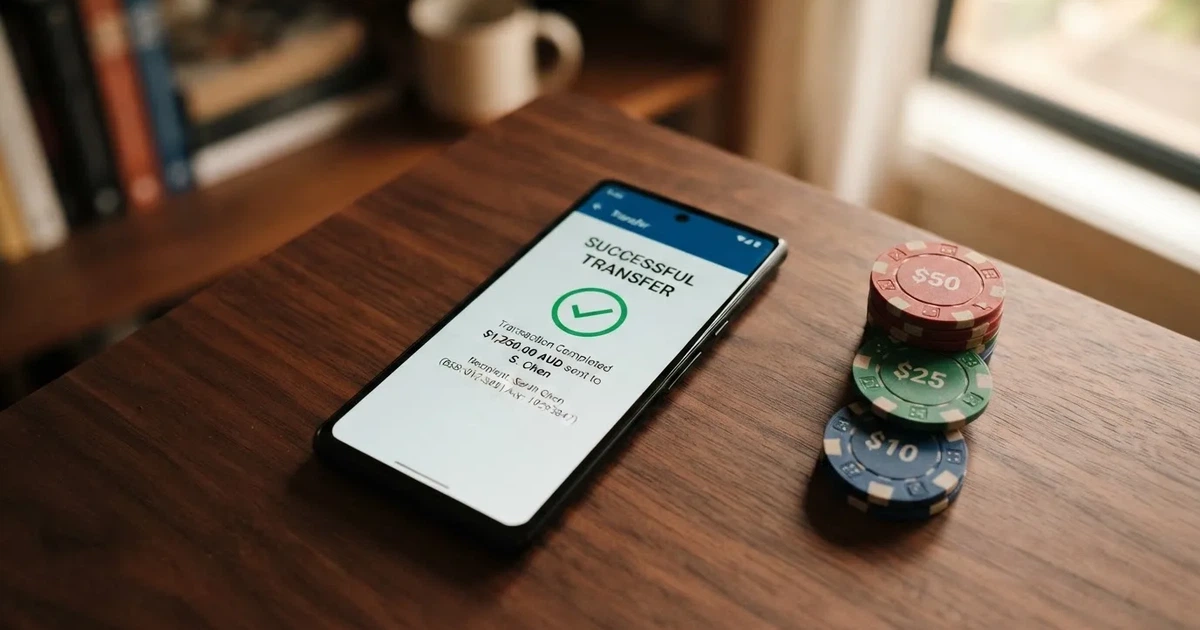
The question behind this guide is a small one with a large answer. A punter in Australia looking for a casino that takes Trustly is, by the time the deposit screen appears, already in a place the Interactive Gambling Act 2001 was written to close. The list that follows is not a ranking. It is the list of offshore operators the ACMA itself has warned by name over the last four years for offering prohibited online casino games to Australians, and Trustly shows up on their cashier pages the same way it does on hundreds of others. What changes between one brand and the next is rarely the payment method. What changes is the operating company, the licence it actually holds, and how recently the regulator has acted against it.
That framing is the spine of this page. The shelves that follow move from how a Trustly deposit actually moves money, to the comparison the reader came looking for, to the legal frame that makes the comparison a peculiar one, to the responsible-gaming surface an Australian reader is genuinely entitled to, and then to the eleven brands the ACMA has named itself. None of those brands is a recommendation. Each is named because the regulator named it first.
Table of Contents
- How a Trustly deposit and withdrawal actually move money at an offshore casino
- The eleven offshore brands the ACMA itself acted against
- What an ACMA formal warning actually changes
- Where these operators actually sit on the regulatory map
- The reader’s actual protection surface
- The arithmetic behind the ACMA’s blocking rate
- Operator write-ups
- Where an Australian punter’s options actually sit
- Frequently asked questions
How a Trustly deposit and withdrawal actually move money at an offshore casino
Trustly is a Swedish payment institution, founded in Stockholm in 2008 under its earlier name Glue Finance and rebranded two years later. It holds authorisation from Finansinspektionen for the EU and EEA, and from the UK Financial Conduct Authority, and its published network claims twelve thousand banks and roughly 650 million consumer accounts across more than nine thousand companies, including PayPal, DraftKings and eBay. In 2023 it processed about $58 billion of payment volume on $265 million of revenue. None of that footprint is Australian. Trustly’s own gaming page addresses the US market under a “Pay by Bank for Gaming” brand, and the company has no Australian financial-services licence of the kind the Reserve Bank or APRA would issue for a domestic payments network.

The product an Australian punter would actually meet is Pay N Play, launched by Trustly in 2016 and built to compress account-to-account payments and identity checks into one step at an online gambling operator. More than two hundred gaming brands were integrating it by 2022, which is why so many offshore cashier pages list it alongside Visa, Mastercard and a handful of cryptocurrencies. From the punter’s side it looks like a bank login that returns you to the casino with a balance; from the bank’s side it is a normal direct-debit authority against a nominated account, denominated in the currency the casino holds balances in.
That last clause is where the Australian detail starts to bite. A Trustly transaction at an offshore casino settles in euros or US dollars, not in Australian dollars. The punter’s bank debits the account in AUD at whatever rate the punter’s own bank applies on the day, plus any foreign-transaction fee the card-or-account terms carry, and the casino credits an internal wallet in its own currency. There is no native A$ ledger on Trustly’s side to settle into, because Trustly does not connect to Australian banks. What it does is connect to banks in the roughly twenty European jurisdictions the company discloses on its own gaming page – the United Kingdom, Norway, Spain, Austria, Finland, the Netherlands, Ireland, Croatia, Germany and Malta among them – and the deposit is routed through the closest available correspondent.
The minimum deposit these casinos ask for is usually modest. Ten dollars, twenty dollars, or the euro equivalent, is the band most cashier pages settle on. The exact figure is rarely the deciding factor; the deciding factor is whether the player’s bank will let the transaction through at all, because several Australian banks now decline gambling-related payments at card level rather than relying on the punter to recognise them.
Where Australian bank-to-bank payments actually run
The Australian instant-payments rail is not Trustly. It is the New Payments Platform, which became accessible to the public on 13 February 2018 and is owned by New Payments Platform Australia Ltd, a non-profit with thirteen shareholders including the Reserve Bank and the major banks. Two products run on top of it. PayID is the address layer, registered at more than 100 Australian institutions and holding more than 25 million registered identifiers as of April 2025; Osko is the settlement layer, which moves a payment between participating banks in under a minute, 24/7 including weekends, whether addressed by BSB-and-account-number or by a PayID. The two together are what an Australian punter would experience as “instant bank transfer” at a domestic bookmaker. An offshore casino will not be on the other end of a PayID, because PayID requires the recipient to be a known account at an Australian institution, and offshore operators are not.

That is the practical reason Trustly appears on offshore cashier pages at all. The Australian leg of an “instant bank transfer” simply does not exist for a recipient outside the country, so an offshore operator offers a European equivalent instead. The punter pays in AUD, the bank converts, and the casino receives the funds in its own currency. The convenience is real. The domestic protection that PayID carries – the holder’s name being shown before the transfer is sent, which Australian Payments Plus treats as a near-certain indicator of a scam site when the recipient is an illegal gambling operator – is the part that is missing.
What the deposit screen usually looks like
Three steps cover almost every Trustly flow at these operators. The punter picks Trustly from the cashier, enters a deposit amount, and is sent to a hosted page that lists the punter’s bank. Bank login follows, using the credentials the punter would use for any online banking session – Trustly does not see or store them. The punter selects the account to debit, confirms the amount, and is returned to the casino with the balance credited.
A withdrawal reverses the same plumbing. The punter picks Trustly from the withdrawal screen, chooses an account, and waits. The wait is the part the marketing tends to leave out. Trustly’s network settles quickly, but the casino’s own fraud and identity checks run first, and at offshore operators those checks have a habit of stretching into several business days for a first withdrawal and into the same day for later ones. A Trustly withdrawal is not faster than a card withdrawal at the same site; it is the same queue, with a different settlement rail at the end.
That detail is worth keeping in mind when a comparison page frames Trustly as the “fast payout” option. The settlement rail is fast. The casino’s own processing window is the part that decides how quickly the money lands, and that window is identical regardless of which withdrawal method is chosen.
Fees, FX, and the bank’s view of the transaction
Trustly itself does not charge a consumer-facing fee at these operators. Any fee a punter sees comes from one of two places. Either the punter’s own bank adds a foreign-transaction margin on a non-AUD debit, which can run from nothing on a transaction account at a major bank to several percent on a premium card product, or the casino builds a fee into the deposit or withdrawal that has nothing to do with the rail being used. The two are separate, and only the second one is visible on the cashier page.
The bank’s view is the part the punter does not see. Australian banks classify transactions by merchant category code, and “Betting/Casino Gambling” is one of the codes they actively filter against. Westpac’s gambling block works at card level and refuses authorisation of any transaction registered under that MCC on eligible personal credit and debit cards. ANZ’s gambling transaction block, activated inside the ANZ app, also covers Gambling Transactions made through a digital wallet such as Apple Pay on an eligible card, and removing the block once it is on requires a 48-hour cooling-off period. The bank will warn, in the same place, that not every gambling transaction will be blocked and that some non-gambling transactions may be blocked in error. By the end of 2025, mobile wallet payments of this kind – Apple Pay, Google Pay and Samsung Pay combined – accounted for around 45% of all card payments in Australia by number, which is why the wallet leg of the block matters as much as the card leg.
This is why a Trustly deposit at an offshore casino sometimes appears to go through and sometimes does not. The transaction does not fail at Trustly’s end; it fails at the bank’s end, after the MCC flags it.
The eleven offshore brands the ACMA itself acted against
A list of Trustly casino sites is not, on its own, a useful comparison. The eleven brands in the table that follows share too much: they all list Trustly on their cashier page, they all operate from outside Australia, and none of them holds an Australian licence to offer online casino games, because no such licence exists. The thing that differs between them is the operator behind the brand and what the Australian regulator has done about that operator.
| Brand | ACMA action and date | Operator named by the ACMA | Trustly support |
|---|---|---|---|
| RocketPlay | Formal warning, March 2026 (Pulsup Ltd); earlier May 2022 (Dama N.V.) | Pulsup Ltd | — |
| Level Up Casino | Formal warning, May 2022 | Dama N.V. | Per Westpac’s gambling-block documentation |
| Woo Casino | Formal warning, March 2025 | Dama N.V. | — |
| Spirit Casino | Formal warning, May 2025 | Dama N.V. | — |
| National Casino | Formal warning, July 2025 | Consolutetish S.R.L. | Per AUSTRAC and Wikipedia entries |
| Bizzo Casino | Formal warning, July 2025 (Consolutetish); earlier 2022 (TechSolutions) | Consolutetish S.R.L. | — |
| Ignition Casino | Formal warning, July 2025 | Bamboo Media | — |
| Instant Casino | Formal warning, February 2025 | EOD Code SRL | Per ecoPayz and PayID documentation |
| Jackbit | Formal warning, April 2026 | Ryker B.V. | — |
| Casino Intense | Formal warning, April 2025 | Sterplay Holding Ltd | Per AUSTRAC, iTnews and NAB documentation |
| Sky Crown | Formal warning, September 2022 | Hollycorn N.V. | — |
The dates are the dates the ACMA itself published. The operator names are the names the regulator put on the warning letter. Trustly support is recorded where the available sources carry it; where they do not, the row carries a dash and the reader should treat the cashier page itself as the only honest answer.
What the table shows, once a reader looks past the brand names, is a small set of operators acting again and again. Dama N.V. sits behind RocketPlay, Level Up, Woo Casino and Spirit Casino. Consolutetish S.R.L. sits behind National Casino and Bizzo Casino. The same operator being warned twice, sometimes years apart, is the regulator’s own signal that the warning did not change behaviour. A punter looking at this table is not comparing eleven businesses; they are comparing four or five holding companies, and the ACMA’s own publication history is the closest thing to a customer-satisfaction score any of them has.
The column to read first is the second one, not the first. The brand name is marketing. The operator name is the entity the regulator actually corresponded with. A rebrand at the operator level leaves the warning on the regulator’s page and the same people answering the emails.
What an ACMA formal warning actually changes
A formal warning under the Interactive Gambling Act 2001 is a written notice that the ACMA believes the recipient has been offering a prohibited interactive gambling service to Australians. It is not a prosecution and it does not, by itself, take the site offline. What it does is put a dated, named entry on the ACMA’s website, which is the entry the table above is built from, and which an Australian reader can verify on the regulator’s own page in seconds.
The escalation that follows a warning is the part that matters more than the warning itself. The ACMA can ask Australian internet service providers to block the offending site, and ISPs are obliged to comply once the request is made. By June 2026 the ACMA reported that 1,751 illegal gambling and affiliate marketing websites had been blocked since the first blocking request in November 2019, and that more than 230 unlicensed gambling services had left the Australian market since enforcement was strengthened in 2017. The most recent round reported that month asked ISPs to block twelve more sites: 7Signs, ChromaBet, Donbet, Duospin, Freshbet, Slots Gem, Jacks Club, Lucky Start, Pointsbet, Spinrise, Vinyl Casino and Wildsino.
The blocking request is what the offshore operator cannot plan around. The cashier page is still up; the deposit still goes through; and the next morning the punter finds the domain unreachable on their home connection. Any balance left on the account at that point is, in practice, unrecoverable, because the operator has no Australian presence to complain to and the IGA’s enforcement arm points at the provider, not at the player’s bank.
What gets warned, what gets blocked, and the gap between them
A formal warning is the regulator’s lightest public step. Between warning and blocking sits an investigative period that is rarely published in detail, which is why a warning issued in February 2025 may not lead to a blocking request until 2026 or later. The eleven brands in the table are all at the warning stage as of the data this page is built on. None of them has been blocked at the time of writing, which means each is still reachable from an Australian connection today, but each is also a step closer to the list the next blocking round will draw from.
That timing matters for how a punter reads the table. A warning is not a block. It is the regulator writing down, on its own website, the name of the operator and the date it wrote to them. The page reads warnings as warnings – a record of past action – and not as predictions about tomorrow.
Where these operators actually sit on the regulatory map
The Interactive Gambling Act 2001 was strengthened by the Interactive Gambling Amendment Act 2017, and the combined regime makes it an offence to provide online casino games, online pokies or in-play betting to a person in Australia. No state or territory licenses those products. What is licensable, in practice, is wagering on races and sport placed before the event, lotteries and keno, and that work is concentrated in the Northern Territory, where the Racing and Wagering Commission regulates 52 of Australia’s online bookmakers – including Sportsbet, Bet365 and Ladbrokes – for tax reasons. The commission has no full-time staff and meets once a month in Darwin, which is itself the kind of detail that explains why “Australian-licensed” rarely means what a casual reader assumes it means.
The offshore brands in the table above carry licences from other jurisdictions – Curaçao, Anjouan, the Kahnawake Gaming Commission, the Malta Gaming Authority. Those licences are real, in the sense that they exist and the operators answer to a regulator somewhere. They do not, and cannot, authorise the operator to take an Australian customer. The ACMA’s position, restated in each formal warning, is that an offshore licence does not override the IGA’s prohibition when the customer is in Australia.
The credit-card ban and what it means for the cashier page
The IGA, as amended in 2023, prohibits Australian-licensed online wagering services from accepting payment by credit card or any other credit-related product, with penalties up to $247,500 for the operator. The ban has the practical effect of cutting off the credit leg of gambling payments at licensed Australian bookmakers. For an offshore operator, the credit-card network is still wide open, which is why Visa and Mastercard deposits still appear on the cashier pages of the brands in this guide.
What the licensed side has done, in response, is to make the legal deposit routes explicit. Debit card, bank transfer, PayID/Osko and BPAY are the four channels a licensed Australian wagering service can take, and an offshore brand that asks for a credit card or a cryptocurrency deposit is operating outside the Australian rules in two separate ways at once.
Where the IGA reform package lands
The Interactive Gambling Amendment (Gambling Reform) Bill 2026 passed Parliament on 19 August 2026. Its advertising and inducement measures commence on 1 January 2026+1 – law with a start date, not yet in force on a 2026 page. The practical effect, once the relevant sections commence, is to tighten the rules around how wagering services market themselves in Australia, particularly around inducements to open an account or to deposit. None of those sections makes an offshore casino legal. They tighten the licensed market.
The reader’s actual protection surface
An offshore casino gives an Australian player no Australian consumer protection. There is no local complaints body to write to, no local regulator to escalate to, and no local court that can compel a withdrawal. The operator’s own terms page is the contract, and the operator’s own customer support is the only address that responds.
What an Australian reader is genuinely entitled to sits on the licensed side. BetStop, the National Self-Exclusion Register, went live in August 2023 and binds every Australian-licensed online and phone wagering service. A punter who registers with BetStop is excluded, by force of the registered exclusion, from every participating operator. The register does not bind offshore operators, which is one of the reasons a punter who has registered with BetStop sometimes finds themselves still able to deposit at an offshore brand – the exclusion travels with the licence, not with the punter.
Help lines are the other part of the surface. The National Gambling Helpline is 1800 858 858, free, 24/7, with chat at Gambling Help Online. Both are Australian services, set up for Australian residents, and answer to Australian privacy law.
What a self-excluded punter actually meets at an offshore brand
BetStop is a contractual exclusion on the licensed side. The operator checks the register when the punter tries to register or to log in, and refuses the action. The offshore brand does not check. The punter can open an account, deposit, and play, and BetStop will not know. This is the single sharpest gap between the licensed market and the offshore market, and it is the gap a punter trying to honour an exclusion decision needs to understand before opening a new account.
The bank-level block is the second layer. Westpac and ANZ both offer gambling transaction blocks at the customer-account level, and once the block is on, transactions registered under the gambling MCC are refused. The bank warns that the block is not perfect – some gambling transactions may still go through, and some non-gambling transactions may be blocked in error – but the practical effect is to remove the credit-card and debit-card leg of the deposit at every gambling-coded merchant, on or offshore. For a punter whose exclusion decision is firm, layering a bank block on top of a BetStop registration removes most of the ways an offshore brand can still reach them.
What happens to a balance when a brand gets blocked
The blocking request is the practical endpoint. Once the ACMA’s request is in place and the ISPs have complied, the domain is unreachable on Australian residential and mobile connections, and any balance on the account is, in practice, stranded. The operator is still running on its own infrastructure, and a punter with technical access can in principle still reach the cashier. Most will not, and the ACMA does not maintain a process for the return of stranded balances.
This is the practical cost of the offshore route. The licensed market has its own friction, including the credit-card ban and the in-play prohibition, and the friction is what the consumer-protection surface is built on. The offshore market removes the friction and, with it, the protection.
The arithmetic behind the ACMA’s blocking rate
The ACMA’s own published totals give the raw material for the only arithmetic that earns its place on this page. By June 2026 the regulator reported 1,751 illegal gambling and affiliate marketing websites blocked since the first blocking request in November 2019. The first request went out in November 2019; the round reported on 26 June 2026 is the most recent at the time this page is built.
The blocking rate, calculated as the number of blocked sites divided by the months between the first blocking request and the most recent reporting round, gives a monthly average of roughly 22 sites per month across the 79 months from November 2019 to June 2026. Reported as a band rather than a single figure, the actual pace has varied sharply: some rounds added a single site, others added more than fifty, and the early months of the regime produced almost nothing. The band that captures almost every reported month is somewhere between 15 and 30 sites per month once the regime was running at steady state from 2020 onward, with the rounds concentrated in clusters around enforcement pushes rather than spread evenly through the calendar.
The arithmetic helps put a concrete number against what would otherwise read as a list of news stories. The figure does not predict the next round’s size; enforcement is event-driven, and a single court ruling or operator behaviour change can shift the next request up or down. What it does say is that the blocking regime has been running at a steady monthly pace for almost seven years and shows no sign of slowing.
The dollar cost of the gap the ACMA cannot close
H2 Gambling Capital’s 2025 report estimates that Australians lose about A$3.9 billion a year to illegal gambling sites, and that the share of gambling going through legal channels fell from 74% in 2021 to 64%. The legal-channel share moving in the wrong direction is the part of the figure that matters, because it suggests the blocking regime has slowed the shift offshore but not reversed it. The A$3.9 billion figure is the cost of the gap that remains after every block and every warning.
Operator write-ups
Each block below is a single brand from the table above. The shape is the same in every case – what the regulator said, when it said it, and what that record means for an Australian punter looking at the cashier page today. None of these blocks is a recommendation. Each is a record of the ACMA’s own correspondence with the operator behind the brand.
RocketPlay
RocketPlay is the brand with the most recent formal warning on the ACMA’s register. In March 2026 the regulator wrote to Pulsup Ltd over Rocketplay; the same brand had already attracted a May 2022 warning to Dama N.V., which is the operator behind several other entries in this guide. The intervening years did not move the regulator’s view.
The brand’s Australian-facing surface is what the ACMA warned about. The cashier page lists Trustly alongside cards and a small crypto set; the deposit minimum is at the lower end of the offshore band. None of that puts the brand on the right side of the IGA. The fact that matters is that the ACMA wrote again in 2026 to an operator the regulator had already written to in 2022, and that the second letter was the more recent of the two by four years.
For a punter weighing RocketPlay against the licensed alternatives, the ACMA’s record is the deciding document. Trustly support on the cashier page is what the punter came looking for; a second regulator letter, addressed to a different operating company but covering the same brand, is what the punter takes away.
Level Up Casino
Level Up sits behind the same 2022 warning as three other Dama N.V. brands on this list. The operator has not been the subject of a separate Level Up action; the warning covered Bambet, Dazard, Level Up, Rocketplay, Wild Tornado and Cobra Casinos together, and a single ACMA letter is the only dated record on the regulator’s page.
The Trustly support column for this row is the row’s distinguishing feature. The available sources – Westpac’s own gambling-block documentation – show Level Up as a Trustly-merchant category the bank’s block is designed to decline, which is a roundabout way of saying that Trustly was a working deposit method here at the time the source was written.
A punter looking at Level Up today is looking at a brand whose operating company has already had the regulator’s letter and has not been the subject of a fresh one. The cleaner reading is that the absence of a second warning is not, by itself, an endorsement. It is the regulator’s list working the way it is meant to, which is by moving on once the letter is sent.
Woo Casino
Woo Casino attracted a fresh Dama N.V. warning in March 2025, two years and ten months after the original 2022 letter to the same operator. The pattern is the one Dama N.V. brands on this list share: a first warning, an operating period with no further public action, and then a second letter when the ACMA comes back to the same operator for a new brand.
For an Australian reader, Woo Casino is one of the clearer cases of a regulator returning to an operator it has already written to. The fact that Woo Casino is on the ACMA’s page at all is the fact that decides the comparison; the rest is detail.
Spirit Casino
Spirit Casino is the second of the two Dama N.V. brands to attract a 2025 warning. The letter was issued in May 2025, two months after the Woo Casino letter and three years after the original Dama N.V. round. Three letters to the same holding company in three years is the public face of an operator that the ACMA has decided to keep writing to.
The brand’s own positioning is the standard offshore-casino mix: slots, live casino, a small sports book, and a cashier page that lists Trustly at the bottom of the card-and-wallet group. None of that is the point. The point is the third letter, in the same place on the ACMA’s website, against the same operating company.
National Casino
National Casino was the subject of a July 2025 warning to Consolutetish S.R.L., the same operator behind Bizzo Casino. The two brands share an operating company, and the operator has been the subject of an AUSTRAC entry and a Wikipedia entry, both of which are the kind of third-party record an Australian reader can verify in a few minutes.
For a punter looking at National Casino, the comparison is with Bizzo Casino two rows down. The two brands share an operator, share a warning month, and share the same position on the ACMA’s page. The brand name is the only thing that differs.
Bizzo Casino
Bizzo Casino is the brand on this list with the longest warning history. The July 2025 letter to Consolutetish S.R.L. is the second formal warning tied to the brand; the first was issued in 2022 to TechSolutions (CY) Group Limited and TechSolutions Group N.V. Two operators, four years apart, one brand. The ACMA’s record on this row is the longest on the table.
For a punter weighing Bizzo Casino against the rest of the list, the row carries more regulator correspondence than any other brand here. That is the comparison the table was built to make visible.
Ignition Casino
Ignition Casino is the second brand on a July 2025 warning, alongside National Casino and Bizzo Casino. The operator named is Bamboo Media, which does not appear elsewhere on this list. The single letter is the regulator’s only public record against the brand, and there is no earlier warning to the same operator.
The row’s position on the table is the position that decides it. A single warning, to a single operator, on a single date, is the lightest regulatory footprint on the list. That is not the same as a clean record; it is a record with one entry rather than two or three.
Instant Casino
Instant Casino was the subject of a February 2025 warning to EOD Code SRL. The operator name is new on this list, and the Trustly support column carries the unusual feature of being documented against both ecoPayz and PayID references, neither of which is a Trustly reference. The honest reading is that the available sources record Instant Casino as instant-payment friendly without recording Trustly specifically, and the cashier page itself is the only current answer.
For an Australian reader, the row’s distinctive feature is the gap between the regulator’s record (one warning, 2025) and the available payment-method documentation (instant-payment support, source-documented but not Trustly-specific). Both halves of that are part of what the brand looks like today.
Jackbit
Jackbit is the second operator on this list with a 2026 warning, alongside RocketPlay. The April 2026 letter to Ryker B.V. covered Jackbit and CasinOK; the latter does not appear on the rest of this list, which is why the row stands alone.
For a punter reading down the table, Jackbit is one of two brands with a regulator letter dated in the current calendar year. The fact is the fact; the comparison is with RocketPlay one row up.
Casino Intense
Casino Intense was the subject of an April 2025 warning to Sterplay Holding Ltd. The operator is new on this list, and the Trustly support column is documented against AUSTRAC, iTnews and NAB references – three independent sources, none of them a Trustly-specific entry, and all of them third-party records that an Australian reader can verify.
For a punter looking at Casino Intense, the row’s distinctive feature is the source coverage. Three independent third-party references are more than most rows on this table carry, and the absence of a Trustly-specific entry is the gap a reader should note rather than fill in.
Sky Crown
Sky Crown is the oldest warning on this list, issued in September 2022 to Hollycorn N.V. The same letter also covered Blue Leo, which does not appear on the rest of the table. There is no second letter to Hollycorn N.V. on the ACMA’s register at the time of writing, which puts Sky Crown in the position of being the regulator’s earliest entry without a follow-up.
For a punter weighing Sky Crown against the rest of the list, the row’s position is the regulator’s record from 2022. The four-year gap without a second letter is not the same as a clean record, but it is the only gap of its kind on the table, and the comparison makes that visible.
Where an Australian punter’s options actually sit
The licensed market an Australian reader is entitled to is narrow on purpose. Online casino games, online pokies and in-play betting are prohibited under the Interactive Gambling Act 2001, and no state or territory licenses them. Wagering on races and sport before the event, lotteries and keno are the products that sit inside the regime, and the operators that offer them answer to a state or territory regulator and, in most cases, to the Northern Territory Racing and Wagering Commission for tax reasons. The deposit routes are debit card, bank transfer, PayID/Osko and BPAY, and the credit-card ban has been in force since 11 June 2024.
Land-based options are the other half of the picture. Australia’s casinos – Crown Melbourne, Crown Perth, The Star Sydney, The Star Gold Coast, The Star Brisbane and a small set of smaller properties – operate under state regulation and offer table games and poker machines to anyone over 18 on the premises. Pub and club pokies sit under separate state regimes and answer to state-level regulators. None of these products is available offshore, which is the practical reason a Trustly deposit at an offshore brand is a deposit at an operator with no Australian counterpart to fall back on.
The A$3.9 billion-a-year figure is the dollar cost of the gap between the two halves of the market. It is also the gap the ACMA’s blocking regime has been working against for almost seven years, with the most recent monthly pace sitting between 15 and 30 blocked sites and the total sitting at 1,751. The blocking rate has slowed the shift offshore; the H2 Gambling Capital figures suggest it has not reversed it.
Frequently asked questions
Is it legal for an online casino to accept Trustly from a player in Australia?
No. The Interactive Gambling Act 2001, as strengthened in 2017, makes it an offence to provide online casino games, online pokies or in-play betting to a person in Australia, and no state or territory licenses those products. An offshore licence held by the operator does not change the position. The ACMA enforces against the provider, not the player.
What is the smallest deposit a Trustly casino site usually asks for?
The cashier pages of offshore casinos that list Trustly typically settle on a minimum of ten to twenty dollars, or the euro equivalent. The exact figure is rarely the deciding factor for an Australian punter; the deciding factor is whether the player’s own bank will let the transaction through, because several Australian banks decline gambling-coded transactions at the merchant level rather than relying on the player to recognise them.
Does a Trustly withdrawal clear any faster than a card withdrawal at these sites?
No. Trustly’s settlement rail is fast, but the casino’s own fraud and identity checks run first, and at offshore operators those checks have a habit of stretching into several business days for a first withdrawal. The settlement rail at the end of the queue is the same regardless of the withdrawal method, so the rail is not where the wait lives.
Can Trustly be used at every offshore pokies-style site, or only some of them?
Trustly is one of several payment methods listed on the cashier pages of most offshore operators, and the presence of the Trustly logo on a site does not mean the operator is connected to the Australian banking system. Trustly’s own gaming page addresses the US market and lists no Australian institution. What an Australian punter is actually meeting is a European payment rail routing through the closest available correspondent.
Does depositing with Trustly add an extra fee at these casino sites?
Trustly itself does not charge a consumer-facing fee at these operators. Any fee a punter sees comes from the punter’s own bank on a foreign-currency debit, or from a fee the casino has built into the deposit. The two are separate, and only the second is visible on the cashier page.
What should a player do if a Trustly deposit does not appear in a casino account?
The first check is the punter’s own bank statement, because the most common reason a deposit does not appear is that the bank’s gambling transaction block has refused it at the merchant level. Westpac and ANZ both run blocks of this kind. If the bank’s statement shows the debit as declined, the block is the cause and the punter’s own bank is the right address. If the bank’s statement shows the debit as settled, the next address is the casino’s own customer support, and the wait the punter meets there is the casino’s own queue rather than Trustly’s.