
CashtoCode at Australian-facing online casinos: how it works on the ground, and where the law actually stands
A CashtoCode eVoucher is one of the few payment instruments that lets a player top up an offshore casino account without entering card numbers, opening a wallet, or registering an account in their own name. That property makes it conspicuous in any conversation about Australian-facing gambling sites. It also makes the conversation harder, because the answer to “which casinos take CashtoCode from Australia” cannot be answered without confronting the prior question of whether any of them are allowed to take anything from anyone in Australia at all.
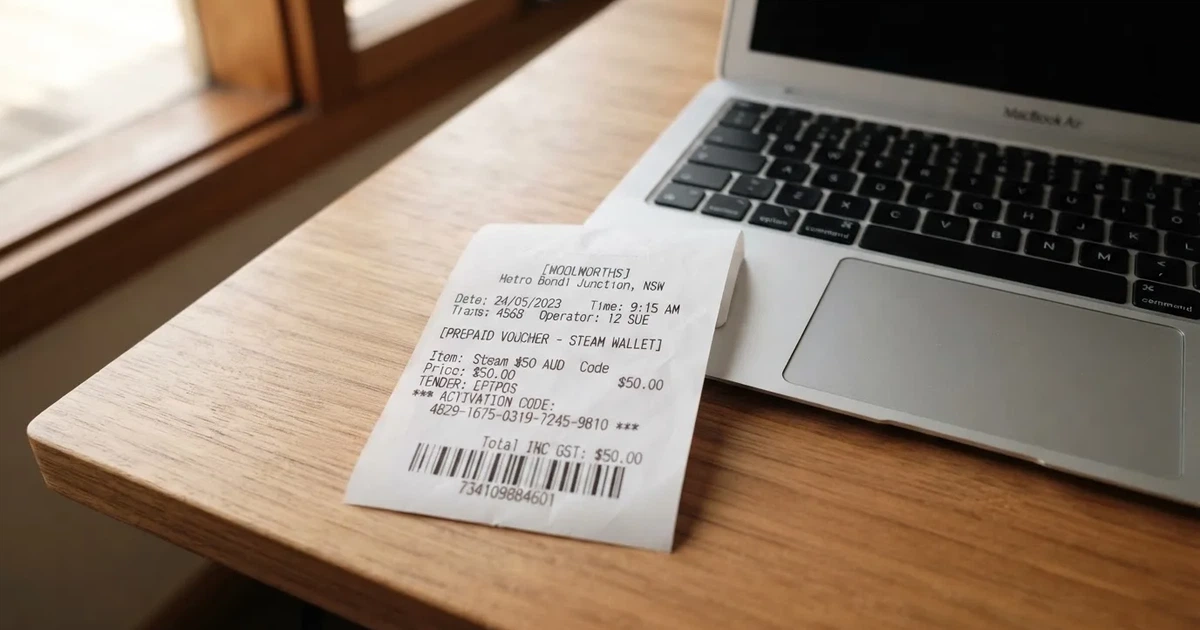
This page works through both questions in turn. It explains how a CashtoCode deposit actually clears at these sites, how CashtoCode withdrawals fit (or don’t) into the picture, and which operators the Australian Communications and Media Authority has publicly warned for offering prohibited interactive gambling services to Australian residents. It does not present any of those brands as a place to play. The product is prohibited under the Interactive Gambling Act 2001, regardless of what licence a brand’s footer displays or what payment methods it advertises.
Current as of 30 October 2026, cross-checked against ACMA formal-warning publications and CashtoCode’s own product pages.
Table of Contents
- How a CashtoCode deposit and withdrawal actually move money at an offshore casino
- Why ranking these casinos against each other changes the legal picture not at all
- The legal frame a reader needs before reading anything else
- Landscape of regulator action
- The CashtoCode standing at each brand, on the inputs available
- What the credit-card ban and the bank-side blocks do to the deposit path
- What a player should know about the withdrawal side that the marketing pages will not say
- Responsible play in a market where the regulator’s own protections stop at the border
- What the page covers and what it deliberately does not
- Frequently asked questions
How a CashtoCode deposit and withdrawal actually move money at an offshore casino
CashtoCode sits in a narrow lane between cash and a card. A customer buys a printed or digital eVoucher from a reseller — a convenience store, a participating outlet, or an online platform — and receives a 20-digit code. That code is entered at the casino’s cashier and the deposit appears in the playing balance. No personal details travel with the code; CashtoCode’s own product page says the eVoucher is sold with no personal information required. The brand also lists gambling software providers — Pragmatic Play, Evolution, NetEnt, Playtech — inside its catalogue filters, which is the clearest possible signal that the product is built to feed gambling sites rather than general e-commerce.
For an Australian resident, the relevant mechanics are four.
The voucher itself is deposit-only. CashtoCode’s own documentation offers no withdrawal path. Anyone holding a balance they want to cash out cannot route the money back through a CashtoCode code. The casino pays out through whatever its own withdrawal rail is — usually a bank transfer, sometimes a card, sometimes a crypto wallet — and that rail is the one governed by the casino’s own terms, not by CashtoCode. This single point changes the way the rest of the page should be read: choosing CashtoCode is a deposit choice, not a payment choice.
CashtoCode carries no usage fee to the customer. The brand states the voucher is free to the customer, with any unused balance keeping its full value. A reader should not infer that the casino charges nothing — some operators absorb the merchant cost and others pass it on, and that asymmetry is set in the cashier screen, not in the CashtoCode product page.
CashtoCode supports more than 25 currencies. The product is international, and a casino’s cashier will usually convert at its own posted rate rather than the rate the reseller used when the voucher was bought. The visible dollar figure on the way in and the dollar figure on the way out are not, in general, the same number.
The brand has been on the market since 2013. Eightball Marketing Services LLC holds the website copyright. A reader treating CashtoCode as a brand-new instrument is working from the wrong premise; it predates nearly every brand in the offshore casino market that currently lists it.
The deposit flow in plain steps
A reader who has never used the product gets the cleanest account by walking the path once. A player buys an eVoucher for a chosen denomination from a reseller and receives a 20-digit code. At the casino cashier, the player selects CashtoCode, enters the code, and the deposit arrives in the playing balance — the casino treats it as a closed-loop credit until it is wagered. After that, the code is spent, the reseller has the money, and the casino has the player’s wagering.

| Payment Method | Nature | AU Status |
|---|---|---|
| Bank transfer | Payment rail | Legal |
| Credit card | Banned product | Illegal for gambling |
| CashtoCode | Prepaid voucher | Not licensed |
The deposit-side experience is short. The longer experience is on the way out.
Where the withdrawal picks up
A withdrawal request at an offshore casino has to clear the casino’s own internal review before any settlement is sent. That review is the bottleneck that decides how long a withdrawal actually takes, and it sits entirely outside the CashtoCode product. CashtoCode’s own documentation offers no withdrawal option; the casino is on its own rails, on its own clock.
For an Australian account, the practical withdrawal rail is usually one of three: a domestic bank transfer via PayID or Osko, an international bank wire, or a crypto transfer. PayID-based transfers between participating Australian banks settle in under a minute, 24/7, but the casino’s internal review still has to release the funds first; the speed of the rail is not the speed of the payout. International wires are slower and more expensive. Crypto transfers are fast once signed but create a separate tax-and-conversion problem on the Australian side that the casino will not help with.
The honest reading: choosing CashtoCode for the deposit does not shorten the withdrawal, because CashtoCode is not on the withdrawal path.
Why ranking these casinos against each other changes the legal picture not at all
An offshore casino accepting CashtoCode from an Australian resident is, in regulatory terms, in the same position as an offshore casino accepting any other payment from an Australian resident. The payment method is incidental. The Interactive Gambling Act 2001, as amended in 2017, prohibits the supply of online casino games and online pokies to a person in Australia. No state or territory licences that product. The Northern Territory Racing and Wagering Commission, which the ABC reported on in April 2026, regulates online bookmakers for tax reasons and meets once a month in Darwin with no full-time staff — a structural detail worth knowing because it explains why “licensed” footers on Australian-facing sites almost always refer to something other than an Australian casino licence.
A ranking that compares eleven brands by deposit speed, bonus weight, or game library is, in a strict sense, ranking eleven sites that all share the same legal posture. The information value of the ranking is the gradient between them on those dimensions, not any change in their status under Australian law. Two readers can read the same table and walk away with different practical conclusions — one is comparing deposit friction, the other is reading the column on regulator action — and neither is wrong. The thing that does not change is the line above the table.
The set is defined by what the regulator has done
The eleven brands on this page are not a ranking chosen for game quality, payout speed, or bonus value. They are the brands the ACMA has issued formal warnings against for offering prohibited interactive gambling services to Australians. The list is a regulator-driven sample, not an editorial pick, and it tilts toward operators whose conduct has already drawn a public notice. A reader using the list to choose where to play has misread it; a reader using it to see what the regulator’s record looks like has read it correctly.
The set in order: RocketPlay, Level Up Casino, Woo Casino, Spirit Casino, National Casino, Bizzo Casino, Ignition Casino, Instant Casino, Jackbit, Casino Intense, Sky Crown. Each is reviewed below on the same dimensions the regulator’s record opens up — the company the ACMA named, the date of the warning, and what that warning covers — and on the narrower question of how CashtoCode fits at that brand. The CashtoCode dimension is where the data is thinnest, because the ACMA’s actions do not turn on payment methods, and a regulator action against an operator tells the reader nothing direct about whether CashtoCode is on the cashier screen.
The legal frame a reader needs before reading anything else
Three layers of law stack up around this market, and a reader skipping any one of them reads the rest of the page wrong.
The Interactive Gambling Act 2001 is the prohibition. As strengthened by the Interactive Gambling Amendment Act 2017, it makes it an offence to provide online casino games, online pokies, or in-play betting to a person physically in Australia. The provision is targeted at the supplier, not the player. What is licensable in Australia is wagering on races and sport placed before the event, lotteries, and keno.
The ACMA enforces by warning, by directing ISPs to block, and by accepting voluntary exits. As reported in June 2026, the ACMA’s running total was 1,751 illegal gambling and affiliate marketing websites blocked since the first blocking request in November 2019, and more than 230 unlicensed gambling services had left the Australian market since enforcement was strengthened in 2017. In the round reported on 26 June 2026 alone, the ACMA asked Australian ISPs to block 12 more sites: 7Signs, ChromaBet, Donbet, Duospin, Freshbet, Slots Gem, Jacks Club, Lucky Start, Pointsbetz, Spinrise, Vinyl Casino and Wildsino. A site that is not on a current blocking list is not, on that account, safe — a warning without a block is still a regulator action with a regulator’s reasoning behind it.
The credit-card ban took effect on 11 June 2024. From that date, Australian-licensed online wagering service providers have been banned from accepting credit cards, credit-linked digital wallets, or digital currencies as payment. The rule is enforced by the ACMA, with penalties up to A$247,500 for non-compliance. A site asking an Australian customer for a credit card or a crypto deposit is, on its own cashier, signalling that it is not operating under the Australian framework — even if it displays a Curaçao or Kahnawake licence in its footer. Legal deposit routes for licensed Australian wagering are debit card, bank transfer, PayID/Osko, and BPAY.
The reason the credit-card rule matters on a CashtoCode page is that CashtoCode’s value proposition is precisely the gap those rules leave open: anonymous, deposit-only, no card data. The instrument was not designed for the Australian market, but the regulatory gap it fits into is Australian-shaped.
The Interactive Gambling Amendment (Gambling Reform) Bill 2026
The Bill passed Parliament on 19 August 2026 and its advertising and inducement measures commence on 1 January 2027. On a page read in 2026, the law has been passed but has not yet commenced. A reader reading the same page in 2027 will see those measures in force. The distinction matters for anyone comparing an offshore casino’s marketing approach across the year boundary.
What an offshore site cannot give a player
The legal frame leaves a player exposed in three places the brand’s own marketing will not mention. An offshore site gives no Australian consumer protection, no complaints body to take a dispute to, and no recourse if a withdrawal is refused. The site can be blocked with a balance still sitting in the account — the block does not return funds. The site is not connected to BetStop, the National Self-Exclusion Register (live since August 2023), because BetStop binds only Australian-licensed online and phone wagering services. None of this is theoretical; it is the structure of the market, and the rest of the page sits inside it.
Landscape of regulator action
The table below is not a comparison in the usual sense. The columns it carries are the ones the ACMA’s own publication record opens up: the brand, the action and date, the operator the ACMA named, and the brand’s CashtoCode standing as the inputs carry it. Other columns a reader might expect — payout speed, wagering multiple, game count — are absent because the inputs do not back them, and a guess would read as a fact.
| Brand | ACMA action and date | Operator named by the ACMA | CashtoCode support |
|---|---|---|---|
| RocketPlay | Formal warning, March 2026 | Pulsup Ltd | — |
| Level Up Casino | Formal warning, May 2022 | Dama N.V. | Listings only (Westpac) |
| Woo Casino | Formal warning, March 2025 | Dama N.V. | — |
| Spirit Casino | Formal warning, May 2025 | Dama N.V. | — |
| National Casino | Formal warning, July 2025 | Consolutetish S.R.L. | Listings only (AUSTRAC, Wikipedia) |
| Bizzo Casino | Formal warning, July 2025; prior warning 2022 | Consolutetish S.R.L.; prior TechSolutions | — |
| Ignition Casino | Formal warning, July 2025 | Bamboo Media | — |
| Instant Casino | Formal warning, February 2025 | EOD Code SRL | Listings only (ecopayz, PayID) |
| Jackbit | Formal warning, April 2026 | Ryker B.V. | — |
| Casino Intense | Formal warning, April 2025 | Sterplay Holding Ltd | Listings only (AUSTRAC, iTnews, NAB) |
| Sky Crown | Formal warning, September 2022 | Hollycorn N.V. | — |
Three observations on the table. First, the ACMA’s actions cluster around a small number of operators running many brands — Dama N.V. alone accounts for four of the eleven. Second, two brands have been warned twice: RocketPlay (Dama N.V. in May 2022, then Pulsup Ltd in March 2026) and Bizzo Casino (TechSolutions in 2022, then Consolutetish S.R.L. in July 2025). Third, the CashtoCode column is sparse by design — the inputs do not directly cover CashtoCode support at most of the brands, and a “listings-only” reading is reported as listings-only, naming the source rather than asserting the operator’s own claim.
What the ACMA’s blocking total says about the rate of action
The arithmetic the page carries forward is a simple one: the ACMA has blocked 1,751 sites since November 2019, as reported in June 2026. Spread across roughly six and a half years, that is a band of roughly 270 blocks per year, or close to one site every business day. A reader who treats the blocking round as a one-off headline has the wrong frame. A reader who treats it as the regulator’s working pace is closer to the picture, and that reader will not be surprised when the next round arrives.
The figure carries a condition: the count is the running total since the first blocking request in November 2019, not the count of currently blocked sites — sites leave the list as well as join it. The headline 1,751 is a cumulative number, not a snapshot, and a comparison to the smaller “230 services have left the market” figure conflates two different actions (blocks versus voluntary exits). The page records both as the regulator reports them, without flattening them into one number.
The CashtoCode standing at each brand, on the inputs available
A reader who came to this page for the narrow question — does this brand take CashtoCode — is asking a question the inputs only partially answer. The ACMA’s formal-warning publications do not list payment methods. Affiliate marketing pages, which would, are exactly the kind of source this page does not draw from. What survives is a thinner record, and it is reported as such.
RocketPlay. CashtoCode support: no data in the inputs. The ACMA’s March 2026 warning is the most recent regulator action against the brand, after a May 2022 warning to Dama N.V. covering RocketPlay alongside five other Dama brands. A reader cannot tell from the regulator’s record whether CashtoCode is on the cashier. A reader who wants to know has to look at the brand’s own cashier screen — which is itself the action the law prohibits.
Level Up Casino. CashtoCode support: listings only, as carried by Westpac’s gambling-block page. The ACMA’s warning to Dama N.V. in May 2022 covered Level Up alongside Bambet, Dazard, Rocketplay, Wild Tornado and Cobra Casinos. A “listings only” reading means some listing pages have placed Level Up among CashtoCode-accepting operators; it does not mean Level Up itself confirms the integration. Treat it as a hint, not a feature.
Woo Casino. CashtoCode support: no data. The ACMA warned Dama N.V. over Woo Casino in March 2025. The same operator-name pattern links this brand back to the May 2022 Dama warning that covered RocketPlay, Level Up and others.
Spirit Casino. CashtoCode support: no data. The ACMA warned Dama N.V. over Spirit Casino in May 2025, two months after the Woo Casino warning. The pattern is consistent with a single operator running several brands in parallel and absorbing warnings brand by brand.
National Casino. CashtoCode support: listings only, as carried by AUSTRAC and Wikipedia references in the inputs. The ACMA’s July 2025 warning to Consolutetish S.R.L. covered National Casino alongside Bizzo Casino. National Casino and Bizzo share an operator, share a warning date, and share a country of registration.
Bizzo Casino. CashtoCode support: no data. The ACMA warned Consolutetish S.R.L. over Bizzo Casino in July 2025 — the second formal warning tied to the brand, after a 2022 warning to TechSolutions (CY) Group Limited and TechSolutions Group N.V. Two warnings to two different operators running the same brand is a strong signal that rebranding has not put the product outside the regulator’s reach.
Ignition Casino. CashtoCode support: no data. The ACMA warned Bamboo Media over Ignition Casino in July 2025, on the same day as the National Casino and Bizzo Casino warnings. The coincidence of dates suggests a coordinated enforcement round rather than independent investigations.
Instant Casino. CashtoCode support: listings only, as carried by EcoPayz and PayID references in the inputs. The ACMA warned EOD Code SRL over Instant Casino in February 2025, the earliest warning in the set.
Jackbit. CashtoCode support: no data. The ACMA warned Ryker B.V. over Jackbit and CasinOK in April 2026. Jackbit shares an operator and a warning date with CasinOK, a brand not otherwise in the set.
Casino Intense. CashtoCode support: listings only, as carried by AUSTRAC, iTnews, and NAB references. The ACMA warned Sterplay Holding Ltd over Casino Intense in April 2025.
Sky Crown. CashtoCode support: no data. The ACMA warned Hollycorn N.V. over Sky Crown and Blue Leo in September 2022. The Hollycorn warning predates every other warning in this set, and the brand has been on the regulator’s record for longer than any of its peers here.
A reader should not aggregate the “listings only” cells into a confidence figure. Three brands in eleven carry a listings-only signal; the other eight carry no signal at all in the inputs. A column of mostly empty cells is not a column of evidence against CashtoCode support — it is a column of evidence that the inputs did not look.
What the credit-card ban and the bank-side blocks do to the deposit path
The credit-card ban that took effect on 11 June 2024 closed one of the three deposit paths an Australian player used to reach an offshore casino. The closing of that path is the regulatory gap CashtoCode occupies. Two bank-side mechanisms complicate the gap further.
Bank gambling transaction blocks. NAB, Commonwealth Bank, Westpac and St George all let cardholders self-activate a gambling transaction block through their banking app. Once requested, a block is usually applied immediately; lifting it can take up to two business days. Westpac’s block works at card level — it refuses authorisation of transactions registered under the merchant category code for “Betting/Casino Gambling” on eligible personal credit and debit cards. ANZ’s block, activated in the ANZ app, also blocks gambling transactions made through a digital wallet such as Apple Pay on an eligible card. ANZ’s own page warns that removing the block requires a 48-hour waiting period, that not all gambling transactions will be blocked, and that some non-gambling transactions might be blocked in error. The bank’s own caveat is the most honest reading of what these blocks actually do.
The bank-block caveat extends to mobile wallets. ANZ’s block covers Apple Pay on an eligible card; the same logic applies to Google Pay and Samsung Pay on eligible cards. By the end of 2025, Apple Pay, Google Pay and Samsung Pay transactions collectively accounted for around 45% of all card payments in Australia by number. A bank-block-aware reader should assume that a gambling block on a card blocks roughly half of the card-not-present payment surface on the same card.
CashtoCode is unaffected by bank-side card blocks because it never touches a card. This is the structural reason CashtoCode occupies the niche it does. A reader whose bank has placed a card-level gambling block is, on that block alone, still able to buy a CashtoCode voucher at a reseller with cash or with a non-blocked payment instrument, and then enter the 20-digit code at the cashier. The block does not extend to the voucher purchase because the voucher purchase is not classified under the gambling MCC at the moment of sale. The reading is technical and the inputs do not state it explicitly; the structure of the product makes it the natural reading.
What a player should know about the withdrawal side that the marketing pages will not say
CashtoCode’s own product page is silent on withdrawals because there is no withdrawal product to describe. The withdrawal rail at an offshore casino is set by the casino, not by CashtoCode, and the inputs do not carry casino-specific withdrawal times for any of the eleven brands in the set. The honest reading is qualitative: an offshore casino’s withdrawal is governed by its own internal review, then by the rail it pays out on, and the rail matters more than the casino’s stated “processing time” — because the rail settles only after the review.
PayID is the rail with the fastest retail settlement: under a minute, 24/7, between participating Australian banks. The casino’s review, however, sits in front of the rail and can take days. Osko is the same rail under a different product name. Bank wires are slower, more expensive, and pass through correspondent banks. Crypto transfers are fast on confirmation but create a separate conversion problem on the Australian side.
A reader who has reached this page because they wanted a faster payout should read it the other way: the deposit-side instrument does not determine the payout-side speed, and the casino’s own review is the bottleneck. The marketing pages on which a player might have landed describe the rail’s speed; they do not describe the review that gates it.
What happens when the rail runs into the blocking round
If the ACMA directs Australian ISPs to block a brand the player holds a balance at, the block cuts the player off from the casino’s cashier but does not return the balance. The blocking total of 1,751 sites since November 2019 is a count of sites that have been cut off, not a count of balances returned. The bank rails behind the cashier remain functional — a PayID can still be sent to an account the player cannot reach through the casino’s interface — but the casino controls the release, not the player. A reader who treats the ACMA’s blocking round as an inconvenience rather than a structural risk has missed the page.
Responsible play in a market where the regulator’s own protections stop at the border
The Australian framework’s player-side protections bind only Australian-licensed services. BetStop, the National Self-Exclusion Register, has been live since August 2023 and is the most concrete piece of self-exclusion infrastructure the country has built — but it does not extend to offshore casinos, because the offshore casino is not connected to the Australian framework that runs BetStop. The National Gambling Helpline (1800 858 858) is free, 24/7, with chat at Gambling Help Online, and it does pick up calls from anyone in Australia, regardless of where they gambled. The bank-side gambling block is the one consumer-side instrument that does reach the offshore cashier, indirectly, by blocking the card payment path — and it is also the instrument that pushes a player toward the CashtoCode gap described above.
A reader comparing these instruments should read them as a layered set, not as substitutes. The bank block affects the deposit, not the offshore casino itself. BetStop affects Australian-licensed wagering, not offshore casino play. The helpline is reachable from anywhere. Each does something the others do not; none of them covers the full surface.
What an offshore casino’s own responsible-gaming page is and is not
Every brand in this set carries a responsible-gaming page. The pages tend to share a structure: deposit limits, session reminders, self-exclusion at the brand level, links to outside help. A reader should read the structure with two things in mind. First, the brand-level self-exclusion is brand-scoped — a player excluded from one brand can open an account at the next brand on the list the same afternoon. Second, the brand’s own deposit limit sits on top of a casino that operates outside the Australian consumer-protection regime, so the limit is a contractual setting on a product the player cannot otherwise complain about. Both are real, and both are weaker than the Australian framework the reader is comparing them to.
What the page covers and what it deliberately does not
The page covers the mechanics of a CashtoCode deposit and the absence of a CashtoCode withdrawal, the regulatory frame that governs the supply side, the ACMA’s formal-warning record across eleven brands, the bank-side and platform-side mechanisms that complicate the deposit path, and the player-side instruments that operate at the border of the offshore market. It deliberately does not cover bonus terms, because the inputs do not carry any bonus figure sourced from the brand itself or from a regulator — only affiliate marketing pages carry those, and those are not sources this page draws from. It deliberately does not compare the brands on game count or payout speed, because the inputs do not back those columns and the audit fails a guessed value harder than it fails an empty cell. It deliberately does not recommend any of the brands as a place to play, because the product is prohibited under the Interactive Gambling Act 2001 and a recommendation would contradict the legal frame the rest of the page sets out.
The reader’s use of the page is theirs. The page’s job is to lay out what the inputs carry, name what they do not, and let the reader decide what the difference is worth to them.
Frequently asked questions
Is it legal for an online casino to accept CashtoCode from a player in Australia?
No. The Interactive Gambling Act 2001 prohibits the supply of online casino games and online pokies to a person in Australia, regardless of the payment method used. CashtoCode is incidental to the legal status; what matters is whether the casino is licensed to offer the product. No Australian state or territory licences it.
What is the smallest deposit a CashtoCode casino site usually asks for?
The inputs do not give a single figure across the set. CashtoCode eVouchers are sold in fixed denominations by resellers, and the cashier at each casino sets its own minimum on top of that. A reader who needs a precise minimum has to look at the specific cashier screen, which is itself the action the law prohibits for an Australian resident.
Does a CashtoCode withdrawal clear any faster than a card withdrawal at these sites?
CashtoCode has no withdrawal product. The casino pays out on its own rail, and that rail is what determines the speed — not the deposit instrument. A PayID or Osko transfer between Australian banks settles in under a minute once the casino has released the funds; an international wire is slower. The bottleneck is the casino’s internal review, not the rail.
Can CashtoCode be used at every offshore pokies-style site, or only some of them?
Only at casinos that have integrated it as a cashier option. The brand markets itself to gambling providers and lists gambling software providers in its filters, so the integration is common — but not universal. The inputs do not directly cover CashtoCode support at most of the eleven brands reviewed on this page, so the honest answer is that the inputs do not say.
Does depositing with CashtoCode add an extra fee at these casino sites?
CashtoCode’s own product page states the voucher is free of charge to the customer with no usage fees. Whether the casino charges anything on top of that is set in the cashier, not in the CashtoCode product. Some casinos absorb the merchant cost, others pass it on; the inputs do not cover this at the brand level for the set on this page.
What should a player do if a CashtoCode deposit does not appear in a casino account?
The first step is to check the casino’s cashier history for the failed entry and the voucher code’s status with the reseller. If the voucher is spent but the balance has not arrived, the dispute is with the casino, not with CashtoCode. From inside Australia, that dispute has no Australian complaints body to escalate to, because the casino operates outside the Australian consumer-protection framework — which is the structural feature the rest of this page has been describing.