
Instant bank transfer casino Australia in 2026: speed, legality, and what an Australian punter is actually buying
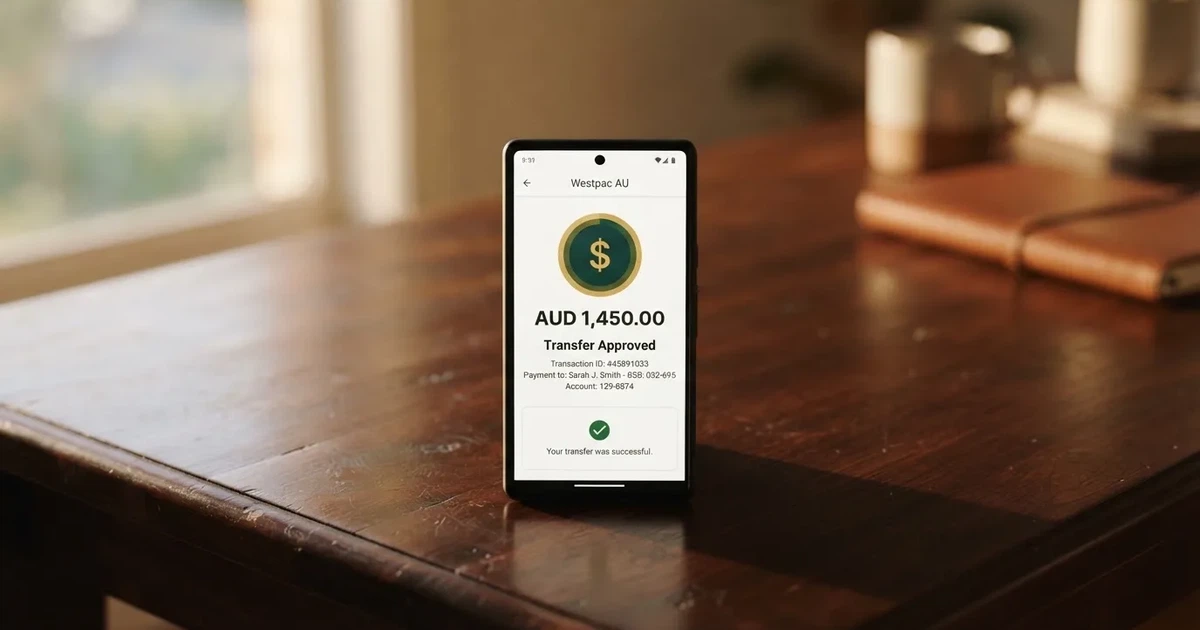
The transfer itself moves fast. With Osko and PayID, money leaves an Australian bank account in under a minute, at any hour of any day, and arrives before the punter has closed the tab on their banking app. What an offshore casino does with that money once it lands is a different question, and it is the one this page is built around. An instant bank transfer casino in Australia is, first and foremost, an offshore site that happens to accept a deposit by direct transfer from an Australian bank. Under the Interactive Gambling Act 2001, no Australian licence covers online casino games or online pokies. The ACMA’s blocking programme has now removed well over a thousand such sites from Australian reach, and a shortlist of eleven of them, named in the regulator’s own formal warnings, is the closest thing the AU market has to a comparison set.
Current as of 30 October 2026 against the ACMA’s published enforcement actions and the registers of the Australian Payments Plus network.
Table of Contents
- What “instant” actually means on the Australian rail
- The blocking rate: how fast the regulator catches up
- The legal frame: what is and is not licensable in Australia
- The featured set: what each brand looks like under that frame
- Why a bank transfer is the rail the regulator and the bank both see
- Responsible play on a rail that does not connect to Australian safeguards
- What the comparison set actually compares
- Frequently asked questions
What “instant” actually means on the Australian rail
The word “instant” in this context is, technically, a property of the New Payments Platform (NPP), the real-time settlement infrastructure that went live to the public on 13 February 2018 and is owned by New Payments Platform Australia Ltd, whose thirteen shareholders include the Reserve Bank of Australia and the major banks. Osko is the consumer-facing brand that sits on top of the NPP, and PayID is the addressing layer that lets a transfer land without a BSB and account number. A transfer sent through Osko between participating Australian banks arrives in under a minute, twenty-four hours a day including weekends, addressed either to a BSB and account number or to a PayID. More than 25 million PayID identifiers had been registered on the NPP as of April 2025, and PayID-based instant transfers are now available at over 100 Australian financial institutions.

For a punter, the practical consequence of that rail is small. The transfer arrives in the payee’s account in under a minute. What it does not do is bypass the casino’s own transaction review. An offshore cashier still has to match the deposit to an account it controls, run the payment against any bonus terms that may apply, and credit the player’s balance. The fastest plausible end-to-end time on a working day is the Osko leg plus a few minutes of cashier processing; on a weekend or public holiday the Osko leg is unchanged but a casino’s back-office queue may not be. The settlement that reaches an Australian bank account on the way out, by the same token, is gated by the casino’s own approval workflow, not by the NPP, and the typical offshore withdrawal cited across the industry runs in business days rather than minutes.
A second practical detail sits in the PayID flow itself. Paying to a PayID shows the name of the account holder before the transfer is sent. Australian Payments Plus warns that being asked to transfer money to a PayID on what looks like a gambling site is a strong signal that the site is unlicensed, because an Australian-licensed wagering operator does not ask a customer to send money to a third-party PayID. For a punter comparing instant bank transfer casinos in Australia, that name check is the cheapest available test of whether the deposit counterparty is who the site says it is.
Bank-level blocks that reach a transfer before it leaves
The fastest settlement in the world is still subject to whatever rules the sending bank applies. Westpac’s gambling block works at card level and refuses authorisation of transactions registered under the merchant category code “Betting/Casino Gambling” on eligible personal credit and debit cards. Commonwealth Bank lets customers apply a gambling lock to eligible cards via the CommBank app, which automatically blocks most gambling transactions, though the bank states it cannot guarantee all gambling-related purchases will be stopped. ANZ’s gambling transaction block, activated in the ANZ app, also blocks gambling transactions made through a digital wallet such as Apple Pay on an eligible card, not just the physical card itself; once turned on, removing the ANZ block requires a 48-hour waiting period, and the bank warns that not all gambling transactions will be blocked and some non-gambling transactions might be blocked in error.
None of those blocks touches a direct bank transfer by name, because the merchant category code sits on a card transaction, not on an Osko transfer to a BSB. The bank-side filter on a transfer is whatever the customer’s own bank applies, and the filter on the receipt of funds is whatever Australian Payments Plus and the receiving bank choose to do. A transfer to an offshore casino account will, in practice, leave most Australian banks without complaint, because the payee is not a flagged merchant. The same cannot be said of the return leg: a withdrawal that comes back from a corporate account at an unfamiliar bank may draw a closer look from the receiving institution than the outbound transfer drew going out, and the practical risk for the punter is that the money arrives but the audit trail takes time.
Where the transfer sits in a wider payment mix
A direct bank transfer is not the only fast path an Australian punter is offered, and the speed claim only makes sense against the alternatives. Apple Pay, Google Pay and Samsung Pay transactions collectively accounted for around 45% of all card payments in Australia by number by the end of 2025, and Apple states that transaction limits and PIN requirements for Apple Pay purchases are set by the card issuer or merchant, not by Apple itself. Apple does not charge fees to consumers for using Apple Pay in stores, online or in apps; any surcharge comes from the merchant’s own card-processing fees, not from Apple. Under the Interactive Gambling Act 2001 as amended in 2023, Australian-licensed online wagering services cannot accept payment by credit card or other credit-related products, a restriction that also constrains gambling use of linked digital wallets like Apple Pay.
BPAY, by contrast, is a bill-payment service in online banking, where the payer enters the Biller Code and the Customer Reference Number (CRN) printed on the bill. BPAY has operated in Australia since 1997, is available in the online banking of over 140 banks and financial institutions and is offered by over 95,000 businesses. It is run by Australian Payments Plus (AP+), the same operator that runs PayID and Osko, and was launched on 18 November 1997, owned equally, via parent company Cardlink Services Limited, by Australia’s four major banks. A BPAY payment is a deferred instruction rather than a real-time transfer; it does not arrive in under a minute and it is not what an instant bank transfer casino markets itself on. For a punter, the practical distinction is that BPAY leaves a CRN-tagged paper trail that the bank can trace, while an Osko transfer leaves a real-time audit entry against the PayID or BSB of the recipient.
The blocking rate: how fast the regulator catches up
The ACMA’s blocking programme has been running since November 2019. According to the ACMA as reported in June 2026, a total of 1,751 illegal gambling and affiliate marketing websites had been blocked since that first blocking request, and more than 230 unlicensed gambling services had left the Australian market since enforcement was strengthened in 2017. In the round reported on 26 June 2026 alone, twelve more sites were added to the block list: 7Signs, ChromaBet, Donbet, Duospin, Freshbet, Slots Gem, Jacks Club, Lucky Start, Pointsbetz.com, Spinrise, Vinyl Casino and Wildsino.
Between November 2019 and June 2026 is roughly 79 months, and 1,751 sites removed across that window works out to an average of around 22 blocked or removed sites per month, or roughly one every 33 hours. The run is not uniform: the early years were sparse as the legal plumbing was being assembled, and the recent rounds have been heavier as the ACMA’s referral pipeline has matured. The figure to hold onto is the order of magnitude, not the precise monthly slice, because the regulator itself reports cumulative counts and dates rather than a steady monthly cadence. The condition behind that band is straightforward. The block is the visible end of a process that starts with a referral or a complaint, runs through an investigation, and ends with a formal request to Australian internet service providers. A site that surfaces this month will typically appear in a published blocking round some weeks later, and a site that has already been the subject of a formal warning is closer to the front of that pipeline than a site that has not.
H2 Gambling Capital’s 2025 report estimates that Australians lose about A$3.9 billion a year to illegal gambling sites, and that the share of gambling going through legal channels fell from 74% in 2021 to 64%. Those two numbers sit behind the blocking rate: the regulator is pulling sites out at a pace of roughly two dozen a month, and the volume of money flowing through the ones that remain is large enough to fund a steady pipeline of replacements. For a punter comparing instant bank transfer casinos, the consequence is that any shortlist is a moving target, and a brand on the ACMA’s list today may be a blocked domain tomorrow.
The legal frame: what is and is not licensable in Australia
Online casino is prohibited in Australia. The Interactive Gambling Act 2001 (IGA), strengthened by the Interactive Gambling Amendment Act 2017, makes it an offence to provide online casino games, online pokies or in-play betting to a person physically in Australia; no state or territory licences them. What is licensable is wagering on races and sport placed before the event, lotteries and keno. In practice the licence for online and phone wagering sits with the Northern Territory, through the Northern Territory Racing and Wagering Commission, which regulates 52 of Australia’s online bookmakers, including Sportsbet, Bet365 and Ladbrokes, for historical tax reasons. The commission has no full-time staff and meets once a month in Darwin. The minimum age for any Australian wagering product is 18.
The enforcement arm is the ACMA. It investigates, issues formal warnings, and directs internet service providers to block illegal sites. The individual player is not prosecuted; the IGA targets the provider. The consequence for the punter is that an offshore site gives no Australian consumer protection, no complaints body, and no recourse if a withdrawal is refused. A blocked site can leave a balance stranded on it. Player protection tools in Australia bind only Australian-licensed services. BetStop, the National Self-Exclusion Register, has been live since August 2023 but covers Australian-licensed online and phone wagering services only; an offshore casino is not connected to it. The National Gambling Helpline on 1800 858 858 is free, 24/7, with chat at Gambling Help Online.
On the payment side, the rules tightened further in 2024. Credit cards, credit-related products and digital currency are banned as payment for licensed online wagering since 11 June 2024, with penalties up to $247,500 for operators. Legal deposit routes for licensed wagering are debit card, bank transfer, PayID/Osko and BPAY. A site asking an Australian for a credit card or a crypto deposit is operating outside the Australian rules. The Interactive Gambling Amendment (Gambling Reform) Bill 2026 passed Parliament on 19 August 2026; its advertising and inducement measures commence 1 January 2027, which is law with a start date, not yet in force on a 2026 page.
On tax, gambling winnings of a recreational player are not assessable income (section 6-5 ITAA 1997) and losses are not deductible, unless the person carries on a business of gambling. That is the model, not advice; the ATO is the right place to check a specific position.
What the ACMA’s own formal warnings show about the operator set
The regulator’s published enforcement record is what the rest of this page is built on. Across 2026 and the years immediately before it, the ACMA has issued formal warnings over a number of brands that accept an instant bank transfer from an Australian account. In March 2026 the ACMA issued a formal warning to Pulsup Ltd over Rocketplay.com.au. In May 2022 the ACMA issued a formal warning to Dama N.V. covering six casino brands: Bambet, Dazard, Level Up, Rocketplay, Wild Tornado and Cobra Casinos. The ACMA issued further formal warnings to Dama N.V. over Woo Casino in March 2025 and Spirit Casino in May 2025. In July 2025 the ACMA issued formal warnings to Bamboo Media over Ignition Casino and to Consolutetish S.R.L. over National Casino and Bizzo Casino; Bizzo Casino had already been the subject of a 2022 formal warning to TechSolutions (CY) Group Limited and TechSolutions Group N.V. In February 2025 the ACMA issued a formal warning to EOD Code SRL over Instant Casino. In April 2026 the ACMA issued a formal warning to Ryker B.V. over Jackbit and CasinOK. In April 2025 the ACMA issued a formal warning to Sterplay Holding Ltd over Casino Intense. The ACMA also issued a formal warning to Hollycorn N.V. over its Sky Crown and Blue Leo casino services, recorded in the regulator’s September 2022 publication.
| Brand | ACMA action and date | Operator named by the ACMA | Instant bank transfer support |
|---|---|---|---|
| RocketPlay | Formal warning, March 2026 | Pulsup Ltd (Rocketplay.com.au); earlier Dama N.V., May 2022 | — |
| Level Up Casino | Formal warning, May 2022 | Dama N.V. | listings-only |
| Woo Casino | Formal warning, March 2025 | Dama N.V. | — |
| Spirit Casino | Formal warning, May 2025 | Dama N.V. | — |
| National Casino | Formal warning, July 2025 | Consolutetish S.R.L. | listings-only |
| Bizzo Casino | Formal warning, July 2025; earlier 2022 | Consolutetish S.R.L.; earlier TechSolutions | — |
| Ignition Casino | Formal warning, July 2025 | Bamboo Media | — |
| Instant Casino | Formal warning, February 2025 | EOD Code SRL | listings-only |
| Jackbit | Formal warning, April 2026 | Ryker B.V. | — |
| Casino Intense | Formal warning, April 2025 | Sterplay Holding Ltd | listings-only |
| Sky Crown | Formal warning, September 2022 | Hollycorn N.V. | — |
The empty cells in that table are deliberate. Research did not carry an instant bank transfer confirmation for those brands; what is on the record is the formal warning, and what the formal warning is saying, in every case, is that the ACMA has found the brand to be offering prohibited interactive gambling services to people in Australia. No licence displayed by any of the listed entities covers online casino games to an Australian resident, whatever the footer of the website claims.
The featured set: what each brand looks like under that frame
The brands below are listed in the order the ACMA’s published actions give, not as a recommendation, and not as a ranking. Each has been the subject of a formal warning under the Interactive Gambling Act 2001. None of them can lawfully serve an Australian resident. The point of writing them up individually is to make plain, for each one, what the regulator has said about it and where the gap between marketing and legality sits. No bonus terms are given, because the only sources for those terms on these brands were affiliate marketing pages, and a code or a percentage copied from those pages is not worth the ink.
RocketPlay
The ACMA issued a formal warning to Pulsup Ltd over Rocketplay.com.au in March 2026, and an earlier warning to Dama N.V. over Rocketplay in May 2022 as part of a six-brand bundle. Two warnings from the same regulator, four years apart, for the same product line is the kind of pattern that ends with a blocked domain rather than a corrected one. Research carries no independent confirmation that the site accepts an instant bank transfer from an Australian account today. For a punter, the operational question is not whether the site still loads but whether a balance already on it can be withdrawn before the next blocking round catches up.
Level Up Casino
Level Up was named in the same May 2022 warning to Dama N.V. that covered five other brands, and the regulator has not, on the public record, taken it back off the list since. Research’s coverage of the brand sits at listings-only: pages that catalogue the operator rather than pages that confirm a specific deposit rail from an Australian bank. The practical reading is that the brand is still being run in a way that keeps the ACMA’s attention on it, and that an instant bank transfer to it draws the regulator’s same general finding against it.
Woo Casino
Woo Casino drew its own formal warning in March 2025, separate from the 2022 bundle and addressed to Dama N.V. as the operator. A formal warning is the step the ACMA takes before a referral for blocking; it is not the block itself, but it is the visible edge of the pipeline. Research carries no specific confirmation of an instant bank transfer rail for the brand today.
Spirit Casino
Spirit Casino received a formal warning in May 2025, again to Dama N.V., again a separate action from the 2022 set. Two Dama N.V. brands drawing fresh warnings in 2025, on top of the six that drew warnings in 2022, is the ACMA’s own way of saying the operator’s compliance posture has not changed.
National Casino
Consolutetish S.R.L. drew a formal warning in July 2025 over National Casino. Research’s coverage of the brand sits at listings-only, drawn from the AUSTRAC threshold-transaction-report rule and general references to the New Payments Platform. The transaction-report rule itself applies only to physical cash transfers of A$10,000 or more; ordinary electronic bank transfers are not subject to that per-transaction reporting requirement, regardless of the amount sent. That distinction matters because it is the rule a punter hears about most often in this context, and it does not actually apply to the deposit rail being discussed here.
Bizzo Casino
Consolutetish S.R.L. drew a formal warning over Bizzo Casino in July 2025, and TechSolutions (CY) Group Limited and TechSolutions Group N.V. drew an earlier formal warning over the same brand in 2022. Two formal warnings over the same brand, addressed to different operators three years apart, is unusual in the ACMA’s published record and signals either a change of ownership or a continuation of the same prohibited offering under a new corporate front.
Ignition Casino
Bamboo Media drew a formal warning over Ignition Casino in July 2025. The brand has historically been associated with a poker and casino product that markets heavily to Australian traffic. Research carries no instant bank transfer confirmation specific to the brand today.
Instant Casino
EOD Code SRL drew a formal warning over Instant Casino in February 2025. The brand’s name reads as a marketing claim, and the ACMA’s February 2025 action is the regulator’s published finding on it. Research’s coverage sits at listings-only on payment rails, drawn from e-wallet and PayID reference material rather than a brand-specific confirmation.
Jackbit
Ryker B.V. drew a formal warning over Jackbit and CasinOK in April 2026. A formal warning over two brands in the same notice is the ACMA’s way of signalling that the operator has been running both products against the same Australian-facing offering. Research carries no instant bank transfer confirmation specific to either brand.
Casino Intense
Sterplay Holding Ltd drew a formal warning over Casino Intense in April 2025. Research’s coverage sits at listings-only, drawn from AUSTRAC, IT News and NAB reference material. The brand is a smaller presence in the published warning set, but the ACMA’s finding against it is the same finding as for any other brand in this list.
Sky Crown
Hollycorn N.V. drew a formal warning over Sky Crown and Blue Leo, recorded in the ACMA’s September 2022 publication. A 2022 warning that has not been publicly followed by a blocking round is not a clean bill of health; it is a brand that has stayed below the radar of the referral pipeline that drives the monthly blocking list, and the regulator’s earlier finding still stands.
Why a bank transfer is the rail the regulator and the bank both see
A direct bank transfer leaves a paper trail that a card payment does not. The receiving institution sees the BSB, the account number or PayID, and the amount; the sending institution keeps a record that the customer’s own statement will surface at month-end. For a punter, that visibility cuts both ways. It is the reason a bank transfer is sometimes recommended as a harm-reduction tool, because the spend shows up in the statement the way a credit card charge does not, and a punter who wants to track what an offshore site is actually costing them can do so without exporting a casino statement. It is also the reason a transfer is the rail most likely to draw a bank’s attention if a customer has asked the bank to block gambling transactions, because the paper trail is the trigger that lets the bank match a subsequent withdrawal against a flagged pattern.
AUSTRAC’s threshold-transaction-report rule, which requires reporting of transfers of A$10,000 or more, applies only to physical cash. Ordinary electronic bank transfers are not subject to that per-transaction reporting requirement, regardless of the amount sent. A punter who hears that “large transfers get reported” is hearing about a rule that does not in fact cover an Osko transfer at any size. What does cover the transfer is the bank’s own monitoring, which is a different and broader regime, and the operator’s own transaction review, which is what holds up a withdrawal on the way back.
For the casino, the same paper trail is the audit defence it offers a payment processor or a regulator if the operator is asked later why a particular deposit was accepted from an Australian account. The trail is also the reason a withdrawal, on the way out, may sit in the cashier’s review queue for longer than the deposit sat on the way in. The deposit matched a BSB and an amount; the withdrawal has to be matched to a player account, a bonus state, a wagering-requirement clearance, and an approved payment method, and each of those checks is where the offshore cashier can stall.
Responsible play on a rail that does not connect to Australian safeguards
A bank transfer deposit gives a clear paper trail, and that trail is itself a safeguard for tracking spend. The trail is also the cheapest available input into a self-imposed limit, because the punter can see the cumulative outflow at any time without needing a casino dashboard. That is the responsible-play argument for the rail.
It does not connect to the Australian safeguards. BetStop binds Australian-licensed online and phone wagering services; an offshore casino is not connected to it, and a punter who has registered with BetStop can still open an account at a brand on the list above. The National Gambling Helpline on 1800 858 858 is free, 24/7, and Gambling Help Online carries a chat channel. None of those tools reach into the cashier of an offshore site to enforce a limit. The only limits that bind an offshore cashier are the ones the punter sets themselves, on their own bank, or the ones the casino chooses to honour, which on a prohibited product is a thin promise.
A practical step that does bind is the bank-side block. Westpac’s gambling block, Commonwealth Bank’s gambling lock, and ANZ’s gambling transaction block each work at the card level rather than on a direct transfer, but the act of turning them on is itself a stated intention that the punter can refer back to. ANZ’s block, once turned on, requires a 48-hour waiting period before it can be removed, and the bank warns that not all gambling transactions will be blocked and some non-gambling transactions might be blocked in error. Commonwealth Bank’s lock carries the same caveat: it cannot guarantee all gambling-related purchases will be stopped. For a punter who has decided the spend has to stop, those caveats matter less than the act of opting in, and the practical effect on the card rail is the one that bites.
What the comparison set actually compares
A shortlist of eleven brands, all named in the ACMA’s published formal warnings, all offering online casino games and online pokies to Australians, and none of them able to do so lawfully, is not a comparison the way a normal shortlist compares. It is not a ranking by payout speed, a ranking by bonus size, or a ranking by game library, because the inputs do not carry those figures for most of the brands, and because ranking prohibited products by how well they are prohibited would be a strange editorial choice.
What it does carry is a record of which operator has drawn which warning, in which year, and what the operator’s name is on the ACMA’s record. A punter who has decided to play anyway, and who is trying to choose between brands on the list, will at least know from the table above which ones are closer to the front of the blocking pipeline than others. A brand with a fresh 2026 warning is closer to the next blocking round than a brand whose last warning is from 2022. A brand with two warnings, to two different companies, is closer still.
What the comparison cannot do is tell a punter that any of the eleven is safer than the others. None of them is licensed in Australia for the product they offer. None of them is connected to BetStop. None of them has an Australian complaints body to answer to if a withdrawal is refused. The differences between them are the differences in how soon the regulator catches up.
Frequently asked questions
Is it legal for an online casino to accept a direct bank transfer from a player in Australia?
No. Under the Interactive Gambling Act 2001, as strengthened by the Interactive Gambling Amendment Act 2017, it is an offence to provide online casino games, online pokies or in-play betting to a person physically in Australia, and no Australian licence covers those products. The player is not prosecuted, but the operator is, and a deposit by direct bank transfer does not change that.
How does a bank transfer deposit at an offshore casino differ from a card deposit?
The transfer itself moves faster on the Osko rail, arriving in under a minute, but it is not subject to the merchant category code rules that let a bank block a card transaction under a gambling flag. Card-side blocks at Westpac, Commonwealth Bank and ANZ do not catch a direct transfer in the same way. The receipt at the casino still has to clear the cashier’s own review, which can take longer than the card-leg equivalent.
Does a bank transfer leave a clearer paper trail than a card or e-wallet deposit?
Yes. The sending bank’s statement shows the BSB or PayID, the amount and the date; the receiving institution sees the same data. That visibility is the reason a transfer is sometimes recommended as a harm-reduction tool, because the spend surfaces in the customer’s own monthly record without needing a casino dashboard. It is also the reason the rail is the one most likely to draw a bank’s monitoring attention on the way out.
How long does an instant bank transfer usually take to actually clear at a casino site?
The transfer itself clears in under a minute on the Osko rail, twenty-four hours a day. The casino’s own transaction review, which has to match the deposit to an account, run it against any bonus terms, and credit the balance, takes longer. A working-day deposit is typically credited within minutes; a weekend or public-holiday deposit may sit in a back-office queue. Withdrawals are gated by the same review and run in business days, not in real time.
Can a bank flag or block a transfer sent to an offshore casino site?
The card-level blocks at Westpac, Commonwealth Bank and ANZ work against card transactions, not against Osko. A direct bank transfer to a BSB or PayID will, in practice, leave most Australian banks without complaint, because the payee is not a flagged merchant. The return leg may draw a closer look from the receiving institution than the outbound transfer drew going out, and the practical risk is that a withdrawal is held up rather than blocked at the source.
What information does a casino site need to accept a direct bank transfer deposit?
An offshore cashier typically asks for the BSB and account number, or for a PayID, plus the deposit amount. The cashier will usually supply its own BSB and account number, or a PayID, for the punter to send to. Paying to a PayID shows the name of the account holder before the transfer is sent, and Australian Payments Plus warns that being asked to transfer money to a PayID on what looks like a gambling site is a strong signal that the site is unlicensed.