
Instant PayID withdrawal casinos Australia: the gap between advertised speed and what the system actually does
There is no shortage of offshore casino sites that will advertise an instant PayID withdrawal to an Australian player. What is short is the gap between that headline and the reality of how the payment moves, who is on the other end of it, and whether the site is allowed to offer it at all. This page works through that gap honestly: how PayID is built, what an “instant” cash-out actually has to wait for, why every brand in this space sits on the wrong side of the Interactive Gambling Act 2001, and what the ACMA’s own enforcement record tells a reader who thinks speed is the main thing at stake.
Current as of 30 October 2026. Verified against the ACMA register of formal warnings and blocking requests, and against the Australian Payments Plus description of PayID on its public pages.
Table of Contents
- How a PayID withdrawal actually moves through the Australian banking system
- Why no offshore casino can lawfully offer this to an Australian resident
- The blocking record, set against the rule book
- The licensed payment routes, and how the prohibited sites route around them
- What an “instant” PayID withdrawal actually waits on
- The brands the ACMA has warned, and what that warning actually means
- What “responsible gambling” looks like when the operator is offshore
- Putting the numbers together: what the blocking rate actually says
- What a reader actually does with all of this
- Frequently asked questions
How a PayID withdrawal actually moves through the Australian banking system
PayID itself: a label, not a separate rail
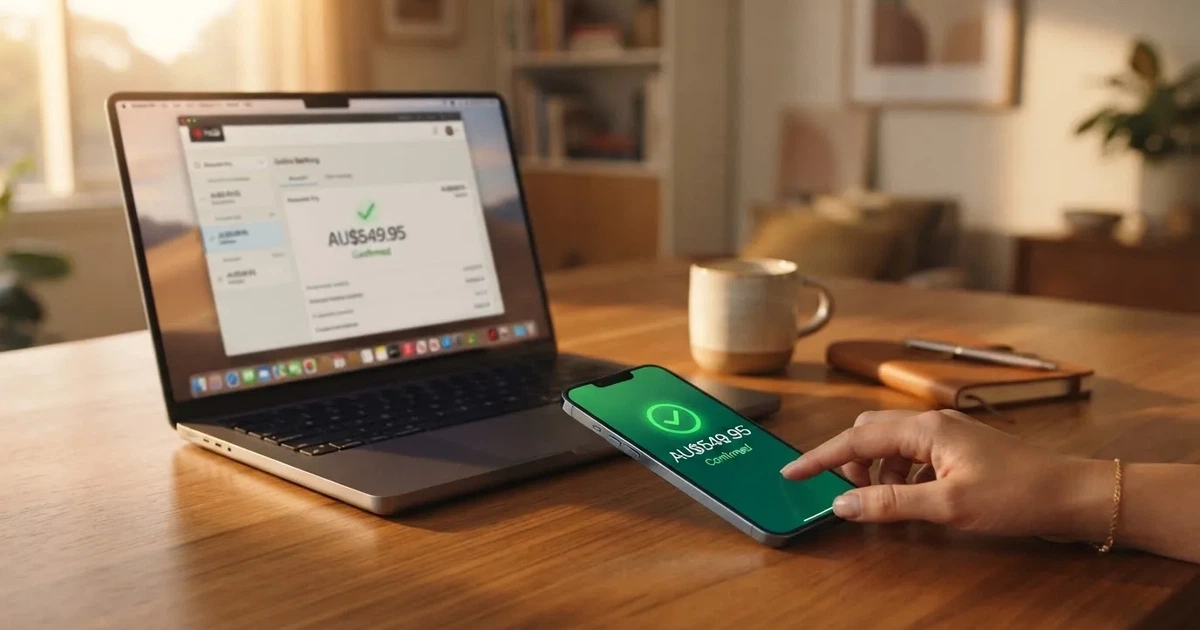
A PayID is not a payment system. It is an alias — a mobile number, an email address, an ABN, or an Organisation Identifier — that resolves to a real bank account held at an Australian financial institution. The rail underneath it is the New Payments Platform, which the Reserve Bank of Australia regulates and which launched in February 2018 to make simply-addressed transfers settle in close to real time, around the clock. When an Australian punter is shown a “PayID withdrawal” at an offshore casino, what the casino is sending is an Osko payment addressed to the punter’s PayID, routed over NPP through one of more than 100 banks that already expose PayID inside their own online banking.
That architecture is what makes the speed claim possible. As of April 2025 there were more than 25 million registered PayIDs in Australia, and AP+ publishes that an Osko transfer between participating banks typically arrives in under a minute, twenty-four hours a day, including weekends. The platform does the work; the casino’s own processing sits on top of it.
The interesting question is what sits on top. AP+ itself is blunt about the use case the rest of this page keeps coming back to: “If you are asked to transfer funds to a PayID on an illegal gambling site, it is almost certainly a scambling website”. “Scambling” is AP+’s own term for illegal online gambling services that lure people in through social media and messaging apps and then run them on a scam site. The rail is honest; the endpoints on it often are not.
What the name-check does, and what it does not do
Every PayID payment shows the payer the name on the destination account before the transfer is sent. That check is the front-line protection against mistaken payments and against the kind of scam where money leaves the account under a false pretext. AP+ repeats the warning that any gambling site directing Australians to deposit via PayID is almost certainly a scam, and adds the operational point: PayID itself will never contact a customer directly, will never ask for money in order to release money, and will never ask anyone to “upgrade” an account. Anyone receiving messages in PayID’s name is being scammed, full stop.

The name-check protects the punter from sending money to the wrong account. It does not protect the punter from sending money to the right one. Knowing that an offshore casino’s PayID resolves to a holding account at some bank does not make that casino a legal place to wager; it only confirms where the money lands.
The settlement review the casino still has to run
This is where the marketing line and the operating reality split. AP+ and the banks deliver the transfer in under a minute, but a withdrawal leaving an offshore casino is not an AP+ transfer the moment the player hits withdraw. The casino’s own cashier must first authorise the payment, and offshore operators run that authorisation as a settlement review. Three things have to clear inside the casino before the NPP message goes out at all: source-of-funds confirmation on the way money came in, an anti-fraud screen for unusual transaction patterns or account takeover, and a wagering-compliance pass on any bonus that was claimed. None of those is the bank’s work. All of them are the casino’s work.
A reader who times the round trip from “withdraw” to “in the bank” is timing all of it. The minute AP+ quotes is the minute from after the casino has released the payment to the moment the receiving bank credits the account. The minutes or hours the casino takes to make up its mind are stacked in front. That is the gap the marketing copy never describes, and the one a player experiences every time.
Why no offshore casino can lawfully offer this to an Australian resident
The product itself is prohibited
The Interactive Gambling Act 2001, as tightened by the 2017 amendments, makes it an offence to provide online casino games, online pokies or in-play betting to a person physically in Australia. The offence sits with the provider, not with the player, but the effect on the player is the practical one: no Australian licence exists for online casino products, no state or territory issues one, and no amount of Curacao or Malta paperwork attached to an offshore operator changes that. What Australia does licence is pre-event wagering on races and sport, lotteries, and keno — wagering services that the Northern Territory Racing and Wagering Commission oversees for tax reasons, a commission that has no full-time staff and meets once a month in Darwin but still regulates 52 of the country’s licensed online bookmakers.
A casino brand that shows a “PayID withdrawal” button to an Australian is offering a product no Australian licence can cover. The licence it does display, whatever it is, was issued by a jurisdiction that does not have the authority to license a provider offering casino games to Australians in Australia. That is not a technicality. It is the whole reason the ACMA acts against these brands.
What enforcement has actually produced
The ACMA’s enforcement stack has three layers, and the numbers behind each one tell a reader how routine the action is. As of June 2026, 1,751 illegal gambling and affiliate websites had been blocked at the request of the ACMA since the first such request in November 2019, and more than 230 unlicensed gambling services had withdrawn from the Australian market since the regime was strengthened in 2017. A single round in June 2026 added twelve more domains to the blocking list: 7Signs, ChromaBet, Donbet, Duospin, Freshbet, Slots Gem, Jacks Club, Lucky Start, Pointsbetz.com, Spinrise, Vinyl Casino and Wildsino.
Layer two is the formal warning, a published notice that names the operator and the brand under the Interactive Gambling Act 2001. The notices have kept coming. March 2026 saw a warning to Pulsup Ltd over Rocketplay.com.au; April 2026 brought one to Ryker B.V. over Jackbit and CasinOK; July 2025 named Bamboo Media over Ignition Casino and Consolutetish S.R.L. over National Casino and Bizzo Casino; May 2025 warned Dama N.V. again, this time over Spirit Casino, on top of a March 2025 warning over Woo Casino; April 2025 covered Sterplay Holding Ltd over Casino Intense; February 2025 named EOD Code SRL over Instant Casino; and Hollycorn N.V. was warned over Sky Crown and Blue Leo back in 2022. Dama N.V. is the operator that recurs most often — the May 2022 warning alone covered six brands in one notice.
The third layer is what the ACMA does not do. It does not chase the player. An Australian punter using an offshore site does not face prosecution under the IGA; the law targets the provider. That is a real protection of the individual, and it is the only piece of the regulatory picture that runs in the player’s favour. Everything else about the offshore site — the absence of an Australian complaints body, the absence of any recourse if a withdrawal is refused, the fact that the site can be blocked mid-week with a balance still on it — runs against the player.
What that means for a withdrawal in practice
A reader looking for a fast PayID cash-out is looking at the wrong variable. The variable that decides whether a player gets any money at all is whether the operator stays reachable and keeps honouring withdrawals. Speed is downstream of that. An offshore site that processes an instant PayID withdrawal today can be on an ACMA blocking list tomorrow, and a blocked site does not pay out — there is no Australian regulator a player can ring, no dispute resolution scheme, and no chance of compelling a payment through an Australian court against a Curacao-licensed entity. AP+’s own message — that a PayID payment to an illegal gambling site is almost certainly a scam — is not legal colour. It is operational advice about where money goes.
The blocking record, set against the rule book
How the blocking rate has moved
The numbers behind the ACMA’s blocking programme are not a static ledger. Between November 2019 and June 2026, 1,751 sites and affiliate marketing pages were added to Australian blocking requests. That is the cumulative tally from the first blocking request through the round reported on 26 June 2026, which itself added twelve new domains.
The blocking rate across the life of the programme works out, in broad terms, to roughly seventy new blocking requests per month on average since the regime started — a band that absorbs both the early years when the rate was lower and the heavier recent rounds. What the cumulative figure does not show is the cadence: individual rounds have added between four and more than twenty sites at a time, and the 2024–2026 period in particular has seen larger batches as the ACMA has shifted from warning-only to actively requesting ISP-level blocks against the affiliate marketing pages that feed players into the casino brands themselves.
The condition that drives the figure higher is the same one that keeps this page relevant: the offshore operators rotate. A brand that has been warned keeps operating under a new name. An affiliate marketing page that has been blocked resurfaces with a different top-level domain. The blocking list is a current snapshot of sites the ACMA has asked ISPs to filter; the operators themselves often still operate elsewhere, including against players in other jurisdictions where the IGA does not reach.
What the numbers cost
H2 Gambling Capital’s 2025 report estimates that Australians lose about A$3.9 billion a year to illegal gambling sites. That is the headline. The structural number sits behind it: the share of Australian gambling going through legal channels fell from 74% in 2021 to 64% in 2025. Two-thirds of the market now sits in licensed Australian channels, against three-quarters four years earlier. The illegal share grew in absolute terms as the overall market expanded, and the speed at which the ACMA can add new sites to the blocking list is one of the few levers the regulator has to claw that back.
The new law in this area, the Interactive Gambling Amendment (Gambling Reform) Bill 2026, passed Parliament on 19 August 2026. Its advertising and inducement measures do not commence until 1 January 2027. Until then, the Bill is law with a start date, not a rule currently being enforced. A page read in 2026 sits in the window where the rule is passed but not yet in force.
The licensed payment routes, and how the prohibited sites route around them
What a licensed Australian wagering site can accept
The set of payment methods a licensed Australian online wagering service can lawfully accept has been narrowed deliberately. Since 11 June 2024, no Australian-licensed wagering operator can accept payment by credit card or other credit-related product, on pain of penalties up to A$247,500 per breach. The legal deposit routes that remain are debit card, bank transfer, PayID and Osko, and BPAY. The PayID option is the one the licensed bookmakers lean on when they want to advertise speed; it works because the PayID resolves to a normal bank account and the debit funds leave from a normal Australian bank.
This is also why the offshore casinos lean on PayID. It is the path of least resistance for an Australian deposit: a real bank transfer from a real Australian account to a real bank, routed through a real domestic rail, with a name-check on the destination that the punter can read before authorising. The same features that make PayID work for a Sportsbet deposit make it work for an offshore casino deposit. The licensed and unlicensed ends of the market both use the same rail.
Where the licensed path diverges from the unlicensed one
The licensed path stops at the operator’s KYC. A Sportsbet or a Ladbrokes will verify identity, hold an Australian licence, sit inside the BetStop self-exclusion register, accept deposits only from non-credit sources, and route complaints through an Australian-licensed body. The unlicensed path has none of that. There is no Australian licence to revoke, no self-exclusion register to bind the operator, no Australian complaints body to take a dispute to. The only thing the unlicensed path shares with the licensed one is the rail.
BetStop, the National Self-Exclusion Register, has been live since August 2023 and binds Australian-licensed online and phone wagering services. It does not bind an offshore casino. A punter who has self-excluded through BetStop and then opens an account at one of the brands in the ACMA warning list is not protected by the exclusion at that site; the operator has no obligation to honour it and no connection to the register. The same holds for deposit limits set through an Australian-licensed bookmaker: they govern that account only.
Bank-side blocks that catch some of the flow anyway
Two of the major banks have built their own friction into the path. Westpac’s gambling block refuses authorisation of transactions registered under the merchant category code “Betting/Casino Gambling” on eligible personal credit and debit cards. ANZ’s block, activated inside the ANZ app, blocks Gambling Transactions made through a digital wallet such as Apple Pay on an eligible card, not only the physical card itself. Removing ANZ’s block requires a 48-hour waiting period, and ANZ itself warns that not every gambling transaction will be blocked and some non-gambling transactions might be blocked in error. The blocks are partial — they work on the card and the merchant code, not on the bank transfer addressed to a PayID — but they illustrate how seriously the Australian banks treat the gambling MCC.
The Apple Pay and Google Pay share of card payments has its own relevance. By the end of 2025, Apple Pay, Google Pay and Samsung Pay together accounted for around 45% of all card payments in Australia by number. Where a gambling transaction originates on a credit-linked digital wallet, the IGA ban on credit-related products for wagering applies; the digital wallet does not exempt the transaction. Apple itself does not surcharge Apple Pay — any surcharge a merchant passes on comes from the merchant’s card-processing fees — and Apple states that limits and PIN requirements for Apple Pay purchases are set by the card issuer or merchant, not by Apple.
The Reserve Bank’s July 2025 review of merchant card payment costs proposes removing surcharges on eftpos, Mastercard and Visa transactions, but explicitly leaves American Express outside the proposed ban. Amex sits outside the four-party model of Visa and Mastercard, running as a three-party scheme that issues and processes its own transactions. The card-side mechanics of gambling deposits run on top of all this; they are not the same thing as the casino side, and the offshore operators route around the card-side friction by asking for a PayID deposit instead.
What an “instant” PayID withdrawal actually waits on
The casino’s own internal clock
The minute the AP+ transfer settles is not the minute the punter asked for the withdrawal. The interval between those two points is the casino’s own processing window, and that window is where the work happens. Three queues run in series inside the casino: the KYC and source-of-funds review for the account, the bonus-compliance check for any wagering requirement still attached to the player’s balance, and the operator’s anti-fraud review for unusual patterns. Offshore operators that advertise “instant PayID withdrawal” are describing the third step in that chain — the moment the operator releases the NPP message — as the whole thing.
The casino’s window opens the moment the player hits withdraw and closes the moment it sends the Osko message. AP+’s published time-to-arrive for Osko, under a minute between participating banks and available around the clock, is the speed of the rail once the casino has released the payment. The casino’s own queue is what decides whether the punter sees that minute at all. A player who funds an account, plays through a bonus, and asks for a withdrawal before the bonus’s wagering requirement is satisfied will wait, because the third queue will not pass the payment while the wagering is unfinished.
The first-withdrawal identity check
The first withdrawal from any account is the longest, because the casino has to verify identity before it can release the funds to a new payout destination. AP+ and the bank already check that the PayID resolves to an account at an Australian financial institution; the casino still has to confirm that the account is actually the player’s. Standard offshore practice is to ask for government ID, a recent utility bill or bank statement as proof of address, and sometimes a source-of-funds declaration. The ACMA’s prohibition against serving Australians does not change the casino’s commercial incentive to collect that documentation; if anything, it sharpens it, because the casino knows the punter has no Australian complaints body to appeal to if a withdrawal is refused.
A first withdrawal that is held for two to five days while identity documents are reviewed is well within the norm. The “instant” claim applies to subsequent withdrawals from the same verified account. A reader who expects the first one to clear in a minute has been sold the wrong expectation.
What can be done about a withdrawal already sent
Once the casino has sent the Osko payment, the PayID name-check has run, and the receiving bank has credited the account, the money is in the punter’s account. The bank cannot recall it at the casino’s request; the casino has no power to claw back a transfer that has already settled at the receiving bank. What an offshore operator can do, and what some have done, is reverse the deposit on its own ledger and leave the punter’s bank balance unchanged — but that is the operator choosing not to pay out, not the rail reversing itself. The AP+ documentation is clear that a name-check before sending is the protection against that kind of fraud, not a remedy after the fact.
The reverse case — a punter sending money to a casino PayID by mistake — is harder. AP+ tells anyone who thinks they have been scammed this way to contact their financial institution, not to expect PayID itself to undo the payment. Once an Osko payment has settled, the only way to recover the money is the punter’s own bank attempting to recall it, and the success rate on a recall against a willing recipient is low. The name-check is the moment to catch the error; after settlement, the rail is not the place to look for a refund.
The brands the ACMA has warned, and what that warning actually means
Why this is a list of warned brands and not a ranking
No ranking of online casinos accepting Australian players can be honest, because the product at the top of the ranking is one that no Australian licence authorises. What follows is not a top-11. It is a record of the eleven operators the ACMA itself has named in formal warnings under the Interactive Gambling Act 2001 in the years covered by this page, set out in the order the regulator issued its notices. A reader comparing them is comparing warning dates, not payout speeds. The site that processed yesterday’s withdrawal fastest is the same site that the regulator has told to stop offering the product.
Summary of operator enforcement
| Operator | Warning status | Brand coverage |
|---|---|---|
| Dama N.V. | Multi-brand active warnings | RocketPlay, Level Up, Woo, Spirit |
| Consolutetish S.R.L. | July 2025 formal warning | National Casino, Bizzo Casino |
| Hollycorn N.V. | 2022 formal warning | Sky Crown, Blue Leo |
| Ryker B.V. | April 2026 formal warning | Jackbit, CasinOK |
| Pulsup Ltd | March 2026 formal warning | Rocketplay.com.au |
| Bamboo Media | July 2025 formal warning | Ignition Casino |
| Sterplay Holding Ltd | April 2025 formal warning | Casino Intense |
| EOD Code SRL | February 2025 formal warning | Instant Casino |
The ACMA action landscape
| Brand | ACMA action and date | Operator named by the ACMA | Subject support |
|---|---|---|---|
| RocketPlay | Formal warning, March 2026 (Pulsup Ltd); earlier warning to Dama N.V., May 2022 | Pulsup Ltd; Dama N.V. | — |
| Level Up Casino | Formal warning, May 2022 | Dama N.V. | listings reference (Westpac gambling block page) |
| Woo Casino | Formal warning, March 2025 | Dama N.V. | — |
| Spirit Casino | Formal warning, May 2025 | Dama N.V. | — |
| National Casino | Formal warning, July 2025 | Consolutetish S.R.L. | listings reference (AUSTRAC, Wikipedia) |
| Bizzo Casino | Formal warning, July 2025; earlier warning, 2022 | Consolutetish S.R.L.; TechSolutions | — |
| Ignition Casino | Formal warning, July 2025 | Bamboo Media | — |
| Instant Casino | Formal warning, February 2025 | EOD Code SRL | listings reference (ecoPayz, PayID) |
| Jackbit | Formal warning, April 2026 | Ryker B.V. | — |
| Casino Intense | Formal warning, April 2025 | Sterplay Holding Ltd | listings reference (AUSTRAC, ITnews, NAB) |
| Sky Crown | Formal warning, 2022 | Hollycorn N.V. | — |
Eleven brands, three of them tied to Dama N.V. (RocketPlay through the earlier 2022 warning, Level Up Casino, Woo Casino, Spirit Casino), and the rest spread across a recognisable cast of Curaçao-incorporated operators. The pattern in the table is the pattern in the ACMA’s enforcement: warnings are operator-level, not brand-level, which is why a parent company surfaces repeatedly under different brand names. Dama N.V. alone has collected four of the eleven entries here.
RocketPlay
RocketPlay is the most recent Dama N.V.-linked brand in the ACMA’s record. The regulator issued a fresh warning in March 2026 naming Pulsup Ltd as the operator behind Rocketplay.com.au; the same brand had already been the subject of an earlier warning to Dama N.V. in May 2022, which covered Rocketplay alongside five other Dama brands in a single notice. The site accepts PayID in the sense that an Australian player can transfer Australian dollars to a PayID it controls; the rail accepts the payment, and the operator has been told twice to stop soliciting it. No Australian licence covers what the site is offering, and the warning record is the regulator’s published view that the site is offering it anyway.
What it suits: a player who has already decided to use an offshore casino and is choosing among Dama N.V.-linked brands is choosing among warnings, not between options. The March 2026 warning is the freshest, and the site has had the longest cooling-off period in which to wind down its Australian-facing operations.
Level Up Casino
Level Up Casino sits in the May 2022 Dama N.V. notice and has not been re-warned under a different operator since. The Westpac gambling block page references Dama N.V.-linked brands in the context of the merchant category code that triggers card declines for Australian cards; that is the closest the public record gets to confirming that Level Up’s payment endpoints hit Australian bank-side friction. The brand has been on the regulator’s published list for the longest uninterrupted period of any brand in this set.
What it suits: a reader cross-referencing the warning list against Australian bank blocking records will find Level Up at the intersection. That is a description of the record, not a recommendation.
Woo Casino
The ACMA warned Dama N.V. over Woo Casino in March 2025. That is the only Woo-specific action in the published record. Woo sits inside the same operator group as Level Up and the older 2022 brands, and the warning carries the same legal weight: the operator has been told under the IGA to stop providing prohibited interactive gambling services to Australians. The site continues to operate; the warning is the regulator’s formal record of having told it to stop.
What it suits: a reader looking at brand-level warnings and seeing a 2025 notice is looking at a brand that the ACMA has acted against more recently than the 2022 cohort. The age of the warning does not change the prohibition.
Spirit Casino
Spirit Casino collected a fresh Dama N.V. warning in May 2025, two months after the Woo Casino warning. Two Dama N.V. warnings inside three months is unusual in the published record and is consistent with the regulator tightening rather than loosening its approach to the operator group. Spirit does not appear in any other entry in this list; the 2025 notice is its only Australian-specific action. This grouping clarifies the operator’s scale of activity.
National Casino
National Casino was the subject of a July 2025 warning naming Consolutetish S.R.L. as the operator. AUSTRAC’s published material and the Wikipedia entry on the operator group reference Consolutetish S.R.L. in the context of anti-money-laundering obligations for cross-border payments. The combination of an ACMA warning and an AUSTRAC reference is a sharper profile than the warning alone gives, and it tells a reader that the operator group is on more than one Australian agency’s radar. The record confirms the regulator’s oversight beyond the IGA itself.
Bizzo Casino
Bizzo Casino was named in the same July 2025 Consolutetish S.R.L. notice as National Casino, and had already been the subject of an earlier 2022 warning to TechSolutions (CY) Group Limited and TechSolutions Group N.V. — the second formal warning tied to the brand. Two warnings across three years for the same brand under two different operator names is the cleanest signal in this list that an operator has changed its wrapper but not its behaviour. The ACMA tracks operators across rebrands; a brand that has been warned twice is a brand the regulator has had to tell twice.
What it suits: a reader who treats a re-warning as evidence of a pattern rather than a fresh start will weight Bizzo more heavily than the other Consolutetish S.R.L. brand in the list.
Ignition Casino
Ignition Casino was named in the July 2025 warning as operated by Bamboo Media. Ignition sits in a different operator group from the Dama N.V. cluster and the Consolutetish S.R.L. pair, which makes it useful as a spread indicator: the ACMA is acting against more than one operator family. The warning date is recent enough that any “we’ve cleaned up since” claim from the brand is harder to reconcile with a 2025 notice than with the 2022 cohort.
What it suits: a reader cross-referencing the warning list for operator diversity will find Ignition sitting outside the two operator groups that dominate this list. That is structural information, not a recommendation.
Instant Casino
Instant Casino was the subject of a February 2025 warning naming EOD Code SRL as the operator. The brand name leans directly into the search-intent side of this market, which makes it worth flagging on that ground alone: Instant Casino is what someone searching for “instant PayID withdrawal casino” is most likely to encounter. EcoPayz and PayID both surface in the public listings referencing the brand, which is consistent with the operator offering the payment routes the search-intent audience is looking for and which the ACMA has warned it to stop offering to Australians.
What it suits: a reader looking at the brand behind the most direct match to their own query will see the ACMA notice, the operator name, and the payment methods the listings report. The conjunction is the entire point of the page.
Jackbit
Jackbit was named in an April 2026 warning alongside CasinOK, both operated by Ryker B.V.. Two brands in one notice is unusual outside the 2022 Dama N.V. round. The April 2026 date places Jackbit among the most recent ACMA actions on this list. The brand does not surface in the public listings the way Instant Casino does, which is consistent with a smaller operator footprint at the moment of the warning.
What it suits: a reader who weights ACMA action by recency will see Jackbit in the most recent cohort. The recency does not change the legal position.
Casino Intense
Casino Intense was named in an April 2025 warning to Sterplay Holding Ltd. AUSTRAC, ITnews and NAB all surface in the public listings referencing the brand, which gives it a slightly wider public-paper trail than some of the other single-warning brands in this set. The April 2025 warning is recent enough that the operator has had limited time to demonstrate any change of behaviour since being told to stop.
What it suits: a reader cross-referencing warnings against mainstream Australian-industry coverage will find Casino Intense at that intersection. This public record confirms the scale of the brand’s visibility.
Sky Crown
Sky Crown was the subject of a 2022 warning naming Hollycorn N.V. as the operator, alongside the Blue Leo casino service. Hollycorn N.V. is a Curaçao-incorporated operator that has been on the ACMA’s published list for the longest unbroken period of any operator family in this set, alongside Dama N.V. The 2022 date places Sky Crown in the early cohort of warnings; the regulator’s published action is older, but the prohibition is not.
What it suits: a reader looking at the older end of the warning record will find Sky Crown there, alongside Level Up Casino, as one of the brands that has lived with an ACMA notice the longest. Its historical position in the enforcement register remains a key reference for any due diligence.
What the warning record adds up to
The pattern in the ACMA’s enforcement is operator-level, not brand-level. Eleven warnings across this list cover roughly six operator groups, with Dama N.V. and Hollycorn N.V. each running multiple brands across multiple years. A reader who treats the brand-level warning as the unit of comparison will see eleven separate signals. A reader who treats the operator-level warning as the unit of comparison will see six operators being told, repeatedly, to stop offering prohibited services to Australians. Both readings are correct; the operator-level reading is the one that explains why the same parent company keeps showing up under different brand names.
What “responsible gambling” looks like when the operator is offshore
BetStop does not reach these sites
The National Self-Exclusion Register, BetStop, has been live since August 2023 and binds Australian-licensed online and phone wagering services. An offshore casino is not bound by BetStop. The exclusion a punter sets through the register stops them at the licensed bookmaker; it does not stop them at the offshore brand the licensed bookmaker was meant to keep them away from. The same gap applies to deposit limits, loss limits, and the time-out features a punter can set through a licensed operator’s responsible-gambling tools. None of them follow the player to an offshore site.
This is the part of the responsible-gambling conversation that gets short-changed in marketing. Offshore operators will frequently display their own self-exclusion and time-out tools inside their account dashboards. Those tools are honoured by the operator that built them, for as long as that operator keeps honouring them, and have no Australian regulatory backing if the operator stops. A punter who relies on the offshore site to enforce their own exclusion is relying on the entity they are trying to exclude themselves from.
Help lines and what they actually deliver
The National Gambling Helpline is 1800 858 858, free, 24/7, with chat available through Gambling Help Online. The helpline is the right number for an Australian punter who is gambling more than they meant to, on any platform, licensed or not. The helpline does not depend on the operator’s cooperation to work; it is independent of the wagering provider, and the conversation is confidential.
Financial Counselling Australia and the state-based problem-gambling services also work across the licensed and unlicensed boundary. A punter who has lost money at an offshore site has the same access to counselling as a punter who has lost money at a licensed bookmaker, and the counselling services do not require the punter to have used a particular platform to be eligible.
Where a fast withdrawal sharpens the harm, not the help
The fastest PayID withdrawal in the world does nothing for a punter who is gambling more than they can afford to lose. A withdrawal that clears in a minute makes the bankroll available to redeposit in the next minute, which is the opposite of what a punter who has just decided to stop needs. The harm-reduction argument for slow withdrawals is the harm-reduction argument against fast ones, in the case where the punter is the one the speed is doing damage to.
A punter who recognises that pattern in themselves is the punter the responsible-gambling tools are for. BetStop for the licensed side, Gambling Help Online for the conversation, and the bank-side gambling block at ANZ or Westpac for the friction. The PayID withdrawal speed is not a variable in their decision.
Putting the numbers together: what the blocking rate actually says
The arithmetic on the ACMA’s blocking programme is simple to describe and the conclusion is the useful part. The cumulative count of 1,751 blocked sites between November 2019 and June 2026 sits across roughly eighty months of enforcement. The 12-site round reported on 26 June 2026 is one round of that eighty months, not the whole programme. Across the full period the blocking rate lands in a band of roughly 20 to 25 sites per month on average, with significant variation between individual rounds — some have added four or five sites, others have added more than twenty — and with the heavier rounds clustering in the most recent two years as the ACMA has shifted toward ISP-level blocking of affiliate marketing pages as well as the casino brands themselves.
The conclusion the band supports is that the blocking programme has scaled rather than slowed. The 1,751 cumulative figure is not the result of a one-off sweep; it is the result of a continuing programme that adds sites every month, with the rate moving upward rather than tapering. The 12-site round in June 2026 sits inside that band, not outside it, and a reader who treats the round as a single event misses the cadence it sits inside. The cadence is the news.
The condition that drives the figure higher is also the one that makes any single warning in this list less decisive than it looks. An operator warned today can rotate a brand name tomorrow, and the ACMA has to start again on the new name. The blocking rate absorbs that rotation by adding the new brand to the block list as soon as it surfaces, and the cumulative figure is the ACMA’s running total of how many times it has had to do so. The block list is the regulator’s worked example of why warning alone is not the answer.
What a reader actually does with all of this
If the choice is between licensed and unlicensed
The choice between a licensed Australian bookmaker and an offshore casino is the only choice on this page that turns on what the punter actually wants to do. A punter who wants to wager on a race or a sport before the event has a licensed option: Sportsbet, Bet365, Ladbrokes and the other 49 NTRWC-regulated operators. The licensed route takes PayID deposits, processes withdrawals through the same NPP rail, and sits inside BetStop, the Australian complaints framework, and the bank-side gambling blocks where they apply.
A punter who wants to play online casino games has no licensed Australian option, because no such option exists. The brands in the warning list are the brands that have tried to fill that gap from outside the Australian regulatory perimeter. The ACMA’s record is the regulator telling them, by name and by date, that the gap they are filling is one the IGA has closed.
If the question is about a specific PayID withdrawal
A reader with a PayID withdrawal in flight at an offshore casino has three things to check. The first is whether the casino’s name-check matched the punter’s name on the receiving account — that is the AP+ protection against sending money to the wrong place, and it has to be right before the transfer is sent. The second is whether the casino’s settlement review is finished: the casino’s own anti-fraud and bonus-compliance queues are the bottleneck, and the NPP minute does not begin until those queues release the payment. The third is whether the operator is still reachable: an ACMA block does not stop a withdrawal in flight, but it does make the operator harder to contact, and a balance at a blocked site is not a balance the player can compel the operator to pay out through an Australian complaints body.
The order matters. Speed is the third consideration, not the first.
If the question is about whether the speed claim is real
The speed claim is real on the rail. Osko settles in under a minute between participating banks, twenty-four hours a day, including weekends. The PayID name-check runs before the transfer is sent, and the receiving bank credits the account as soon as the bridge settles. AP+ publishes those numbers; the Reserve Bank of Australia regulates the platform that delivers them. The speed claim is a description of the platform.
The speed claim is not real on the casino side. An “instant PayID withdrawal” advertised by an offshore casino describes the moment after the operator’s own queue releases the payment. That queue runs inside the operator, takes whatever time it takes, and is the variable the marketing copy leaves out. A reader who times the round trip from “withdraw” to “in the bank” is timing both the operator’s queue and the AP+ rail, and the operator’s queue is the longer of the two.
If the question is about the ACMA’s record
The ACMA’s record is the regulator’s published view, dated by warning, of which operators have been told to stop offering prohibited interactive gambling services to Australians. The cumulative figure of 1,751 blocked sites and 230+ withdrawn services is the scale. The list of eleven brands in this page is the sample. The conclusion is the one the regulator has been drawing in writing since 2017: the IGA prohibits this product, and the ACMA continues to enforce that prohibition.
A reader looking for a recommendation should not find one in this page. The product is prohibited. The brands listed are the brands the regulator has named. The rest is the reader’s call.
Frequently asked questions
Is it legal for an online casino to process a PayID withdrawal for a player in Australia?
No. Online casino games, online pokies and in-play betting are prohibited interactive gambling services under the Interactive Gambling Act 2001, and no Australian state or territory issues a licence for them. The PayID rail can carry the payment, but the operator offering the product is doing so outside the Australian regulatory perimeter and is subject to ACMA action. The IGA targets the provider, not the player; the player is not prosecuted for using the site.
What steps does a casino usually complete before releasing an instant PayID withdrawal?
Three queues run inside the operator before the Osko payment is sent. The first is the identity and source-of-funds check, longest on the first withdrawal and shorter on subsequent ones from a verified account. The second is the bonus-compliance review, which holds the payment if any wagering requirement on a claimed bonus is still outstanding. The third is the operator’s anti-fraud screen for unusual transaction patterns. The AP+ transfer minute starts after all three release the payment.
Does a PayID withdrawal clear any faster outside normal banking hours?
The PayID rail itself does not distinguish business hours from non-business hours. Osko by AP+ is available 24/7, including weekends, and a transfer between participating banks typically arrives in under a minute at any time of day or night. Whether a withdrawal reaches the punter’s account outside normal hours depends on whether the casino’s own queues are staffed outside normal hours, which varies by operator and which the marketing copy does not describe.
Is there a maximum amount that can be withdrawn instantly through PayID at once?
The PayID rail does not impose a single maximum on transfers. The ceiling on an “instant” PayID withdrawal is set by the operator, and offshore operators typically apply a per-transaction cap and a daily or monthly cap that the player can see inside the cashier. A first withdrawal is usually capped lower than later ones while the account is being verified. The published AP+ documentation does not list a platform-level maximum that overrides the operator’s own setting.
What identity checks apply before a first PayID withdrawal is approved?
Standard offshore practice is for the operator to request government-issued photo ID, a recent utility bill or bank statement as proof of address, and sometimes a source-of-funds declaration. The first withdrawal is held until those documents are reviewed, which routinely takes two to five days. The PayID name-check is an AP+ feature, not a substitute for the operator’s KYC; the operator still has to confirm that the account receiving the withdrawal belongs to the player who opened the account. A first withdrawal that clears in a minute is the exception, not the norm.
Can an instant PayID withdrawal be recalled once a casino has sent it?
Once the Osko payment has settled at the receiving bank, the bank cannot recall it at the casino’s request. The casino can reverse the deposit on its own ledger, which leaves the punter’s bank balance unchanged, but that is the operator choosing not to pay out, not the rail reversing itself. The AP+ name-check before sending is the protection against sending the money to the wrong place in the first place. After settlement, the only way to recover the funds is the punter’s own bank attempting a recall, which has a low success rate against a willing recipient.