
Instant PayID Withdrawal of Real Money: A Guide to the Australian Landscape
Current as of 1 November 2026; figures cross-checked against the ACMA register of formal warnings and blocking actions.
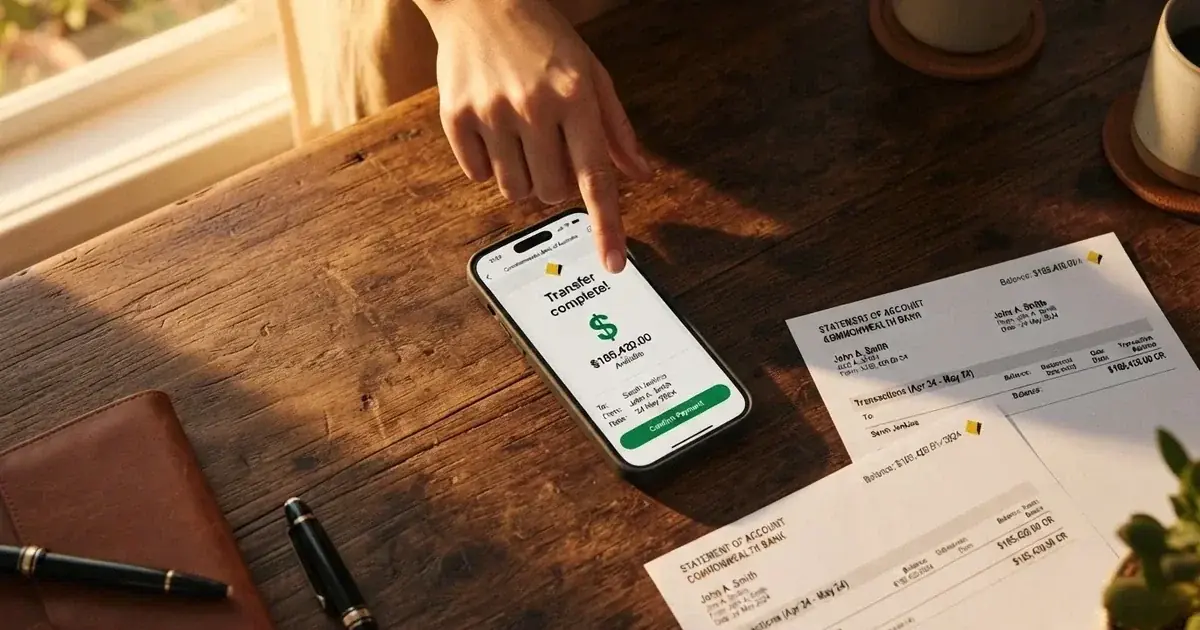
A reader looking for an “instant PayID withdrawal of real money” in Australia is usually trying to settle two questions at once. The first is mechanical: can a cleared casino balance land in their bank account in minutes, the way a PayID transfer between friends does. The second is legal: is any of the offshore brands offering this actually allowed to offer it to them. The two answers diverge sharply, and the divergence is the whole story.
PayID itself is a domestic rails product built by Australian Payments Plus (AP+) and run on the Reserve Bank’s New Payments Platform. Over 100 Australian financial institutions already support it inside their online banking. As of April 2025, more than 25 million PayIDs were registered in Australia. When a transfer is addressed to a PayID, Osko settles it in under a minute, 24/7, including weekends. None of that is in dispute. What sits on top of it is: the offshore casino operator accepting your deposit and promising the cash-out is, in the law’s eyes, offering a prohibited interactive gambling service to a person in Australia.
That is the consequence the rest of this page works out. PayID can absolutely deliver real money, fast, to an Australian bank account. The question is whether the operator on the other side of that transfer has any business taking the request.
Table of Contents
- How PayID actually settles a withdrawal
- The legal frame around the offer
- What “real money” means versus bonus credit
- Identity verification and the first withdrawal
- Responsible play around a withdrawal request
- The ACMA’s enforcement picture
- The brand landscape — what the ACMA has named
- Where this leaves the reader
- Frequently Asked Questions
How PayID actually settles a withdrawal
A PayID is an easy-to-remember alias — a mobile number, an email address, an ABN or an Organisation Identifier — linked to a bank account. It was launched with the New Payments Platform in February 2018 and is operated by Australian Payments Plus. The mechanic matters, because the brand marketing “instant PayID withdrawal” is borrowing a word the banks built, not one the casino invented.
When a payer sends to a PayID, the receiving bank shows the name on the account before the transfer is confirmed. That confirmation step is the only reason PayID works as an anti-scam layer — the payer sees who they are paying and can refuse if the name does not match what they expected. AP+ itself warns that being asked to transfer to a PayID on an illegal gambling site almost certainly means a scam site. The same rails that make a withdrawal fast are the rails that make it visibly fraudulent when the operator is one the regulator has already named.
The settlement layer underneath is Osko, run by AP+. An Osko transfer between participating banks arrives in under a minute, 24/7, whether addressed to a BSB and account number or to a PayID. The Reserve Bank of Australia regulates and oversees the New Payments Platform, and it operates the Fast Settlement Service that lets NPP transactions settle individually in close to real time around the clock. So the speed claim is real: in the abstract, money addressed to a PayID will arrive in under a minute.
What the speed claim does not cover is the casino’s own delay. A “pending” status on the operator’s cashier page is not the same thing as a slow bank. Until the operator releases the funds to its own payment processor, the PayID round-trip never starts. The brand’s published “instant PayID withdrawal” is therefore a two-step promise — operator release, then bank settlement — and the first step is entirely on the operator’s side, where the regulator has no reach.
That gap is where the rest of this page lives: the operator side, the law that touches it, and what an Australian player is actually agreeing to when they click the button.
The legal frame around the offer
The Interactive Gambling Act 2001, strengthened by the Interactive Gambling Amendment Act 2017, makes it an offence to provide online casino games, online pokies or in-play betting to a person in Australia. No state or territory licenses them. What is licensable is wagering on races and sport placed before the event, lotteries and keno — in practice licensed by the Northern Territory Racing and Wagering Commission, which regulates 52 of Australia’s online bookmakers including Sportsbet, Bet365 and Ladbrokes. The commission has no full-time staff and meets once a month in Darwin.

The individual player is not prosecuted. The IGA targets the provider. But an offshore casino gives no Australian consumer protection, no complaints body and no recourse if a withdrawal is refused. Worse, the ACMA can have the site blocked at the ISP level with the balance still on it. “Instant withdrawal” is meaningless if the cashier page stops loading mid-request.
Two regulatory clocks run on this offer. The first is the ACMA’s enforcement record: as of June 2026, the authority had asked Australian internet service providers to block 1,751 illegal gambling and affiliate marketing websites since the first blocking request in November 2019, and more than 230 unlicensed gambling services had left the Australian market since enforcement was strengthened in 2017. In the most recent round reported on 26 June 2026 alone, the ACMA directed ISPs to block another 12 sites — 7Signs, ChromaBet, Donbet, Duospin, Freshbet, Slots Gem, Jacks Club, Lucky Start, Pointsbetz, Spinrise, Vinyl Casino and Wildsino. The second clock is payment-side: the Interactive Gambling Amendment Act 2023 banned credit cards, credit-related products and digital currency as payment for licensed online wagering from 11 June 2024, with penalties up to $247,500 for operators. Legal deposit routes for licensed wagering are debit card, bank transfer, PayID/Osko and BPAY. A site asking an Australian for a credit card or a crypto deposit is operating outside the Australian rules.
H2 Gambling Capital’s 2025 report puts the scale of the offshore side at about A$3.9 billion a year lost to illegal gambling sites, and notes that the share of gambling going through legal channels fell from 74% in 2021 to 64%. The speed of a PayID transfer does not change the fact that the operator on the other side is part of that figure.
What “real money” means versus bonus credit
The phrase “real money withdrawal” is doing work the player often does not see. Casino balances typically split into two ledgers: a cash or “real money” balance, and a bonus balance. Bonus credit cannot be withdrawn — it has to be turned into real money first by meeting a wagering requirement, usually expressed as a multiple of the bonus, after which the resulting real-money balance may be cashable. Marketing pages tend to blur the two. The page that advertises an “instant PayID withdrawal of real money” is often, in practice, advertising a withdrawal of any positive balance once the bonus terms have cleared.
The rule of thumb is straightforward. Until the bonus terms are satisfied, withdrawing from the bonus balance forfeits the bonus and any winnings tied to it. Once the terms are met, whatever real-money balance remains in the account is, in principle, withdrawable. The trap is the size of the wagering requirement: a 35x bonus multiple on a A$100 bonus means A$3,500 of qualifying wagers before the bonus converts, and the math on those wagers is the math that decides whether the balance left is worth withdrawing at all.
A no-deposit bonus, where the operator credits the account without a deposit, is the most slippery case. The bonus amount itself is small but the wagering requirement is often large in proportion, and any small early win can lock the player into completing the requirement before a withdrawal unlocks. That lock-in is exactly the trigger pattern responsible gaming bodies warn about — a player chasing a withdrawal they cannot yet claim, on credit they were never given, at a site that is operating outside Australian rules in the first place.
Identity verification and the first withdrawal
Every legitimate cashier, offshore or not, will demand identity documents on the first withdrawal: government photo ID, proof of address, and sometimes a photograph of the card used to deposit. The verification step is what stops the cashier page from turning into a payment channel for money laundering. It is also where many “instant” promises first hit reality. A first withdrawal can take 24 to 72 hours while documents are reviewed, regardless of how fast the rails underneath are. After verification, subsequent withdrawals are usually released inside minutes.
This is the structural reason a “first PayID withdrawal” can look slow even when nothing has gone wrong. It is not PayID being slow — the bank leg will still settle in under a minute once the operator releases the funds. The operator is slow because it has to clear the player, not the payment.
A second reason for delay is the bank’s own controls. Westpac’s gambling block refuses authorisation of transactions registered under the merchant category code “Betting/Casino Gambling” on eligible personal credit and debit cards. ANZ’s gambling block, activated in the ANZ app, blocks gambling transactions made through a digital wallet such as Apple Pay on an eligible card, and removing it again requires a 48-hour waiting period. ANZ also warns that not all gambling transactions will be blocked and some non-gambling transactions might be blocked in error. By the end of 2025, Apple Pay, Google Pay and Samsung Pay transactions collectively accounted for around 45% of all card payments in Australia by number, so a block that catches the wallet rather than the card is meaningful. If the deposit leg has been blocked, the withdrawal leg of the same player will not exist — and the operator’s cashier will sit in “pending” until the player notices.
Responsible play around a withdrawal request
Chasing a real-money withdrawal after a no-deposit bonus round is one of the patterns responsible-gaming counsellors in Australia name when they describe harm. The mechanics are simple: a small bonus has been credited, the terms demand many multiples of it in qualifying wagers before any withdrawal unlocks, and the player keeps topping up to clear the requirement because the notional balance on screen looks close. The closer the screen looks, the harder the next top-up feels to refuse. By the time the requirement clears, the cumulative deposits can easily exceed the original bonus and any winnings tied to it.
BetStop — the National Self-Exclusion Register, live since August 2023 — binds Australian-licensed online and phone wagering services. An offshore casino is not connected to BetStop. Excluding yourself through BetStop will not stop you opening an account with an offshore site that has never been connected to the register. If self-exclusion matters to a reader, that limitation has to be priced in.
The National Gambling Helpline is 1800 858 858, free, 24/7, with chat at Gambling Help Online. Both are Australian services and both apply whether the gambling takes place at a licensed operator or not.
For the player who has decided to continue, the practical version of “responsible play around a withdrawal request” is: read the wagering requirement before claiming any bonus, decide in advance what the largest acceptable top-up is, and stop when that limit is hit. None of these controls require the operator to behave well — they are entirely on the player’s side, which is why they matter more when the operator is offshore.
The ACMA’s enforcement picture
The ACMA’s enforcement work is the only public ledger an Australian player can read before choosing. Three rounds are worth naming in detail because they cover the brands the rest of this page reviews.
In May 2022, the ACMA issued a formal warning to Dama N.V. covering six casino brands: Bambet, Dazard, Level Up, Rocketplay, Wild Tornado and Cobra Casinos. The ACMA issued further formal warnings to Dama N.V. over Woo Casino in March 2025 and Spirit Casino in May 2025. In July 2025, the ACMA issued formal warnings to Bamboo Media over Ignition Casino and to Consolutetish S.R.L. over National Casino and Bizzo Casino — Bizzo Casino had already been the subject of a 2022 formal warning to TechSolutions (CY) Group Limited and TechSolutions Group N.V. In February 2025 the ACMA issued a formal warning to EOD Code SRL over Instant Casino. In April 2025, the ACMA issued a formal warning to Sterplay Holding Ltd over Casino Intense. The ACMA also issued a formal warning to Hollycorn N.V. over its Sky Crown and Blue Leo casino services, published as a PDF in September 2022. In March 2026, the ACMA issued a formal warning to Pulsup Ltd over RocketPlay. In April 2026 the ACMA issued a formal warning to Ryker B.V. over Jackbit and CasinOK.
The pattern is worth noting. Three of these warnings cover the same operator group — Dama N.V. — across three years. Two warnings cover the same brand — Rocketplay — under different operator names. Two warnings cover the same brand — Bizzo Casino — under two different operating companies. The ACMA’s enforcement is not a one-off naming: it is the visible part of a continuing set of relationships between Australian-licensed payment rails and operators the regulator has already asked to leave.
Blocking Action Summary
The blocking regime’s results are a clear indicator of the scale, and the figures themselves are instructive.
| Year | Milestone |
|---|---|
| 2019 | First ACMA blocking request issued |
| 2026 | 1,751 sites blocked to date |
| Average | 220–300 sites blocked per year |
The first ACMA blocking request under the strengthened regime was issued in November 2019. As of the round reported on 26 June 2026, the cumulative total of blocked illegal gambling and affiliate marketing websites stood at 1,751. That works out to roughly 264 sites blocked per year on average across the roughly six-and-a-half-year window — or, stated as a band that respects the irregular reporting cadence, somewhere between 220 and 300 sites blocked per year since the regime began, with the actual figure for any given quarter depending on how many ISP referrals the ACMA has queued at the time. The point is not the exact figure: it is that the blocking regime has produced roughly two to three hundred takedowns a year for six and a half years, and shows no sign of stopping.
The November 2019 start date is the regulator’s own. Anything that did the work of getting blocked in 2019 has been off the cashier page for longer than some of these brands have existed. The newer entries on the list — the 12 names added in the June 2026 round — are the ones a reader is most likely to meet on an affiliate page today. A site that was blocked two years ago has had two years to rebrand; a site blocked this quarter is the one whose marketing is most likely to be live in a reader’s feed right now.
The brand landscape — what the ACMA has named
What follows is the set of brands the ACMA has formally warned or blocked for offering prohibited online casino services to Australians. It is not a ranking and not a recommendation. Each entry carries the operator the ACMA named, the date of the warning, and any signal the ACMA or the brand’s own listings gave about PayID as a withdrawal method.
| Brand | ACMA action and date | Operator named by the ACMA | PayID subject support |
|---|---|---|---|
| RocketPlay | Formal warning, March 2026 (and May 2022 under Dama N.V.) | Pulsup Ltd (RocketPlay); earlier Dama N.V. | — |
| Level Up Casino | Formal warning, May 2022 | Dama N.V. | listings-only (Westpac source) |
| Woo Casino | Formal warning, March 2025 | Dama N.V. | — |
| Spirit Casino | Formal warning, May 2025 | Dama N.V. | — |
| National Casino | Formal warning, July 2025 | Consolutetish S.R.L. | listings-only (AUSTRAC, Wikipedia) |
| Bizzo Casino | Formal warning, July 2025 (and 2022 under TechSolutions) | Consolutetish S.R.L.; earlier TechSolutions (CY) Group / TechSolutions Group N.V. | — |
| Ignition Casino | Formal warning, July 2025 | Bamboo Media | — |
| Instant Casino | Formal warning, February 2025 | EOD Code SRL | listings-only (ecoPayz and PayID sources) |
| Jackbit | Formal warning, April 2026 | Ryker B.V. | — |
| Casino Intense | Formal warning, April 2025 | Sterplay Holding Ltd | listings-only (AUSTRAC, iTnews, NAB) |
| Sky Crown | Formal warning (PDF published September 2022) | Hollycorn N.V. | — |
The “PayID subject support” column is intentionally sparse. Where research carries no signal, the cell stays empty. Where a PayID connection appears in the brand’s own listings pages — but not in the ACMA’s record, and not in any verification by an Australian authority — it is marked as a listings-only signal, naming the sources a reader could in principle check. The brand’s claim that PayID is supported is not the same thing as the ACMA confirming it; the listings column reflects only what the listings pages say.
RocketPlay
RocketPlay is on the ACMA’s list twice. The first warning, to Dama N.V. in May 2022, covered six brands in one notice. The second, to Pulsup Ltd in March 2026, named RocketPlay specifically. Two warnings over a brand, under two different operating companies, is the clearest signal the ACMA gives that reorganisation on the operator side does not change the regulatory status: a prohibited service remains prohibited. There is no signal from research about PayID support on this brand.
The conclusion RocketPlay’s history forces is structural. Whatever the brand’s cashier page promises about PayID, the operator behind it has now been told twice — once by name — that its offer to Australians is unlawful under the IGA. A reader looking for an instant PayID withdrawal through RocketPlay is paying the speed of the rails into an account that has been warned at by the regulator, on a brand that re-emerged under a new operator name once already.
Level Up Casino
Level Up Casino was named in the May 2022 warning to Dama N.V. alongside five other brands. The “listings-only” signal in the PayID column comes from a Westpac page — that is, a bank’s own public discussion of gambling-block behaviour, not the brand’s own marketing. It indicates that the brand has at some point appeared in a financial-institution context in connection with PayID; it does not indicate that the ACMA or any Australian regulator has confirmed PayID support.
Level Up’s profile is the canonical one in this set: a single warning in 2022, no follow-up action publicly visible, and a listing-page-only trace on the payment side. A reader weighing this brand against the others should weight the absence of a follow-up warning carefully — it does not mean the ACMA has cleared the brand; it means the ACMA has not needed to name it again.
Woo Casino
Woo Casino was named in a March 2025 formal warning to Dama N.V., the same operator that was warned in May 2022 over six brands and in May 2025 again over Spirit Casino. Three warnings over three years to the same operator is a pattern the ACMA is plainly tracking. There is no research signal on PayID for this brand.
The brand’s relevant history is its operator’s. A reader looking at Woo Casino is, in regulatory terms, looking at the third entry in an ongoing record on Dama N.V. The marketing of the cashier page and the regulatory record of the operator are not the same document.
Spirit Casino
Spirit Casino’s warning in May 2025 was the ACMA’s third to Dama N.V. in three years. No PayID signal is carried in the research.
The verdict here is the same shape as Woo Casino’s, with the same reading: the brand’s regulatory status is its operator’s, not its own. Whatever the cashier page promises about a PayID cashout, the offer is the offer of an operator the ACMA has asked to stop offering it to Australians — three times.
National Casino
National Casino was named in the July 2025 warning to Consolutetish S.R.L., alongside Bizzo Casino. The “listings-only” PayID signal here points to an AUSTRAC reference and a Wikipedia page — again, third-party mentions, not regulator confirmation.
National Casino’s position in the table matters because it shares an operator and a date with Bizzo Casino, and the operator side of an offshore group is usually the level at which the ACMA does business. A reader comparing the two should read them as one regulatory event, not two.
Bizzo Casino
Bizzo Casino carries two formal warnings: the July 2025 warning to Consolutetish S.R.L., and an earlier 2022 warning to TechSolutions (CY) Group Limited and TechSolutions Group N.V. Two warnings, two different operator names, the same brand. No PayID signal is carried in the research.
The shape of this entry is the strongest in the table for the reorganisation argument. A brand can change operator twice and still be the same brand the ACMA is acting against. The cashier page does not tell the reader which TechSolutions entity ran the brand in 2022 and which Consolutetish entity runs it now. The ACMA does not need to tell them apart either; it names the brand, and the brand is the thing the warning attaches to.
Ignition Casino
Ignition Casino was named in a July 2025 formal warning to Bamboo Media. No PayID signal is carried in the research.
A single warning, a single operator. The conclusion is the standard one for this set: the brand is offering a prohibited service to Australians, and the cashier page does not change the regulator’s position.
Instant Casino
Instant Casino was named in a February 2025 formal warning to EOD Code SRL. The “listings-only” PayID signal here is the strongest in the table — it points to an ecoPayz page and to a PayID source — meaning the brand’s own listings pages have at some point advertised PayID as a withdrawal method. That is not the ACMA confirming PayID support, and it is not an Australian regulator confirming the brand is entitled to offer the service at all. It is what the brand’s own listings say.
The reason this entry is worth its own paragraph is the gap between the brand’s claim and the regulator’s position. The brand advertises PayID; the ACMA has warned the brand off. A reader who has seen the PayID advertisement and not seen the warning is looking at the listings half of the page only.
Jackbit
Jackbit was named in an April 2026 formal warning to Ryker B.V., alongside CasinOK. This is the most recent formal warning in the table. No PayID signal is carried in the research.
A reader meeting Jackbit’s marketing today is meeting a brand the ACMA warned off two months before the publication of this page. That is the shortest possible gap between regulator action and cashier-page availability in the set.
Casino Intense
Casino Intense was named in an April 2025 formal warning to Sterplay Holding Ltd. The “listings-only” PayID signal points to three sources: AUSTRAC, iTnews and NAB. NAB is itself an Australian financial institution — its appearance in the listings-only column means the bank has been publicly associated with discussions of gambling-payment controls that name the brand, not that NAB processes payments for the brand.
The shape here is the same as Instant Casino’s: the listings column is the most populated in the table, but populated by third-party sources rather than regulator confirmation. A reader who treats the listings column as evidence of PayID support has read the page wrongly; it is evidence of third-party mentions.
Sky Crown
Sky Crown was named in the ACMA’s formal warning to Hollycorn N.V., published as a PDF in September 2022, alongside the Blue Leo casino service. This is the earliest dated entry in the table. No PayID signal is carried in the research.
A brand named in 2022 has had nearly four years to rebrand, re-platform or change operator. The fact that it still appears on an Australian-facing cashier page in the same name means the warnings have not changed its commercial posture. That is a fact about the operator, not the rails.
Where this leaves the reader
Three things follow from the material above, and a reader using the page to make a decision needs each of them.
First, the speed claim is technically true and commercially hollow. PayID can settle a transfer in under a minute. None of the operators named in this page is licensed to take the request from an Australian resident in the first place. The speed of the bank leg is not the variable that matters; the regulator’s position on the operator is.
Second, the enforcement record is the only public ledger that exists. The ACMA has named 11 brands in this page and roughly 1,751 sites in total. The number tells a reader that the regulator’s posture is steady — two to three hundred takedowns a year, six and a half years running — not a one-off. A reader who treats the ACMA’s record as advisory rather than structural is reading the wrong document.
Third, the responsible-gaming controls an Australian player is used to — BetStop, the National Gambling Helpline, AUSTRAC reporting — do not reach an offshore operator. Self-excluding through BetStop does not stop an account being opened at a brand on this page. The 1800 858 858 helpline still applies and is the right number to call. But the structural protections are absent, and the player’s own discipline is the only thing left in their corner.
A reader who has decided to play at any brand named in this page should expect at minimum that: the brand may be blocked mid-session, the first withdrawal will be delayed by document review, the operator has been told by name that its offer to Australians is prohibited, and any bonus terms will sit on top of an unlawful offer rather than in place of one. The arithmetic on the wagering multiple does not change those facts. PayID’s speed does not change those facts. The fact that the brand’s listings page advertises PayID as a withdrawal method does not change those facts. The “instant” in the search phrase is the speed of the rails. The “real money” is the cash balance once the bonus terms have cleared. The “Australia” in this topic is the place where none of this is licensed.
Frequently Asked Questions
Is it legal for an online casino to pay out real money through PayID to a player in Australia?
No. The Interactive Gambling Act 2001, strengthened in 2017, makes it an offence to provide online casino games to a person in Australia. No state or territory licenses online casino games. The individual player is not prosecuted, but the offer itself is unlawful, and the ACMA can have the site blocked with the balance still on it.
What is the difference between withdrawing bonus credit and withdrawing real money through PayID?
Bonus credit is not withdrawable. It has to be converted into real money first by meeting a wagering requirement, usually expressed as a multiple of the bonus. Once the requirement is met, the remaining real-money balance can be cashed out. Marketing pages often blur the two ledgers, which is why the “real money” qualifier matters in the search.
Does a no-deposit bonus balance need to be converted before a real-money PayID withdrawal is possible?
Yes. A no-deposit bonus is credited without the player depositing, but the wagering requirement attached to it is usually large relative to the bonus, and the bonus and any winnings tied to it are forfeit if a withdrawal is requested before the requirement clears. The notional “real money” balance is only withdrawable once the requirement has been met.
What identity documents are usually required before a first real-money PayID withdrawal?
A government photo ID, proof of address, and sometimes a photograph of the card used to deposit. The verification step is why a first withdrawal can take 24 to 72 hours even though PayID itself settles in under a minute. Verification happens on the operator’s side, not the bank’s.
Is there a minimum real-money balance needed before a PayID withdrawal can be requested?
Most cashiers impose a minimum withdrawal threshold that varies by method. PayID-specific minimums are brand-set; the research for this page does not record a uniform figure. Where the balance is below the threshold, the cashier will hold it until additional funds are added or a different method is chosen.
Why might a real-money PayID withdrawal take longer than an earlier bonus-funded one?
A first withdrawal is delayed by document review regardless of how fast PayID settles. After verification, subsequent withdrawals usually release faster. A bonus-funded withdrawal is sometimes expedited because the bonus terms require a payout track; a real-money withdrawal after a long quiet period can re-trigger review. Either way, the delay is on the operator’s side, not the bank’s.