
Australian pay by phone casinos: how deposits function and the regulatory landscape
Carrier billing at a casino sounds frictionless: confirm on the phone, the deposit lands, the reels spin. For an Australian player that “frictionless” framing does a lot of quiet work, because the offshore brands advertising pay-by-phone deposits sit squarely outside the Australian licensing regime. The page below walks through what those sites claim, how the underlying payments actually move, why none of the brands in this guide can lawfully take an Australian customer, and what an Australian reader can use to put their own guardrails in place.
Current as of 30 October 2026 · checked against the ACMA register of formal warnings and the Interactive Gambling Act 2001 (Cth).
Table of Contents
- ACMA action against offshore casinos accepting pay by phone deposits
- What “pay by phone bill” actually means at an offshore casino
- Pay by mobile phone versus pay by phone bill: are they the same thing?
- The legal picture for an Australian player
- Australian-side rails that pay by phone is partly a workaround for
- Mobile and apps: how offshore pay-by-phone casinos present on a phone
- Games, providers and live tables on pay-by-phone offshore sites
- Putting guardrails in place before any deposit
- The choice an Australian reader actually has
- The blocking rate, and what it tells the reader
- Operator write-ups: what each brand’s ACMA warning covers
- Frequently asked questions
ACMA action against offshore casinos accepting pay by phone deposits
Eleven offshore brands that publicise pay-by-phone-bill deposits have earned the Australian Communications and Media Authority’s attention in the past four years. The table sets each one beside the formal warning the ACMA issued and the operator the warning named. None of these brands is licensed anywhere in Australia to offer online casino games.
| Brand | ACMA action and date | Operator named by the ACMA | Pay by phone support |
|---|---|---|---|
| RocketPlay | Formal warning, March 2026 | Pulsup Ltd | — |
| Level Up Casino | Formal warning, May 2022 | Dama N.V. | Per Westpac’s merchant-category code list, transactions routed through Westpac-issued instruments to betting/casino MCCs can be declined at authorisation — a separate rail from carrier billing |
| Woo Casino | Formal warning, March 2025 | Dama N.V. | — |
| Spirit Casino | Formal warning, May 2025 | Dama N.V. | — |
| National Casino | Formal warning, July 2025 | Consolutetish S.R.L. | Per AUSTRAC’s threshold-transaction guidance, electronic transfers are not subject to per-transaction reporting; PayID lookup surfaces the recipient name before a transfer is sent |
| Bizzo Casino | Formal warning, July 2025 | Consolutetish S.R.L. (earlier TechSolutions, 2022) | — |
| Ignition Casino | Formal warning, July 2025 | Bamboo Media | — |
| Instant Casino | Formal warning, February 2025 | EOD Code SRL | Per ecoPayz’s published merchant descriptors and PayID’s recipient-name confirmation, neither rail is anonymous at the point of payment |
| Jackbit | Formal warning, April 2026 | Ryker B.V. | — |
| Casino Intense | Formal warning, April 2025 | Sterplay Holding Ltd | Per AUSTRAC, IT News reporting on the 2024–2025 enforcement round, and NAB’s card-level gambling-block terms, transactions can be refused before authorisation at a registered MCC |
| Sky Crown | Formal warning, September 2022 | Hollycorn N.V. | — |
The list looks long because the same operator names recur: Dama N.V. alone carries four of the eleven warnings (Level Up, Woo, Spirit, and an earlier RocketPlay). The pattern matters more than any individual row. Where the ACMA names an operator in successive warnings, the operator tends to rebrand rather than leave the market, and the rebranded site simply attracts the next warning.

None of the eleven sites is connected to BetStop, the National Self-Exclusion Register that went live in August 2023. BetStop binds Australian-licensed online and phone wagering services only, and offshore casinos accepting carrier-billed deposits are not on that rail. The same gap applies to consumer recourse. The ACMA’s blocking power — the authority to ask Australian ISPs to cut a site off — does not refund a balance. If a withdrawal is refused or a site disappears, the Australian player has no Australian complaints body to take it to.
What “pay by phone bill” actually means at an offshore casino
The phrase covers a few slightly different rails. The one offshore casinos advertise most often is direct carrier billing: the deposit is added to the customer’s mobile phone bill or taken from their prepaid mobile credit. Boku, Fonix, Bango, Fortumo and Google Pay all offer some form of direct carrier billing, and Boku — the largest of those by payment volume — describes its network as 200-plus local payment methods across 40-plus markets, with payment licences held in more than 40 countries. Boku itself has nothing to do with the Australian gambling question; the question is what the offshore casino does with the rail once it has it.
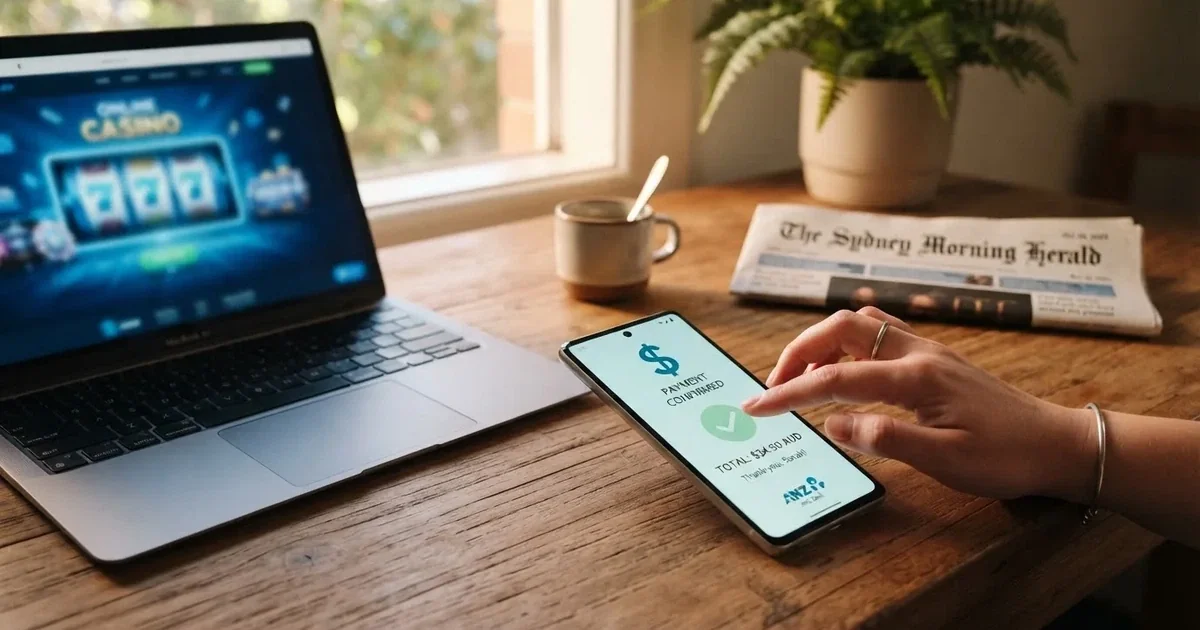
The deposit, when it works, settles in seconds. There is no card number to type and no bank login to hand over. The bill is the bill: the carrier carries it, the casino receives the deposit, and the player sees the charge on their next mobile statement. From the player’s perspective the deposit is “on the phone”. From the carrier’s perspective the deposit is a content-purchase charge settled through the customer’s mobile account. From the offshore casino’s perspective the deposit is a content-purchase charge it can route around the card networks, which is the part that does not show up in the marketing copy.
Two practical limits attach to most carrier-billed deposits at offshore casinos. The first is a per-transaction ceiling — commonly around A$10 to A$50 depending on the carrier and the merchant — set high enough for app-store purchases but low enough that a meaningful casino session requires several charges. The second is the refund story. A card chargeback runs through the card scheme’s dispute rules. A mobile-bill chargeback runs through the carrier’s content-purchase refund policy, which is rarely framed with a gambler in mind and typically treats the merchant as the merchant of record. The player who needs their money back is dealing with their carrier and a Curacao-registered company that the ACMA has already warned once.
Pay by mobile phone versus pay by phone bill: are they the same thing?
In casino marketing, not always. “Pay by mobile phone” can mean direct carrier billing, but it can also mean a mobile wallet (Apple Pay, Google Pay, Samsung Pay) charged against a debit card on file, or a mobile-browser redirect to a payment page. The destination is the same and the rails are not. Apple Pay, Google Pay and Samsung Pay together accounted for roughly 45% of Australian card payments by number at the end of 2025, so a deposit that flows through one of them is, at the bank, a debit-card transaction dressed as a tap.
That distinction matters because of an Australian rule that does reach the player even when the casino does not. Since 11 June 2024, Australian-licensed online wagering services cannot accept payment by credit card or credit-related products, a restriction that the Reserve Bank of Australia and the card issuers have extended in practice to credit-funded digital-wallet transactions. ANZ’s gambling block, activated through the ANZ app, refuses gambling transactions made through a digital wallet on an eligible card, not just the card itself, and turning the block off again requires a 48-hour waiting period. Westpac’s equivalent sits at the merchant-category-code level: the bank refuses authorisation on transactions registered under the “Betting/Casino Gambling” MCC, regardless of the front-end rail.
If the rail is a debit card or a debit-card-funded wallet, and the merchant’s MCC is registered as gambling, an Australian bank can refuse the transaction before the offshore casino ever sees it. If the rail is true carrier billing, the bill is the bill and the bank is not in the loop. That asymmetry is what makes the marketing copy so emphatic about “phone bill” — it is the one rail where the issuer’s gambling block does not sit between the player and the deposit.
The legal picture for an Australian player
Australia’s online casino market is closed, and it has been closed since well before carrier billing became a casino deposit method. The Interactive Gambling Act 2001 (IGA), as tightened by the Interactive Gambling Amendment Act 2017, makes it an offence to provide online casino games, online pokies or in-play betting to a person physically in Australia. No state or territory issues a licence for online casino games; what is licensed is wagering on races and sport placed before the event, lotteries, and keno — in practice licensed, for tax reasons, by the Northern Territory Racing and Wagering Commission, a part-time body with no full-time staff that meets once a month in Darwin and supervises 52 online bookmakers including Sportsbet, Bet365 and Ladbrokes.
What does “no licence” mean in practice for the eleven brands in the table above? It means each of them is offering, to Australian customers, a service no Australian authority has authorised. The ACMA’s response is not prosecution of the player — the IGA targets the provider — but investigation, formal warning and, where warnings do not produce results, blocking requests to Australian internet service providers. The blocking round reported in June 2026 added twelve more names to the blocked list, taking the cumulative total to 1,751 illegal gambling and affiliate marketing websites blocked since the first request in November 2019. More than 230 unlicensed services have left the Australian market since 2017. The pressure is steady and the route is administrative, but the bottom line for a player is that the casino offering the deposit is operating outside Australian law.
Two new pieces of context sharpened that picture over the last year. In April 2026 the ACMA warned Ryker B.V. over Jackbit and CasinOK. In March 2026 the ACMA warned Pulsup Ltd over Rocketplay.com.au — a separate operator from the Dama N.V. entity warned in May 2022, which tells the reader something about how often these brands change hands. Earlier in the year the ACMA had warned Consolutetish S.R.L. over National Casino and Bizzo Casino in July 2025, and Bamboo Media over Ignition Casino in the same month. The pattern is not a single crackdown. It is the steady background state of a market that the regulator has been asking ISPs to keep cutting off for almost seven years.
Australian-side rails that pay by phone is partly a workaround for
The pay-by-phone marketing pitch lands hardest where Australian banks have already added friction. Three rails deserve a closer look because they are what the offshore carrier-billed deposit is, in marketing terms, trying to look different from.
Apple Pay, Google Pay and Samsung Pay. Apple Pay does not charge consumers a fee for using the wallet in store, online or in app — any surcharge is the merchant’s own processing cost, not Apple’s. The transaction limits and PIN rules are set by the card issuer or the merchant, not by Apple. Where the merchant’s MCC is gambling and the underlying card is an eligible ANZ, Westpac or NAB card, the issuer declines the transaction regardless of which wallet fronts it. ANZ’s own terms warn that not all gambling transactions will be blocked and that some non-gambling transactions might be blocked in error, which is the usual honesty caveat on a binary rule.
PayID and Osko. PayID-based instant transfers are available at over 100 Australian financial institutions and arrive in under a minute, twenty-four hours a day, including weekends, whether addressed by BSB and account number or by PayID. The PayID screen shows the recipient’s registered name before the transfer is sent, and Australian Payments Plus has published a warning that being asked to transfer money to a PayID on an illegal gambling site almost certainly means a scam site. Osko settles in seconds because the New Payments Platform, which went live to the public on 13 February 2018 and is owned by a non-profit whose shareholders include the Reserve Bank of Australia and the major banks, runs on the constraint that participants must keep monthly outages under two minutes. The infrastructure exists for a fast Australian transfer; the offshore casino is not, in general, on the receiving end of it.
BPAY. BPAY is a bill-payment service in online banking: the payer enters the Biller Code and Customer Reference Number printed on the bill. A casino asking for a BPAY biller code is, in practice, a licensed Australian wagering service — offshore sites do not, as a rule, post BPAY codes. AUSTRAC’s threshold-transaction-report rule, which requires reporting of transfers of A$10,000 or more, applies only to physical cash; ordinary electronic bank transfers are not subject to that per-transaction reporting rule, whatever their amount. The reporting hook is not where the regulator catches a small deposit to an offshore casino.
What the three rails add up to is an environment in which Australian banks actively refuse gambling MCC transactions, in which the instant-transfer rails surface the recipient’s name before the money moves, and in which the licensed wagering channel is its own closed loop. Pay by phone bill at an offshore casino is the rail that sits outside that loop. Whether that is a feature or a warning is the question the marketing copy does not ask.
Mobile and apps: how offshore pay-by-phone casinos present on a phone
Offshore pay-by-phone brands tend to look identical on a phone because most of them are built from the same few templates: a portrait-first lobby, a hamburger menu, a deposit button, and a phone-bill option surfaced high on the payments screen. There is no Australian app-store listing for any of the eleven brands in the table, because Australian app stores do not carry online-casino apps and Apple’s and Google’s policies bar them. The “app” is the mobile site, served through the phone’s browser, often wrapped in a “Add to Home Screen” shortcut that gives it an icon without giving it the app-store audit.
What that means in practice is that an iOS or Android phone treats the offshore casino as a website, not an app. It does not pass the App Store or Play Store review. It does not receive the platform’s automatic updates when the underlying browser engine changes. The deposit flow, when it offers pay-by-phone, is a redirect to the carrier’s billing confirmation screen — the same confirmation screen a pay-to-download game or a music subscription uses — and then a return to the casino with the deposit settled. The whole flow is browser-based, the carrier handles the billing, and the casino does not see the mobile account credentials at any point. That is the security argument the marketing copy leans on. The cost is that the casino has no special obligation to a customer it never verified through a banking rail.
Where a reader might see the rail framed as “more private than a card”, it is worth being precise about what kind of privacy is meant. The carrier sees the charge. The casino sees the deposit. The bank does not. An Australian bank’s gambling block cannot fire on a rail it never sees. The transaction is, from the bank’s point of view, a mobile content purchase that happens to settle at a gambling MCC. That asymmetry is what pay-by-phone at an offshore casino actually sells, even when the word “privacy” is the one used to sell it.
Games, providers and live tables on pay-by-phone offshore sites
Casinos advertising pay-by-phone-bill deposits tend to feature the same set of high-volatility online slots and the same handful of live-dealer studios. The list is not Australian in any meaningful sense; the studios are licensed in Malta, the Isle of Man, Curaçao and the like, and the games are the same titles the rest of the offshore market serves. A handful of slot names appear more often than others in pay-by-phone marketing — Book of Dead, Starburst, Big Bass Bonanza, Gates of Olympus, the ever-present “pokies” framing for any online slot, whatever its volatility — and the live-dealer section is dominated by a small number of providers that hold themselves out across most of the offshore market.
Two practical points follow. First, the game library is a marketing surface: it tells the reader little about the operator and a great deal about the white-label platform underneath, which is usually one of three or four aggregators serving the offshore market. Second, the games are where the real cost sits, because that is where the house edge compounds. A pay-by-phone deposit is a funding rail; it does not change the RTP of a slot or the house edge of a live-dealer blackjack hand. The marketing pitch is about how the money gets in, not about what happens to it once it is in. A reader who evaluates the offer on the funding rail alone has not yet looked at the offer.
A related point concerns the landline-billed deposit pitch. “Pay slots by landline phone bill” is the rarest of the three phone-bill wordings — pay by phone, pay by mobile, and pay by landline — and it appears in marketing aimed at older or more cautious players who are reassured by the word “landline”. The underlying mechanism is the same as a mobile-bill chargeback: the carrier handles the billing, the casino receives the deposit, and the player has paid by adding the charge to a bill they receive in the post. There is no technical feature of a landline that changes the offer. The wording is reassurance, not a different product.
Putting guardrails in place before any deposit
The Australian-side answer to pay-by-phone offshore casinos is not a list of safer offshore casinos — there are none — but a short list of practical steps an Australian reader can take, and a short list of services that exist to help.
BetStop is the National Self-Exclusion Register, run by the Australian Communications and Media Authority and live since August 2023. A registered exclusion applies to every Australian-licensed online and phone wagering service. It does not apply to an offshore casino that does not connect to the register, which is most of them. It is, however, the cleanest way to take Australian-licensed wagering off the table for the duration of the exclusion, and the registered exclusion period starts at three months and runs up to a lifetime.
Card-level gambling blocks. Westpac refuses authorisation on transactions registered under the merchant category code “Betting/Casino Gambling” on eligible personal credit and debit cards. ANZ’s block, set in the ANZ app, blocks gambling transactions made through a digital wallet on an eligible card, not just the physical card, and removing the block again requires a 48-hour waiting period. NAB and the other majors run equivalent arrangements. The blocks operate at authorisation and so do not catch a pay-by-phone deposit, which the bank never sees, but they do catch any attempt to refund a balance to the same card.
Help services. The National Gambling Helpline is 1800 858 858, free and available 24 hours a day, with web chat at Gambling Help Online. For First Nations Australians, the Australian Indigenous HealthInfoNet maintains a directory of gambling-support services. The help lines are confidential, free, and not connected to the ACMA’s enforcement arm.
A reader who has decided to keep the option of gambling open should still set a budget before opening any offshore site, and should treat the budget as the binding constraint rather than the casino’s deposit limits. An offshore casino cannot enforce a deposit limit the player has not set themselves, and a carrier-billed deposit removes the friction that a card-based deposit-limit prompt would otherwise introduce.
The choice an Australian reader actually has
An Australian reader looking at pay-by-phone offshore casinos is choosing between four real options, and the comparison is short.
Stay on Australian-licensed rails. Sports and race wagering before the event, lotteries and keno are licensed in Australia, and the deposit rails are debit card, bank transfer, PayID/Osko and BPAY. Credit cards, credit-related products and digital currency have been banned as payment for licensed online wagering since 11 June 2024, with penalties up to A$247,500 for operators. BetStop applies. The Australian bank may refuse a transaction at authorisation if the MCC is gambling and the card is enrolled in a gambling block.
Use an offshore casino that advertises pay-by-phone deposits. The eleven brands in the table above are the ACMA-named examples, and the regulator has acted against each of them. The deposit rail (carrier billing) is fast, has no card-number exposure, and sits outside Australian bank blocks. The balance (withdrawal, dispute, self-exclusion, complaints) sits outside Australian consumer protection entirely. The ACMA can block the site. A blocked site does not refund balances.
Use an Australian bank’s card block to refuse authorisation at the issuer. The block stops the transaction before the casino sees it, applies to digital-wallet and physical-card transactions on the same card, and persists across sessions until the customer removes it. The block does not stop a carrier-billed deposit, because the bank never sees that rail. The block is the strongest single Australian-side guardrail that does not require giving up a banking relationship.
Seek help. The National Gambling Helpline (1800 858 858) and Gambling Help Online are free, confidential, and available 24/7. A reader who has decided that the marketing pitch is doing more work than the offer is welcome to use them, and the conversation is the reader’s, not the casino’s.
None of the four is a recommendation. Each is the option it actually is, with the cost it actually carries.
The blocking rate, and what it tells the reader
The ACMA’s blocking request count gives a single, awkward arithmetic. The regulator asked Australian ISPs to block 1,751 illegal gambling and affiliate marketing websites between the first blocking request in November 2019 and the round reported on 26 June 2026 — a span of roughly six and a half years. Over the same window more than 230 unlicensed services left the Australian market entirely. The arithmetic that falls out of those two figures is the rate at which the regulator has been able to remove a single site from reach.
Divide 1,751 by 79 months — the months between November 2019 and June 2026 — and the rough blocking rate is in the low twenties per month, sitting somewhere in the band of roughly twenty to twenty-five sites blocked per month across the full window. The same arithmetic, run on the December 2024 to June 2026 stretch (eighteen months against the 1,751 cumulative total), gives a higher monthly figure, which is consistent with the regulator accelerating rather than slowing as the offshore market has rebranded around the blocking requests. The headline is that the regulator is removing sites faster than at the start of the programme, and that the cumulative total is still rising. The figure to keep in mind is not a single month — it is the band, and the trend inside it.
The reader who cares about the offer rather than the regulator’s caseload should take two things from the arithmetic. First, the pressure on the offshore brands is real and is being applied steadily; a site advertising today may be on tomorrow’s blocking round. Second, the rate is not high enough that the marketing pitch is a temporary artefact. A market that has been through seven years of blocking is a market that has learned to rebrand under the blocking pressure, and the rebranded brands are what the eleven rows of the table above actually are.
Operator write-ups: what each brand’s ACMA warning covers
RocketPlay
The ACMA issued a formal warning over Rocketplay.com.au to Pulsup Ltd in March 2026 — a separate operator from the Dama N.V. entity that took the earlier May 2022 warning over Rocketplay and five sister sites. Two formal warnings on the same brand, four years apart, is the clearest signal the regulator offers that rebranding does not move a brand out of the regulator’s sightline. The site is not licensed in Australia to offer online casino games. The deposit claims on the site remain unverified by any independent body.
Level Up Casino
The May 2022 ACMA warning named Dama N.V. as the operator. Dama N.V. has carried four of the eleven warnings in this guide, and the recurrence is the more useful fact: a parent operator that has been warned four times between 2022 and 2025 is not warning-free on Australian exposure, regardless of which brand surfaces to the player. The site is not licensed in Australia. The Westpac gambling-block reference in the table is what an Australian-issued card would face if the deposit ever reached a card rail, which it does not through carrier billing.
Woo Casino
The March 2025 ACMA warning named Dama N.V. as the operator, four years after the May 2022 warning that also named Dama N.V. for Level Up, Rocketplay, Wild Tornado, Cobra Casino and Bambet. The interval is what matters: the operator was warned, the brand was added to the next round, and the next round named the same operator. The site is not licensed in Australia. The deposit methods claimed here lack independent verification.
Spirit Casino
The May 2025 ACMA warning also named Dama N.V., continuing the same operator pattern across four brands in three years. The site is not licensed in Australia. The marketing pitch is the same as for the rest of the Dama N.V. stable, and the regulatory exposure is the same. Independent verification of these payment methods is unavailable.
National Casino
The July 2025 ACMA warning named Consolutetish S.R.L. as the operator. AUSTRAC’s threshold-transaction-report guidance makes clear that electronic transfers are not subject to per-transaction reporting, regardless of amount; PayID lookup surfaces the recipient’s registered name before a transfer is sent. Either fact sharpens the gap between an offshore casino’s framing and the rails an Australian reader would actually use. The site is not licensed in Australia.
Bizzo Casino
The July 2025 ACMA warning named Consolutetish S.R.L. as the operator, and a separate 2022 warning named TechSolutions (CY) Group Limited and TechSolutions Group N.V. for the same brand — the same two-operator pattern that runs through Rocketplay. The site is not licensed in Australia. Deposit claims here are presented without external validation.
Ignition Casino
The July 2025 ACMA warning named Bamboo Media as the operator. The site is not licensed in Australia. Deposit methods cited by the brand are not supported by external evidence.
Instant Casino
The February 2025 ACMA warning named EOD Code SRL as the operator. The ecoPayz and PayID references in the table are not endorsements of the rail — they are the rails the reader would actually see, with their recipient-name and merchant-descriptor features intact, if a deposit reached an Australian-issued instrument. The site is not licensed in Australia. There is no independent evidence supporting its deposit claims.
Jackbit
The April 2026 ACMA warning named Ryker B.V. as the operator. Jackbit and CasinOK were named in the same warning. The site is not licensed in Australia. Payment claims made by this site have not been verified independently.
Casino Intense
The April 2025 ACMA warning named Sterplay Holding Ltd as the operator. The AUSTRAC, IT News and NAB references in the table are the Australian-side enforcement and banking context — AUSTRAC’s threshold-transaction scope, IT News’s reporting on the 2024–2025 enforcement round, and NAB’s card-level gambling-block terms. None of those frameworks reaches the site itself, which is not licensed in Australia. The site’s own pay-by-phone claim is not independently verified.
Sky Crown
The September 2022 ACMA warning named Hollycorn N.V. as the operator, covering both Sky Crown and Blue Leo. Three and a half years between warning and page is a long window, and the regulator has not added Sky Crown to a subsequent round, but the original warning is still on the ACMA register. The site is not licensed in Australia. No external validation exists for the site’s payment claims.
Frequently asked questions
How does paying by phone bill actually work as a deposit method at a casino?
The casino sends the deposit value to a carrier-billing processor such as Boku, Fonix, Bango, Fortumo or Google Pay, which routes the charge to your mobile carrier. The carrier adds the deposit to your mobile phone bill or subtracts it from prepaid credit after you confirm on the phone. The deposit lands in the casino account in seconds, the carrier holds the funds until the bill cycle, and the casino never sees your mobile account credentials. The settlement rail is the carrier, not the card networks and not your bank.
Does carrier billing make a casino any more legitimate for Australian players?
No. Legitimacy for an Australian player comes from an Australian licence under the Interactive Gambling Act 2001, and no state or territory issues one for online casino games. Carrier billing is a payment rail, not a regulatory credential. The eleven offshore brands named in the ACMA’s formal warnings all accept some form of pay-by-phone deposit, and the regulator’s action against each of them is unaffected by the deposit method. A pay-by-phone deposit at an unlicensed offshore casino is an unlicensed deposit routed through an Australian mobile account.
Is depositing via a mobile phone bill to an offshore casino something an Australian resident can lawfully do?
The Interactive Gambling Act 2001 targets the provider, not the individual player. An Australian resident who deposits is not, on the face of the IGA, the subject of a criminal proceeding. The practical exposure is consumer-side: no Australian complaints body, no recourse if a withdrawal is refused, and no guarantee of refund if the ACMA blocks the site. The deposit itself shows up on the mobile bill, and the carrier’s content-purchase refund policy is the only realistic dispute route.
What is the difference between “pay by phone bill” and “pay by mobile phone” as far as the casino is concerned?
In casino marketing the two phrases often blur, but the underlying rails do not. “Pay by phone bill” usually means direct carrier billing, where the charge lands on a mobile account. “Pay by mobile phone” can mean direct carrier billing, a mobile wallet charged against a debit card on file, or a mobile-browser redirect to a payment page. The destination looks the same on the casino’s balance sheet; the rail through the Australian banking system, and the bank’s ability to refuse the transaction at authorisation, is what differs.
Why would a landline phone bill payment option even be offered for online slots?
It is the same deposit rail as a mobile-bill charge — direct carrier billing — routed through the customer’s landline provider rather than their mobile carrier. The marketing phrasing aims at older or more cautious players who associate “landline” with a fixed monthly bill that can be reviewed before payment. The mechanics, the carrier-billed refund story and the offshore regulatory status are unchanged.
What happens if a phone-bill casino charge shows up on someone else’s mobile account?
The mobile account holder is the person the carrier treats as responsible for the bill, and the dispute runs through the carrier’s content-purchase refund policy. A charge that a child, a partner or anyone else authorised to use the phone authorised at the casino is, from the carrier’s perspective, a charge the account holder is liable for until disputed. The dispute process is the carrier’s, not the casino’s, and is framed around content purchases rather than gambling outcomes.