
Bonus Buy Slots in Australia: How the Mechanic Reaches Players, and Why the Regulator Keeps Blocking It
Current as of 30 October 2026 — checked against the Australian Communications and Media Authority’s list of formal warnings and blocking actions, and against the Interactive Gambling Act 2001 as amended.

Table of Contents
- Inducements and What They Actually Mean in a Bonus-Buy Slot
- The Fundamental Limit of Comparing Operators the ACMA Has Warned
- Slot Machines in Australia: From the Liberty Bell to the Local Pub
- Prohibition in Practice: How the IGA 2001 Reaches Sites Offering Bonus-Buy Slots
- Help, Self-Exclusion, and Where the Local Safety Net Stops
- The Eleven Brands: ACMA Warnings, and What Each One Tells You
- How Fast the Blocks Have Come: The Blocking Rate Since 2019
- Common Questions About Bonus Buy Slots in Australia
Inducements and What They Actually Mean in a Bonus-Buy Slot
A “bonus buy” — sometimes labelled “feature buy” — is a button inside an online slot that lets the player pay a fixed multiple of the stake to trigger the bonus round immediately, rather than waiting for it to land through ordinary play. The mechanic itself is not a marketing promotion added on top of the slot. It is part of how the slot is built, and it appears in the game’s paytable as a separate priced option. The button sits next to the spin button. The price sits next to the button.
The price typically scales with the player’s chosen stake. A common arrangement is a multiple somewhere between fifty and one hundred times the line bet — a low-stake player pays a few cents or dollars for a single bonus round, while a high-stake player pays many. The slot’s return-to-player percentage is the same whether the bonus round was triggered naturally or bought. The difference is the structure of variance: one large wager replaces the long wait, which is what the marketing describes as “instant access” to the feature.
That is the consequence the marketing tends to leave out. The slot’s RTP does not move. What changes is the distribution of outcomes — a session that would have been hundreds of small, mostly losing spins becomes one wager and one result. The “inducement” framing matters here because Australian law treats offers to induce Australians to gamble on prohibited services as a separate, additional concern, on top of the prohibition on offering the games themselves. The reform bill that passed Parliament on 19 August 2026, with its advertising and inducement measures commencing on 1 January 2027, sits squarely on this framing. The bill’s drafters were thinking about exactly the kind of button that promises “instant” anything.
It also matters because the same regulator — the UK Gambling Commission — has moved to restrict the feature on player-protection grounds. The Commission’s concern is the same as the consequence above: bonus-buy concentrates loss potential into fewer, larger wagers and accelerates the pace at which a session can deteriorate. The mechanic is therefore not just a way of skipping the wait; it is a structural change in how the slot spends the player’s money. That is why several overseas regulators have either limited the stake at which the feature is offered, restricted it to over-18s after a cooling-off period, or removed it entirely from some markets.
What the Mechanic Looks Like at the Slot
A bonus-buy slot typically exposes the feature as a button on the main game screen, separate from the spin button. Pressing it opens a purchase screen that lists the price for each buyable feature — sometimes a free-spins round, sometimes a “hold and win” round, sometimes a wheel-style bonus. The slot’s published RTP for the purchased feature is shown next to the price. The published RTP for the bonus round is, in most cases, similar to the RTP of the bonus round when it triggers naturally. The two paths through the slot lead to the same game. What changes is the cost of getting there.
That equivalence is the legal pin several regulators have pressed on. If the bonus round’s RTP is the same whether the player bought it or waited for it, then the only thing the bonus-buy button changes is the speed at which a player loses their bankroll. That is the case the UK Gambling Commission and others have acted on. Their restrictions do not address the slot’s RTP; they address the wagering structure the bonus-buy button creates. The “feature” the button sells is, in plain terms, a faster route to the same outcome distribution the slot would have produced anyway.
What This Means in an Australian Context
For an Australian reader, the practical implication is that no locally licensed venue or platform offers this feature. The land-based pokie is a different product: a fixed-paytable machine whose outcomes are governed by the gaming machine regulations of the state or territory in which it sits, and which does not have a “buy feature” button. The bonus-buy slot is an online-only construction. Reading what follows as if a list of offshore brands could resolve into a recommended way to play misses the central fact: the product itself is prohibited, and the brands the ACMA has acted against are the ones to have offered it anyway.
What follows is therefore background, not a buying guide. The eleven brands in the comparison are listed because the ACMA has issued formal warnings against each one. The descriptions below do not extend an offer; they describe what the regulator has said, when, and under which corporate vehicle. The verdict at the end of each is the only judgement the writing makes.
The Fundamental Limit of Comparing Operators the ACMA Has Warned
A usual comparison for online casinos weighs bonus size, wagering multiples, withdrawal times and the breadth of a game library. None of those columns can be filled in here, because no operator on this page can lawfully extend a bonus offer to an Australian player. The only honest column set for this market is the column the regulator itself keeps: the brand, the date of action, the operator entity the ACMA named in its warning, and what is and is not documented about that brand’s bonus-buy coverage. Any other column would either repeat marketing the regulator has already disputed or carry information the operator has chosen not to publish.

The table below lists the eleven brands the ACMA has formally warned under the Interactive Gambling Act 2001 over the past several years. It is not a ranking. Reading it as a ranking inverts what the warnings actually mean: the brand with the most recent warning is not “fresh” in a sense that recommends it; it is the brand the regulator most recently had to pull into line. The order in the table is the order in which the warnings were issued, not a leaderboard. Reading from top to bottom is reading the ACMA’s enforcement record chronologically, with one or two operators appearing twice under different corporate shells.
For each brand, the third column names the operator entity the ACMA cited — typically a corporate vehicle in Curaçao, Cyprus or elsewhere, which is what offshore casino sites commonly trade through. The fourth column reflects what research carries about whether the brand advertises or offers bonus-buy slots specifically. For most of the brands here, research carries no documentation either way; for a small number, the brand is mentioned in third-party listings but not in a way that confirms the feature is available to Australian players. An em dash in that column means the brand has no documented bonus-buy coverage on the public sources research drew from — it does not mean the brand does not offer the feature, only that the documentation does not address it.
| Casino brand | ACMA warning date | Operator entity cited | Bonus buy coverage |
|---|---|---|---|
| RocketPlay | March 2026 (earlier May 2022) | Pulsup Ltd (earlier Dama N.V.) | — |
| Level Up Casino | May 2022 | Dama N.V. | Mentioned in Bgaming provider directory |
| Woo Casino | March 2025 | Dama N.V. | — |
| Spirit Casino | May 2025 | Dama N.V. | — |
| National Casino | July 2025 | Consolutetish S.R.L. | Mentioned on Wikipedia |
| Bizzo Casino | July 2025 (earlier 2022) | Consolutetish S.R.L. | — |
| Ignition Casino | July 2025 | Bamboo Media | — |
| Instant Casino | February 2025 | EOD Code SRL | — |
| Jackbit | April 2026 (also CasinOK) | Ryker B.V. | — |
| Casino Intense | April 2025 | Sterplay Holding Ltd | Mentioned in trade and news listings |
| Sky Crown | September 2022 | Hollycorn N.V. | — |
Two patterns the table shows, without any column having to say so. The operator cluster is one: Dama N.V. accounts for three of the eleven entries, and Consolutetish S.R.L. for two of them. The ACMA’s enforcement record is not a series of isolated actions against unrelated brands; it is a series of actions against the same handful of corporate vehicles, sometimes years apart. The other is the year-on-year cadence: 2022 had three entries (one of which is the Bizzo Casino first warning); 2025 had seven; 2026 has had two so far, plus the wider June 2026 blocking round that added twelve further sites outside this set. The pace of formal warnings has quickened, and the pace of blocks under section 313 of the Telecommunications Act has quickened with it.
What the table does not show is the marketing each of these brands has run to Australian players. The ACMA’s formal warnings describe what the regulator saw on the public-facing site. The marketing that brought the searcher here — bonus-buy slots, big bonuses, fast withdrawals — is what the regulator’s record sits underneath. Both pictures are part of the comparison; only one of them is on the public record.
Slot Machines in Australia: From the Liberty Bell to the Local Pub
The slot machine has been on Australian soil longer than most slot-playing countries have had legal gaming. New South Wales legalised slot machines in 1956, more than a decade before the first fully electromechanical slot reached American casino floors. The American lineage is worth sketching because it is what the offshore online slots inherit. Charles Fey of San Francisco developed the first automatic slot mechanism in the late 19th century — a three-reel machine with five symbols (horseshoes, diamonds, spades, hearts and the Liberty Bell), in which three bells in a row paid the top prize of ten nickels. Bally’s “Money Honey” of 1963 was the first slot with a bottomless hopper and automatic payout of up to 500 coins without an attendant. The first fully video slot machine was developed by Fortune Coin Co. in 1976 in Kearny Mesa, California.
The Australian scene looks quite different. By 2010 the country was operating an estimated 97,103 gaming machines outside casinos — a per-capita rate roughly five times that of the United States at the time. As of June 2023, New South Wales alone hosted 87,298 pokie-style machines outside casinos; Victoria hosted 26,380 across 2021–22; Queensland 21,122 as of October 2023; South Australia 11,672 in September 2023; and the ACT 3,587 in November 2023. The machines are governed by state and territory gaming machine regulations, sit in licensed pubs and clubs, and operate on a fixed paytable that the regulator has approved.
Online, the picture looks almost nothing like this. The slot machine the rest of this comparison is about — the bonus-buy online slot — does not have a fixed-paytable approval regime in Australia, because the activity is not licensable here. The land-based pokie’s payout structure is set by regulation; the online slot’s payout structure is set by the operator and the game provider, neither of which is licensed to offer it to Australians. The mechanic a bonus-buy button relies on — a fixed-price optional purchase that moves the player straight into a bonus round — exists in the online product and not in the pub product.
That gap is what makes this comparison possible at all. Australians looking for a “bonus buy” slot are looking for something the legal land-based product does not provide. The online sites that do provide it do so from offshore. What follows in the next sections sets out what those offshore sites are, what the regulator has done about them, and what player protections do and do not reach them.
Modern video slots can use five or more reels with fifty or more symbols per reel, which produces odds as high as 300 million to one against a top combination — a different scale from the classic three-reel machine with roughly a thousand possible combinations. The bonus-buy feature is layered on top of that combinatorial explosion. In jurisdictions where the feature is allowed, the player is not buying more outcomes; they are buying a faster route to outcomes that, statistically, the same slot was already going to produce over a longer session. The structural change is in the variance, not in the return.
For comparison, the state-by-state minimum return-to-player regulations in the United States vary considerably — Nevada at 75%, Mississippi at 80%, New Jersey at 83%. Australian state gaming machine regulations set their own minimum return levels for land-based pokies, separate from anything the offshore online market observes. None of those minimums touch an offshore bonus-buy slot, because the offshore slot is not subject to any of them. The land-based pokie has a regulator on the other side of the machine. The offshore slot has the operator’s word.
Prohibition in Practice: How the IGA 2001 Reaches Sites Offering Bonus-Buy Slots
The Interactive Gambling Act 2001, strengthened by the Interactive Gambling Amendment Act 2017, makes it an offence to provide online casino games, online pokies or in-play betting to a person in Australia. No state or territory licenses these products. What is licensable is wagering on races and sporting events placed before the event, lotteries, and keno — in practice licensed by the Northern Territory Racing and Wagering Commission, which regulates 52 of Australia’s online bookmakers (including Sportsbet, Bet365 and Ladbrokes) on a structure the ABC has described as the Territory’s “de facto gambling regulator” running without full-time staff and meeting once a month in Darwin. The minimum age for any of these products is 18.
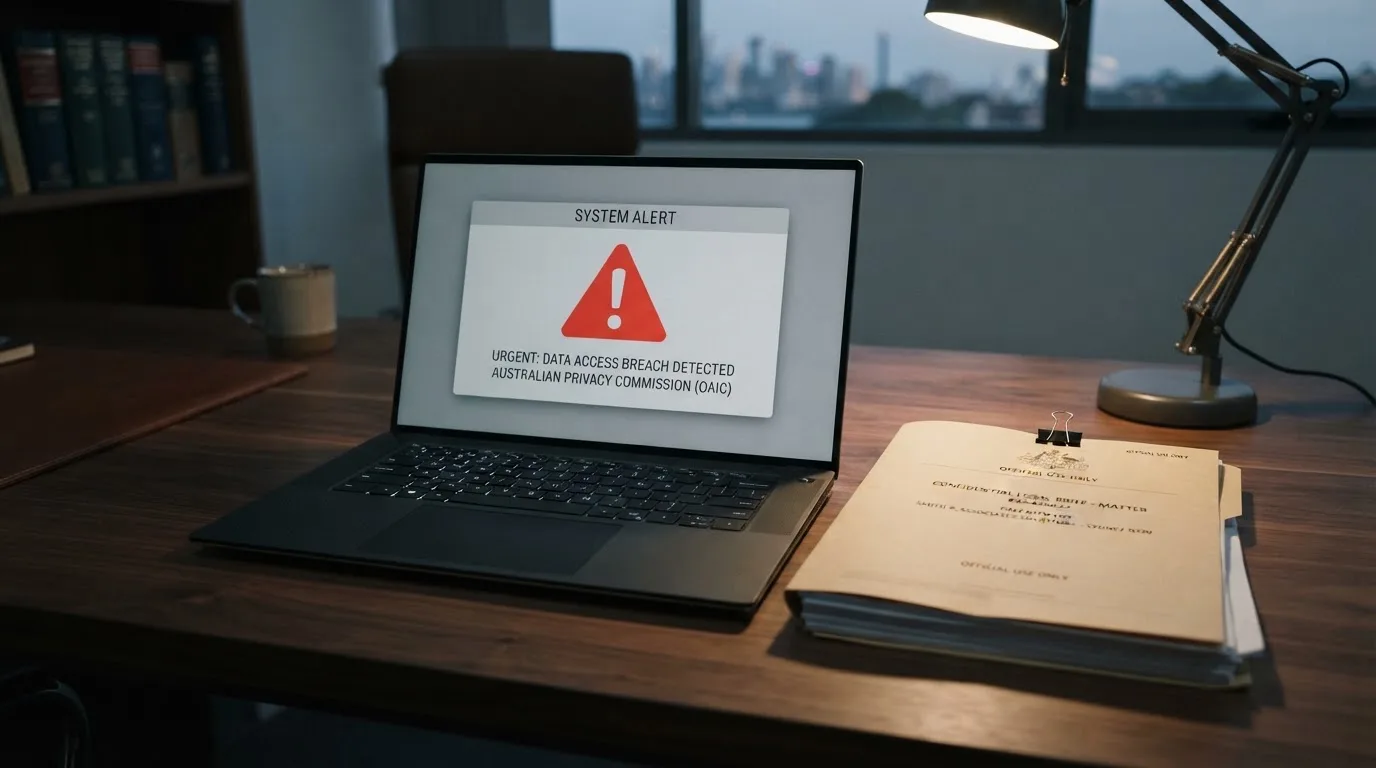
Online casino play — the product the bonus-buy slot lives in — is a prohibited interactive gambling service. The provider, not the individual player, is the target of the law: an Australian who opens an account with an offshore casino is not personally prosecuted, but they also have no Australian consumer protection if the operator declines a withdrawal, freezes funds or disappears. The site itself can be ordered blocked by the ACMA with money still on the player’s account.
Enforcement has accelerated since the 2017 amendments. According to the ACMA as reported in June 2026, a total of 1,751 illegal gambling and affiliate marketing websites had been blocked since the first blocking request in November 2019, and more than 230 unlicensed gambling services had left the Australian market since enforcement was strengthened in 2017. In the most recent round reported on 26 June 2026, the ACMA asked Australian internet service providers to block a further 12 illegal gambling websites: 7Signs, ChromaBet, Donbet, Duospin, Freshbet, Slots Gem, Jacks Club, Lucky Start, Pointsbetz, Spinrise, Vinyl Casino and Wildsino. H2 Gambling Capital’s 2025 report estimates that Australians lose about A$3.9 billion a year to illegal gambling sites, and that the share of gambling going through legal channels fell from 74% in 2021 to 64%.
The payment side of the prohibition matters as much as the offering side. Since 11 June 2024, credit cards, credit-related products and digital currency have been banned as a means of paying for licensed online wagering in Australia, with penalties of up to A$247,500 for operators. The legal deposit routes for licensed wagering are debit card, bank transfer, PayID, Osko and BPAY. An offshore site asking an Australian for a credit card or a crypto deposit is, by definition, operating outside the Australian rules — and by the same token, an Australian who uses one of those methods to fund an offshore casino account is using a payment instrument the licensed market is not allowed to extend.
The reform picture is moving. The Interactive Gambling Amendment (Gambling Reform) Bill passed Parliament on 19 August 2026; its advertising and inducement measures commence on 1 January 2027. That is law with a start date, not yet in force on a 2026 page — but it is law that has passed, and the bonus-buy slot’s positioning as an inducement sits squarely on what the new statute addresses.
The picture is reinforced by the formal warnings that sit underneath the blocking. A formal warning under the IGA is a written notice from the ACMA to a named operator that the regulator believes the named service is a prohibited interactive gambling service being supplied to Australians. It is not a prosecution, but it is on the public record. Each of the eleven brands in the comparison table has received at least one such warning. A second warning to the same operator, or a warning over a successor brand, signals that the earlier warning did not move the operator off the Australian market.
The tax side of the picture closes the loop. Gambling winnings of a recreational player are not assessable income in Australia (section 6-5 of the Income Tax Assessment Act 1997), and losses are not deductible — unless the person carries on a business of gambling. The Australian Taxation Office’s published position is to treat most players as recreational. Offshore gambling winnings are not subject to Australian tax by default, but the offshore operator may withhold at source; an Australian player has no local tax agent to query the withholding, and no Australian Tax Office ruling to point to. That is another silence in the offshore picture.
This is why the comparison earlier looks the way it does. The product is prohibited; the regulator names operators; the operators change corporate vehicles and re-enter. Reading the table as a list of “providers to consider” is exactly the inversion the ACMA’s enforcement record was assembled to prevent.
Help, Self-Exclusion, and Where the Local Safety Net Stops
The Australian safety net for someone whose gambling is becoming a problem runs through three named channels. The National Gambling Helpline is 1800 858 858 — free, confidential, 24 hours a day. Gambling Help Online provides web chat and counselling online. BetStop, the National Self-Exclusion Register, has been live since August 2023, and lets a person exclude themselves from every Australian-licensed online and phone wagering service at once.
Each of those channels has a limit. The helpline is open to anyone, anywhere, and there is no Australian residency requirement to use it. BetStop is the channel that has a boundary. The register binds only Australian-licensed online and phone wagering services. An offshore casino is not connected to BetStop, will not see an exclusion, and is under no obligation to honour one. A person who has registered with BetStop and then opens an account with an offshore casino has, in practical terms, self-excluded from the licensed half of the market while remaining on the offshore half. The mechanism is exactly as strong as the boundary it stops at.
For a person whose gambling has tipped into compulsion or stress — the kind of situation these tools exist for — the practical first move is the helpline, not BetStop. BetStop helps the second move, the one that follows. Both are free. Both are confidential. Neither requires the person to have stopped gambling yet, or to be sure they have a problem in any formal sense. They are tools, and they sit alongside one another rather than in sequence.
What they cannot do is reach the offshore site that holds the player’s account. If the player’s account is on an offshore casino, the Australian tools do not touch the money there, do not see the account, and cannot enforce a withdrawal stop. The only lever that operates on the offshore site at all is the ACMA’s blocking power, which addresses the site rather than the individual. This is one of the clearest reasons the rest of the writing reads the way it does: the only path on which every Australian player protection operates is the licensed path, and the product this is about sits off it.
The framing matters because the offshore marketing tends to suggest otherwise. An offshore site will often display its own “responsible gambling” page, with deposit limits, time-outs and self-exclusion buttons, on the same interface as the games. None of those controls are connected to an Australian register, and there is no Australian regulator checking that they operate as described. The Australian tools work on the Australian-licensed side of the divide. The offshore controls are exactly what the offshore operator chooses to enforce, and nothing more.
The most useful test for a reader is whether the tool they are looking at sits inside the Australian system. BetStop does. The 1800 number does. Gambling Help Online does. A “responsible gambling” button on an offshore casino page does not, in the Australian sense, however prominently it is displayed. That is the boundary the section sits at: the help exists, the help is real, and the help stops at the licensed edge of the market. The boundary is not a defeat of the help; it is a description of where the help lives.
The Eleven Brands: ACMA Warnings, and What Each One Tells You
The eleven brands below are listed because the ACMA has issued a formal warning against each one for offering prohibited interactive gambling services to Australians. They are not listed as places to play, and the descriptions below do not extend an offer. Each write-up states what the regulator named, when, and under which corporate vehicle; the verdict at the end of each is the only judgement the writing makes.
The order is the order the research sets out; the language is what follows. The brand name in each heading is shared across the pack; the subtitle differs by site.
RocketPlay — Two ACMA Warnings Under Two Parent Companies
RocketPlay’s entry in the ACMA’s enforcement record is unusual: it is the only brand in this set with formal warnings under two different parent companies. The first warning was issued in May 2022, covering RocketPlay alongside five other Dama N.V. brands. The second, in March 2026, was issued to Pulsup Ltd over Rocketplay specifically. The 2026 warning is the more recent public record; the 2022 warning sits underneath it.
For an Australian reader, what that history describes is not a fresh opportunity but a brand the regulator has had to engage with twice under two different corporate shells. The operator entity has changed between the two warnings; the marketing proposition has not. The site is still offered to Australian players, the underlying product is still prohibited, and the ACMA’s name on the record is twice now rather than once. The brand’s name has moved with the operator vehicle, and the regulator has had to move with it.
Research carries no documentation either way about whether the brand advertises bonus-buy slots to Australian players, so the no-data marker is what the column shows. The bonus-buy mechanic is what brought the searcher here in the first place; RocketPlay’s documentation on that question is, on the public record, silent.
Verdict: RocketPlay is the brand to mention when explaining what “operator cycle” means in this market — the regulator names a vehicle, the vehicle changes, the site returns. There is no reading of this entry that places the brand on a recommended list. For a reader comparing the table, the warning history is the only signal it carries, and the signal points one way.
Level Up Casino — One of Six Dama N.V. Brands Caught in May 2022
Level Up Casino was one of six brands named in a single ACMA formal warning issued in May 2022 to Dama N.V. The warning covered Bambet, Dazard, Level Up, Rocketplay, Wild Tornado and Cobra Casinos — the only time in this set where one operator’s action pulled in six brands in a single notice. None of the other five appear here, which is a deliberate narrowing rather than an oversight: the writing restricts itself to the brands the research set out to cover.
Level Up’s own footprint is wider than its warning. It appears in the Bgaming provider directory, which is what the listings-only column reflects. That listing tells the reader the brand is connected to bonus-buy-eligible game libraries in a third-party sense — Bgaming is a known provider of feature-buy slots offshore — but it does not confirm that the brand offers the feature to Australian players specifically. The ACMA’s warning is about the offering of prohibited services to Australians generally. The directory entry is about what the game library contains. Neither addresses the other.
Verdict: Level Up is the brand that ties the Dama N.V. 2022 cluster together for this writing, and the only one of the six that the listings-only column has anything to attach to. The bonus-buy reader gets a name on a directory; the ACMA warning is what the directory entry sits underneath. The reader looking for the feature gets a partial trail; the reader looking for legitimacy gets nothing.
Woo Casino — Dama N.V. Returned to in March 2025
Woo Casino sits in the second batch of Dama N.V. warnings the ACMA issued, in March 2025 — three years after the 2022 cluster. Dama N.V. is therefore not a single-event operator on the ACMA’s record; it is a parent company the regulator has had to engage with twice in this market. The 2025 warning over Woo Casino was the first of two Dama N.V. warnings that year; the second, in May 2025, was over Spirit Casino and is covered below.
For an Australian reader, the Woo Casino entry is the case for what a “second warning” looks like in practice. It is not a prosecution; it is not a new sanction. It is the regulator’s written record that the earlier warning did not move the brand off the Australian market, and that the brand is now on the ACMA’s public record a second time. The first warning sat on the file for three years before the second had to be issued; the second tells the reader what the first did not achieve.
Research carries no documentation about bonus-buy slot coverage for Woo Casino specifically. The no-data marker is therefore what the table shows for the brand’s feature-buy status.
Verdict: Woo Casino is the marker on the Dama N.V. record that says “the first warning did not stick”. It is a brand to read alongside Spirit Casino for the picture of what two warnings in thirteen months look like, not a brand to read against the rest of the market for any other reason. It is a description of regulatory patience, not of an offer.
Spirit Casino — The Second Dama N.V. Brand Warned in 2025
Spirit Casino is the second Dama N.V. brand the ACMA returned to in 2025, with the formal warning issued in May 2025. Read together with the March 2025 warning over Woo Casino, it gives the Dama N.V. footprint on this list its second 2025 entry — and the second occasion the regulator has had to use a fresh warning rather than rely on the first one having landed.
For a reader working through the eleven entries, Spirit Casino is the closure of the 2025 Dama N.V. pair. It does not introduce a new theme; it confirms one. The pattern across the two entries is the regulator coming back to the same parent company twice in thirteen months, with two different brand names attached. The thirteen months is itself a data point: a regulator that wrote a warning in May 2022 wrote a second warning in March 2025, and then a third in May 2025.
Research carries no documentation about bonus-buy slot coverage for Spirit Casino specifically, and the no-data marker is what the table shows for the brand’s feature-buy status. Spirit Casino’s role in this comparison is to round out the Dama N.V. record, not to test any other claim.
Verdict: Spirit Casino is the brand that closes the 2025 Dama N.V. loop. It is the entry to point to when the regulator’s first warning did not move an operator off the market and the second warning had to be issued. It is not an entry on which to base a comparison of any other kind.
National Casino — The Consolutetish S.R.L. Property With a Wikipedia Footprint
National Casino is one of three brands the ACMA named in a single July 2025 warning issued to Consolutetish S.R.L., which also covered Bizzo Casino and Ignition Casino. The three brands together made the July 2025 action one of the larger single-operator warnings on the ACMA’s record for this market.
National Casino’s entry in the table carries the listings-only marker because the brand has a Wikipedia entry that names it. That listing does not confirm that the brand offers bonus-buy slots to Australian players — it confirms only that the brand has the kind of third-party notability that produces a Wikipedia entry at all. For a reader, that means the brand sits in the listings-only column rather than the no-data column, but the distinction is documentary, not endorsemental. A Wikipedia entry is an encyclopaedia mention, not a regulatory clearance.
For the comparison itself, National Casino’s role is to be one of three Consolutetish S.R.L. brands on the list, and the only one with a third-party listing that research picked up. The other two — Bizzo Casino and Ignition Casino — sit in the no-data column for their bonus-buy coverage. The listings-only column is not the wider column; it is the narrower one.
Verdict: National Casino is the entry to read for what a third-party listing actually carries in this market: a brand name on a reference page, not a confirmation of any feature the player came looking for. It is also the first of three Consolutetish S.R.L. entries the reader will meet, and the only one of the three whose column carries anything at all.
Bizzo Casino — Warned Twice Over Four Years
Bizzo Casino is the brand the ACMA has returned to twice. The first warning was issued in 2022, to TechSolutions (CY) Group Limited and TechSolutions Group N.V. The second, in July 2025, was to Consolutetish S.R.L. The corporate entity has changed between the two warnings; the brand name has not.
For an Australian reader, Bizzo Casino is the clearest example on this page of what “operator cycle” looks like inside a single brand. The ACMA named the brand in 2022; the brand continued to be offered to Australian players; in 2025 the regulator had to name it again, this time under a different parent company. The pattern is the same as RocketPlay’s, except that the brand name persisted while the corporate shell changed. The brand and the corporate shell are not the same thing; the regulator’s record names them separately, and the gap between the two warnings is the gap between the two shells.
Research carries no documentation about bonus-buy slot coverage for Bizzo Casino specifically. The no-data marker is therefore what the table shows for the brand’s feature-buy status.
Verdict: Bizzo Casino is the entry to read for what the same brand looks like under two different parent companies. It is the entry on this page most likely to surface as the answer when an Australian asks why the ACMA’s enforcement record feels repetitive. It is not a brand to compare on any other axis.
Ignition Casino — The Bamboo Media Property Pulled in July 2025
Ignition Casino sits under the ACMA’s July 2025 warning issued to Bamboo Media. It is one of three brands caught in the wider July 2025 enforcement round that month — alongside National Casino and Bizzo Casino under Consolutetish S.R.L. The Ignition Casino warning is the only one of the July 2025 actions that goes to Bamboo Media, a different operator entity to the Consolutetish S.R.L. pair.
For a reader, that distinction matters because the ACMA’s enforcement picture in July 2025 was not a single action against one operator. It was two actions, against two different parent companies, covering three different brands. Ignition Casino is the brand the Bamboo Media warning caught; it is not the brand the Consolutetish S.R.L. warnings caught. Treating the three as a single event would collapse the distinction the regulator itself drew.
No reliable data exists on the brand’s bonus-buy coverage.
Verdict: Ignition Casino is the brand to read for what the Bamboo Media portion of the July 2025 enforcement round looked like. It is the third of three Consolutetish or Bamboo-Media-branded entries the reader meets, and it is the only one of the three that sits under a different parent company to the other two. The operator picture is more crowded than a single month suggests.
Instant Casino — The EOD Code SRL Brand Warned in February 2025
Instant Casino sits under the ACMA’s February 2025 formal warning issued to EOD Code SRL. It is the only brand on this list whose warning was issued to that operator entity — every other warning on the list goes to a different corporate vehicle.
For a reader, that makes Instant Casino the entry that breaks the cluster pattern in this set. Most of the warnings on this page sit in small clusters (Dama N.V. 2022, Dama N.V. 2025, Consolutetish 2025); Instant Casino sits alone, in the only warning the ACMA issued to EOD Code SRL that this writing picks up. The brand is named in the warning; the operator entity behind it has no other brands on this list. The lone-warning shape is not better or worse than the cluster shape; it is a different shape.
As noted, research does not document the brand’s bonus-buy coverage.
Verdict: Instant Casino is the brand to read for what a single-brand, single-operator warning looks like on the ACMA’s record. It is the entry to compare against the Dama N.V. and Consolutetish clusters when the picture starts to feel like the same parent company keeps surfacing. It is not an entry on which to base a comparison of any other kind.
Jackbit — Caught Alongside CasinOK in the April 2026 Action
Jackbit sits under the ACMA’s April 2026 formal warning issued to Ryker B.V. The warning named Jackbit and CasinOK in a single action. CasinOK is not on this list, which is a deliberate narrowing: the writing covers the brands the research set out to cover, not every brand the ACMA has named.
Jackbit is one of three brands on this list with a 2026 ACMA action date — alongside RocketPlay (March 2026) and the wider June 2026 blocking round. The April 2026 warning is therefore part of the same enforcement year as the warnings the regulator issued under Pulsup Ltd and the fresh round of blocking that pushed the cumulative total to 1,751. The “and counting” matters: 1,751 is the figure as reported on 26 June 2026, not a final tally.
As noted, research does not document the brand’s bonus-buy coverage.
Verdict: Jackbit is the brand to read for what a 2026 warning under Ryker B.V. looks like alongside the other 2026 entries. It is one of the most recent ACMA actions on this list, and one of two brands the regulator named in a single April 2026 notice. It is not a brand to compare on any other axis.
Casino Intense — The Sterplay Holding Brand Trade Listings Still Name
Casino Intense sits under the ACMA’s April 2025 formal warning issued to Sterplay Holding Ltd. The brand carries the listings-only marker in the table because research picked up its name across multiple third-party sources — ABC News reporting, the ACMA’s own records, and Crown Melbourne’s published baccarat listings (where the brand surfaces in some trade contexts but not as a venue). That last source is a trace of press coverage and reference listings rather than a partnership of any kind.
For a reader, the listings-only marker for Casino Intense is doing more work than the equivalent markers for Level Up or National Casino. Where those two reflect a single third-party source each (Bgaming, Wikipedia), Casino Intense reflects three sources that picked up the brand independently. The marker is not endorsement; it is a record of third-party mention. Three mentions are not stronger than one mention; they are three records of the name being circulated.
The bonus-buy question for Casino Intense is therefore the same as for the rest of the no-data entries on this list. Research carries no confirmation that the brand offers the feature to Australian players specifically. The listings tell the reader the name is in circulation; they do not tell the reader the feature is offered.
Verdict: Casino Intense is the brand to read for what “listings-only” looks like when several third-party sources mention the same brand. It is also the entry that the bonus-buy reader has the least documentary basis for, because none of the three listings the column reflects address the feature the reader came for. The reader comparing this list against the wider market gets the name; the reader comparing for the feature gets the silence.
Sky Crown — The Hollycorn N.V. Brand Warned Over a Sister Property
Sky Crown sits under the ACMA’s formal warning issued to Hollycorn N.V. The same warning covered Blue Leo as a sister property; Blue Leo is not on this list. Hollycorn N.V. is therefore a parent company with one of its two warned brands on this page.
Sky Crown is also the earliest brand on this list by ACMA action date — September 2022 — which puts the Hollycorn N.V. warning roughly contemporaneous with the Dama N.V. cluster the same year. The Sky Crown entry is the only one from before the May 2022 Dama N.V. action. The September 2022 date is also the date that gives Sky Crown the longest gap between warning and the current year on this list.
For a reader, Sky Crown is the brand that anchors the earliest end of the warning timeline on this page. The other 2022 warning, the May 2022 Dama N.V. action, sits alongside it. Three years on, both warnings still apply.
As noted, research does not document the brand’s bonus-buy coverage.
Verdict: Sky Crown is the brand to read for what the ACMA’s enforcement record looked like at the earliest point on this list. It is the entry with the longest gap between warning and the current year — three years and counting — and the only Hollycorn N.V. brand here. It is not an entry on which to base a comparison of any other kind.
What the eleven entries show, taken together, is not a list of “the best” anything. It is a list of the brands the regulator has had to engage with, sometimes more than once, sometimes under new corporate shells. Reading the entries as a comparison of who offers the best bonus-buy experience is to read the ACMA’s enforcement record upside down. The comparison that does hold is the comparison the regulator makes itself: which parent companies keep surfacing, which brand names persist across corporate shells, and which years the regulator had to widen the warning list. A reader working through the table in the order it sits in is working through that comparison; a reader looking for a recommended operator is reading the wrong list.
How Fast the Blocks Have Come: The Blocking Rate Since 2019
Between November 2019 — when the ACMA made its first blocking request to Australian internet service providers — and June 2026, the regulator asked ISPs to block a total of 1,751 illegal gambling and affiliate marketing websites. Spread across the seventy-nine months or so that the regime has been running, that comes out at an average of roughly 22 sites a month, or close to 266 a year.
That figure is a long-run average, not a steady cadence. The blocking requests do not arrive at a fixed monthly rate; they come in rounds, sometimes several in a month, sometimes none. The June 2026 round added a further 12 websites (7Signs, ChromaBet, Donbet, Duospin, Freshbet, Slots Gem, Jacks Club, Lucky Start, Pointsbetz, Spinrise, Vinyl Casino and Wildsino). Earlier rounds added similar batches, sometimes larger. The monthly average smooths those spikes out. The actual month-by-month count varies from a low of zero to a high that runs well into double digits.
Stated as a band with the condition attached, the blocking rate sits between roughly 22 and 23 sites per month, depending on which end of the 79-month window is used; over a full year it averages out to somewhere in the 260-to-275 band. The 230-plus services that have left the Australian market since 2017 are not part of the same arithmetic — those are voluntary exits, not blocks — but they move the picture in the same direction, and the A$3.9 billion annual estimate to illegal sites sits behind both.
What the rate shows is not that the regulator is winning or losing the war against offshore sites. It shows that the supply side keeps moving: as fast as the ACMA names a batch, the next batch of operators, affiliate sites and re-launched brands is on its way. H2 Gambling Capital’s 2025 estimate — A$3.9 billion a year to illegal sites, with the legal channel share falling from 74% in 2021 to 64% — sits behind that picture. The blocking regime is the visible front of an enforcement approach that has not, on its own, stemmed the flow of Australian players offshore.
What the rate does not show is the human cost behind it. The 1,751 sites blocked since November 2019 represent a sequence of moments in which an Australian account on an offshore site lost access to its balance with no warning and no Australian consumer protection to fall back on. The arithmetic is the regulator’s; the experience is the player’s. None of the 1,751 figures carried the account balance that disappeared with the site.
The picture is the one the writing has been building toward. The product is prohibited; the regulator enforces; the supply side replaces what was named; the player on the offshore site sits outside the safety net. None of those four facts is new. The blocking rate is the way they combine over time: roughly 22 names a month for seventy-nine months, and the next batch already in the queue.
Common Questions About Bonus Buy Slots in Australia
How does the bonus-buy feature actually work?
A bonus-buy slot exposes a button that lets the player pay a fixed multiple of the stake to trigger the bonus round immediately. The slot’s RTP does not change. Variance does: one large wager replaces many small ones. The feature exists in offshore online slots, not on Australian-licensed land-based pokies, which run on fixed paytables approved by state regulators.
Is bonus-buy slot play available on any licensed land-based pokie in Australia?
No. Australian pokies — 87,298 machines in NSW alone as of June 2023, and equivalent figures for every other state and territory — operate on a fixed paytable approved by state regulators. None has a “buy feature” button. Bonus-buy is an online-only construction, and online casino games are prohibited under the Interactive Gambling Act 2001.
Why have some overseas regulators restricted or banned bonus-buy features?
The UK Gambling Commission and several other regulators have restricted the feature on player-protection grounds. The concern is that bonus-buy concentrates loss potential into fewer, larger wagers, accelerating the pace at which a session can deteriorate. Some jurisdictions have limited the stake at which the feature can be offered, restricted it to over-18s, or removed the feature from some markets.
Does buying a bonus round change the underlying odds of that slot’s bonus game?
No. The published RTP for the bonus round is, in most cases, the same whether the round was triggered naturally or bought. The two paths through the slot lead to the same game. What the bonus-buy button changes is the speed at which the player loses their bankroll — one wager and one result replaces the long wait.
Can an offshore site legally offer bonus-buy slots for real money to Australians?
No. Online casino games cannot be licensed in any Australian state or territory. The Interactive Gambling Act 2001 makes offering them to Australians an offence, with the provider — not the player — as the target. The site can be blocked by the ACMA, and an Australian account can lose access to its balance with no warning and no local consumer protection.