
Best new Australian online pokies 2026 — and why the shortlist most readers expect cannot exist
A reader typing “best new Australian online pokies 2026” wants a working list of online casinos to try this week. The Australian market cannot honestly produce one. The Interactive Gambling Act 2001 prohibits offering online casino games — including online pokies — to anyone in Australia, and no state or territory issues the licence that would legalise them. Every brand a search engine puts at the top of a “best new pokies” page is operating outside Australian law. The honest answer is what follows: the legal landscape, the safeguards a player can still use, what the ACMA has been doing about it, and where a person in Australia can lawfully play a pokie.
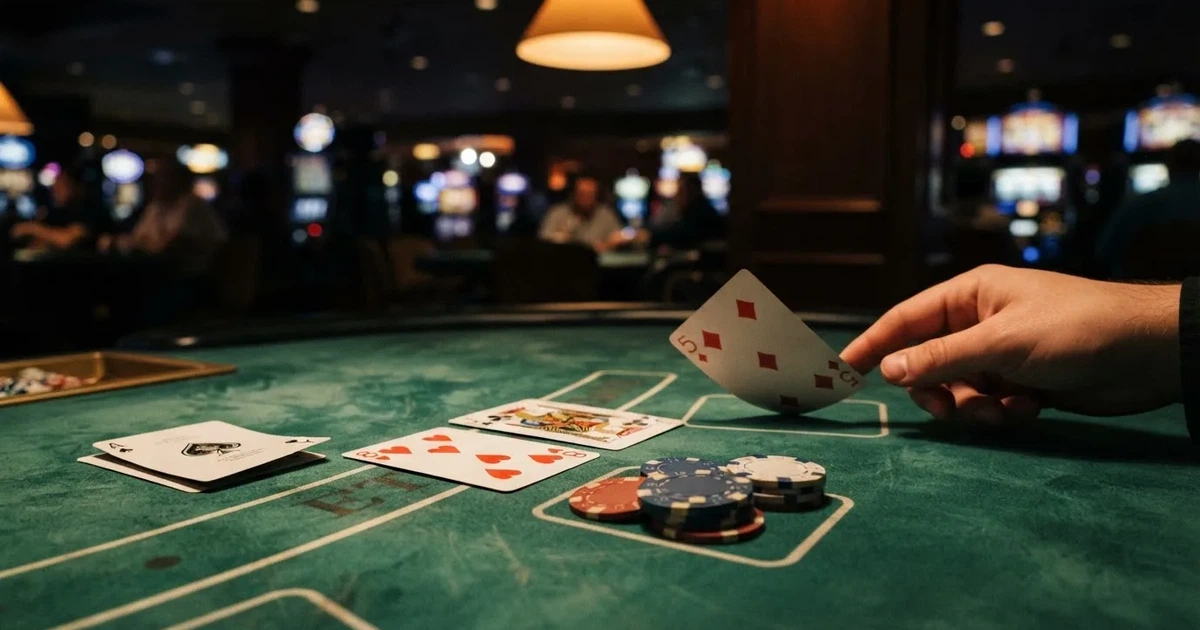
Current as of 29 October 2026. Licence claims and ACMA action verified against the Australian Communications and Media Authority register and the regulator’s published formal-warning notices.
Table of Contents
- The law that makes the shortlist impossible: how the Interactive Gambling Act shapes every “new pokies” page
- Player safeguards that do work in Australia — what BetStop covers and what it doesn’t
- PayID, BPAY and the routes an Australian can actually use — and why credit cards are off the table
- Gameplay detail a reader would normally want — paytables, providers and live tables
- The brands the ACMA has formally warned — what the regulator has actually done
- How each brand on the ACMA’s list ended up there
- The honest shape of “new pokies” for an Australian in 2026
- What an Australian reader should take from this
- Frequently asked questions
The law that makes the shortlist impossible: how the Interactive Gambling Act shapes every “new pokies” page
The Interactive Gambling Act 2001, strengthened by the Interactive Gambling Amendment Act 2017, makes it a civil offence to provide an online casino game, an online pokie or in-play betting to a person physically in Australia. The “interactive gambling service” it prohibits is defined broadly: anything interactive that takes bets over the internet on a game of chance or a sporting event after the event has started. A new pokie release on an offshore site, hosted abroad, licensed in Curaçao — that site is committing the offence, not the punter. The law targets the provider.

What can be licensed is narrower than the marketing makes it sound. The list covers wagering on races and sport placed before the event, lotteries and keno. In practice, most online bookmakers serving Australia — Sportsbet, Bet365, Ladbrokes — are licensed in the Northern Territory through the Northern Territory Racing and Wagering Commission, partly for tax reasons. The NTRWC has no full-time staff and meets once a month in Darwin. Casino games, table games, online pokies, live dealer roulette, blackjack and baccarat are not on the licensed list, anywhere in the country.
The legal minimum return-to-player on a poker machine, the figure that governs how much of every dollar wagered is returned to players over the long term, varies by state. It is 85% in New South Wales, the Northern Territory, Queensland and generally in Victoria (87% at Crown Melbourne), 87% in the Australian Capital Territory and Tasmania, 87.5% in South Australia and 90% in Western Australia — the last figure is moot for most readers, because Western Australia banned poker machines in pubs and clubs when Crown Perth opened in 1985. The RGTP floor is the law’s quiet admission that the house always takes a cut, and that the size of that cut is something each jurisdiction decides for itself.
Paytable, RTP and the figures a “new pokies” review normally leads with
The expected return on a pokie is set by its paytable and the regulatory ceiling above it. A 90% machine in Western Australia pays out, on average across its operating life, ninety cents of every dollar wagered; the remaining ten cents is the gross margin the operator retains. A 87% machine at Crown Melbourne pays out eighty-seven cents and keeps thirteen. The percentage is a long-run average across millions of spins; on any given session the actual return can be anything from zero to many multiples of the stake.
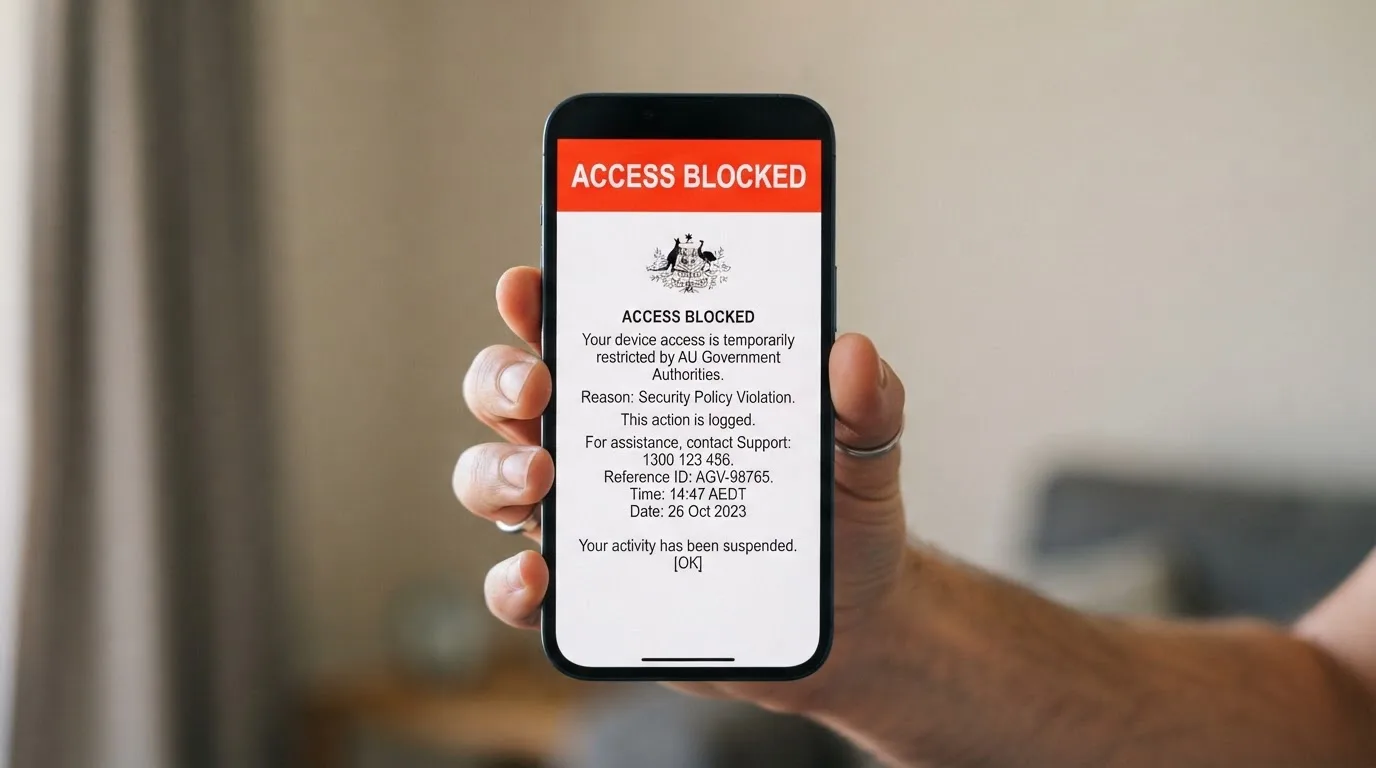
That is the same arithmetic the offshore “new pokie” review uses, just running on a platform whose existence the IGA forbids. A pokies review written from Australia, recommending an offshore brand, is recommending a service the law says cannot be provided. The percentages and the bonus terms may be real; the act of offering the game to an Australian is not.
Player safeguards that do work in Australia — what BetStop covers and what it doesn’t
The legal prohibition does not leave a person who is struggling without tools. It leaves them with tools the offshore casino does not honour.
BetStop, the National Self-Exclusion Register, has been live since August 2023. Registration is free and binds every Australian-licensed online and phone wagering service to honour the exclusion — bookmakers, the racing and sports operators, the lotteries. What it does not bind is any offshore casino: a Curacao-licensed site that takes bets from Australia is not connected to BetStop, ignores any Australian self-exclusion request and offers no equivalent register a person could sign up to. The exclusion mechanism is national; the gap in it is the offshore sector itself.
Minimum age is 18 across every Australian jurisdiction. The National Gambling Helpline, 1800 858 858, is free, runs 24/7 and connects to Gambling Help Online, which also offers web chat. A self-exclusion from BetStop can be set for periods from three months to a permanent exclusion. A person signing up for BetStop is also excluded from wagering marketing — licensed operators must remove them from promotional contact.
The 2026 reform agenda, the Interactive Gambling Amendment (Gambling Reform) Bill 2026, passed Parliament on 19 August 2026. Its advertising and inducement measures commence 1 January 2027. It is law with a start date, not yet in force; on a 2026 page the change is announced, not operating. Anyone reading this in 2027 will see the new rules apply, and a separate review of the inducement regime is the lever the government is using to make licensed wagering less aggressive in its marketing.
What an offshore casino does not give an Australian player
The set of consumer protections a person gives up by playing offshore is the entire set a licensed Australian operator must provide:
- no Australian complaints body for a refused withdrawal
- no BetStop coverage — exclusion does not stop an offshore site
- no Australian Consumer Law recourse
- no guarantee the site will still exist when the punter asks for a payout
- no protection if a site’s terms change mid-session
- no pathway through the ACMA other than the complaint that triggered the original investigation
That last point matters for what follows. The ACMA’s enforcement is on the provider, not on the player; an Australian who has lost money on an offshore site can lodge a complaint, but the ACMA’s action against the provider does not refund the player.
PayID, BPAY and the routes an Australian can actually use — and why credit cards are off the table
Licensed Australian wagering accepts a defined set of deposit methods. Debit card, bank transfer, PayID/Osko and BPAY are the legal channels. Since 11 June 2024, credit cards, credit-related products and digital currency are banned as payment for licensed online wagering; the penalty for an operator that accepts them can run to $247,500. The rule covers digital currency — the cryptocurrency route that offshore casinos used to promote is closed for the licensed Australian market.
PayID/Osko is the fast-settlement option: a deposit or withdrawal moves through the New Payments Platform, usually within seconds, between participating Australian banks. For a person funding a licensed bookmaker account, PayID is the route that takes the friction out of the round trip. For an offshore pokie site, PayID is irrelevant — the site does not accept it, and a person routing a deposit through PayID to an offshore operator is the customer of an unlicensed service regardless of the payment rail.
The deposit side and the payout side are not the same question, and a “fast payout” claim on an offshore site is rarely a verified claim. Some sites quote settlement times in business hours; some quote them in days; the actual time depends on the operator’s bank, on its anti-money-laundering checks and on whether the site pays at all. A withdrawal delayed past the quoted window has no Australian body to appeal to. The licensed alternative has Australian dispute resolution and the AFCA route through the operator’s nominated EDR.
Why an offshore “instant withdrawal” promise is hollow for an Australian
An Australian bank will process an inbound transfer from an offshore entity in accordance with Australian anti-money-laundering rules, which means name matching, source-of-funds questions on large sums and occasional holds. An offshore site promising “instant” PayID withdrawal is either misrepresenting what PayID does (it does not reach an offshore account) or routing through an intermediary, both of which add friction. The fastest payout a person can reasonably expect from an unlicensed offshore casino is several business days, and that is before the operator’s own pending period.
The deposit limit that matters for a person playing any licensed Australian wagering is the operator-set deposit cap, not a statutory ceiling. BetStop sets the exclusion; the operator sets the deposit cap; the bank may decline a transaction above its own monitoring threshold. None of these stops a person from opening an account with an offshore site, which is the gap the IGA leaves for the player’s own safeguards to fill.
Gameplay detail a reader would normally want — paytables, providers and live tables
A “new pokies” review, properly written, leads with the mechanics. The paytable is the central document: the value of each symbol, the payout for combinations, the scatter and wild rules, the free-spins trigger, the bonus round and any progressive jackpot path. The volatility class — low, medium or high — describes the pattern of returns: low volatility pays small amounts often, high volatility pays larger amounts rarely. The RTP figure, the long-run return to player, sits somewhere between the statutory minimum and 100%, with most modern online pokies clustering in the 94–96% range. Each game shows a hit frequency and a maximum exposure, and the difference between two pokies at the same RTP is almost entirely volatility and feature density.
For an Australian reader the working answer is that none of these mechanics are licensed for online play. The mechanics exist on offshore sites, the providers behind them are real studios — Pragmatic Play, BGaming, NetEnt, Microgaming, Push Gaming, Hacksaw Gaming, Play’n GO — and the games are tested by independent laboratories (GLI, eCOGRA, iTech Labs) before release. The product is licensed in jurisdictions that permit it; Australia is not one of them.
Baccarat on the licensed side: where the game actually lives
For table games, the working answer in Australia is land-based. Crown Melbourne offers three baccarat variants — Traditional Baccarat, Crown Baccarat and 2 to 1 Baccarat — as approved table games regulated by the Victorian Gambling and Casino Control Commission, the body that replaced the VCGLR as Victoria’s casino regulator on 1 July 2022. The house edge is 1.06% on the Banker bet, 1.24% on the Player bet and 14.36% on the Tie. Cards 2 to 9 count at face value, 10, J, Q, K count as zero, and aces count as one, with hand totals taken modulo 10; punto banco, the variant most played today, was developed in Havana during the 1940s and the casino banks the game at all times, playing out both hands by fixed drawing rules.
The baccarat section on an offshore site carries the same house edge and the same rules. The difference is that an Australian playing punto banco on a Curaçao-licensed site is committing the provider to an offence under the IGA. The rules of baccarat do not change between Crown Melbourne and an offshore site; the legality of offering it to an Australian does.
Blackjack, the closest licensed equivalent a player can find
Blackjack’s house edge with optimal strategy sits at about 0.28% under liberal Las Vegas Strip rules and about 0.43% under Atlantic City rules — the lowest house edge of any common casino game, which is part of why it persists on every licensed floor in the world. Blackjack’s immediate predecessor was the English game vingt-un; a related game called veintiuno appears in Miguel de Cervantes’ Rinconete y Cortadillo, written around 1601 to 1602, and formal rules were published in Britain in 1800. The game was renamed “blackjack” around 1899, with prospectors during the Klondike Gold Rush credited with the modern name.
Established blackjack variants include Spanish 21 (played without 10s but with liberal player-favourable rules), Double Exposure Blackjack (both of the dealer’s cards dealt face-up), Blackjack Switch (players can swap cards between two hands) and Super Fun 21 (allowing up to four splits). A licensed Australian casino running a blackjack floor offers a variant set and a rules sheet; an offshore site offering the same variants is offering an unlicensed service.
Australian land-based machines — the lawful context for any pokie
Poker machines — “pokies” — operate in every Australian state and territory, and each jurisdiction separately regulates their design and operation. In 2020–21 Australians bet almost A$150 billion through gaming machines and lost A$12.18 billion on them; Australia has about 3% of the world’s pub and club poker machines with 0.3% of the global population. New South Wales had 87,298 gaming machines outside casinos across 2,195 venues in June 2023, with player losses of A$8.18 billion in 2022–23. Queensland had 21,122 gaming machines operating in 351 venues in October 2023; Victoria had 26,380 outside Crown Casino in 488 venues in 2021–22 under a 30,000-machine statewide limit.
Registered clubs operated Australia’s first legal poker machines from 1956, in New South Wales. Tasmania planned nation-leading mandatory pre-commitment cards for its poker machines, but implementation of the reform was delayed until late 2025; the Federal Group held a monopoly licence over all of Tasmania’s poker machines from 1968, and legislation passed in November 2021 ended that monopoly, moving oversight of the machines to the Tasmanian Liquor and Gaming Commission. The legal pokies environment in Australia is mature, regulated state by state, and operating at scale. The online version of it is not licensed.
The brands the ACMA has formally warned — what the regulator has actually done
The honest list for “new Australian online pokies 2026” is not a ranking of offshore casinos to play at. It is the list of brands the Australian Communications and Media Authority has formally warned for offering prohibited services to Australians. The ACMA’s enforcement record is the only verifiable measure of which offshore brands a search engine has been steering Australians toward. Eleven brands carry formal warnings published on the regulator’s own register.
| Brand | ACMA action and date | Operator named by the ACMA | Subject support |
|---|---|---|---|
| RocketPlay | Formal warning, March 2026 (earlier Dama N.V., May 2022) | Pulsup Ltd (Rocketplay) | — |
| Level Up Casino | Formal warning, May 2022 | Dama N.V. | listed on BGaming |
| Woo Casino | Formal warning, March 2025 | Dama N.V. | — |
| Spirit Casino | Formal warning, May 2025 | Dama N.V. | — |
| National Casino | Formal warning, July 2025 | Consolutetish S.R.L. | listed on en.wikipedia.org |
| Bizzo Casino | Formal warning, July 2025 (earlier TechSolutions, 2022) | Consolutetish S.R.L. | — |
| Ignition Casino | Formal warning, July 2025 | Bamboo Media | — |
| Instant Casino | Formal warning, February 2025 | EOD Code SRL | — |
| Jackbit | Formal warning, April 2026 | Ryker B.V. | — |
| Casino Intense | Formal warning, April 2025 | Sterplay Holding Ltd | listed on the ABC News website, the ACMA website, and the Crown Melbourne website |
| Sky Crown | Formal warning (PDF published September 2022) | Hollycorn N.V. | — |
The brands cluster by operator more than by name. Dama N.V. carries four of the warnings on this list — Woo Casino, Spirit Casino, Level Up Casino and an earlier Rocketplay warning from 2022 — and Rocketplay has been re-warned through a different corporate vehicle in March 2026. Consolutetish S.R.L. took on National Casino and Bizzo Casino in July 2025, with Bizzo already carrying a 2022 warning issued to TechSolutions Group. The pattern is that offshore operators cycle through corporate names as warnings accumulate, which is exactly the structure the ACMA’s enforcement mechanism has to work against.
The card-level takeaways follow from the table. A person searching for any of these brands in Australia is looking at a service the regulator has already named. A person reading a “best new pokies” review that recommends any of them is reading a recommendation that the ACMA has actively rejected. A licence from Curaçao or any other jurisdiction does not authorise the offering of these games to Australians; what it does is license the offering in the licensing jurisdiction.
The blocking-rate calculation: how the ACMA’s pace has built up
The ACMA’s published figures are the audit trail. Since the first blocking request in November 2019, a total of 1,751 illegal gambling and affiliate marketing websites had been blocked as of the round reported on 26 June 2026. More than 230 unlicensed gambling services had left the Australian market since enforcement was strengthened in 2017. In a single round the ACMA asked Australian internet service providers to block 12 more illegal gambling websites — 7Signs, ChromaBet, Donbet, Duospin, Freshbet, Slots Gem, Jacks Club, Lucky Start, Pointsbetz, Spinrise, Vinyl Casino and Wildsino. That is one batch on one day in mid-2026.
The blocking rate, calculated across the period from November 2019 to the June 2026 round, lands at a pace of roughly 250 to 270 sites blocked per year on average, with the cumulative total running to 1,751. As a band: between 250 and 270 sites per year across the period, on the assumption that blocking continued at a roughly steady pace and that the count includes affiliate marketing pages as well as the gambling services themselves. The arithmetic does not produce one figure, because the running total is uneven across years — early rounds were smaller and the pace has lifted as the ACMA’s infrastructure has matured. The direction is one-way: more blocks each year, more operators exiting, more warnings issued. The list above is the slice the regulator has named, and the broader count of 1,751 sites is the depth the slice sits in.
How each brand on the ACMA’s list ended up there
Each entry on the regulator’s register is a discrete enforcement action. The wording below is what the ACMA published; the verdicts are the page’s reading of what the action means for a person considering the brand.
RocketPlay
Two formal warnings, separated by nearly four years. The first was issued to Dama N.V. in May 2022 covering six brands including Rocketplay; the second, issued to Pulsup Ltd for Rocketplay, was published in March 2026. The brand has cycled through a new corporate vehicle between warnings. The verdict: a brand with the longest enforcement history on this list, and the clearest demonstration that reincorporation does not reset the regulator’s file.
Level Up Casino
A May 2022 formal warning to Dama N.V., one of the six covered in that single round. The brand carries a presence on the BGaming platform listings, the only verifiable external trace research turned up. The verdict: a brand on the original Dama N.V. warning list, and one with no licensed operation in the country.
Woo Casino
A March 2025 formal warning to Dama N.V. The action was part of a renewed round against the operator’s portfolio in 2025, after the initial 2022 batch. The verdict: an extension of Dama N.V.’s enforcement file, demonstrating that the operator’s portfolio of brands is treated as a single corporate risk rather than as separate businesses.
Spirit Casino
A May 2025 formal warning to Dama N.V., following the Woo Casino action by two months. The verdict: the same operator, a different brand name, the same regulatory exposure. The 2025 pair of warnings is the regulator signalling that Dama N.V.’s re-entry into the Australian market after the 2022 warning was not tolerated.
National Casino
A July 2025 formal warning to Consolutetish S.R.L. The brand carries a listing on Wikipedia’s Australian gambling pages, the only verifiable trace outside the regulator’s own file. The verdict: a brand on a 2025 enforcement round, is not licensed in Australia, and has an operator name that did not previously appear on the ACMA’s file.
Bizzo Casino
Two formal warnings, with a three-year gap. The first, issued in 2022, went to TechSolutions (CY) Group Limited and TechSolutions Group N.V.; the second, in July 2025, went to Consolutetish S.R.L. The brand has cycled operators as well as reincorporating. The verdict: the second warning demonstrates that changing operator is also insufficient to reset the regulator’s file, and the ACMA tracks the brand, not just the corporate vehicle behind it at any given moment.
Ignition Casino
A July 2025 formal warning to Bamboo Media. The verdict: an operator that did not previously appear in the ACMA’s published enforcement actions, named in the same July 2025 round as National Casino and Bizzo Casino. The brand’s presence in the Australian-facing market has been documented by the regulator’s own investigation.
Instant Casino
A February 2025 formal warning to EOD Code SRL. The action preceded the mid-2025 batch against Dama N.V. and Consolutetish S.R.L. The verdict: an early 2025 enforcement action that prefigured the broader 2025 enforcement wave, and a brand on the regulator’s file for a full year before the second-round operators were caught.
Jackbit
An April 2026 formal warning to Ryker B.V., covering both Jackbit and CasinOK. The verdict: a recent enforcement action against a brand that was not on the regulator’s file before April 2026, and an operator with no other ACMA history on this list.
Casino Intense
An April 2025 formal warning to Sterplay Holding Ltd. The brand carries listings on the ABC News gambling coverage and on the ACMA’s own register, alongside Crown Melbourne’s baccarat page. The verdict: a brand on the regulator’s 2025 file, with no official standing in Australia.
Sky Crown
A formal warning to Hollycorn N.V. over Sky Crown and Blue Leo casino services, with the PDF published in September 2022. The verdict: the oldest warning still active on this list, issued before the bulk of the 2025 enforcement wave, and a brand that has been on the regulator’s file for the longest continuous period.
The honest shape of “new pokies” for an Australian in 2026
The category this search asks about does not exist as a licensed product in Australia. The substitutes are clear, and the page’s read of which substitute suits which reader is below.
A reader who wants the closest analogue to “new online pokies” can play the licensed land-based equivalent: a poker machine at a registered club in NSW, Queensland, Victoria or Tasmania, subject to each state’s rules. The titles on a club floor are not the new-release roster of an offshore studio; the gaming machine regulations in each state govern the title mix, and a new release must clear the state’s approval process before it appears on the floor. That is the design — a slower release cadence, on purpose, with regulator-set minimum RTPs.
A reader who wants the broader wagering catalogue that Australia does license should look at licensed bookmakers for racing and sport. Sportsbet, Bet365, Ladbrokes and others operate under NTRWC licences and offer a full wagering product. In-play betting is not part of that licensed product — the IGA prohibits in-play betting — but pre-event wagering on racing and sport is. A punter who wants to use PayID on a regulated deposit rail will find it at these operators.
A reader who is concerned about their own play, or someone else’s, should look at BetStop, the National Self-Exclusion Register, and at the National Gambling Helpline at 1800 858 858. BetStop is the only exclusion register that binds Australian-licensed operators; it does not bind offshore casinos, but registering does remove marketing contact from licensed operators, and the helpline is free, 24/7.
A reader who has already lost money to an offshore site can complain to the ACMA. The complaint contributes to the file the regulator builds against the operator and is the route through which brands end up on the warning list above. The ACMA does not refund individual losses, but the complaint is what makes the next round of enforcement possible.
The single figure that anchors the whole picture: as of June 2026, 1,751 illegal gambling and affiliate marketing websites had been blocked since November 2019. That is the depth of the gap between what the search results promise and what Australian law permits.
What an Australian reader should take from this
Three things, in order of consequence.
The first is that any “best new pokies” review recommending an offshore casino is recommending a service the ACMA has named as prohibited. The brands named in the regulator’s published formal warnings — the eleven on this page — are the brands most likely to be at the top of an Australian search result for the search. The marketing on those sites is not the relevant signal; the regulator’s enforcement record is.
The second is that the licensed alternative — wagering on racing and sport, lottery products, the licensed poker machines on a club or pub floor — is the only place Australian law actually protects a player. The protections are real: BetStop binds the operator, the AFCA dispute resolution route exists for licensed wagering complaints, the deposit rails are PayID, BPAY, debit card and bank transfer, and credit cards are banned.
The third is that the tax position is clean for a recreational player. Gambling winnings of a recreational player are not assessable income under section 6-5 of the ITAA 1997, and losses are not deductible, unless the person carries on a business of gambling. A person running a gambling business has a different tax position entirely. The model answer — “check with the ATO” — applies whenever the line between recreation and business is unclear.
The 2026 reform agenda, with advertising and inducement measures commencing 1 January 2027, will tighten the licensed wagering marketing environment further. The new rules do not legalise online casino games; they constrain the licensed wagering operators’ promotional conduct. The category the subject asks about remains prohibited on a 2027 page as it does today.
Frequently asked questions
How much do Australians lose on gaming machines in a year?
In 2020–21 Australians bet almost A$150 billion through gaming machines and lost A$12.18 billion on them — the figure is for licensed land-based machines. The offshore online estimate from H2 Gambling Capital’s 2025 report puts losses to illegal gambling sites at roughly A$3.9 billion per year, and shows the share of gambling going through legal channels falling from 74% in 2021 to 64%. The two figures together describe the licensed and unlicensed markets in turn.
What counts as a new pokies release versus an established one?
On a licensed Australian club floor, a new release is a title that has cleared the relevant state or territory regulator’s approval process — Liquor & Gaming NSW, the Queensland Office of Liquor and Gaming Regulation, the Victorian Gambling and Casino Control Commission and the equivalent bodies elsewhere — and is appearing on the floor for the first time. On an offshore site, “new” is a marketing label applied to any title that has not yet been rotated off the lobby carousel, regardless of how long it has been available. The licensed release cadence is slower by design; the offshore label is a promotional re-up.
Is it legal for an online casino to offer new pokies titles to Australians?
No. The Interactive Gambling Act 2001, strengthened by the Interactive Gambling Amendment Act 2017, prohibits offering online casino games, including online pokies, to anyone in Australia. The offence is committed by the provider, not the player; the licence the offshore site displays (typically Curaçao) authorises the operation in the licensing jurisdiction, not the offering of games to Australians. The ACMA’s enforcement record — formal warnings, blocking requests, the 1,751 blocked sites — is the regulator applying this prohibition.
Can a new pokies bonus be claimed through a PayID deposit?
PayID is a deposit method for Australian-licensed wagering services — debit-card-funded sports and racing bookmakers. It is not a deposit method offered by offshore online casinos, which use card payments, e-wallets and cryptocurrency. Since 11 June 2024 credit cards and digital currency are banned as payment for licensed online wagering; the legal deposit rails for licensed wagering are debit card, bank transfer, PayID/Osko and BPAY. A bonus claimed through any deposit on an offshore site is paid by an unlicensed operator and is not protected by Australian consumer law.
Are new pokies titles tested before they appear on licensed club or pub floors?
Yes. Each Australian jurisdiction’s regulator approves the title, the paytable and the operating rules before a poker machine can be deployed on a licensed floor. Independent testing laboratories — typically GLI, eCOGRA or iTech Labs — audit the game’s RNG and the published RTP. Offshore sites use the same laboratories to test the same games, but the testing is for the licensing jurisdiction, not for Australia; Australia has no equivalent approval process for online pokies because no such deployment is licensed.