
Best online casinos with big jackpot slots in Australia: the gap the law leaves behind
Currency stamp: 31 October 2026 · ACMA register, igamingbusiness.com, legislation.nsw.gov.au, vgccc.vic.gov.au.
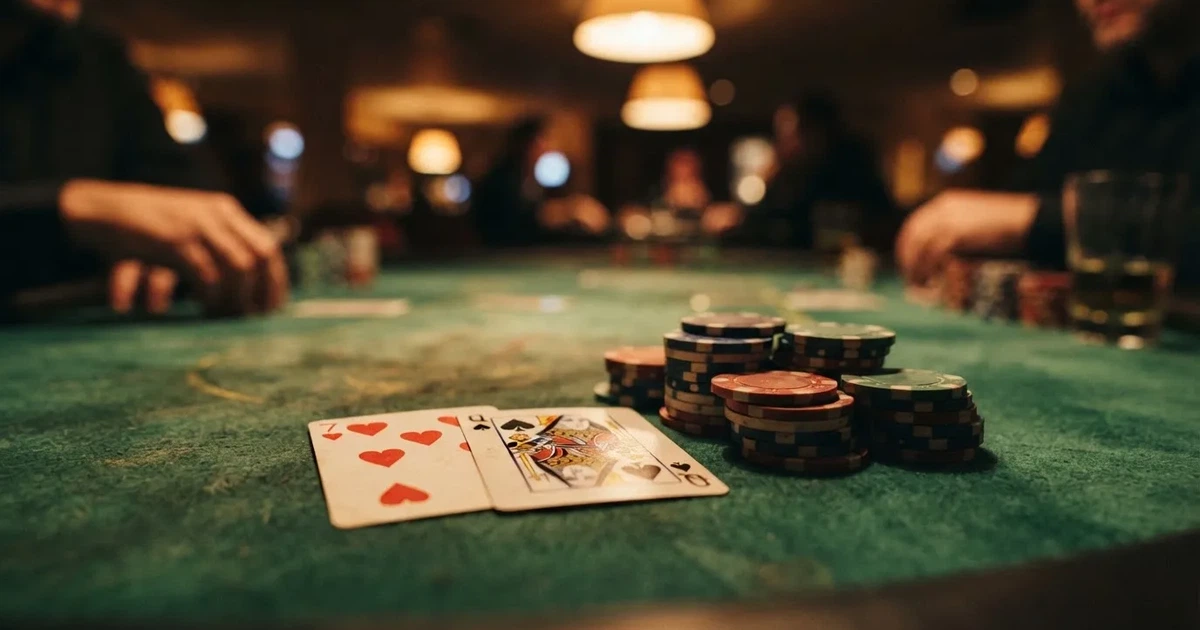
The headline question hides a simpler one. Anyone in Australia typing “best online casinos with big jackpot slots” is asking for a shortlist the page cannot honestly hand over, because offering online casino games to anyone in Australia is an offence under the Interactive Gambling Act 2001 and no state or territory licenses it. The honest answer is the gap itself: the catalog of offshore brands is long, the brands’ promises are loud, the legal status has not changed, and the practical options are a few — licensed wagering on races and sport, land-based pokies in clubs and casinos, and the BetStop register for anyone who wants out.
That is what this page is for. We work through how progressive jackpots are built and why they pay out the way they do, because the marketing never quite gets to the math. We lay out the Australian law, the ACMA’s enforcement record, and the eleven named brands the regulator has acted against most recently. And we name what a player in Australia can actually do this week.
Table of Contents
- How a progressive jackpot works and what it costs the player
- The Australian law and what the ACMA has actually done
- Responsible gambling: what an Australian can actually use
- The brands the ACMA has warned: eleven operators, in date order
- Brand write-ups
- What this page does for a reader in Australia
- Frequently asked questions
How a progressive jackpot works and what it costs the player
A progressive jackpot is a prize pool that grows with each losing wager until someone wins it, then resets to a fixed minimum and begins climbing again. The first progressive machines were installed in large casinos in 1986, and IGT’s Megabucks paid its inaugural jackpot of $4,988,842.17 on 1 February 1987. The mechanics have not changed much since: machines can be linked locally within one venue or across a wide-area network spanning many venues, and casinos fund the growth out of a portion of their own margin. The player is funding the pool in roughly that same proportion, every spin, every losing wager.

The big prizes get big for two reasons that compound. The base reset is set high — frequently four or five figures in real money — and every bet on every linked machine feeds the pool. That makes the headline number grow fast and the odds of hitting it grow long. A “must-hit-by” jackpot is the cleanest illustration: a random number generator sets the exact payout within a preset range (the example commonly given is A$1,000–A$3,000) immediately after the previous jackpot is won, and the player does not have to land a specific symbol combination to collect. The mystery jackpot exists so the game can advertise a hard ceiling; the cost is paid in millions of small losing spins.
The honest arithmetic of a progressive is unfavourable for almost every spin and theoretical-positive for the rare one. Because the pool grows out of a slice of house edge, the effective return on ordinary play is lower than the same game without a progressive; when the pool climbs past a threshold, the game’s theoretical return to player can briefly push above 100%, creating a positive-expectation bet. The break-even point is calculable for some games where the rules are public, but slot machines publish reel layouts as proprietary and the calculation collapses into an estimate. The market relies on that opacity. A reader who treats the headline jackpot as a return is treating marketing as math.
The reason jackpots pay out less often between big wins is that they are built to. A small percentage of every wager — fractions of a cent per spin on a cheap machine, more on higher-denomination games — feeds a pool that is only paid out when a rare combination lands. The longer the pool grows, the rarer the win becomes on a per-spin basis, because the operator keeps the per-spin funding rate constant. What changes is the size of the prize for the player who eventually does hit it. The pool and the odds are not independent; the odds are tuned to make the pool feel worth chasing.
That distinction matters when comparing a progressive slot to a table game in the same venue. A craps Pass Line bet has a house edge of 1.41% per roll, Don’t Pass 1.36%, Any Craps 11.11%; baccarat’s Banker bet is 1.06% and its Player bet 1.24%, with the Tie at 14.36%; blackjack with optimal play runs about 0.28% under liberal Las Vegas Strip rules and 0.43% under Atlantic City rules. None of those numbers match what a progressive slot extracts on the spins between jackpots. The progressive is selling a long-shot ticket funded by a permanent surcharge on ordinary play. That is the deal. It is not a comparable bet to a hand of blackjack; it is a lottery ticket with a lower base return and a much larger ceiling.
Why a progressive slot is not the same game as its base title
Take a slot with a published return to player of, say, 96%. Add a progressive contribution of a few percent, and the effective return on every spin that does not win the pool falls into the low 90s. The headline RTP becomes a number that applies only to the rare spin that also hits the jackpot. Marketing is happy to print the higher figure because it is technically the published RTP; the player who reads it as the expected return on a session is reading it wrong. The same machine, the same paytable, a different payout profile. The progressive changes the game without changing the name on the lobby.

Why a wide-area network can pay eight-figure jackpots
Link enough machines across enough venues, and the pool grows fast enough that the seven-figure prize is routine and the eight-figure prize becomes plausible. Microgaming’s Mega Moolah series is the textbook case: the record online slot jackpot is €19,430,723.60, won on 27 April 2021 by a player in Belgium on “Absolootly Mad: Mega Moolah” at Napoleon Sports & Casino. Games Global, the business that now distributes the Mega Moolah series, has since announced later wins of £11.5 million and £13.5 million. None of those record payouts changes the arithmetic on a single losing spin. They advertise the network and confirm that the pool can climb that high; they do not argue that the player will hit it.
Why the headline does not survive the math
A reader who treats a jackpot slot as an investment is paying a higher per-spin cost in exchange for a chance at a prize so rare that the expected value per spin is usually well below the same game without the progressive. The only case where the math turns is when the pool crosses the threshold where the theoretical return pushes above 100%, and that threshold is rarely published, hard to verify, and reached briefly before the pool resets. Every other spin is a negative-expectation bet at a higher margin than the comparable table game. The marketing reads “big jackpot”; the math reads “smaller return per spin”.
The Australian law and what the ACMA has actually done
The Interactive Gambling Act 2001 (IGA), strengthened by the Interactive Gambling Amendment Act 2017, makes it an offence to provide online casino games, online pokies or in-play betting to a person physically in Australia. What is licensable is wagering on races and sport placed before the event, lotteries, and keno. The Northern Territory Racing and Wagering Commission (NTRWC) is the regulator most offshore bookmakers list on their pages because the Territory licences wagering for tax reasons — Sportsbet, Bet365 and Ladbrokes are licensed in the Territory for that reason, and the commission has no full-time staff and meets once a month in Darwin. The same Commission does not license online casino games, because no Australian jurisdiction does. The page should say so plainly: no Australian licence for online casino games exists.
Enforcement runs through the ACMA. The Authority investigates complaints, issues formal warnings, and directs Australian internet service providers to block illegal sites. As reported in June 2026, a total of 1,751 illegal gambling and affiliate marketing websites had been blocked since the first blocking request in November 2019, and more than 230 unlicensed gambling services had left the Australian market since enforcement was strengthened in 2017. That is the regulator’s running total: thousands of blocking requests over six and a half years, hundreds of operators gone. The pace has been roughly 269 blocks per year on the long-run average, with the largest single round in the count being one of many — the ACMA issued more than a dozen such directions in a single round reported on 26 June 2026 alone.
The most recent round cited 12 more blocking requests, dated 26 June 2026: 7Signs, ChromaBet, Donbet, Duospin, Freshbet, Slots Gem, Jacks Club, Lucky Start, Pointsbetz.com, Spinrise, Vinyl Casino and Wildsino. That is the regulator’s weekly cadence at scale — twelve sites at once, in one published direction. The names change, the direction is the same. Sites that accept Australian customers without an Australian licence are added to the block list. Some disappear. Some resurface under a new domain. The list is long because the supply is long, not because any one site has done anything unusual.
The ACMA’s other lever is the formal warning, which it publishes against named operators and named brands. The formal warning is a public step before a blocking request: it names the operator, the brand, and the prohibited service, and it asks the operator to stop offering the service to Australians. The published list is the regulator’s own assessment of which offshore operators have crossed the line. The catalog is long because the supply is long. The page’s job is to put the recent ones beside each other, in date order, so a reader can see who has been warned, when, and over which brand.
H2 Gambling Capital’s 2025 report estimates that Australians lose about A$3.9 billion a year to illegal gambling sites, and that the share of gambling going through legal channels fell from 74% in 2021 to 64%. The math is its own commentary. The regulated channel is shrinking as a share of the market while the unregulated channel absorbs more than three billion dollars a year. The page is honest about which channel an offshore jackpot slot would sit in.
Payments: where the Australian rules draw a hard line
Credit cards, credit-related products, and digital currency are banned as payment for licensed online wagering since 11 June 2024. Penalties run to A$247,500 for operators. Legal deposit routes for licensed wagering are debit card, bank transfer, PayID/Osko and BPAY. A site asking an Australian customer for a credit card or a crypto deposit is operating outside the Australian rules; the payment method is itself a marker that the site is not licensed in Australia. The marker is not a hint — it is the regulator’s own list. A reader who sees a crypto deposit button on a jackpot slots site is looking at a site the ACMA has not licensed and cannot license.
The 2026 reform
The Interactive Gambling Amendment (Gambling Reform) Bill 2026 passed Parliament on 19 August 2026. Its advertising and inducement measures commence 1 January 2027. On a page written before that commencement, the bill is law with a start date, not yet in force. The reform tightens inducements and advertising around what is already prohibited; it does not open the door to online casino games. The slot machine offshore marketing that an Australian reader sees this week will still be prohibited next year; what changes is the penalty structure for the advertisers who flout it. The page notes the reform because the reader should know it is coming, and then returns to the question the reader actually asked.
Tax note
Gambling winnings of a recreational player are not assessable income under section 6-5 of the Income Tax Assessment Act 1997, and losses are not deductible, unless the person carries on a business of gambling. That is the model. For a reader who has won something offshore, the rule is “check with the ATO”, because the rule for professional gamblers is different and the line is not always clear.
Responsible gambling: what an Australian can actually use
The player-facing tools in Australia are built around licensed wagering and land-based venues, not offshore jackpot slots. The headline tool is BetStop, the National Self-Exclusion Register, which has been live since August 2023. BetStop binds Australian-licensed online and phone wagering services — a Sportsbet or a Ladbrokes, for example, but not an offshore casino. If a reader self-excludes through BetStop and continues to play at an offshore casino, the offshore site has no Australian licence to enforce against and BetStop has no lever to pull. The exclusion applies to the licensed channel only. That is the practical reach of the Australian self-exclusion tool.
For anyone reading this from inside Australia and wondering what the offshore option looks like from the consumer-protection side, the short answer is that there is none. An offshore site gives no Australian consumer protection, no complaints body, no local regulator to write to, and no recourse if a withdrawal is refused. The site can be blocked with a balance still sitting on it. A self-exclusion from BetStop covers the licensed channel; the same reader at an offshore site has only the site’s own policy and the site’s own discretion.
For help now, the National Gambling Helpline is 1800 858 858, free, 24/7, with chat at Gambling Help Online. The Helpline is run by the state and territory counselling services and is the right starting point for any reader who feels their play is getting ahead of them — at a licensed venue, at an offshore site, anywhere.
The brands the ACMA has warned: eleven operators, in date order
The eleven operators below are not a ranking and not a recommendation. Each is named because the ACMA issued a formal warning over it for offering prohibited services to Australians. No bonus terms are given; the only sources for those terms were affiliate marketing pages, and the page’s job is to describe, not to advertise. What follows is the regulator’s own record, presented plainly.
| Brand | ACMA action and date | Operator named by the ACMA | Subject support |
|---|---|---|---|
| Bizzo Casino | Formal warning, July 2025; earlier warning to TechSolutions over the same brand, 2022 | Consolutetish S.R.L. | No data |
| Ignition Casino | Formal warning, July 2025 | Bamboo Media | No data |
| National Casino | Formal warning, July 2025 | Consolutetish S.R.L. | No data |
| Casino Intense | Formal warning, April 2025 | Sterplay Holding Ltd | Listed in third-party sources |
| Instant Casino | Formal warning, February 2025 | EOD Code SRL | No data |
| Spirit Casino | Formal warning, May 2025 | Dama N.V. | No data |
| Woo Casino | Formal warning, March 2025 | Dama N.V. | No data |
| Jackbit | Formal warning, April 2026 | Ryker B.V. | No data |
| RocketPlay | Formal warning, March 2026; earlier Dama N.V., May 2022 | Pulsup Ltd | No data |
| Sky Crown | Formal warning, September 2022 | Hollycorn N.V. | No data |
| Level Up Casino | Formal warning, May 2022 | Dama N.V. | Listed in third-party sources |
Dama N.V. recurs. The ACMA issued a formal warning to Dama N.V. in May 2022 covering six casino brands — Bambet, Dazard, Level Up, Rocketplay, Wild Tornado and Cobra Casinos — and then issued further warnings over Woo Casino in March 2025 and Spirit Casino in May 2025. The same corporate operator, different brands, repeated warnings, different domain names. A reader who notices Dama N.V. appearing under several brands on the warning list is reading the table correctly. The list is the regulator’s, not the page’s.
The same shape repeats elsewhere on the list. Consolutetish S.R.L. took a warning in July 2025 over both National Casino and Bizzo Casino; Bizzo had already been the subject of a 2022 warning to TechSolutions (CY) Group Limited and TechSolutions Group N.V. Same brand, two operators, four years apart. Hollycorn N.V. took a warning over both Sky Crown and Blue Leo in a single September 2022 action. Ryker B.V. took a warning in April 2026 over both Jackbit and CasinOK. The unit the regulator warns is the corporate operator, not the brand; a brand can change hands and the warning history travels with it.
What the brands have in common is the legal status: each is offering online casino games to Australians without an Australian licence, which is an offence under the IGA. The fact that a brand displays a Curaçao or other offshore licence on its footer does not change that, because no Australian jurisdiction recognises an offshore casino licence and the IGA targets the offer, not the licence. The eleven above are the most recent and most visible; they are not the only ones. The complete published record sits on the ACMA’s site.
What the blocking record looks like in numbers
The first blocking request was made in November 2019. By June 2026 the ACMA’s running total of blocked sites stood at 1,751, with more than 230 unlicensed gambling services having left the Australian market since 2017. That works out to roughly 269 blocking requests per year across the six-and-a-half-year window, with the rate uneven: enforcement strengthened in 2017, the first block came in November 2019, and the pace has stepped up since. The most recent published round, on 26 June 2026, named 12 sites in a single direction — 7Signs, ChromaBet, Donbet, Duospin, Freshbet, Slots Gem, Jacks Club, Lucky Start, Pointsbetz.com, Spinrise, Vinyl Casino and Wildsino — and that single round accounts for under 1% of the running total. The cadence is dozens at a time, not one at a time.
What the rate says about the market is that supply is plentiful and enforcement is steady rather than decisive. Each blocking direction closes one set of doors; new domains appear, and the cycle continues. For a reader, the practical reading is that an offshore brand is one direction away from being unreachable, and that any balance on the site at that moment is locked until the operator chooses to pay it out. The regulator has no power to compel an offshore operator to refund a balance after a blocking direction. That is the consumer-protection answer to “why not just play offshore”.
The H2 Gambling Capital estimate
H2 Gambling Capital’s 2025 report estimates that Australians lose about A$3.9 billion a year to illegal gambling sites. The legal-channel share of total gambling spend fell from 74% in 2021 to 64% by the time of the report. The drop is the more interesting figure: the regulated channel is shrinking as a share, the unregulated channel is absorbing the difference, and the offshore offer for jackpot slots is part of that unregulated channel. A$3.9 billion a year is a marketing problem for the regulator and a consumer-protection problem for the reader. The page says it plainly because the reader should know the size of what is being discussed.
The NTRWC and the offshore bookmakers
The NTRWC regulates 52 of Australia’s online bookmakers, including Sportsbet, Bet365 and Ladbrokes, which are licensed in the Territory for tax reasons. The Commission has no full-time staff and meets once a month in Darwin. That is the regulator that puts “Northern Territory licensed” at the bottom of the betting pages the reader sees on licensed sportsbooks. The same commission does not license casino games, because no Australian jurisdiction does. The footer that says “licensed and regulated by the NTRWC” describes a wagering licence, not a casino licence. A reader who sees the footer and assumes it covers online slots is reading the wrong line of the page.
Brand write-ups
The brand write-ups below close the gap the law leaves between an offshore offer and an Australian reader. Each write-up states what the regulator has done, what the brand offers, and where the brand lands on the legal status that determines whether an Australian reader should be on it. The verdicts are the page’s, not the regulator’s.
RocketPlay
The ACMA has acted twice over RocketPlay. The earlier action was part of the May 2022 warning to Dama N.V., which covered six brands including RocketPlay. The most recent action was a formal warning in March 2026 against Pulsup Ltd over Rocketplay.com.au. The brand has changed hands at least once inside the period the regulator publishes against. The legal status has not changed at either step: offering online casino games to Australians is prohibited, and the change of corporate operator does not change the prohibition. A reader who treats the brand as the same entity across both warnings is reading the regulator’s record correctly; a reader who treats a brand change as a fresh start is reading marketing, not the ACMA.
Level Up Casino
Level Up Casino was one of the six brands named in the May 2022 warning to Dama N.V. The brand appears in third-party listings for the subject of this page, which is where the page records the connection; the page does not affirm a marketing claim it cannot verify. The regulator’s action is a fact about Level Up, and a fact that does not expire when the operator changes the lobby. The legal status remains what it has been since 2022. Level Up’s value to a reader sits where its licence sits: outside the Australian framework, in a market where the regulator has already named it once.
Woo Casino
Woo Casino was named in a March 2025 formal warning to Dama N.V., the second Dama N.V. action the ACMA has published. Two warnings on the same corporate operator, three years apart, two different brands — Woo Casino in 2025, six others in 2022 — tells a reader that the pattern is corporate, not brand-level. The brand sits inside an operator the regulator has already addressed twice. The legal status of Woo Casino to an Australian reader is the same as the legal status of every brand Dama N.V. has run for Australians: prohibited.
Spirit Casino
Spirit Casino was named in the May 2025 formal warning to Dama N.V., the third Dama N.V. action on the regulator’s published record. Three warnings, several brands, the same operator. Spirit Casino carries the same legal status as the others and the same consumer-protection answer for an Australian reader: no Australian licence, no local regulator to write to, no recourse if a withdrawal stalls. The brand is not unique in the table; the table’s pattern is.
Bizzo Casino
Bizzo Casino was named in the July 2025 warning to Consolutetish S.R.L., but that is not the regulator’s first action on the brand. A 2022 formal warning went to TechSolutions (CY) Group Limited and TechSolutions Group N.V. over the same brand. Two operators, three years apart, one brand. The brand has changed hands at the corporate level, the regulator has followed it across the change, and the legal status has not changed at either step. A reader who lands on Bizzo Casino and looks at the footer for an answer is looking at a footer irrelevant to the IGA.
National Casino
National Casino was named in the same July 2025 warning as Bizzo Casino, against Consolutetish S.R.L. Same operator, same warning date, two brands. The pattern is the one the regulator has been publishing for years: one warning, several brands, the corporate operator named once. National Casino’s value to a reader sits where the licence sits. The footer is silent on the IGA; the ACMA warning is the relevant record.
Ignition Casino
Ignition Casino was named in the July 2025 warning to Bamboo Media. It is also featured in third-party listings, though we cannot verify the associated marketing claims. Ignition’s legal status is the same as every other brand on this page: prohibited offer to Australians, named in a formal warning. A reader who notices that the regulator’s recent warnings tend to land in batches over a small number of operators is reading the pattern correctly.
Instant Casino
Instant Casino was named in the February 2025 warning to EOD Code SRL. A single operator, a single brand, the most recent of the regulator’s published warnings at the time. Instant Casino’s offer to Australians is the same as every other offer on this page: prohibited under the IGA, named in a formal warning. The brand’s value to an Australian reader sits where its licence sits. The footer ignores the IGA requirements entirely.
Jackbit
Jackbit was named in the April 2026 warning to Ryker B.V., alongside CasinOK. Same operator, two brands, one warning. Jackbit is the more recent of the two on the regulator’s published list. It appears in industry listings, which is the only connection the page can record. Jackbit’s offer to Australians is prohibited. The footer does not address the IGA.
Casino Intense
Casino Intense was named in the April 2025 warning to Sterplay Holding Ltd. It is likewise found in industry listings. The regulator’s published record names the brand once, the operator once, the date once. Casino Intense’s offer to Australians is prohibited under the IGA. The footer does not address the IGA. For a reader, the value of the brand sits where the licence sits.
Sky Crown
Sky Crown was named in the September 2022 formal warning to Hollycorn N.V., which covered both Sky Crown and Blue Leo. The earliest formal warning on this page, and the one that has had the longest to either age out or resolve. It has not aged out: a formal warning remains on the regulator’s published record, and the legal status of Sky Crown’s offer to Australians is the same as it was in 2022 — prohibited. The brand carries a regulator history the marketing does not advertise.
What this page does for a reader in Australia
A reader who arrived looking for a shortlist of online casinos for big jackpot slots leaves with three things. The math behind a progressive jackpot, in enough detail to see why a big pool is funded by a permanent surcharge on every losing spin. The legal status of an offshore offer to an Australian reader, which is the same for every brand the regulator has warned and is unchanged by which footer the brand shows. And the practical options that remain: licensed wagering on races and sport before the event, land-based pokies in clubs and casinos, and BetStop for anyone who wants out.
The page does not recommend an offshore brand to an Australian reader. The regulator’s record is the recommendation: 1,751 sites blocked, more than 230 operators gone since 2017, eleven named brands in the most recent published warnings, A$3.9 billion a year flowing into illegal sites. The right read of that record is to read it. The right action for a reader who has been playing offshore is the Helpline and the register.
Frequently asked questions
Which single online slot holds the record for the largest jackpot win?
The record online slot jackpot is €19,430,723.60, won on 27 April 2021 by a player in Belgium on “Absolootly Mad: Mega Moolah” at Napoleon Sports & Casino. Games Global, the business now distributing the Mega Moolah series, has since announced later wins of £11.5 million and £13.5 million. None of those payouts changes the per-spin math for the player who did not win.
Can a jackpot slot be funded with a cryptocurrency deposit?
Credit cards, credit-related products, and digital currency are banned as payment for licensed online wagering in Australia since 11 June 2024, with penalties of up to A$247,500 for operators. An offshore casino asking for a crypto deposit is asking outside the Australian rules, because the site itself is outside the Australian rules. The deposit method is itself a marker that the site is not Australian-licensed.
Is it legal for an online casino to offer jackpot slots to Australians?
No. The Interactive Gambling Act 2001, strengthened by the Interactive Gambling Amendment Act 2017, makes it an offence to provide online casino games, online pokies, or in-play betting to a person in Australia. No state or territory licenses them. The individual player is not prosecuted; the IGA targets the provider. The complete published record of formal warnings sits on the ACMA’s site.
Why do jackpot slots typically pay out less often between big wins?
A progressive jackpot is funded by a small slice of every wager on every linked machine, and that slice is paid out only when a rare combination lands. The longer the pool grows, the rarer the per-spin odds become on average, because the per-spin funding rate is held constant. What changes is the size of the eventual prize; the player’s odds of hitting it on a single spin do not improve as the pool climbs. The pool and the odds are tuned together.
What happened to the record jackpot won on Mega Moolah in 2021?
The €19,430,723.60 win on “Absolootly Mad: Mega Moolah” at Napoleon Sports & Casino on 27 April 2021 remains the record online slot jackpot. Games Global, the business formerly known as Microgaming, now distributes the Mega Moolah series and has announced later Mega Moolah wins of £11.5 million and £13.5 million. The mechanics behind the prize are unchanged by the corporate change; the player who funds the pool still funds it on every losing spin.
Is there a way to play jackpot-style slots for real money through a licensed Australian venue?
Land-based pokies venues in clubs and casinos operate under state and territory casino and gaming-machine legislation, and Crown Melbourne offers approved table games under the Victorian Gambling and Casino Control Commission. What the page does not recommend is an offshore online casino, because the offer is prohibited under the IGA. The licensed Australian options are the licensed wagering channel for races and sport before the event, and licensed land-based venues for pokies and table games.