
Best Pokie Machine to Play Australia 2026: What Actually Decides the Spin
The honest answer to “which pokie machine is best” is uncomfortable: there isn’t one. Every pokie machine in a licensed Australian pub, club or casino runs at a return-to-player rate set by the state that regulates it, and that rate is the closest thing to a “best” the question admits. Volatility changes the shape of the session, not the long-run edge. Bet size changes how long a bankroll lasts, not whether the math favours the house. The marketing language around any specific machine — “hot,” “loose,” “due” — describes nothing the math supports.
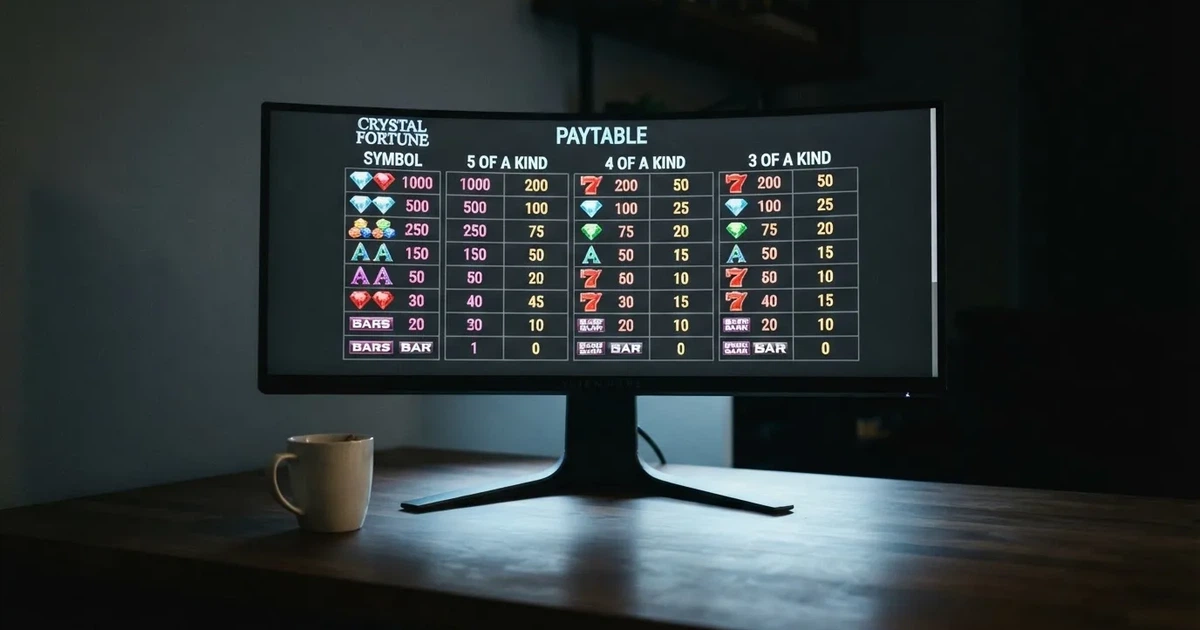
This guide works through what actually separates one machine from another in Australia in 2026: how the law treats online pokies, why offshore sites keep advertising at Australians anyway, where the licensed machines physically live, and the three numbers (RTP, volatility, hit frequency) that decide what a session looks like before it starts. It closes with the eleven brands the ACMA has publicly warned this year and last, because their names keep appearing in Australian search results for “best pokie machine” and a reader deserves to know which way the regulator has ruled on each.
Current as of 4 November 2026 — verified against the Australian Communications and Media Authority’s published enforcement notices.
Table of Contents
- The Eleven Operators the ACMA Has Formally Warned
- How to Actually Pick a Pokie Machine in Australia
- The Legal Frame: Why “Best Online Pokie” Returns What It Returns
- Responsible Gambling in the Australian Frame
- Payments, Payout Speed and What an Offshore Site Cannot Match
- Mobile and App Play
- The Specifics of the Pokie Machine Itself
- What the Reader Does With All of This
- Frequently Asked Questions
The Eleven Operators the ACMA Has Formally Warned
Before the mechanics, the regulatory landscape. Online casino games — and online pokies with them — are prohibited in Australia under the Interactive Gambling Act 2001. The ACMA enforces that prohibition by issuing formal warnings to offshore operators and by directing Australian ISPs to block illegal sites. The table below covers every operator named in those formal warnings that still appears in Australian-facing search results for this topic, in the order the regulator acted against them. None of these is licensed to offer online pokies to a person in Australia. The product they advertise cannot lawfully be sold to the reader of this page.

| Brand | ACMA action and date | Operator named by the ACMA | Subject support |
|---|---|---|---|
| RocketPlay | Formal warning, March 2026; earlier Dama N.V., May 2022 | Pulsup Ltd | — |
| Level Up Casino | Formal warning, May 2022 | Dama N.V. | — |
| Woo Casino | Formal warning, March 2025 | Dama N.V. | — |
| Spirit Casino | Formal warning, May 2025 | Dama N.V. | — |
| National Casino | Formal warning, July 2025 | Consolutetish S.R.L. | — |
| Bizzo Casino | Formal warning, July 2025; earlier TechSolutions, 2022 | Consolutetish S.R.L. | — |
| Ignition Casino | Formal warning, July 2025 | Bamboo Media | — |
| Instant Casino | Formal warning, February 2025 | EOD Code SRL | — |
| Jackbit | Formal warning, April 2026 | Ryker B.V. | — |
| Casino Intense | Formal warning, April 2025 | Sterplay Holding Ltd | — |
| Sky Crown | Formal warning, September 2022 | Hollycorn N.V. | — |
What the table makes plain: this is a regulatory list, not a ranking. A reader comparing options needs to see these names because they keep appearing in the search results the topic generates, and because the ACMA has already ruled on each of them. They are not endorsed by inclusion; they are described by it. The “Subject support” column is intentionally empty across the board: research found no listing that meaningfully documents any of these brands as a pokie-machine provider, because the product the reader is searching for cannot be lawfully offered to an Australian online.
A handful of operator write-ups below put the same regulatory finding in plain language against each name, because a table row reads quickly and a paragraph lands slowly, and both belong on the page.
RocketPlay — Pulsup Ltd (March 2026); Dama N.V. (May 2022)
Two formal warnings, four years apart, both for offering prohibited online casino games to Australians. The March 2026 notice to Pulsup Ltd is the most recent, and the operator is the same entity behind Rocketplay.com.au that the ACMA named in its blocking requests through this year. Rocketplay’s product in Australia is unlawful regardless of what licence footer the site displays.
Level Up Casino — Dama N.V. (May 2022)
Dama N.V. holds one of the longest warning histories in the ACMA’s enforcement record, and Level Up is one of six brands named in the May 2022 notice. The offshore licence the site advertises is real — Curaçao issues them routinely — but it does not authorise the operator to take Australian online casino play. BGaming has Level Up listed among its operator partners; that fact says nothing about the legality of taking bets from Australians.
Woo Casino — Dama N.V. (March 2025)
The March 2025 warning was the regulator’s return to Dama N.V. for a second round, after the 2022 batch. Woo Casino’s marketing keeps surfacing in Australian search results for “best pokie machine”; the ACMA’s view is that the product it sells is prohibited for a person physically in Australia.
Spirit Casino — Dama N.V. (May 2025)
Two months after the Woo Casino warning, the ACMA named another Dama N.V. brand — Spirit Casino — for the same conduct. Same operator, same prohibition, second formal notice.
National Casino — Consolutetish S.R.L. (July 2025)
The July 2025 warning consolidated enforcement against Consolutetish S.R.L., which operates National Casino. Wikipedia lists it among Consolutetish’s brands, which is the only verification trail a reader has that the name resolves to a real operator rather than a marketing shell.
Bizzo Casino — Consolutetish S.R.L. (July 2025); TechSolutions (2022)
Bizzo was already the subject of a 2022 formal warning to TechSolutions (CY) Group Limited and TechSolutions Group N.V. The July 2025 notice to Consolutetish S.R.L. suggests the brand has changed hands at least once without leaving the ACMA’s enforcement scope. Either way, the offer to Australians is the same prohibited one.
Ignition Casino — Bamboo Media (July 2025)
Bamboo Media is the operator the ACMA named for Ignition Casino in July 2025. Ignition markets itself heavily to Australian search traffic despite having no path to lawful operation here. The product is the prohibited one.
Instant Casino — EOD Code SRL (February 2025)
The February 2025 warning to EOD Code SRL over Instant Casino is the entry the ACMA made explicit on its own enforcement page, and it is the cleanest single-line illustration on this list of what the regulator considers out of bounds for an Australian player. Instant Casino accepts deposits from Australians; the ACMA’s position is that the deposit itself is part of the prohibited service.
Jackbit — Ryker B.V. (April 2026)
The April 2026 warning to Ryker B.V. covers both Jackbit and CasinOK. The brand positions itself around crypto betting, which in Australia is a doubly disqualifying posture: digital currency has been a banned payment method for licensed online wagering since June 2024, and the underlying product is prohibited in any case.
Casino Intense — Sterplay Holding Ltd (April 2025)
The April 2025 formal warning to Sterplay Holding Ltd is the regulator’s cleanest single-brand notice of that year. Cross-references from ABC News, ACMA’s own publications and Crown Melbourne’s game catalogue appear in the research trail for Casino Intense — the last because Crown Melbourne legitimately offers approved baccarat variants under Victorian regulation, which is what Casino Intense’s marketing mimics without the licence.
Sky Crown — Hollycorn N.V. (September 2022)
Hollycorn N.V. operates a stable of brands the ACMA has acted against repeatedly. The September 2022 warning over Sky Crown and Blue Leo is one of the older items on this list and the one that establishes Hollycorn as a recurring target rather than a one-off. No Hollycorn brand has a lawful route to the Australian online pokie market.
How to Actually Pick a Pokie Machine in Australia
The legal frame settles which side of the line a reader is on. The mechanics settle what to do once they’re standing in front of a machine. Both deserve proper treatment, and the mechanics are the part a reader most often gets wrong.
Volatility, RTP, and Hit Frequency Are the Only Three Numbers That Matter
Return-to-player (RTP) is the percentage of money a machine returns to players over a very long run — millions of spins, not a session. Australia’s licensed machines all carry an RTP set by their state regulator, with the legal minimums ranging from 85% in NSW, the NT, Queensland and most of Victoria (87% at Crown Melbourne) up to 90% in Western Australia. South Australia sits at 87.5%, and the ACT and Tasmania at 87%. These are floors, not ceilings; a particular machine in a particular venue can publish a higher RTP, but it cannot publish a lower one. A venue that wants to advertise a “96% pokie” is either misrepresenting what the regulator has approved or running an unlicensed machine, and a patron has every right to ask which it is.
Volatility — sometimes called variance — describes how that long-run RTP gets paid out across individual sessions. A low-volatility machine returns small wins often; a high-volatility machine returns larger wins rarely, with long stretches of nothing in between. The math behind both is the same: the house edge is fixed. What changes is the shape of the ride.
Hit frequency is the third number, the one most machines don’t publish. It tells you, on average, how often any winning combination lands. A machine can have a high RTP and a low hit frequency — small wins are rare but the rare win is large — and that combination is what most players mistake for a “tight” machine. Conversely, a machine can return almost every spin but only at 1:1 or smaller, which feels generous and is in fact closer to the long-run edge than it appears.
The only honest answer to “which is best” is which combination of these three suits the bankroll and the time available. Low volatility suits a short session with a small bankroll because the losses arrive in small, predictable doses. High volatility suits a longer session with a larger bankroll because the player can absorb the dry stretches that come with the territory.
Bet Size Does Not Change the Odds
This is the single most common mistake a player makes. Pressing the higher denomination button does not improve the RTP — it changes the size of each win relative to the bet, but the percentage the house keeps is the same. What changes is the speed at which the bankroll disappears during a cold streak, because each spin costs more. The machines that “pay better at max bet” pay the same percentage at max bet; they just pay more absolute dollars, and a bankroll that doesn’t have the dollars to absorb fifty max-bet spins in a row will find out why this distinction matters before the hundredth spin.
The practical implication: pick a denomination where the bankroll can survive two hundred spins at minimum. Two hundred is a rough rule of thumb for the time it takes the variance to settle on a low-volatility machine; on a high-volatility machine it isn’t enough, but on a high-volatility machine no fixed number of spins is enough.
Multi-Line Machines Are Not More Likely to Pay Out
A multi-line pokie accepts bets on more than one payline at a time. Each spin costs more — five lines at one cent a line is five cents a spin — and each line is evaluated independently. The number of paying lines per spin goes up, but the per-line RTP is the same as on a single-line machine. The trap is the language: “more chances to win” sounds like an advantage and is in fact the mechanism by which the house collects faster. The math is unchanged; the cost per spin is multiplied.
Where the Payout Percentage Is Published
Every licensed Australian venue has the RTP and the rules of every machine on the premises available to patrons on request. This is a regulatory requirement in every state. The rules are typically printed on a card at the machine itself; the long-run RTP is in the help screen, often labelled “theoretical return to player” or “return to player.” If the venue cannot produce them on request, the venue is out of step with its own regulator, and the patron has a real complaint to make. Asking for the rules before sitting down is not a tell of inexperience; it is the difference between a session and a donation.
The Legal Frame: Why “Best Online Pokie” Returns What It Returns
The search volume around “best pokie machine” splits cleanly into two audiences: players looking for guidance in front of a licensed machine, and players looking for an offshore site. The first audience is asking a question the law has an answer to. The second is asking a question the law has already answered, and the answer is no.
The Interactive Gambling Act 2001
Online casino games, online pokies and in-play betting cannot be offered to a person physically in Australia. The Interactive Gambling Act 2001 (IGA), strengthened by the Interactive Gambling Amendment Act 2017, makes the provision of those services a civil offence, and the Australian Communications and Media Authority is the regulator that enforces it. What the IGA permits is wagering on races and sport placed before the event, lotteries, and keno — in practice licensed by the Northern Territory and a few other state regimes. Online pokies are not in that list. They never have been.
What this means in 2026: an Australian opening a casino site and seeing “best pokie machine” advertised at them is being shown a product that cannot be lawfully sold to them. The offshore licence the site displays — usually Curaçao, sometimes the Malta Gaming Authority, occasionally Anjouan — is real and the operator is regulated there. It does not authorise taking Australian play. The product line is the prohibited one.
What the ACMA Actually Does
The ACMA’s enforcement toolkit has three parts. It issues formal warnings to operators, naming the brand and the corporate entity behind it. It investigates complaints from Australian consumers. It directs Australian internet service providers to block illegal sites, which is what the long blocking-request lists in the news are about. As of June 2026, the ACMA’s published running total sat at 1,751 illegal gambling and affiliate marketing websites blocked since the first blocking request in November 2019, with more than 230 unlicensed gambling services having left the Australian market since enforcement was strengthened in 2017. The June 2026 round alone added twelve more sites to the blocking list — 7Signs, ChromaBet, Donbet, Duospin, Freshbet, Slots Gem, Jacks Club, Lucky Start, Pointsbetz.com, Spinrise, Vinyl Casino and Wildsino.
The blocking rate tells its own story. From the first request in November 2019 to the June 2026 reporting, 1,751 sites blocked across roughly eighty months works out to a rate of just under twenty-two new sites blocked per month on average, or about two hundred and sixty per year. The rate is not constant — it spikes around major enforcement rounds — but the order of magnitude is the right one to hold in mind: this is a regulator adding hundreds of sites a year to the block list, not dozens. The number of illegal offers targeting Australians is large enough that even an aggressive enforcement programme can only stay current, not catch up.
The Player Side
The IGA targets the provider, not the individual player. No Australian has been prosecuted for placing an online pokie bet. That is not, however, the same thing as protection. An offshore casino gives no Australian consumer protection: no Australian complaints body, no Australian regulator to complain to, no enforceable path if a withdrawal is refused. The site’s own licence regime applies, which means in practice a Curaçao-licensed operator is answerable to Curaçao and to no one else. The site can be blocked mid-session, leaving a balance in an account the player can no longer reach.
The H2 Gambling Capital 2025 estimate puts Australians’ losses to illegal gambling sites at about A$3.9 billion a year, with the share of gambling going through legal channels having fallen from 74% in 2021 to 64% in 2025. The legal channel has lost roughly ten percentage points of the market in four years to operators the ACMA has explicitly ruled are unlawful for Australians. That is the size of the gap the regulatory frame is trying to close.
The 2026 Reform
The Interactive Gambling Amendment (Gambling Reform) Bill 2026 passed Parliament on 19 August 2026. Its advertising and inducement measures commence on 1 January 2027 — law with a start date, not yet in force on a 2026 page. The reform is the next step in the same direction the 2017 amendments took: tightening what offshore operators can say to Australian customers, tightening what inducements they can offer, and tightening the regulator’s hand for the next round. None of it changes the underlying prohibition on offering online pokies to a person in Australia, which has been in place since 2001 and tightened in 2017.
Responsible Gambling in the Australian Frame
The responsible-gambling supports in this market are built around licensed venues and licensed online wagering. Offshore pokies sites are not connected to any of them, which is part of why the prohibition exists.
BetStop — the National Self-Exclusion Register
BetStop went live in August 2023. It is a national register a person can put their name on to be excluded from Australian-licensed online and phone wagering services. The exclusion periods run from three months up to a permanent exclusion, and every licensed Australian wagering provider is bound to honour them. The crucial limitation: BetStop binds Australian-licensed wagering services. An offshore casino is not connected to it, and self-excluding through BetStop does not stop a person who chooses to use an offshore site from doing so. What it does is remove the licensed option from the table.
Gambling Help Online
The National Gambling Helpline — 1800 858 858 — is free, 24/7, and offers phone and webchat counselling through Gambling Help Online. The service is funded by the Australian government and staffed by professional counsellors. It is the right first call for someone whose gambling has moved from entertainment into harm, regardless of whether the gambling happens at a licensed venue or on an offshore site.
State Self-Exclusion Registers
Each Australian state and territory runs its own venue-level self-exclusion scheme for the pubs, clubs and casinos it regulates. New South Wales has its own exclusion register; Victoria runs one; Western Australia, South Australia, the ACT, the Northern Territory and Tasmania each have their own. These registers cover the licensed land-based machines the rest of this guide is about, and they are the right mechanism for a player who wants to step away from the machines in their own state.
The 2017 Smoking Reform and the Limits It Did Not Reform
The land-based venue reforms of the last decade — Tasmania’s pre-commitment card rollout delayed to late 2025, Western Australia’s continued ban on poker machines outside Crown Perth, Victoria’s statewide cap of 30,000 machines outside Crown — are about the floor, not the ceiling. They are the framework the licensed machines sit inside, and they are the framework offshore sites do not have to honour. A punter standing in front of a machine in a Melbourne club has protections a punter on a Curaçao-licensed site does not, and the gap between the two is the practical meaning of “licensed” in this market.
Payments, Payout Speed and What an Offshore Site Cannot Match
The licensed wagering side of the Australian market has a payments framework offshore casinos cannot use, partly because the framework is itself a regulatory choice and partly because the offshore operator doesn’t need it to be lawful.
Banned Payment Methods Since June 2024
Credit cards, credit-related products and digital currency (cryptocurrency) have been banned as payment methods for licensed online wagering in Australia since 11 June 2024. Penalties for operators that take them run up to A$247,500. The legal deposit routes for a licensed Australian wagering account are debit card, bank transfer, PayID/Osko and BPAY. A site that asks an Australian customer for a credit card or a Bitcoin deposit is operating outside the Australian rules on payment methods, regardless of what its own licence says about the underlying product.
For a player, the practical meaning is that an offshore casino asking for a crypto deposit is signalling two things at once: the product is unlawful under the IGA, and the payment method is unlawful under the credit and crypto ban. The deposit itself is the second violation on top of the first.
Payout Speed on Licensed Sites
A licensed Australian wagering operator is required to honour withdrawal requests through the same channels it accepts deposits, and is bound by Australian consumer law on the timeliness of refunds. The exact turnaround varies by operator and by payment method, but the framework is a domestic one with a domestic regulator. An offshore site has no such framework. Withdrawal times published on an offshore casino’s terms page are the operator’s own commitments, enforced only by the licence regime of whatever jurisdiction issued it. When a withdrawal stalls — and offshore casino complaints databases are largely populated by exactly this — the only recourse is the offshore regulator, and the offshore regulator’s response time is what it is.
The Tax Position
Gambling winnings of a recreational Australian player are not assessable income under section 6-5 of the Income Tax Assessment Act 1997. Losses are not deductible unless the person is carrying on a business of gambling, which a recreational player is not. The ATO’s guidance on this is the controlling reference. The summary is the right one for the page: recreational winnings are tax-free in Australia, recreational losses are not recoverable, and the only reason to talk to the ATO is if the gambling has crossed into a business, which is a different conversation. This page is not that conversation.
Mobile and App Play
The mobile frame for “best pokie machine” splits the same way the rest of the topic does.
Licensed Land-Based Pokies Have No App
A licensed pokie machine in a New South Wales club, a Queensland pub, a Victorian casino or a Tasmanian hotel has no mobile app and no remote-play path. The machine is the machine, the venue is the venue, and the player’s relationship with it is a physical one. Mobile phones in this picture are about the secondary services around the play — venue finders, self-exclusion apps, gambling-help apps, the BetStop registration flow — not about the play itself.
Offshore Pokies Have Apps and Browsers and Neither Is Lawful
The offshore pokies apps and mobile-browser sites that turn up in Australian search results are the same prohibited product in a different wrapper. They are designed for mobile from the ground up, which is part of why they keep surfacing in search: mobile is where most of the traffic lives, and the offshore operators optimise accordingly. The load times, the touch-screen ergonomics, the in-app deposit flows — all of it is well-built, and all of it is part of a service the ACMA has named as prohibited.
A licensed Australian wagering app — Sportsbet, Bet365, Ladbrokes, the others regulated by the Northern Territory Racing and Wagering Commission — does not offer pokie machines. It offers sports betting, racing and, where licensed, the in-play products the IGA permits. The boundary between what those apps offer and what an offshore casino app offers is the same boundary the rest of this guide has been drawing.
Browser Versus App on the Offshore Side
Where an offshore casino offers both a downloadable app and a browser version, the differences are largely cosmetic. The app may load slightly faster and offer biometric login; the browser version works on any device without an install. Neither is a faster path to a lawful product, because the product itself is the issue. For a reader who has decided to use an offshore site anyway, the practical answer is that the browser version carries less device footprint and works on more devices, but this is a small distinction inside a larger problem.
The Specifics of the Pokie Machine Itself
The mechanics shelf is where the page ends, because it is where the topic sits most squarely: the machine, the paytable, the design choices that decide what a session looks like.
The Pokie’s Place in Australian Gambling History
Registered clubs operated Australia’s first legal poker machines from 1956, in New South Wales. The machines spread through clubs and hotels across the country over the following decades, with each state and territory writing its own regulatory framework. Western Australia banned them in pubs and clubs when Crown Perth opened in 1985 — the only state to take that step — leaving about 2,500 machines inside Crown Perth itself, every one of them approved by the state’s Gaming and Wagering Commission. Tasmania granted a single operator, the Federal Group, a monopoly over its poker machines from 1968; legislation passed in November 2021 ended that monopoly and moved oversight of the machines to the Tasmanian Liquor and Gaming Commission.
The point of the history for a reader in 2026 is that the modern pokie machine is a state-regulated artefact, with a regulator in every jurisdiction, and that the design and operation of the machine is decided inside that regulatory frame. The machine in a Western Australian club does not exist. The machine in a New South Wales club is governed by Liquor & Gaming NSW. The machine in a Victorian casino is governed by the Victorian Gambling and Casino Control Commission, which replaced the VCGLR on 1 July 2022.
The Numbers Across the Country
New South Wales held 87,298 gaming machines outside casinos across 2,195 venues as of June 2023, with player losses on those machines of A$8.18 billion in 2022-23. Queensland had 21,122 machines in 351 venues in October 2023. Victoria had 26,380 machines outside Crown Casino across 488 venues in 2021-22, sitting under a 30,000-machine statewide limit. Across Australia, gaming machines and the bets placed on them represent roughly 3% of the world’s pub and club poker machines, in a country with 0.3% of the global population. The 2020-21 figures, which are the most recent national aggregation the research could source, put total bets through gaming machines at almost A$150 billion and total losses at A$12.18 billion.
Australia has an outsized share of the world’s poker machines, and an outsized share of the losses that come with them. The numbers are not a curiosity; they are the reason the IGA exists in the form it does and why the ACMA’s enforcement programme has the scope it does.
What the Paytable Actually Tells the Player
A paytable on a licensed Australian machine lists every winning combination, the credit value of each, and the rules for the bonus features. It is the one document on the machine that is unambiguous. The RTP published in the help screen is derived from the paytable under the assumption of perfect play over the long run; the volatility is a function of the spread between the smallest and largest combination values; the hit frequency is the rate at which the combinations land across millions of simulated spins.
What the paytable does not tell the player is whether the machine is “hot.” It does not tell the player the machine is “due.” It does not tell the player the previous session’s outcome has any bearing on the next spin. The mathematics of the machine are the same on every spin, and the most useful thing a player can do with the paytable is read it carefully before the first spin and decide whether the structure suits the bankroll.
Other Games the Same Math Produces
The pokie machine is the most heavily-played gambling product in Australia, but the math behind it is the same math behind the table games in a casino, and a reader who wants to compare machines across the floor will find the same RTP-and-volatility frame applies. Blackjack, played with optimal strategy under liberal Las Vegas Strip rules, carries a house edge of about 0.28%; under Atlantic City rules, about 0.43%. Baccarat’s Banker bet runs at 1.06%, the Player bet at 1.24%, the Tie bet at 14.36%. The math is the same kind of math, the venue is the same kind of venue, and the licensed Australian casino offering these games operates inside the same regulatory frame as the licensed pokie machine.
These are not pokie machines and the page is not about them. They are the comparison the licensed casino offers a player who has decided the pokie is the wrong session for the night, and the right next step is to ask the venue which tables are open before walking past them.
What the Reader Does With All of This
The page has worked through the legal frame, the regulatory enforcement, the responsible-gambling supports, the payment rules, the mobile reality, and the specific mechanics of the machine itself. What remains is the synthesis.
A reader in Australia who wants to play a pokie machine has one lawful path: walk into a licensed venue, look at the paytable, decide whether the machine’s RTP and volatility match the bankroll and the time, and play within a budget that survives the worst-case session. A reader who wants the same play on a phone has, in 2026, no lawful path at all — only offshore sites that the ACMA has named as offering a prohibited product, with no Australian regulator behind the withdrawal, no Australian consumer protection, and a credit-card-or-crypto deposit flow that is itself banned under Australian law.
The “best pokie machine” in Australia is the licensed machine in front of which the reader understands the paytable, the RTP, and the bankroll. Everything else is marketing aimed at a market the regulator has already closed.
Frequently Asked Questions
What’s the difference between a low-volatility and a high-volatility pokie machine?
Volatility describes how the long-run RTP gets distributed across individual sessions. A low-volatility machine returns small wins often, with short dry stretches; a high-volatility machine returns large wins rarely, with long stretches of nothing. The house edge is the same on both — what changes is the shape of the ride. Low volatility suits a short session on a small bankroll; high volatility suits a longer session with money to absorb the dry runs.
Does bet size change the odds on a pokie machine?
No. The RTP — the percentage the machine returns over the long run — is fixed by the regulator and is the same at every denomination the machine accepts. What bet size changes is the absolute dollar value of each win and the rate at which the bankroll is spent during a cold streak. Pressing the higher-denomination button does not give the math an edge the lower button does not have.
Are mobile pokie-machine apps the same as the licensed machines in a pub or club?
No. A licensed pokie machine in an Australian pub, club or casino has no app and no remote-play option. The apps that turn up in Australian search results for “pokie machine” are offshore casino products. Online casino games and online pokies are prohibited for a person in Australia under the Interactive Gambling Act 2001, and the ACMA has issued formal warnings to the operators behind most of these apps. The two products are not the same product in different packaging; one is lawful in a venue and the other is prohibited online.
How can someone find the payout percentage of a specific pokie machine before playing?
Every licensed Australian venue is required to make the rules and the theoretical return-to-player available to patrons on request. The rules are typically on a card at the machine; the RTP is usually in the help screen, labelled “theoretical return to player” or “return to player.” If the venue cannot produce these on request, the venue is out of step with its own regulator, and the patron has a real complaint to make. The state-level minimum RTP varies by jurisdiction, from 85% in NSW, the NT, Queensland and most of Victoria, up to 90% in Western Australia.
Are multi-line pokie machines more likely to pay out than single-line ones?
No. Each line on a multi-line machine is evaluated independently and carries the same per-line RTP as a single-line machine. The number of paying lines per spin goes up because more lines are being bet on, not because the math has shifted. The trap is the marketing language: “more chances to win” sounds like an advantage and is in fact the mechanism by which the house collects faster, because each spin costs more. The percentage the house keeps is the same.
Who audits pokie machines in licensed Australian venues?
Each state and territory regulator is responsible for the audit and approval of the machines operating under its licence. In New South Wales that is Liquor & Gaming NSW; in Victoria, the Victorian Gambling and Casino Control Commission; in Queensland, the Office of Liquor and Gaming Regulation; in Western Australia, the Gaming and Wagering Commission; in Tasmania, the Tasmanian Liquor and Gaming Commission; in the ACT, the ACT Gambling and Racing Commission; in the Northern Territory, the NTRWC’s licensing function for wagering and the Liquor Commission’s role for venues; in South Australia, Consumer and Business Services. Independent testing laboratories — typically international firms accredited under the relevant technical standards — certify each machine’s software against the regulator’s technical requirements before it can be deployed.