
Crash casino games in Australia: what the multiplier is, why the offer is unlawful, and what the ACMA has done about it
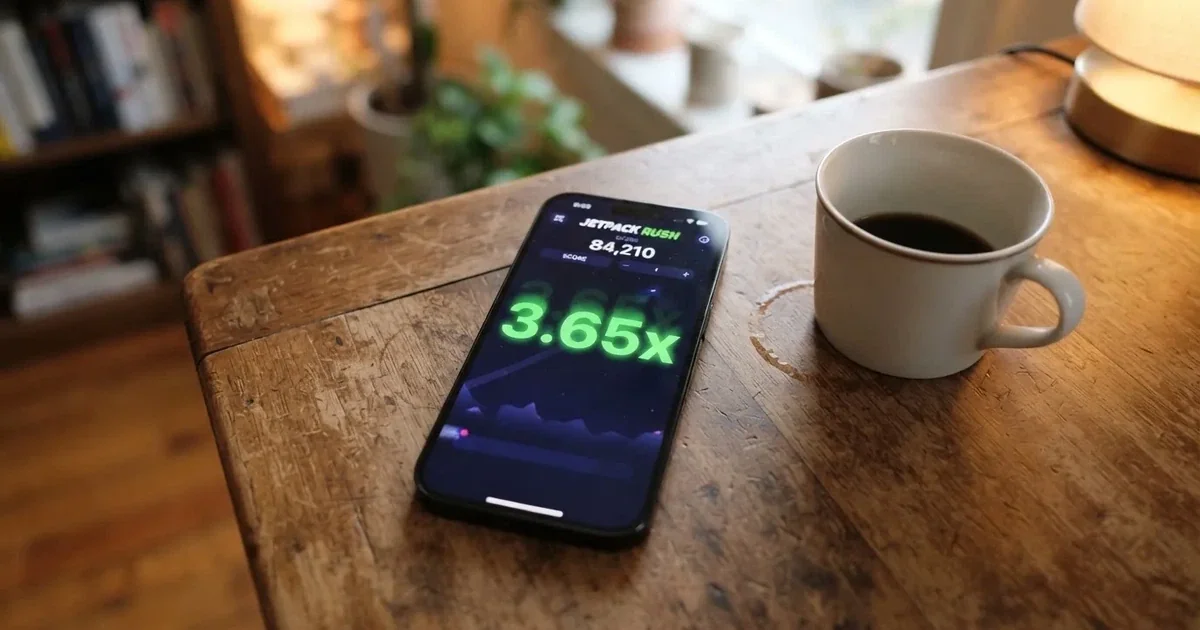
A “crash casino game” is a wager on a rising multiplier that can stop at any moment. The format is simple to describe and quick to play, which is why it has spread through offshore crypto casinos at speed. The thing an Australian reader needs first is the part the marketing tends to bury: no online casino game, crash or otherwise, can be licensed for Australian residents under the Interactive Gambling Act 2001. The format works the same way on every site; what changes between sites is the licence they wave at you, and the licence is the part that does not hold up.
This page works through the format honestly, then through what the Australian Communications and Media Authority (ACMA) has actually done about it, then through eleven offshore brands the ACMA has named in formal warnings — not because they are good, not because they are bad, but because the regulator itself has acted against them for offering exactly this product to people physically in Australia.
Data current as of 8 November 2026; licence claims and ACMA actions cross-checked against the ACMA’s own formal-warning register and operator filings.
Table of Contents
- Legality and regulation: why every site in this list sits on the same side of the IGA
- Responsible play: the only edge you can control on a crash round
- Crypto, “provably fair” and the anonymity pitch
- How the format actually works, and what the math says
- Spribe, Aviator, and the shape of the market
- Offshore brands the ACMA has acted against
- What an Australian reader actually has, and what they do not
- Frequently asked questions
Legality and regulation: why every site in this list sits on the same side of the IGA
The Interactive Gambling Act 2001 (IGA), tightened by the Interactive Gambling Amendment Act 2017, makes it an offence to provide online casino games, online pokies, online keno and in-play betting to a person physically in Australia. Crash games fall squarely under “online casino games” — they are internet-hosted wagering on a random outcome, played against the house, with no event being bet on. State and territory regulators (the Victorian Gambling and Casino Control Commission, Liquor & Gaming NSW, the Queensland Office of Liquor and Gaming Regulation and the rest) have no scheme under which a crash game can be licensed either. What is licensed is wagering on racing and sporting events placed before the event starts, lotteries and keno — products the offshore sites in this market do not offer.
What this means on the ground is that any site marketing a crash game to an Australian resident is, by definition, operating outside the Australian framework. The licence displayed in the footer is granted by some other jurisdiction — Curaçao, Anjouan, the Malta Gaming Authority — and authorises the operator to offer the game to whoever that other jurisdiction’s rules cover. It does not authorise them to offer it to you in Australia, and no amount of fine print makes it do so. The offshore operator is the party the IGA targets; the individual player is not prosecuted, but they also have no Australian consumer protection, no complaints body to escalate to and no way to compel a withdrawal if the site decides to delay or decline it.
The Interactive Gambling Amendment (Gambling Reform) Bill 2026 passed Federal Parliament on 19 August 2026, and its advertising and inducement measures commence on 1 January 2027. It is law with a start date — passed but not yet in force on a page read in 2026, which matters when an operator claims a new rule already binds them.
What the ACMA actually does
Enforcement runs through the ACMA, which investigates complaints, issues formal warnings, and asks Australian internet service providers to block offending sites at the network level. A formal warning is a public step — it identifies the operator entity by name (often a corporate vehicle registered in Curaçao or another low-disclosure jurisdiction) and the brand being offered to Australians. The ACMA does not need a court order to publish one.
In a single round reported on 26 June 2026, the ACMA asked ISPs to block twelve more illegal gambling sites: 7Signs, ChromaBet, Donbet, Duospin, Freshbet, Slots Gem, Jacks Club, Lucky Start, Pointsbetz, Spinrise, Vinyl Casino and Wildsino. The running total of blocked sites and affiliate pages since the first blocking request in November 2019 stood at 1,751 in that same round, with more than 230 unlicensed services having left the Australian market since enforcement was strengthened in 2017. The figures are stark and worth keeping hold of: a decade of blocking has not removed the supply, and the supply has been broadening rather than narrowing. H2 Gambling Capital’s 2025 report estimates Australians lose about A$3.9 billion a year to illegal offshore sites, and the share of gambling going through legal Australian channels has fallen from 74% in 2021 to 64%.
A dated band from the blocking rate
Taking the ACMA’s running total of 1,751 blocked sites and affiliate pages since the first blocking request in November 2019, against the 26 June 2026 update, gives a band of roughly 260 to 270 blocks a year across the six-and-a-half-year window — that is the rate at which new illegal sites and affiliate pages have been added to the blocking list on average, with the underlying number ticking up every time the ACMA publishes a fresh round. The block count is a count of distinct sites, not a count of players affected, and a single brand often reappears under a new domain after a block lands; the rate is therefore a floor, not a ceiling, on how much supply the regulator has had to keep up with.
Payments, age and consumer protection
The minimum age for any form of gambling in Australia is 18. Since 11 June 2024, credit cards, credit-related products and digital currency (crypto) have been banned as a payment method for licensed online wagering, with penalties of up to A$247,500 for an operator who accepts them. Legal deposit routes on a licensed wagering site are debit card, bank transfer, PayID/Osko and BPAY. A crash-game site asking an Australian for a credit card or a Bitcoin deposit is operating outside the Australian rules — that single fact tells you more about the operator than any licence logo at the bottom of the page.
For player protection, BetStop (the National Self-Exclusion Register, live since August 2023) binds Australian-licensed online and phone wagering services only. An offshore crash casino is not connected to BetStop; self-excluding through BetStop does nothing about an account at one of these brands. The National Gambling Helpline is 1800 858 858, free, 24/7, with chat at Gambling Help Online. Both work whether or not the gambling was done on a licensed site.
On tax, recreational gambling winnings are not assessable income in Australia (section 6-5 of the Income Tax Assessment Act 1997), and losses are not deductible, unless gambling is genuinely the person’s business. That is the standard treatment, not advice — the ATO’s own guidance is the place to check for a personal position.
The Northern Territory bookmaker licence, and what it does not cover
A great deal of noise is made about “Australian-licensed” gambling, and it is worth being precise about what that means. The Northern Territory Racing and Wagering Commission (NTRWC) regulates 52 of Australia’s online bookmakers — Sportsbet, Bet365 and Ladbrokes among them — through licences issued in the Territory. The Territory licences these operators for tax reasons rather than consumer-protection ones, and the commission itself has no full-time staff and meets once a month in Darwin. The licences cover wagering on racing and sport before the event starts. They do not, and could not, cover an online casino game. A footer logo claiming NTRWC regulation on a site hosting crash games is either a misreading of what the licence covers or an active misstatement.
Responsible play: the only edge you can control on a crash round
A crash round resolves in seconds. The multiplier rises from 1.00x; a player who has not cashed out before the random “crash” loses the stake for that round. The format rewards a single decision made under time pressure — when to click cash out — and the rapid cycle is the design. Anyone who has watched a friend play for ten minutes has seen the pattern: a streak of small multipliers that would have been safe cashouts, then one multiplier that climbs into the double digits and crashes, and the chasing that follows.
The only reliable defence is the one you put in place before the first bet. Set a loss limit, in dollars, that you can afford to write off entirely, and stop when that figure is reached — not when the next round “feels” like a recovery. Set a session time limit, and stop on the timer, not on the result of the most recent round. Set a cashout target, typically modest (1.20x to 1.50x for most rounds), and stick to it; the longer the multiplier runs, the less likely it is to keep running, and the higher the multiplier on offer, the rarer the outcome that delivers it. Auto-cashout, where the platform offers it, removes the click delay that costs impatient players their winnings and is worth using.
BetStop covers every Australian-licensed wagering service. It does not cover offshore crash casinos, and a self-exclusion registered with BetStop will not block an account at one of the brands in this list. If a person needs the offshore account closed too, the operator’s own responsible-gaming page is the path — and an offshore operator is not obliged to honour a request, which is itself a reason not to put more money in than you can accept losing without a complaint route.
Help is available regardless of which side of the line the gambling happened on: Gambling Help Online (chat, free) and the National Gambling Helpline on 1800 858 858 (free, 24/7).
Crypto, “provably fair” and the anonymity pitch
The marketing around crash games leans heavily on three overlapping claims: that the format is “provably fair”, that crypto deposits make play anonymous, and that the lack of identity verification is itself a feature. Each is worth pulling apart on the evidence available, not on the operator’s pitch.
A “provably fair” system is a way for the player (or a third party) to confirm, after a round, that the random outcome was not altered by the operator mid-round. The most common construction is a hashed server seed committed before the round starts, combined with a client seed the player can change, with the combined hash determining the crash point. Spribe’s Aviator runs on a provably-fair system offered to casino operators, and the construction is verifiable in principle. What it is not is a guarantee of fairness in any wider sense: it confirms the operator did not switch the outcome of one round, but it does nothing about whether the operator will pay out a winning player, will not block withdrawals, will not disappear, or will hand the data to anyone who asks for it. A provably-fair round at an unlicensed operator that refuses to pay is still an unpaid withdrawal.
Crypto deposits are not anonymous in Australia for any meaningful definition of the term. A licensed Australian exchange applies Know Your Customer checks before a customer can buy or sell; on-chain transactions are pseudonymous, not anonymous, and clustering tools routinely trace funds. Crypto is also banned as a deposit method for licensed Australian wagering, so a crash-game site asking for Bitcoin is, on that single fact, operating outside the Australian rules — an indicator of risk rather than a privacy gain.
“No KYC” is the third pitch, and it cuts the wrong way for the reader. The Australian-licensed route requires identity verification precisely because it gives the player a regulator to complain to, a self-exclusion register that actually binds, and a payments regime that does not push them toward an offshore operator. Removing identity verification removes the protection as well as the paperwork. The player who values anonymity has, in effect, opted out of every consumer-protection mechanism that the law offers.
The underlying product in many crypto casinos is also worth naming for what it is: a reskin of the same rising-multiplier format that non-crypto crash games use, served from the same providers, with the same house edge dressed in different branding. A Bitcoin deposit does not change the math; it changes the rail the deposit runs on.
How the format actually works, and what the math says
A round starts the moment betting closes. The multiplier is set to 1.00x and begins to rise — visually, on a curve that is purely cosmetic; the underlying number is generated before the round begins, but it is not revealed until the round ends. Players place one or two bets (some allow two simultaneous bets per round) and choose, before lift-off or while the multiplier is rising, the multiplier at which they want to be cashed out automatically. If the multiplier reaches that figure before the crash, the bet is paid out at that multiplier. If the multiplier crashes first, the bet is lost.
The crash point is generated as a random number — most implementations use a hash of a server seed (committed before the round) combined with a client seed, with the combined output mapped to a crash multiplier. The result is fixed at round start; the visual rise is a clock, not a calculation. A crash at 1.00x is, for the betting round, a loss on every uncashed bet — the round is treated as if it never opened for cashout, and “instant crash” rounds are the punishing tail of the distribution that all crash formats carry.
What the house edge looks like in practice
The house keeps its share by paying the cashout multiplier at slightly less than its true probability-weighted value. For a format such as Spribe’s Aviator, the operator publishes a return-to-player figure in the high 90s as a percentage — in the same general band as a slot machine’s RTP, which is what a crash game functionally is, even though the betting interface looks nothing like a slot. The shape of the payout curve is what makes the format feel different from a spin-and-wait game: a multiplier running into double digits can pay 20x or 50x, but the rounds that deliver those multipliers are rare enough that the average outcome over thousands of rounds settles to the published RTP.
The marketed maximum multiplier on a crash game (some advertise 1,000,000x as the theoretical ceiling) is not a realistic outcome a player should bet around. It exists in the math the same way a slot’s top jackpot exists in the math — present, advertised, and almost never the multiplier that resolves the round a player is in.
The single decision, in real terms
If a player cashes out at 1.50x and the round actually crashes at 1.80x, the bet paid 1.50x. If the round crashes at 1.20x, the bet is lost. Over many rounds, the cashout point chosen is the dominant variable the player controls, and the only one. Choosing 1.20x will produce many small wins and many small losses. Choosing 3.00x will produce fewer wins, larger when they come, and a much higher loss rate on rounds where the multiplier does not get there. The format makes the choice feel strategic; the math says it is a bet on a tail.
Provably fair in plain language
The player (or anyone) can take the server seed hash published before the round, the client seed the player set, and a nonce for the round, and recompute the crash point. If the recomputed crash point matches what the round actually crashed at, the operator did not switch the outcome mid-round. The check is mechanical, and a third-party verifier can run it on the player’s behalf. It is genuinely useful — it is the only reason a player at an offshore site has any technical means to confirm a round was not rigged against them. It is also a single, narrow check. It does not address whether the operator pays out, whether the operator honours a self-exclusion request, or whether the operator will be reachable next week.
Spribe, Aviator, and the shape of the market
Aviator, the crash game developed by the studio Spribe, is the dominant product of the format. By January 2024 it had grown to more than 12 million players a month, making it the top-ranked crash game of its kind. By February 2025 Spribe reported Aviator was live at roughly 5,000 online casino brands and was handling up to 350,000 bets per minute across those brands. The volume tells you something the format’s pitch does not: the multiplier rises for a few seconds, bets resolve, and a new round starts — 350,000 bets a minute is not an exaggeration in the same league as a slot machine, where the cadence is faster still, but it is enough that the format is now a fixture of offshore casino lobbies rather than a novelty.
Spribe holds a Malta Gaming Authority licence and earlier gained approval from Great Britain’s Gambling Commission to supply operators there. Neither licence covers offering the game to Australian residents, and the studio does not market Aviator at Australians — the brands that carry it, including some in the ACMA’s list below, do that marketing themselves.
In August 2024 a Georgian court ruled against Spribe in a dispute brought by a company called Aviator LLC over rights to the Aviator name in Georgia; Spribe said it would appeal. The decision is jurisdiction-specific and does not affect the game’s availability elsewhere, but it is worth flagging because “Aviator” is a name that has been fought over, and a player who searches for it may find more than one product under the same word.
Other studios carry their own crash titles, with the same rising-multiplier mechanic and different skins. The format is the product; the brand on the title bar is decoration.
Offshore brands the ACMA has acted against
The brands below are not ranked. They appear in this section because the ACMA itself has issued a formal warning over each of them for offering prohibited interactive gambling services to Australians, and the order is the order the research names them. A formal warning is a public step with the operator entity named; it tells you which corporate vehicle was on the other side of the offer. Where the same operator entity has been warned more than once, both warnings are listed.
A note on the licence displayed on these brands: every licence shown in the footer of an offshore casino applies in the jurisdiction that issued it. None of them authorise the operator to take Australian customers for online casino games. The same observation holds for every brand below, and repeating it under each one would be noise — the general principle sits in the legality section above and applies throughout.
| Brand | ACMA action and date | Operator named by the ACMA | Subject support |
|---|---|---|---|
| RocketPlay | Formal warning, March 2026; earlier Dama N.V., May 2022 | Pulsup Ltd; earlier Dama N.V. | No data on crash-game listing |
| Level Up Casino | Formal warning, May 2022 | Dama N.V. | Listings report Level Up carries BGaming crash titles |
| Woo Casino | Formal warning, March 2025 | Dama N.V. | No data on crash-game listing |
| Spirit Casino | Formal warning, May 2025 | Dama N.V. | No data on crash-game listing |
| National Casino | Formal warning, July 2025 | Consolutetish S.R.L. | Listings report crash titles carried |
| Bizzo Casino | Formal warning, July 2025; earlier TechSolutions, 2022 | Consolutetish S.R.L.; earlier TechSolutions | No data on crash-game listing |
| Ignition Casino | Formal warning, July 2025 | Bamboo Media | No data on crash-game listing |
| Instant Casino | Formal warning, February 2025 | EOD Code SRL | No data on crash-game listing |
| Jackbit | Formal warning, April 2026 | Ryker B.V. | No data on crash-game listing |
| Casino Intense | Formal warning, April 2025 | Sterplay Holding Ltd | Listings report live table games |
| Sky Crown | Formal warning, September 2022 | Hollycorn N.V. | No data on crash-game listing |
The “Subject support” column reports only what the listings research has reached — a directory entry noting the brand carries a particular studio’s crash title, a press report, or nothing. Where the column reads “No data”, the listing research returned nothing on whether the brand currently features crash games, and that absence is not a denial. The wording matters: a brand with “No data” on this column may still carry crash titles; the column only reports what the inputs could verify.
The pattern of repeat warnings is itself worth reading. Dama N.V. has been warned for six brands across May 2022, March 2025 and May 2025 — Bambet, Dazard, Level Up, Rocketplay, Wild Tornado, Cobra Casino in the first round, then Woo Casino, then Spirit Casino. The corporate vehicle does not get a fresh start with a new brand name under the IGA; the ACMA names the operator entity, not just the brand. A player looking at a Dama N.V. brand in 2026 is looking at an operator that has been publicly warned three times in four years.
RocketPlay
The ACMA named Pulsup Ltd as the operator of Rocketplay in a formal warning issued in March 2026. The same brand had previously been the subject of a May 2022 warning to Dama N.V. covering six brands. Two operator entities, one brand, four years apart, is the kind of trajectory that tells you the offer to Australians did not stop when the first warning landed. As a brand for an Australian player to consider, it is on the wrong side of the law, and its own operator history does not give confidence that the situation will change.
Level Up Casino
Level Up was named in the May 2022 Dama N.V. warning that covered six brands. BGaming’s public operator listings have referenced Level Up as a brand that has carried its crash titles; that is what the listings say and nothing more. A Dama N.V. brand from the 2022 round sits at the older end of the ACMA’s recent enforcement and has had time to move off the IGA’s wrong side, which it has not done.
Woo Casino
The ACMA warned Dama N.V. over Woo Casino in March 2025. That is the second Dama N.V. warning of 2025 and the third the entity has received since 2022. The pattern is the same operator, different brand, fresh warning — the corporate vehicle moves on, the brand rotates, the offer to Australians does not.
Spirit Casino
Spirit Casino is the third Dama N.V. warning in the sequence, dated May 2025. It is the most recent of the three and arrives with the entity’s earlier warnings on the public record. The corporate identity matters here precisely because Dama N.V. has been warned more than once; “I didn’t know” is not a position the entity can credibly take.
National Casino
The ACMA named Consolutetish S.R.L. as the operator of National Casino in a July 2025 warning. The same warning named the same operator entity over Bizzo Casino, which had already been warned in 2022 under a different corporate vehicle (TechSolutions Group). Listings sources reference National Casino as a brand that has carried crash titles; the ACMA action is what puts it on this page.
Bizzo Casino
Consolutetish S.R.L. was named over Bizzo Casino in July 2025, the second formal warning tied to that brand — the first went to TechSolutions Group N.V. in 2022. Two operator entities, one brand, three years apart. A brand that has been publicly warned twice under different corporate vehicles is one whose continuity of operation deserves particular attention from anyone thinking of depositing.
Ignition Casino
Bamboo Media was named as the operator of Ignition Casino in the July 2025 warning round. Ignition has long been a known offshore casino brand and has been the subject of enforcement steps in other jurisdictions too. The Australian action is the relevant one for a reader in Australia.
Instant Casino
EOD Code SRL was named over Instant Casino in a February 2025 warning. The brand had been marketed heavily on Australian-facing affiliate channels, which is itself part of the basis for the ACMA’s action.
Jackbit
Ryker B.V. was named over Jackbit in an April 2026 warning. Jackbit is a crypto-native casino — the kind of brand the credit-card and crypto ban for licensed Australian wagering pushes an Australian player toward. The fact that Jackbit accepts the deposits that licensed Australian operators are forbidden to take is the indicator, not a positive one.
Casino Intense
Sterplay Holding Ltd was named over Casino Intense in an April 2025 warning. Listings sources reference Casino Intense for live table games rather than crash titles specifically, and the page reports that as a listings observation only.
Sky Crown
Hollycorn N.V. was named by the ACMA in a formal warning covering its Sky Crown and Blue Leo services, published in September 2022. Sky Crown is the older end of the warnings on this page; the warning itself is dated and specific, and the ACMA has not (as of the most recent round) added a fresh formal warning to Hollycorn over Sky Crown since. The 2022 warning is still on the register, and the operator’s licence status under Australian law is what it was: online casino games cannot be licensed here.
What an Australian reader actually has, and what they do not
Stripped of marketing, the offer to an Australian reader breaks into three layers, and only the bottom one is real:
The bottom layer is the offshore casino offering crash games to Australians in spite of the IGA. The product works; deposits in crypto settle; rounds resolve; small withdrawals sometimes clear. That is the surface a player sees and is the only part of the operation most marketing ever describes. None of it makes the offer lawful.
The middle layer is the part that becomes visible the first time something does not work. A withdrawal is “under review” for weeks. A bonus term the player did not read turns a withdrawal into a forfeit. The site asks for KYC documents the player would rather not provide to an offshore entity. A block lands and the player’s balance is on a domain that no longer resolves. None of these is a hypothetical — they are the standard failure modes of unlicensed offshore gambling, and they are the reason the Australian consumer-protection framework exists in the first place.
The top layer is the regulator’s response. The ACMA names operators, asks ISPs to block sites, and updates a running total of blocked domains. It does not enter individual disputes and cannot compel an offshore operator to pay. The block rate — 260 to 270 blocks a year on average since November 2019 — is the regulator’s pace, not a guarantee that any particular site will be blocked, and not a guarantee that a fresh site will not take its place the same week.
What an Australian reader has, that an offshore casino customer does not, is the licensed wagering route. Online casino games are not on it. Sports and racing bets placed before the event, lotteries and keno are. If a person wants to bet on something inside Australian law, that is the offer. If a person wants to play a crash game, the offer they are being sold is the one the IGA says they should not be sold.
Frequently asked questions
Is it legal to play a crash casino game for real money in Australia?
No. The Interactive Gambling Act 2001, as tightened in 2017, makes it an offence to provide online casino games to a person in Australia, and crash games are online casino games. No state or territory licences them. The individual player is not prosecuted, but the offer itself is unlawful and the player has no Australian consumer protection if the operator declines a withdrawal or disappears. Credit cards and crypto have been banned as deposits on the licensed Australian wagering side since 11 June 2024, so an offshore crash site is also taking payments the licensed side is forbidden to take.
How does the rising multiplier in a crash game actually work?
A round opens with the multiplier at 1.00x. It rises on a visual curve that is cosmetic, not calculative; the underlying crash point is generated before the round starts and is not revealed until the round ends. A player chooses a cashout point before lift-off or during the rise; if the multiplier reaches that figure before the crash, the bet pays out at that multiplier. If the multiplier crashes first, the bet is lost. Most crash implementations allow one or two simultaneous bets per round and offer auto-cashout, which removes the click delay that costs impatient players their winnings.
Is a crash game’s outcome decided before or during the multiplier’s rise?
Before. The crash point is generated when the round opens and is fixed for the rest of the round. The visual rise is a clock, not a calculation, and the multiplier cannot “almost crash” or be steered. Provably fair constructions publish a hash of the server seed before the round starts so that anyone can later verify the crash point was not changed mid-round, which is a check against mid-round tampering, not a check on whether the operator will pay out a winning player.
Do crypto casino crash games use a different random outcome system to a standard one?
No — most use the same provably-fair construction as non-crypto crash games: a server seed committed before the round, combined with a client seed and a nonce, with the resulting hash mapped to a crash multiplier. The crypto wrapper changes the deposit rail, not the math. It also puts the deposit on a payment method that has been banned for licensed Australian wagering since 11 June 2024, which is itself an indicator that the operator is on the wrong side of the Australian rules.
What is a sensible way to set a loss limit before starting a crash game round?
Decide the dollar figure you can write off entirely before the first bet, and stop when that figure is reached — not when the next round looks like a recovery. Set a session time on a timer and stop on the timer, not on the result of the most recent round. Set a cashout target in the modest range (1.20x to 1.50x for most rounds) and use auto-cashout where the platform offers it; the longer a multiplier runs, the less likely it is to keep running. BetStop (1800 858 858) is the Australian-licensed self-exclusion path and covers wagering services licensed in Australia; it does not cover offshore crash sites, and an offshore operator is not obliged to honour a request.