
Pragmatic Play in Australia: the offshore marketing and what actually sits behind it
Pragmatic Play sits at the centre of an odd Australian contradiction. Its games appear on banner ads, in influencer slots videos and across affiliate sites that pitch themselves directly at Australian visitors, while the law that governs online gambling here has spent eight years saying that none of these casino products may be supplied to a person physically in Australia at all. The page that follows is built around that contradiction. It walks through what Pragmatic Play actually makes, why the marketing exists, what the Interactive Gambling Act does to it, and the practical consequences a player in Australia ends up carrying when an offshore site is the only place offering the product. The picture is not the one the ads draw.
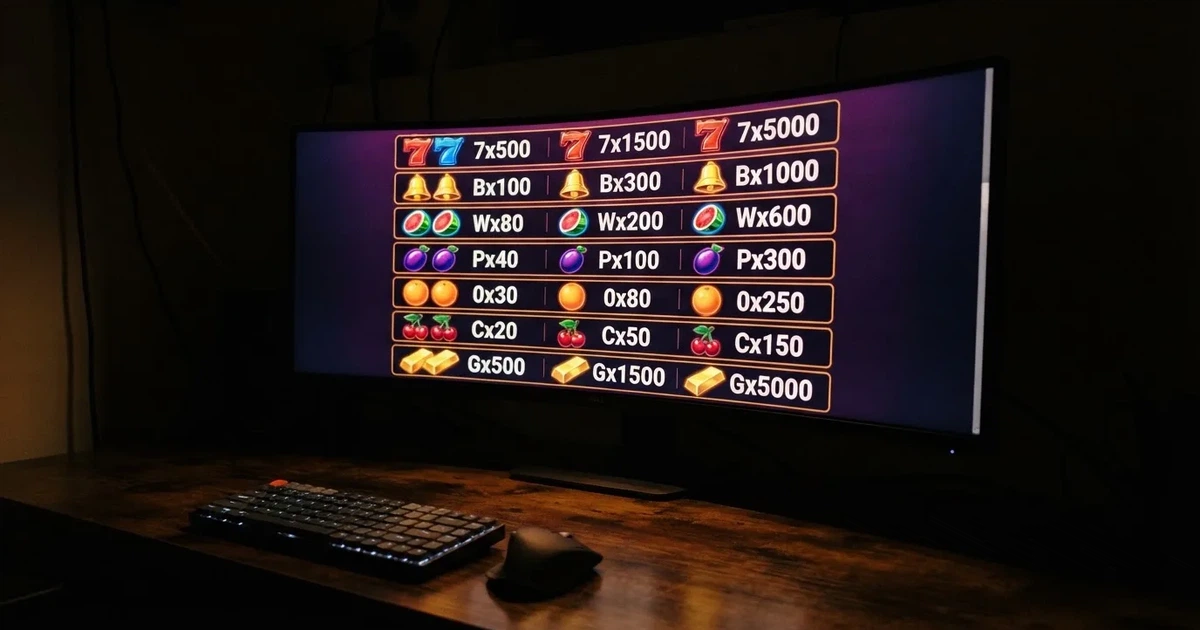
Data current as of 8 November 2026 and checked against the ACMA register of formal warnings and the regulator’s blocking requests as published.
Table of Contents
- Pragmatic Play on mobile and app screens in Australia
- Pragmatic Play slots, providers and live tables
- How this ranking is put together — and what an offshore comparison can actually rank
- Pragmatic Play, Aristocrat and the Australian gambling market
- Responsible play around Pragmatic Play-branded casino games
- How deposits and withdrawals work at offshore Pragmatic Play casinos
- Pragmatic Play casino bonuses and free spins
- The offshore brands the ACMA has acted against
- Frequently asked questions about Pragmatic Play in Australia
Pragmatic Play on mobile and app screens in Australia
Mobile performance of Pragmatic Play titles
Pragmatic Play’s product page states that its slots and live casino tables are delivered through a single API, available in 33 languages and built around HTML5, which means the same game file loads in a mobile browser and on a desktop. That single-API design is what makes the title set look consistent across operators: the math model, the paytable and the bonus-round logic sit on the supplier’s side, and the operator skin sits on top. Load times on a modern handset over 4G are short, and live-dealer streams default to a mobile-resolution window so the video tile does not dominate a small screen.

The Australian angle on the mobile picture is not the engineering. It is where the player is. A browser session on an offshore site in Australia is the only path on which Pragmatic Play-branded casino games actually run here. A native app published under a Pragmatic Play label, downloadable from an Australian app store, does not exist — and if one appeared, the operator behind it would be offering a prohibited interactive gambling service the moment it was installed.
Browser play versus a downloadable client
Most offshore Pragmatic Play casinos serve their players from a mobile browser, which keeps the player out of the app-store gatekeeping that flags real-money gambling apps in Australia. The trade is straightforward: a browser session is faster to enter and gives the operator less friction, and a downloadable client would invite the kind of platform-level enforcement that follows a real-money gaming app being served into the country. Some offshore brands still publish a download link for Windows, mainly as a wrapper for a desktop browser session, but the mobile path is browser-first on almost every site a reader will meet.
What a player on a small bankroll sees on a phone
The lower-stakes slots in the Pragmatic Play catalogue — the classic three-reel fruit games and the simpler five-reel video slots — were built for short sessions on a small screen. They show one paytable at the bottom of the screen, a single spin button, and a stake selector that runs from a few cents up. That said, the underlying math model is identical to the desktop version, so the volatility band and the return-to-player figure are the same regardless of where the game is opened. The convenience of mobile play does not change the cost of the spin.
Pragmatic Play slots, providers and live tables
What the supplier actually makes
Pragmatic Play is a slot and live-casino studio headquartered in Gibraltar, with Julian Jarvis as CEO. It was launched in 2015 and is owned by private investors led by Veridian (Gibraltar) Limited. Its product is built around two pillars: video slots, including branded titles and 3D slots, and live-dealer tables covering roulette, blackjack and baccarat. The live-casino arm came from its 2018 acquisition of Extreme Live Gaming from the Novomatic Group, which ran ten tables out of London studios, and its virtual-sports offering arrived in 2019 through the VSoftCo acquisition. Through a single API, the supplier says it serves operator brands including Flutter, Entain, bet365 and LeoVegas, and reports being licensed or certified in more than 30 jurisdictions with regulator cover from the UK Gambling Commission and a Class II licence from Romania’s Oficiul Național pentru Jocuri de Noroc, plus game-level certification from Gaming Laboratories International, Quinel and Gaming Associates.
That supplier footprint is what makes Pragmatic Play so visible on offshore Australian-facing sites. The marketing does not have to sell the brand — the brand sells itself once a slot thumbnail shows up on a casino lobby.
Three providers Australian readers will also meet in the same lobbies
Three other suppliers tend to appear beside Pragmatic Play on offshore sites aimed at Australian traffic, and each tells the reader something about how those lobbies are assembled.
1spin4win is a Curaçao-headquartered slot provider founded in 2021, running a portfolio of more than 190 online slots built in HTML5 for low-bandwidth connections and operating on a Curaçao gaming licence. It reports more than 1,000 partnerships with online casinos and aggregators, and stated that its total bet sum grew 46% in the first half of 2025 against the first half of 2024. It is a high-volume, light-footprint slot supplier of the kind offshore operators lean on to fill lobby space.
Betsoft was founded in 2006, describes a catalogue of more than 200 RNG games across slots, table games, video poker and specialty titles, and operates with RNG certification from Quinel and Gaming Labs International, alongside licensing cover from Italy’s ADM. Its slot Good Girl Bad Girl 2 is published at a 96.22% return-to-player with very high volatility and a 15.59% hit rate across 5 reels and 20 paylines. That single title is one of the more transparent reference points a player can use to compare a slot’s published math between suppliers.
Aristocrat Leisure is the only Australian-headquartered supplier on this list and the only one with a presence in the country’s onshore gambling market. Founded in 1953 by Leonard Ainsworth, listed on the Australian Securities Exchange in 1996 under the ticker ALL, and reported 2025 revenue of A$6.30 billion on a normalised net profit after tax and amortisation of A$1.55 billion, with 7,400 employees. Aristocrat’s electronic gaming machines sit in clubs, pubs and casinos in every Australian state and territory, and its online arms — Product Madness for social games and Aristocrat Interactive for regulated real-money gambling — sit alongside the same physical footprint. The relevant arm for an Australian reader comparing suppliers is Aristocrat Interactive, formed in April 2024 by combining the Anaxi unit with the NeoGames group acquired that month for roughly US$1 billion, and bundling Aspire Global, BtoBet and Pariplay. Aristocrat Interactive supplies real-money online gambling technology to regulated markets overseas, not to Australian residents.
Live tables and game-show formats
Pragmatic Play’s live product runs out of studios in Bucharest and Manila in addition to the London footprint inherited from Extreme Live Gaming, and the catalogue beyond classic roulette and blackjack includes game-show-style titles such as Mega Wheel and the Sweet Bonanza CandyLand wheel. The studio feed is the same code path the offshore operator skin sits on top of, which means a player opening a Pragmatic Play live table on an offshore site is running the same game stream a Flutter or bet365 customer runs under a UK or European licence. The supplier does not change; the licence that covers the session does.
How this ranking is put together — and what an offshore comparison can actually rank
The rule that makes any “best of” list awkward
The natural way to compare Pragmatic Play casinos for an Australian reader is to line up the offshore brands that market the catalogue and score them on the same axes — bonus size, payout time, game count, mobile quality. The following comparison is structured to highlight these axes, but every cell in it is shadowed by the same fact: online casino games and online pokies cannot be licensed for supply to a person in Australia under the Interactive Gambling Act 2001, regardless of what licence the offshore brand displays. The scoring still tells the reader something — payout speed and operator track record are facts about a brand regardless of jurisdiction — but it cannot tell the reader where it is safe to play.
That asymmetry is the reason the comparison below leans on the ACMA’s own published actions rather than on affiliate-marketing claims. The regulator’s register is the only public record that names the operator behind the brand and the date of the formal warning, and it is the only source that can be checked against a brand the reader sees in an ad. The columns below carry exactly what the ACMA’s formal-warning publications carry: the brand name as published, the operator entity named, the date of the warning, and the subject-key association where research could confirm it through the supplier’s own pages.
The criteria the ACMA actions suggest, by accident
Read across the eleven brands the ACMA has formally warned since 2022, the same four criteria surface repeatedly: the operator entity behind the brand (one corporate name may sit behind several skins), the date the warning was issued (a tighter timeline shows the regulator’s cadence), the prior action on the same operator (a repeat pattern is a louder signal than a first offence), and whether the brand appears in a recognised supplier’s partner or listings data (a list the supplier publishes is not endorsement, but it shows the supplier’s own commercial relationship with the brand). None of these criteria is a recommendation to play, and none of them is the operator’s own statement about itself. They are what a reader can check without opening an account.
The comparison block
| Brand | ACMA action and date | Operator named by the ACMA | Subject support |
|---|---|---|---|
| RocketPlay | Formal warning, March 2026 | Pulsup Ltd | — |
| Level Up Casino | Formal warning, May 2022 | Dama N.V. | Wazdan listings |
| Woo Casino | Formal warning, March 2025 | Dama N.V. | — |
| Spirit Casino | Formal warning, May 2025 | Dama N.V. | — |
| National Casino | Formal warning, July 2025 | Consolutetish S.R.L. | Betsoft, Pragmatic Play listings |
| Bizzo Casino | Formal warning, July 2025; earlier 2022 | Consolutetish S.R.L.; TechSolutions (CY) Group / TechSolutions Group N.V. | — |
| Ignition Casino | Formal warning, July 2025 | Bamboo Media | — |
| Instant Casino | Formal warning, February 2025 | EOD Code SRL | — |
| Jackbit | Formal warning, April 2026 | Ryker B.V. | — |
| Casino Intense | Formal warning, April 2025 | Sterplay Holding Ltd | 1spin4win, Aristocrat Leisure, UK Gambling Commission listings |
| Sky Crown | Formal warning, September 2022 | Hollycorn N.V. | — |
The spread on the operator column is the most useful signal in the table. Dama N.V. sits behind three of the eleven brands — Level Up Casino, Woo Casino and Spirit Casino — across formal warnings in May 2022, March 2025 and May 2025, which is a three-year pattern on the same corporate entity. Consolutetish S.R.L. sits behind two brands after a July 2025 action, one of which had already been warned in 2022 under a different corporate name. The operator column is what tells the reader that an offshore brand is not always an independent business; the skin changes, the registration does not.
What the calculation adds
The ACMA’s published figure, current as of June 2026, is that 1,751 illegal gambling and affiliate marketing websites have been blocked since the first blocking request in November 2019. That is just over six and a half years of enforcement against a single prohibited product class, against which the eleven formal-warning operators below sit as a separate enforcement track. Two different ACMA tools, two different public records, and the two together describe the offshore market an Australian reader sees in the ads.
The arithmetic the page draws from those numbers is the blocking rate: between November 2019 and June 2026 the ACMA moved from zero to 1,751 blocked sites. That works out to a band of roughly 215 to 275 new blocks per calendar year across the period, depending on which months are counted at the edges, with a noticeably higher cadence in the years since 2023 as the ACMA’s enforcement team expanded. The condition that matters is that the figure is a cumulative block count rather than a count of unique operators — the same offshore operator can appear behind multiple blocked domains, and the same brand can reappear under a new domain after an old one is blocked. The conclusion the band supports is narrow: roughly one new blocked site per working day across the period, give or take the months when major blocking rounds landed.
Pragmatic Play, Aristocrat and the Australian gambling market
What the supplier catalogue looks like from inside Australia
The offshore Pragmatic Play picture and the onshore Australian picture are two different products that share a vocabulary. Offshore, the catalogue is delivered as a continuous stream of new slot releases — typically four to six a month — each carrying a published return-to-player figure, a volatility band and a bonus-round mechanic designed around an identifiable theme. Onshore, in clubs, pubs and casinos regulated by state and territory authorities, the closest equivalents are Aristocrat electronic gaming machines — the pokies that anchor the Australian gambling floor — running under different math models, different maximum-stake rules, and different return-to-player disclosure rules set by each state regulator.
The reason that distinction matters is that a reader who sees a Pragmatic Play slot advertised by an offshore site and asks “where do I play this” is asking the wrong question in two directions at once. The offshore site is offering the online version, which is prohibited here. The onshore equivalent is a different machine, on a different licence, in a venue the reader may or may not have easy access to. The brand on the screen is the same studio, but the regulatory environment behind it is not the same environment at all.
What licensed Australian wagering actually covers
The Interactive Gambling Act 2001, strengthened by the Interactive Gambling Amendment Act 2017, makes it an offence to provide online casino games, online pokies or in-play betting to a person in Australia. The act does not prohibit wagering on races and sport placed before the event, lotteries and keno. In practice, wagering on sport and racing is licensed by the Northern Territory — 52 of Australia’s online bookmakers, including Sportsbet, Bet365 and Ladbrokes, are licensed through the Northern Territory Racing and Wagering Commission, which has no full-time staff and meets once a month in Darwin. The minimum age for any licensed Australian wagering service is 18.
That carve-out is the line that explains why an Australian reader can open a Sportsbet or a Ladbrokes account in their own name but cannot open a real-money Pragmatic Play casino account anywhere in the country. Casino games are not on the licensable list. The carve-out is also why the ACMA’s blocking activity targets casino-style products — slots, live tables, game-show formats — rather than licensed bookmakers.
What 2026 reform changed
The Interactive Gambling Amendment (Gambling Reform) Bill 2026 passed Parliament on 19 August 2026, and its advertising and inducement measures commence on 1 January 2027. The bill is law with a start date, not yet in force on a page read in 2026. Its effect, when commenced, will be to tighten the rules on how licensed wagering operators market to Australian customers — bonus structures, sign-up inducements and advertising windows — rather than to reopen the prohibition on online casino games. The casino prohibition stays.
Responsible play around Pragmatic Play-branded casino games
Where Australian player protection actually applies
The single national player-protection tool that binds an Australian-licensed operator is BetStop, the National Self-Exclusion Register, which has been live since August 2023. A player who registers with BetStop is excluded from every Australian-licensed online and phone wagering service. The register is enforced by the licensed wagering operators themselves — bookmakers, lottery operators, keno services — and does not bind offshore casinos that are not connected to the Australian system at all. An Australian who self-excludes and then opens an offshore casino account has not self-excluded from that account, because the offshore operator has no obligation to check the register and no mechanism by which to do so.
The other tools sit with the licensed operator: deposit limits, session-time reminders, real-money play pauses, and the right to set a cooling-off period before any withdrawal. None of these are available through an offshore site on the same terms. Some offshore sites publish self-exclusion tools inside the account dashboard; the published terms are the only recourse a player has if a dispute arises.
What to do when offshore marketing reaches an Australian player
The most common path is the simplest one: an advertisement, a search result, or a sponsored post that lands on a screen and is followed by a click. The page recommends the following sequence, not because it is novel but because it is the one the ACMA itself publishes.
A click on an advertisement for an offshore casino offering Pragmatic Play games to an Australian visitor is itself a reportable signal. The ACMA accepts reports of illegal online gambling through its website, including the brand name, the URL and the type of inducement. The report does not lead to a refund, a chargeback or a recovery — the IGA targets the provider, not the individual player — but it adds to the public record that the regulator acts against. Where the player’s bank or card issuer is the route through which a deposit was placed, a dispute through the bank is the practical recovery path for that deposit; the offshore casino’s own dispute process is not connected to any Australian complaints body.
Where to get help if play has become a problem
The National Gambling Helpline is 1800 858 858 — free, 24/7, with chat at Gambling Help Online. The helpline is operated by state and territory services and is the right first call. BetStop is the right first action for anyone who wants to be excluded from Australian-licensed wagering. Neither tool closes the door on offshore sites, which is exactly why the two together are necessary.
How deposits and withdrawals work at offshore Pragmatic Play casinos
The deposit routes the law blocks
Since 11 June 2024, credit cards, credit-related products and digital currency have been banned as payment for licensed online wagering in Australia, with penalties up to $247,500 for operators. The legal deposit routes for an Australian-licensed wagering service are debit card, bank transfer, PayID/Osko and BPAY. An offshore casino that accepts a credit card or a crypto deposit from an Australian customer is operating outside the Australian rules on payment, in addition to operating outside the rules on the product itself.
The point is sharper than the payment list suggests. The payment ban is part of the same 2023 reform package that tightened inducement rules, and it was designed precisely because the offshore sites targeting Australian visitors were routing deposits through credit and crypto to put the transaction beyond the card-issuer’s existing gambling-block protections. A request for a credit card or a Bitcoin deposit is not a feature; it is a signal that the operator has not adapted to Australian rules.
The deposit routes that do work at offshore casinos
For an Australian reader who does open an offshore casino account, the practical deposit routes are debit cards issued by Australian banks (Visa Debit or Mastercard Debit), a handful of e-wallets such as Skrill, Neteller and MiFinity, and selected cryptocurrency options at the operator’s discretion. None of these carries the credit-card ban the licensed bookmakers operate under. The relevant practical limit is the bank’s own gambling-block setting: most Australian banks ship a gambling-block toggle in their mobile app that blocks card transactions to merchant codes linked to gambling, and that toggle is independent of the operator’s licence status. A bank-blocked card declines the deposit at the bank’s end, before the operator ever sees the transaction.
What payout speed looks like at offshore Pragmatic Play casinos
Offshore brands publish payout windows that range from “instant” on crypto withdrawals to several business days on bank transfer. The published window is the optimistic case; the realistic case depends on the operator’s verification queue. The first withdrawal from a new account is almost always the slowest, because the operator has to clear its know-your-customer checks — proof of identity, proof of address, sometimes a selfie — before the cash-out is approved. The withdrawal is then routed through the same payment channel as the deposit, which means a debit-card cash-out takes the card network’s standard settlement time on top of the operator’s approval queue.
The offshore casino’s published payout time is not enforceable through any Australian complaints body. If a withdrawal is refused, delayed or reversed, the player’s recourse is the operator’s own terms and the card issuer’s chargeback rules. A chargeback through the bank is the practical backstop; it is not a guarantee, and it does not work for crypto deposits. The single most useful thing a player can do before opening an account is read the operator’s withdrawal terms, including the maximum cash-out per transaction, the maximum cash-out per week, and the verification steps that gate the first withdrawal.
Pragmatic Play casino bonuses and free spins
How a Pragmatic Play casino bonus is actually structured
A typical offshore Pragmatic Play casino bonus carries a deposit match — for example, a 100% match up to a stated cap on the first deposit — plus a bundle of free spins tied to a named slot title. The match bonus sits in the bonus balance, the free spins sit in a spins balance, and the wagering requirement — the multiplier that determines how much real money has to be wagered before the bonus balance converts to withdrawable cash — is the figure that decides whether the bonus is worth taking. The same offshore sites also publish no-deposit bonuses, which carry the bonus amount without requiring a deposit but raise the wagering multiple to compensate, and welcome packages, which stretch the same structure across the first three or four deposits.
The structure has not changed materially in years, because it does not need to. A reader who follows a Pragmatic Play-themed banner is unlikely to read the bonus terms page before signing up, and the marketing language is designed for that reader. The terms page is where the offer stops being a marketing claim and starts being an arithmetic exercise.
The wagering requirement, in plain language
A wagering requirement of 35x on a A$100 bonus means A$3,500 of qualifying wagers has to be placed before the bonus converts to real money. The qualifying wagers are bets placed on the casino’s games, weighted differently by game type — slots usually count at 100%, table games often at 10% or 20%, live dealer games sometimes excluded entirely. The relevant figure is the total turnover, not the total deposit, and that distinction is the one marketing language tends to bury.
A free-spin bundle works the same way, with one addition. The free spins are played at a stake the operator sets — usually the minimum stake on the named slot — and any winnings land in the bonus balance, which is then subject to the same wagering requirement as the deposit match. A bundle of 200 free spins at A$0.10 on a slot with a 96% return-to-player produces roughly A$19.20 in expected winnings, all of which is then subject to the wagering multiple. That A$19.20 is a marketing headline, not a payout.
What the bonus actually costs
The expected cost of a bonus is the wagering requirement multiplied by the house edge across the games the bonus is played on. Pragmatic Play slots sit across a wide return-to-player band, with the more transparent titles in the mid-96s. At a 96% return-to-player and a 35x wagering requirement on a A$100 bonus, the expected loss against the bonus is roughly A$140 — well above the A$100 bonus itself. The arithmetic turns the headline bonus into a net cost.
The point sharpens once a maximum-cashout cap is applied. Many offshore Pragmatic Play casino bonuses publish a cap on what the bonus balance can convert to, often a multiple of the bonus amount itself. A 5x cap on a A$100 bonus means the maximum withdrawable amount is A$500 — a real ceiling on what the bonus can ever produce, regardless of the wagering math. Caps are the line where the offer moves from “wagering requirement” to “wagering requirement with a ceiling”, and the ceiling is what an honest comparison turns on.
The two specific offers offshore Pragmatic Play casinos publish
The deposit-gated welcome package is the most common structure. A player makes a first deposit and receives a percentage match plus a free-spin bundle, both subject to the same wagering requirement, with a stated maximum-cashout cap. The arithmetic the package carries is straightforward: the headline bonus is real, the wagering requirement is the cost, and the cap is the ceiling. Players who intend to play through the bonus once and withdraw should read the cap first.
The no-deposit bonus is a smaller offer — typically A$10 to A$30 in bonus balance plus a smaller free-spin bundle — published without a deposit requirement. The wagering requirement is higher, often 50x to 80x, and the maximum cash-out is tightly capped, sometimes at A$100 or less. The arithmetic is harder for the player and easier for the operator, because the bonus is paid out of marketing budget rather than the player’s own deposit. It is worth taking only as a way to test an operator’s payout process; it is not worth taking as a money-making proposition.
The offshore brands the ACMA has acted against
The eleven brands below are listed because the ACMA itself issued a formal warning over each of them for offering prohibited interactive gambling services to Australians. This is not a ranking and not a recommendation: each is presented on the ACMA’s own published record. The brands are in the order research gave.
RocketPlay — the most recent warning
The ACMA issued a formal warning to Pulsup Ltd over RocketPlay in March 2026, under the Interactive Gambling Act 2001. The same brand sat under Dama N.V. in May 2022 as part of a six-brand warning. The change in the named operator entity between the two warnings is itself the story: the brand outlived the corporate action, with a different registration behind it. For an Australian reader, the RocketPlay surface looks the same in the ads. The IGA exposure does not.
The picture is not a recommendation. The match between the brand’s product pitch and a reader who wants Pragmatic Play slots is real — the brand’s lobby will carry the catalogue — but the offshore position is unchanged. The verdict for a reader weighing this brand is straightforward: the ACMA’s most recent action against it is from the calendar quarter the reader is sitting in, and the operator behind it has changed once already.
Level Up Casino — the Dama N.V. cluster
The ACMA issued a formal warning to Dama N.V. over Level Up Casino in May 2022, as one of six brands warned in the same round. Dama N.V. sits behind three of the eleven brands in this list — Level Up Casino, Woo Casino and Spirit Casino — across formal warnings in May 2022, March 2025 and May 2025, which is a three-year enforcement record against a single corporate entity. Wazdan lists Level Up Casino in its partner network, which is the supplier’s own published relationship, not a regulatory endorsement.
For an Australian reader, the Dama N.V. cluster is the most consequential single signal in the ACMA’s record. Three brands, three separate warnings, one corporate name. The verdict is that any reader who picks a Dama N.V. brand on the assumption that it is a different operator from the others on this list is mistaken.
Woo Casino — second Dama N.V. action
The ACMA issued a further formal warning to Dama N.V. over Woo Casino in March 2025. The pattern is the same as Level Up Casino: a brand that survived an earlier warning under the same operator and was the subject of a fresh action more than two years later. The supplier-relationship evidence for Woo Casino is thinner than for Level Up Casino. The ACMA record is not.
Spirit Casino — the third Dama N.V. action
The ACMA issued a further formal warning to Dama N.V. over Spirit Casino in May 2025. Spirit Casino rounds out the Dama N.V. cluster at three brands and three warnings. The corporate pattern is the same as the two above. The supplier-relationship evidence for Spirit Casino is the thinnest of the three: research did not turn up a supplier-side listing in the consulted set, which is itself a signal — the brand is not as visible to the supplier side of the market as its Dama N.V. siblings.
National Casino — supplier-visible brand under a new operator
The ACMA issued a formal warning to Consolutetish S.R.L. over National Casino in July 2025. National Casino appears in the partner-network listings of both Betsoft and Pragmatic Play, which means the brand is visible on the supplier side of the market. The fact that a regulator-warned brand sits on a major supplier’s partner list is itself part of the offshore picture: supplier listings are a commercial relationship, not a regulatory endorsement, and they tell the reader that the brand carries the catalogue the reader is searching for. The ACMA’s record tells the reader the rest.
Bizzo Casino — a brand warned twice under two operator names
The ACMA issued a formal warning to Consolutetish S.R.L. over Bizzo Casino in July 2025. Bizzo Casino had already been the subject of a 2022 formal warning to TechSolutions (CY) Group Limited and TechSolutions Group N.V. The two-operator pattern here is the same shape as the RocketPlay case: the brand survived an earlier warning under a different corporate registration. For a reader comparing National Casino and Bizzo Casino, the only meaningful difference is that Bizzo Casino carries an extra year of enforcement history.
Ignition Casino — the July 2025 round
The ACMA issued a formal warning to Bamboo Media over Ignition Casino in July 2025, as part of the same Consolutetish S.R.L. action that brought National Casino and Bizzo Casino. The three-brand, two-operator pattern of that round is the loudest single signal in the ACMA’s recent record.
Instant Casino — the EOD Code SRL action
The ACMA issued a formal warning to EOD Code SRL over Instant Casino in February 2025. Instant Casino is the brand with the longest gap between the warning and the present in the cluster, with the supplier-side evidence also the thinnest in the consulted set. The EOD Code SRL name has not surfaced on a separate brand in the consulted record.
Jackbit — the April 2026 action
The ACMA issued a formal warning to Ryker B.V. over Jackbit and CasinOK in April 2026, the most recent two-brand action in the consulted record. The two-brand shape echoes the Consolutetish S.R.L. action in July 2025, with a single operator behind two skins. The pattern is now familiar enough that a reader scanning the ACMA’s recent record can read a two-brand, one-operator warning as the regulator’s normal operating mode.
Casino Intense — the Sterplay Holding action
The ACMA issued a formal warning to Sterplay Holding Ltd over Casino Intense in April 2025. Casino Intense sits in the supplier-side listings of 1spin4win and Aristocrat Leisure and is referenced in the UK Gambling Commission’s public materials, which is the broadest supplier footprint among the eleven brands. That footprint does not change the ACMA’s record.
Sky Crown — the Hollycorn N.V. action
The ACMA issued a formal warning to Hollycorn N.V. over its Sky Crown and Blue Leo casino services in September 2022. Hollycorn N.V. sits behind two brands, in the same two-brand shape as the other recent actions, but with the oldest warning date in the consulted set. The supplier-side evidence for Sky Crown is the thinnest of the eleven. The verdict is the same as for the other ten: the ACMA’s record is what it is, and an Australian reader cannot route around it.
Frequently asked questions about Pragmatic Play in Australia
Is Pragmatic Play legally available to players in Australia?
Pragmatic Play is a supplier, not a casino operator. The slots and live tables it makes are licensed by the supplier in more than 30 jurisdictions — including the UK Gambling Commission and Romania’s Oficiul Național pentru Jocuri de Noroc — but none of those licences authorises the supply of online casino games to a person in Australia. The Interactive Gambling Act 2001 prohibits the supply, and the ACMA enforces that prohibition against offshore operators offering Pragmatic Play titles to Australian visitors.
What kinds of games does Pragmatic Play make?
Pragmatic Play’s catalogue splits into two pillars: video slots — including branded titles and 3D slots — and live-dealer tables covering roulette, blackjack and baccarat, with game-show formats such as Mega Wheel and Sweet Bonanza CandyLand added more recently. The live-casino arm came from the 2018 acquisition of Extreme Live Gaming, and the virtual-sports offering arrived in 2019 through the VSoftCo acquisition. Everything runs through a single API.
Are Pragmatic Play games offered at land-based venues in Australia?
The onshore equivalent is not Pragmatic Play at all. Land-based venues in Australia — clubs, pubs and casinos regulated by state and territory authorities — host Aristocrat electronic gaming machines, not Pragmatic Play cabinets. The two studios operate in different markets under different regulatory regimes. Aristocrat’s online arms (Product Madness, Aristocrat Interactive) supply regulated real-money online gambling technology overseas, not to Australian residents.
How can Australians check whether a Pragmatic Play title is fair before ever considering play?
The supplier-side certification is a start: Pragmatic Play states its games are certified by Gaming Laboratories International, Quinel and Gaming Associates, and that it is licensed or certified in more than 30 jurisdictions. That certification covers the math model and the random number generator. The licence that matters for an Australian reader is the one covering the session the reader is in — which, for an offshore casino, is not an Australian licence.
Why do offshore sites keep advertising Pragmatic Play games to Australian visitors?
Because the marketing channel is open and the enforcement gap is real. Affiliate marketing pages, search ads and sponsored content reach Australian screens without passing through an Australian gatekeeper, and the ACMA’s enforcement cycle — formal warnings, blocking requests — runs months behind the publication of the ads. The same brand may reappear under a new domain after a block, and the same operator may sit behind several brand skins. The advertising cadence outruns the regulator’s cadence, which is why the ads persist.
What should an Australian do if they see a Pragmatic Play game promoted by an unlicensed site?
Report the site to the ACMA through its website, including the brand name, the URL and the inducement in the ad. The report does not lead to a refund or a recovery — the IGA targets the provider, not the individual player — but it adds to the public record. If a deposit has already been made, the bank’s dispute process is the practical recovery path, and the National Gambling Helpline on 1800 858 858 is the right number for anyone whose play has moved past casual.