
Wazdan online casinos in Australia: what the 2026 market actually delivers
A Wazdan slot is a real piece of software, made by a real studio in Malta with licences in more than thirty jurisdictions — but the legal status of playing one from an Australian address is settled and unfriendly. The Interactive Gambling Act 2001, tightened in 2017, makes it an offence to provide online casino games to a person physically in Australia. Every site that markets Wazdan titles to an Australian visitor is offering a prohibited interactive gambling service, regardless of the offshore licence it displays in its footer. The page below sets out what Wazdan is, how the offshore sites that carry its games behave toward Australian visitors, and what record the ACMA has built up against the eleven operators that surface most often in searches for this category.
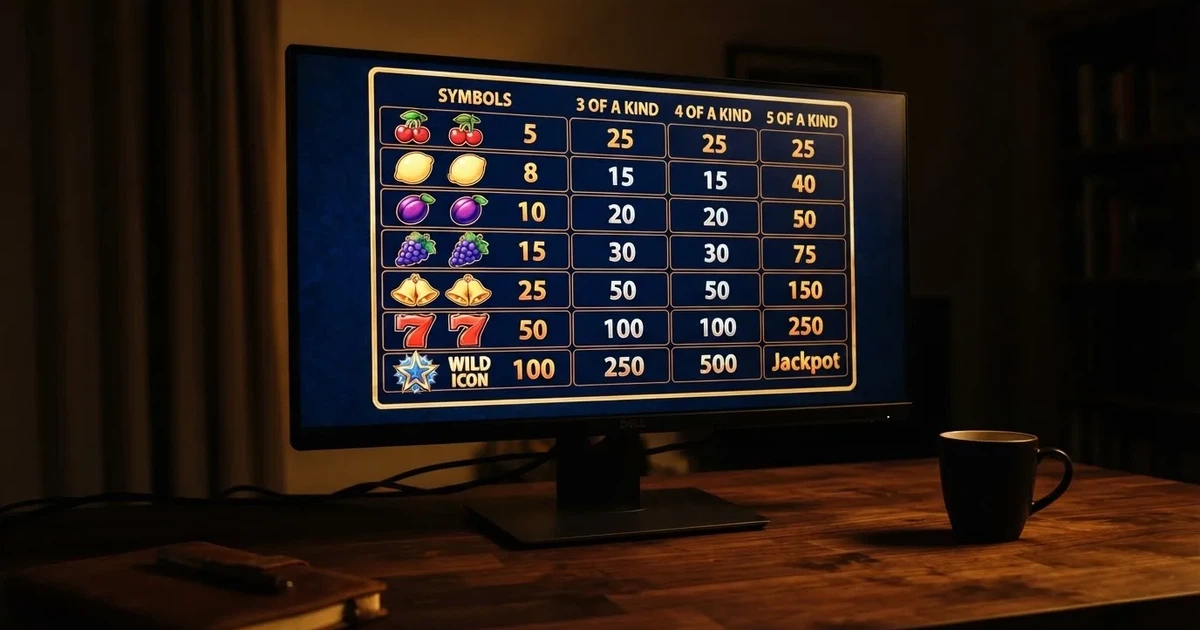
Data current as of 8 November 2026, checked against the ACMA register of formal warnings and blocking actions.
Table of Contents
- Playing Wazdan slots on a mobile in Australia
- Wazdan’s catalogue, mechanics, and what its games are like
- Eleven operators the ACMA has acted against
- The legal picture in Australia for 2026
- How many sites has the ACMA blocked, and at what rate
- Protecting yourself when Wazdan titles appear in your search results
- How bonuses and free-spin offers work on the brands that carry Wazdan
- Payment and withdrawal mechanics on the operators above
- What an Australian reader takes from this page
- Frequently asked questions
Playing Wazdan slots on a mobile in Australia
Wazdan has been a mobile-first studio since long before HTML5 became table stakes. Every game in its catalogue runs in a browser tab, so no download is needed: load a casino’s instant-play lobby in Safari or Chrome on iOS, or in Chrome on Android, and the slot opens full-screen. The studio’s own description lists more than 2,500 casino partners and a presence in 20+ markets, and a meaningful share of that traffic is mobile. Load times are short, the controls scale to thumb reach, and portrait orientation is supported on most of the more recent releases.

The catch sits one layer up, in the casino rather than the game. A dedicated casino app downloaded from the App Store or Google Play from an Australian IP, advertising Wazdan pokies for real money, is exactly the product the Interactive Gambling Act prohibits. Apple’s policy already removes real-money casino apps from the Australian storefront; Google’s policy is similar. So the practical Wazdan-on-mobile experience for an Australian resident is a browser tab on an offshore site, not a downloadable product, and the offshore site is the entity the ACMA has spent the last several years warning and blocking.
Two operator-side specifics travel with mobile play. First, the orientation lock — many Wazdan titles force landscape because the bonus round is wider than the portrait viewport can carry without shrinking the symbol grid. A punter who prefers one-handed play adjusts. Second, the in-game Volatility Levels feature (low, standard, high) changes session length: a player on “low” will see more, smaller hits and a longer battery-and-data bill than a player on “high,” which is part of why Wazdan pitches it as a comfort setting. On a metered mobile connection, that choice has a real cost.
Wazdan’s catalogue, mechanics, and what its games are like
Wazdan was founded in 2010 and operates from Office 602, Dragonara Road, St Julian’s, Malta. Its studio licence there is MGA/B2B/206/2011 and it holds a UK Gambling Commission account under number 48872. The company’s own page counts more than 300 active titles, 40+ new releases a year and a footprint in over thirty regulated markets including New Jersey, Michigan, West Virginia, Ontario, Sweden, Romania, Greece and Denmark. None of those jurisdictions is Australia.
Three mechanics recur across the catalogue and are worth naming because they appear in every Wazdan review. Volatility Levels, introduced in 2018, lets a player switch the game’s hit distribution across three settings before the next spin — a feature few other studios ship. Hold the Jackpot is a bonus-round series built around sticky bonus symbols that lock for respins, with jackpots paid on the filling of the meter. Collect to Infinity (and its branded cousin Cash Infinity) lets cash-symbol values accumulate across an unlimited number of respins, which is the design choice that produces the headline max wins. The flagship release 9 Coins is the cleanest illustration of how these fit together: a 96.06% RTP, medium-high volatility, a 500× max win, no base-game prizes at all, and every payout concentrated in the Hold the Jackpot bonus.
The catalogue has a recognisable house style: bright symbols, fruit-and-coin iconography on older releases, mythology and adventure themes on newer ones, and a consistent 6×4 or 5×3 reel footprint. The 3D claim that recurs in marketing material refers to rendering depth on symbols and bonus wheels, not to a different category of game. For a player choosing what to play, the practical filter is volatility (Low / Standard / High), RTP (mostly in the 96.0–96.5% band) and the bonus mechanic (Hold the Jackpot, Collect to Infinity, Cash Crash, or Gamble).
1spin4win sits adjacent to Wazdan in the wider market as a smaller, HTML5-only studio founded in 2021, headquartered in Curaçao with a portfolio of more than 190 online slots and partnerships with over a thousand casinos. Its games appear on some of the same offshore sites that carry Wazdan. Aristocrat Leisure is the Australian angle: founded in 1953, ASX-listed under ALL since 1996, A$6.30 billion of revenue in 2025, and the largest gambling-machine manufacturer in Australia — but Aristocrat’s real-money online casino content is run through Aristocrat Interactive, and the Wazdan catalogue is not part of that arrangement. The two studios do not overlap on a player-facing basis in Australia.
Eleven operators the ACMA has acted against
The eleven brands below are not a ranking. They are the operators the Australian Communications and Media Authority has publicly named in formal warnings or blocking actions over the past four years, in connection with offering prohibited online casino games (including Wazdan-branded titles) to Australians. They are listed because the ACMA has acted, and in the order the research file records that history. Some carry Wazdan content directly; others carry games from studios that sit alongside Wazdan on the same offshore platforms. Each entry ends with a verdict on what the operator’s record means for a reader weighing the choice in front of them.
| Brand | ACMA action and date | Operator named by the ACMA | Wazdan subject support |
|---|---|---|---|
| RocketPlay | Formal warning March 2026; earlier Dama N.V., May 2022 | Pulsup Ltd (Rocketplay.com.au) | — |
| Level Up Casino | Formal warning May 2022 | Dama N.V. | Listed on Wazdan partner pages |
| Woo Casino | Formal warning March 2025 | Dama N.V. | — |
| Spirit Casino | Formal warning May 2025 | Dama N.V. | — |
| National Casino | Formal warning July 2025 | Consolutetish S.R.L. | Listed alongside other studios |
| Bizzo Casino | Formal warning July 2025; earlier TechSolutions, 2022 | Consolutetish S.R.L. | — |
| Ignition Casino | Formal warning July 2025 | Bamboo Media | — |
| Instant Casino | Formal warning February 2025 | EOD Code SRL | — |
| Jackbit | Formal warning April 2026 | Ryker B.V. | — |
| Casino Intense | Formal warning April 2025 | Sterplay Holding Ltd | Listed across multiple aggregators |
| Sky Crown | Formal warning (no date on ACMA publication) | Hollycorn N.V. | — |
The table is the editorial spine of the section. Below, each brand is unpacked in turn, with the specific ACMA record, what the public operator-of-record looks like, and the one distinguishing factor that decides who — if anyone — would still see this brand in their search results.
RocketPlay
The ACMA issued a formal warning to Pulsup Ltd over Rocketplay.com.au in March 2026, and a separate formal warning to Dama N.V. over a Rocketplay brand back in May 2022. The two records together suggest the same product has changed corporate shells at least once across the intervening four years. Dama N.V. is the operator-of-record for a long list of casino brands (Bambet, Dazard, Level Up, Wild Tornado, Cobra Casinos) that the ACMA grouped into a single May 2022 warning, so a reader who lands on RocketPlay today is landing on a corporate lineage the regulator has already addressed twice. Wazdan subject support for RocketPlay is not directly confirmed in the source material. The verdict: of the eleven brands, RocketPlay is the one with the longest running ACMA record and the clearest pattern of rebranding after action. For a reader who is in any case unable to play legally from Australia, the longevity is itself a warning — the warning cycle has not changed how the site reaches Australian traffic.
Level Up Casino
Level Up Casino sits inside the May 2022 Dama N.V. warning alongside five other brands, and Wazdan’s own partner pages list Level Up among sites carrying Wazdan content. That makes it the operator on this list with the most direct paper trail between the studio and the ACMA-named brand. The 2022 formal warning predates the 2024 ban on credit cards and crypto as deposit methods at licensed Australian wagering operators, so the site’s payment menu today is more tightly policed than it was when the warning was issued, but the prohibition on offering casino games to Australians is unchanged. The verdict: this is the brand on the list that genuinely stocks Wazdan slots according to the studio’s own listings, and the ACMA record is the older one — a reader comparing offshore options sees a site that the studio itself acknowledges, regulated by no Australian body.
Woo Casino
The ACMA issued a further formal warning to Dama N.V. over Woo Casino in March 2025, three years after the same operator’s first warning. The source material offers no direct confirmation of Wazdan subject support here. Two-and-a-half years after the first warning, Dama N.V. received another one for the same brand — which is the regulator’s quiet way of recording that the warning did not, on its own, change the operator’s behaviour. The verdict: Woo Casino is the clearest illustration on this page of what a formal warning is worth under the IGA. It is a published statement from the regulator, not a cease-and-desist. A reader looking at Woo Casino is looking at a brand the ACMA has named twice.
Spirit Casino
Spirit Casino was named in a Dama N.V. warning issued in May 2025. Like Woo Casino, it sits inside the Dama N.V. corporate family but on a separate brand name. Evidence of Wazdan content on this specific site is not explicitly documented. The pattern across the Dama N.V. family — Woo Casino in March 2025, Spirit Casino in May 2025, the original six-brand block in May 2022 — is one operator generating formal warnings faster than the ACMA can publish them as separate brands. The verdict: a reader who finds Spirit Casino in a search for Wazdan sites is, in practical terms, looking at the same corporate entity behind Woo Casino and four other brands. The “different brand” framing is a marketing surface; the regulator sees one operator.
National Casino
National Casino received a formal warning in July 2025 over Consolutetish S.R.L. The site is listed in the research file’s broader sweep as carrying titles from studios that sit alongside Wazdan on offshore lobbies — Betsoft and Pragmatic Play are named in the source material. Wazdan subject support for National Casino specifically is not directly confirmed. Consolutetish S.R.L. controls a group of brands (National Casino, Bizzo Casino) that the ACMA grouped into the same July 2025 warning cycle. The verdict: National Casino is on the list as a same-operator pair with Bizzo Casino below. A reader who is comparing one against the other is comparing two skins of the same regulated entity, and both are on the regulator’s published warning list.
Bizzo Casino
Bizzo Casino received its July 2025 Consolutetish S.R.L. warning alongside National Casino, and a separate formal warning over TechSolutions (CY) Group Limited and TechSolutions Group N.V. back in 2022 — so this brand has been through two distinct ACMA enforcement cycles under two distinct operators. Wazdan subject support for Bizzo Casino specifically is not directly confirmed in the source material. The verdict: Bizzo is the brand on this list with two operators named by the ACMA at two different points in time. A reader who treats it as a fresh offshore option is treating a brand that the Australian regulator has now addressed under two separate corporate shells.
Ignition Casino
Ignition Casino received a formal warning in July 2025 over Bamboo Media. Bamboo Media is the operator-of-record; the underlying brand surfaces in US-facing marketing but the ACMA action places it on the Australian prohibited-services list. Wazdan subject support for Ignition Casino is not directly confirmed in the source material. The verdict: Ignition is the brand on this list whose Australian relevance is least established — the ACMA action is real, but a reader who arrives here from a search for “Wazdan casinos Australia” is more likely to encounter the brand through its offshore poker and casino skin than through any Wazdan-specific offering. The Australian warning stands on its own.
Instant Casino
The ACMA issued a formal warning to EOD Code SRL over Instant Casino in February 2025. The “instant” naming pattern recurs across offshore brands that pitch rapid-withdrawal products; the ACMA record is what fixes the brand’s status in Australia. Wazdan subject support for Instant Casino is not directly confirmed in the source material. EOD Code SRL does not appear elsewhere in the ACMA’s published warning list at the time the research file was assembled. The verdict: Instant Casino is the simplest single-warning case on the page — one operator, one warning, no prior history in the register. A reader comparing it with the more repeatedly-named brands is looking at a thinner corporate footprint, which is neither an endorsement nor a red flag beyond the IGA’s underlying prohibition.
Jackbit
The ACMA issued a formal warning to Ryker B.V. over Jackbit and CasinOK in April 2026 — Jackbit and CasinOK are named together because they sit on the same Ryker B.V. licence, and the warning covers both. Wazdan subject support is not directly confirmed in the source material. Jackbit markets itself as a crypto-friendly casino and sportsbook; the April 2026 warning predates the 1 January 2027 start of the inducement provisions in the Interactive Gambling Amendment (Gambling Reform) Bill 2026 but sits inside the existing prohibition on providing casino games to Australians. The verdict: Jackbit is the most recent of the eleven formal warnings and the one most likely to appear in current Australian search results. It is also one of the two brands on this list that share a single ACMA action, which is the regulator’s quiet acknowledgement that an operator can run multiple prohibited brands from one licence.
Casino Intense
The ACMA issued a formal warning to Sterplay Holding Ltd over Casino Intense in April 2025. Casino Intense appears in third-party listings of studios that aggregate across offshore platforms — 1spin4win is one of the studios specifically named in those listings, with the broader studio mix including Betsoft, Playtech and others. Wazdan subject support is not directly confirmed in the source material, but the site’s aggregator footprint puts it in the same offshore lobby ecosystem as Wazdan’s studio partners. The verdict: Casino Intense is the brand on this list with the cleanest aggregator footprint, and the one most likely to surface in a player search that crosses studio catalogues. The ACMA record is a single warning; the broader aggregator placement is what distinguishes it from the brands above.
Sky Crown
The ACMA’s published formal warning to Hollycorn N.V. over Sky Crown and Blue Leo casino services is dated within the ACMA’s register but the specific date on the regulator’s publication is September 2022 — the older entry on this list. Wazdan subject support is not directly confirmed in the source material. Hollycorn N.V. operates multiple casino brands and the warning bundles Sky Crown with Blue Leo. The verdict: Sky Crown is the oldest record on the page — a reader who lands here is landing on a brand the ACMA has had on file for the better part of four years, with no second formal warning against it in that period.
The legal picture in Australia for 2026
Online casino play is prohibited in Australia. The Interactive Gambling Act 2001, in the form it took after the Interactive Gambling Amendment Act 2017, makes it an offence to provide online casino games, online pokies, online slot machines or in-play betting to a person physically in Australia. No state or territory licences those products. What is licensable is wagering on races and sporting events placed before the event, lotteries and keno — in practice, the licensed online bookmakers (52 of them, including Sportsbet, Bet365 and Ladbrokes) operate under Northern Territory Racing and Wagering Commission licences for tax reasons.
Wazdan’s own licensing footprint runs to more than thirty jurisdictions: New Jersey, Michigan, West Virginia, Ontario, Sweden, Romania, Greece, Denmark and others. The list is long and well credentialed, and it does not include Australia. The studio does not need an Australian licence because the studio is not the entity that provides the product to Australians — the offshore casino site is. The studio’s commercial relationship is with the operator; the operator’s breach of Australian law is what the ACMA acts against. That is why every brand in the table above carries an operator-of-record named by the ACMA, and not a Wazdan corporate entity.
Three further rules travel with the prohibition. First, the individual player is not prosecuted. The IGA targets the provider, not the customer. Second, the offshore site gives no Australian consumer protection — no Australian complaints body, no recourse if a withdrawal is refused, and the site can be blocked with a real-money balance still on it. Third, the 2024 payment reforms matter: since 11 June 2024, credit cards, credit-related products and digital currency are banned as payment methods at licensed Australian wagering operators, with penalties up to A$247,500 per breach. Legal deposit routes for licensed wagering are debit card, bank transfer, PayID/Osko and BPAY. A site asking an Australian for a credit card or a crypto deposit is one of two things: either it is licensed somewhere else and accepting payment methods that the Australian regime has closed off, or it is unlicensed. The same payment menu rules apply in spirit to offshore casino sites that target Australians — the Wazdan-branded titles that an Australian visitor can browse are offered by entities operating outside the Australian regime entirely.
The 2026 reform calendar adds one more piece of context. The Interactive Gambling Amendment (Gambling Reform) Bill 2026 passed Parliament on 19 August 2026; its advertising and inducement measures commence on 1 January 2027. On a 2026 page, that is law with a start date, not yet in force — but the advertising tightening that arrives in the new year is the next stage of the same enforcement direction the ACMA has been running since the 2017 amendments.
How many sites has the ACMA blocked, and at what rate
As of June 2026, the ACMA had asked Australian internet service providers to block 1,751 illegal gambling and affiliate marketing websites since the first blocking request in November 2019. That figure is the cumulative total of every blocking request the ACMA has issued over roughly six and a half years — November 2019 through June 2026, or about 79 months. Across that span, the regulator has directed blocks on something in the range of 22 sites per month, or roughly 265 per year. The most recent single round, reported on 26 June 2026, named twelve sites in one decision: 7Signs, ChromaBet, Donbet, Duospin, Freshbet, Slots Gem, Jacks Club, Lucky Start, Pointsbetz.com, Spinrise, Vinyl Casino and Wildsino.
A more honest framing than a single average: the rate has changed shape over the period. The early blocking rounds in 2019 and 2020 were small — single-figure requests as the ACMA built the legal machinery. The bulk of the 1,751 total has accumulated in 2023–2026, with successive multi-site rounds of fifteen to twenty sites at a time. The twelve-site round reported on 26 June 2026 is on the smaller end of the 2023–2026 cadence. The wider enforcement story is that more than 230 unlicensed gambling services have left the Australian market entirely since the 2017 strengthening of the IGA — which is the figure that captures the cumulative effect of warning letters, blocking requests, and the payment-method crackdown that closed off credit cards and crypto to licensed operators.
The H2 Gambling Capital 2025 estimate puts Australians’ losses to illegal gambling sites at roughly A$3.9 billion a year. The same report finds the share of gambling going through legal channels fell from 74% in 2021 to 64% in 2025. Those two figures together — roughly 22 site blocks a month on the enforcement side, A$3.9 billion a year still leaking offshore on the loss side — describe the gap between what the ACMA is doing and what Australian players are still doing. The blocking-rate arithmetic is one number; the A$3.9 billion is the other. They are measuring different things and both belong on the page.
Protecting yourself when Wazdan titles appear in your search results
The responsible-gambling framework that the ACMA funds and the states administer was built for the legal Australian market — licensed wagering, lotteries, keno, land-based pokies in clubs and pubs. The framework does not extend to offshore casino sites. BetStop, the National Self-Exclusion Register, went live in August 2023 and binds Australian-licensed online and phone wagering services; an offshore casino is not connected to it, and self-excluding through BetStop will not stop an offshore site from accepting a deposit. The National Gambling Helpline is 1800 858 858 — free, 24/7, with chat at Gambling Help Online — and it is the first call a reader should make if offshore marketing for Wazdan slots is starting to look like more than background noise. State and territory problem-gambling services run alongside the national line.
Two practical habits reduce exposure to offshore Wazdan marketing. First, if a brand surfaces in a search result and the brand name appears in the ACMA’s published warning list, that is the regulator’s published position that the site offers prohibited services to Australians — the warning is not a hint. Second, if the brand asks for payment by credit card or cryptocurrency for casino play from an Australian IP, the payment menu is the simplest available test of where the brand sits relative to the Australian regime. The credit-card and crypto prohibition at licensed Australian wagering operators, in force since 11 June 2024, is the consumer-facing edge of a much longer enforcement chain.
For readers who are weighing an actual session rather than a hypothetical one: the substantive position is that the Wazdan slots themselves are well-made software from a properly-licensed studio, and the act of prohibition targets the offering, not the player. The offshore casino site that carries them to an Australian visitor is the entity the ACMA acts against, and it is the entity that holds any real-money balance a player deposits. The Australian consumer protection that exists — BetStop, the helpline, the state-level services — operates on the legal side of the line the IGA draws.
How bonuses and free-spin offers work on the brands that carry Wazdan
Affiliate marketing for offshore casinos that carry Wazdan titles leans heavily on bonus and free-spin offers — deposit-match bonuses, free-spin packages tied to specific Wazdan releases, no-deposit bonus credits in the small print. The marketing language is uniform across the category and the structure is uniform too: a headline number (“100% up to A$500 + 200 free spins”), a wagering requirement (commonly 35×–50× the bonus amount), a maximum-cashout cap on no-deposit offers, a list of excluded games, and a withdrawal window measured in days. None of that changes under Australian law. The offers exist to convert a search visitor into a depositing player; the prohibition on offering the underlying product to Australians is independent of whatever inducement the operator puts in front of the visitor.
Three patterns recur. First, a no-deposit bonus is small in absolute terms (often A$10–A$25 in bonus credit or a small number of free spins) and capped hard on what it can convert to — a maximum-cashout ceiling of A$50–A$100 is common, with the rest voided at withdrawal. Second, a deposit-match welcome package spreads over the first two to four deposits and carries a wagering multiple that compounds across the bundle. Third, free-spin offers typically lock the spin value at the minimum bet level and route any winnings back through the same wagering requirement. At a 40× wagering multiple on a A$100 bonus with a A$0.10 spin value, the player has to spin 40,000 times before the bonus balance converts to withdrawable cash, and at a five-second spin interval that is roughly 56 hours of continuous play.
Two cautions travel with the bonus numbers. Wazdan’s own games are usually eligible for bonus play on these sites, but a small number of high-RTP or jackpot titles are routinely excluded from wagering contribution — the bonus terms page is where that list sits. And the wagering contribution of slots is typically 100%, but table games and live casino often contribute 5%–10%, which means a player who takes a bonus and then plays blackjack against the bonus balance will clear the wagering requirement far slower than the headline implies. The bonus is the inducement; the wagering multiple is the cost.
Payment and withdrawal mechanics on the operators above
Onshore payment mechanics for licensed Australian wagering are debit card, bank transfer, PayID/Osko and BPAY. Offshore sites that target Australians offer a wider menu — credit cards (where the issuer processes them), cryptocurrency (Bitcoin, Ethereum, USDT on TRC-20), e-wallets (MiFinity, Jeton, eZeeWallet), and bank transfer. Two of those routes are out of bounds for licensed operators: credit cards and crypto. An Australian-facing offshore site that offers crypto deposit is operating entirely outside the Australian regime; an Australian-facing offshore site that offers only debit card and PayID is harder to categorise, but the underlying prohibition on offering casino games to Australians remains whichever payment menu the site carries.
Withdrawal speed is the metric these operators compete on, and the marketing claims are uniform: “instant withdrawals”, “same-day payouts”, “15-minute processing”. The reality, where it can be verified, is a layered process. Crypto withdrawals are the fastest end-to-end — same blockchain confirmation, no intermediary bank, with the time cost sitting in queue and manual review. E-wallet withdrawals sit in the middle — same-day once approved, with an approval step that can take 24–72 hours on a first withdrawal because of KYC re-checks. Bank-transfer withdrawals are the slowest end of the menu, especially for cross-border transfers from a Curaçao- or Cyprus-incorporated entity to an Australian bank account.
The deeper question is what happens to a withdrawal that is refused. An offshore casino operating outside the Australian regime gives the player no Australian complaints body and no Australian recourse if the operator declines a withdrawal, voids winnings on a bonus-rule technicality, or closes the account. The “fast withdrawal” claim is only ever tested on a withdrawal the operator is happy to pay out.
What an Australian reader takes from this page
For an Australian resident, “best Wazdan online casino” is not a category that resolves the way the same search would resolve in Ontario or New Jersey. The Interactive Gambling Act prohibits the offering; the ACMA enforces that prohibition with formal warnings, blocking requests and a published register; the eleven brands above are the ones that surface most often in Australian-facing search results and that the regulator has already named. The page’s job is to lay those brands side by side with the ACMA record and the Wazdan listing status, so that the choice the reader is implicitly making — to either stop at this page, or to keep clicking through to one of those brands — is made on the actual shape of the Australian market rather than on the marketing language on the operator’s landing page.
The alternative path that the law leaves open is straightforward. Wazdan’s slot catalogue is also licensed for distribution through state and territory land-based venues, where equivalent games are regulated by the relevant state authority. The studio’s credentials — Malta, UK, New Jersey, Ontario, Sweden and the rest — are real. What is missing is the Australian online licence that would let the games reach Australian residents in an online casino wrapper, and no amount of offshore rebranding or fresh corporate shell changes that. The choice in front of an Australian reader is, in the end, the same one the IGA draws: between a legal onshore product in a regulated venue and an offshore product whose operator the ACMA has, in most cases, already named.
Frequently asked questions
Are Wazdan games legal to play from Australia?
No. Under the Interactive Gambling Act 2001, online casino games — including Wazdan slots — cannot lawfully be offered to a person in Australia. The offshore casinos that carry Wazdan titles are not licensed in Australia, and the ACMA has issued formal warnings to most of the operators that surface in Australian-facing search results for the category. The individual player is not the target of enforcement; the provider is.
What kinds of games does Wazdan make?
Wazdan specialises in online video slots — currently more than 300 active titles according to the studio’s own site — with mechanics including Volatility Levels (low, standard, high), the Hold the Jackpot bonus series, and Collect to Infinity / Cash Infinity. The studio is based in Malta, holds an MGA B2B licence (MGA/B2B/206/2011) and a UK Gambling Commission account, and is licensed in more than thirty regulated markets. None of those markets is Australia.
Are Wazdan games available in Australian land-based venues?
Wazdan’s catalogue is primarily an online product, and the studio’s licensing footprint runs through online regulators in Malta, the UK, New Jersey, Michigan, West Virginia, Ontario and a long list of European jurisdictions. For Australian players, the equivalent regulated product sits with state and territory authorities that oversee land-based pokies in clubs and hotels, and the game suppliers that build for that market — Aristocrat Leisure is the largest Australian gambling-machine manufacturer and has a separate online arm in Aristocrat Interactive. Wazdan and Aristocrat do not overlap in any Australian-facing product.
How can a player check whether a Wazdan title is fair before play?
Every Wazdan game lists its RTP and volatility on the studio’s own game page, and a player who has access to the game client can read those numbers in the paytable or help menu before staking. Independent testing labs certify the random number generator; the studio’s MGA and UKGC licences both require RNG certification to published standards. What no player can verify is the behaviour of an offshore casino’s own platform — whether the game offered is the genuine Wazdan build, whether the bonus terms are honoured, and whether a withdrawal request will be paid. Those sit outside the studio’s control.
Why do offshore sites keep advertising Wazdan games to Australian visitors?
Because the marketing reach (search advertising, affiliate content, social-media promotion) is global, and the IGA’s enforcement targets the provider rather than the player. The ACMA’s response is to issue formal warnings, direct ISPs to block sites and publish a register of action; the research file’s blocking-rate arithmetic captures the scale of that response over time. The economics for the operator are that any Australian visitor who deposits is revenue, and the per-visitor enforcement cost is low.
What should an Australian do if a Wazdan title appears on an unlicensed site?
The first move is to recognise the position: the site is offering a prohibited service under the IGA, and any money deposited sits with an offshore entity outside Australian consumer protection. The second is to use the official channels: BetStop for self-exclusion from licensed wagering, the National Gambling Helpline (1800 858 858) for 24/7 support, and the state or territory problem-gambling service for ongoing help. The third is to report the site to the ACMA, which is the practical mechanism by which the published register of formal warnings gets longer over time.