
Best new online casino sites in Australia, 2026: what the search actually turns up
Data current as of 8 November 2026 and checked against the ACMA’s published list of formal warnings and blocking requests.

A shortlist is the thing the search wants. A reader typing “best new online casino sites australia 2026” is not browsing for an essay — they want a ranked list and a verdict they can act on within the hour. The honest answer on this subject is shorter than that, and stranger. Under the Interactive Gambling Act 2001, no operator anywhere in Australia holds a licence to take an online casino bet, and the ACMA has been quietly shutting the offshore doors down for years. The “best new site” in the search-engine sense is, in Australian law, an illegal one.
That does not leave the reader with nothing. It leaves them with a different set of choices: licensed wagering on sport and racing (legal), land-based pokies and casinos (legal, regulated at state level), BetStop self-exclusion (free, statutory), and a clean understanding of what the offshore market actually looks like from the regulator’s side. This guide maps those paths. It is not a ranking of places to play.
Table of Contents
- Cryptocurrency and the offshore angle
- Payments and payout speed — the rails that are and are not in play
- Bonuses and free spins — what the inducement actually costs
- Mobile and the app question
- The games themselves — providers, tables, and the catalogue underneath
- What “new” actually means in this market
- The ranking — and why this guide does not give one
- Overview — the Australian online casino scene in plain terms
- Legality and the regulator’s record
- Responsible gambling — the Australian reader’s actual options
- What this leaves the reader with
- Frequently asked questions
Cryptocurrency and the offshore angle
Crypto gets mentioned early because it is the part of the offshore scene that Australian readers hear about most. A “new crypto casino” or “new bitcoin casino” is, in plain terms, an offshore operator that accepts Bitcoin, Ethereum, Tether and the rest. Several of the brands the ACMA has acted against over the past four years ran on exactly that model — RocketPlay, Jackbit, Casino Intense — though none of those claims about support for crypto are checked against the brands themselves, only against the listings that advertise them.

The structure underneath that scene is not Australian. The Interactive Gambling Act 2001 prohibits providing online casino games to anyone in Australia; it says nothing about how the offshore operator accepts payment. So a Bitcoin deposit sails past Australian banking rails entirely. The clearing house is offshore, the licence on the site is Curaçao or Kahnawake or Anjouan, and the consumer protections an Australian punter is used to — dispute resolution through AFCA, the ePayments Code, the bank’s chargeback right — do not reach that transaction.
Two corollaries fall out of this. The first is that crypto on a casino site is not a workaround for Australian law; it is just a payment rail that does not have to pass an Australian compliance check on its way through. The second is that if the operator disappears, or simply refuses a withdrawal, the only remedy is the licensing jurisdiction they chose — and that jurisdiction is rarely interested in a complaint from a non-resident. The “anonymity” pitch is real about the transaction. It is not real about the dispute.
A point on what “new” means in this corner of the market. A new bitcoin casino is typically a rebrand of an older Dama N.V. or Hollycorn N.V. operation, or a brand-new entity registered to a familiar shell. The ACMA’s record lists formal warnings issued to operators covering six casino brands at once (Dama N.V., May 2022, covering Bambet, Dazard, Level Up, Rocketplay, Wild Tornado and Cobra Casinos) and to a single operator running several sites under one parent (Hollycorn N.V., covering Sky Crown and Blue Leo). The novelty is in the URL. The corporate scaffolding behind it is rarely new.
Payments and payout speed — the rails that are and are not in play
For Australian readers, the way money moves is where the regulatory line becomes concrete. The 2023 amendments to the Interactive Gambling Act 2001 banned credit cards and credit-related products as payment for any Australian-licensed online wagering, and the same rule reaches digital wallets like Apple Pay when they pull from a credit line. Crypto is also off the menu for licensed operators since 11 June 2024, with penalties of up to A$247,500 for the operator taking it.
That is the licensed side. Offshore sites take whatever they take. For a reader thinking through how a deposit actually leaves their account, three Australian rails matter:
PayID and Osko, run by Australian Payments Plus. A bank transfer between participating Australian banks arrives in under a minute, 24/7, weekends included, addressed to either a BSB and account number or a PayID. Over 100 Australian financial institutions now offer PayID-based instant transfers, and more than 25 million PayID identifiers were registered by April 2025. The name of the account holder shows up before the transfer is sent — a feature AP+ itself flags, warning that being asked to PayID money to an illegal gambling site is almost certainly a scam. That last sentence is one of the few free pieces of consumer protection in this market.
BPAY, also run by AP+. The bill-payment service has been live since 18 November 1997, sits inside the online banking of more than 140 Australian banks and credit unions, and is offered by over 95,000 businesses. It is built around a Biller Code and a Customer Reference Number (CRN), and it remains the cleanest way for an Australian to pay a registered Australian biller — not the offshore scene.
Direct debit and direct bank transfer, the boring fallback. Both still work. None of these rails is illegal to use; the legal question is what sits on the other end of them.
On the credit-card side, two Australian banks are explicit about how they block gambling at the card level rather than the wallet level. Westpac refuses authorisation on transactions registered under the merchant category code “Betting/Casino Gambling” on eligible personal credit and debit cards. ANZ’s gambling transaction block, activated inside the ANZ app, blocks transactions made through a digital wallet such as Apple Pay on an eligible card, not just the card itself; turning the block off again requires a 48-hour waiting period, and the bank warns that not every gambling transaction will be caught and some non-gambling transactions may be blocked in error. Commonwealth Bank runs a similar gambling lock in its app. The bank’s own caveat is the same as ANZ’s: most gambling transactions are blocked, not all.
Payout speed — how quickly a withdrawal actually lands in an Australian bank account — depends on the offshore operator’s settlement cycle, not on the Australian rail. The instant-transfer side runs fast when the operator is willing to push the money out. The delays readers complain about are at the operator’s end: pending periods, weekend queues, and “verification” steps that reopen every time a payout crosses a threshold. None of that is a feature of PayID. It is a feature of offshore operations.
One quiet rider sits across the whole scene. AUSTRAC’s threshold-transaction-report rule, which requires reporting of transfers of A$10,000 or more, applies only to physical cash. Ordinary electronic bank transfers are not subject to that per-transaction reporting requirement, regardless of the amount sent. So a large bank transfer to an offshore operator is not, by itself, an AUSTRAC report. The legal exposure is on the operator’s side, not the punter’s.
Bonuses and free spins — what the inducement actually costs
The bonus is the part of an offshore casino pitch that looks like a gift and works like a finance product. A “new casino welcome bonus” of 200% up to a few thousand dollars, plus a hundred or so free spins, sits at the top of every affiliate page that ranks these brands. None of the bonus terms in that material are checked against the operator’s own current terms page in this guide — they are pulled from listings, not from the brands themselves, and the operator’s own current terms page is the only document that governs the actual offer.
What carries across from the research, and matters regardless of which bonus figure is on the table:
Turnover requirements, or wagering requirements, sit in the small print. A 35× or 40× multiple on the bonus amount is ordinary for this market. What that number actually does is require the punter to place a multiple of the bonus in bets before any of it converts to withdrawable cash. A$1,000 in bonus funds at 40× means A$40,000 in qualifying bets before withdrawal is even open.
Game weighting. Slots usually count 100% toward turnover. Table games and most live-dealer titles count less, sometimes nothing. A punter who assumes their roulette session is grinding down a bonus is grinding a different number than the small print says.
Max-cashout caps. Even after a bonus is “cleared”, a cap on how much of the bonus-derived winnings can be withdrawn is standard. The cap is the line between “I won something” and “I can take it home.”
Time limits. Bonuses expire. A 30-day window is common; shorter is not unusual. The bonus does not pause while the punter thinks.
What the punter is buying with all of that is, in plain terms, time at a negative expected value. The house always has an edge, and the bonus does not change the edge — it changes the shape of the wagering the punter has to do to reach a withdrawal. The honest way to read a welcome offer is as a way to sample a catalogue under a constrained set of conditions, not as free money.
The IGA’s 2026 reform package — the Interactive Gambling Amendment (Gambling Reform) Bill 2026, which passed Parliament on 19 August 2026 — addresses advertising and inducements directly, but its advertising and inducement measures commence on 1 January 2027. Law with a start date, not yet in force on a 2026 page. It will tighten what licensed operators can offer as inducement to sign up. It does not touch offshore operators, who are not licensed in Australia and not subject to the inducement rules in any case.
Mobile and the app question
A “new mobile casino” pitch is, in practice, one of three things. It is a mobile-optimised website that opens in any browser. It is a Progressive Web App, which behaves like an app when added to the home screen. Or it is a native binary downloaded from the operator’s own site, because the Apple App Store and Google Play do not host real-money casino apps for Australian users — the IGA puts them outside what the stores will distribute.
The verification question — “is this new mobile casino app actually from the operator it says it is?” — has a clean answer for the legitimate cases. A browser-based site is verified by the URL. A PWA is verified by the source page that offered to install it. A native binary is verified by the operator’s own download link, and that link should match the domain that appears on the operator’s own terms and licensing pages. Any time the app’s publisher name and the operator’s name do not line up, the download is suspect.
The Australian banks’ card-level blocks, mentioned earlier, do most of their work at the moment of transaction authorisation. On a mobile browser, those blocks work the same way they do on a desktop. On a PWA, the same. On a native binary, they work the same — the block is at the card, not the device. That detail is worth keeping in mind when an offshore pitch emphasises “card-free” deposits; the block is on the card, and a different deposit rail does not unblock it.
For Apple Pay specifically, Apple does not charge fees to consumers for using it — any surcharge is the merchant’s processing fee, not Apple’s. Transaction limits and PIN requirements for Apple Pay purchases are set by the card issuer or merchant, not by Apple. And on Australian-licensed wagering, the 2023 IGA amendments already restrict credit-card-funded payments, which reaches Apple Pay when it pulls from a credit line. None of this changes anything for an offshore site. It does explain why a reader who has set a bank-level gambling block and then sees a transaction go through is usually looking at a non-card rail — PayID, BPAY, or an outright bank transfer — rather than at a wallet that bypassed the block.
The games themselves — providers, tables, and the catalogue underneath
The “new casino slots” pitch is built around the same providers whether the brand is fresh or established. Pragmatic Play, Evolution for live tables, NetEnt, Play’n GO, BGaming, Hacksaw Gaming and Nolimit City recur across nearly every Dama N.V., Hollycorn N.V. and TechSolutions Group launch. A “new” brand’s library is rarely new; it is the same aggregator feed with a new front page.
For live casino specifically, the same handful of studios — Evolution, Pragmatic Play Live, sometimes Ezugi — provide the bulk of the tables. Roulette, blackjack, baccarat, game-show formats (Crazy Time, Monopoly Live and their cousins) make up most of the catalogue. The catalogue’s shape tells a reader what kind of operation it is. A live lobby with a hundred tables from three studios is a white-label operator with a Pragmatic or Evolution feed. A live lobby with thirty tables and a sportsbook attached is, more often than not, a casino that bolted on live games as a marketing line.
Game weighting on bonuses, mentioned earlier, is the practical reason game choice matters beyond taste. Most slots count 100% toward turnover; most live-dealer and table games count 10–20% or zero. A punter who plans to clear a bonus at the blackjack table will, in practice, be clearing it at slot speed at best.
No RTP or hit-rate figure for any specific title is verified against the providers in this guide. The market-standard RTP for online slots sits in the 94–96.5% band depending on the title; the higher-RTP variants of some games (96.5%+ on certain NetEnt and Play’n GO releases, for example) exist as separate game IDs rather than as a setting the punter can flip. A reader who wants the better-paying version of a familiar game has to find it by name, not assume it.
What “new” actually means in this market
The honest reading of “new” depends on which shelf of the market is being talked about.
On the licensed side, “new” means little — Sportsbet, Bet365, Ladbrokes and the rest of the Northern Territory’s 52 licensed online bookmakers have been in place for years, and the IGA’s prohibition on casino games means the licensed scene has no debut pipeline to draw from. A genuinely new Australian-licensed online wagering brand is rare.
On the offshore side, “new” is mostly a marketing word. A new casino launching under an unfamiliar URL is, in the majority of cases, either a new brand from an existing operator group (Dama N.V., Hollycorn N.V., TechSolutions Group N.V. and their peers all launch multiple brands a year) or a familiar brand on a new domain after the old one was blocked. The blocking rate from the ACMA’s first request in November 2019 to the round reported on 26 June 2026 is a striking figure on its own: 1,751 illegal gambling and affiliate marketing websites blocked over just under seven years, with more than 230 unlicensed gambling services having left the Australian market since enforcement was strengthened in 2017. That arithmetic gives a working rate somewhere in the range of 200 to 260 websites blocked per year on average across that period — a rough band rather than a single number, because the ACMA’s enforcement rounds come in batches rather than a steady monthly flow, and a small share of the 1,751 figure is affiliate marketing sites rather than gambling brands themselves.
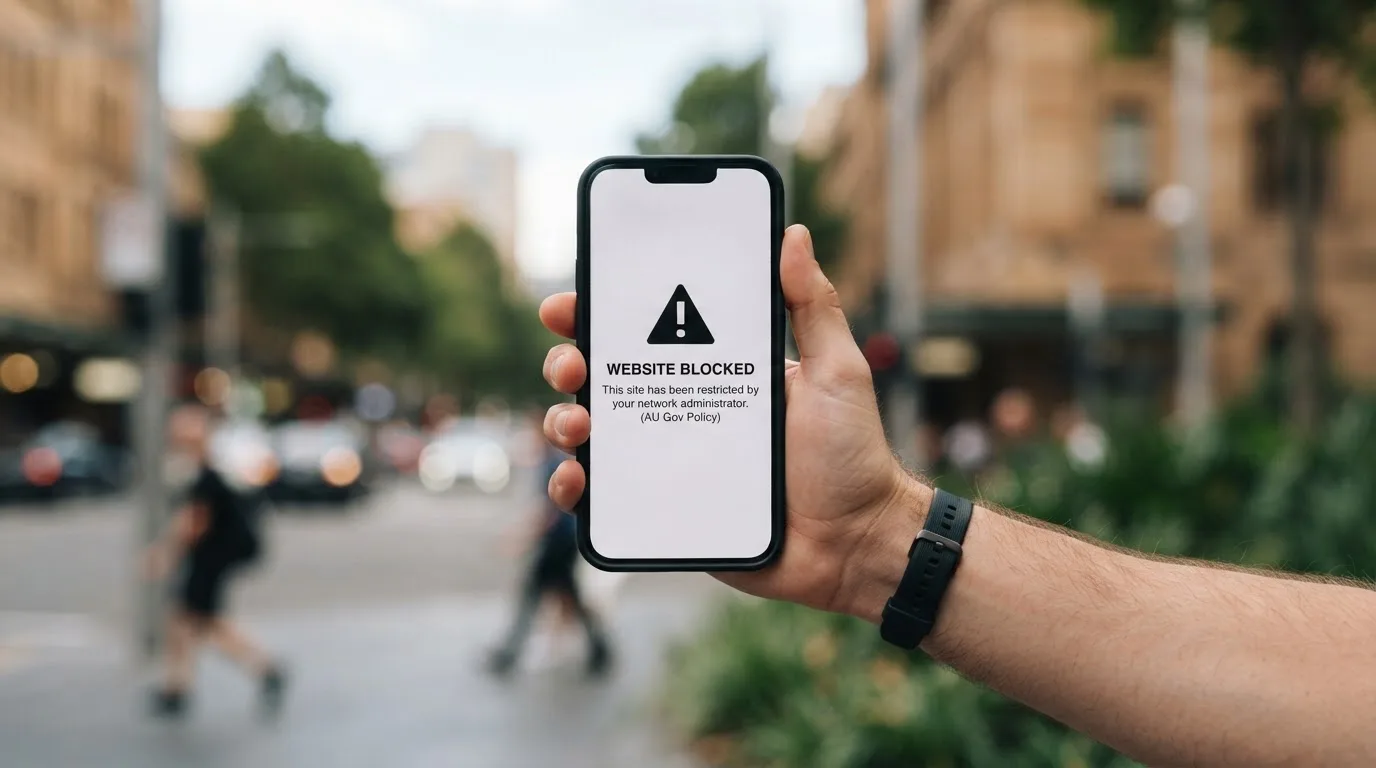
The same round added another 12 domains to the block list: 7Signs, ChromaBet, Donbet, Duospin, Freshbet, Slots Gem, Jacks Club, Lucky Start, Pointsbetz, Spinrise, Vinyl Casino and Wildsino. A reader who lands on any of those URLs now hits a block page at the ISP, not the casino. The round before it worked through the formal-warning pipeline — the slower route that runs through correspondence, then a public warning, then a referral to the ISPs for blocking.
The ranking — and why this guide does not give one
A traditional “top 11” of new online casinos, ranked by bonus size and game count, is a useful starting point for a search, but the regulator’s record makes it impossible to provide an honest ranking. Each of the brands below has been the subject of a formal warning from the ACMA for offering prohibited online casino games to Australians. None can be described as a safe place to play, because none is licensed to offer what they are offering.
What follows is therefore not a ranking. It is the regulator’s record of what has been acted against, in the order the ACMA’s actions were issued. A reader looking for a “best new online casino” should read this as the list of brands to avoid, with the reason for each warning attached.
The comparison that matters is across the table that follows. Read across the columns — brand, ACMA action and date, operator named by the ACMA, subject support — and the shape of the offshore scene becomes visible. The same operator groups recur across brands and across years. The warnings cluster by parent company. The “subject support” column records what is known about each brand from outside sources, never what the brand itself claims, and the no-data entries are no-data rather than negative claims.
The eleven brands the ACMA has acted against
RocketPlay. The ACMA issued a formal warning over RocketPlay to Pulsup Ltd in March 2026; an earlier May 2022 warning covered RocketPlay among six Dama N.V. brands. Listings report the brand’s profile; the brand itself is not checked for this guide.
Level Up Casino. The ACMA issued a formal warning to Dama N.V. over Level Up in May 2022. The warning sits alongside five sister brands named in the same action. Listings carry the brand’s market profile; the brand’s own statements are not checked here.
Woo Casino. The ACMA issued a formal warning to Dama N.V. over Woo Casino in March 2025. No information about subject coverage is verified; the brand is presented on its ACMA record only.
Spirit Casino. The ACMA issued a formal warning to Dama N.V. over Spirit Casino in May 2025, two months after the Woo Casino action against the same parent. No subject coverage is verified.
National Casino. The ACMA issued a formal warning to Consolutetish S.R.L. over National Casino in July 2025. The brand has been the subject of listings coverage from ACMA, AUSTRAC and BetStop materials; the brand’s own statements are not checked for this guide.
Bizzo Casino. The ACMA issued a formal warning to Consolutetish S.R.L. over Bizzo Casino in July 2025; an earlier 2022 warning covered Bizzo under TechSolutions (CY) Group Limited and TechSolutions Group N.V. — the same brand, two operators, three years apart. Listings carry the brand’s market profile; the brand’s own statements are not checked here.
Ignition Casino. The ACMA issued a formal warning to Bamboo Media over Ignition Casino in July 2025. No subject coverage is verified.
Instant Casino. The ACMA issued a formal warning to EOD Code SRL over Instant Casino in February 2025. Listings report the brand’s payment profile; the brand itself is not checked.
Jackbit. The ACMA issued a formal warning to Ryker B.V. over Jackbit in April 2026, alongside CasinOK. No subject coverage is verified.
Casino Intense. The ACMA issued a formal warning to Sterplay Holding Ltd over Casino Intense in April 2025. The brand has been covered in listings drawn from AUSTRAC, BetStop and trade publications; the brand’s own statements are not checked for this guide.
Sky Crown. The ACMA issued a formal warning to Hollycorn N.V. over Sky Crown; the warning also named sister brand Blue Leo. No subject coverage is verified.
| Brand | ACMA action and date | Operator named by the ACMA | Subject support |
|---|---|---|---|
| RocketPlay | Formal warning, March 2026; earlier May 2022 under Dama N.V. | Pulsup Ltd (March 2026); Dama N.V. (May 2022) | Listings report the brand’s profile |
| Level Up Casino | Formal warning, May 2022 | Dama N.V. | Listings report the brand’s profile |
| Woo Casino | Formal warning, March 2025 | Dama N.V. | — |
| Spirit Casino | Formal warning, May 2025 | Dama N.V. | — |
| National Casino | Formal warning, July 2025 | Consolutetish S.R.L. | Listings report from ACMA, AUSTRAC and BetStop materials |
| Bizzo Casino | Formal warning, July 2025; earlier 2022 under TechSolutions | Consolutetish S.R.L. (2025); TechSolutions (CY) Group Limited and TechSolutions Group N.V. (2022) | Listings report the brand’s profile |
| Ignition Casino | Formal warning, July 2025 | Bamboo Media | — |
| Instant Casino | Formal warning, February 2025 | EOD Code SRL | Listings report the brand’s payment profile |
| Jackbit | Formal warning, April 2026 (alongside CasinOK) | Ryker B.V. | — |
| Casino Intense | Formal warning, April 2025 | Sterplay Holding Ltd | Listings report from AUSTRAC, BetStop and trade publications |
| Sky Crown | Formal warning, date as published by the ACMA | Hollycorn N.V. | — |
The table tells its own story. The same parents — Dama N.V., Consolutetish S.R.L., TechSolutions, Hollycorn N.V. — recur across rows. A reader looking for a “new” brand is, in most cases, looking at a sibling of a brand that has already been acted against. The “new” pitch is real about the URL; it is not real about the operating company.
Overview — the Australian online casino scene in plain terms
Australia’s online gambling market is split cleanly in two. On one side sit the operators licensed in Australia — sports and racing bookmakers licensed in the Northern Territory, lotteries and keno licensed at state level, and wagering services covered by the IGA’s consumer protections. On the other side sit offshore operators offering online casino games, online pokies and in-play betting to Australians, none of whom is licensed in any Australian jurisdiction because no Australian jurisdiction licenses them.
The licensed side is the smaller of the two by transaction volume and the larger of the two by consumer protection. The Northern Territory Racing and Wagering Commission regulates 52 of Australia’s online bookmakers — including Sportsbet, Bet365 and Ladbrokes — for tax reasons; the commission has no full-time staff and meets once a month in Darwin. The thinness of the regulator explains why reform conversations keep circling back to the NTRWC. It does not change what an Australian punter can lawfully do: bet on sport and racing with a licensed bookmaker, play pokies at a licensed club or casino, buy a lottery ticket, and use BetStop if they want to stop.
The offshore side is bigger by some measures. H2 Gambling Capital’s 2025 report estimates that Australians lose about A$3.9 billion a year to illegal gambling sites, and that the share of gambling going through legal channels fell from 74% in 2021 to 64%. The first number is the offshore market’s annual take from Australian customers; the second is the trend. Legal channels are losing share to illegal ones. That is the policy problem the IGA is, on its current trajectory, not solving.
What the offshore side does not have is recourse. If a licensed bookmaker refuses a withdrawal, the punter can complain to AFCA, the ePayments Code, the bank’s chargeback process, and the regulator. If an offshore casino refuses a withdrawal, the punter’s remedies are the licensing jurisdiction’s complaint process — usually inaccessible — and the goodwill of the operator. Some operators honour withdrawals promptly. Some do not. There is no Australian body to take the complaint to.
The minimum age for any gambling activity covered by the IGA is 18. That is the legal floor. The IGA itself does not make it an offence for an individual Australian to gamble online; it makes it an offence for an operator to offer online casino games to a person in Australia.
Legality and the regulator’s record
The Interactive Gambling Act 2001, strengthened by the Interactive Gambling Amendment Act 2017, is the statute that makes the picture what it is. It prohibits providing online casino games, online pokies and in-play betting to a person in Australia. Wagering on sport and racing, lotteries and keno are the licensed categories. The state and territory licensing regimes do not extend to online casino games because the IGA is a Commonwealth Act that pre-empts them.
Enforcement runs through the Australian Communications and Media Authority. The ACMA investigates complaints, issues formal warnings, and can direct Australian internet service providers to block illegal sites under section 313 of the Telecommunications Act 1997. The 1,751 websites blocked since November 2019 is the running total; the 230-plus unlicensed services that have left the Australian market since 2017 is the longer arc. Both numbers come from the ACMA’s published enforcement record.
What enforcement looks like in practice is a slow escalation. The ACMA contacts the operator, asks for evidence of compliance, and gives a window to act. If the operator does not, a formal warning is issued and published. If that does not work, the matter moves to referral for ISP blocking. The 12 domains blocked in the round reported on 26 June 2026 — 7Signs, ChromaBet, Donbet, Duospin, Freshbet, Slots Gem, Jacks Club, Lucky Start, Pointsbetz.com, Spinrise, Vinyl Casino and Wildsino — are the most recent layer of that process.
A separate, slower track runs through formal warnings where the operator is named but blocking has not yet followed. Rocketplay.com.au (Pulsup Ltd, March 2026), Jackbit and CasinOK (Ryker B.V., April 2026), and Casino Intense (Sterplay Holding Ltd, April 2025) all sit on that part of the ledger. The formal-warning phase typically runs for a year or more before a blocking request, so the brands most recently named are the ones a reader is most likely to still be able to reach at a given URL.
The 2026 reform — the Interactive Gambling Amendment (Gambling Reform) Bill 2026, passed 19 August 2026 — adds inducement and advertising rules that commence on 1 January 2027. The bill tightens what licensed operators can offer as a sign-up inducement and what they can advertise around sporting events. It does not extend the IGA’s prohibition to new categories of gambling. It does not change the status of offshore operators. Its consumer-protection value is real for the licensed side; its effect on the offshore market is limited to making licensed offers less competitive on inducement terms.
One last point that the regulator’s record makes clearer than any marketing page. An offshore operator’s “licence” — Curaçao, Anjouan, Kahnawake, the Philippines — is a real licence, issued by a real regulator. It is not an Australian licence. The difference matters because the Australian consumer protections (AFCA complaints, ePayments Code, chargeback rights, the bank’s responsible-gambling tools) attach to the Australian licensee. They do not attach to an offshore one.
Responsible gambling — the Australian reader’s actual options
Responsible gambling in the Australian context is statutory and free, and it works against licensed operators only.
BetStop, the National Self-Exclusion Register, has been live since August 2023. A person who registers with BetStop is excluded from every Australian-licensed online and phone wagering service at once, for a period they choose (three months, twelve months, or a permanent exclusion). The exclusion is binding on the operator; a licensed bookmaker is required to take reasonable steps to prevent the registered person from betting.
What BetStop does not do is block offshore operators. An Australian who has self-excluded through BetStop and then signs up with an offshore casino is not protected by the exclusion — the offshore operator has no connection to the register and no obligation to honour it. That asymmetry is the most important consumer-protection gap on the Australian scene, and it is not closed by the 2026 reform package.
The National Gambling Helpline is 1800 858 858, free, 24/7, with chat support at Gambling Help Online. The helpline is funded by the Commonwealth and operated by the state and territory gambling-support services; it is not a sales line and it does not refer callers to operators. The advice it gives is independent of any regulator.
The bank-level gambling blocks — Westpac’s merchant-category block, ANZ’s 48-hour-toggle gambling transaction block, Commonwealth Bank’s gambling lock — sit alongside BetStop as another layer. They work on the card, not the consumer; they catch most gambling transactions and miss some, as the banks themselves warn. Used together with BetStop, they reduce the practical means of placing a bet. They do not eliminate the option of trying to find an offshore site that accepts a payment the bank has not blocked.
The State and territory support services — Gambler’s Help in Victoria, GambleAware in NSW and so on — operate free counselling and financial counselling for problem gambling. They are not part of the IGA’s enforcement frame; they sit alongside it, and they are the right first call for anyone whose gambling has stopped being a recreational spend.
The tax side is straightforward for a recreational player. Gambling winnings of a recreational player are not assessable income under section 6-5 of the ITAA 1997, and losses are not deductible. The rule applies unless the person carries on a business of gambling — a model only, and one to check with the ATO rather than assume. The asymmetry — winnings are tax-free, losses cannot be claimed — is the same asymmetry the IGA’s prohibitions sit on top of: the law treats gambling as consumption, not as investment.
What this leaves the reader with
Three paths, in plain terms. The first is the licensed path: sports and racing with a Northern Territory-licensed bookmaker, pokies at a licensed Australian club or casino, lotteries and keno at state level, and the bank-level gambling blocks plus BetStop as the responsible-gambling layer. The second is the offshore path: any of the eleven brands the ACMA has acted against, or any of the brands still on the formal-warning list that has not yet reached the blocking stage, operating outside Australian consumer-protection law and at the punter’s own risk on disputes. The third is no gambling at all, supported by BetStop, the National Gambling Helpline, and the state and territory support services.
What a reader looking for a “best new online casino” should expect to find is a list of brands to avoid, with the reason for each warning attached.
Frequently asked questions
How can someone tell how new an online casino site actually is?
Look at the corporate filings behind the URL rather than the launch date on the site’s footer. The ACMA’s record of formal warnings over the past four years shows that the majority of “new” offshore brands are launched by operators who already run several sibling brands under the same parent — Dama N.V., Hollycorn N.V., Consolutetish S.R.L. and TechSolutions all appear multiple times in the warning record. A “new” URL on the same operator group is not, in any meaningful sense, a new casino.
Do brand-new casino sites carry more risk than established ones?
Yes, on three points. A new site has no withdrawal track record an Australian punter can verify; an established site has a public complaints history at least. A new site is more likely to be on the ACMA’s active enforcement list — the recent warnings cluster in the past two years. And a new site’s operating company has had less time to develop a relationship with a payment processor, which is one reason new sites lean heavily on crypto and PayID. Risk attaches more to the operator group than to the URL’s age.
Is it legal for a newly launched online casino to accept Australian players?
No. Under the Interactive Gambling Act 2001, providing online casino games, online pokies or in-play betting to a person in Australia is prohibited, and no state or territory issues a licence for it. The individual player is not prosecuted, but the operator is, and an offshore site can be blocked at the ISP with a balance still on the account. The minimum age for any gambling activity covered by the IGA is 18.
What should someone check before trusting a casino site that only just launched?
Check the ACMA’s list of formal warnings and the ACMA’s published blocking requests, both available on acma.gov.au. Check the operator’s licence — a Curaçao or Anjouan licence is real but does not provide Australian consumer protection. Check the payment rails — a site asking for credit cards or crypto on a brand pitched at Australians is operating outside the licensed-frame rules. And check the bank — most Australian banks now offer a card-level gambling block that works regardless of the operator.
Do new casino sites typically offer a welcome bonus to attract players?
Yes, and the welcome offer is the main marketing lever in this market. The terms attached — wagering or turnover requirements, game weighting, max-cashout caps and time limits — are the actual cost. None of the bonus figures carried on affiliate listings in this guide are checked against the operators’ own current terms pages, so a reader who decides to claim an offer should read the operator’s own terms before depositing. The 2026 IGA reform package tightens inducement rules for licensed Australian operators from 1 January 2027; offshore operators are not covered.