
The ‘best casino in Tasmania’ in 2026: where the search leads, what the IGA does, and what the ACMA’s record looks like
A search for the best casino in Tasmania runs into Australia’s Interactive Gambling Act 2001 before it runs into any venue. Online casino games are prohibited for Australian residents. No state or territory issues the licence. What the search actually leads to is a licensed floor — one in Hobart, one in Launceston — and a regulator’s enforcement record that explains why nothing else stays online for long. The prohibition sits at the front of the answer. The ACMA’s enforcement record follows. The player-protection tools come next. And the eleven brands the ACMA has formally warned are listed in their published order.

Current as of 25 November 2026 and cross-checked against the ACMA’s published enforcement record.
Table of Contents
- The Interactive Gambling Act and Australia’s prohibition of online casino
- How the ACMA turns the prohibition into action
- The pace of blocking: a band across six and a half years
- Player wellbeing, self-exclusion, and what still works offshore
- Fundamentals: Wrest Point, Country Club, and the licensed floor in Tasmania
- Games on the floor: tables and pokies
- Eleven brands the ACMA has acted against: the warning record
- The core picture for someone searching in Tasmania
- Frequently asked questions
The Interactive Gambling Act and Australia’s prohibition of online casino
Australia’s online gambling law sits in the Interactive Gambling Act 2001, the IGA. The IGA was tightened in 2017 by the Interactive Gambling Amendment Act 2017, and the framework has been reinforced since. The single most important fact for the search “best casino in Tasmania” is this: the IGA makes it an offence to supply online casino games, online pokies, or in-play betting to a person physically in Australia. No state or territory — Tasmania included — issues the licence. There is no Australian licence to issue.
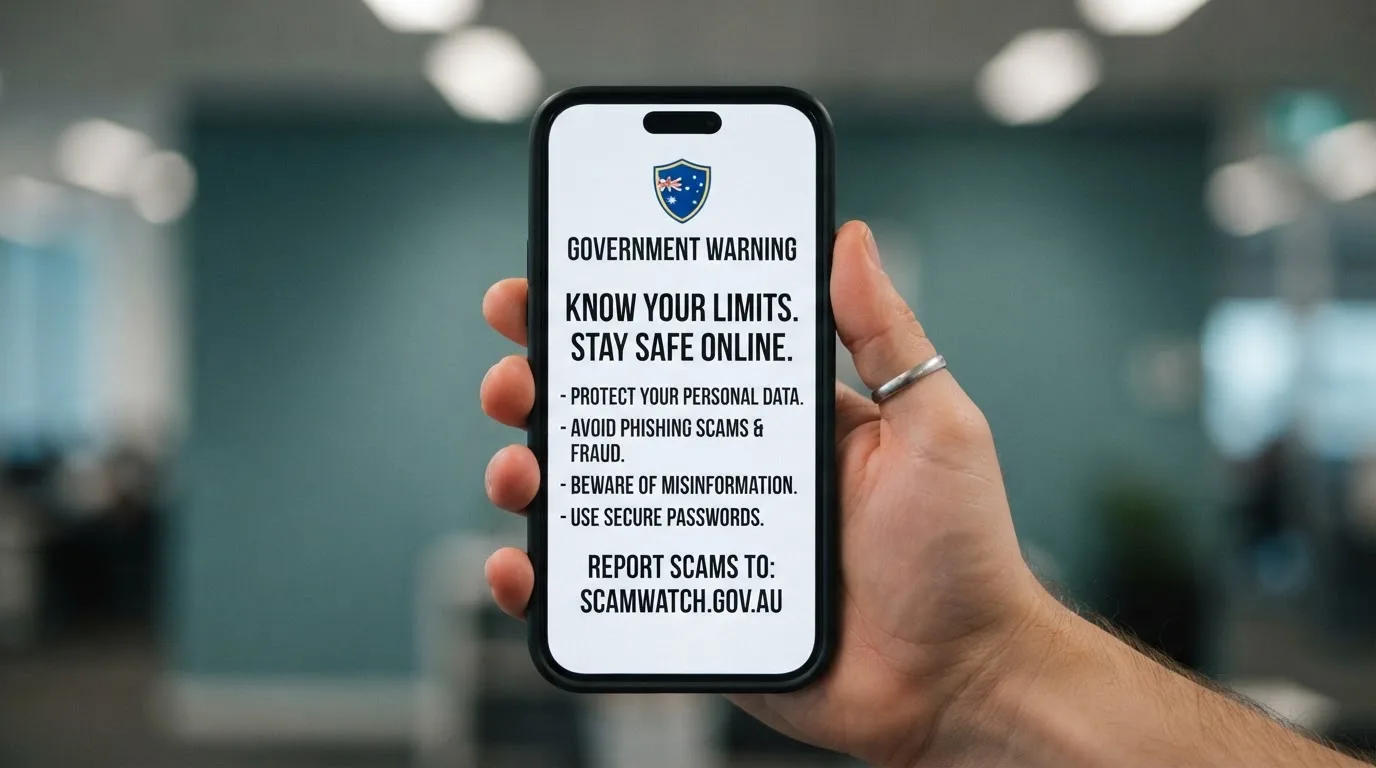
That is a stronger statement than it sounds. A casino can hold a Curaçao registration. It can hold a Malta Gaming Authority licence. It can hold an Anjouan approval. It can display those credentials on its homepage. It can pass an integrity audit and run a tournament series with named ambassadors. None of that changes what an Australian player encounters, which is that the service being supplied is a prohibited interactive gambling service the moment a Tasmanian resident opens an account. The IGA targets the provider, not the player. The provider’s status is what makes the offer legal or illegal in the first place.
What is licensable in Australia is a narrower set of activities. Racing and sports wagering placed before the event is permitted. Lotteries and keno are permitted. A small number of licensed wagering operators run those products under Northern Territory oversight. The Northern Territory Racing and Wagering Commission regulates fifty-two online bookmakers — the big names punters recognise from television advertising — and the commission itself operates with no full-time staff. It meets once a month in Darwin. None of those licences covers online casino, online pokies, or in-play betting. The universe of legal online gambling in Australia does not include the question this search is asking.
The structure of the prohibition has consequences for what a player is actually relying on, and those consequences are the point of the rest of this page. The IGA does not give the player Australian consumer protection. There is no Australian complaints body that an account-holder at an offshore casino can call when a withdrawal stalls. There is no requirement that the operator hold the player’s balance in segregated funds. There is no path to dispute resolution under Australian law, because the very relationship the player is entering into is one Australian law says should not exist. The protection that does exist — payment-route restrictions, self-exclusion registers, advertising caps — is layered around the legal channels. Anyone choosing the prohibited channel opts out of all of it.
The minimum age for any gambling activity in Australia is eighteen. That age applies on the floor of Wrest Point and the Country Club Casino. It applies online for the licensed wagering services. For the prohibited services, age is a side issue: the offering itself is unlawful regardless of how old the customer is.
There is one reform worth flagging because it will change the advertising picture rather than the prohibition itself. The Interactive Gambling Amendment (Gambling Reform) Bill 2026 passed Parliament on 19 August 2026, and its advertising and inducement measures commence on 1 January 2027. The IGA’s prohibition is not being loosened. It is being tightened around marketing. On a page being read in 2026, the new rules are law with a start date. They are not yet in force.
A secondary point that gets missed: credit cards, credit-related products, and digital currency are banned as payment for licensed online wagering in Australia since 11 June 2024. Penalties run to A$247,500 for operators that take them. Legal deposit routes for licensed wagering are debit card, bank transfer, PayID/Osko, and BPAY. A site asking an Australian for a credit card or a crypto deposit is operating outside the Australian rules. That is a small but useful tell for whether the site is reading the Australian rulebook at all.
The tax picture is the last piece of the framework, and it is the one players ask about most often. Gambling winnings of a recreational player are not assessable income under section 6-5 of the Income Tax Assessment Act 1997. Losses are not deductible — unless the person carries on a business of gambling. The ATO is the only authority that can answer the business-of-gambling question for a particular player. The default for the casual reader is that winnings are not taxed and losses cannot be claimed. Offshore sites, again, are not part of the Australian tax framework at all. Reporting depends on the player’s own circumstances and on the rules of the operator’s home jurisdiction.
How the ACMA turns the prohibition into action
The IGA is enforced by the Australian Communications and Media Authority, the ACMA. The ACMA investigates complaints, issues formal warnings to operators, and can direct Australian internet service providers to block illegal websites. Three enforcement tools, applied in roughly that order. Formal warnings and blocks are published on the ACMA’s website and dated.
The June 2026 round was a typical example. The ACMA asked ISPs to block twelve more illegal gambling sites: 7Signs, ChromaBet, Donbet, Duospin, Freshbet, Slots Gem, Jacks Club, Lucky Start, Pointsbetz, Spinrise, Vinyl Casino and Wildsino. Each name is the kind a search engine would have happily returned a year earlier. Each is now on a list Australian ISPs are obliged to act on. The round was reported on 26 June 2026.
The running total tells the longer story. As of that same report, the ACMA had asked ISPs to block 1,751 illegal gambling and affiliate marketing websites since the first blocking request went out in November 2019. More than 230 unlicensed gambling services had left the Australian market entirely since enforcement was strengthened in 2017 — a different count, because it includes services that withdrew rather than waited to be blocked. Both numbers move in the same direction. The market that the prohibition targets is shrinking, not because Australians have stopped searching, but because the operators targeted by the prohibition have stopped serving, or been cut off from serving.
Formal warnings are the ACMA’s earlier-stage tool. A formal warning names the operator behind a site and gives the date of the warning. It is published, and it is searchable. Several operators have been warned more than once, in some cases under different corporate names after the warning has gone out. Dama N.V., a Curaçao-registered operator, has been the named recipient of multiple ACMA formal warnings covering brands including Bambet, Dazard, Level Up, Rocketplay, Wild Tornado and Cobra Casinos in May 2022, Woo Casino in March 2025, and Spirit Casino in May 2025. TechSolutions Group has appeared under both TechSolutions (CY) Group Limited and TechSolutions Group N.V. for earlier warnings over Bizzo Casino. RocketPlay itself was named again under Pulsup Ltd in March 2026, three and a half years after the first Dama N.V. warning. The brand migrated between operators. The ACMA’s underlying concern did not go away.
The list of named warnings covers more than just Dama N.V. and its historical portfolio. The ACMA issued a formal warning to Bamboo Media over Ignition Casino and to Consolutetish S.R.L. over National Casino and Bizzo Casino in July 2025 — with Bizzo Casino already on the ACMA’s record from a 2022 warning to TechSolutions. EOD Code SRL was warned over Instant Casino in February 2025. Ryker B.V. was warned over Jackbit and CasinOK in April 2026. Sterplay Holding Ltd was warned over Casino Intense in April 2025. Hollycorn N.V. was warned over its Sky Crown and Blue Leo casino services in September 2022. The pattern is consistent: a corporate entity, one or more brand names, a date, and a public record.
The consequence for the player comes when the warning turns into a block. A site that has been formally warned and then continues to take Australian sign-ups is a candidate for the ACMA’s next blocking request. When the block goes in, the player’s existing account sits behind a domain Australians can no longer reach. Any balance still on it is now subject to whatever withdrawal process the operator chooses to run — and the operator, by this point, has been formally told the service is prohibited. A player who realises at that moment that they have no Australian recourse has just learned what the prohibition meant in practice.
The individual player is not prosecuted under the IGA. The Act targets the provider. The lack of prosecution does not create a safe harbour for the consumer. An Australian who has deposited with an offshore site, played through a bonus, and requested a withdrawal has no Australian regulator to escalate to. The site’s own complaints process, if it has one, is the only process. If that process refuses, delays, or simply ignores the request, the player has lost the money in the only sense that matters. There is no one to call.
There is also the question of what the ACMA can and cannot do once a balance has been paid into an offshore account. The ACMA’s powers run against the operator and against Australian ISPs. They do not extend to freezing funds, recovering deposits, or ordering a payout. Once money has crossed to a Curaçao or Anjouan corporate entity, the path back is whatever the operator’s terms say it is. The prohibition is enforced at the supply edge. It is not enforced at the recovery edge.
H2 Gambling Capital, in a 2025 industry report, estimated that Australians lose about A$3.9 billion a year to illegal gambling sites, and that the share of gambling going through legal channels fell from 74% in 2021 to 64%. The figures are estimates rather than audited totals, but the direction matches the ACMA’s own record. The prohibited channel is being used, and is being used at scale. The legal channel’s market share has fallen, not because Australians have stopped gambling, but because a growing share of what they spend on gambling is going through the prohibited path.
The pace of blocking: a band across six and a half years
The blocking rate is the most informative single number on the ACMA’s record, because it shows what the prohibition has actually translated into over time. The first blocking request went out in November 2019. The most recent published figure, in the June 2026 round, is 1,751 blocked sites.
That works out to roughly 22 sites blocked per month on average across the 79 months between November 2019 and June 2026. As a yearly rate, the same calculation sits in the band of 260 to 270 sites a year, averaged across the full period. State the result as a band with its condition, and the condition is exactly this: the rate is an average across the period since the first blocking request in November 2019. It does not include the 230-plus unlicensed services that left the market voluntarily rather than wait for a block.
The rate is the part that matters, more than the cumulative figure. A 1,751-site total looks like a finished number. A 22-per-month rate makes clear that this is enforcement that compounds. Each round sweeps up another dozen names. Each new name is the kind of brand that would have shown up in a search for “best online casino Tasmania” the year before. The site disappears. The searcher moves on. The next round handles the next brand that filled the gap.
The variation between rounds is itself a tell. The June 2026 round was twelve sites. Some earlier rounds were larger, some smaller, and the gap between them is sometimes weeks, sometimes months. The averages hide that unevenness. The prohibition is being applied. Not on a metronome.
There is a calculation worth doing alongside the rate, to see what the rate would have to be to clear the visible backlog in a given window. The 1,751 sites blocked by June 2026 represent only what the ACMA has chosen to act against. There is no published total of illegal gambling sites currently serving Australians — the regulator does not count what it has not yet named — but the rate of new blocking requests implies a steady pipeline of replacements for the ones that have been removed. The number on the ACMA’s list is the number the regulator has had time to add. The number of brands that have ever accepted an Australian deposit is larger.
Player wellbeing, self-exclusion, and what still works offshore
The flip side of a strict prohibition is that the licensed channels carry the player-protection architecture. The prohibited ones do not. Australia’s licensed wagering operators are bound to a set of tools that offshore casinos are not connected to. The most prominent is BetStop, the National Self-Exclusion Register, live since August 2023. BetStop lets a person exclude themselves from every Australian-licensed online and phone wagering service at once. The exclusion periods range from three months to a permanent block, and a licensed operator is required to honour the registration.

For an account at Wrest Point or the Country Club Casino, the venue itself runs its own self-exclusion arrangements, and Anglicare Tasmania’s Gamblers Help Service can help arrange them. In-person counsellors are based in Hobart, Launceston, Devonport and Burnie. The Gambling Helpline Tasmania number — 1800 858 858 — is the same number as the National Gambling Helpline, free, twenty-four hours a day. It sits alongside the chat service at Gambling Help Online.
What BetStop does not do is the part that matters for this page. BetStop binds Australian-licensed services. An offshore casino is not connected to it. A person who has self-excluded through BetStop can still open an account with an offshore operator on the same day, because there is no mechanism to extend the Australian exclusion across borders. The architecture for self-exclusion stops at the licensed perimeter.
The cashless gaming card reform is the other major player-protection development for Tasmania specifically. From December 2025, mandatory carded play applied to hotel and club poker machines across the state. The default loss limits are A$100 per day, A$500 per month and A$5,000 per year. The only way to raise any of them is after a 24-hour cooling-off period. The Tasmanian Liquor and Gaming Commission oversees the system. As of September 2024, no rollout date had been set for the casino floor — the reform covered hotels and clubs first, with the casinos to follow under a separate timetable. The defaults are not recommendations. They are the maximum pre-set. A player can set them lower.
The reform has two consequences worth naming. The first is that hotel and club gambling in Tasmania now happens through a card, with the loss limits visible to the player before each session. The second is that the cashless system produces data the regulator can audit, which is the part that changes the long-term picture for the operator. Federal Group, the licensee that holds the Tasmanian casino licences, no longer has an exclusive hold on hotel and club machines. That monopoly was relinquished in August 2017, when the Gaming Control Act 1993 was amended to allow individual pubs and clubs to hold their own machine licences.
For the wellbeing question, the practical answer is that the tools exist, they work, and they work only on the legal side. The player who wants to use BetStop, the Gambling Helpline, the venue self-exclusion process, or the cashless card’s loss limits has to be on the legal side to start with. The offshore channel opts out of all of it. This is one of the clearest consequences of the prohibition’s structure.
For a Tasmanian player in distress, the order of operations is straightforward. Call the Gambling Helpline on 1800 858 858 first, twenty-four hours a day. Use the chat service at Gambling Help Online if a phone call is not workable. Anglicare Tasmania’s Gamblers Help Service has in-person counsellors in Hobart, Launceston, Devonport and Burnie who can help arrange venue self-exclusion at either Wrest Point or the Country Club Casino. None of these routes work for an offshore account. No Australian path exists for one.
Fundamentals: Wrest Point, Country Club, and the licensed floor in Tasmania
Tasmania has two casinos, both operated by Federal Group. Wrest Point is in Hobart. It opened on 10 February 1973 as Australia’s first legal casino. The Country Club Casino is at Launceston, opened by Federal Group in 1982, with a design modelled on the stately homes of the American South in a Georgian style chosen for the rural landscape around it. These are the licensed floors the search leads to. Two venues. One operator. Federal Group runs both.
Wrest Point sits on the waterfront at Sandy Bay, a short drive from Hobart’s central business district and the address most visitors will be heading to. The Country Club is further north, near the Launceston golf course and country club grounds, and is the natural stop for travellers driving down from the north of the state. Both are full-service venues with bars, restaurants and hotels on site. Both are the only two legal casino floors in Tasmania.
Federal Group is the operator behind both. The company traces its history to the Federal Coffee Palace Company Limited, founded in Melbourne in June 1885. The Farrell family acquired majority ownership of the holding company by 1989 and took the group private in 1990. Federal Group remains Tasmanian family-owned. The gambling licences sit inside a structure that includes Mulawa Holdings, which reported profit nearly doubling from A$13.9 million to A$24.4 million in the year to 30 June 2018, on revenue of A$543 million, while paying about A$75 million in gaming taxes and licence fees to the Tasmanian government. Those figures predate the cashless gaming card reform. They also predate the 2017 relinquishing of the hotel-and-club machine monopoly that had been Federal Group’s exclusive licence under the Gaming Control Act 1993.
The two casinos together make Tasmania one of the smaller licensed casino markets in Australia, by both table count and machine count. The contrast with Adelaide or Brisbane is sharp. Adelaide Casino has ninety gaming tables and 950 gaming machines in a single riverside venue, on a licence formalised in 2013 that allows the casino to expand up to 200 tables and 1,500 machines. The Treasury Casino, before it closed on 25 August 2024 to make way for the Queen’s Wharf Brisbane precinct, ran eighty tables and over 1,300 machines across three levels. Tasmania’s two floors do not approach those volumes. They are the licensed Tasmania-only options. That is the part of the answer the search is really asking for.
Practical visiting details follow from the licensing. The minimum age for entry is eighteen. Photo ID is required. Dress standards apply in the formal gaming rooms. The casino floor operates within a responsible-gaming framework that includes the venue self-exclusion arrangements run with Anglicare Tasmania’s Gamblers Help Service. These are the conditions that come with being on the legal side of the prohibition. These are the conditions the offshore channel cannot match.
For a visitor deciding between the two, the practical question is geography. Wrest Point is the choice for anyone based in or near Hobart, or arriving by air through Hobart airport. Country Club Casino is the choice for anyone based in or near Launceston, or driving the north–south route. Both venues offer accommodation on site. Both are licensed for table games. Both sit within their respective cities’ existing hotel and dining infrastructure rather than depending on it.
One detail worth flagging is the South Australian comparison the search sometimes carries across state lines. South Australia has a single licensed casino, Adelaide Casino, regulated by the state’s Independent Gambling Authority and Liquor and Gambling Commissioner, and that casino paid more than A$41 million in taxes and charges in the 2007-08 financial year. South Australia also sets a minimum gaming-machine return-to-player rate of 87.5% and a general maximum bet of A$5.00 outside the casino, while Adelaide Casino itself has no maximum-bet limit. The structure of the Tasmanian market is different — two casinos under one operator rather than a single dominant venue — but the regulatory logic is similar: a single licensed casino market under one regulator’s purview, with the casino floor exempted from the lower-stake rules that apply to pubs and clubs.
Games on the floor: tables and pokies
The game mix at Wrest Point and Country Club follows the licensed Australian casino standard: table games (blackjack, baccarat, craps, roulette) and electronic gaming machines — what Australians call pokies. Both venues run the full table-game range alongside the machine floor. Both offer electronic table terminals for lower-stakes play outside the main rooms.
Blackjack and baccarat are the staples. Both are banked games against the house, with rules that vary slightly by table limit. Roulette is available in both American and single-zero configurations, depending on the room. Craps is offered as a full table on the main floor rather than as an electronic version, because craps depends on the social dynamics around the stickman and the box. The electronic gaming machine count on each floor is a fraction of what the larger mainland venues run. The table-game side of the offering carries more weight at Wrest Point and Country Club than it would at, say, Treasury Brisbane before its closure.
The catalogue on the machine side is the standard mix that runs across the Australian market, plus whatever licensed proprietary titles the venues add. Pokie returns in Australia vary by state. Tasmania’s settings fall within the national range without being the highest or the lowest. The licensed setting is part of why the cashless gaming card reform’s default loss limits matter even on the casino floor. Once the rollout date is set, the same A$100 a day, A$500 a month and A$5,000 a year defaults will apply at Wrest Point and Country Club as at any hotel or club.
For someone used to an offshore online casino, the floor-side game mix will look small. An offshore site can run thousands of titles from dozens of providers. The licensed Tasmanian floor offers a curated set. The trade-off is the one that runs through the whole page: the licensed venue offers fewer games under the rule of Australian consumer protection. The offshore site offers more games outside it.
Live table games — the streamed-dealer format — are not part of what an Australian licensed casino offers, because the relevant category of interactive gambling service is prohibited under the IGA. The Australian-licensed casino floor offers in-person table games. The offshore site offers streamed live-dealer games to anyone who can reach it. The format difference is part of the consequence picture: a live-dealer studio outside Australia serving a Tasmanian resident is a prohibited interactive gambling service, whatever the licensing body behind the studio says.
Eleven brands the ACMA has acted against: the warning record
This is not a ranking of recommended sites. The ACMA’s record is the record, and the names below are the ones the regulator has formally warned over the last few years. Each is a brand that has offered prohibited interactive gambling services to Australians and has been told, in writing, that the offering is unlawful. The list is in the order the ACMA’s record reads. The order does not imply a comparison of quality.
| Brand | ACMA action and date | Operator named by the ACMA | Subject support |
|---|---|---|---|
| RocketPlay | Formal warning, March 2026 (earlier May 2022) | Pulsup Ltd (earlier Dama N.V.) | — |
| Level Up Casino | Formal warning, May 2022 | Dama N.V. | listings only |
| Woo Casino | Formal warning, March 2025 | Dama N.V. | listings only |
| Spirit Casino | Formal warning, May 2025 | Dama N.V. | — |
| National Casino | Formal warning, July 2025 | Consolutetish S.R.L. | listings only |
| Bizzo Casino | Formal warning, July 2025 (earlier 2022) | Consolutetish S.R.L. (earlier TechSolutions) | — |
| Ignition Casino | Formal warning, July 2025 | Bamboo Media | — |
| Instant Casino | Formal warning, February 2025 | EOD Code SRL | — |
| Jackbit | Formal warning, April 2026 | Ryker B.V. | — |
| Casino Intense | Formal warning, April 2025 | Sterplay Holding Ltd | listings only |
| Sky Crown | Formal warning, September 2022 | Hollycorn N.V. | listings only |
What “listings only” means in this table is that the brand has been the subject of third-party directory listings — Wikipedia entries, gambling-industry directories, regulator notices — but no independent confirmation of those entries is being relied on here. The ACMA warning itself is the only fact the page leans on for the consequence argument. Where the cell shows an em dash, the brand’s appearance in the ACMA record is the entirety of what is known about it. Same consequence every time.
Three operators recur in the table, and the recurrence is itself part of the record. Dama N.V. is named across four of the eleven warnings — Level Up Casino, Woo Casino, Spirit Casino, and RocketPlay under its earlier corporate form. The pattern is one operator cycling through brand names, with the ACMA’s record tracking each rebrand rather than treating it as a new entrant. Consolutetish S.R.L. is named across two — National Casino and Bizzo Casino — with Bizzo Casino already on the ACMA’s record from an earlier 2022 warning to TechSolutions. The brand changed hands without the warning going away. Hollycorn N.V. is the third recurring operator, named for Sky Crown (and Blue Leo) in September 2022.
The list is not exhaustive of the ACMA’s enforcement. The June 2026 round added another twelve names — 7Signs, ChromaBet, Donbet, Duospin, Freshbet, Slots Gem, Jacks Club, Lucky Start, Pointsbetz, Spinrise, Vinyl Casino and Wildsino — and earlier rounds named others still. The eleven here are the ones tied to named operators with formal-warning records recent enough to be worth a reader’s attention.
For a Tasmanian player, the consequence of any of these brands appearing in a search result is the same. The site is operating in breach of the Interactive Gambling Act 2001. The operator has been formally told so. A blocking request may follow at any round. Any balance held with the site at the moment of a block is at the mercy of the operator’s withdrawal process — and there is no Australian regulator to escalate to if that process goes wrong. The fastest way to find out whether a brand is on the ACMA’s record is to check the regulator’s website directly. That is what the published list is for.
A handful of the named brands share a structural feature: they advertise deposit methods or bonus structures that would be illegal for an Australian-licensed operator. Instant Casino and Jackbit have featured prominently in affiliate marketing that promotes instant-withdrawal framing. Rocketplay and Spirit Casino have been marketed through sportsbook affiliate channels. Casino Intense’s marketing material features the high-volatility framing that an Australian-licensed venue cannot use because of the inducement rules that come into force on 1 January 2027. None of those marketing features makes the underlying service any less prohibited. They are the surface a search engine picks up on, which is why these are the brands that surface when the search term is run.
The core picture for someone searching in Tasmania
Pull the threads together. The search “best casino in Tasmania” runs into Australia’s prohibition on online casino before it runs into any operator. The Interactive Gambling Act 2001 makes the offering unlawful at the supply end. No state or territory licenses it. The two legal casino floors in Tasmania are Wrest Point in Hobart and the Country Club Casino in Launceston. Both operated by Federal Group. Both licensed. Both inside the player-protection architecture.
The offshore alternative — the eleven brands the ACMA has formally warned, and the many more on the blocking list — runs outside that architecture. The ACMA’s record, at 1,751 blocked sites since November 2019 and a pace of roughly 22 a month, is the strongest argument that the offshore option is not a stable one. A site that takes Australian sign-ups today is a candidate for a blocking request next month. A player who has put a balance into one of these sites is dependent on the operator’s goodwill for the duration of that balance.
The player-protection tools — BetStop, the Gambling Helpline, the cashless gaming card’s loss limits, venue self-exclusion — work only on the legal side. The legal side is the licensed venue, the licensed wagering operator, and the licensed lottery. The illegal side is everything else. The split is not a stylistic distinction. It is the difference between having an Australian regulator to call and not having one.
The minimum age for any of it is eighteen. The reform on advertising that commences 1 January 2027 will tighten the marketing picture around the legal channels without loosening the prohibition itself. The cashless gaming card reform has begun rolling out across Tasmanian hotels and clubs. The casino floors are to follow.
For the reader who has read this far, the practical bottom line is a sequence rather than a verdict. Confirm the licence. Check the venue. Use the loss limits. Keep the Gambling Helpline number handy. The architecture exists. The prohibition’s whole point is that the legal channels carry it. The illegal channels do not.
Frequently asked questions
Which casinos actually operate in Tasmania under an Australian licence, and where are they?
Two. Wrest Point in Hobart opened on 10 February 1973 and was Australia’s first legal casino. The Country Club Casino opened in Launceston in 1982, in a Georgian style modelled on the stately homes of the American South. Both are operated by Federal Group, the Tasmanian family-owned company.
What is the minimum age to enter a Tasmanian casino?
Eighteen. The age applies at Wrest Point and the Country Club Casino, and online to any Australian-licensed wagering service. Photo ID is required on entry and is checked at the door. The age is the same regardless of which games the visitor plans to play.
Does the casino floor in Tasmania offer blackjack, baccarat, craps and roulette?
Yes. Both licensed floors run the standard Australian table-game range — blackjack, baccarat, craps, roulette — alongside the electronic gaming machine floor. The table count is smaller than at the larger mainland venues; Adelaide Casino runs ninety tables and Treasury Brisbane ran eighty before its August 2024 closure.
Can an Australian player use an offshore online casino instead of going to a venue?
No. The Interactive Gambling Act 2001 makes it an offence to supply online casino games to a person in Australia. The ACMA’s record — 1,751 blocked sites since November 2019 — shows how the prohibition is enforced. The player is not prosecuted, but there is no Australian regulator if an offshore site refuses a withdrawal.
What recourse does a player have if an offshore casino refuses a withdrawal?
None under Australian law. The IGA prohibits the supply of the service, which means no Australian consumer protection, no complaints body, and no recourse if a balance is held. The legal side carries BetStop, the Gambling Helpline, the cashless gaming card’s loss limits and venue self-exclusion. The prohibited side carries none of them.