Pokies in Brisbane: What the City Licences, What It Doesn’t, and What a Punter Can Actually Walk Into
25 November 2026 data current as of the ACMA’s blocking and warning record and the Victorian and Queensland gaming registers.
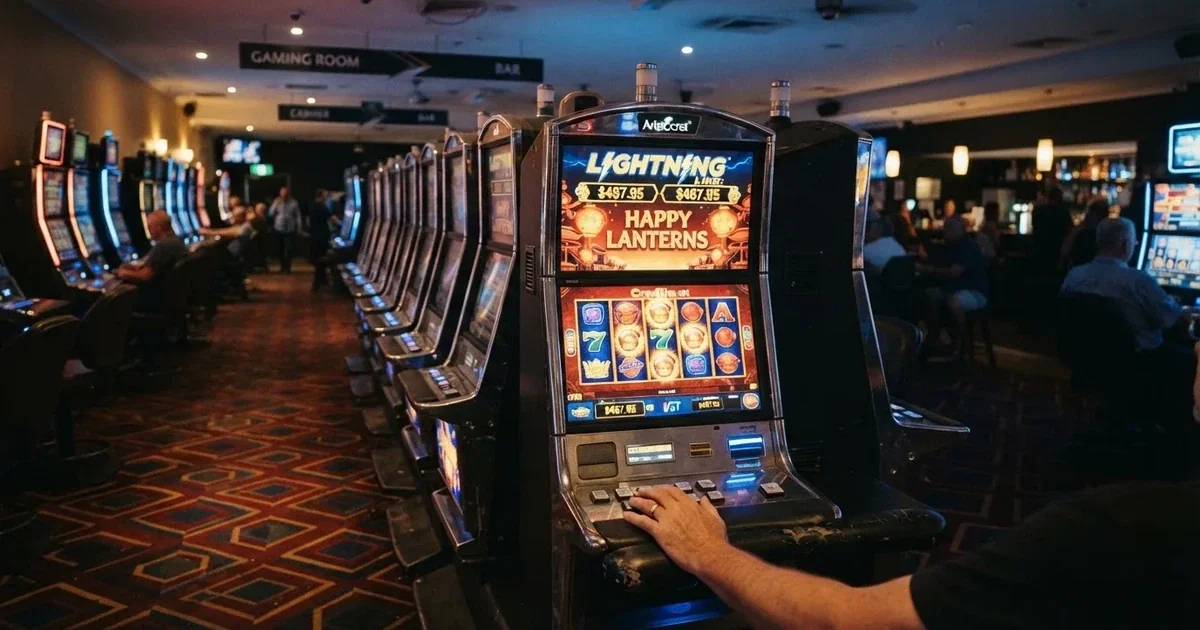
Table of Contents
- What “Best Pokies in Brisbane” Actually Means in 2026
- The Brisbane Venues That Are Lawfully in the Game
- How This Ranking Is Put Together
- The ACMA Record: What the Regulator Has Actually Done
- The Brisbane Casino Story: From Treasury to Queen’s Wharf
- Where the Money Actually Goes: Payments and Payout Reality
- Responsible Gambling: What Actually Works in Brisbane
- Landscape
- How Many Sites the ACMA Has Actually Blocked
- Regulatory Milestones
- Specific Games, Providers and Live Tables: What Actually Runs on the Brisbane Casino Floor
- The Brisbane Payment Reality
- How to Read This Page in Practice
- The 2026 Reform Calendar
- Tax Treatment for the Recreational Punter
- The Bottom Line
- Frequently Asked Questions
What “Best Pokies in Brisbane” Actually Means in 2026
Someone typing that phrase is doing one of two things. The first, and by far the more common, is hunting a real, bricks-and-mortar gaming room — a pub machine, a club bank, a casino floor in the central business district, somewhere in the western suburbs, somewhere south of the river. The second is being courted by an offshore site that has tagged its slots tab “Brisbane pokies” and is hoping the geography reads as relevance. Only the first of those is a place a punter in Brisbane can actually sit down and play.
That gap is the spine of this page. Brisbane runs more than twenty thousand poker machines in licensed venues under state oversight; it does not run a single licensed online casino. Offshore sites that take Australian dollars and call themselves “Brisbane pokies” are breaking the Interactive Gambling Act 2001 the moment they accept a deposit from a Queensland postcode. The Australian Communications and Media Authority has been naming names since 2017, and a fresh round of formal warnings has landed as recently as April 2026. None of those brands can offer an Australian licence, whatever banner they fly.

The useful frame, then, is a choice between two very different things: real venues that answer to state regulators, or offshore sites that answer to no one. The rest of the page works through both, separately, so a reader knows what they are actually choosing between.
The Brisbane Venues That Are Lawfully in the Game
Queensland is one of the heavier pokies states by machine count and one of the lighter ones by per-machine regulation. As of October 2023, Queensland had 21,122 gaming machines operating across 351 venues — a number that puts the state in the top handful nationally and one that has drifted slowly downward over the decade as harm-minimisation measures have tightened. The state regulator is the Office of Liquor and Gaming Regulation, and every pub, club or casino running poker machines in Brisbane answers to it through a gaming-machine licence tied to the venue.
The big change in the Brisbane landscape happened in August 2024. Treasury Casino, the long-running venue inside the historic Treasury Building at the top of Queen Street Mall, closed its doors on 25 August 2024. The closure was not a financial one — the building is being repurposed as part of a broader development — it was the end of a thirty-year run that began when the same building opened refurbished as a casino in April 1995. At its peak Treasury occupied three gaming levels with more than 1,300 machines and 80 tables, plus a hotel, six restaurants, five bars and a nightclub. It was, for most of its life, Brisbane’s only full casino.
Four days after Treasury closed, on 29 August 2024, the replacement opened its doors. The Star Brisbane is the centrepiece of the Queen’s Wharf Brisbane precinct, a A$3.6 billion joint development between Star Entertainment Group and Hong Kong-based Chow Tai Fook Enterprises. The opening happened in stages: the main casino floor and the premium gaming rooms came first, with the broader entertainment, dining and hotel component rolling out over the months that followed. The whole precinct is a ten-minute walk from where Treasury used to sit, which is also a ten-minute walk from where most readers reading this in central Brisbane are probably standing.
Beyond the casino, the bulk of Brisbane’s pokies live in clubs and hotels. RSLs and leagues clubs in the suburbs — Brisbane’s Greek community clubs, the big gaming-friendly hotels around the inner west, the RSLs in suburbs like Indooroopilly, Chermside and Carindale — hold the majority of suburban machines. Each venue is licensed separately, each machine is metered and reported to the state regulator, and player losses flow through a regulated tax base rather than an offshore payment processor. That is the on-the-ground answer to “where do I play pokies in Brisbane.” It is also the only legal one.
How This Ranking Is Put Together
Any shortlist of Brisbane pokies venues is built from a handful of questions, and the questions matter because the answers do most of the work. A list that ranks by machine count tells a different story from a list that ranks by return-to-player, and a list that ranks by ambience tells a different story from either. The criteria below are the ones that actually separate one option from another in this market — and they double as the questions a punter should be asking before picking a venue.
The first criterion is licensing status. Every venue named on this page holds an actual Queensland gaming-machine licence, or in the case of the casino, a Queensland casino licence. The distinction matters: an offshore site with a Curaçao registration or a Costa Rica business address is not licensed to take bets from Queensland, full stop. The ACMA’s blocking list is the audit trail for that distinction.
The second is return-to-player. Queensland does not publish a mandated RTP floor for non-casino gaming machines, but Queensland Treasury data and the operator-level disclosures put the typical pub-and-club machine in the 85–90 per cent range, with the casino floor running slightly higher on some machine categories. The honest spread in this market sits there; the marketing claim of a “97 per cent” pub machine is not consistent with what state regulators report.
The third is opening hours and access. Brisbane is not a 24-hour pokies city the way some commentators assume. Most pubs wind their gaming floor down by midnight or earlier under local liquor-licence conditions; a handful of large clubs and the casino run longer. The question of whether a punter can find an open machine at 3 am depends entirely on which suburb they happen to be in.
The fourth is the harm-minimisation footprint. Cashless card-based gaming has been rolling out across Queensland venues since 2023, with mandatory pre-commitment limits applying to electronic gaming in clubs and hotels from 2024 onward. A venue that has fully implemented the scheme looks different from a venue still running paper tickets — and the difference is more than aesthetic.
The final criterion is cost structure. The casino pays a different tax rate from clubs and pubs; clubs are non-profit and return a higher share of net proceeds to the community than hotels do. For a player, the relevant point is not the tax rate but what gets done with the money, and that varies sharply between venue types.
The ACMA Record: What the Regulator Has Actually Done
The Interactive Gambling Act 2001, as strengthened by the Interactive Gambling Amendment Act 2017, makes it an offence to provide online casino games — including online pokies — to a person physically in Australia. No state or territory licences the activity. The federal regulator, the ACMA, investigates complaints, issues formal warnings, and can direct Australian internet service providers to block offending sites at the network level. As of the latest published figure, 1,751 illegal gambling and affiliate marketing websites have been blocked since the first blocking request went out in November 2019, and more than 230 unlicensed services have left the Australian market since enforcement was strengthened in 2017. The June 2026 blocking round alone added twelve more names: 7Signs, ChromaBet, Donbet, Duospin, Freshbet, Slots Gem, Jacks Club, Lucky Start, Pointsbetz, Spinrise, Vinyl Casino and Wildsino.
The ACMA’s formal-warning list is a useful cross-section of what offshore brands have been trying to sell into Australia. The names that have come up include Dama N.V., which was warned in May 2022 over six brands (Bambet, Dazard, Level Up, Rocketplay, Wild Tornado and Cobra Casinos) and then again in March 2025 over Woo Casino and in May 2025 over Spirit Casino. EOD Code SRL was warned in February 2025 over Instant Casino. Consolutetish S.R.L. was warned in July 2025 over National Casino and Bizzo Casino — the latter having already been the subject of a 2022 warning to TechSolutions. Bamboo Media was warned the same month over Ignition Casino. Ryker B.V. was warned in April 2026 over Jackbit and CasinOK. Sterplay Holding Ltd was warned in April 2025 over Casino Intense. Hollycorn N.V. was warned over Sky Crown and Blue Leo in September 2022. Pulsup Ltd was warned in March 2026 over Rocketplay.
The reason the list runs long is the reason this page is being written: offshore operators continue to accept Australian customers and Australian dollars despite the federal prohibition. The size of the economic incentive, even after a decade of ACMA action, is the kind of figure that makes the case plainly. H2 Gambling Capital’s 2025 estimate puts annual losses to illegal gambling sites at roughly A$3.9 billion, and shows the share of Australian gambling going through legal channels falling from 74 per cent in 2021 to 64 per cent in 2025. Those are not the losses the ACMA is having.
The Brisbane Casino Story: From Treasury to Queen’s Wharf
The history matters because the casino licence in Brisbane has been anything but stable. In late 2022, the Queensland Government, acting on an independent review by former Court of Appeal judge Robert Gotterson, found Star Entertainment Group unsuitable to hold its Queensland casino licences. The finding was that Star had misled regulators and failed its anti-money-laundering duties. Star was fined $100 million on 9 December 2022, with a 90-day suspension of the Treasury Brisbane and Star Gold Coast licences deferred to 1 December 2023 to allow remediation work. The Queen’s Wharf opening in August 2024 went ahead amid ongoing concerns about Star’s licence position — a structural risk that has not been fully resolved at the time of writing and is worth a punter knowing about before they hand over a player’s card.
For comparison, Adelaide’s equivalent story is steadier. Adelaide Casino, which sits in the heritage-listed Adelaide railway station on North Terrace and operates commercially as SkyCity Adelaide, has 90 gaming tables and 950 gaming machines. It is the sole licensed casino in South Australia under the Casino Act 1997, regulated by the state’s Independent Gambling Authority. South Australia’s framework is more restrictive than Queensland’s on the gambling-machine side: outside the casino, the state sets a minimum return-to-player of 87.5 per cent and a general maximum bet of A$5.00. The casino itself has no maximum-bet limit. South Australian gaming-machine losses outside Adelaide Casino totalled about A$0.92 billion in 2022-23, equivalent to roughly A$497 per adult — a per-capita figure that sits higher than Queensland’s because the machine count per adult in South Australia is denser. (Adelaide Casino opened on 12 December 1985, was sold to SkyCity in 2000, and had its table-game monopoly extended to 30 June 2035 under a licence formalised on 11 October 2013.)
Canberra sits at the other end of the spectrum. Casino Canberra, in the city’s CBD, is the only Australian casino not licensed to operate poker machines. It runs 39 gaming tables for blackjack, roulette, baccarat and the like, plus a poker lounge and a sports lounge, and it does so under the Casino Control Act 2006 administered by the ACT Gambling and Racing Commission. The ACT had 3,587 gaming machines in 46 venues on 1 November 2023, with player losses of A$0.19 billion in 2022-23 — a tiny fraction of the national total and a useful reminder that what a federation of state regimes looks like depends entirely on which state the punter is sitting in.
Where the Money Actually Goes: Payments and Payout Reality
The casino floor at the Star Brisbane settles in cash, EFTPOS and the venue’s own cashless gaming card. For licensed wagering on races and sport — the only form of online gambling Australia actually permits — the payment routes since 11 June 2024 are debit card, bank transfer, PayID/Osko and BPAY. Credit cards, credit-related products and digital currency are banned as payment instruments for licensed online wagering, with penalties up to $247,500 for operators who breach the rule. An offshore site asking for a credit card or a crypto deposit is, among other things, not playing by the Australian rules.
The “payout percentage” question on the table in any Brisbane pokies conversation turns on venue type. Casino machines tend to publish their theoretical RTP in the machine’s help screen, typically in the 90–96 per cent range for slots and higher for video poker. Pub and club machines in Queensland do not always publish a figure in the same way; the state does not mandate a published RTP floor for non-casino gaming machines, and what gets called the “payout rate” tends to be a long-run average across venue type rather than a guarantee on any given machine on any given night. The honest answer to a punter asking how Brisbane pokies compare with other Australian cities is that the casino floor is broadly comparable to other Australian casinos, and the pub-and-club sector runs the kind of mid-to-high eighties RTP that the broader Australian pub-and-club sector runs.
For a punter trying to translate that into a budget question: the expected loss on any session at any venue is turnover multiplied by (one minus the RTP). A$200 in spins on a 90 per cent machine has an expected loss of A$20; the same A$200 on an 85 per cent machine has an expected loss of A$30. The mechanical point is unromantic and unchangeable. So is the next step: the longer the session, the closer the realised loss tends to approach the expected loss. There is no strategy that bends the RTP upward.
Responsible Gambling: What Actually Works in Brisbane
The harm-minimisation regime in Queensland runs through the Office of Liquor and Gaming Regulation and through the venue-level obligations tied to each gaming-machine licence. Mandatory pre-commitment limits on electronic gaming machines in clubs and hotels have been a feature of the state’s harm-minimisation framework since 2024, and cashless card-based gaming — which lets a punter set a hard ceiling before the session begins — has been rolling out across the venue base. The casino operates its own pre-commitment and exclusion arrangements through Star Entertainment’s responsible-gambling staff.
The national layer sits on top. BetStop, the National Self-Exclusion Register launched by the ACMA on 21 August 2023, covers Australian-licensed online and telephone wagering services. It does not cover in-venue gambling, and it does not cover offshore casinos. A punter in Brisbane who wants to self-exclude from brick-and-mortar venues has to use the venue-level or state-level self-exclusion arrangements rather than the national register, and the gaps between the two regimes are exactly the gaps an offshore site will exploit by offering a “self-exclusion” feature that has no Australian legal weight.
The 24/7 free helpline is the National Gambling Helpline on 1800 858 858, run by Gambling Help Online with telephone, online chat and face-to-face financial counselling. In the ACT the equivalent is the ACT Gambling Support Service, which runs the same free 24/7 helpline from a fund administered by the ACT Gambling Harm Prevention and Mitigation Fund. The helpline works the same way regardless of state: phone, talk to a counsellor, and figure out what step one actually looks like.
Landscape
What follows is not a ranking, not a recommendation, and not a comparison. Each brand is included because the ACMA itself issued a formal warning over it for offering prohibited interactive gambling services to people in Australia. The ACMA’s published warnings are the only source backing each entry; bonus terms and game libraries are deliberately not reproduced, because the only sources for those were affiliate marketing pages, and a description of an offer is not an invitation to claim it.
The table below records the operator, the ACMA action and date, the legal entity named by the ACMA, and whether research turned up any independent confirmation of the brand’s claimed support for the subject matter of this page. The legal position is the same for every row: online casino games and online pokies cannot be licensed in Australia, whatever licence the site displays.
| Brand | ACMA action and date | Operator named by the ACMA | Subject support |
|---|---|---|---|
| RocketPlay | Formal warning, March 2026 (Pulsup Ltd); earlier May 2022 (Dama N.V.) | Pulsup Ltd | — |
| Level Up Casino | Formal warning, May 2022 | Dama N.V. | Listings-only (en.wikipedia.org, vgccc.vic.gov.au) |
| Woo Casino | Formal warning, March 2025 | Dama N.V. | Listings-only (en.wikipedia.org) |
| Spirit Casino | Formal warning, May 2025 | Dama N.V. | — |
| National Casino | Formal warning, July 2025 | Consolutetish S.R.L. | Listings-only (ABC, infrastructure.gov.au) |
| Bizzo Casino | Formal warning, July 2025 (Consolutetish S.R.L.); earlier 2022 (TechSolutions) | Consolutetish S.R.L. | — |
| Ignition Casino | Formal warning, July 2025 | Bamboo Media | — |
| Instant Casino | Formal warning, February 2025 | EOD Code SRL | — |
| Jackbit | Formal warning, April 2026 | Ryker B.V. | — |
| Casino Intense | Formal warning, April 2025 | Sterplay Holding Ltd | Listings-only (ABC, ASGAM, cbs.sa.gov.au) |
| Sky Crown | Formal warning, September 2022 | Hollycorn N.V. | Listings-only (en.wikipedia.org) |
The legal entity is worth a closer look than the brand name. “RocketPlay” is the same consumer-facing brand in two separate ACMA actions against two separate companies: Dama N.V. in May 2022 and Pulsup Ltd in March 2026. The brand continues to operate under fresh ownership; the underlying prohibition does not change. The same pattern shows up with Bizzo Casino, which was warned as a TechSolutions operation in 2022 and as a Consolutetish S.R.L. operation in 2025. A rebrand, a new corporate registration, a fresh domain — none of those moves the brand out of the prohibited zone.
How Many Sites the ACMA Has Actually Blocked
The blocking arithmetic sits in two published figures. The first is 1,751: the total number of illegal gambling and affiliate marketing websites the ACMA has had blocked since the first blocking request in November 2019. The second is 230: the number of unlicensed gambling services that have left the Australian market since enforcement was strengthened in 2017.
The blocking rate, calculated as the total number of blocked sites divided by the elapsed time since the first blocking request, runs in the order of 250 sites a year across the seven-year window — though the rate has clearly accelerated since 2023 as the ACMA has rolled out the affiliate-marketing provisions and pushed harder on the operator side. The honest summary is a band, not a single figure: between 200 and 300 illegal sites blocked per year since 2019, with the figure trending upward as the ACMA’s enforcement footprint has grown. The condition on that band is that it counts every blocked site from every round, including redirects, mirror domains and affiliate pages that may not represent distinct operators.
The number of operator-level departures — services that have withdrawn from the Australian market entirely rather than simply been blocked — is harder to put a rate against, because the denominator is fuzzier. The 230 figure covers the full enforcement-strengthening window from 2017 and includes operators of all sizes; the implied rate is in the high-twenties per year, with substantial year-to-year variation driven by specific enforcement rounds.
Regulatory Milestones
| Year | Regulator Action | Impact |
|---|---|---|
| 2017 | Enforcement Strengthening | First formal warnings issued; 230+ unlicensed services exited |
| 2019 | Blocking Initiative | First blocking request; 1,751+ sites blocked to date |
| 2024 | Credit Card Ban | Credit/crypto payments banned for licensed wagering |
| 2026 | Reform Bill | Advertising/inducement measures passed |
Specific Games, Providers and Live Tables: What Actually Runs on the Brisbane Casino Floor
Brisbane’s land-based casino is new enough that the game mix is still bedding in. The Star Brisbane opened with a heavy table-game footprint across the main floor and the premium gaming rooms, with electronic gaming machines filling out the broader floor. The premium rooms run baccarat, roulette and sic bo variants suited to the Asian-tourist and high-roller segment that the Queen’s Wharf precinct was partly designed to attract; the main floor runs a broader spread that includes blackjack, roulette, mini-baccarat and a substantial slot floor.
Compared with Adelaide, Brisbane’s table-game offering is the lighter of the two in machine count (Adelaide runs 950 gaming machines and 90 tables) but comparable in absolute floor size. Brisbane’s 1,300-plus machines at the old Treasury site have not all migrated one-for-one to Queen’s Wharf; the new casino opened with a smaller machine count than the venue it replaced, with the difference absorbed by expanded table space and the broader entertainment footprint. The slot floor runs the usual mix of Australian-favourite titles — Lightning Link, Buffalo, the Aristocrat-linked Dragon Train and Heart of Gold-style games that show up in every Australian casino — alongside the multi-denomination video poker and keno terminals that the segment expects.
Casino Canberra’s game mix is the most restricted of any Australian casino. With no poker machines licensed under the ACT framework, Casino Canberra’s 39 gaming tables cover blackjack, roulette, baccarat and other games, plus a poker lounge and a sports lounge. A punter looking for a one-armed bandit in the capital is not going to find one in the casino; they will find one in the 46 ACT hotels and clubs that do hold gaming-machine licences, with a combined 3,587 machines approved as of November 2023.
The “provider” question is largely an online question. Brisbane’s land-based casino uses the same global slot manufacturers — Aristocrat, IGT, Konami — that every Australian casino uses, and the same hardware vendors. The provider question becomes live only when a punter is looking at an offshore site and wondering whether the games are actually the games they claim to be. The honest answer is that the offshore site’s “Aristocrat” or “Pragmatic Play” or “NetEnt” label is unverified from the player’s seat and is one of the things the ACMA’s enforcement action is built around.
The Brisbane Payment Reality
For real, in-person play, the answer is the one most Australians already know. Cash into the machine, ticket out, ticket redeemed at the cashier or re-inserted into another machine. The Star Brisbane and most of the larger clubs run cashless card-based gaming on top of that, with the player’s account sitting behind a tap or insert. Pub machines still run on tickets in many cases, though the cashless transition has been moving through Queensland since the late 2020s.
For the licensed online wagering segment — racing and sport, not casino — the legal deposit routes since 11 June 2024 are debit card, bank transfer, PayID/Osko and BPAY. The ban on credit cards and digital currency applies to the licensed wagering market, with penalties for operators running into the quarter-million-dollar range. An offshore casino asking for a credit card or a Bitcoin deposit is, by definition, outside that framework — and a punter using those instruments gets none of the Australian consumer protection that the framework exists to provide.
Settlement time on withdrawals from the licensed Australian wagering market runs from same-day for some PayID and Osko payouts, to one to three business days for bank transfers, depending on the operator. Offshore casinos advertise their own timelines; those timelines have no Australian recourse attached to them. A withdrawal refused by an offshore operator is a withdrawal a punter has no Australian body to complain to.
How to Read This Page in Practice
For a punter in Brisbane choosing between a night at the Star Brisbane, a suburban RSL and an offshore site, the decision comes down to what each option actually delivers. The Star Brisbane delivers a full casino experience with table games, electronic gaming machines, restaurants and a hotel, all under a Queensland licence that comes with the consumer-protection apparatus that licence implies. A suburban RSL or club delivers pokies under a venue-level licence, with the cashless card framework, mandatory pre-commitment limits and venue-level self-exclusion arrangements that the state framework requires. An offshore site delivers none of that, charges whatever RTP it likes, holds whatever balance it likes, and answers to whatever regulator it likes — which is to say, not the ACMA, not the Queensland regulator, and not the Australian consumer-law framework.
The choice that “best pokies in Brisbane” actually means, in 2026, is the choice between the regulated market and the unregulated one. The regulated market has a casino licence that has been through more public scrutiny in the last three years than at any point in its history. The unregulated market has a regulator that has named more than 1,700 of its peers and is still adding to the list. A punter weighing those two is not weighing two flavours of the same product; they are weighing two different products with two different cost structures, two different consumer-protection regimes, and two different risks for the punter holding the balance.
The 2026 Reform Calendar
The Interactive Gambling Amendment (Gambling Reform) Bill 2026 passed Parliament on 19 August 2026. The advertising and inducement measures within it commence on 1 January 2027, which means the bill is law with a start date — not yet in force on a page reading as 2026. The practical effect of the new measures, once they commence, will be tighter restrictions on how licensed wagering operators can advertise and what inducements they can offer, and likely a tighter perimeter around what offshore operators can do to reach Australian customers through affiliate and bonus channels. A punter reading this in late 2026 is reading it on the cusp of those changes; a punter reading it in early 2027 will be reading it under them.
Tax Treatment for the Recreational Punter
Gambling winnings of a recreational player are not assessable income in Australia under section 6-5 of the Income Tax Assessment Act 1997, and losses are not deductible — unless the person is carrying on a business of gambling. The model answer for almost every punter in Brisbane is that the ATO has no interest in their machine winnings, and has no sympathy for their machine losses. The edge the house takes is the edge the punter pays; the ATO’s role is the smaller one. Anyone uncertain about their own position should check with a registered tax agent.
The Bottom Line
The best pokies venue in Brisbane is the one a punter can walk into with the protections they would want if something went wrong. For most readers, that is a licensed club, a licensed pub, or the Star Brisbane casino. For readers who insist on an online option, the only legal one is licensed wagering on races and sport, which is not what most of them mean when they say “online pokies.” The rest of the market — the offshore sites with “Brisbane” in their marketing — is the market the ACMA has spent nine years and 1,751 blocking requests pushing back against, and the market the H2 Gambling Capital data shows is still drawing nearly four billion dollars a year out of Australian pockets.
A punter who treats the offshore pitch as a parallel product is misreading the position. A punter who treats it as the only online option is being misled by the marketing. The licensed product in Brisbane is licensed; the offshore product is not. The difference is not a preference; it is the law.
Frequently Asked Questions
Which venues in Brisbane are actually licensed to run pokies?
Every pub, club and casino operating poker machines in Brisbane holds a Queensland gaming-machine or casino licence issued through the Office of Liquor and Gaming Regulation. The full-scale casino option is the Star Brisbane at Queen’s Wharf, which opened in late August 2024 and replaced the closed Treasury Casino. The bulk of suburban machines sit in licensed RSLs, leagues clubs and gaming-friendly hotels across the inner west, south side and northern suburbs, with 351 venues holding gaming-machine authorisations across Queensland as of October 2023.
Are pokies in Brisbane available 24 hours a day?
Not as a general rule. Most pub and club gaming floors close by midnight or earlier under the venue’s liquor-licence conditions, and the Star Brisbane runs its own operating hours that are not round-the-clock. A small number of larger clubs hold extended-hours gaming permits, but the assumption that any Brisbane venue has machines spinning at 3 am is wrong more often than not. A punter who needs a late session should call the specific venue before they drive across town.
What identification do Brisbane venues require before letting someone play?
The legal minimum age is 18 across Australia, and Brisbane venues enforce it through standard photo-ID checks at entry or at the cashless card sign-up. Under Queensland’s cashless card framework, the venue’s pre-commitment system is tied to the player’s verified identity, and venue staff can request ID at any point. The casino runs a stricter regime, with the Star Brisbane’s responsible-gambling staff empowered to ask for proof of identity and to issue venue-level exclusions where appropriate.
Can visitors to Brisbane use self-exclusion schemes at local pokies venues?
Visitors can use the venue-level and state-level self-exclusion arrangements, but BetStop — the National Self-Exclusion Register launched by the ACMA in August 2023 — covers Australian-licensed online and phone wagering only, not in-venue gambling. A self-exclusion from a Brisbane club or casino has to be set up directly with the venue or through the relevant state body. The national register does not bind offshore casinos, and offshore “self-exclusion” features have no Australian legal weight.
How does the Brisbane payout percentage compare with other Australian cities?
The Star Brisbane’s table games and slot floor run RTPs in line with other Australian casinos, generally in the 90–96 per cent range for slots and higher for video poker. Queensland’s pub and club sector does not publish a mandated RTP floor, and what gets called the “payout rate” tends to be a long-run average across the venue type rather than a guarantee on any given machine. By contrast, South Australia sets a minimum RTP of 87.5 per cent and a maximum bet of A$5 outside Adelaide Casino — a tighter regulatory floor than Queensland’s, and a useful reference point.
Is it legal for an online casino to advertise pokies to Brisbane players?
No. The Interactive Gambling Act 2001, strengthened by the 2017 amendments, makes it an offence to provide online casino games — including online pokies — to a person in Australia, and no state or territory issues licences for that activity. The ACMA has issued formal warnings to more than a dozen operators in the last three years alone, has blocked 1,751 illegal sites since November 2019, and continues to add names in monthly rounds. An offshore brand that markets “Brisbane pokies” is doing so in deliberate breach of Australian law, and any bonus terms or payout claims it advertises have no consumer-law backing for an Australian customer.