
Best Pokies in New South Wales NSW 2026 — Licensed Venues, Real Paytables, and the Offshore Brands That Should Not Be There
When someone types “best pokies in New South Wales NSW 2026” into a search bar, they are usually looking for one of three things: a pub or club nearby that has decent machines, a casino floor worth the drive, or a straight answer about whether the offshore sites waving an Aussie flag actually carry a real licence. The honest answer to all three sits in this page. New South Wales runs more legal pokies outside its casinos than any other Australian state — tens of thousands of machines across thousands of venues — and that is where the actual product lives. Everything else is a separate question, and a more consequential one than most players realise, because the offshore sites that market themselves as “NSW pokies” are operating under notices from the Australian Communications and Media Authority, and the framework behind those notices is worth understanding before anyone clicks a deposit button.
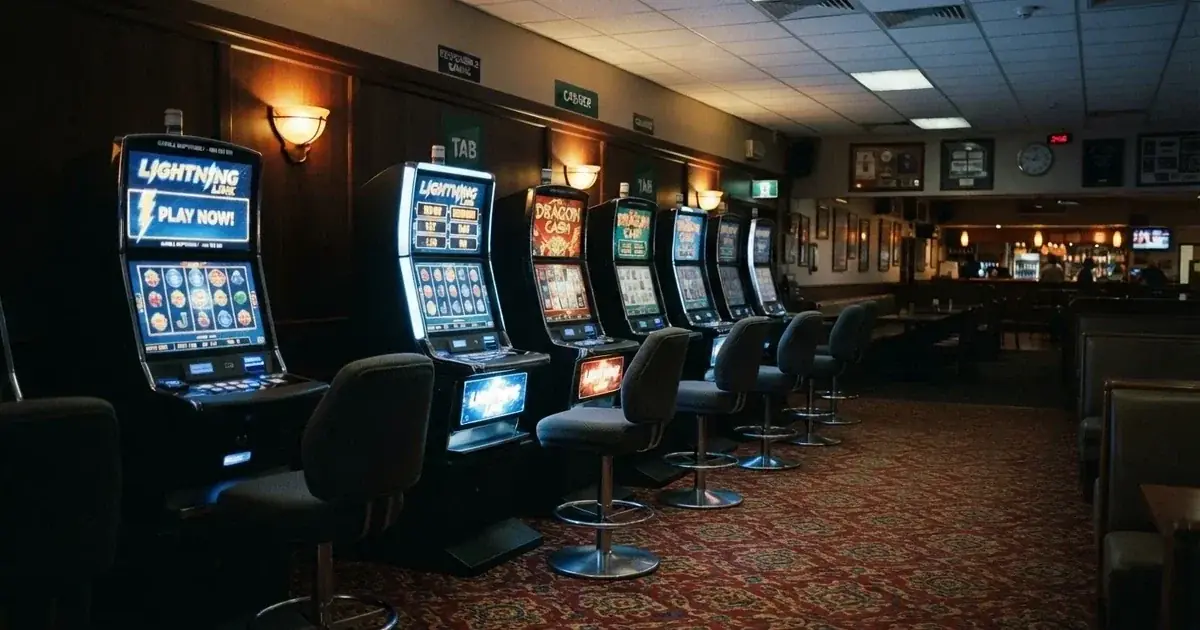
This page is current as of 25 November 2026 and was checked against the ACMA register of formal warnings and the NSW Independent Casino Commission’s published media releases.
Table of Contents
- NSW Pokies Legality and the Prohibition That Defines the Market
- Responsible Gambling Where Pokies Are Legal
- Payments and Payouts at NSW Venues and the Offshore Mismatch
- Paytable Mechanics, Closed Floors and Cashless Pokies in NSW
- Top NSW-Connected Offshore Brands and the ACMA Warnings Against Them
- The Blocking Rate and What It Says About Enforcement
- NSW’s Two Casino Floors and What Is Going Wrong There
- How the NSW Pokies Landscape Compares Across Australia
- What Actually Determines the “Best” Pokies Venue
- Tax, Winnings and the Bit No One Enjoys Reading
- Frequently Asked Questions
NSW Pokies Legality and the Prohibition That Defines the Market
The reason “pokies” sounds like a search for pubs and clubs rather than websites is that the online version of the product is not licensed in Australia. The Interactive Gambling Act 2001, as tightened by the Interactive Gambling Amendment Act 2017, makes it an offence to provide online casino games, online pokies or in-play betting to a person physically in Australia. No state or territory issues a licence for it. What can be licensed is wagering on races and sport placed before the event, lotteries and keno — in practice through the Northern Territory Racing and Wagering Commission, which regulates 52 of Australia’s online bookmakers including Sportsbet, Bet365 and Ladbrokes, and runs with no full-time staff, meeting once a month in Darwin. The distinction matters because it carves the market into two halves that look similar from the outside and behave nothing like each other on the inside.

Enforcement runs through the ACMA, which investigates services, issues formal warnings, and asks Australian internet service providers to block sites that keep operating. By June 2026, 1,751 illegal gambling and affiliate marketing websites had been blocked since the first blocking request in November 2019, and more than 230 unlicensed services had withdrawn since enforcement was strengthened in 2017. A single round on 26 June 2026 added another 12 names — 7Signs, ChromaBet, Donbet, Duospin, Freshbet, Slots Gem, Jacks Club, Lucky Start, Pointsbetz, Spinrise, Vinyl Casino and Wildsino — to the list of sites Australians can no longer reach through their normal provider.
H2 Gambling Capital’s 2025 report estimates that Australians lose about A$3.9 billion a year to illegal gambling sites, and that the share of gambling going through legal channels fell from 74% in 2021 to 64%. The decline does not mean Australians are gambling less. It means more of the action is leaving the regulated system entirely — a system that, whatever its faults, gives a player somewhere to complain, a regulator to write to, and a self-exclusion register to opt into. None of that exists on the offshore side.
The individual player is not prosecuted under the IGA. The law targets the provider. What the offshore site does not give an Australian is consumer protection, a local complaints body, or any recourse if a withdrawal is refused. It can also be blocked while a balance is still sitting in the account, and the player has no Australian channel through which to recover it.
Responsible Gambling Where Pokies Are Legal
NSW players have a set of supports that simply do not exist for anyone playing at an offshore site. Gambling Help Online runs the National Gambling Helpline on 1800 858 858, free, twenty-four hours a day, with web chat available for anyone who prefers to type. The service is run at arm’s length from the venues themselves, which is the point.

BetStop, the National Self-Exclusion Register, has been live since August 2023 and binds every Australian-licensed online and phone wagering service. A person who registers is locked out of those channels for a chosen period, and the venues and operators have to honour it. The mechanism covers licensed wagering. It does not cover an offshore casino — those operators are not connected to BetStop and are under no obligation to enforce the exclusion, which is one of the more practical reasons not to use them.
NSW also runs its own self-exclusion arrangements through ClubsNSW and the Australian Hotels Association for venues, alongside the state-based counselling and financial counselling services. The full suite of supports is built around the licensed venue network because that is where the regulator can compel the operator to act. It cannot compel an operator based in Curaçao, Cyprus or any other offshore jurisdiction, no matter what is printed in the footer.
Payments and Payouts at NSW Venues and the Offshore Mismatch
Inside NSW, payments for pokies are cash-and-carry at the venue itself. There is no online transaction; the player hands over notes or uses the cash redemption terminal at the club. There is no payout percentage race to run, no wagering requirement to clear, and no e-wallet pending period to wait through. The payout percentage on NSW pub-and-club machines is set by the state gaming-machine framework, and the published return-to-player sits in a band that is materially below what an offshore “high-RTP” slot advertises, because the regulated product funds a different cost base (community contributions, harm minimisation, venue amenity) rather than affiliate commissions.
The contrast with the offshore sites is sharpest on payments. Since 11 June 2024, credit cards, credit-related products and digital currency have been banned as payment for licensed online wagering in Australia, with penalties up to A$247,500 for operators that breach the rule. The legal deposit routes for licensed wagering are debit card, bank transfer, PayID/Osko and BPAY. A site asking an Australian customer for a credit card or a crypto deposit is, by definition, not operating inside that frame. Most of the offshore brands in this market are doing exactly that.
South Australia, for comparison, sets a minimum gaming-machine return-to-player of 87.5% and a general maximum bet of A$5.00 outside the casino; Adelaide Casino itself has no maximum-bet limit. NSW does not run a single statewide maximum bet in the same form because venues can be members-only or general-entry and the framework is structured differently, but the principle — a regulated venue, a regulated RTP floor, regulated bet ceilings in licensed categories — holds in every Australian state. A “high-limit pokie” inside a registered club sits inside that regulated perimeter. A “high-limit pokie” on an offshore site is a marketing term with no enforced ceiling behind it.
NSW gaming-machine turnover was A$85.72 billion in 2020–21, or A$13,559 per adult, and NSW players lost A$8.18 billion on gaming machines outside casinos in 2022–23, about A$986 per adult. Those are the volumes the licensed product handles, before a single offshore dollar is counted.
Paytable Mechanics, Closed Floors and Cashless Pokies in NSW
A NSW pokie is a regulated electronic gaming machine with a state-set return-to-player band, a published paytable on the cabinet, and a compliance regime that reaches into the cabinet software. The venue does not get to swap the maths around mid-lease. The cluster of “best paying pokies NSW” searches reflects a real player interest: which cabinets are running closer to the top of the band, which venues stock them, and whether the higher-return games are at the smaller clubs or the larger ones. The honest answer is that the venue’s licence category and the cabinet model determine the return band, and that information is on the machine itself, often printed on the help screen.
New South Wales had 87,298 gaming machines outside casinos in 2,195 venues in June 2023 — more than any other state. South Australia, for scale, had 11,672 gaming machines outside Adelaide Casino in 471 venues in September 2023, and Queensland had 21,122 gaming machines operating in 351 venues in October 2023. The NSW number alone is roughly four times Queensland’s and nearly seven-and-a-half times South Australia’s outside-casino footprint, which is what gives the state its weight in any national comparison and is why a search for “pokies near me NSW” returns options.
Cashless pokies have been the direction of travel across the country for several years. The NSW framework introduced a cashless gaming card, the limit and the harm-minimisation settings that attach to it, and the rollout is the structural answer to a lot of the historical criticism of the product — loss limits, session time visibility, and a clean break from the “pumping” patterns the old cash machines enabled. A venue that has switched to a cashless card is not running a different maths model; it is running the same maths behind a different player interface.
Twenty-four-hour pokies NSW remains a narrow product. Some Sydney CBD and inner-city venues run late or continuous trading, and the casino floors at The Star Sydney and Crown Sydney at Barangaroo (opened December 2020) operate on extended hours. Most suburban and regional clubs do not. The default NSW pub-and-club trading pattern closes well before midnight, and the assumption that any pokies venue is open at 4 a.m. is wrong outside a small set of city venues.
Top NSW-Connected Offshore Brands and the ACMA Warnings Against Them
The brands below are not a ranking and not a recommendation. They are listed because the ACMA has issued a formal warning over each of them for offering prohibited interactive gambling services to people in Australia, and because the published enforcement record is the only objective basis on which they can be discussed. They are not licensed to take Australian customers. Where the research carries no data on a particular brand, the row reflects that and the brand sits in this list on its enforcement history alone.
The Australian Communications and Media Authority is the regulator that investigates providers and publishes these notices; the NSW Independent Casino Commission handles licensed casino venues within NSW and is the body that has, separately, fined Crown Sydney and The Star Sydney for allowing minors onto their gaming floors.
| Brand | ACMA action and date | Operator named by the ACMA | Subject support |
|---|---|---|---|
| RocketPlay | Formal warning, March 2026 (Pulsup Ltd); earlier Dama N.V., May 2022 | Pulsup Ltd | — |
| Level Up Casino | Formal warning, May 2022 | Dama N.V. | Listed by en.wikipedia.org and the Victorian regulator |
| Woo Casino | Formal warning, March 2025 | Dama N.V. | Listed by en.wikipedia.org |
| Spirit Casino | Formal warning, May 2025 | Dama N.V. | — |
| National Casino | Formal warning, July 2025 | Consolutetish S.R.L. | Listed by Abc.net.au and infrastructure.gov.au |
| Bizzo Casino | Formal warning, July 2025 (Consolutetish S.R.L.); earlier TechSolutions, 2022 | Consolutetish S.R.L. | — |
| Ignition Casino | Formal warning, July 2025 | Bamboo Media | — |
| Instant Casino | Formal warning, February 2025 | EOD Code SRL | — |
| Jackbit | Formal warning, April 2026 | Ryker B.V. | — |
| Casino Intense | Formal warning, April 2025 | Sterplay Holding Ltd | Listed by Abc.net.au, Asgam.com and Consumer and Business Services SA |
| Sky Crown | Formal warning, September 2022 (Sky Crown and Blue Leo) | Hollycorn N.V. | Listed by en.wikipedia.org |
The “Subject support” column reflects what the broader listing ecosystem says about the brand — the third-party reference sites and state registers that have heard of it — not whether any of those listings constitute an Australian licence. None do.
RocketPlay
RocketPlay has been the subject of two ACMA formal warnings: one to Dama N.V. in May 2022 (alongside Bambet, Dazard, Wild Tornado, Cobra Casinos and others) and a more recent one to Pulsup Ltd in March 2026 over the Rocketplay domain specifically. The site displays a Curaçao-issued certificate in its footer and markets aggressively to Australian customers through affiliate networks. The Australian position is straightforward: an offshore licence is not an Australian licence, and offering interactive casino games to people in Australia is an offence under the Interactive Gambling Act 2001 regardless of what authority the operator points to. There is no payout-speed benchmark, no Australian complaints body and no local regulator to escalate a dispute to.
Level Up Casino
Level Up Casino sat inside the same May 2022 Dama N.V. warning as RocketPlay and several other brands. It is listed by en.wikipedia.org and by the Victorian regulator (the Victorian Gambling and Casino Control Commission) among the offshore sites that have come to Australian regulators’ attention. The lesson of the warning is the same as it is for any operator in this section: a brand name that turns up in a regulator’s index is, by definition, not one that operates within the Australian regulatory perimeter.
Woo Casino
Woo Casino drew a separate ACMA formal warning to Dama N.V. in March 2025, well after the 2022 batch. The pattern matters: Dama N.V. has been warned repeatedly, has changed brand surfaces, and has continued to offer prohibited services to Australians. A repeat-enforcement record of this shape is the closest thing in this market to a published track record on the operator side, and the trajectory is not flattering.
Spirit Casino
Spirit Casino drew the May 2025 Dama N.V. warning. The brand is younger than some of the others in the cluster but operates inside the same parent-company structure that the ACMA has now warned at least twice over. The combination of new brand, same operator, same set of prohibitions is the reason the ACMA’s enforcement work has shifted from one-off takedowns to repeat warnings against the underlying company.
National Casino
National Casino was named in the July 2025 ACMA formal warning to Consolutetish S.R.L. It is listed by Abc.net.au and by infrastructure.gov.au in published material on offshore gambling. The brand surfaces under a separate affiliate programme from the TechSolutions cluster and has continued to take Australian traffic, which is what triggered the 2025 warning.
Bizzo Casino
Bizzo Casino has the longest paper trail in this section. It was the subject of a 2022 ACMA formal warning to TechSolutions (CY) Group Limited and TechSolutions Group N.V., then reappeared in the July 2025 Consolutetish S.R.L. warning. The reappearance of a brand the regulator has already warned is the clearest possible signal that the operator has not changed its behaviour in response to the first notice. Consumer and Business Services South Australia, the state regulator, has also noted the brand in its published work.
Ignition Casino
Ignition Casino was named in the July 2025 ACMA formal warning to Bamboo Media. The brand had been running in the Australian market for some time under that surface; the formal warning is the regulator’s published record that it has now acted. The research carries no third-party listing beyond the ACMA’s own notice, which is unusual for a brand of this age and reflects how little of the offshore market is captured by the listings that do exist.
Instant Casino
Instant Casino drew a February 2025 ACMA formal warning to EOD Code SRL. The brand markets itself heavily to Australian traffic through search and affiliate channels. The research carries no third-party listing data on the brand, which leaves the warning itself as the only verifiable record.
Jackbit
Jackbit and CasinOK were the subjects of an April 2026 ACMA formal warning to Ryker B.V. The brand is one of the more recent additions to the ACMA’s enforcement record and the warning was published in the same regulatory update cycle as several other offshore names.
Casino Intense
Casino Intense was named in an April 2025 ACMA formal warning to Sterplay Holding Ltd. It is listed by Abc.net.au, Asgam.com and Consumer and Business Services South Australia — a broader trail than several of the others in this cluster, which gives the regulator’s published action one of the more multi-source confirmations on this page.
Sky Crown
Sky Crown, along with Blue Leo, drew an ACMA formal warning to Hollycorn N.V. in September 2022, and the action is published in PDF form on the ACMA site. Sky Crown is listed by en.wikipedia.org in the published corpus of offshore brands that have come to regulators’ attention, but the brand has continued to operate since the warning in much the same form. The Hollycorn cluster is one of the more persistent operator families on the ACMA’s enforcement record.
The Blocking Rate and What It Says About Enforcement
The arithmetic of the ACMA’s blocking programme is straightforward and the answer matters more than the process. The first blocking request under the strengthened regime went out in November 2019. By 26 June 2026, the cumulative count of illegal gambling and affiliate marketing websites the ACMA had asked Australian ISPs to block stood at 1,751. The years between cover roughly 79 months — late 2019 through to the published June 2026 total.
That works out to a published blocking rate of roughly 22 sites per month on average across the period, or about one site blocked every 34 to 35 hours of the regulator’s enforcement window. The June 2026 round alone added 12 more, which is a single-day batch that runs ahead of the long-run average. The point of doing the arithmetic is not the precision — it is the gap between the marketing claim that “offshore sites are easy to set up” and the regulator’s demonstrated capacity to take them down in steady volume across multiple years.
The condition that sits behind the figure: this is the count of sites the ACMA asked ISPs to block, not the count of unique operators, and not the count of brand surfaces an operator can stand up under another domain. A single operator can run several domains; blocking one does not necessarily block the others. The published rate is the rate at which enforcement can act on the surface, and it is high, but it does not close every door on its own.
NSW’s Two Casino Floors and What Is Going Wrong There
The casino side of the NSW market is small in machine count compared to the pub-and-club network but carries the heaviest regulatory spotlight. The Star Sydney is the state’s long-established casino, and Crown Sydney at Barangaroo opened in December 2020. The regulator for both is the NSW Independent Casino Commission.
The Commission has not been quiet. It issued The Star Sydney a total of A$10 million in fines along with an enforceable undertaking, announced on 2 June 2026, and then on 19 August 2026 it fined Crown Sydney A$1.75 million and The Star Sydney A$500,000 in a coordinated enforcement action for allowing a minor to enter each venue. A casino that lets an under-age guest onto the gaming floor is a casino that has failed the most basic operational test, and the fines are the regulator’s published response.
The Queensland equivalent, the Star Entertainment Group’s Brisbane operations, supplies a cautionary parallel. Treasury Casino closed on 25 August 2024 to make way for the new Star Brisbane at the A$3.6 billion Queen’s Wharf precinct, which opened in stages beginning 29 August 2024. The lead partner opened under a cloud. In late 2022, on the back of an independent review by former Court of Appeal judge Robert Gotterson, the Queensland Government found Star Entertainment unsuitable to hold its Queensland casino licences, fined it A$100 million on 9 December 2022, and deferred a 90-day suspension of the Treasury Brisbane and Star Gold Coast licences to 1 December 2023 to allow remediation. The lesson is the same in both states: a casino licence is contingent, and the regulator will move when the operator’s conduct warrants it.
Adelaide Casino, the South Australian equivalent, sits inside the heritage-listed Adelaide railway station building on North Terrace and has 90 gaming tables and 950 gaming machines — by some distance the smallest of the three state-casino footprints. SkyCity Entertainment Group has run the venue since June 2000, the building was renamed SkyCity Adelaide in April 2001, then reverted to the Adelaide Casino name in 2009. The 2015–2021 Riverbank precinct redevelopment added the EOS by SkyCity tower, which opened in 2021 with 120 hotel rooms and expanded gaming space. The casino’s table-game monopoly in South Australia was extended to 30 June 2035 under a licence formalised on 11 October 2013, which also allows up to 200 gaming tables and 1,500 gaming machines subject to redevelopment. Outside the casino, South Australian venues run 11,672 gaming machines and SA players lost about A$0.92 billion on gaming machines outside Adelaide Casino in 2022–23, equivalent to about A$497 per adult.
Casino Canberra, in the Canberra CBD, was the first legal casino in the ACT, built on land excised from Glebe Park under a 99-year lease; it has no hotel, theatres or retail. The ACT sits alongside NSW in the broader south-east market and is the closest casino option for players on the southern NSW border.
How the NSW Pokies Landscape Compares Across Australia
Looking across the states, the structure of the Australian market is the same in outline and very different in scale. Every state runs licensed pub-and-club pokies under a state-level gaming-machine framework, with a state-set return-to-player floor and venue categories that determine bet limits and trading hours. The casino component sits separately under a state casino regulator and a smaller number of licences.
The numbers tell the scale story. The following table summarises the venue and machine counts as of 2023:
| State | Venues | Machines |
|---|---|---|
| New South Wales | 2,195 | 87,298 |
| Queensland | 351 | 21,122 |
| South Australia | 471 | 11,672 |
NSW, with 87,298 gaming machines outside casinos in 2,195 venues as of June 2023, has the largest pub-and-club footprint in the country. Queensland had 21,122 gaming machines in 351 venues in October 2023. South Australia had 11,672 gaming machines outside Adelaide Casino in 471 venues in September 2023. By any cut of those figures, NSW is the dominant non-casino market, and a “best pokies in NSW” question is, in practice, a question about which of the state’s licensed venues are worth the trip — not a question that the offshore sites can answer.
The offshore sites compete on a different axis entirely. They sell convenience, a wider game catalogue, a “higher RTP” claim and bonuses that an Australian-licensed venue cannot match. They do so by operating outside the Australian regulatory perimeter, which is why the ACMA has been steadily blocking them since November 2019. A player who weighs convenience against recourse will land somewhere on this trade-off knowingly; a player who has not realised the trade-off exists has not been given the full picture.
What Actually Determines the “Best” Pokies Venue
A ranking of NSW pokies venues is, properly, a ranking on a small set of variables that the regulated framework exposes. Return-to-player is on the cabinet and on the venue’s published game-mix list. Bet ceilings are a function of the venue category and the machine classification. Cashless gaming card support is a venue-level operational choice, not a state-wide mandate, and venues that have rolled it out give the player loss-limit and session-time tools that older cash-only venues do not.
Beyond the regulated surface, the practical variables are distance, opening hours, member-versus-guest entry rules, food and beverage amenity (which is the real differentiator at the higher-end clubs), and whether the venue runs the higher-RTP games under the state-set band or stocks closer to the floor. A venue’s published gaming-machine return-to-player for a given cabinet model is, in the NSW market, the most useful single piece of information a player can ask for, and any registered club will produce it on request. The offshore sites do not offer that level of disclosure because their cabinets do not sit inside a state-level compliance regime.
Tax, Winnings and the Bit No One Enjoys Reading
Gambling winnings of a recreational Australian player are not assessable income under section 6-5 of the Income Tax Assessment Act 1997, and losses are not deductible, unless the person carries on a business of gambling. The ATO’s own framing treats the recreational player as outside the income-tax net entirely, which is the rule rather than the exception. A player who hits a sizeable jackpot at a NSW pub or club is paid out by the venue (sometimes via a hopper at the machine, sometimes via the cashier’s desk for larger amounts) and does not owe tax on it. The operator pays the state its share through the gaming-machine tax framework, which is where the public revenue sits.
The “check with the ATO” caveat matters only at the edges. A professional poker player, a sports arbitrageur, or someone running a matched-betting operation sits in a different tax position and should be talking to a registered tax agent, not a search engine. The standard pub-and-club pokies player does not.
Frequently Asked Questions
Which venues in New South Wales are licensed to operate pokies?
NSW pubs and registered clubs hold the licences for the bulk of the state’s 87,298 gaming machines outside casinos, with The Star Sydney and Crown Sydney at Barangaroo running the casino floors. Each venue is authorised by Liquor & Gaming NSW, which publishes the register and a venue-level gaming-machine entitlement on its website.
Are pokies in New South Wales available around the clock?
Not generally. Sydney CBD venues and the two casino floors run late or continuous trading, but most suburban and regional NSW clubs close in the late evening. A 24-hour assumption is wrong outside a narrow set of inner-city and casino venues.
What identification do venues in New South Wales require before letting someone play pokies?
A driver’s licence, a passport or a NSW Photo Card is the standard proof-of-age document, and the venue has to sight it before entry to the gaming-machine area in most categories. Identification checks are a Liquor & Gaming NSW requirement, not a venue option, and they apply to every patron regardless of appearance.
Can visitors to New South Wales use self-exclusion schemes at local pokies venues?
BetStop, the National Self-Exclusion Register, covers licensed Australian online and phone wagering services and is the primary cross-state channel. NSW venues also run their own self-exclusion arrangements through ClubsNSW and the AHA NSW for in-venue exclusion, and a visitor can register at the venue in person.
How does the payout percentage on NSW pokies compare with other Australian states?
The state-level gaming-machine framework sets a return-to-player floor in NSW that is comparable to other states, and the cabinet-level RTP is published on the machine itself. South Australia sets a minimum gaming-machine return-to-player of 87.5%, and Adelaide Casino itself has no maximum-bet limit; NSW operates its own category-based ceiling structure for pub-and-club machines.
Is it legal for an online casino to advertise ‘pokies’ in New South Wales the same way a pub or club does?
No. The Interactive Gambling Act 2001 makes it an offence to provide online casino games or online pokies to a person in Australia, and the ACMA enforces the prohibition by issuing formal warnings and asking ISPs to block illegal sites. A pub or club’s licence to run gaming machines is a state-level instrument and does not extend to online play.