
Best pokies venues in Perth in 2026: the licensed floor, the offshore substitutes, and the choice that sits in front of any player in Western Australia
Current as of 25 November 2026 · verified against the Australian Communications and Media Authority’s published formal warnings, the Interactive Gambling Act 2001, and the Western Australian Department of Racing, Gaming and Liquor.
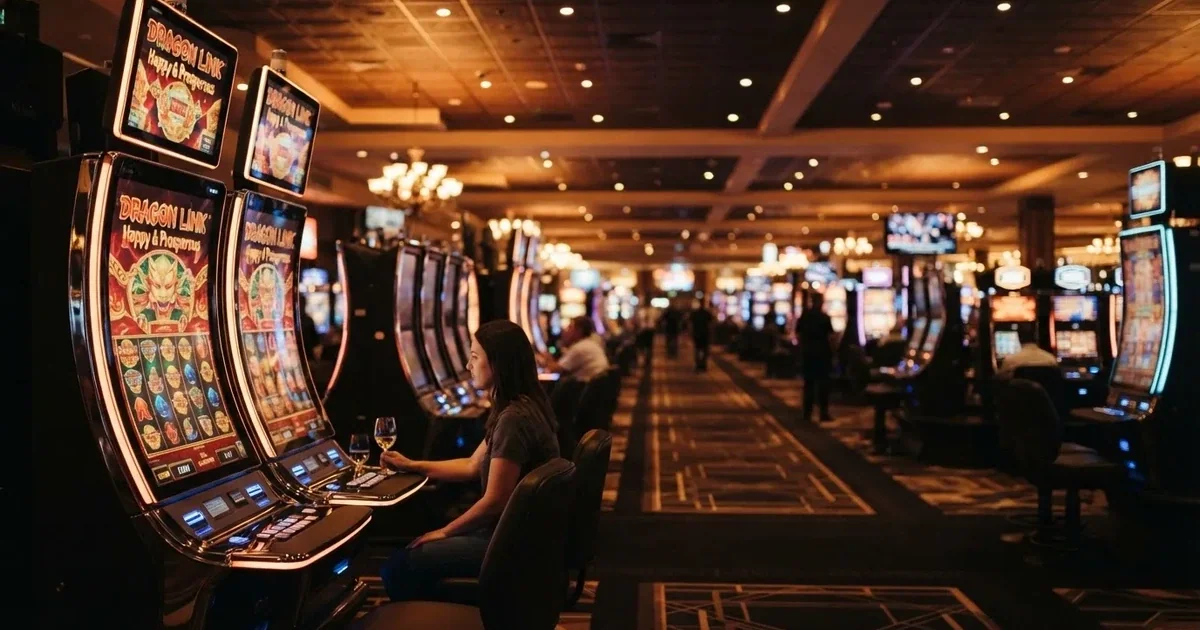
Perth’s pokies question has a short answer and a long set of consequences. The short answer: Crown Perth in Burswood is the only venue in Western Australia licensed to operate poker machines. There is no pub, club, tavern or bar in the state where they are legal — that has been the position for decades, and the state government has shown no appetite to change it. Everything else a Perth punter sees under the word “pokies” sits on the other side of the law. Offshore casino sites brand a “pokies” section the same way a Crown sign does; the Interactive Gambling Act 2001 treats them as prohibited interactive gambling services regardless of the design. The page below lays out what that choice actually is, who each path suits, and what the ACMA’s enforcement record says about the offshore substitutes that market hardest at Australian players.
Table of Contents
- How this shortlist was put together, and which paths a Perth player is actually choosing between
- Crown Perth and the Western Australian regulatory regime: what a player on the licensed floor is actually getting
- Other Australian cities for comparison: what a player gives up by being in WA
- The legal prohibition on online pokies in Australia, and how the ACMA actually enforces it
- Responsible gambling in Western Australia, and which schemes actually cover an offshore site
- Payment rules under the Australian regime, and what an offshore site’s deposit screen is really asking
- Paytables and game mechanics: what an onshore licensed venue in WA is required to show
- The brands the ACMA has formally warned: who is reaching hardest for Perth players, and what the regulator has done about each
- Choosing between the paths, and what each one actually costs the player
- Tax and what a win at Crown Perth actually looks like at year end
- Frequently asked questions
How this shortlist was put together, and which paths a Perth player is actually choosing between
The shelf here is not a ranking of casinos to play at. It is a comparison of the paths that exist for someone in Perth who wants to play a poker machine today: the single licensed venue in the state, the licensed wagering and lottery channels that sit legally alongside it, and the offshore online sites the ACMA has spent the last nine years formally warning and blocking. A “best” framing applied to a market where one option is legal and the others are not would mislead by symmetry. The comparison that matters is whether the substitutes are what they present themselves as, and what each path costs the player who walks onto it.
The shelves below follow that comparison in this order: the licensed onshore floor at Crown Perth and what Western Australia’s regulatory regime actually gives a player there, the prohibition on online casino games and how the ACMA enforces it, the responsible-gambling channels that bind a Western Australian and those that do not, the payment rules that define a lawful deposit, and finally a list of brands the ACMA itself has named in formal warnings — read as a record of who is trying hardest to reach Perth players and what the regulator’s answer to each of them has been.
Crown Perth and the Western Australian regulatory regime: what a player on the licensed floor is actually getting
Crown Perth is a casino resort on the Burswood peninsula, a few kilometres east of the Perth CBD across the Swan River. The property carries three hotels — Crown Metropol at 405 rooms, Crown Promenade at 291 and Crown Towers at 500, the last opened in December 2016 — alongside a convention centre and more than thirty restaurants and bars. The complex began life as the Burswood Island Casino, opened on 30 December 1985 and at the time the largest casino in Australia. Publishing and Broadcasting Limited acquired control in 2004 and vested the gaming interests into Crown Limited in 2007, a James Packer-controlled company. The Burswood licence is held under Western Australian law, and Western Australia has never permitted poker machines in pubs or clubs — the casino in Burswood is the only place in the state where they are legal.
The state’s gambling regulator is the Department of Racing, Gaming and Liquor, and the regulatory floor Crown Perth operates above is the most player-favourable minimum return-to-player rate in Australia. The state requires a minimum long-term return-to-player rate of 90% on gaming machines, higher than South Australia’s 87.5%, higher than every other state. That is not a marketing claim; it is a licence condition a venue must evidence to keep operating. The casino tax regime is a 12.42% flat rate on gross gaming revenue plus a 2% Burswood Park Levy, both stable since 2015-16, which keeps the operator’s incentive structure fixed and visible.
In July 2025 the Gaming and Wagering Commission of Western Australia recommended that Crown Perth keep its gaming licence, after the casino made remedial efforts to become compliant with government gaming regulations. That recommendation followed the kind of regulator scrutiny the rest of the Australian casino industry has been under since 2022, and it means the venue’s licence position is current, current enough that a player walking in today is on a floor the state has actively re-endorsed.
The practical consequences for a Perth player come down to three things. First, the licensed floor is one venue — Crown Perth — and the state’s higher minimum RTP applies there. Second, no pub, club or hotel in WA offers poker machines, which means there is no 24-hour neighbourhood poker-machine option, no late-night session in the suburbs, no cashing-out at the bar on the way home. Third, every other “pokies” surface a Perth resident can reach — online sites, mobile apps, “perth casino online” landings — is operating in breach of the Interactive Gambling Act 2001, and the regulatory floor the state has built applies to none of them.
Other Australian cities for comparison: what a player gives up by being in WA
Other state capitals put their own licensed floors in different regulatory boxes, and the contrast with Western Australia is sharp.
South Australia runs Adelaide Casino (commercially called SkyCity Adelaide) out of the heritage railway station on North Terrace. Ninety gaming tables, 950 gaming machines, the sole licensed casino in the state under the Casino Act 1997. Adelaide Casino has no maximum-bet limit on its gaming floor, while South Australia sets a minimum RTP of 87.5% and a general A$5.00 maximum bet on the 11,672 machines in the 471 venues outside the casino. The Adelaide licence was formalised on 11 October 2013 and runs through to 30 June 2035, with redevelopment headroom to 200 gaming tables and 1,500 gaming machines. The Riverbank precinct A$330 million redevelopment opened the EOS by SkyCity tower in 2021 with 120 hotel rooms. State-regulated venues outside the casino saw about A$0.92 billion in losses in 2022-23, near A$497 per adult. A player in Perth comparing the two states sees one with thousands of machines in neighbourhood pubs and clubs, the other with one venue.
Queensland’s casino situation has just turned over. Brisbane’s Treasury Casino in the heritage Treasury Building — opened refurbished as a casino in April 1995, three gaming levels, 80 tables, over 1,300 machines — closed on 25 August 2024 to make way for the new Star casino at Queen’s Wharf. The Star Brisbane began a staged opening on 29 August 2024 at the A$3.6 billion Queen’s Wharf precinct, developed jointly with Hong Kong-based Chow Tai Fook Enterprises, with the main casino floor and premium gaming rooms opening first. Queensland ran 21,122 gaming machines across 351 venues in October 2023. The Star licence has been under serious regulatory pressure: in late 2022 an independent review by former Court of Appeal judge Robert Gotterson found Star Entertainment unsuitable to hold its Queensland casino licences after concluding it had misled regulators and failed its anti-money-laundering duties; Star was fined $100 million on 9 December 2022, with a 90-day suspension of the Treasury Brisbane and Star Gold Coast licences deferred to 1 December 2023 to allow remediation.
Canberra’s Casino Canberra sits in the CBD on land excised from Glebe Park under a 99-year lease — the first legal casino in the ACT, built without a hotel, theatres or retail attached.
The point of the comparison is not a recommendation. The point is the shape of the Western Australian choice: a single licensed venue, the highest minimum RTP in the country, no neighbourhood alternatives, no online casino substitutes that hold an Australian licence. A player who wants to play a poker machine in Perth in 2026 plays it at Crown Perth on the terms the WA regulator sets, or does not play it through a licensed channel.
The legal prohibition on online pokies in Australia, and how the ACMA actually enforces it
The Interactive Gambling Act 2001, strengthened by the Interactive Gambling Amendment Act 2017, makes it an offence to provide online casino games, online pokies and in-play betting to a person in Australia. No state or territory issues a licence for them. What is licensable is wagering on races and sport placed before the event, lotteries and keno — in practice licensed by the Northern Territory, where the Northern Territory Racing and Wagering Commission regulates 52 of Australia’s online bookmakers (including Sportsbet, Bet365 and Ladbrokes) for tax reasons; the commission has no full-time staff and meets once a month in Darwin. An offshore casino site holding a Curaçao or Anjouan licence has no Australian authorisation to take a Perth punter’s bet, regardless of what the small print at the foot of its homepage says.
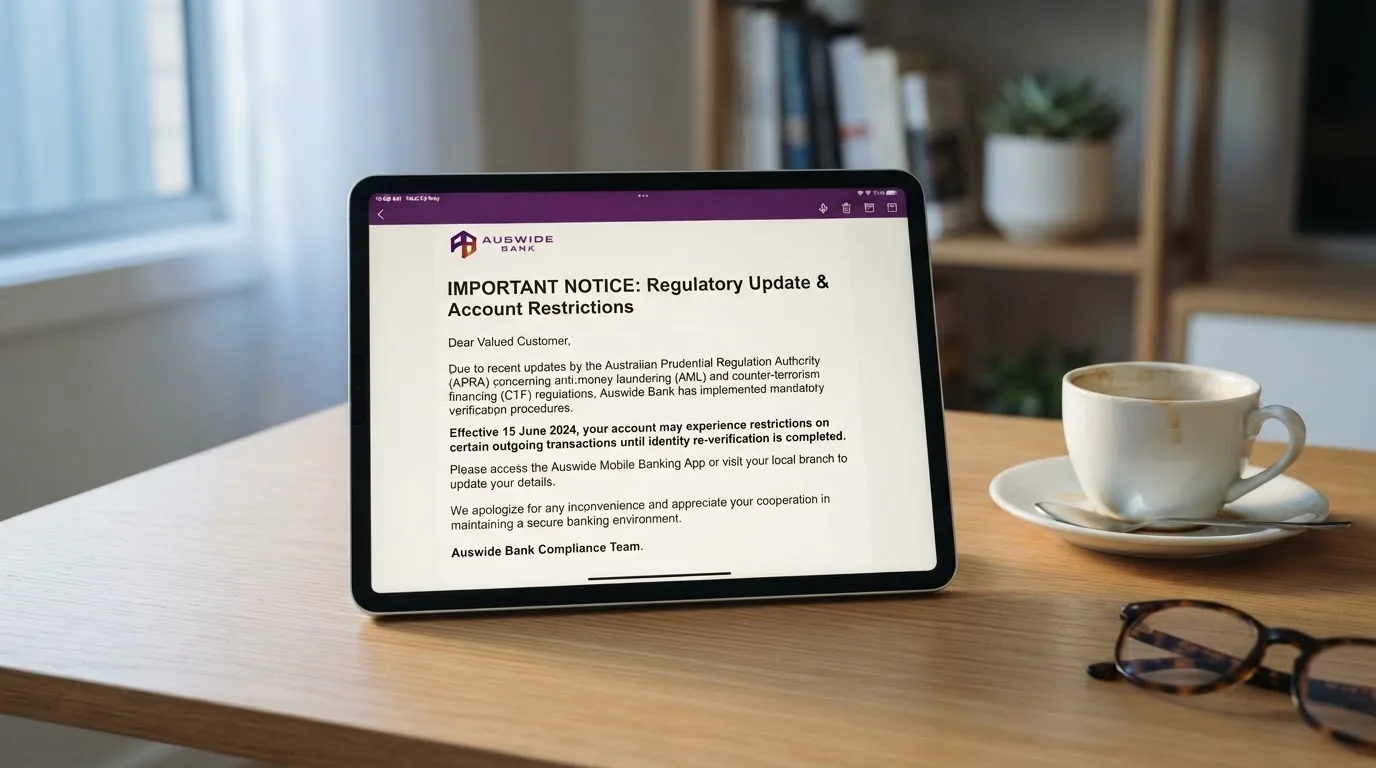
Enforcement runs through the Australian Communications and Media Authority. The ACMA investigates complaints, issues formal warnings to operators it identifies as offering prohibited services to Australians, and asks Australian internet service providers to block offending sites. As reported in June 2026, the ACMA had asked ISPs to block 1,751 illegal gambling and affiliate marketing websites since the first blocking request in November 2019, and more than 230 unlicensed gambling services had left the Australian market since enforcement was strengthened in 2017. The latest round, reported on 26 June 2026, added another 12 sites to the block list: 7Signs, ChromaBet, Donbet, Duospin, Freshbet, Slots Gem, Jacks Club, Lucky Start, Pointsbetz, Spinrise, Vinyl Casino and Wildsino. The mechanism is administrative rather than criminal — the IGA targets the provider, not the player — but a balance held by an offshore site at the moment an ISP block lands is a balance with no Australian complaints body to chase.
The arithmetic behind that block list is the page’s calculation, and it is worth sitting with. Between the first blocking request in November 2019 and the ACMA’s June 2026 round, the cumulative count reached 1,751 sites blocked. Spread across the roughly 79 months of active enforcement, the rate runs in the high-twenties per month as a long-run average; but the recent round alone added 12 sites in one cycle, and earlier periods have moved faster. The honest reading is a band, not a single figure: somewhere in the low-twenties per month as a baseline, with bursts around regulator rounds and operator cluster takedowns. The figure is informative precisely because it is rough — every block is the result of an investigation, a formal warning, a request to ISPs, and a compliance window, and a regulator working through a cluster of related operators lands a dozen at once.
A parallel data point gives the cost the prohibition is failing to prevent. H2 Gambling Capital’s 2025 report estimates that Australians lose about A$3.9 billion a year to illegal gambling sites, and the share of gambling going through legal channels fell from 74% in 2021 to 64%. The block list grows; the offshore losses grow with it; the legal-channel share shrinks. That is what enforcement against a prohibited product looks like at scale.
The 2026 reform: the Interactive Gambling Amendment (Gambling Reform) Bill 2026 passed Parliament on 19 August 2026, with its advertising and inducement measures commencing on 1 January 2027. A bill passed and signed is law; a commencement date in the future is not a provision in force on a 2026 page, and the practical effect on what a Perth punter sees this year is the existing IGA regime with the ACMA’s enforcement record underneath it.
Responsible gambling in Western Australia, and which schemes actually cover an offshore site
The responsible-gambling supports available to a player in Perth divide cleanly into two sets: the ones an offshore casino is connected to, and the ones it is not.
BetStop, the National Self-Exclusion Register, has been live since August 2023. It binds Australian-licensed online and phone wagering services. A player who registers with BetStop is excluded from every Australian-licensed bookmaker and wagering operator. An offshore casino is not connected to BetStop. A self-excluded Australian punter can still load an offshore site, deposit by whatever route the site accepts, and play. That is not a gap BetStop was set up to close — it is the design ceiling of a register built around licensed providers, and a player who needs the offshore sites excluded as well needs a different control.
The National Gambling Helpline on 1800 858 858 is free, 24/7, with chat available through Gambling Help Online. It is not an offshore-channel control either, but it is the practical front line for a player in Western Australia whose gambling has become a problem, whatever channel they are using. Gambling Help Online takes chat sessions, can refer into financial counselling, and can connect to state-specific face-to-face services.
Western Australia’s own exclusion and venue-control regimes sit with the Department of Racing, Gaming and Liquor, and apply to the licensed floor at Crown Perth. A self-excluded patron at Crown Burswood cannot enter the gaming floor for the exclusion period, with the usual graduated re-entry options. None of that mechanism extends to a Curaçao-licensed site advertising “Perth pokies” through an Australian-facing affiliate.
The asymmetry is the point. A player who uses the legal floor at Crown Perth is inside the WA regulatory perimeter: 90% minimum RTP, venue self-exclusion, a complaints route through the regulator if a payout is refused, the helpline and BetStop reachable. A player who moves to an offshore substitute leaves all of that behind — keeps the deposit, loses the protections, gains nothing the licensed floor did not already offer.
Payment rules under the Australian regime, and what an offshore site’s deposit screen is really asking
The payment rules are part of the prohibition, not an adjacent regime. Since 11 June 2024, credit cards, credit-related products and digital currency are banned as payment for licensed online wagering, with penalties up to A$247,500 for operators who breach the rule. The legal deposit routes for licensed wagering are debit card, bank transfer, PayID/Osko and BPAY. A site asking an Australian player for a credit card or a crypto deposit is operating outside the Australian rules on this dimension as well as on the product itself.
The offshore sites a Perth player sees under a “pokies” banner are typically built on a deposit stack that includes Visa and Mastercard, several e-wallets, and a cryptocurrency option — sometimes promoted as the recommended route. Each of those routes is doing one of two jobs: routing the deposit through a payment service that has its own disputes process (Visa and Mastercard, chargeback-eligible in narrow circumstances), or routing it through a rail with no chargeback, no consumer protection and no Australian jurisdiction (crypto). A player who deposits by card into a site the ACMA subsequently blocks loses the channel with the balance on it; a player who deposits by crypto loses the balance more quietly.
The licensed wagering channels by contrast ask for a debit card or a bank transfer, log the deposit under the player’s verified identity, and credit winnings back to the same verified rail. Withdrawals sit inside Australian consumer law. None of that is true of the offshore substitute.
Paytables and game mechanics: what an onshore licensed venue in WA is required to show
Pokies paytables are not a marketing surface in Western Australia — they are a regulated disclosure. A venue operating under the WA regulatory regime is required to make the return-to-player rate and the game rules available on the machine or on the venue floor, and the state’s 90% minimum long-term RTP is the floor the regulator audits against. A player who wants to compare one machine to another on the Crown Perth floor reads a published figure on the machine itself or the venue’s information point, not a marketing summary.
The offshore substitutes operate without a comparable audit. They publish RTP figures on game info pages, sometimes with ranges (for example “94%–96%”), sometimes as point figures, and the figures come from the developer’s own testing. The third-party testing exists, but it is not the regulator’s testing, and a regulator has not required the offshore site to clear a 90% floor. The “best paying pokies Perth” question, answered honestly, has two readings: on the licensed floor it is a published-and-audited figure, on the offshore substitutes it is a developer-stated figure the regulator has not checked.
The “Perth cashless pokies” question is part of the same shelf. Crown Perth operates cashless gaming on the licensed floor through the venue’s card-and-account system; the state regulator’s stance on cashless gaming is tied to harm-minimisation reforms, and the on-floor technology reflects that. The offshore substitute does not have a cashless mode in the same sense — it has an account wallet funded by whatever deposit rail the player chose, which is cashless because it bypasses the physical money and venue floor entirely. That bypass is the legal problem and the marketing pitch at the same time.
The brands the ACMA has formally warned: who is reaching hardest for Perth players, and what the regulator has done about each
The brands below are not casinos to play at. They are listed because the ACMA issued a formal warning against the operator behind each one for offering prohibited interactive gambling services to Australians, including Perth players. The product the sites offer — online casino games branded as “pokies” — is unlawful for an Australian consumer to be offered under the Interactive Gambling Act 2001 regardless of what licence the site displays offshore. Reading the list is reading the enforcement record, not a casino ranking.
RocketPlay
The ACMA issued a formal warning to Pulsup Ltd over RocketPlay in March 2026. Dama N.V. had earlier received a formal warning over the brand in May 2022, which makes Rocketplay a brand that has been on the regulator’s radar under two different operator entities in four years. The site offers online casino games including slots to Australian-facing users.
Level Up Casino
Dama N.V. was the named operator in the ACMA’s May 2022 formal warning over Level Up alongside five other brands (Bambet, Dazard, Wild Tornado, Cobra Casino and Rocketplay). The same operator entity recurring across that list is itself part of the pattern — a single parent moving brands through formal warnings rather than a scattered set of unrelated operators.
Woo Casino
The ACMA issued a further formal warning to Dama N.V. over Woo Casino in March 2025, three years after the same operator was warned over the wider group in 2022. The reappearance under the same operator, on a different brand, is exactly the cluster pattern that drove the broader enforcement approach.
Spirit Casino
A second further formal warning to Dama N.V., this time over Spirit Casino in May 2025. Same operator, same enforcement channel, another brand on the same parent operator’s roster.
National Casino
The ACMA issued a formal warning to Consolutetish S.R.L. over National Casino in July 2025. The Consolutetish cluster on that warning round also included Bizzo Casino — two brands on a single operator entity in one formal warning.
Bizzo Casino
The same July 2025 formal warning to Consolutetish S.R.L. covered Bizzo Casino, which had already been the subject of a 2022 formal warning to TechSolutions (CY) Group Limited and TechSolutions Group N.V. A second operator entity taking on a brand after an earlier warning is the same cluster problem at a different link in the chain.
Ignition Casino
The ACMA issued a formal warning to Bamboo Media over Ignition Casino in July 2025. Ignition has been the subject of multiple offshore-jurisdiction enforcement actions over its history and is one of the longer-running brands in the offshore segment.
Instant Casino
The ACMA issued a formal warning to EOD Code SRL over Instant Casino in February 2025. The brand’s name trades on the convenience framing the offshore segment uses to recruit Australian players — “instant” as a marketing claim that depends on bypassing the Australian verification and licensing regime, not on any technical feature the licensed wagering channels lack.
Jackbit
The ACMA issued a formal warning to Ryker B.V. over Jackbit and CasinOK in April 2026, the most recent operator on this list at time of writing. Jackbit markets a sportsbook and a casino product together; the casino side is the prohibited interactive gambling service the formal warning names.
Casino Intense
The ACMA issued a formal warning to Sterplay Holding Ltd over Casino Intense in April 2025.
Sky Crown
The ACMA issued a formal warning to Hollycorn N.V. over its Sky Crown and Blue Leo casino services, with the regulator’s publication dated September 2022 — the longest-standing formal warning on this list and the one the rest of the cluster has accumulated around.
The eleven brands above are a sample of the operator population the ACMA has formally warned, not the full list. A Perth player who sees any of these brand names attached to a “pokies” page is looking at a brand the Australian regulator has specifically named. The cumulative picture across the list is a small number of operator entities reappearing under successive brand names after a formal warning — Dama N.V. alone appears across four of the eleven entries — which is the structural pattern the block list is responding to.
Choosing between the paths, and what each one actually costs the player
The choice in front of a Perth punter has three branches and no fourth.
The licensed floor at Crown Perth is the only venue in Western Australia where poker machines are legal to play in person. The minimum RTP is 90%, audited against the state regulator’s licence conditions; the venue self-exclusion and complaints mechanisms exist; the tax and licence regime are published; the operating company is identifiable and the licence position was re-endorsed by the Gaming and Wagering Commission of Western Australia in July 2025. The cost of this choice is geography — Crown Perth is one site on one peninsula — and the absence of any neighbourhood alternative inside the state.
The licensed wagering channels (online bookmakers holding Northern Territory licences for sports and racing wagering placed before the event, lotteries and keno) are lawful for a Perth punter but they are not pokies. The deposit routes are debit card, bank transfer, PayID/Osko and BPAY; credit cards and crypto are banned for these services. BetStop covers them; the helpline covers the player; the regulator covers the operator. A punter who wants to play a slot is on the wrong channel here.
The offshore site claiming to offer “pokies” to Perth players is offering a prohibited interactive gambling service. The ACMA has named every brand listed above in a formal warning. The IGA targets the operator, not the player, but the operator sits offshore, the deposit sits offshore, the balance can be stranded when an ISP block lands, and the consumer protection regime that covers the licensed floor does not reach it. H2 Gambling Capital puts the annual Australian loss to illegal sites at about A$3.9 billion; the legal-channel share has dropped from 74% to 64% over four years.
A reader comparing the three paths on what each one actually delivers to a Perth punter sees the answer on its face. The licensed floor is the only path inside the law, the only path inside the WA regulatory perimeter, and the only path where the RTP, the venue self-exclusion and the complaints route are enforced by a regulator with jurisdiction over the venue. The offshore substitute is none of those, whatever its homepage claims.
Tax and what a win at Crown Perth actually looks like at year end
The tax treatment is the one part of the calculus where the onshore floor and the offshore substitute look the same to the player, and where the divergence between them is small. Gambling winnings of a recreational player are not assessable income under section 6-5 of the Income Tax Assessment Act 1997, and losses are not deductible — unless the person carries on a business of gambling. That position holds whether the win came from a Crown Perth machine or from an offshore site; the ATO does not differentiate by venue.
The practical consequence is that most Perth punters will never see a gambling win or a gambling loss on their tax return at all. The exception — the “business of gambling” carve-out — is a high-bar test the ATO applies to professional gamblers, and the standard professional-punter cases turn on a pattern of activity, not on a single session. A recreational player who walks out of Crown Perth with a ticket does not owe tax on it; the same player who wins on an offshore site does not owe tax on it either. The advice line the ATO publishes on gambling income is the operative reference: a model only, check with the ATO.
The minimum age for legal gambling in Australia is 18, set at the state and territory level and uniform across the country. Crown Perth enforces it at the door.
Frequently asked questions
Which venues in Perth are licensed to operate pokies?
Crown Perth at Burswood is the only venue in Western Australia licensed to operate poker machines. The state has never permitted them in pubs or clubs, and that policy has not changed. Crown Perth holds the licence under Western Australian law, with the Gaming and Wagering Commission of Western Australia having recommended in July 2025 that the licence be retained after the casino’s remediation work.
Are pokies in Perth available around the clock?
The licensed floor at Crown Perth operates its own trading hours, which fall well short of 24 hours. The “24-hour pokies” listings a Perth punter sees online are typically offshore casino sites or marketing pages for venues that do not actually run poker machines. There is no licensed, in-person 24-hour poker-machine venue in Western Australia.
What identification do venues in Perth require before letting someone play pokies?
Crown Perth applies 100-point identification at the door and on entry to the gaming floor, including age verification (minimum age 18). Western Australian law requires that operators verify identity for gaming-floor access and that the regulatory authority can audit the records. The offshore substitute asks for a name and an email and verifies the credit card on the deposit screen — a different control entirely.
Can visitors to Perth use self-exclusion schemes at local pokies venues?
A self-exclusion registered with Crown Perth applies on that floor, with the usual re-entry options set out in the venue’s responsible-gambling policy. BetStop, the National Self-Exclusion Register, binds Australian-licensed online and phone wagering services from August 2023 onwards but does not extend to offshore casino sites. A visitor who is already registered with BetStop is excluded from licensed wagering, not from the offshore substitutes — a coverage gap that is by design, not oversight.
How does the payout percentage on Perth pokies compare with other Australian cities?
Western Australia sets a minimum long-term return-to-player rate of 90% on gaming machines, the highest such threshold among Australian states. South Australia sets 87.5% outside Adelaide Casino, with the casino itself not subject to a state-level minimum RTP. Other states run at lower floors again. A player comparing Perth against the cross-state picture is looking at the most player-favourable minimum in the country — but only on the one licensed floor in the state.
Is it legal for an online casino to advertise ‘pokies’ in Perth the same way a pub or club does?
No. The Interactive Gambling Act 2001, strengthened by the Interactive Gambling Amendment Act 2017, makes it an offence to provide online casino games to a person in Australia, and no state or territory licences them. A pub or club in Perth cannot run pokies either — Western Australia has never permitted poker machines outside Crown Perth — but the regulatory gap between the two paths is real: the pub or club is not running them, the offshore site is. The Interactive Gambling Amendment (Gambling Reform) Bill 2026 passed Parliament on 19 August 2026 and its advertising provisions commence 1 January 2027; the existing IGA regime, the ACMA’s blocking programme and the formal warnings on file are what apply on a 2026 page.