
Best Pokies in Tasmania in 2026: Licensed Venues, the Law, and Why “Online Pokies Tasmania” Doesn’t Exist
Current as of 25 November 2026, checked against the ACMA’s published list of formal warnings and blocking actions.
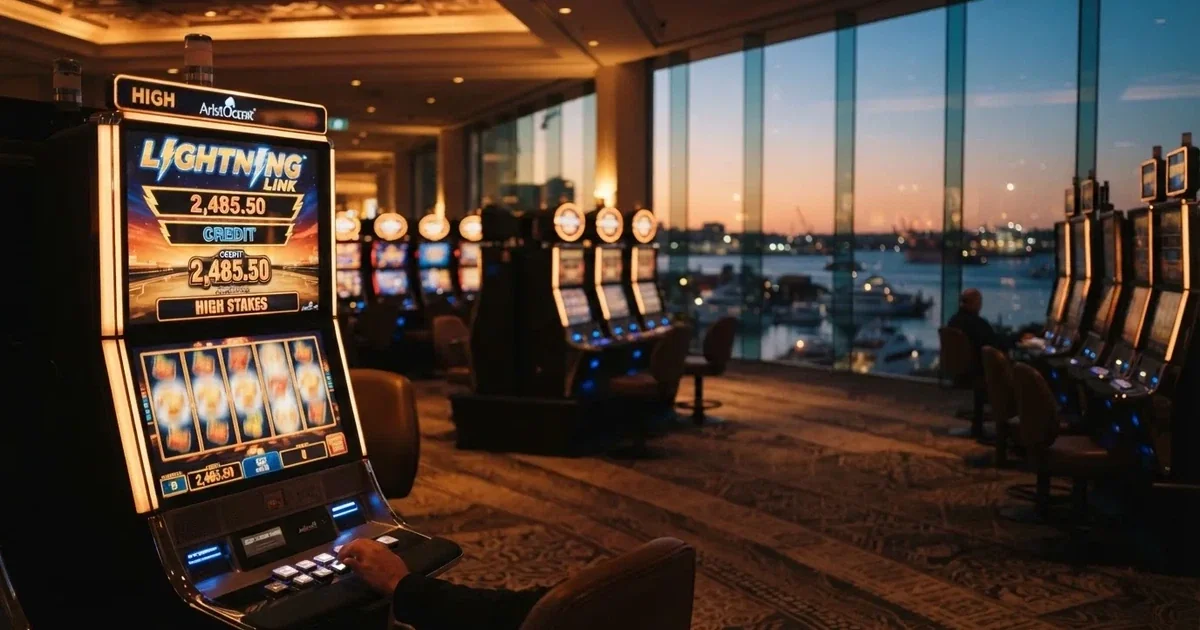
Pokies in Tasmania is a land-based question, and the only honest answer points readers into the venues that the Tasmanian Liquor and Gaming Commission actually licences to host electronic gaming machines. Two casinos carry that licence on the island — Wrest Point in Hobart and the Country Club Casino in Launceston — alongside the pubs and clubs that took on their own machine entitlements after Federal Group gave up its monopoly in 2017. Everything an offshore site calls “pokies” is a different product offered to Australians in breach of the Interactive Gambling Act 2001, and the Australian Communications and Media Authority has spent the last several years saying so, formally, to operator after operator. This page walks through both sides of that line: the venues a Tasmanian can walk into tonight, and the offshore brands whose Australian-facing pages the regulator has warned, blocked or named.
Table of Contents
- The Eleven Operators the ACMA Has Warned
- What “Pokies in Tasmania” Actually Means
- The Legal Landscape in 2026
- Playing Safely in Tasmania
- How Payouts and Limits Compare
- The Land-Based Venues Worth Knowing
- How Other States Compare
- The Specifics of Playing in Tasmania
- Offshore Sites and the Law
- Reading the Numbers Without Being Misled
- What the Choice Looks Like in 2026
- Frequently Asked Questions About Pokies in Tasmania
The Eleven Operators the ACMA Has Warned
Before any other shelf of this subject is worth discussing, it helps to know what is and isn’t on the table. Australia does not license online casino games to anyone, which means every offshore brand that runs a “pokies” lobby for Australian players is, by definition, offering a prohibited service. The ACMA has issued formal warnings about many of them. Eleven of those brands make up the set below — not as a ranking, not as endorsements, but as a record of what the regulator has named. Each entry records who the ACMA named, when, and the operator behind the brand at the time of the warning. None of them is licensed in Australia. None of them can lawfully take a deposit from a person in Tasmania.

The Comparison at a Glance
| Brand | ACMA action and date | Operator named by the ACMA | Subject support |
|---|---|---|---|
| RocketPlay | Formal warning, March 2026 (Pulsup Ltd); earlier warning, May 2022 (Dama N.V.) | Pulsup Ltd / Dama N.V. | — |
| Level Up Casino | Formal warning, May 2022 | Dama N.V. | Listings-only (Wikipedia, Victorian regulator) |
| Woo Casino | Formal warning, March 2025 | Dama N.V. | Listings-only (Wikipedia) |
| Spirit Casino | Formal warning, May 2025 | Dama N.V. | — |
| National Casino | Formal warning, July 2025 | Consolutetish S.R.L. | Listings-only (ABC, federal infrastructure register) |
| Bizzo Casino | Formal warning, July 2025; earlier 2022 warning (TechSolutions) | Consolutetish S.R.L. / TechSolutions | — |
| Ignition Casino | Formal warning, July 2025 | Bamboo Media | — |
| Instant Casino | Formal warning, February 2025 | EOD Code SRL | — |
| Jackbit | Formal warning, April 2026 | Ryker B.V. | — |
| Casino Intense | Formal warning, April 2025 | Sterplay Holding Ltd | Listings-only (ABC, ASGAM, SA regulator) |
| Sky Crown | Formal warning, September 2022 | Hollycorn N.V. | Listings-only (Wikipedia) |
Two patterns jump out. Dama N.V. shows up three times in the table — once in 2022 over a six-brand bundle that included Level Up, then again in 2025 over Woo and Spirit. TechSolutions and its later corporate re-skin, Consolutetish, recur with National and Bizzo. These are not the same offshore company rebranding after a warning; they are the regulator running into the same operators repeatedly under different brand names. The ACMA names the corporate parent because that is the legal entity it can pursue under the Interactive Gambling Act. The brand on the front of the website is what an Australian punter sees; the corporate parent is what the regulator sees. Both matter.
The other pattern is time. Five of the eleven warnings date from 2025 or 2026. The pace has accelerated, not slowed: the ACMA moved from one or two formal warnings a year early in the enforcement cycle to a noticeably steadier drumbeat as blocking requests and operator relocations became routine. That isn’t because Australians are gambling more on offshore sites — the share going through legal channels has fallen from 74 per cent in 2021 to 64 per cent in H2 Gambling Capital’s 2025 estimate — but because the regulator’s tools have multiplied. Blocking requests to ISPs, formal warnings, civil penalties and the new advertising reforms in the Interactive Gambling Amendment (Gambling Reform) Act 2026 give the ACMA a longer reach than it had even two years ago.
RocketPlay
Pulsup Ltd received a formal warning in March 2026, but RocketPlay’s history with the ACMA is longer than that. Dama N.V. — the Curacao-based operator behind RocketPlay along with five other brands — was the subject of an earlier warning in May 2022, when the regulator named six sites at once. A second corporate parent showing up to run the same brand is the textbook shape of an offshore operator shopping for a cleaner wrapper after the first warning lands. From a Tasmanian reader’s perspective, none of the legal picture changes: an offshore site that has been warned once has been warned publicly, and a second warning is a record, not a fresh start.
Level Up Casino
Level Up Casino came in as part of the same six-brand Dama N.V. bundle the ACMA named in May 2022. The 2022 warnings covered Bambet, Dazard, Level Up, Rocketplay, Wild Tornado and Cobra Casino, all under one operator. Listings pages outside Australia have referenced the brand and its Dama N.V. ownership, which is how the ACMA connected the dots. A brand that surfaces under one operator and reappears under another — sometimes within the same year — is the reason the regulator names the parent rather than the skin.
Woo Casino
Woo Casino attracted a fresh ACMA formal warning in March 2025, again against Dama N.V. The 2022 bundle did not include Woo, so this is the regulator catching up to a brand the parent had been running quietly under the radar. Woo is one of several Dama N.V. brands that came into the ACMA’s field of view as the regulator widened its scope after 2022.
Spirit Casino
Spirit Casino is the second 2025 Dama N.V. warning, dated May. Two warnings in two consecutive months — Woo in March, Spirit in May — show what the regulator’s 2025 campaign against Dama N.V. looked like in practice: a slow accumulation of names tied to a single corporate parent, with a formal paper trail for each. The pattern is not unique to Dama N.V., but it is one of the cleaner illustrations of how the ACMA builds a record.
National Casino
National Casino was named by the ACMA in July 2025, this time under Consolutetish S.R.L. The ABC and the federal register of prohibited services have both referenced the brand, which is how a reader outside the regulator’s own publication channels can verify a warning. National Casino is a useful example of why the ACMA names operators rather than just brands: Consolutetish is the corporate entity; National is one of several brands it ran during 2025.
Bizzo Casino
Bizzo Casino was also named in the July 2025 Consolutetish warning, and the ACMA’s history with the brand stretches back further. TechSolutions (CY) Group Limited and TechSolutions Group N.V. — earlier corporate shells for what would become Consolutetish — drew a 2022 warning over Bizzo. The 2025 warning is the third time the regulator has engaged the brand under a different corporate name. For a reader comparing operators, Bizzo is the cleanest case study on the page: one brand, three parent entities, two formal warnings, no licence anywhere in Australia.
Ignition Casino
Ignition Casino was named in the same July 2025 batch, but the operator is different. Bamboo Media — not Consolutetish — is the entity the ACMA named. Two operators running two of the brands in a single warning batch shows how a single monthly ACMA action can sweep up unrelated corporate groups at once. The ACMA batches warnings for efficiency, not because the operators are connected.
Instant Casino
Instant Casino is a February 2025 warning against EOD Code SRL. It is also the warning that brought the largest single brand to ACMA attention in early 2025 — Instant Casino had run prominent Australian-facing affiliate campaigns before the warning landed. The regulator does not always disclose what triggered a particular warning, but the timing in Instant Casino’s case lined up with a high-volume affiliate push targeting Australian deposit methods, which the ACMA treats as evidence the operator knew its audience.
Jackbit
Jackbit and CasinOK were both named in the ACMA’s April 2026 warning against Ryker B.V. Two brands, one warning, one operator — another instance of the regulator catching the corporate parent. Jackbit had been running an Australian-facing product for several years before the warning, and Ryker B.V. is one of the more active new-license operators the ACMA has engaged with in 2025 and 2026.
Casino Intense
Sterplay Holding Ltd drew a formal warning in April 2025 over Casino Intense. The ABC and ASGAM have both referenced the brand, and South Australia’s Consumer and Business Services has logged Casino Intense against the same operator in its own communications. Casino Intense is on the smaller end of the offshore market, which is part of why it took until 2025 for the ACMA to act — the regulator’s attention tends to follow volume.
Sky Crown
Sky Crown is the oldest warning in the table — the ACMA published a formal warning over Hollycorn N.V. in September 2022, covering Sky Crown and its sister brand Blue Leo. Sky Crown has been on the regulator’s list longer than any other brand here, and it has stayed there as a quiet illustration of how persistent an offshore operation can be. A warning from 2022 does not expire; it remains the ACMA’s published position unless the regulator formally withdraws it, which it has not done.
What the Set Looks Like as a Whole
Read across the eleven entries, the table describes a regulator that has moved from operator-by-operator warnings into something more systematic. The ACMA named Dama N.V. repeatedly, named Consolutetish after naming its predecessor TechSolutions, and named Bamboo Media, EOD Code SRL, Ryker B.V., Sterplay Holding and Hollycorn N.V. alongside them. That is six distinct corporate entities across eleven brand entries. Tasmania readers looking for a quick takeaway: any brand that runs an offshore “pokies” page targeted at Australians is, with high probability, on this regulator’s working list — either warned, blocked, or both.
What “Pokies in Tasmania” Actually Means
The phrase “pokies” is Australian English for what international regulators call electronic gaming machines (EGMs) or slot machines. In Tasmania, pokies are licensed as EGMs under the state’s Gaming Control Act 1993 and are physically installed at venues approved by the Tasmanian Liquor and Gaming Commission. There is no separate online category — and that is the entire point. Tasmania does not license online EGMs because Australia does not license them anywhere.
The two casinos in Tasmania are the only venues licensed to operate EGMs outside the pub-and-club network. Wrest Point in Sandy Bay opened on 10 February 1973 and remains Australia’s first legal casino. The Country Club Casino in Launceston was opened by Federal Group in 1982 and remains the second. Between them they cover the state’s population centres at either end of the island, with the rest of the licensed pokies footprint made up of pubs and clubs holding their own entitlements.
The history of those entitlements is short. Federal Group held the exclusive licence to operate EGMs outside its own casinos until August 2017, when it gave up that monopoly and let individual pubs and clubs apply for their own machine entitlements. The reform opened the door to a more distributed network, but it didn’t change the underlying model: every EGM in Tasmania, whether in a casino or in a pub, is still licensed by the same state regulator and still sits under the same gaming legislation.
Federal Group and the Structure Behind the Casinos
Federal Group is the Farrell family’s Tasmanian business and remains the operator of both Wrest Point and the Country Club Casino. The Farrells acquired majority ownership of the group’s holding company by 1989 and took Federal Group private in 1990. The Country Club’s design was modelled on the stately homes of the American South, in a Georgian style picked for the rural landscape around Launceston — a quirk that says more about the property’s positioning than its gaming operations do. Underneath the casino business sits Mulawa Holdings, which reported profit rising from A$13.9 million to A$24.4 million in the year to 30 June 2018, on revenue of A$543 million, and which paid the Tasmanian government around A$75 million in gaming taxes and licence fees that year. Those numbers are old — 2018 — but they remain the most recent public breakdown of the casino business’s economics, and they explain why the two-licence structure has been politically durable.
The Legal Landscape in 2026
Online casino games and online pokies cannot be licensed anywhere in Australia. The Interactive Gambling Act 2001, strengthened by the Interactive Gambling Amendment Act 2017, makes it an offence to provide online casino games, online pokies or in-play betting to a person in Australia. Wagering on races and sport placed before the event is a different product and is licensed separately — most online bookmakers operating in Australia, including Sportsbet, Bet365 and Ladbrokes, are licensed by the Northern Territory Racing and Wagering Commission, which has no full-time staff and meets once a month in Darwin.
For an Australian player, the practical consequences of the IGA are:
- Online casino games, online pokies and in-play betting cannot be offered to you by an Australian-licensed operator.
- The ACMA enforces the prohibition by issuing formal warnings, directing ISPs to block illegal sites, and pursuing civil penalties. The individual player is not prosecuted — the IGA targets the provider.
- An offshore site gives no Australian consumer protection. There is no local complaints body and no recourse if a withdrawal is refused. The site can be blocked with a player balance still on it.
- BetStop, the National Self-Exclusion Register, binds only Australian-licensed online and phone wagering services. An offshore casino is not connected to it.
- Credit cards, credit-related products and digital currency are banned as payment for licensed online wagering since 11 June 2024. Legal deposit routes are debit card, bank transfer, PayID/Osko and BPAY. A site asking for a credit card or a crypto deposit is operating outside the Australian rules.
The new layer in 2026 is the Interactive Gambling Amendment (Gambling Reform) Act 2026, which passed Parliament on 19 August 2026. Its advertising and inducement measures commence on 1 January 2027 — law, but not yet in force on a page published before that date. The reform gives the ACMA a faster set of tools against inducement marketing — bonus offers, “free spins”, affiliate “review” pages that double as landing pages — than the existing warning-and-block cycle. From a reader’s perspective, the change is invisible until 2027; from the regulator’s, it represents a meaningful shift in what it can demand from offshore operators’ local marketing infrastructure.
How Fast the ACMA Moves
The ACMA reported on 26 June 2026 that it had asked Australian ISPs to block 1,751 illegal gambling and affiliate marketing websites since the first blocking request in November 2019, and that more than 230 unlicensed gambling services had left the Australian market since enforcement was strengthened in 2017. The June 2026 round itself added twelve: 7Signs, ChromaBet, Donbet, Duospin, Freshbet, Slots Gem, Jacks Club, Lucky Start, Pointsbetz, Spinrise, Vinyl Casino and Wildsino. The numbers give the only honest scale to put against the warnings above. From the first blocking request in November 2019 to the published count in June 2026 is roughly six and a half years, which works out at an average blocking pace of around twenty-five sites per month across the whole enforcement period — though the pace has accelerated sharply in 2024, 2025 and 2026 as the ACMA’s tools matured.
The Blocking Rate, Put in Plain Terms
Take the running total of 1,751 blocked sites against the first blocking request in November 2019, with the snapshot dated 26 June 2026. Spread over the period between those two points, the rate comes to roughly 270 blocks per year on average, or just over twenty-two per month. The earlier years were slower; the later years have been faster. H2 Gambling Capital’s 2025 report estimates that Australians lose about A$3.9 billion a year to illegal gambling sites and that the legal share has fallen from 74 per cent in 2021 to 64 per cent, which is the only honest way to read what those blocks have and have not achieved. The blocks remove access from Australian ISPs, not the operators themselves, and the operators keep finding new domains.
Playing Safely in Tasmania
Tasmania’s responsible-gambling framework is built around the Tasmanian Liquor and Gaming Commission and its venue-level self-exclusion arrangements, plus the national registers that sit on top. The numbers worth keeping in mind:
- Gambling Helpline Tasmania is 1800 858 858, free, 24-hour, run by Anglicare Tasmania’s Gamblers Help Service. The same number routes to Gambling Help Online chat.
- In-person counsellors are based in Hobart, Launceston, Devonport and Burnie.
- Tasmania’s cashless gaming card reform made carded play mandatory on hotel and club pokies from December 2025. The default loss limits are A$100 per day, A$500 per month and A$5,000 per year. Limits can be raised, but only after a minimum 24-hour wait.
- BetStop (National Self-Exclusion Register) covers Australian-licensed wagering services. It does not extend to offshore casinos — a player who self-excludes from BetStop is not self-excluded from the eleven brands in the comparison table above.
- The Tasmanian Liquor and Gaming Commission oversees the cashless card system. No casino rollout date had been set as of September 2024.
The cashless card reform is the most material change for someone playing in Tasmania today. Carded play at pubs and clubs is no longer optional, the loss limits are statutory defaults rather than venue-set policies, and the 24-hour cooling-off before any increase gives a player time to walk away from an impulse. For anyone playing in a Wrest Point or Country Club Casino, the rollout hadn’t been set as of late 2024 and is not yet in force in those venues.
What a Venue Self-Exclusion Actually Does
A venue self-exclusion in Tasmania is an agreement between a player and a specific venue (or a group of venues under the same operator). The player is barred from entering the gaming floor or using EGMs at those venues, and the venue is required to enforce the exclusion. The arrangement is voluntary in the sense that the player must ask for it, but it is binding once agreed. The Gamblers Help Service in Hobart, Launceston, Devonport and Burnie can help arrange an exclusion without the player having to walk into a venue themselves.
How Payouts and Limits Compare
Pokies payout percentages vary by jurisdiction, and Tasmania does not publish a separate state figure in the same way South Australia does. The South Australian minimum return-to-player rate for gaming machines outside Adelaide Casino is 87.5 per cent, and Adelaide Casino itself has no maximum-bet limit. South Australian gaming-machine losses outside Adelaide Casino totalled about A$0.92 billion in 2022-23, or roughly A$497 per adult. Tasmania’s cashless card default limits — A$100 a day, A$500 a month, A$5,000 a year — are the closest equivalent to a state-level ceiling on losses a player can run up before having to actively raise the limit.
The mechanics for offshore pokies — for the brands the ACMA has warned — are different. They run on the operator’s own rules, with payout percentages set by the game provider and the operator’s own maximum-bet, maximum-coin-in and cashout caps. Because those sites are unlicensed in Australia, none of those limits are enforceable under Australian consumer law. A Tasmanian punter who deposits at one of the eleven brands above has no Australian complaints body to appeal to and no local regulator to enforce a payout.
Cashless Card Mechanics
The cashless gaming card links a player’s identity to a pre-funded account at the venue. Card in, money comes out of the account; card out, the machine stops. The default loss limits apply across all venues the player uses the card at, not at each venue independently. A player can lower a limit instantly; raising a limit requires the 24-hour cooling-off. The card also gives the venue a record of play, which is what the regulator uses to monitor harm. For a player who wants the simplest possible control over their pokies spend, the card removes cash from the equation.
The Land-Based Venues Worth Knowing
| Venue | Location | Opened | Type |
|---|---|---|---|
| Wrest Point | Hobart | 1973 | Casino |
| Country Club Casino | Launceston | 1982 | Casino |
Tasmania has two casinos and a network of pubs and clubs. Both are worth knowing by name because the operator behind them is the same — Federal Group — and because the venue mix is unusual in Australian terms.
Wrest Point Hotel Casino, Hobart
Wrest Point in Sandy Bay opened on 10 February 1973 as Australia’s first legal casino. It remains the southern anchor of Tasmania’s casino licence. The property runs gaming, hospitality and conferencing under Federal Group, and it has been the public face of Tasmanian gaming for more than fifty years. For someone in Hobart, Wrest Point is the closest licensed casino venue.
Country Club Casino, Launceston
The Country Club Casino in Launceston opened in 1982 under Federal Group and serves the northern end of the state. The Country Club’s design was modelled on the stately homes of the American South, in a Georgian style, which gives the property a more resort-style character than Wrest Point. For someone in Launceston or the north-east, the Country Club is the closest licensed casino venue.
The Pub and Club Network
Under the post-2017 entitlements regime, individual pubs and clubs in Tasmania hold their own machine licences. The 2017 reform let Federal Group give up its monopoly; it did not produce a public map of every pub-and-club machine in the state. A reader who wants to play pokies outside the two casinos is dealing with individual venues, each licensed separately by the Tasmanian Liquor and Gaming Commission. The cashless card system applies to all of them from December 2025.
How Other States Compare
Tasmania is unusual in having only two casinos. Most other Australian states either have one dominant casino or several competing licences. The brief comparison below is to put Tasmania’s structure in context, not to redirect the reader to play elsewhere — Tasmania’s two casinos are the lawful option for in-state play.
South Australia: One Casino
South Australia has one casino, Adelaide Casino (commercially SkyCity Adelaide until 2009), in the heritage-listed Adelaide railway station building on North Terrace. It carries 90 gaming tables and 950 gaming machines and is the sole licensed casino in the state under the Casino Act 1997. Its table-game monopoly was extended to 30 June 2035 under a licence formalised on 11 October 2013. South Australia had 11,672 gaming machines outside Adelaide Casino in 471 venues in September 2023. SkyCity Entertainment Group bought Adelaide Casino in June 2000 and operated it as SkyCity Adelaide from April 2001 until reverting to the Adelaide Casino name in 2009. A 2015-2021 Riverbank precinct redevelopment, worth about A$330 million, added the EOS by SkyCity tower that opened in 2021.
Queensland: One Casino, Recently Relocated
Queensland’s Treasury Casino closed on 25 August 2024 to make way for the new Star Brisbane at the Queen’s Wharf precinct, which opened in stages from 29 August 2024 at a total development cost of A$3.6 billion. Treasury had been a three-level gaming emporium with 80 gaming tables and over 1,300 gaming machines before it closed. Queensland had 21,122 gaming machines operating in 351 venues in October 2023. Star Entertainment Group’s Queensland licence position was reviewed in late 2022 after a Gotterson inquiry found it had misled regulators and failed anti-money-laundering duties. Star was fined A$100 million on 9 December 2022, with a 90-day suspension of the Treasury Brisbane and Star Gold Coast licences deferred to 1 December 2023 to allow remediation.
What Makes Tasmania Different
Tasmania has two casinos to South Australia’s one and Queensland’s one, but Tasmania has only one operator — Federal Group — running both. South Australia has SkyCity. Queensland had Star. Tasmania’s duopoly-on-paper, monopoly-in-practice structure is the legacy of the Federal Group licence history. The cashless card reform applies across Tasmania’s pub-and-club network; the other states are at different stages of similar reforms. For someone choosing where to play in Tasmania, the two casinos are the licensed casino option; the pubs and clubs are the licensed non-casino option.
The Specifics of Playing in Tasmania
The mechanics of playing pokies in Tasmania are the same as in any other Australian state at the venue level. The machine is a regulated EGM with a return-to-player percentage set under state law, a maximum bet set under state law (Tasmania has not adopted the South Australian A$5.00 cap but has its own venue-level limits), and cashless play mandatory at pubs and clubs from December 2025. The cashless card removes the option of feeding notes into a machine, which is the most material change in the player’s day-to-day experience.
Identification
Pokies venues in Tasmania require identification before play. The cashless card system links a player’s identity to a pre-funded account, which is how the loss limits are enforced — a player who has hit the daily A$100 limit cannot keep playing on a different machine in the same venue or a different venue. The same identification requirement applies at the two casinos. The card registration is the player’s record of play, which the regulator and venue can use to enforce venue self-exclusion and to monitor harm.
24-Hour Venues
The Spirit of Tasmania — the ferry service between Geelong and Devonport — runs gaming machines on board, which is the closest thing to a 24-hour pokies venue tied to the state. On land, the two casinos and the pub-and-club network operate within their own licensed hours; 24-hour pokies venues in Tasmania are not the standard. A reader who searches for “24 hour pokies Tasmania” is most often looking for the Spirit of Tasmania or for a casino floor with late hours, not for an always-open pub.
Cashless Pokies
Tasmania’s cashless gaming card reform made carded play mandatory on hotel and club pokies from December 2025. The default loss limits — A$100 a day, A$500 a month, A$5,000 per year — apply across all venues the player uses the card at. Limits can be lowered instantly; raising a limit requires a minimum 24-hour wait. The Tasmanian Liquor and Gaming Commission oversees the system. No casino rollout date had been set as of September 2024. The cashless card is the most material change in how pokies are played in Tasmania, and it is the change most likely to affect a regular player’s day-to-day experience.
Offshore Sites and the Law
Eleven brands sit on the ACMA’s published list of formal warnings, and the legal picture for any of them is the same: online casino games cannot be offered to Australians, and the ACMA has formally told the operator so. The mechanics of enforcement run in roughly this order:
- Investigation. The ACMA identifies that a site is offering prohibited interactive gambling services to Australians.
- Formal warning. The ACMA issues a written warning under the Interactive Gambling Act 2001, naming the operator and the brand.
- ISP blocking. If the site continues to operate, the ACMA asks Australian ISPs to block it. A blocked site cannot be reached from an Australian IP address without a VPN or other work-around.
- Civil penalties. The ACMA can pursue civil penalties under the IGA. The criminal prohibition sits with the Department of Infrastructure.
- Continued operation. Many sites continue to operate outside Australia. They are inaccessible from Australian ISPs but reachable from elsewhere.
The published warnings over the eleven brands in this page’s set all sit at step 2, with several at step 3 as well. None has reached step 4 in published ACMA action.
Why a Warning Matters to a Player
A formal warning tells a player three things. First, the operator has been told, in writing, that what it is doing is unlawful in Australia. Second, the regulator’s position is on the public record. Third, an Australian player dealing with the operator has no local consumer protection — no local regulator, no local court, no local complaints body. A withdrawal refused, a bonus not paid, an account closed with balance on it: all of these are disputes the operator handles on its own terms. The fact that the operator has been formally warned by the ACMA does not change that, but it does mean the regulator has already concluded the operator is acting unlawfully.
The Affiliate Layer
The ACMA’s June 2026 count of 1,751 blocked sites includes affiliate marketing pages — review sites, comparison sites, “best pokies” lists — that route Australian traffic to offshore operators. The Interactive Gambling Amendment (Gambling Reform) Act 2026 gives the regulator a faster set of tools against this layer from 1 January 2027, but in the meantime the affiliate pages continue to operate, with many Australians reaching them through search results that look like independent reviews. A reader who lands on an affiliate page is not looking at an independent review; the affiliate gets paid when the reader clicks through and deposits.
Reading the Numbers Without Being Misled
H2 Gambling Capital’s 2025 estimate of A$3.9 billion a year in losses to illegal gambling sites is the largest published figure on the offshore market. The number is an estimate, not an audited total, and it is built from operator data and observed traffic. The accompanying figure — the legal share falling from 74 per cent in 2021 to 64 per cent — is the more important data point for a Tasmanian reader. It says that more Australians are gambling through offshore channels than was the case five years ago, even as the legal options for online wagering on sport and racing have multiplied.
The 1,751 blocks since November 2019 are an ACMA-published number. The 230-plus unlicensed services that have left the Australian market since 2017 are an ACMA-published number. Neither is contested. The H2 estimate is a third-party estimate, with the methodology in the public report. Reading all three together gives a more honest picture than any one alone: blocks are increasing, the legal share is falling, and the dollar volume going offshore is the largest single category of gambling spend that is not visible to the regulator.
What the Choice Looks Like in 2026
For a Tasmanian reader, the choice in 2026 is straightforward and worth stating plainly. The lawful options are the two casinos — Wrest Point in Hobart, Country Club Casino in Launceston — and the licensed pubs and clubs holding their own EGM entitlements. Both come with the cashless card, the loss limits and the venue self-exclusion arrangements, plus the national BetStop register for online wagering on sport and racing. The unlawful options are the offshore brands the ACMA has warned, blocked or named — eleven of which are in this page’s set — and they come with no Australian consumer protection, no local complaints body and the knowledge that the regulator has already told the operator it is acting unlawfully.
The right framing for a Tasmanian who wants to play pokies is to play them where the regulator has licenced them. The right framing for a Tasmanian who is being advertised offshore pokies is to understand what an ACMA formal warning means, and what it does not change.
Frequently Asked Questions About Pokies in Tasmania
Which venues in Tasmania are licensed to operate pokies?
Wrest Point Hotel Casino in Hobart and Country Club Casino in Launceston are Tasmania’s two licensed casinos, both operated by Federal Group. Outside the casinos, individual pubs and clubs hold their own EGM entitlements under the post-2017 licensing regime, with all machines overseen by the Tasmanian Liquor and Gaming Commission. There is no third casino licence and no separate online category, because Australia does not license online casino games anywhere.
Are pokies in Tasmania available around the clock?
On land, the two casinos and the pub-and-club network operate within their own licensed hours; 24-hour pokies venues in Tasmania are not the standard offering. The closest thing to a 24-hour venue is the Spirit of Tasmania ferry, which runs gaming machines on board between Geelong and Devonport. A reader searching for 24-hour pokies is most often looking at the ferry, a late-night casino floor, or an offshore site — and only the first two are lawful options.
What identification do venues in Tasmania require before letting someone play pokies?
The cashless gaming card system, mandatory at pubs and clubs from December 2025, links a player’s identity to a pre-funded account at the venue, which is how the default loss limits are enforced and how venue self-exclusion is recorded. The two casinos apply their own identification checks. A player who has hit the daily A$100 limit cannot keep playing on a different machine in the same venue or a different venue using the same card.
Can visitors to Tasmania use self-exclusion schemes at local pokies venues?
Yes, in two layers. Venue self-exclusion is a voluntary arrangement between a player and a specific venue, and the Gamblers Help Service in Hobart, Launceston, Devonport and Burnie can help arrange one without the player having to walk into the venue. BetStop, the National Self-Exclusion Register, binds Australian-licensed online and phone wagering services but does not extend to offshore casinos, which is a meaningful gap for anyone who has self-excluded from Australian wagering.
How does the payout percentage on Tasmania pokies compare with other Australian cities?
Tasmania does not publish a separate state payout percentage in the same way South Australia does. South Australia sets a minimum gaming-machine return-to-player rate of 87.5 per cent outside Adelaide Casino, with Adelaide Casino itself carrying no maximum-bet limit. Tasmania’s cashless card default limits — A$100 a day, A$500 a month, A$5,000 per year — are the closest equivalent to a state-level ceiling on losses, and they apply across every venue the player uses the card at, not at each venue independently.
Is it legal for an online casino to advertise “pokies” in Tasmania the same way a pub or club does?
No. The Interactive Gambling Act 2001 prohibits online casino games and online pokies from being offered to Australians, and the ACMA has formally warned, blocked or named every offshore operator that runs a “pokies” lobby targeting Australians. The Interactive Gambling Amendment (Gambling Reform) Act 2026 gives the regulator a faster set of tools against inducement marketing from 1 January 2027, but the underlying prohibition is already in force. An offshore brand running an Australian-facing “pokies” page is operating unlawfully regardless of what licence it displays.